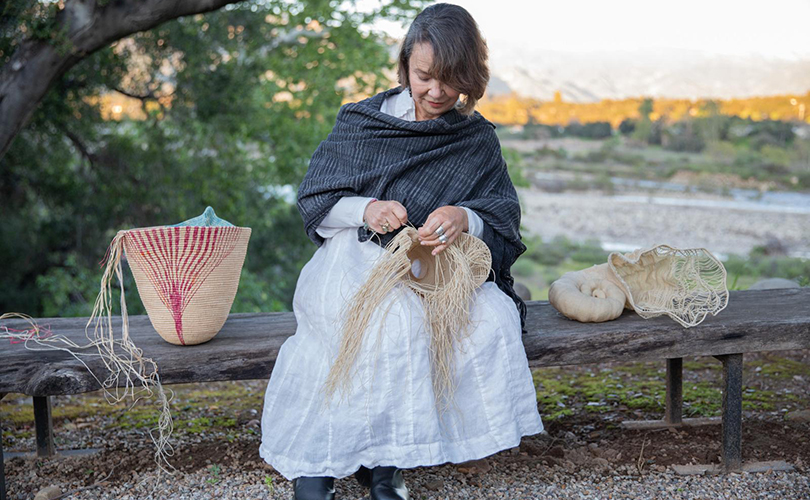
In an art landscape increasingly drawn to fiber and textile practices, Carol Shaw-Sutton stands out as someone who has been doing this work — with rigor, curiosity, and consistency — since long before it was considered mainstream. Her practice is a reminder that fiber is a language capable of carrying myth, memory, and meaning as powerfully as any other.
Some artists find their medium. Carol Shaw-Sutton’s found her. At age five, recovering from burns to her hands, she was taught to knit as part of her physical therapy. What began as a clinical exercise in dexterity became something else entirely — a quiet, absorbing way of looking closely at the world. That early encounter with thread set the course for a career that has spanned more than five decades and established her as a respected voice in contemporary fiber art.
A Life Woven from Many Threads
Shaw-Sutton’s visual language didn’t come from a single source. As a child, road trips through the American Southwest introduced her to Indigenous craft traditions, including the coiled ceremonial baskets of the Hopi. Around the same time, she watched her family’s Japanese gardener bundle backyard vines using nothing but the vines themselves — a small, practical act that left a lasting impression about how material could be both functional and beautiful.
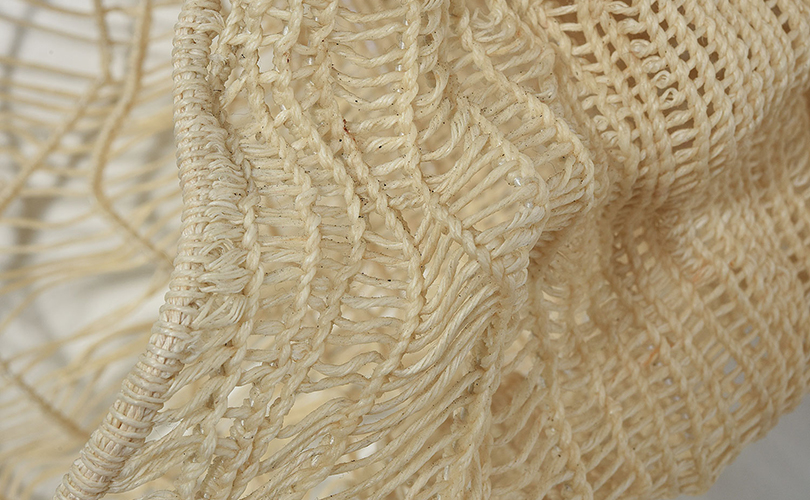
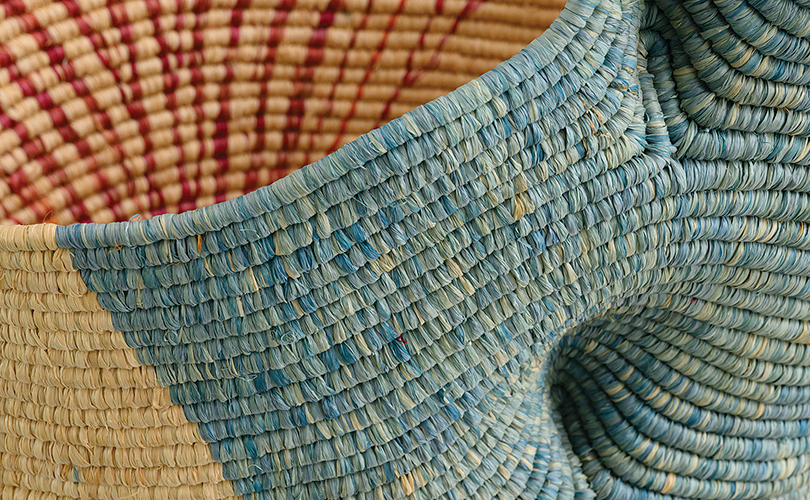
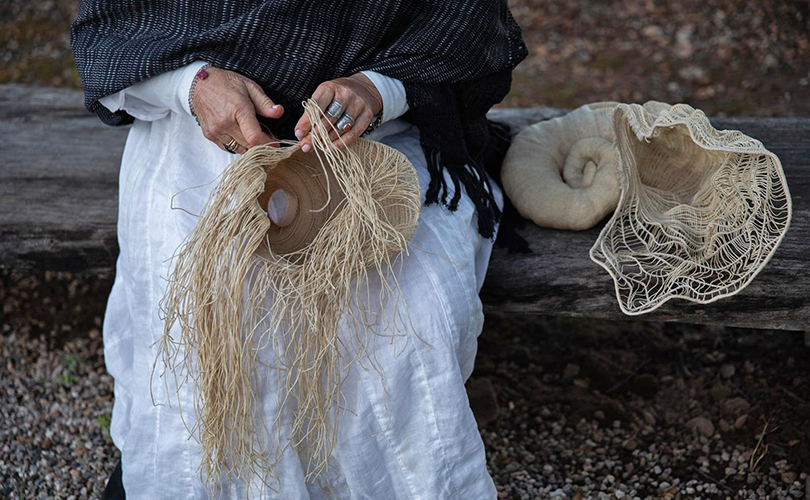
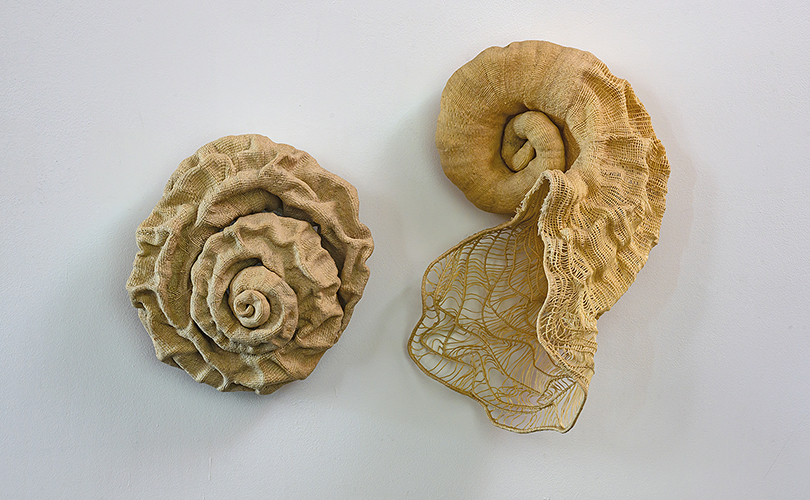
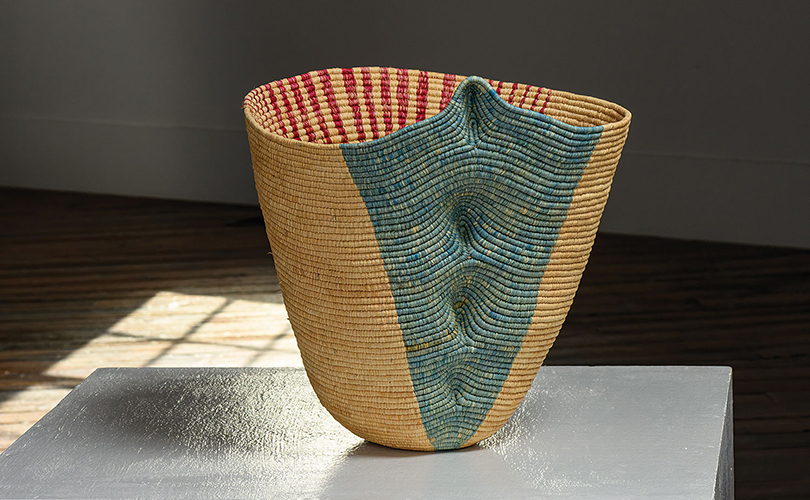
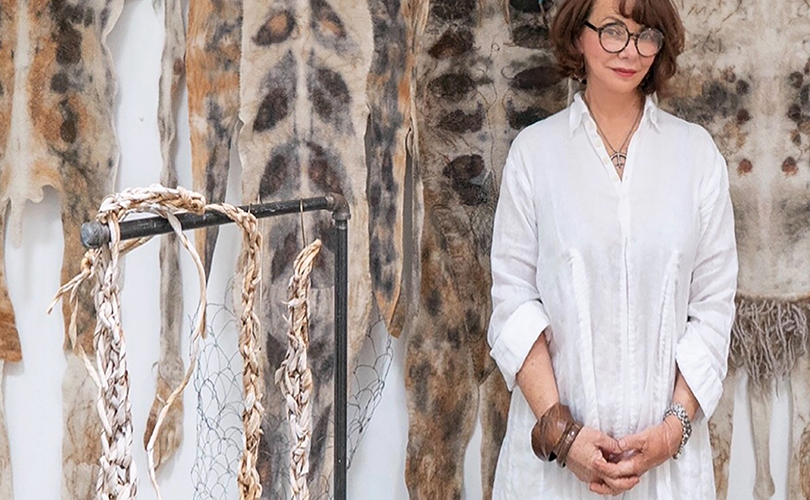
These influences converge in a practice built on what she has called ancient and modern processes working side by side: coiling, wrapping, looping, knotting, and weaving, often using natural materials like willow, linen, wood, and feathers. The results are sculptural, immersive, and frequently large in scale — installations that can stretch many feet across a gallery while still carrying the intimacy of handwork.
Themes That Run Through the Work
Critics and curators consistently point to a recurring set of concerns in Shaw-Sutton’s output: loss, longing, repair, and the search for wholeness — cultural and environmental alike. Writer and critic Betty Park described her pieces as objects laden with meaning, functioning less like literal narratives and more like myths open to many readings.
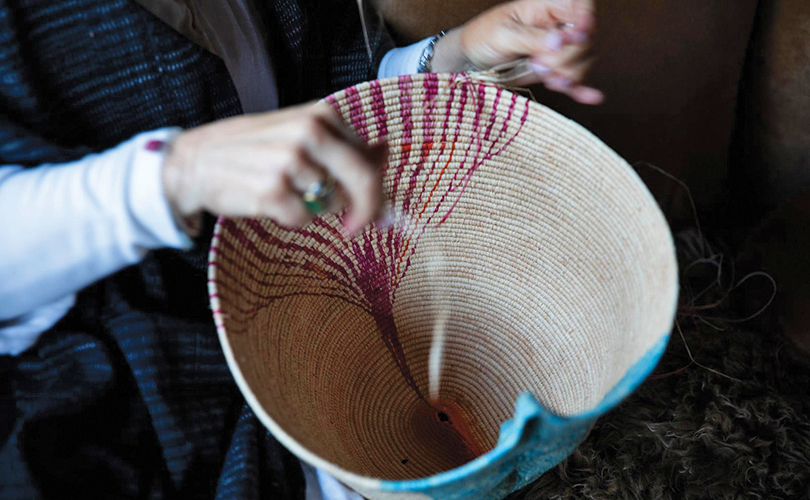
That mythic quality is deliberate. Shaw-Sutton has spoken about wanting her work to sit at the intersection of the deeply personal and the broadly human — pieces that reference her own body and history while also gesturing toward larger questions about nature, culture, and time. Titles and series such as Our Bones Are Made of Stardust and Staying Alive reflect this dual register: intimate and cosmic in the same breath.
Recognition and Collections
Shaw-Sutton’s accolades include multiple National Endowment for the Arts Individual Artist Fellowships, a Fellowship from the American Craft Council, and honors from institutions in Japan and France, among others. Her work resides in numerous major public collections, including the de Young Museum in San Francisco, the Oakland Museum of California, the Museum of Arts and Design in New York, the Mint Museum in North Carolina, and the Musée des Beaux-Arts in Lausanne, Switzerland — a testament to how thoroughly fiber art rooted in ancient technique has found a home in the contemporary art world.
Continuous Significance
For over 30 years, Shaw-Sutton taught at California State University, Long Beach, where she chaired the Fiber Program starting in 1990. She is now Professor Emerita there, having shaped generations of fiber artists during her tenure. Her influence extends well beyond her own studio practice — a reminder that some of the most significant contributions in art happen in the classroom as well as the gallery.
“At its root, Shaw-Sutton’s work is traditional,” Betty Park has written, “yet also highly original, elegant and eloquent in its form and concept. She has stepped into an unknown land that somehow feels like home.” For anyone interested in where contemporary textile art has been, and where it might be going, Carol Shaw-Sutton’s body of work is essential viewing.