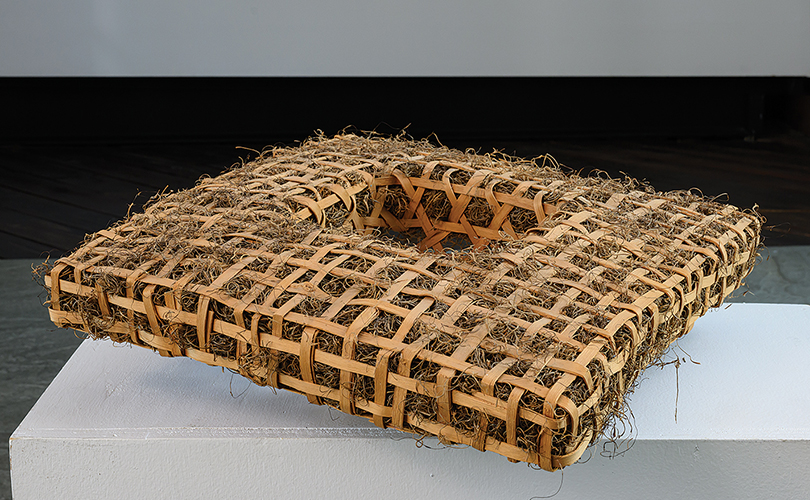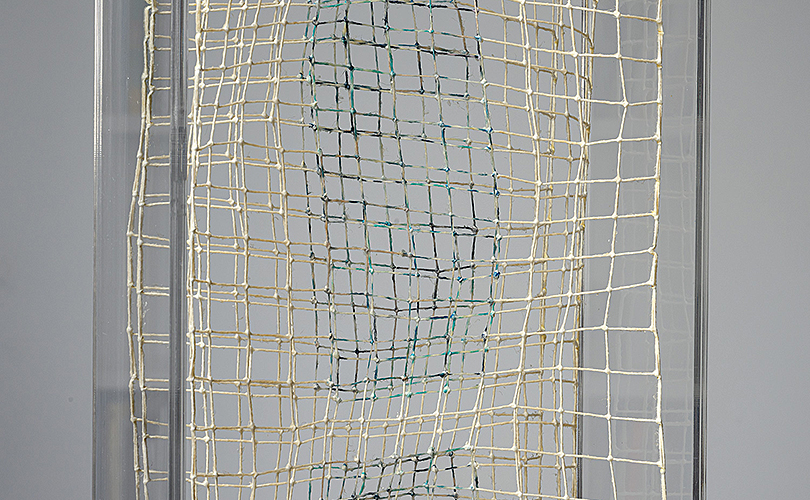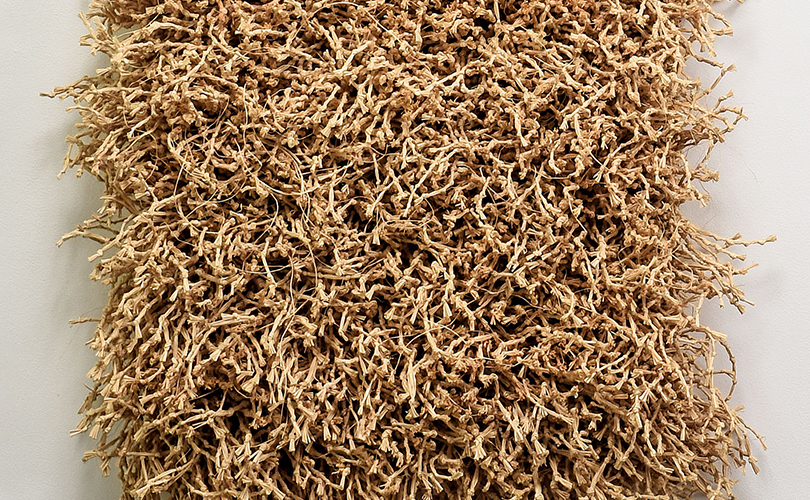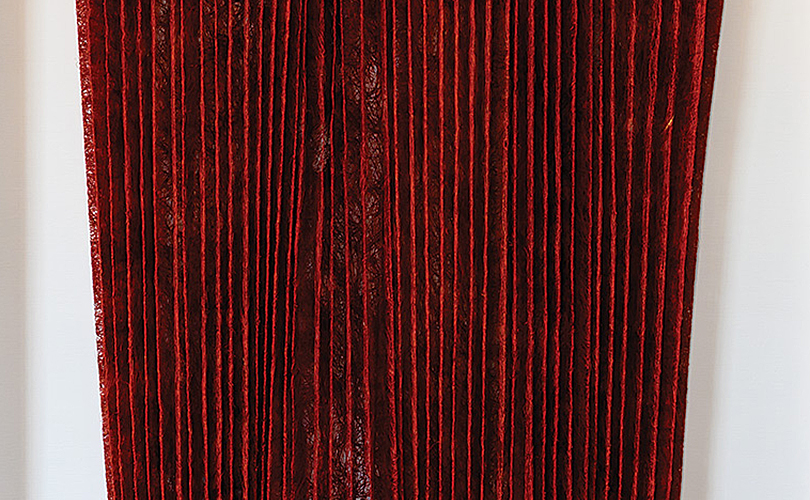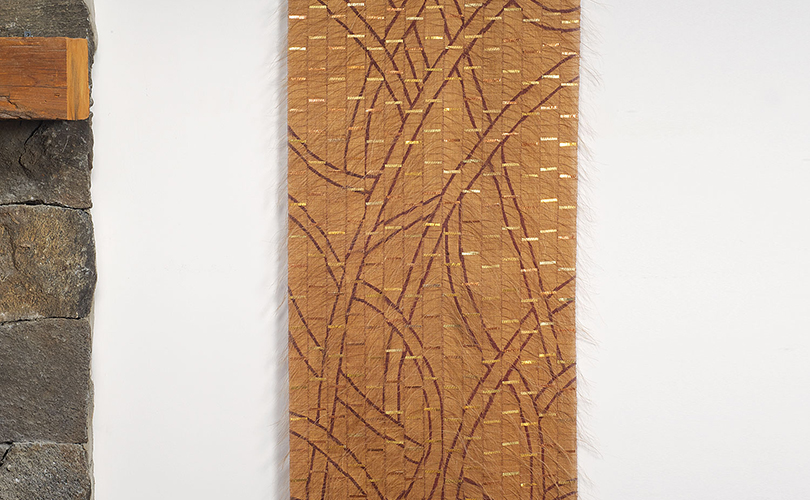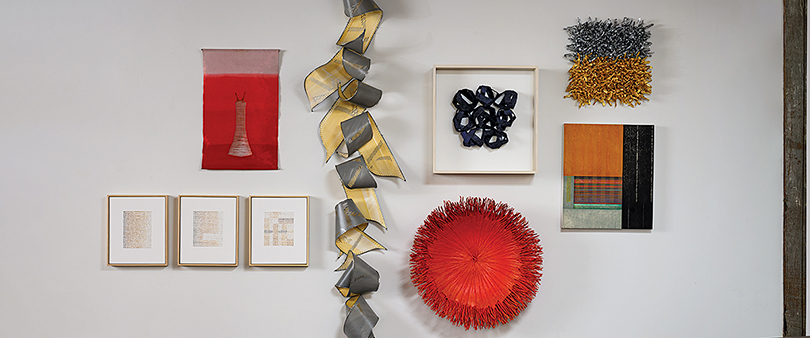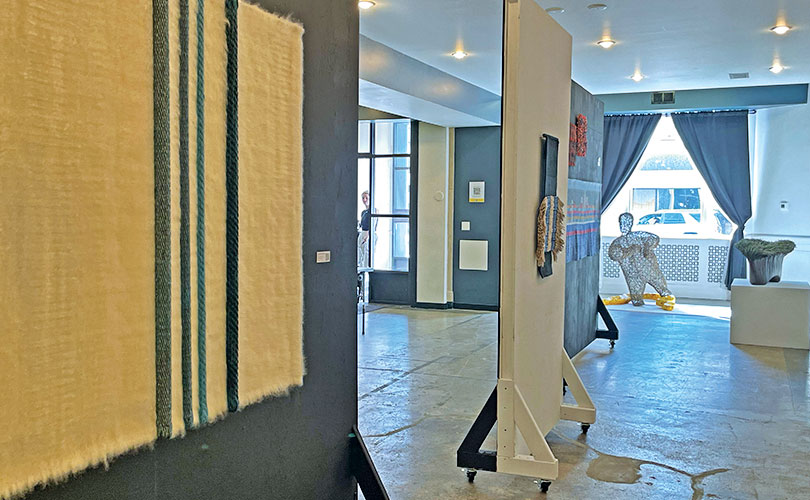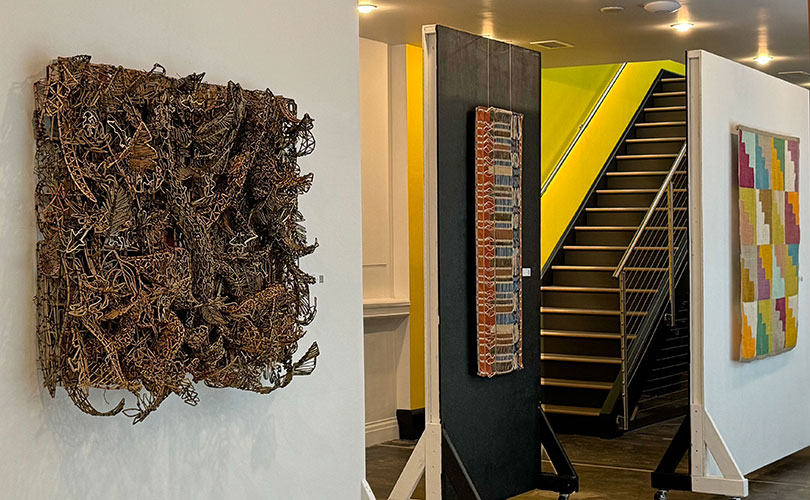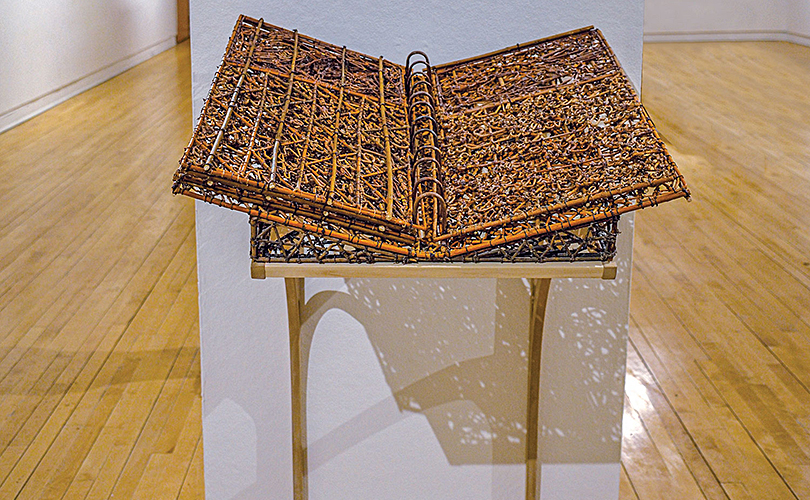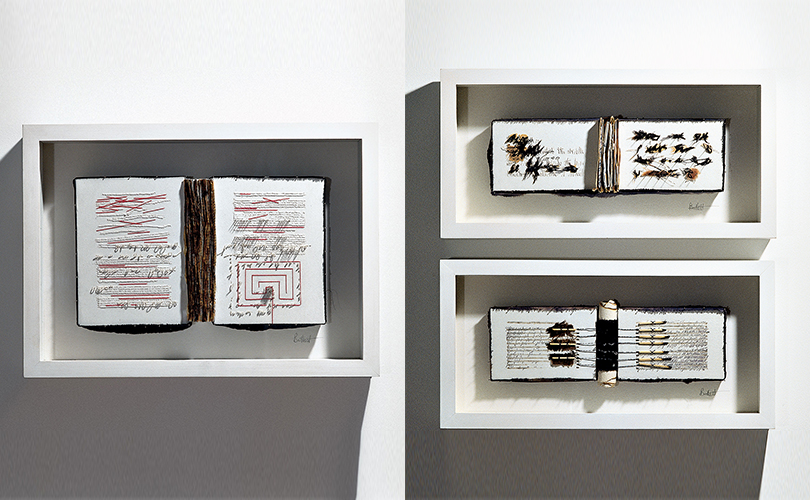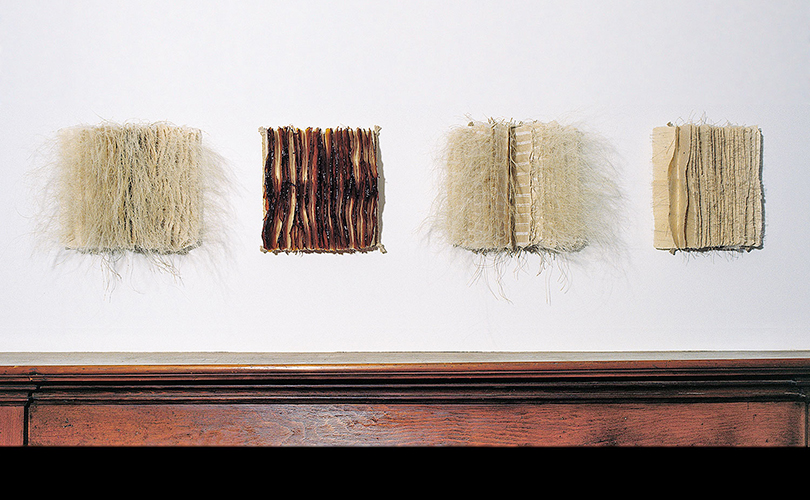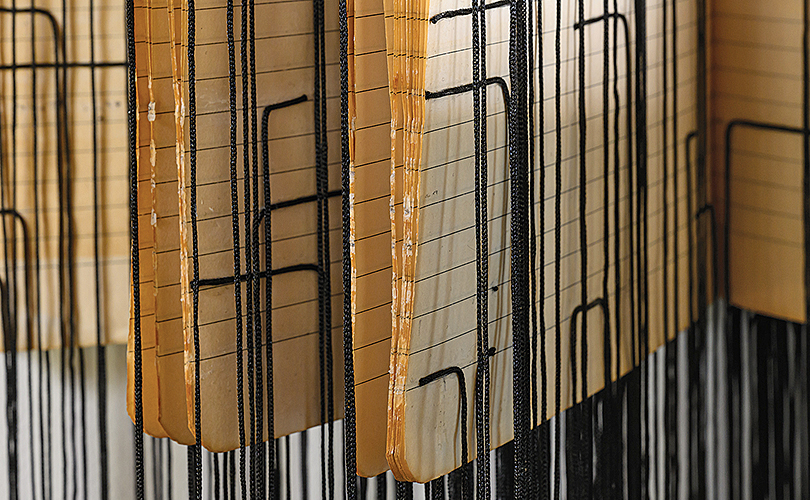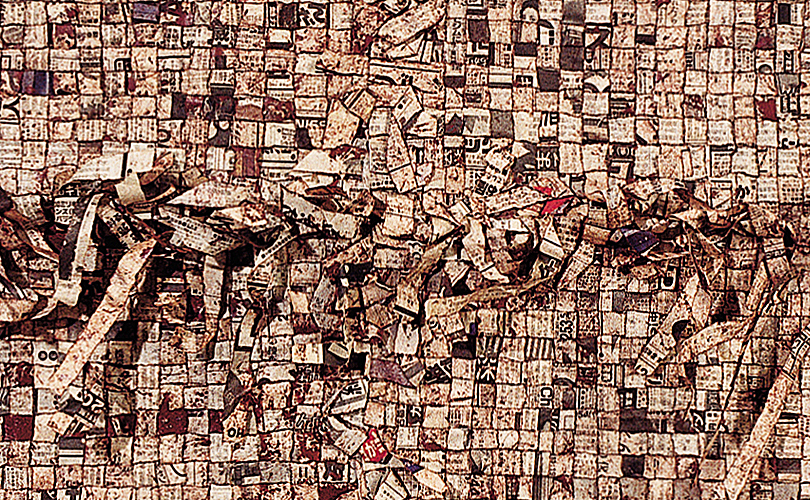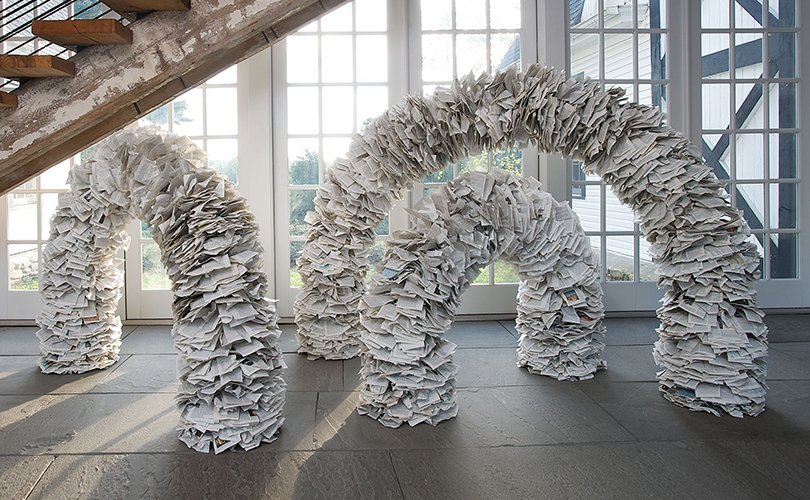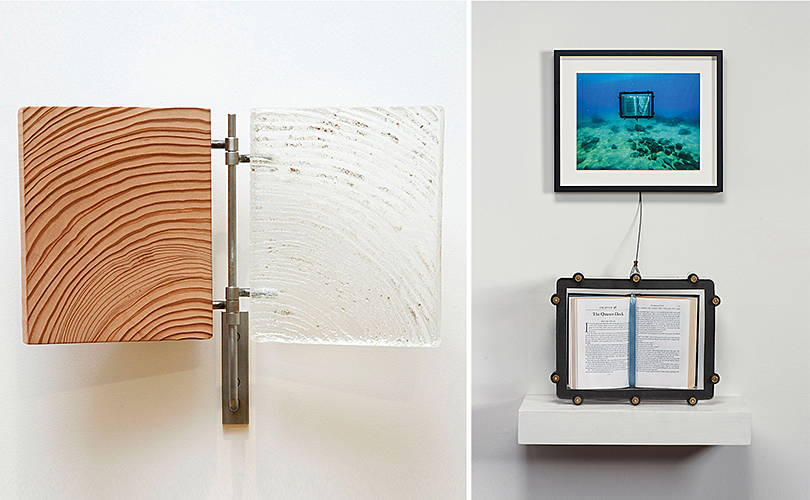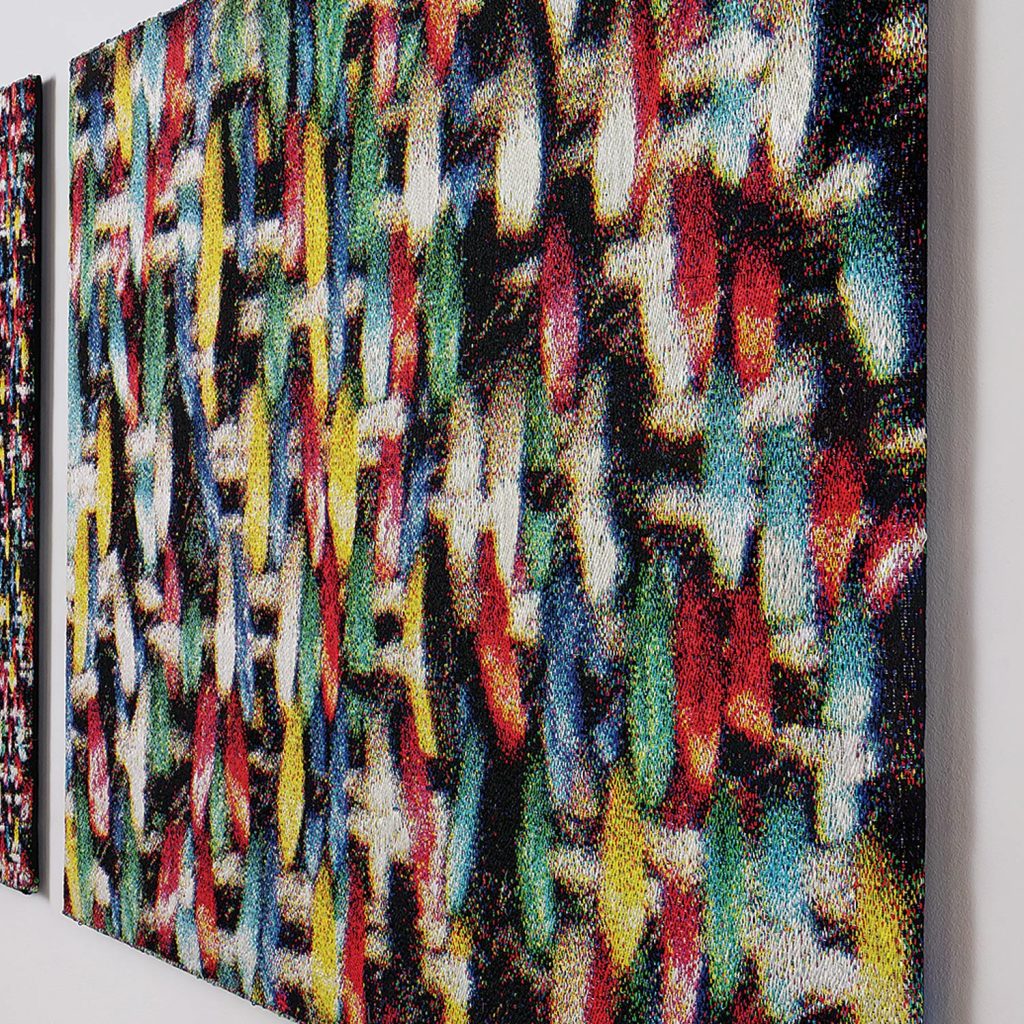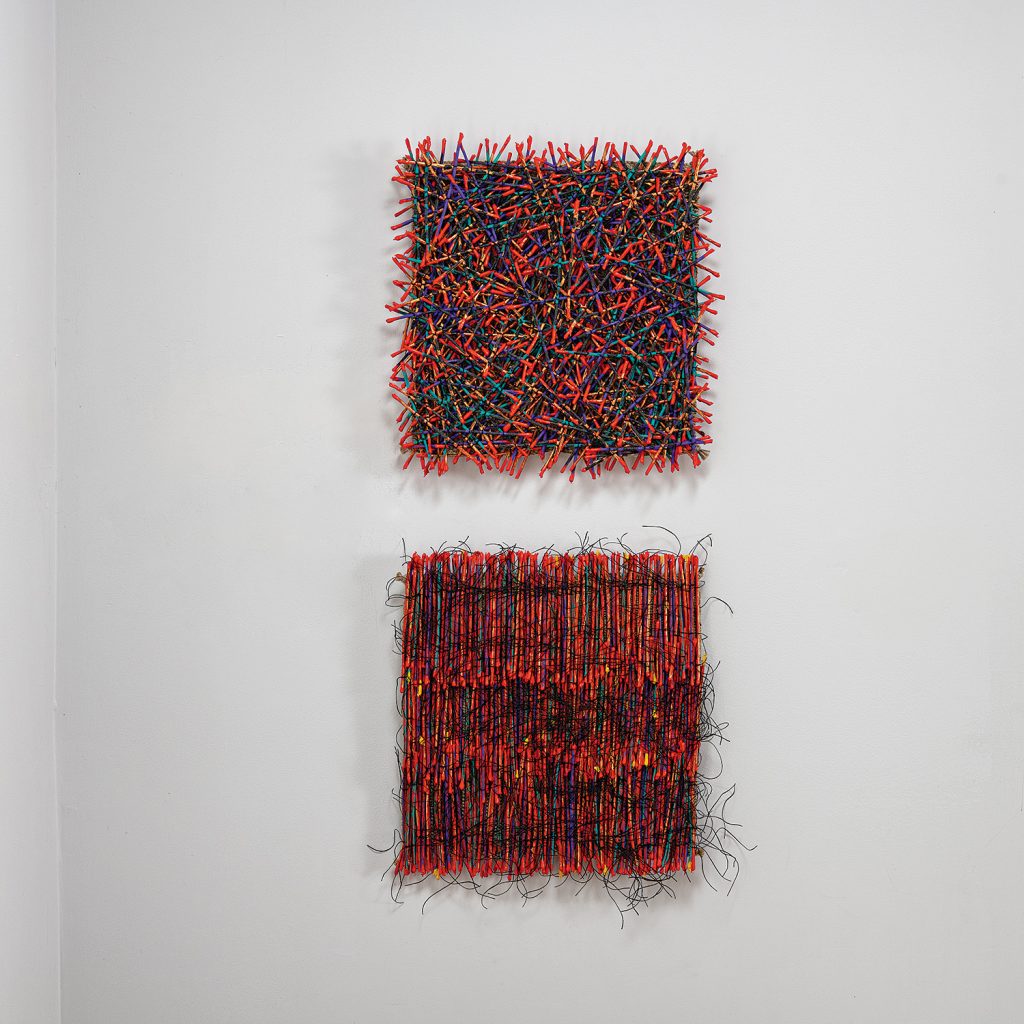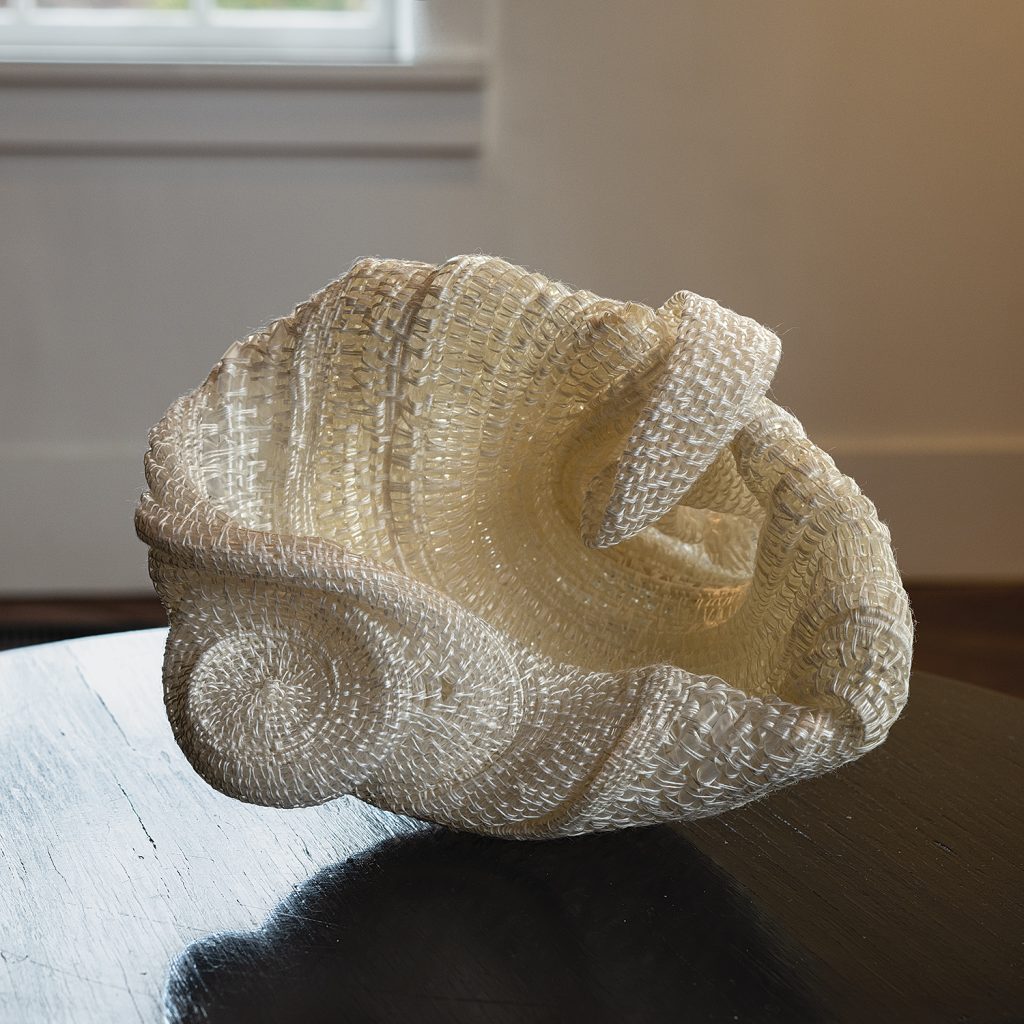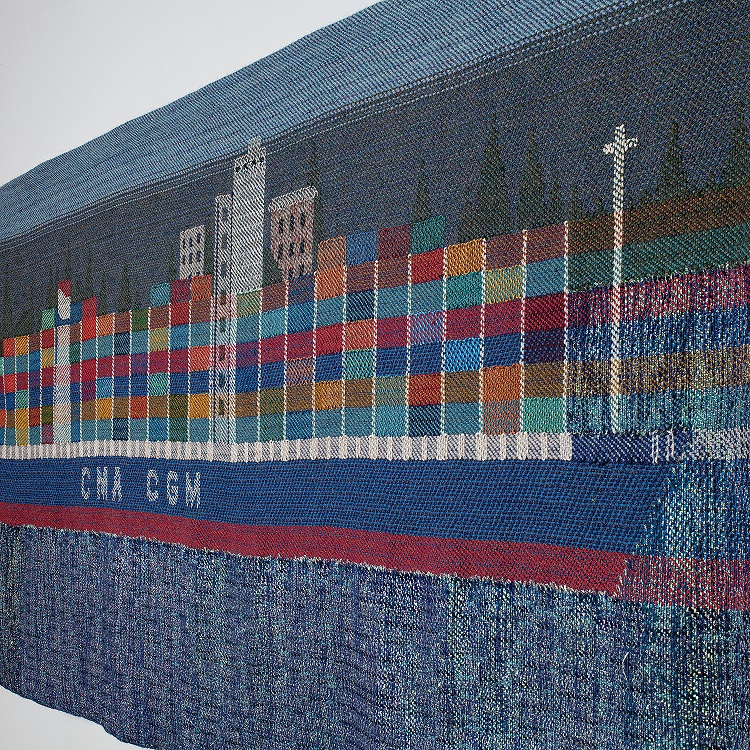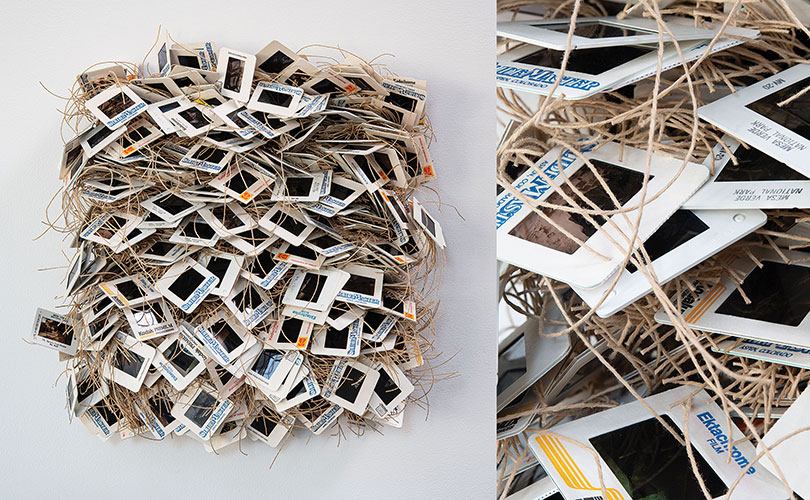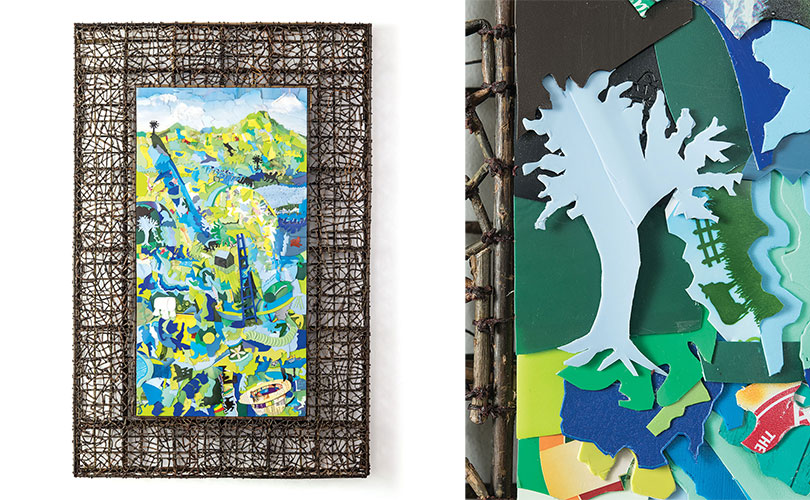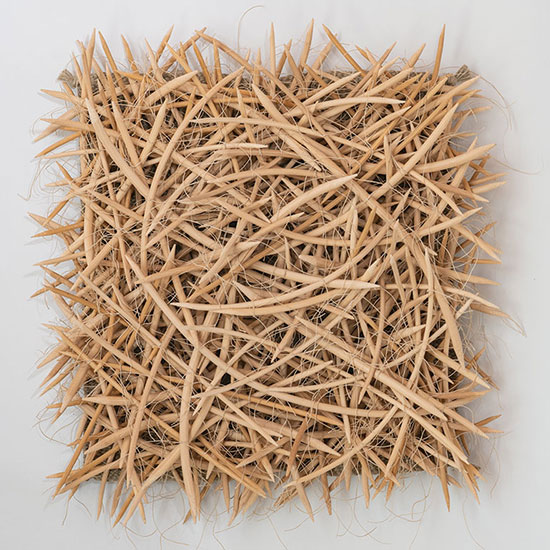
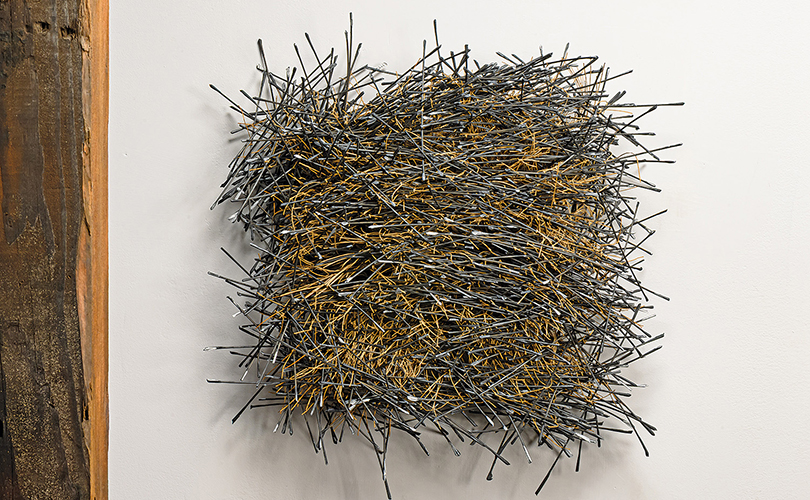
This May in New this Week we presaged our Spring exhibition, Transformations: dialogues in art and materials, featuring works in which artists engaged with materials in intriguing ways. Landscape Accumulation #11 by Lewis Knauss is a powerful example of the materiality that we explored in Transformations. In this work, Knauss deftly combines linen, hemp, paper twine, paint, and reed in a work that references growth and memory. Alone, away from home at college, Knauss says he “was suddenly struck with nostalgia for the fields and forests of Macungie, Pennsylvania, where I was born. Increasingly conscious of how we create feelings of comfort from familiar places, the textile medium became my vehicle for expressing ideas about the importance of landscape.”
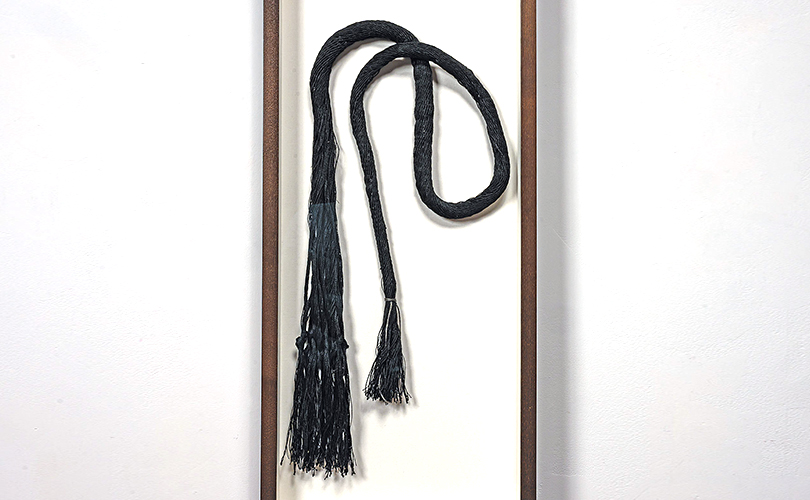
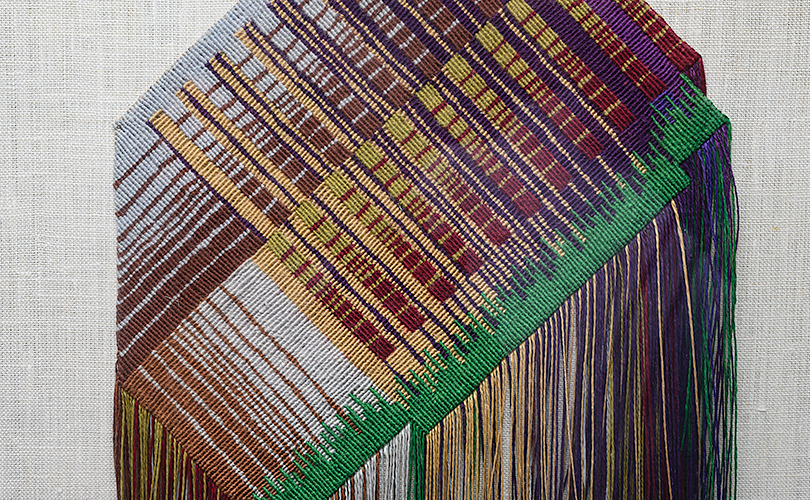
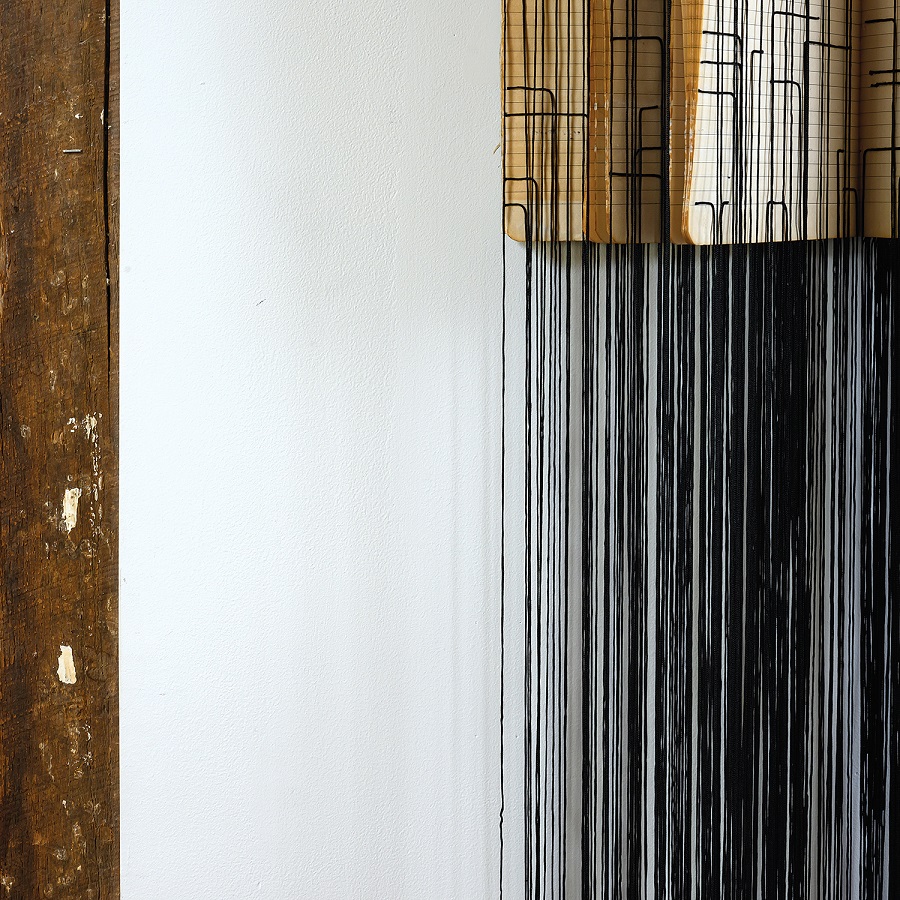
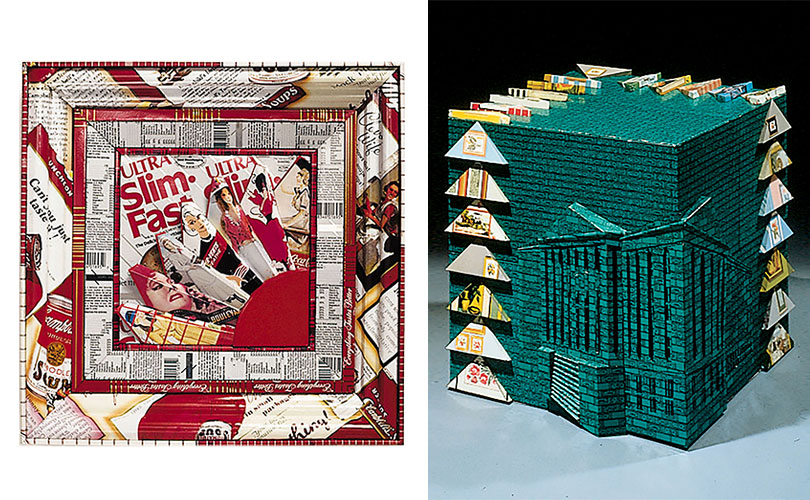
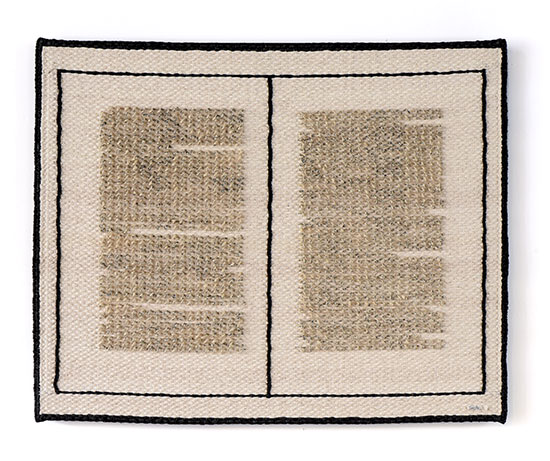
The next work we highlighted was Last Card Weaving by Kay Sekimachi. Sekimachi is a fiber artist and weaver, known as a “weaver’s weaver” for her unusual use of the loom in constructing three-dimensional sculptural pieces. She has created tubes and handwoven strips like Last Card Weaving of cotton and linen using card weaving — an ancient technique traced back to the Vikings. Fibers are threaded through cards — keeping the cards in place controls the pattern. She demonstrates the technique in a short video from Craft in America. In the video, Sekimachi uses a board to hold the threads which was made by husband, noted woodturner, Bob Stocksdale.
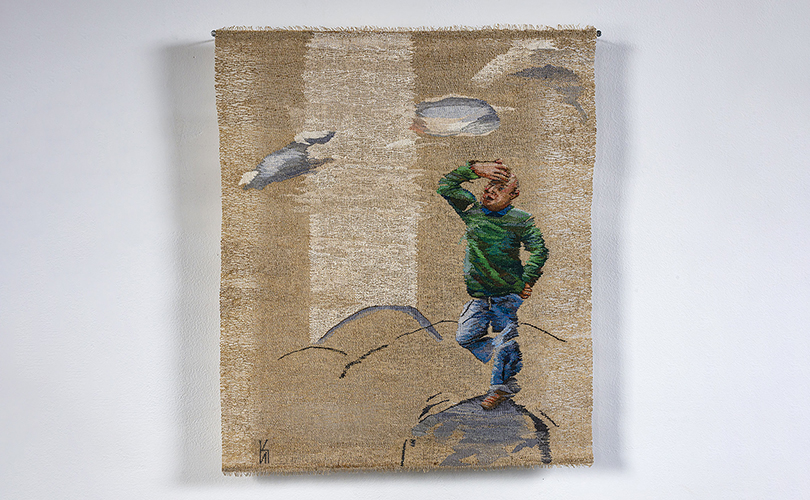
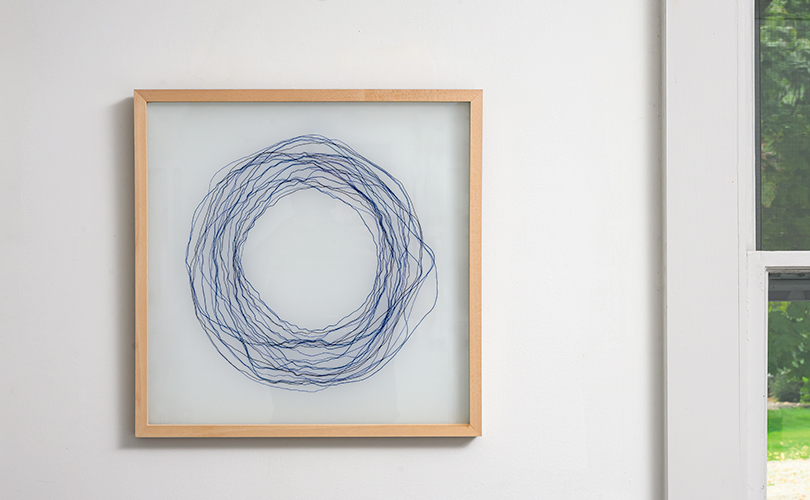
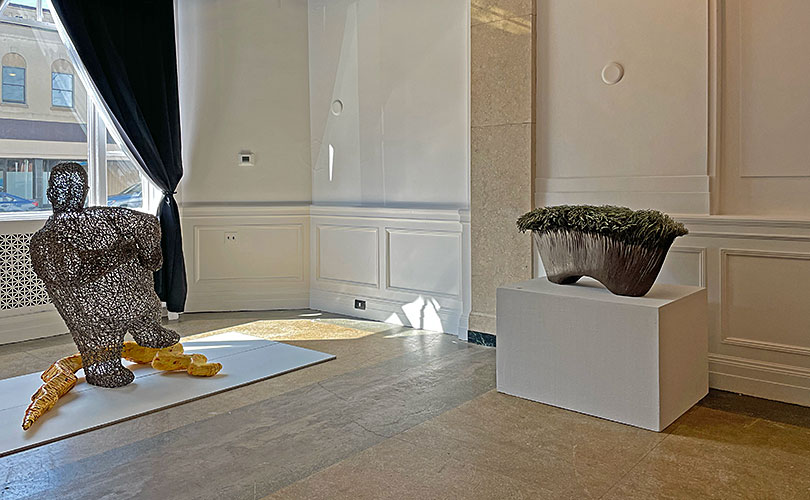
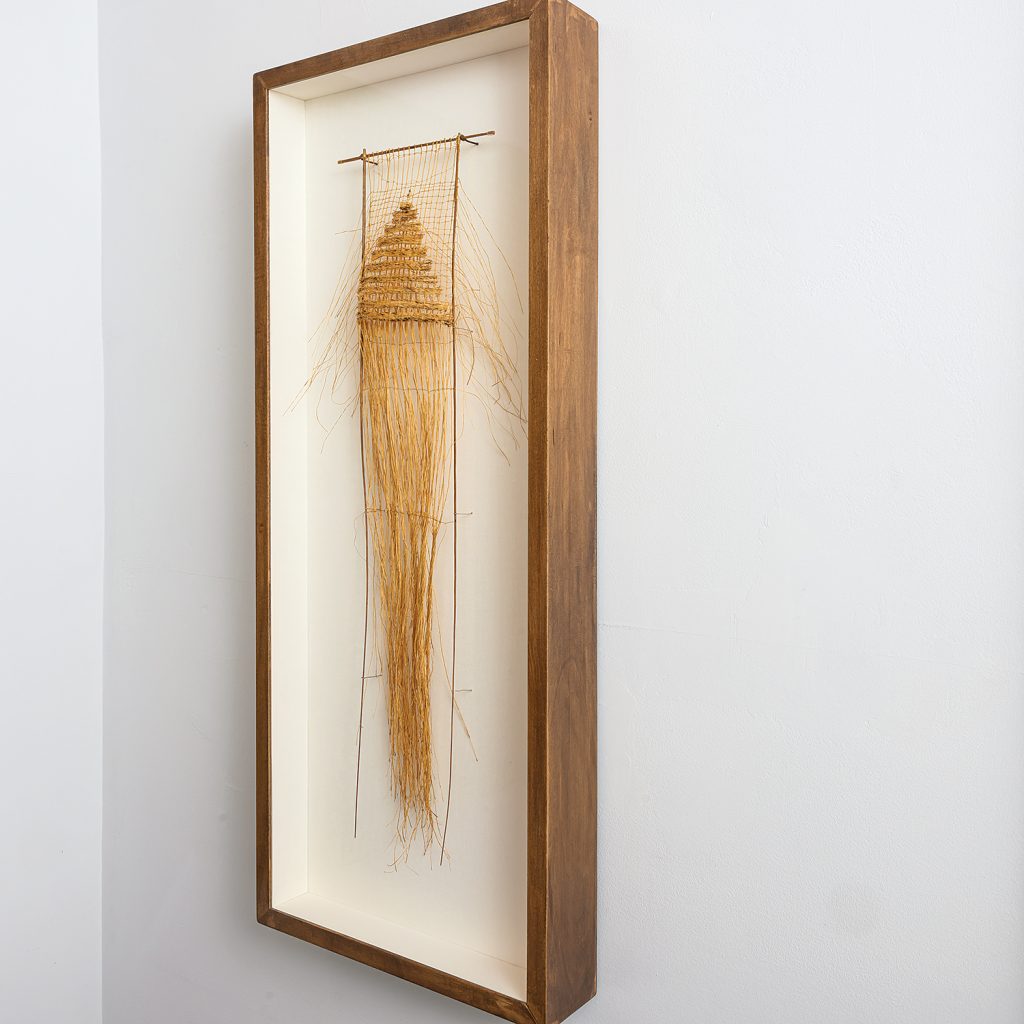
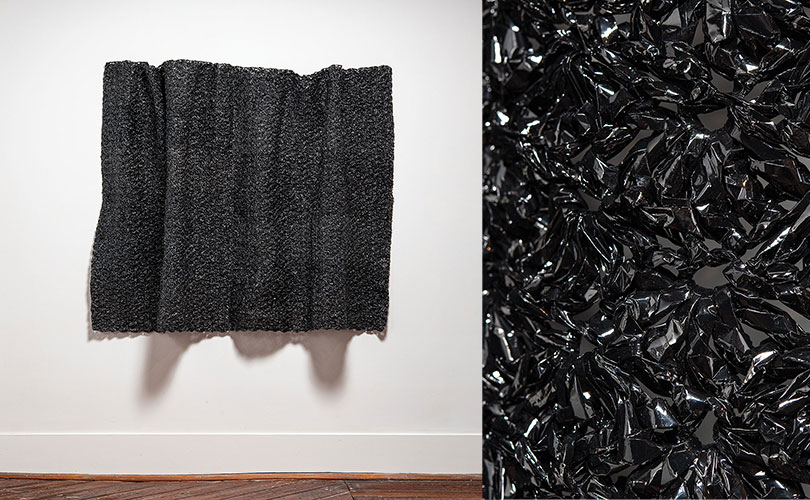
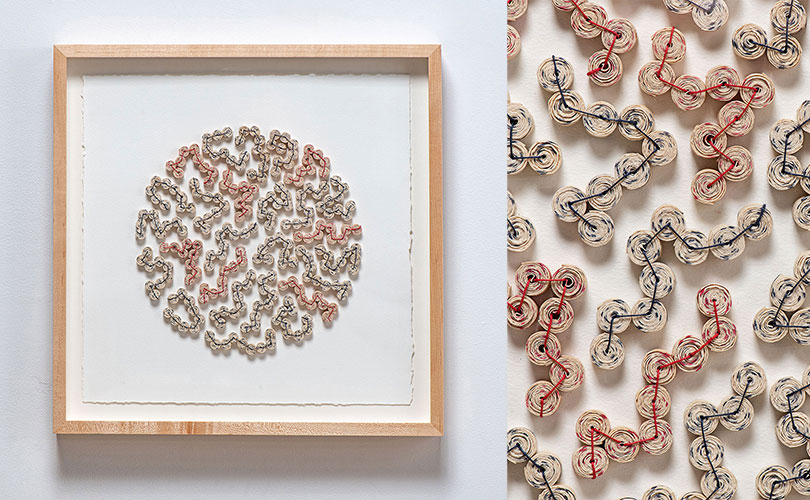
The Garden of Diverging Paths II is a recent work in flax by Irina Kolesnikova. Kolesnikova had emigrated from Russia to Germany. Current world events placed the themes of time and anxiety about the various consequences of what is happening or what might happen front of mind for the artist. In The Garden of Diverging Paths II, Kolesnikova’s alter ego reappears. He is often unsure of himself and his abilities. It seems to him that someone important is in charge controls his destiny. Should he step forward? Or stay where he is and wait for things to resolve themselves somehow? It is that tension between uncertainty and choice that Kolesnikova depicts in her intricately woven works.
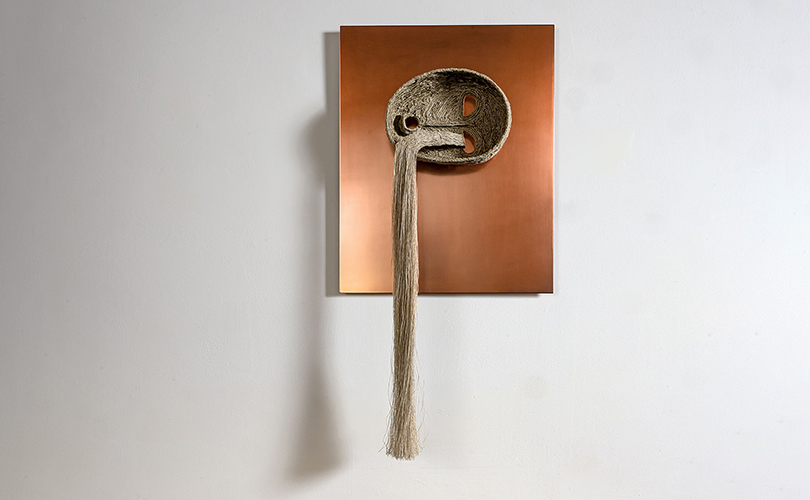
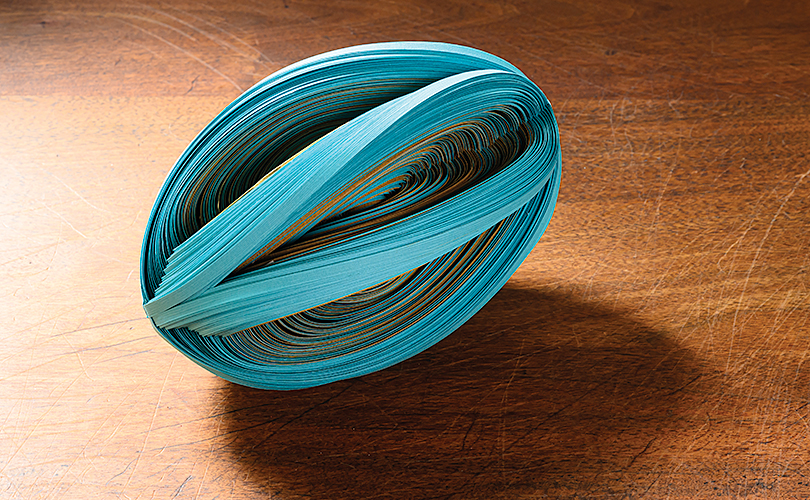
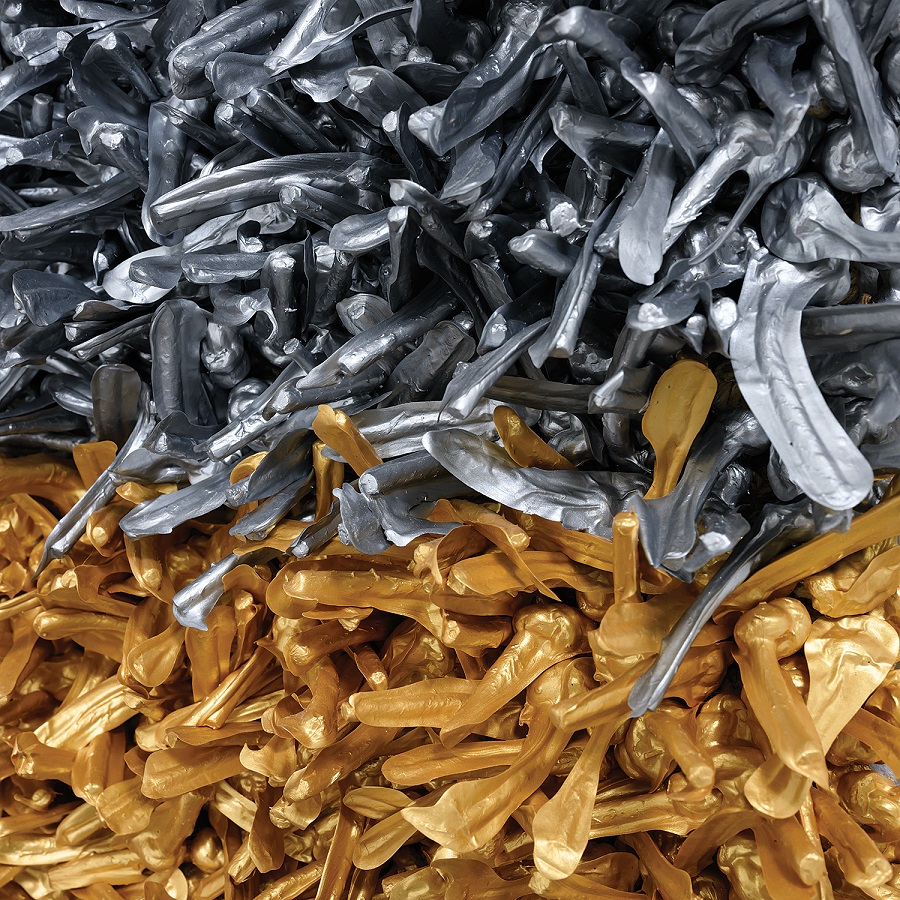
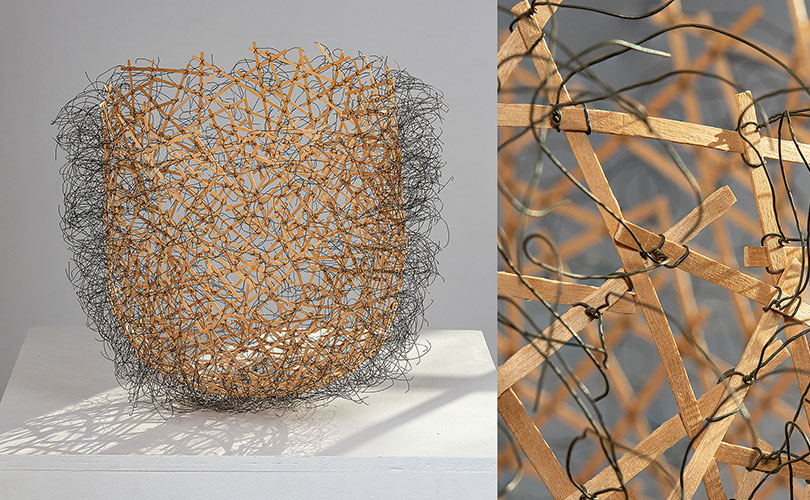
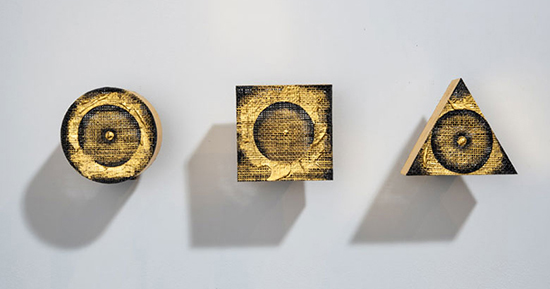
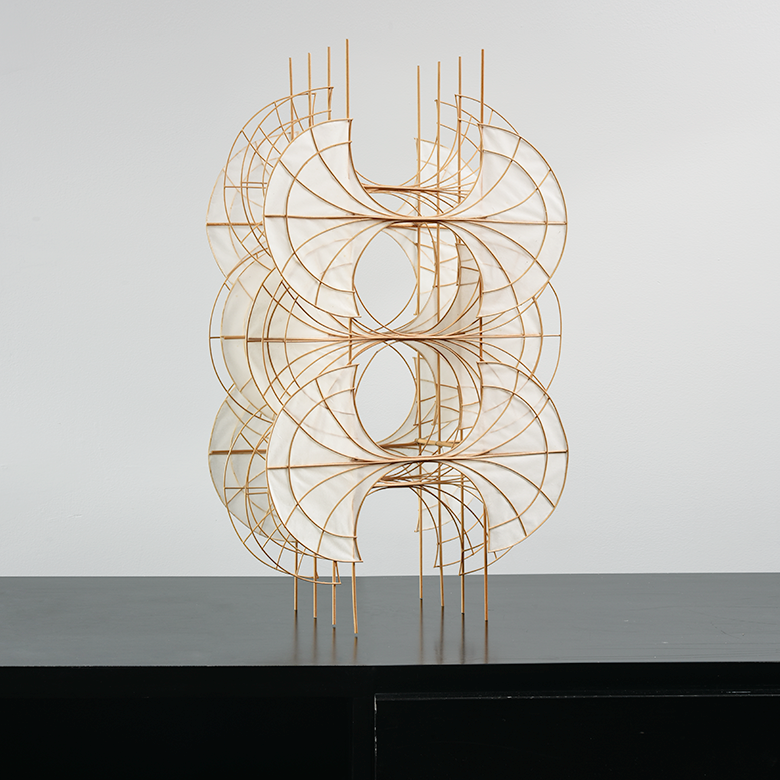
Dans le creux de ta main (In the hollow of your hand) is a compelling sculpture by Stéphanie Jacques made of copper and flax. “If I sculpt,” Jacques says,” it is because I want to express something that I cannot manage to put into words. Sculpture is a different language (and there are plenty of other languages).” What interests Jacques about sculpture is that “it occupies space; it has an impact upon it.” Jacques also likes it when there is space within the sculpture—when there are openings, transparency. “[O]bserve [Jacques’s] voids and shadows carefully,” influential UK artist Mary Butcher tells us, of Jacques’s work, “as they are rich with meaning.”
Enjoy these and more to come in June!