Tag: Mary Merkel-Hess

Books Make Great Gifts 2011: Artist Recommendations

This year we asked the artists we represent just one question:

What was the most enjoyed/most inspirational book you read this year?? Here are their wide-ranging replies:

Nancy Moore Bess and her friend, artist Sharon McCartney share studios with for occasional “play dates” that involve hours of restorative art chat, small handwork and book sharing. It was Sharon, Nancy says. who introduced me to the exhibition catalogue, El Anatsui at the Clark (Clark Art Institute). “I had seen ads for his work,” adds Nancy, “but the catalog was more than glorious photographs – it placed his current work in the larger context of his entire career/life. Known now for his monumental ‘fabrics’ with metals and Nigerian liquor bottle caps, his earlier work with wood, found metals, steel sheets, etc. was equally exciting for me. I love rust! I was extremely sorry to have missed the exhibition which was installed in the Stone Hill Center at the Clark Museum, but delighted to have access to the book.

Sharon loved a book that Nancy owned, Boro, by Amy Sylvester Katoh, who lives and works at the Blue & White shop in Tokyo. When she tried to order it, she found a different book that Nancy recommends,  Boro: Rags and Tatters from the Far North of Japan by Yukiko Koide and Kyoichi Tsuzuki (Aspect). Both books illustrate the traditional practice of reusing rags and stitching them into clothing and household textiles. Amy’s book concentrates on mostly indigo fabrics which she collects. Both books include impressive photographs with the closeup images really illustrating how the fabrics are used. “Sharon and I both do a great deal of top stitching,” Nancy says, “she on her fabric constructions (she is the queen of French knots!) and I on my experimental paper work. The variety of garments in her book and the variety of fabrics really inspires me to get to the book store!!”

“I have one great book to add,” writes Gyöngy Laky, “though only peripherally art related:
The Absolutely True Diary of a Part-Time Indian by Sherman Alexie, illustrated by Ellen Forney (Little, Brown; National Book Award) . This is a semi-autobiographical novel by award-winning author, poet and film-maker, Sherman Alexie.  Alexie has been named one of Granta’s Best Young American Novelists and has been lauded by The Boston Globe as “an important voice in American literature.” He is one of the most well-known and beloved literary writers of his generation, with works such as Reservation Blues and War Dances. He also wrote the screenplay for the film, Smoke Signals, based on a short story from his book, Lone Ranger and Tonto Fistfight in Heaven.   In his novel, Alexie tells the heartbreaking, hilarious, and beautifully written story of a young Native American teen, Arnold, as he attempts to break free from the life he was destined to live.  Arnold’s drawings illustrate the book.”

Kate Hunt’s suggestion was a CD, rather than a book, Souvenirs, featuring opera star Anna Netrebko. The Independent says she is, “in a word, sensational . . . Netrebko’s strength is not just in the mobility of her voice and the razzle-dazzle of her upper register’s big-money notes – no, it’s the fullness and beauty of the middle voice that singles her out . . . properly overwhelming. For once, fullness of heart is truly matched in fullness of sound.”

Mutsumi Iwasaki enjoyed,「朝鮮陶磁図録」(tyousen toji zuroku), a book on ancient Korean pottery that accompanied last year’s exhibition of Korean Ceramics – 50 Years After the Death of Muneyoshi Yanagi at the Japan Folk Crafts Museum in Tokyo.

Lawrence LaBianca recommends The Last Place on Earth by Roland Huntford (Modern Library) and Kon-Tiki: Across the Pacific by Raft (Simon & Schuster) by Thor Heyerdahl. Both are true accounts of heroism and determination and creative reasoning used to reach historic goals in exploration — Huntford in the South Pole and Heyerdahl in the South Seas..

Sue Lawty, wrote to us about Edward R. Tufte’s Envisioning Information (Graphics Press), a book I bought for Tom a few years ago.  Sue bought the book, which covers wide-ranging systems, patterns or logic for presenting information from mathematics to maps, a couple of weeks ago in London as a present for her nephew, but now she wants a copy of her own. “It stimulates thinking,” writes Sue.  “For example, in the micro/macro design of the Vietnam Veterans Memorial in Washington, artist Maya Ying Lin had the vision of ordering names chronologically (resolutely resisting pressure for a more pedestrian telephone directory-type listing) thus, within the overwhelming density of 58,000 named dead, the unique loss of each individual is retained. I know I need this book on my shelves to dip into at sly moments and be informed by.”

“I read a good book called The Craftsman by Richard Sennett (Yale University Press),” Mary Merkel-Hess  wrote. “It is a broad-ranging analysis of what it means to do good work. His definition of a craftsman extends beyond those who work with their hands to include everyone who wants to do a job well. So many references to literature, sociology, society — it was fascinating.” Mary also enjoyed Architecture of Silence: Cistercian Abbeys of France, photographs by David Heald which contains marvelous photos of stone buildings and their simple but inspiring interiors and the catalog from Stimulus: art and its inception (browngrotta arts). “[S]peaking of inspiring, thanks for the Stimulus catalog! It’s great!”

For Lija Rage, her most-enjoyed book this year was Haroun and the Sea of Stories (Penguin), the first work by Salman Rushdie after The Satanic Verses (Random House Trade Paperbacks). She’s also been reading about Chinese culture in preparation for her next exhibition.

“The most important book this year is for me,” writes Heidrun Schimmel, “is the catalog of the Venice Biennial, 54.Esposizione Internazionale d´Arte Illuminations. I visited most of the exhibitions in Venice for three days and of course there are many ‘pros’ and ‘cons.’ But this year the catalog is very good and there is an English edition, The Venice Biennale. 12th International Architecture Exhibition. People meet in architecture (Marsilio Editions). In Munich now you can see two wonderful exhibitions with works of Ellsworth Kelly. In Pinakothek der Moderne you see 60 drawings of plants (through January 8th) http://www.pinakothek.de/en/kalender/2011-10-07/14412/ellsworth-kelly-plant-drawings. And the catalog is an inspirational artwork for itself! But there is only a German edition.”

Karyl Sisson reports that, “Sometimes I just need to laugh.  Tina Fey’s Bossypants (Reagan Arthur Books) did it for me.”

Wendy Wahl, writes that, “It is with pleasure I sing the praises for a book that is pure joy to consume in a vicarious living sort of way. Rosamond Bernier has written Some of My Lives, A Scrapbook Memoir (Farrar, Straus and Giroux). The author’s voice comes alive as she tells the stories of her amazing life’s experiences with leading personalities of the 20th century in the world of art and music. She has lead such a vivid and unique life; the book is fabulous armchair travel.” (Full disclosure: my day job is with this publisher’s parent.)

Sensual Relations by David Howes (University of Michigan) is Deborah Valoma’s recommendation.

Randy Walker  found Portraits of the Mind: Visualizing the Brain from Antiquity to the 21st Century by Carl Schoonover (Abrams) to be inspirational. His wife bought the book for her sister, who is a Doctoral student in Psychology, but when Randy saw the images in the book, he nabbed it and his wife had to buy another one for her sister.

Lena McGrath Welker loved Jane Urquhart’s  Sanctuary Line (MacAdam/Cage Publishers).


The Next Big Thing: Green from the Get Go: International Contemporary Basketmakers

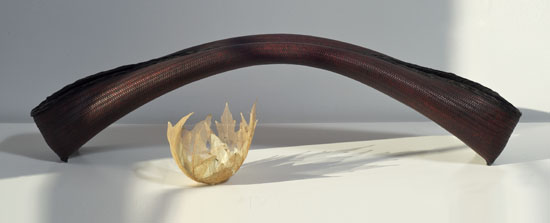
Jiro Yonezawa bamboo Bridge and Kay Sekimachi Leaf bowl. photo by Tom Grotta

We’ve had a busy fall season at browngrotta arts. First was Stimulus: art and its inception, which you can still see in the catalog http://www.
browngrotta.com/Pages/c36.php
 and online through the end of the month http://www.browngrotta.com/Pages/StimulusOnlineExhibit.php. Next up, is Green from the Get Go: International Contemporary Basketmakers at the Wayne Art Center, Pennsylvania http://www.
wayneart.org/exhibition/green-from-the-get-go-international-contemporary-basketmakers
 which runs from December 2, 2011 to January 21, 2012.  Green from the Get Go is curated by Jane Milosch, former curator of the Renwick Gallery, Smithsonian American Art Museum in collaboration with browngrotta arts. The exhibition features an exciting compilation of more than 40 works by artists who take inspiration from nature and the history of basketry. Since prehistoric times artists and craftspeople have been highly attuned to the beauty and resources of the natural world, whether depicting a pristine landscape, untouched by man, or harvesting plants and minerals for pigments and brushes. Sustainability is part of the design and craft process, which requires a heightened sensitivity to materials, one that honors the caring for, replenishing and repurposing of materials. Artist Dorothy Gill Barnes captures this eco-friendly position well when she explains, “my intent is to construct a vessel or related object using materials respectfully harvested from nature.”
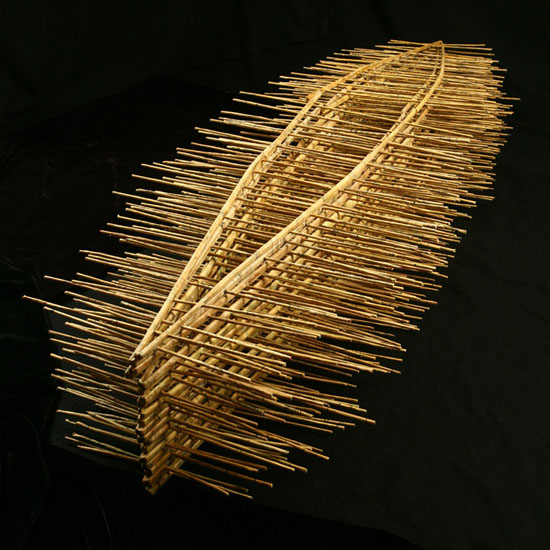
CROSSING OVER Dona Anderson bamboo kendo (martial art sticks), patterned paper, thread 15″ x 94″ x 30″ 2008. photo by Richard Nicol


Some of the sculptural baskets in Green from the Get Go are made from both flora and fauna, from bamboo, pine, sea grass, and willow to emu feathers and bayberry thorns. The tactile nature of these fiberous works stimulates all of the senses—sight, smell, touch and even sound. Each maker brings his or her own conceptual approach and expression to the design and fabrication process. Some works are small enough to nestle in the hand or rest table-top, while others are monumental or hang on the wall. Green from the Get Go stretches our imagination in terms of what materials and forms constitute a basket and how art bespeaks the interconnected relationship of man and nature.

The exhibition includes artists from Australia, Canada, Japan, the UK, Scandinavia and the US, featuring innovators in the genre of 20th-century art basketry as well as emerging talent: Dona AndersonJane Balsgaard, Dorothy Gill Barnes,Dail Behennah. Nancy Moore Bess, Birgit Birkkjaer, Jan Buckman, Chris Drury, Lizzie Farey, Ceca Georgieva, Marion Hildebrandt, Kiyomi Iwata, Christine JoyVirginia Kaiser, Markku Kosonen, Gyöngy Laky, Dawn MacNutt,  John McQueenMary Merkel-Hess, Norma Minkowitz, Valerie Pragnell, Ed Rossbach, Hisako Sekijima, Kay Sekimachi, Naoko SerinoKlaus Titze, Jiro Yonezawa and Masako Yoshido.
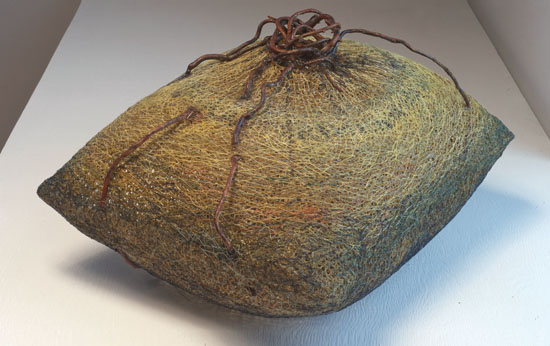
PILLOW, Norma Minkowitz, fiber, wood, paint, 2011


The preview party for Green from the Get Go: International Contemporary Basketmakers and Craftforms 2011, juried by Elisabeth Agros of the Philadelphia Art Museum, takes place on the evening of December 2nd and we’ll be there. For more in formation, contact the Wayne Art Center: http://www.wayneart.org/events/?id=48.

Exhibition News: Flora and Fauna, Museum of Arts and Design, New York

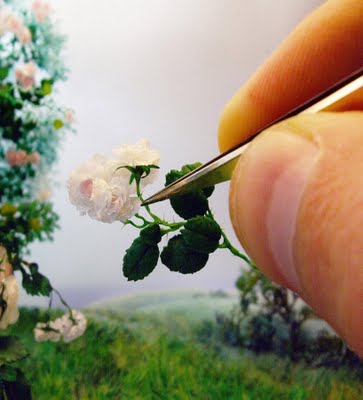
Rhonda’s friends from high school in Arizona visited New York from LA and Philadelphia in early August. We talked up the Museum of Arts and Design and the High Line as must-see sites and met them at the Museum and had a terrific time. We were all Otherworldly: Optical Delusions and Small Realities (through September 18, 2011), which features artists constructing small-scale hand-built depictions of artificial environments and alternative realities, either as sculpture or as subjects for photography and video. These are worlds of “magic realism” conceived and realized through intense engagement with materials, attention to detail, and concern for meaningful content.

Dorothy Gill Barnes UNTITLED 1995

Gyöngy Laky Red Birds

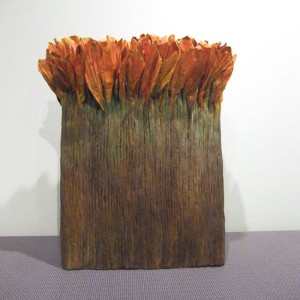
Mary Merkel-Hess Tall Grass

Tom & Connie McColley Along the Path

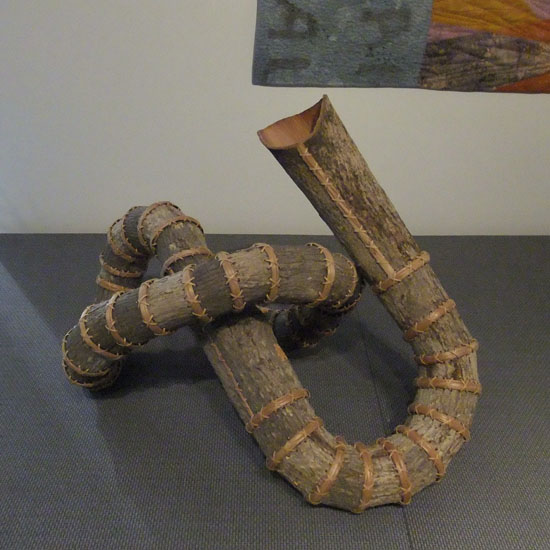
There were also some remarkable pieces in A Bit of Clay on the Skin: New Ceramic Jewelry (through September 4, 2011). Flora and Fauna, MAD about Nature (through November 6, 2011), however, was less successful. There were individual works that we liked, including Steffen Dam’s Marine Forms, Wayne Higby’s Mesa Gap and Beth Katelman’s Folly and the works pictured here (two of which were sold to collectors by browngrotta arts, and the Gyöngy Laky work that lead us to contact her about representation back in the 90s). But by mixing works featuring motifs from Nature, like fish and flowers and butterflies, with works made of branches and bark and other natural materials, the curator has created a bit of a mashup — two exhibitions with very different sensibilities installed as one.  Museum of Arts and Design, 2 Columbus Circle, New York, NY 10019, 212-299-7777, http://www.madmuseum.org/see.


Books Make Great Gifts, Part I Artist Recommendations

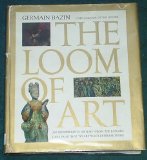
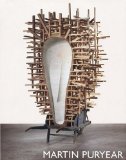
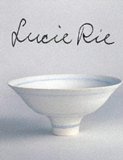
My day job is in publishing, and thanks to browngrotta arts’ catalog publishing program, my night job is too. We’ve got books and papers everywhere. My rules for 2010: No pile of papers, books or magazines may grow taller than two feet and there may not be more than six piles (that are mine) in the house at one time. That’s 12 feet of reading for next year. You’d think that would be enough, but maybe not. So, I asked artists whose work browngrotta arts represents for book recommendations. Specifically: “Is there a book that has had a particular influence on your work or decision to pursue art as a career?” Here’s the first installment of their thoughtful replies: Gyöngy Laky: It is difficult for me to think of a particular book that launched me into what I am doing today…there have been many and it was long ago that I set out on this path in art! But, there is one general art history book that I bought as a young person when I spent a year studying art and French in Paris in 1963-64! And, funny enough… it was titled The Loom of Art by Germain Bazin, curator of the Louvre (Simon Schuster, NY, 1962) probably way out of print! The book is beautiful and I have it and love it still. More recently my friend, who is a builder, designer, wood collector extraordinaire, Paul Discoe, put out a book on his work, Zen Architecture: The Building Process as Practice (with Alexandra Quinn, Gibbs Smith, 2008). It is a wonderful book. He collects street trees and mills them and uses them in his work so he is dear to my heart. Another book, for children, but adults love it too is If… (Getty Trust Publications : J. Paul Getty Museum) IF (Getty Publications; J. Paul Getty Museum; First Edition edition 1995) by another artist friend of mine, Sarah Perry. And, of course, I love and am inspired by Martin Puryear (The Museum of Modern Art, New York 2007) by John Elderfield, Elizabeth Reede, Richard Powell, Michael Auping, Martin Puryear. Scott Rothstein: Here is one I love: Lucie Rie by Tony Birks (Marston House 1994). I feel this book documents her work very well. I am always amazed at the “drawing” she could do with glaze. Kay Sekimachi: Yes, there is a book. Anni Albers: On Designing (Wesleyan 1971). It was my weaving “Bible”. In fact everything she wrote makes so much sense to me. Nancy Koenigsberg: I have worked as an artist – painter, rug designer, knitter – for many years, but when I read Beyond Craft: The Art Fabric: Mainstream by Mildred Constantine/Jack Larsen (Van Nostrand Reinhold 1972) it just turned my ideas and work upside down. I saw what was possible with the materials I was using and what else was out there. That book opened up a whole new world to me. Mary Merkel-Hess: Your question has set me thinking about exactly why I did choose art as a career. I think, actually, the desire originated in the ethnographic collection of the Milwaukee Public Museum where I whiled away hours between classes looking at objects from South America, Africa and Europe. But, back to your question. A book that is much on my mind just recently is The Unknown Craftsman: A Japanese Insight into Beauty by Soetsu Yanagi (Kodansha International, Revised edition, 1990). One of my first trips after arriving in Tokyo three weeks ago was to the Mingeikan, Yanagi’s museum and home. It was a delight, after so many years, to see some of the work pictured in the book. Yanagi’s theory that hard, repetitive practice resulted eventually in the disengagement of self and led to work of merit produced with ease was an inspiration to me. I was a young grad student when I first read the book and at the time every day was a struggle. Kate Hunt: The Savage Mind (Nature of Human Society) by Claude Levi-Strauss (University Of Chicago Press, 1968). The introduction made me think about the role of an artist and about materials.