Oops! The last post was a false alarm. Here is the final set of artist recommendations for 2010. That’s more than 30 titles; enough for an erudite 2011.
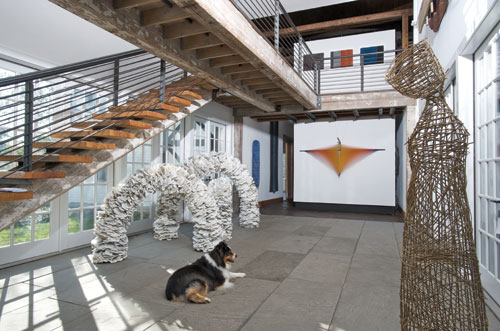
Gyöngy Laky is currently reading  The Alphabet Versus the Goddess: The Conflict Between Word and Image by Leonard Schlain, which she says,” is intriguing me in relation to much of my recent work. According to Schlain, a holistic, simultaneous, synthetic and concrete view of the world is feminine while linear, sequential, reductionist and abstract thinking is male! These are opposites that exist in all individuals, he states, but it’s the balance that is critical and the balance was upset first by writing and then by the alphabet – literacy developed the left brain. Maybe most curiosity provoking is Schlain’s belief that art precedes physics. Hmmmm….”
 The title Gyöngy is eager to read next, Proust Was a Neuroscientist, by Jonathan Lehrer, is a logical follow up. In his review in The New York Times, D.T. Max called it ” … a precocious and engaging book that tries to mend the century-old tear between the literary and scientific cultures.” Gyöngy notes that in his July 2008 article in The New Yorker, “The Eureka Hunt,” Lehrer explored what she thinks of as the basic activity of making art “…the “aha” moment of sudden insight in the brain – “…a surge of electricity leading to a rush of blood.” Lehrer’s most recent book, How We Decide also seems very germane for people in the arts, Gyöngy points out, quoting the review from The New York Times, “Explaining decision-making on the scale of neurons makes for a challenging task, but Lehrer handles it with confidence and grace. As an introduction to the cognitive struggle between the brain’s ‘executive,’ rational centers and its more intuitive regions, How We Decide, succeeds with great panache.
Gyöngy still recommends Zen Architecture: The Building Process as Practice by her friend Paul Discoe (with Alexandra Quinn and Roslyn Banish). “His collection of wood from street trees removed by local cities that he saves and mills, is a marvel,” Gyöngy writes. “If you’d like to see some of it used in an interior and happen to be hungry in Berkeley, California be sure to visit his new and wonderful restaurant, Ippuku at 2130 Center Street.”

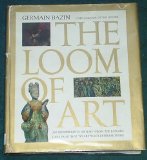
 by Germain Bazin, curator of the Louvre (Simon Schuster, NY, 1962) probably way out of print! The book is beautiful and I have it and love it still.
 (with Alexandra Quinn, Gibbs Smith, 2008). It is a wonderful book. He collects street trees and mills them and uses them in his work so he is dear to my heart.
 IF (Getty Publications; J. Paul Getty Museum; First Edition edition 1995) by another artist friend of mine, Sarah Perry.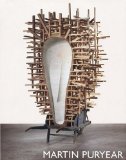
 (The Museum of Modern Art, New York 2007) by John Elderfield, Elizabeth Reede, Richard Powell, Michael Auping, Martin Puryear.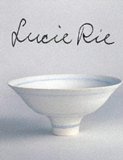
 by Tony Birks (Marston House 1994). I feel this book documents her work very well. I am always amazed at the “drawing” she could do with glaze.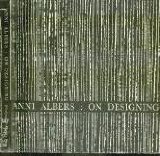
 (Wesleyan 1971). It was my weaving “Bible”. In fact everything she wrote makes so much sense to me.
 by Mildred Constantine/Jack Larsen (Van Nostrand Reinhold 1972) it just turned my ideas and work upside down. I saw what was possible with the materials I was using and what else was out there. That book opened up a whole new world to me.
 by Soetsu Yanagi (Kodansha International, Revised edition, 1990). One of my first trips after arriving in Tokyo three weeks ago was to the Mingeikan, Yanagi’s museum and home. It was a delight, after so many years, to see some of the work pictured in the book. Yanagi’s theory that hard, repetitive practice resulted eventually in the disengagement of self and led to work of merit produced with ease was an inspiration to me. I was a young grad student when I first read the book and at the time every day was a struggle.
 by Claude Levi-Strauss (University Of Chicago Press, 1968). The introduction made me think about the role of an artist and about materials.