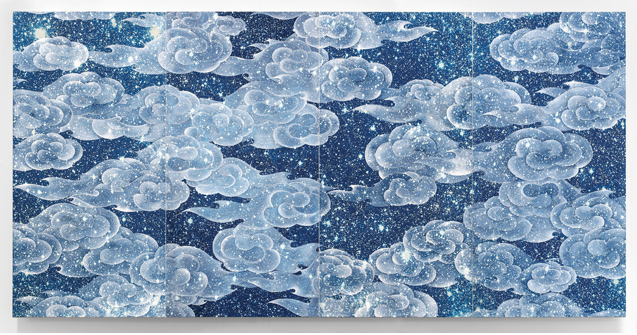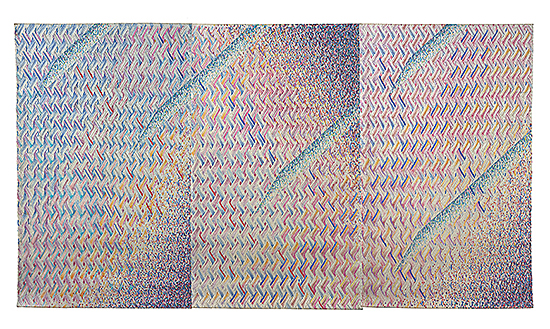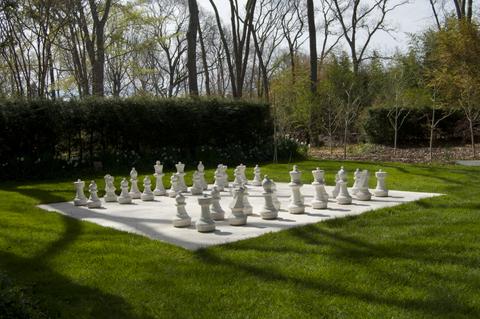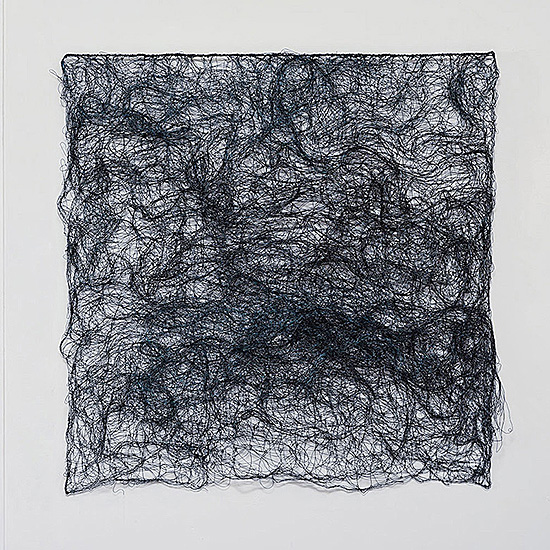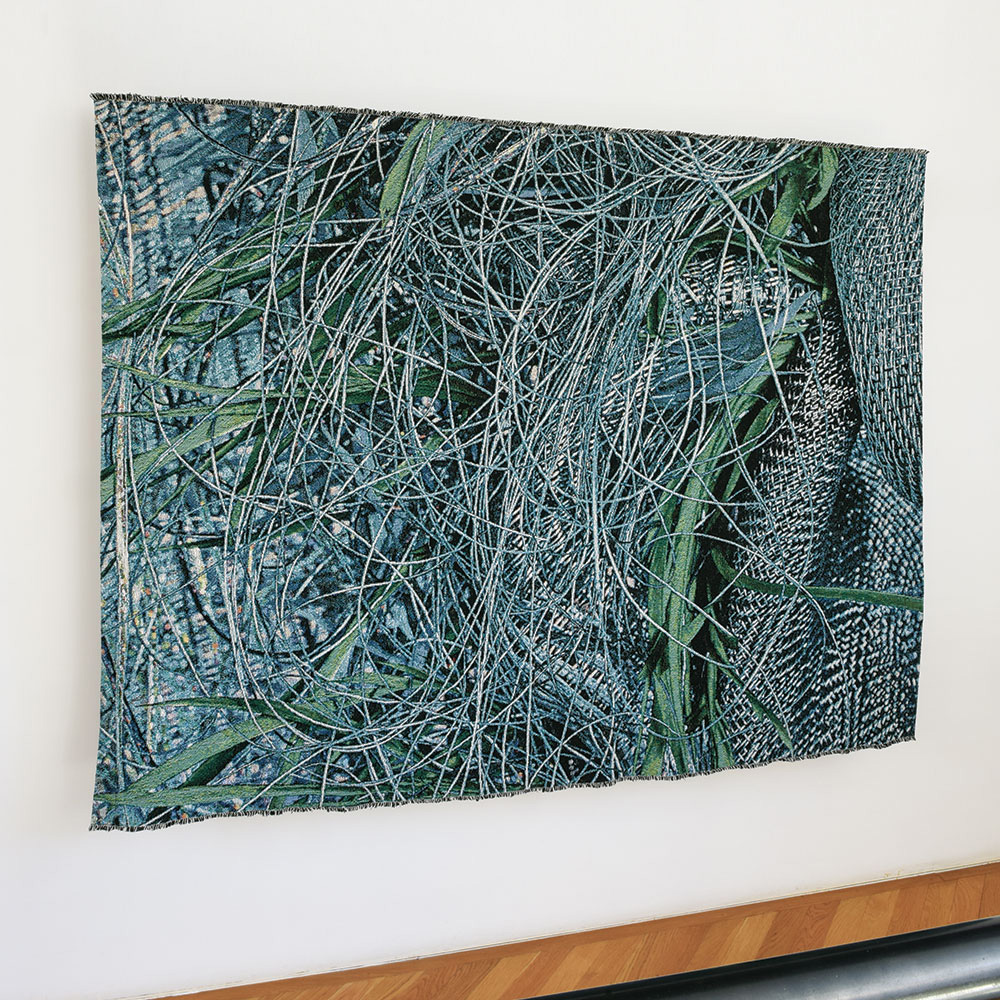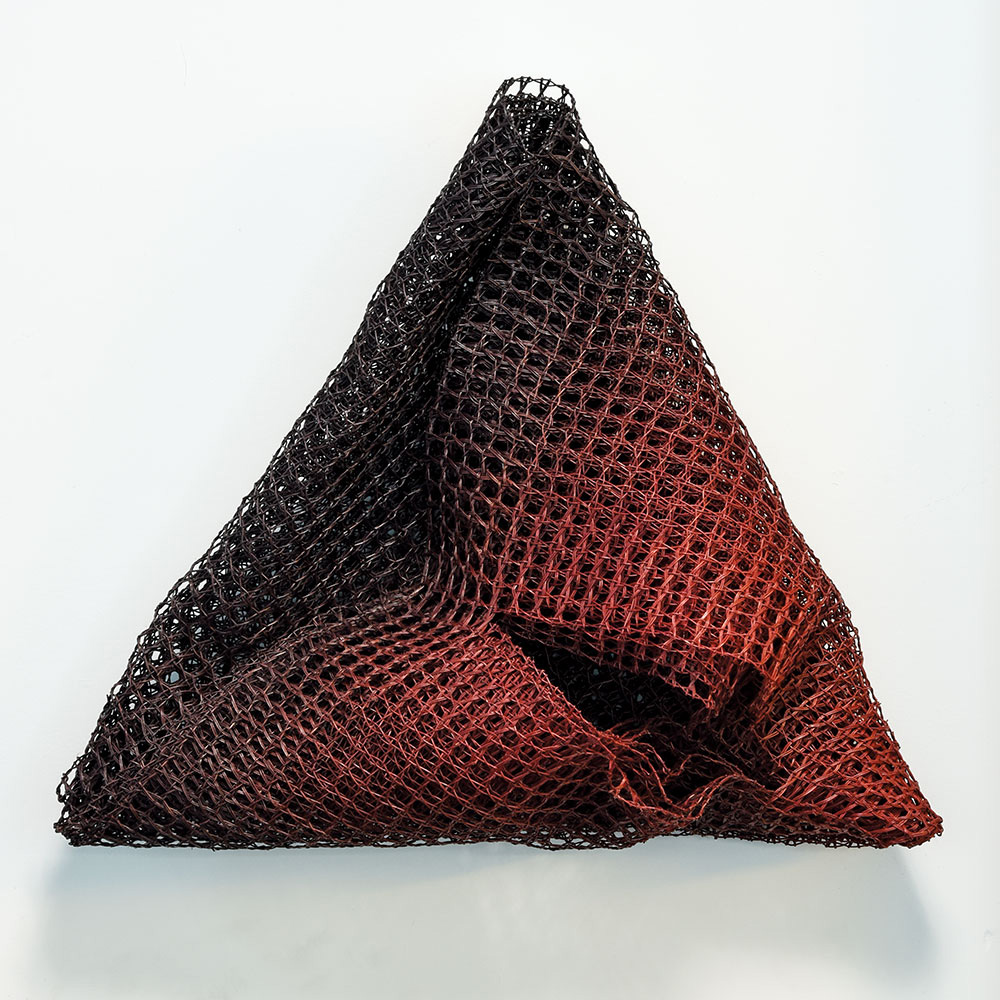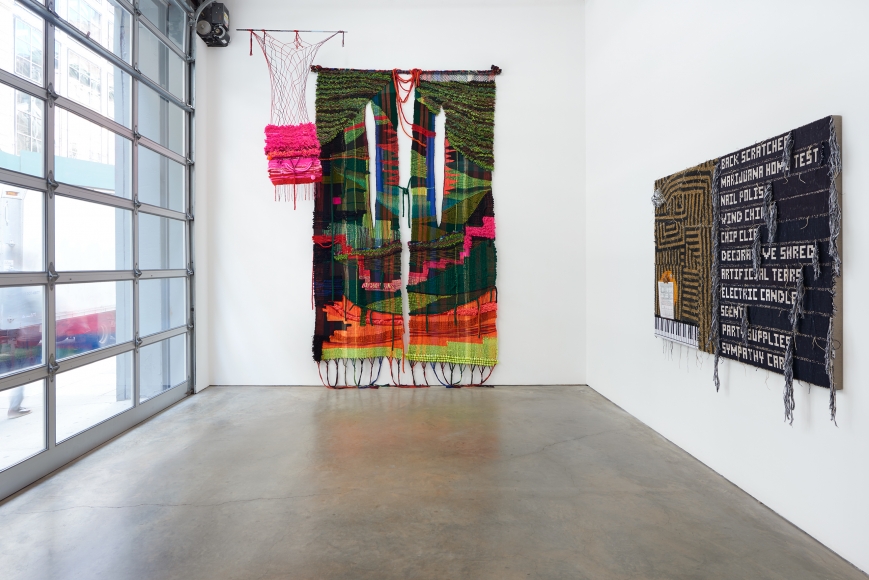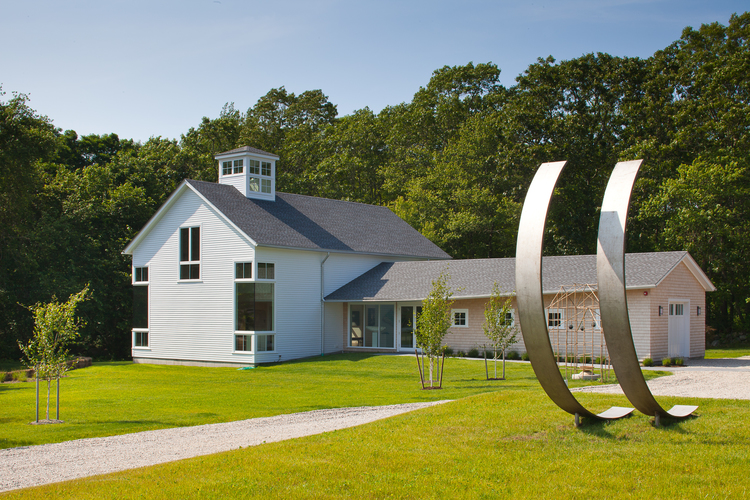
Ala Ebtekar’s Zenith V at Long, Winding Journeys: Contemporary Art and the Islamic Tradition. Photo: Katonah Museum of Art

Ala Ebtekar’s Zenith V at Long, Winding Journeys: Contemporary Art and the Islamic Tradition. Photo: Katonah Museum of Art

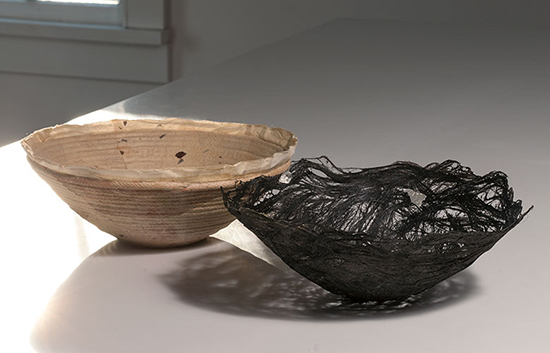
Untitled, Kay Sekimachi, Japanese paper and fiber flex, 4” x 11” x 11”, 1985
Silver Metallic, Kay Sekimachi, flax, 4” x 11” x 11”, 2008. Photo by Tom Grotta
We kicked off the new year with pieces by Kay Sekimachi. Sekimachi avoids color in many of her pieces in order to direct more attention to the sculptural qualities of her work as well as the natural properties of her chosen materials. Through her career, Sekimachi has been enamored with antique Japanese paper, using it in a variety of ways to create small pots, large sculptures and bowls, such as she did in Untitled.
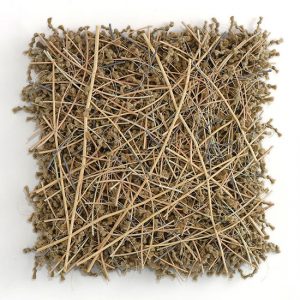
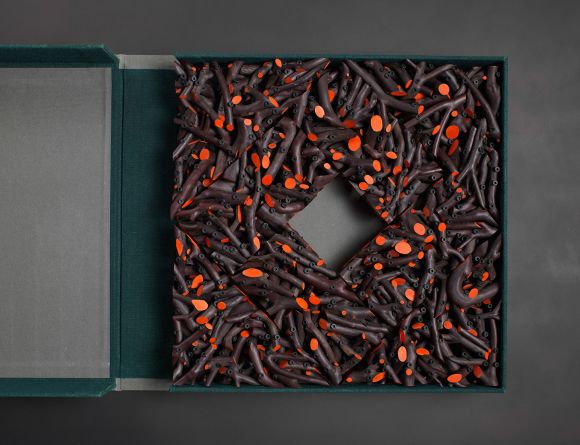
In Forest Floor Lewis Knauss uses linen (waxed and natural), reed, twigs and acrylic paint to convey the natural layers and complexity of our landscape. “Landscape serves as witness to the passage of time and the cycle of life, its disturbing beauty often the result of natural or manmade events–drought, fire, flood.” The meticulous process Knauss goes through while constructing a piece cements his life and presence as a maker. For Knauss, the repetitive acts of knotting and long periods of working silence become a mediation through which he can release his gratitude for the environment.

Forest Floor, Lewis Knauss
linen, acrylic paint, reed; twigs, waxed linen, 16” x 16”x 2.5” 2016/201. Photo by Tom Grotta

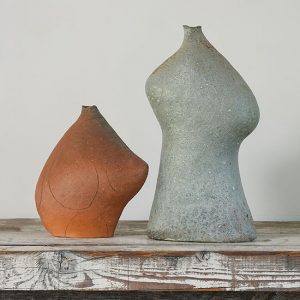
Ceramic 49, Yasuhisa Kohyama, wood-kiln ceramic, 11.25″ x 11″ x 6″
Ceramic 50, Yasuhisa Kohyama, wood-kiln ceramic, 18.25″ x 10″ x 5″ Photos by Tom Grotta
Next up we had two sculptures by Yasuhisa Kohyama. Kohyama pioneered the revival ancient ceramic traditions of Shigaraki by bringing back the use of the anagama, a single chambered tunnel kiln that had not been used since medieval times to create traditional Japanese suemono vessels. Kohyama derives much of his inspiration from nature. “Every time I fire, I’ve come to recognize that I am in Nature; I am a small part of Nature,” explains Kohyama “Intently I watch Nature over and over again; working with clay, inspired by Nature, I am free to allow creation to happen, approaching the experience as the ancients did.”

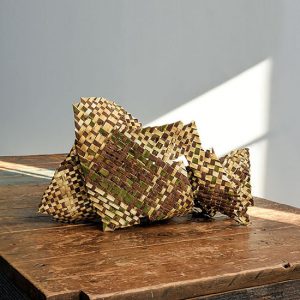
Capricious Plaiting, Kazue Honma, plaited paper, mulberry bark, 10.5″ x 18″ x 12.5″, 2016. Photo by Tom Grotta
This month we also featured Kazue Honma’s Capricious Plaiting, a labyrinth-like woven plaited paper mulberry bark basket. Led by Hisako Sekijima, Honma is one of a group of Japanese basket-makers who has radically experimented with traditional Japanese weaving techniques. Plaiting allows Honma to follow strict rules of geometry while also offering her the freedom to create new shapes. When weaving Capricious Plaiting Honma started at the dark square, then plaited in two different directions, continuously shifting directions at the moments she felt she should.
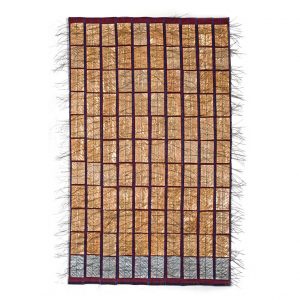
In our last New This Week of January, we featured Golden Red by Adela Akers. The reflectiveness of the metal foil coupled with the contrast of the red and blue linen creates a window-like effect.The dimensionality of Akers’ works can be attributed the reflection of light off of both the metal and horsehair. Akers’ background in science strongly influences the materials and process of her work. The mathematical discipline Akers exercises when working contrasts “the organic process (handweaving) and materials (linen & horsehair) that bring work to fruition.”
2017 was a busy year for browngrotta arts! We featured more than 80 artists from Europe, Asia, North and South America and the UK in our celebratory 30th Anniversary exhibition Still Crazy After All These Years…30 Years in Art. Plunge: Explorations from Above and Below made quite the splash this summer at the New Bedford Art Museum. In addition to both exhibitions we also published our 42nd and 43rd catalogs: Still Crazy After All These Years…30 Years in Art and Plunge: Explorations from Above and Below, companion catalogs to both of our exhibitions.
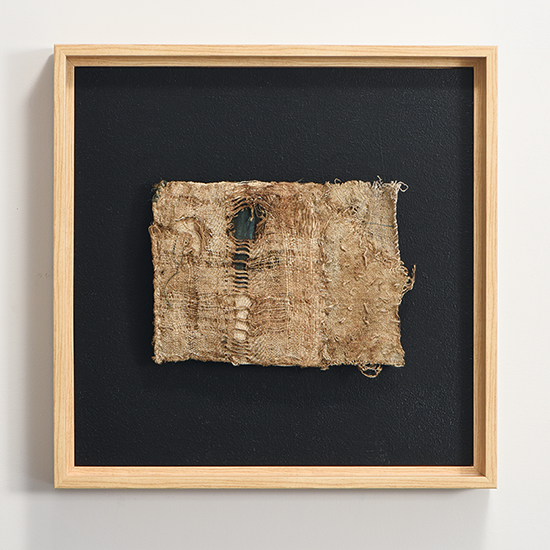
We started off December’s New this Week with Susie Gillespie’s Worn. Gillespie’s work stems from her interest in archaeology and early textiles. Through her work, Gillespie strives to achieve a sense of earth, stone, vegetation and decomposition. In Worn, Gillespie uses handspun flax and linen to add a “clothiness“ that creates texture and life not possible with machine spun yarn. “If all creativity stems from dissatisfaction, maybe for me it is a dissatisfaction with the ugliness of that is modern, and the ruin of what I imagine once to have been beautiful,” explains Gillespie “…I look forward to a future where we do not discard things because they are worn out or outmoded. Out of decay and disintegration I wish to express a sense of renewal.”
Machine sewn with polyester mesh, Chang Yeonsoon’s multilayered Matrix III is eye catching and thought provoking. Matrix III, like other pieces from Yeonsoon’s Matrix series, “derives from the oriental perspective that observes the human mind and body as unified,” explains Yeonsoon. “These fiber artworks represent my own Korean formative language. In them, I minimize my body while my mind fills with abstract ideas.”
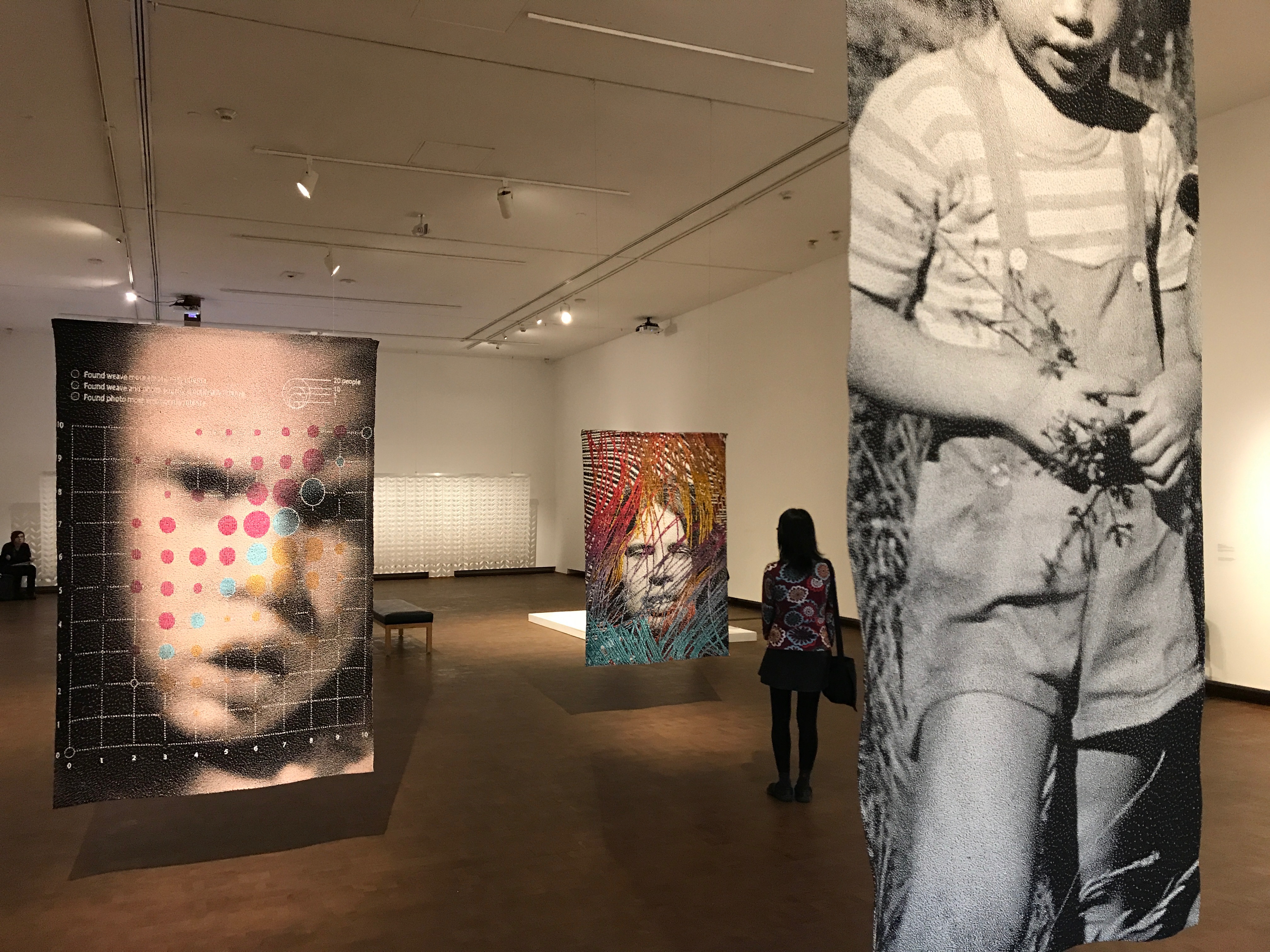
We ended 2017 with Lia Cook’s Pressed Variation Series. Bridging textiles and technology, Cook weaves digital images of cherubic faces or dolls using a jacquard loom, while also incorporating patterns taken from EEG and MRI brain scans over er subjects. While the scans themselves evoke textile-like patterns, Cook’s ability to wind a thread between technology and craft has led to world recognization of her innovations in fiber and textile arts.
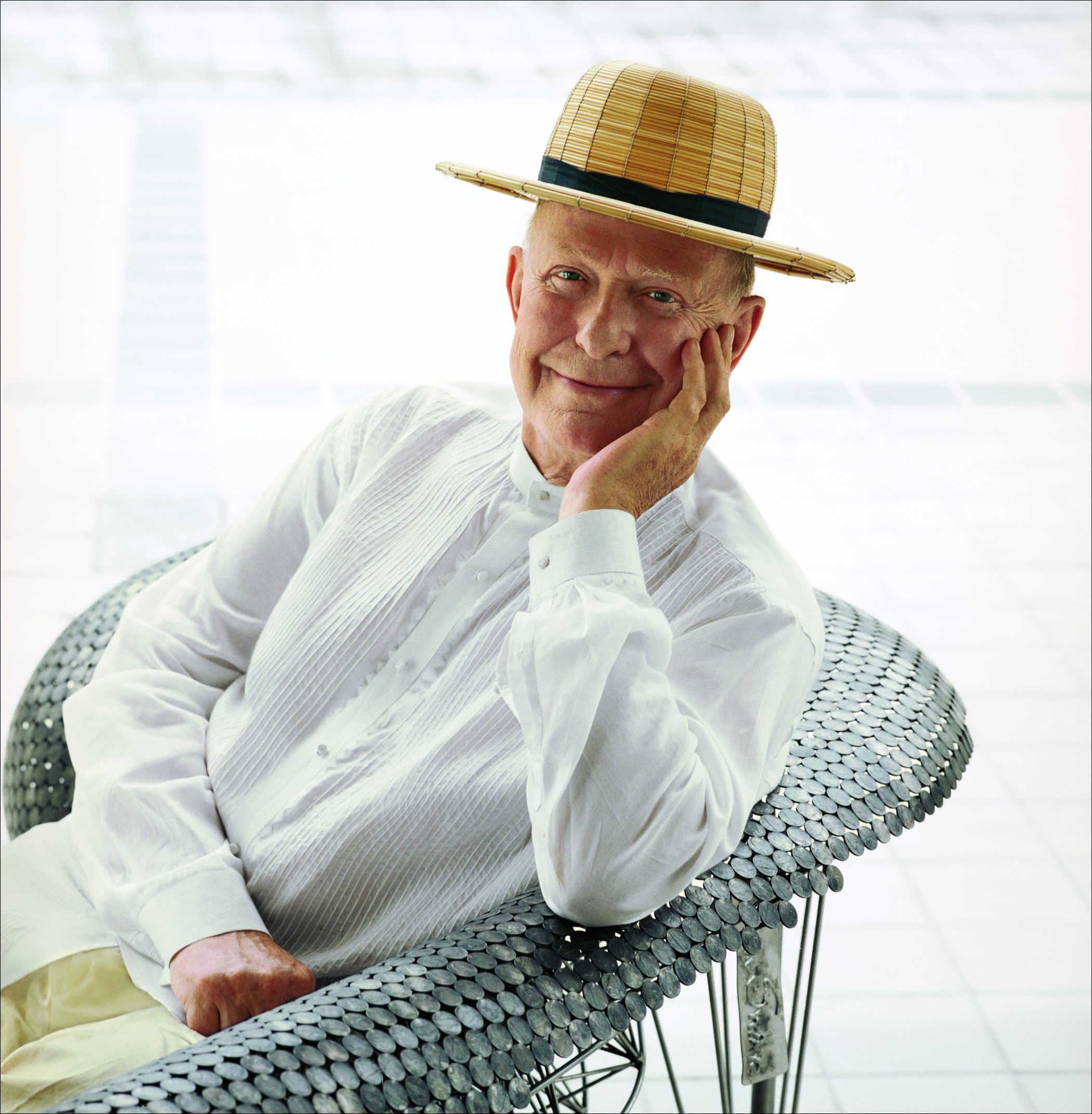
We’ve been celebrating our 30th Anniversary by posting blogs commemorating other milestones in the art world (Frank Lloyd Wright after 150 years; 30 Years of Contemporary Japanese Basketmaking; 10 Years of Feminist Art in Brooklyn), next up we have Jack Larsen at 90. An international textile designer, author and collector, Larsen has long played an influential role in textile arts and has been an important mentor and supporter of browngrotta arts.
Born and raised in Seattle, Larsen spent much of his childhood surrounded by nature of the Pacific North-West. In 1945, Larsen began studying at the School of Architecture at the University of Washington, where he developed an interest in weaving. Larsen then focused his full attention on weaving, enveloping himself in the Los Angeles art and design scene. Larsen’s desire to work in textiles grew and he enrolled himself in the Cranbrook Academy of Art in Bloomfield Hills, Michigan. In order to break into the design scene, Larsen and fellow Cranbrook students traveled to New York hoping to make some connections. “It was sort of a game—how many people would interview me,” he has written about this trip,”—but the only job I would have taken at the time, happily, was with Knoll. But “Shu” [Florence] Knoll said I was too much of an individual to fit into their mold, which was partly true. My colors were very different; my colors were earthy.” Instead of working for another company, Larsen started his own in 1951. “By the late 1950s, architects were buying my fabric for Knoll furniture in order to get something that wasn’t red, yellow, or electric blue.”

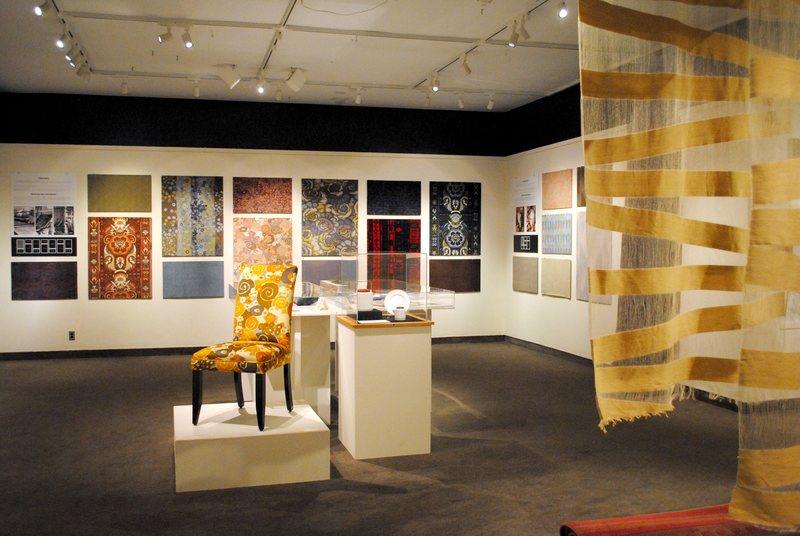
Jack Lenor Larsen at 90: Transformations by a Textile Innovator at The Goldstein Museum of Design. Photo: Taylor Barker
For over 60 years Larsen and his company Jack Lenor Larsen Inc. have designed fabrics for public buildings, corporate offices, Pan American and Braniff Airlines, the Phoenix Performing Arts Center, and Air Force One and collaborate with Frank Lloyd Wright, just to name a few. The “Larsen Look” characterized by Larsen’s award-winning hand-woven fabrics of natural yarn is synonymous with 20th-century design at its pinnacle. Larsen has spent much of his life traveling the world to unearth new patterns and techniques. His travels and passion for global design made him familiar with ikat and batik, two techniques which he introduced them to the American public. Larsen has won many awards, including the Lifetime Achievement Award from the American Crafts Museum in 200and the Smithsonian’s Archives of American Art Medal in 2009. Furthermore, Larsen is one of only four Americans to ever be honored with an exhibition in the Palais du Louvre in Paris.
You can see highlights of his remarkable career in Minneapolis through January 7th. The Goldstein Museum of Design opened Jack Lenor Larsen at 90: Transformations by a Textile Innovator, an exhibition celebrating Larsen’s 90th Birthday through his many innovations. The 70 textiles in the exhibition exemplify Larsen’s mastery of craft techniques, technological innovation and inspiration drawn from global design. The exhibition also includes correspondence, drawing and production samples to give viewers a better understanding of Larsen’s creative processes. Jack Lenor Larsen at 90 can be viewed in Gallery 241 at The Goldstein Museum of Design for free. For more information about the exhibition click HERE.
In 1992, Larsen completed his East Hampton, NY estate “Longhouse Reserve.” Spanning 16 acres, the estate boasts an expansive sculpture garden with work by Yoko Ono, William de Kooning and Sol LeWitt, among others. While Larsen’s home on Longhouse Reserve remains private, his sculpture garden is open to the public throughout the summer months. “I built the LongHouse gardens to share. I think seeing in three dimensions is so contagious,” explains Larsen. This past summer, Larsen used his 90th birthday to acquire works for the Longhouse collection. The benefit attracted artists, architects, designers and politicians. Guests were treated to performances by multi-instrumentalist Gian Carlo Feleppa on sitar, Mohsen Namjoo, an Iranian singer and sitar player and the synchronized swimmers The Brooklyn Peaches.

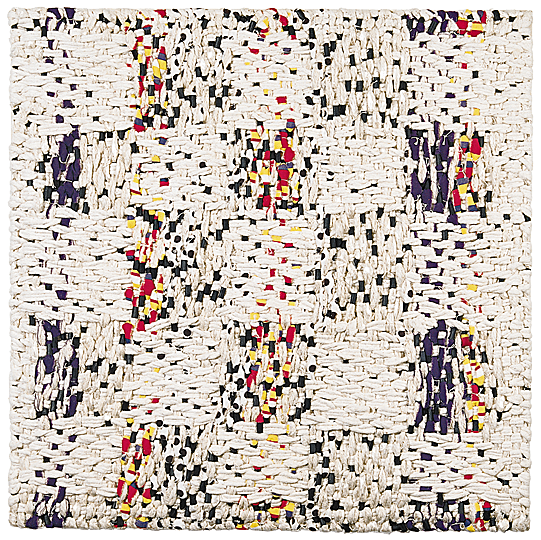
Damask Waterfall, Ed Rossbach, cotton welting cord, commercial fabric, plastic, satin damask, wrapped, 36″ x 36″, 1977
In addition to his design success, Larsen has authored an array of landmark publications including Elements of Weaving (1967), The Dyer’s Art: Ikat, Batik, Plangi (1971), Beyond Craft: The Art Fabric (1972), Fabric for Interiors (1975), The Art Fabric: Mainstream (1981), Interlacing: The Elemental Fabric (1986), Material Wealth: Living with Luxurious Fabrics (1989), The Tactile Vessel: New Basket Forms (1989), A Weaver’s Memoir (1998), Jack Lenor Larsen: Creator & Collector (2004) exhibition catalog and Learning from Longhouse (2010).
Larsen has been a generous friend to browngrotta arts, selecting browngrotta as the Best Booth at SOFA, NY one year and Sue Lawty as Best Artist. Browngrotta arts also worked with Longhouse Reserve in collaboration with an Ed Rossbach Special Exhibition at SOFA Chicago years ago.Larsen wrote the introduction to our monograph: Ethel Stein: Weaver and contributed to 25 for the 25th.
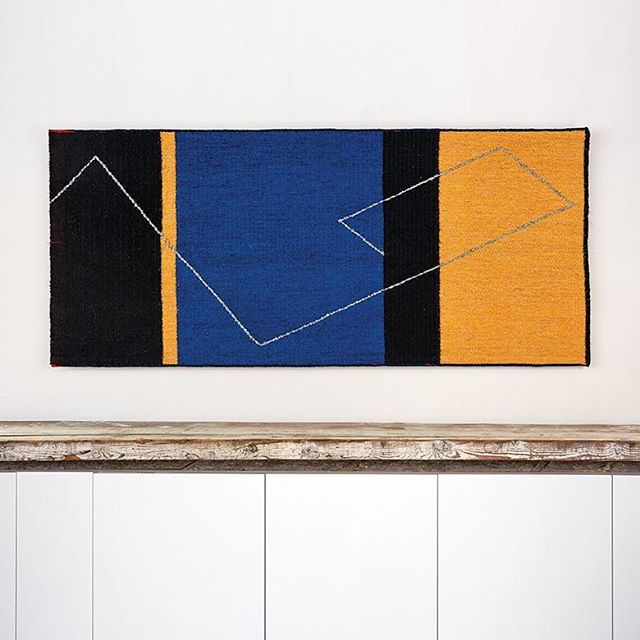
We started off October with Yellow, Blue and Black, a tapestry made by Danish artist Gudrun Pagter. When making tapestries, Pagter draws inspiration from architecture, using lines and shapes to achieve spatial tension. “I am engaged in a constant process of exploring the picture through a highly disciplined structuring of geometrical form elements and lines through a restricted color spectrum,” states Pagter. The expansive gray line in Yellow, Black and Blue not only creates a sense of movement but also “transforms a two-dimensional plane into a three-dimensional space.” Despite the name, there are actually many colors in Yellow, Black and Blue; Pagter mixed in light pink and yellow linen threads with the yellow sisal, deep green flax with the blue sisal and blue and black flax with the black sisal. Incorporating other colors into Yellow, Black and Blue helped Pagter to bring the tapestry to life.
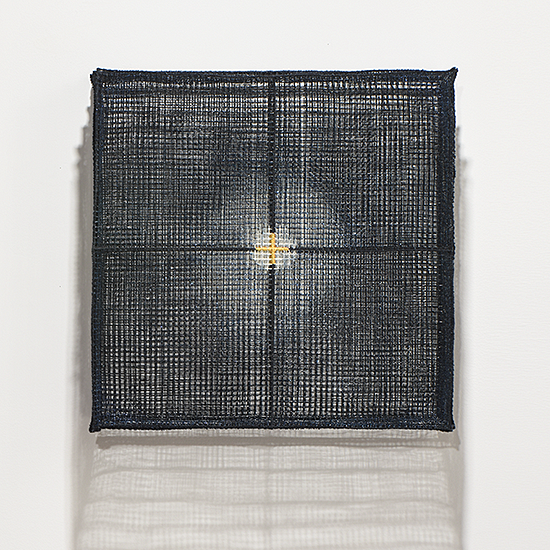
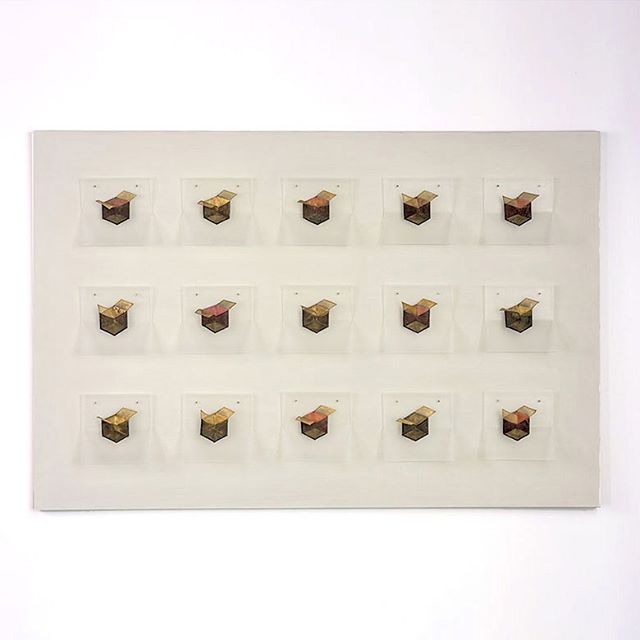
Jin-Sook So’s Black 15 Boxes immediately grabs the viewers eye with its grid-like structure. In Black 15 Boxes So creates a grid pushing each of the 15 electroplated gold boxes off the wall, giving them a two-dimensional quality which flattens the boxes without completely altering the perspective. While the ability to peek inside So’s boxes and bowls captivates the viewer, the material’s ability to look like paper, silk and steel bend the viewer’s perception.

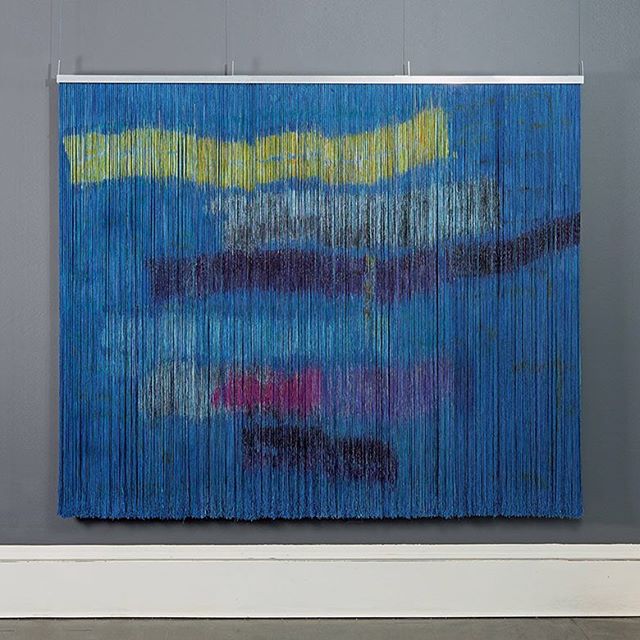
Biagga (Sea Wind), Ulla-Maija Vikman, painted viscose and linen, 67 x 71 in, 2010
When making Biagga (Sea Wind) Ulla-Maija Vikman was inspired by his material, linen. The vertical threads create their own natural rhythm complemented by their horizontal patterns. Vikman paints and repaints the threads two or three times in order to get the tones he desires. Vikman always hangs his work off the wall to give the impression of a free fall. The slightest breeze or draft moves will move the threads, altering the light and form of the piece, having a kinetic effect that brings the work to life.

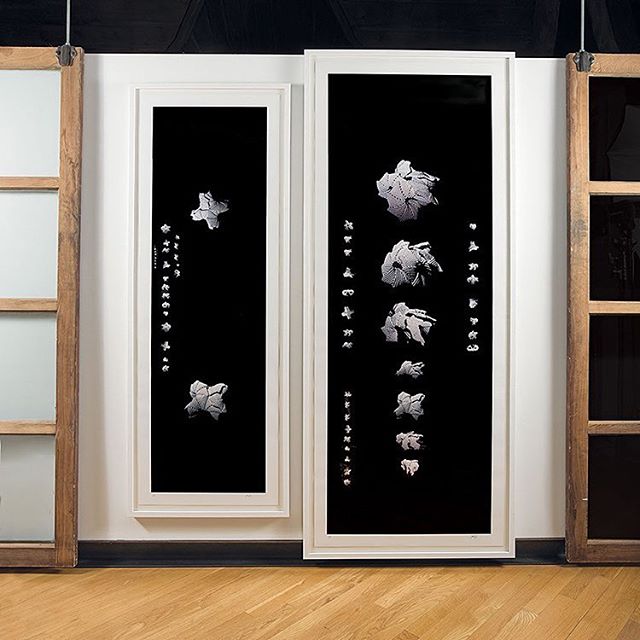
Left: White Shell Tongue n. 1, Federica Luzzi ,two fine art prints on “baritata” paper, 66.875” x 24.75” x 1.25”, 2006 Right: White Shell Tongue n. 2, Federica Luzzi, 78.625” x 32.75” x 1.25”, 2006
Federica Luzzi’s work focuses on nature, specifically leaves, bark and plant seeds. Above all, Luzzi is fascinated with plant seed, it is for that reason all of her work features the title Shell. “I am interested in their small and sinuous shapes, which assure their mobility from trees, and in their vital capacity of shutting themselves until the moment they mysteriously wake up, the seeds like ‘sleeper beauties,’ ” states Luzzi. The White Shell Tongue prints were born after a variety of conversations with researchers at the National Institutes of Physics in Frascati about the concepts of dark matter, antimatter, nuclear, subnuclear physics and the particle accelerator. The prints “suggest a primordial voice, speaking in a language now unknown to us but original, a pure, reductive writing externality, with wrappings and empties shells,” Luzzi explains. The vertical loom and tapestry art tools allow Luzzi to work with vegetal fibers from their frame to three-dimensionality. Luzzi’s works are presented like a dimensional installation as if they are fragments of a galaxy: macrocosm and microcosm together.
Art of interest can be found across the US and abroad this winter. Out West, Lia Cook and browngrotta art’s friend Carol Westfall are both featured in Coded Threads: Textiles and Technology in the Western Gallery at Western Washington University. The fourteen artists in the exhibition were chosen for their use of new textile technologies. Despite the fact that technology is changing lives and art rapidly, the earliest textile techniques are still practiced (basket weaving, indigo dying, etc.) The exhibition recognizes the importance of maintaining a connection to the past while seizing the opportunities that lie ahead with innovative textiles technology. Artists are now using spider silk, nanotechnology, biocouture, smart textiles (conductive threads, fiber optics) and Arduino microprocessors as materials for their work. The creation and use of these materials have fostered collaborative relationships between scientists, artist, and engineers. For example, Lia Cook works in collaboration with neuroscientists to investigate the natural response to woven faces by mapping the responses in the brain. She uses DSI (Diffusion Spectrum Imaging of the brain) and TrackVis software to view the structural neuronal connections between parts of the brain and then integrates the resulting “fiber tracks” with weaving materials to make up the woven translation of an image. Coded Threads: Textiles and Technology is on display in the Western Gallery at Western Washington University until December 8th. Do not miss the chance to glimpse at the future of textile art!
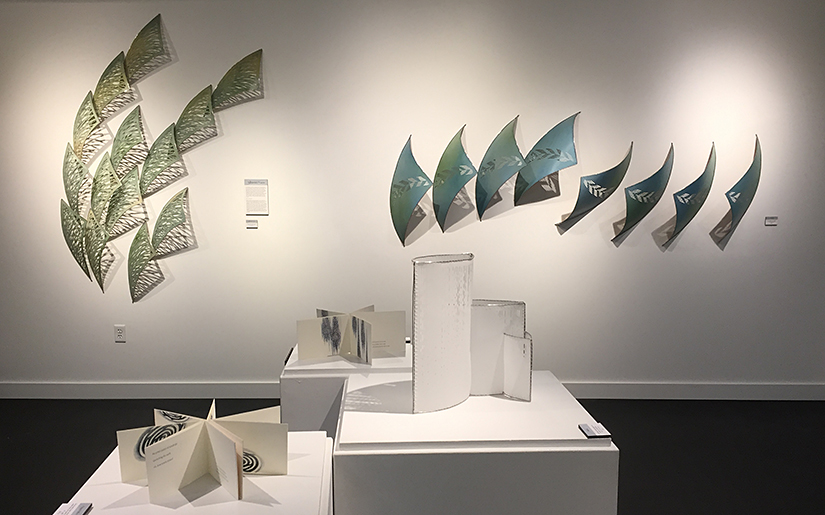
If you’re in the Midwest make sure to go see Flow: The Carved Paper Work of Jennifer Falck Linssen before it closes at the Talley Gallery in Bemidji, Minnesota on October 27th. “The impetus for Flow began one cold January week when Wisconsin artist Jennifer Falck Linssen escaped the frozen north for the lush green vegetation and mild temperatures of the Florida coast,” notes Laura Goliaszewski, the Talley’s Gallery Director. As Linssen was kayaking and hiking, she noticed the large population of birds making their new homes along the coast. Linssen began to consider how the diverse landscapes and climates of Florida and Wisconsin serve the seasonal needs of birds. A series of swooping, swerving wall sculptures that send viewers’ eyes aloft is the result.
Of Art and Craft, on display in the Flinn Gallery at the Greenwich Library, on the East Coast, explores the division between Art and Craft. The exhibition displays creations of glass, clay and fiber, which are all traditionally considered “craft materials.” However, the talent and skill present in all of the resulting pieces without a doubt make the pieces art, in the view of the exhibition’s curators. The exhibition features clay sculptures from Jocelyn Braxton Armstrong, Susan Eisen, and Phyllis Kudder Sullivan; glass work from Kathleen Mulcahy, Josh Simpson, and Adam Waimon; as well as fiber explorations by Emily Barletta, Ellen Schiffman and browngrotta arts artist Norma Minkowitz. Minkowitz, a resident of Westport, CT, has seven pieces featured in the exhibition, all of which use a variety of materials. Minkowitz’s piece in the exhibition Goodbye My Friend exemplifies her commitment to conveying the intimacy and imperfection of the human hand. “The interlacing technique that I use makes it possible for me to convey the fragile, the hidden, and the mysterious qualities of my work, in psychological statements that invite the viewer to interpret and contemplate my art,” explains Minkowtiz. Minkowitz is set to give a talk at the Flinn Gallery on November 5th at 2pm. Of Art and Craft will be on display at the Flinn Gallery from October 26th through December 6th.

This Way and That, 2013, Gyöngy Laky. Cut and assembled manzanita wood painted with acrylic paint and secured with trim screws. Photo: Bruce M. White© Lloyd Cotsen, 2016
The Box Project: Uncommon Threads, which was previously at the Racine Art Museum, is currently on display in the Textile Museum at The George Washington University Museum. Art collector Lloyd Costen challenged 36 international fiber artist to create a piece of work in the parameters of an archival box. 10 browngrotta arts artist have work on display in The Box Project: Helena Hernmarck, Agenta Hobin, Kiyomi Iwata, Lewis Knauss, Naomi Kobayashi, Nancy Koenigsberg, Gyöngy Laky, Heidrun Schimmel, Hisako Sekijima and Sherri Smith. The exhibition will be on display at The George Washington University Museum through January 29th.
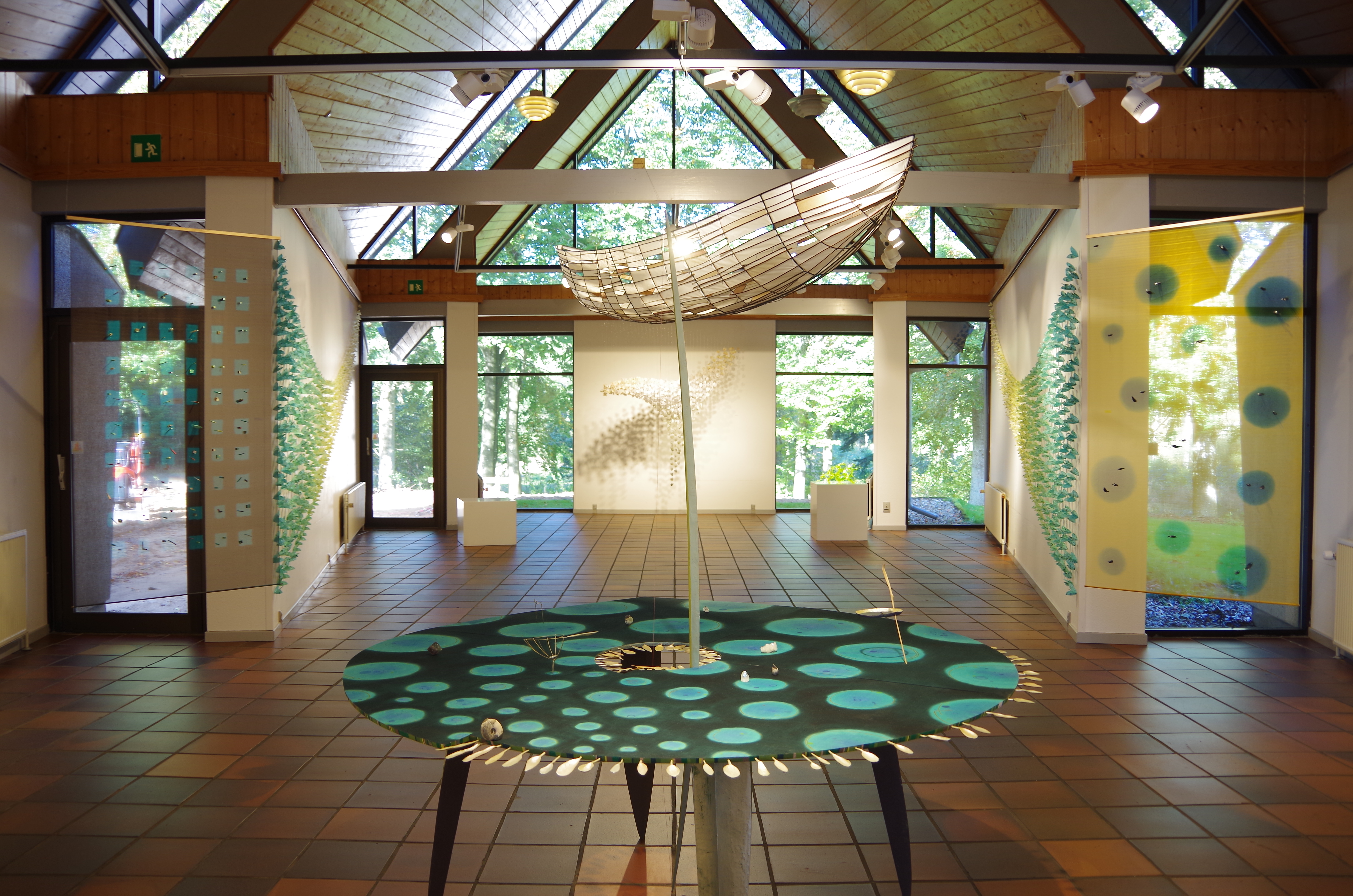
Out side the US, Essence Iki at the Dronninglund Kunstcenter in Denmark, celebrates 150 years of diplomatic cooperation between Japan and Denmark. Browngrotta arts artist Jane Balsgaard is one of six artists featured in the exhibtion, three from Denmark and three from Japan. Featured are objects, room dividers and Balsgaard’s majestic, airbound boats of paper. The exhibition will be on display at the Dronninglund Kunstcenter until December 11th
BBC Woman’s Hour Craft Prize nominee Laura Ellen Bacon also has a solo exhibition on display at the National Centre for Craft & Design in Sleaford, UK. The exhibition, titled Rooted in Instinct demonstrates the process Bacon goes through when crafting a new sculpture or installation while also displaying a variety of Bacon’s new thatching, weaving and knotting techniques. Once an old seed warehouse, The National Centre for Craft & Design is the largest venue in England entirely dedicated to the exhibition, celebration, support, and promotion of national and international contemporary craft and design. Rooted in Instinct will be on display until January 14th.
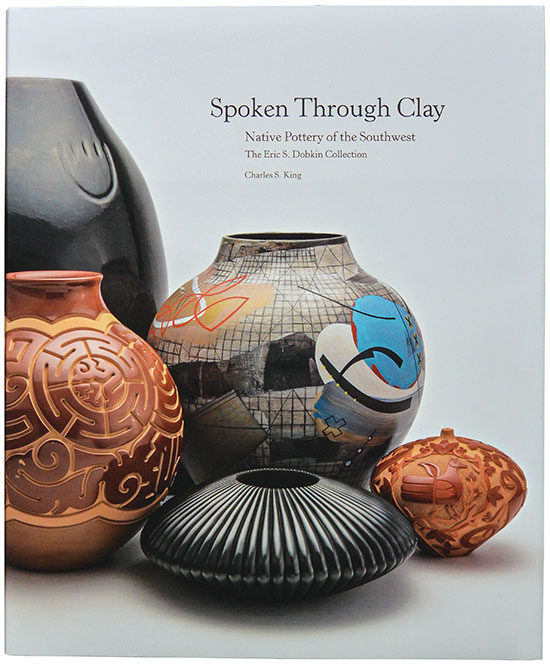
A number of interesting and varied press reports, books and catalogs have crossed our desk at browngrotta arts in the last couple of months. The truly glorious Spoken Through Clay, Native Pottery of the Southwest: The Eric S. Dobkin Collection, edited by Charles S. King (Museum of New Mexico Press) is one example. The volume documents 300 vessels in the Dobkin collection in large-scale, meticulously corrected color photos, a collection that has a “unique and distinctive focus on aesthetic of the vessel.” King has organized the works into several sections: Dreamers, Traditionalists, Transitionists, Modernists, Visonaries, Transformists and Synchronicity. The Navajo artists — mostly Pueblo — provide uniques insights into the works.
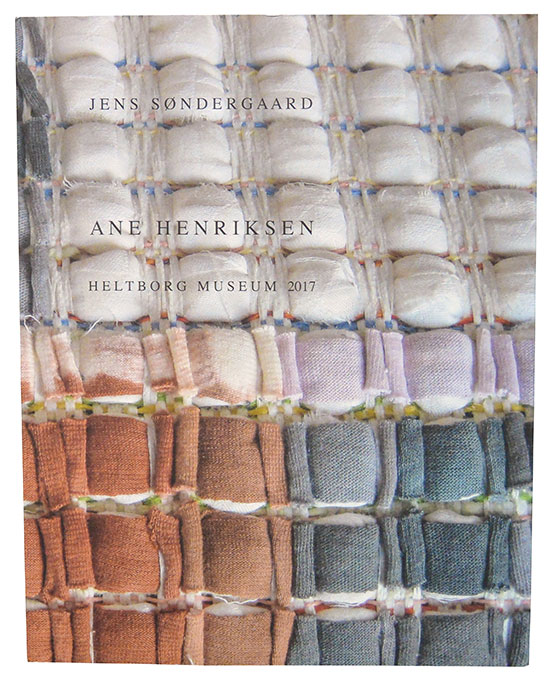
at the Old Dock in Copenhagen. For 25 years, she has lived in Thy and created woven pictures inspired by nature and culture there. Highlighting work by Sara Brennan, James Koehler and Ann Naustdal among others, the Coda 2017 catalog is the third Coda volume published by the American Associate of Tapestry. It also includes informative
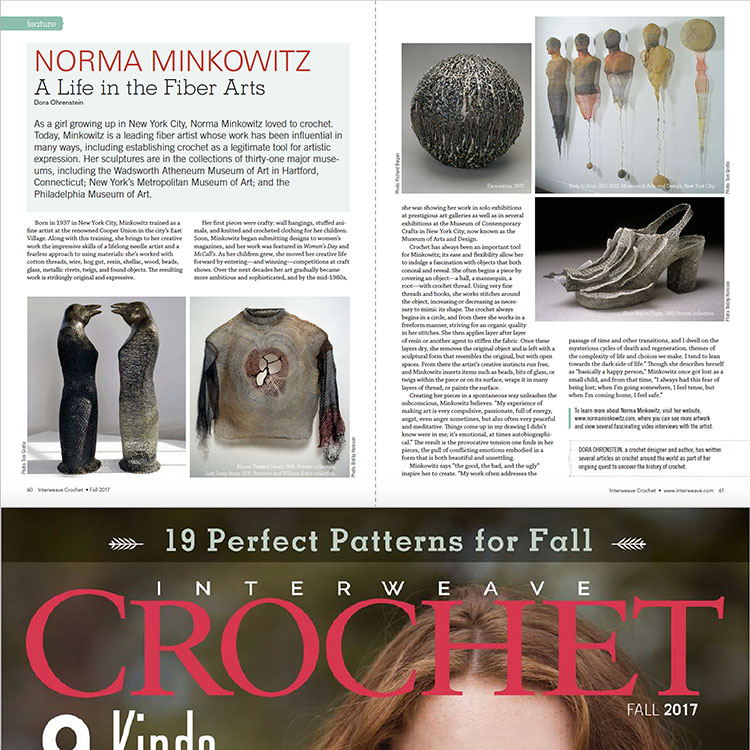
In the fall 2017 issue of Interweave Crochet, Dora Ohrenstein explains how Norma Minkowitz has established crochet “as a legitimate tool for artistic expression ”recognized by the 31 major museums that have acquired her work, including the Wadsworth Atheneum Museum of Art in Hartford, Connecticut, New York’s Metropolitan Museum of Art and the Philadelphia Museum of Art, in her article “Norma Minkowitz: A Life in the Fiber Arts.” And online in “Randy Walker: Thread Held in Tension,” textileartist.org shares “what fires Randy’s imagination…how his background in architecture has shaped his artistic vocabulary…and how he puts together his subtle, yet mind-blowing installations.” Look for them.September was quite the busy month for browngrotta arts. Summer officially ended and fall is here and as beautiful as ever. Owners and Curators Tom Grotta and Rhonda Brown went on an art-filled adventure to South Africa (to read about click here). In addition to our “New this Week” posts, we have also started posting “Art Live!” videos every Monday. There is a wealth of video contents available online that allows you to see artworks up close and learn about the artist. Some Art Live! videos feature interviews with artists, while others allow you to visit exhibitions or view the details of a particular piece. Still, others feature a close-up, 360-degree view of a single work.
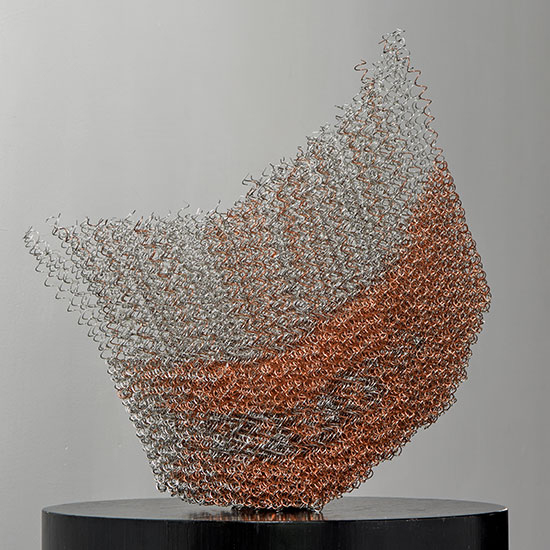
We started off September with Nancy Koenigsberg’s Currents, a square coated copper wire piece. The wire Koenigsberg uses for her work allows her to explore space. The delicate nature of the wire allows Koenigsberg to create lace-like layers. “The layers allow for transparency, the passage of light, and the formation of shadows,” notes Rhonda Brown in Still Crazy After All These Years…30 years in Art. The intertwining of the wires creates a complex fabric and variety of light and shadow.
Next up we had Michael Radyk’s tapestry Green Sow Sow. In his recent series, Corduroys, Migrations and Featherworks, Radyk drew inspiration from featherworks in Peru and Africa, cut corduroy structures from Peter Collingwood’s The Technique of Rug Weaving and the concept of migration. However, for Green Sow Sow Radyk drew inspiration from a conversation he had with Lousie Mackie, former Curator of Textiles and Islamic Art at the Cleveland Museum of art, about fakes and forgeries. The conversation inspired him to create a “forgery” of his own work by re-imagining two dimensions of work he had previously done.
Tonal Fifths by Rachel Max was also featured this month. Max’s artwork challenges the relationship between containment and concealment, lines and shadow, and movement and space. Max constructs her forms with a combination of lace and basketry techniques. These techniques help her to creates an intricate, open weave fabric of interlinked lines. Max’s current work (such as Tonal Fifths) investigates the similarities between weaving and music. The musical composition of Max’s works are based on two or more themes which she works to weave together through her art.
A Line Can Go Anywhere, currently on display at the James Cohan Gallery in New York, studies the use of fiber as the main material used by seven Bay Area artists. The show examines artists ability to use linear pliable elements such as yarn, thread, monofilament, and rope.
A Line Can Go Anywhere works to show viewers all the ways in which fiber is utilized in art. The term “fiber” encompasses both the use of pliable material and technique needed to manipulate the materials to construct art works. “Crisscrossing generations, nationalities, processes, and approaches, the works speak to the cultural forces and art discourses that have contributed to a rich, and often overlooked, legacy of art making,” explains Jeffrey Waldon “from the initial efflorescence of the international fiber revolution of the 1960s to fiber’s recent reclamation by contemporary artists who, in an expanded field of art, create fiber-based work with a kind of ‘post-fiber’ awareness.”
The show features works from Trude Guermonprez and browngrotta arts’ artist Ed Rossbach, two influential artists whose works served as primers for the making of art in Northern California. The pair “contributed to the categorical transformation of art and craft,” notes the Gallery. In addition to Rossbach and Guermonprez, A Line Can Go Anywhere will feature work by Josh Faught, Terri Friedman, Alexandra Jacopetti Hart, Ruth Laskey, and browngrotta arts’ artist Kay Sekimachi.

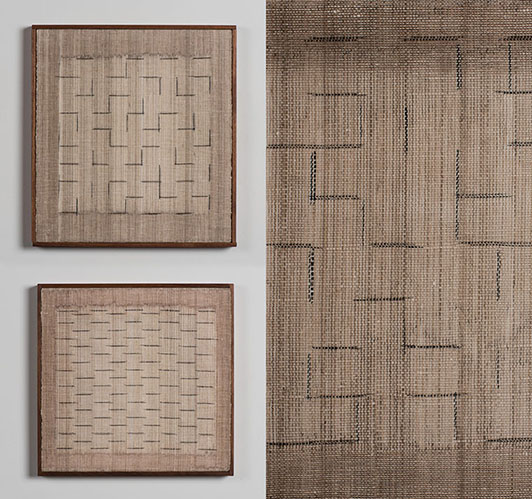
Top: Homage to Paul Klee, Kay Sekimachi, linen, painted warp & weft with dye, permanent marker, modified plain weave, 13.25” x 12”, 2013
Bottom: Lines, Kay Sekimachi, linen, painted warp & weft with dye, permanent marker, modified plain weave, 11.5″ x 11.75″, 2011
With a sincere devotion to textile traditions and worldwide culture, Ed Rossbach’s work referenced everything from ancient textile fragments to pop-culture icons such as Mickey Mouse. Rossbach experimented with atypical materials to create an anti-form intimate body of work. Despite being a prolific maker, write and professor at the University of California between 1950 and 1979, Rossbach, by his own choice, rarely exhibited or sold his work. Shortly before his death in 2002 he provided a large number of his remaining works of fiber, paintings, and drawings to Tom Grotta to photograph and exhibit. Most of Rossbach’s remaining works continue to be available through browngrotta arts. Kay Sekimachi began working in fiber in 1960s, just as the international fiber movement began. For a number of years, according to the Gallery, Sekimachi’s work was “charged by Guermonprez’s pedagogical emphasis on both free experimentation and the rational logic of weaving.” Sekimachi’s early double weavings showcased her ability to harmonize the opposite relationships of density and translucency, complexity and simplicity, technique and free expression.
A Line Can Go Anywhere was curated by Jenelle Porter, an independent curator in Los Angeles. From 2011 to 2015 she was the Mannion Family Senior Curator at the Insitute of Contemporary Art/Boston where she organized the acclaimed Fiber Sculpture 1960-present. A Line Can Go Anywhere is on show at the James Cohan Gallery in New York until October 14th. For more information about the show click HERE.
We’ve all heard of the common stomping grounds of an affluent New England traveler. Many New Yorkers head to the Hamptons, but for those who are farther north (or willing to take a longer trek), Cape Cod, Martha’s Vineyard and Nantucket make up the holy trinity.
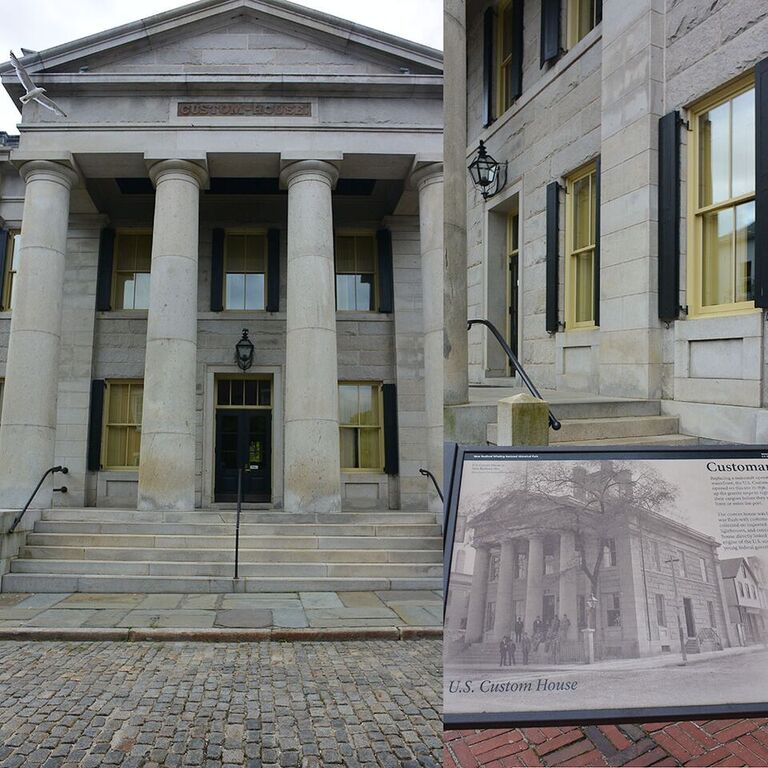
But for anyone who’s ready to switch things up, enjoy the opportunity to take a break from driving this summer by stopping in New Bedford, MA on your way to whichever classic summer vacation spot lies ahead. Whether you’ve visited before or it’s your first time stopping through, New Bedford will capture your heart with its rich history, quaint cobblestone streets and incredible art offerings.
New Bedford’s historic downtown boasts a working waterfront brings the nostalgia of old whaling days. Filled with a variety of restaurants, shops, and museums, the downtown district of New Bedford offers something for everyone while bringing the past to life. If you are looking for a lively experience, check out the North End of New Bedford; teeming with an array of cafes and bakeries, the North End illuminates New Bedford’s multicultural heritage.
What to Do in New Bedford and environs:
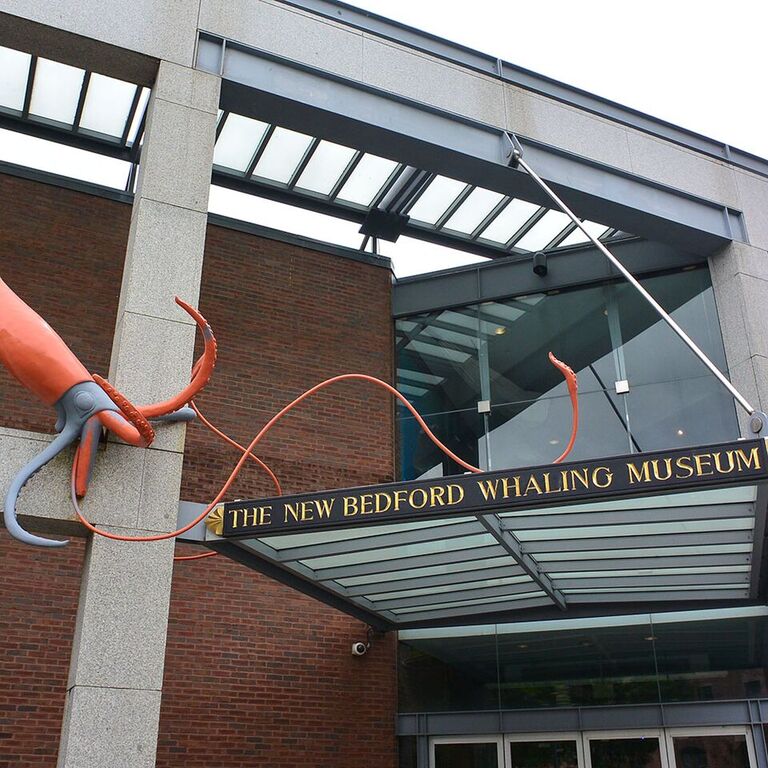
New Bedford Whaling Museum
The New Bedford Whaling Museum chronicles the history and impact of the “Old Dartmouth” whaling industry. Whale oil harvested by crews from New Bedford once lit the entire East Coast. The museum houses everything from whale skeletons and a model of the world’s largest whaling ship to work by internationally known maritime artists. The museum also gives you an opportunity to explore the importance of whale science and conservation, as well as informing you about what you can do to advance the cause.
New Bedford Art Museum/Artworks!
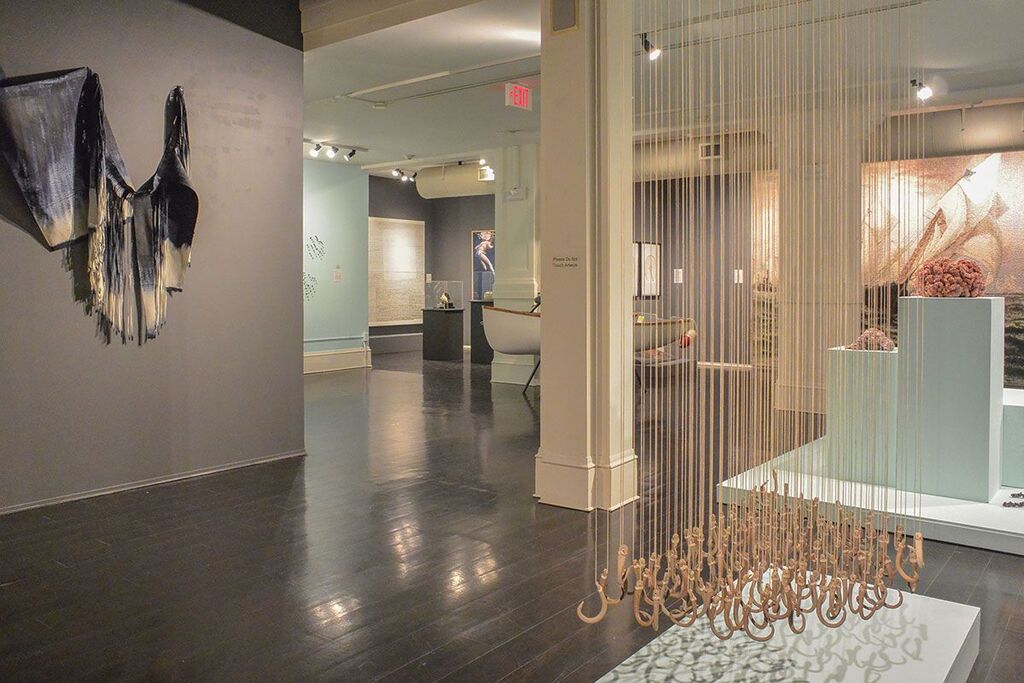
The New Bedford Art Museum is a must-see for visitors of all ages. The museum offers a diverse array of engaging artwork, as well as a dynamic and interactive experience for kids and an extensive collection for parents and art lovers. This summer, the New Bedford Art Museum collaborated with browngrotta arts to create Plunge: Explorations from Above and Below, a unique exhibit that combines 16 artists working in numerous media to create a body of work that pays tribute to the nautical and natural processes around us. Artist featured in Plunge used fish scales, Danish sail cloth, and even an old Moby Dick book as material for their work. Plunge can be viewed at the New Bedford Art Museum until October 8th.
The Seamen’s Bethel
Life at sea was exhausting and monotonous, after returning to landwhalers would spend the majority of their time and money at gambling dens, brothels and saloons. However, Quaker whalers in New Bedford saw this as a threat to the dignity and good order of their community. Therefore, the citizens of the town created the New Bedford Port Society for the Moral Improvement of Seamen, which offered church services to whalers before and after their whaling ventures. Due to the varying religions of the whalers, the church was declared non-denominational and is still that way today. Moby Dick’s author Herman Melville was one of the many whalers who found solace in the church before venturing out to sea.
New Bedford Fishing Heritage Center
Where to Stay:
In addition to the larger chains, like the Fairfield Inn, Seaport Inn and Conference Center in Fairhaven, the area is home to charming Bed and Breakfasts like the Cranberry Gardens Inn; in nearby Wareham, Massachusetts (Contact: 508-295-9475 www.bbonline.com) or the Delano Homestead & Gardens in Fairhaven (Contact: 508-992-5552; http://www.delanohomestead.com).
Nearby:
Dedee Shattuck Gallery (Just 25 minutes West of New Bedford)
A contemporary art gallery situated among acres of meadows and forests in neighboring Westport, Massachusetts, the Dedee Shattuck Gallery exhibits an ever-broadening selection of noted international, national, regional and emerging artists, and select artistic gifts — jewelry, scarves, tableware — establishing a cultural destination in the heart of Westport, Massachusetts (Contact: 508-636-4177; Dedeeshattuckgallery@gmail.com).
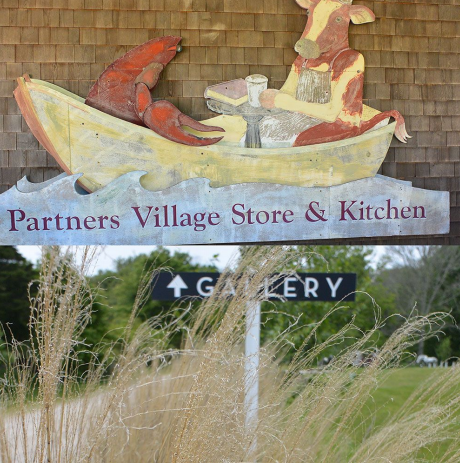
Partners Village Store and Kitchen (also 25 minutes West of New Bedford)
Copyright © 2014-2026 arttextstyle | Powered by WordPress | Design by Iceable Themes