
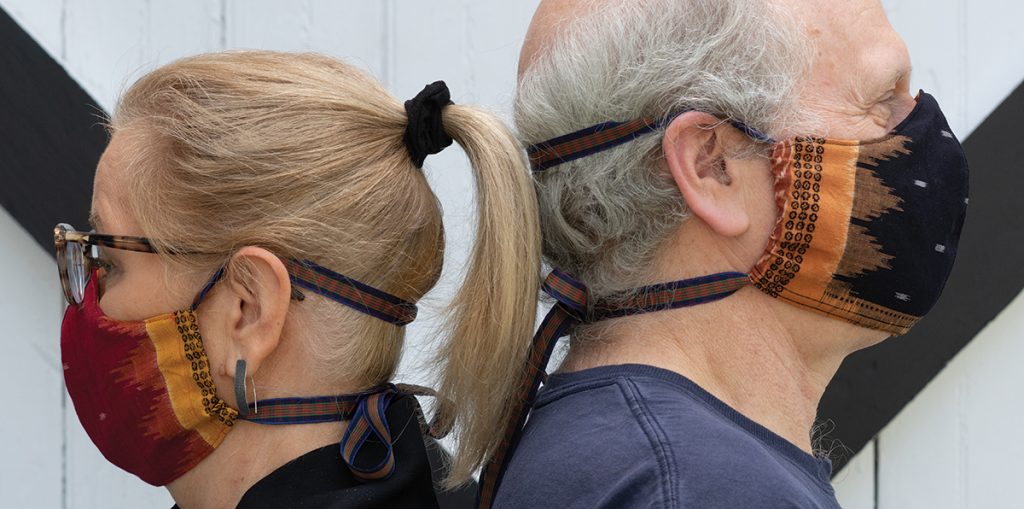
Jo Barker wrote us earlier this spring, “The creative community is well set for these isolating few months as we work in that way so much anyway.” Spurred by her remarks, last month, Rhonda and Tom sent a photo of themselves in masks made by Blair Tate asking our artists for specifics: “How have you coped with social distancing, sheltering in place and all the other changes brought on worldwide by COVID 19?” Here is the first in a series of their replies:
Scott Rothstein and his wife left Europe on one of the last flights out and it was packed.After that exposure, each had mild cases of what they think was the virus, but after that,”[i]n an almost surreal way, my days are not much different than before… just spending time in my studio.” His soundtrack of the pandemic is something that was posted at about the same time that we all started staying in — a solo piano concert by the Latvian pianist Vestard Shimkus. https://bit.ly/2YTzrRt Vestard is a friend of Scott’s who he rates one of the best youngish pianists playing today. The music “does take the listener out of this world and into another… which is a pretty nice things these days.”
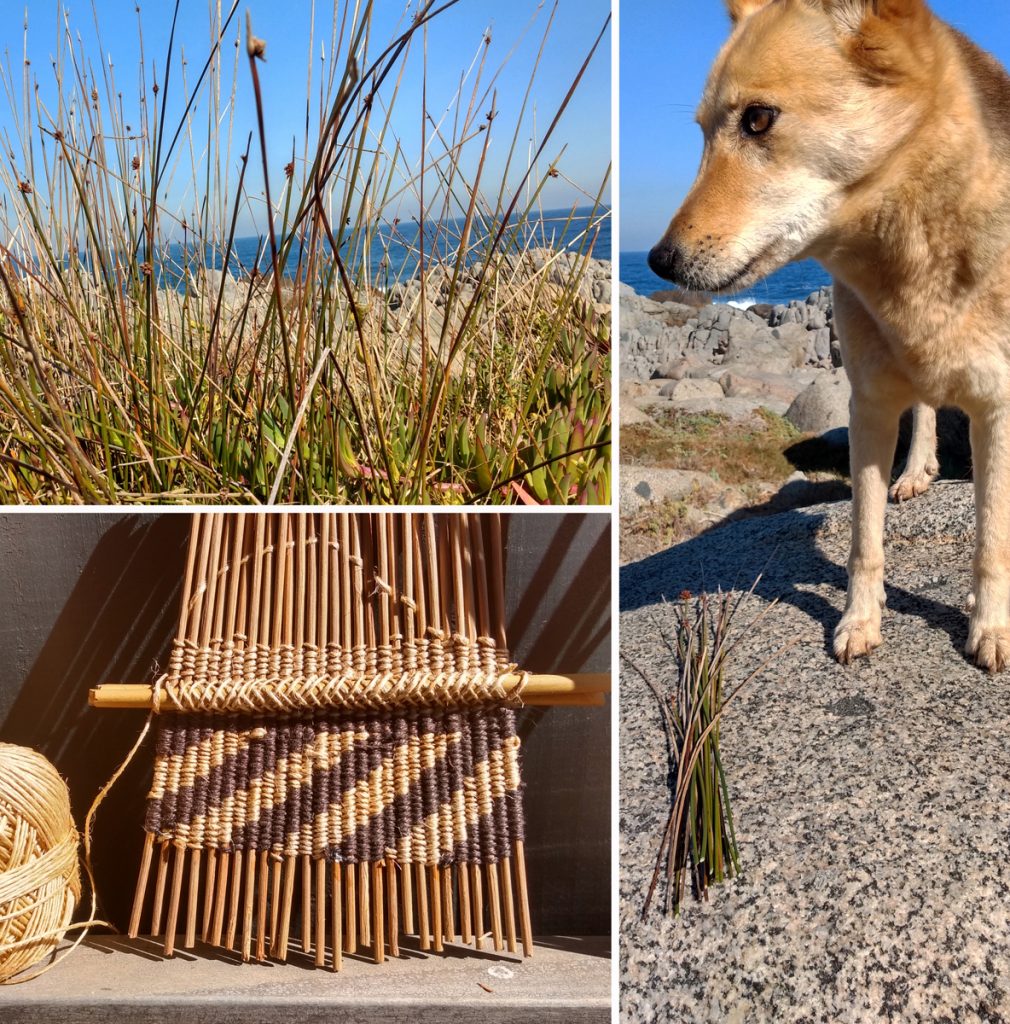
“With the Coronavirus, I have found myself working from home in Isla Negra,” writes Carolina Yrrázaval from Chile. “It is a little town by the sea. It is impossible to find the material I need here to continue with the weaving that I had started. Due to this, I began to look for new creative possibilities in my natural surroundings. Wandering amongst the rocks with my dog, Laika, we came across this plant that reminded me of pre-Columbian combs. It has been an interesting project that is still in progress.”
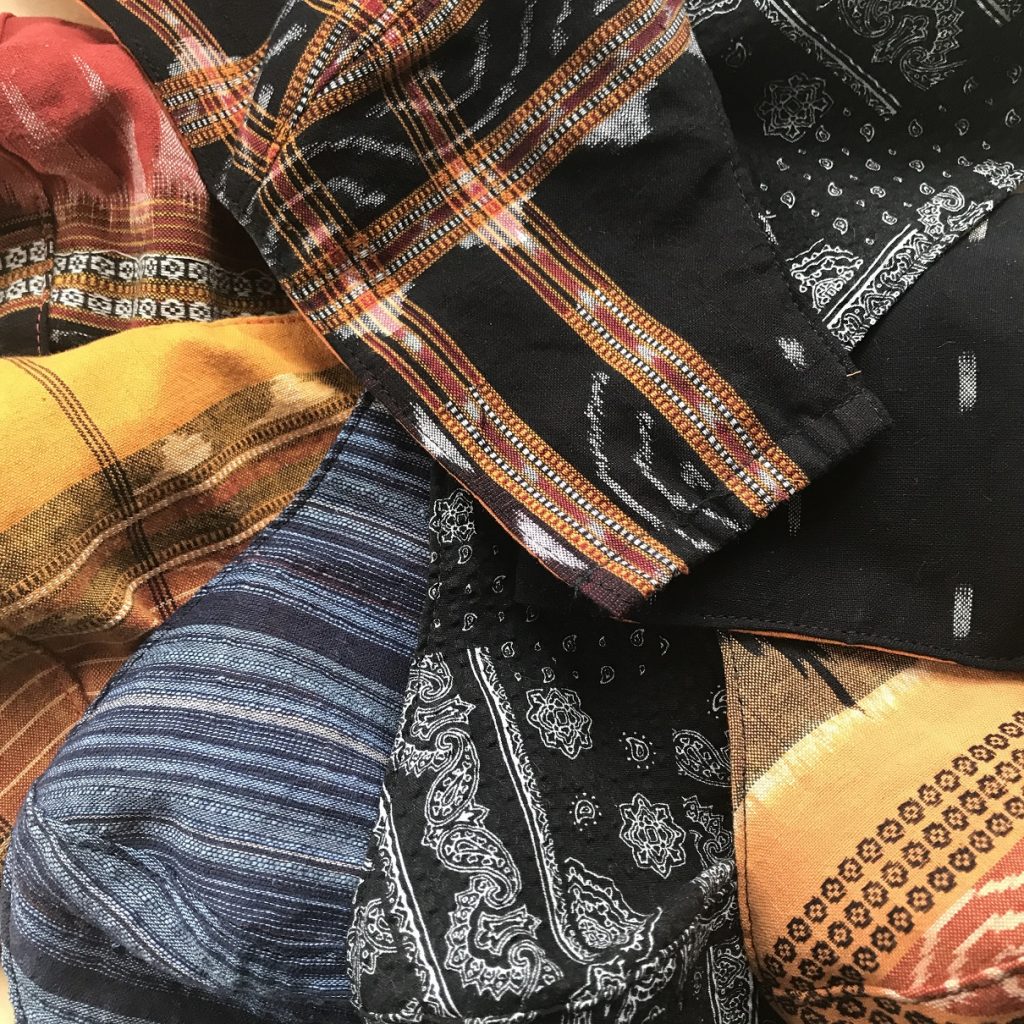
“All still healthy in the epicenter…” wrote Blair Tate from Brooklyn, New York in April. “Just finished sewing my 20th shaped cloth mask for neighbors and friends. They’ve been scattered to the winds at this point. Have 72 of the pleated kind cut and awaiting elastic (en route from Japan for last 2 weeks) so I can sew for a care center nearby.” Blair sent us two – made from pre-washed/pre-shrunk cotton Indian dupatta scraps. Inside lining is cotton face out with poly back (Welspun sheet fabric from many market developments ago) so quick dry. and a sleeve for the nose wire to let the wearer to pinch the wire to grip when wearing.
Stay Safe, Stay Separate, Stay Inspired!
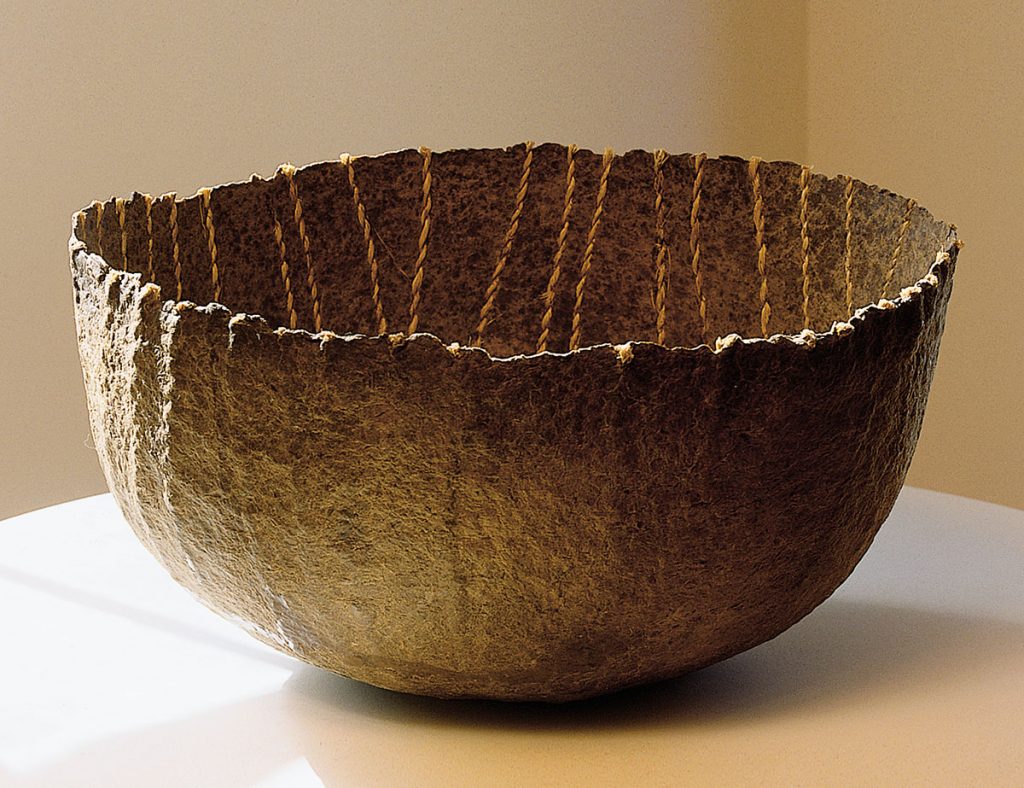
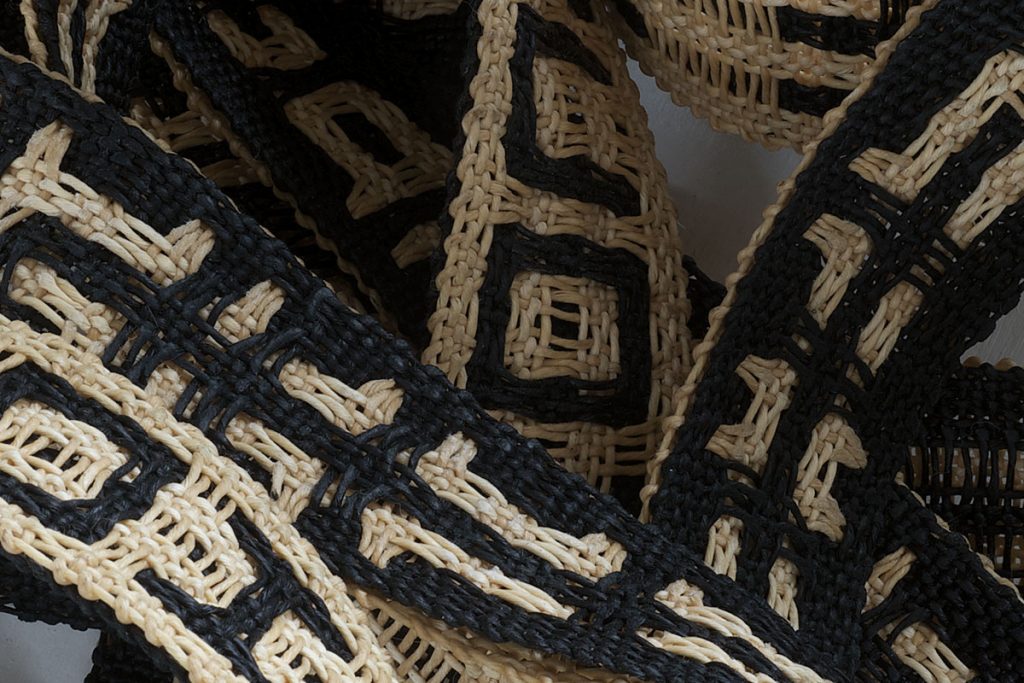
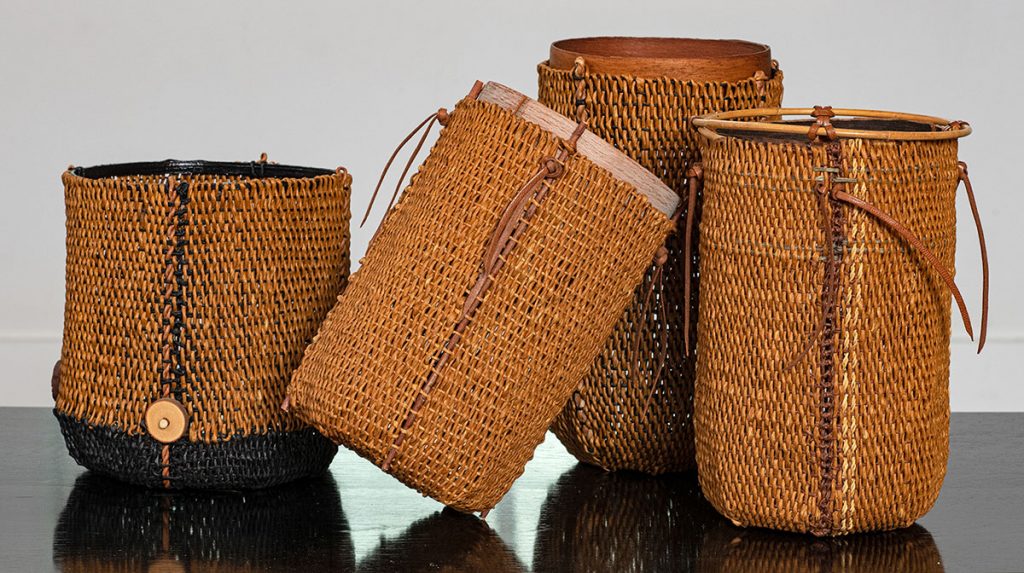
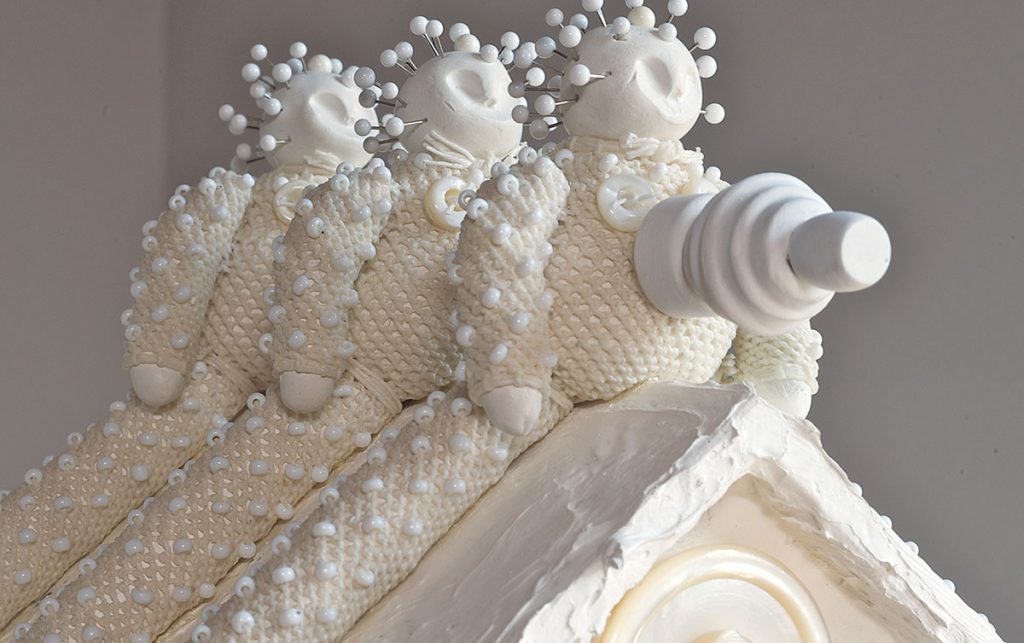
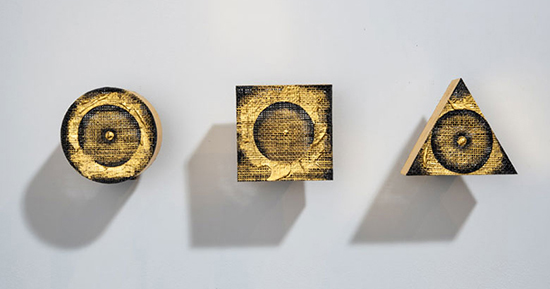
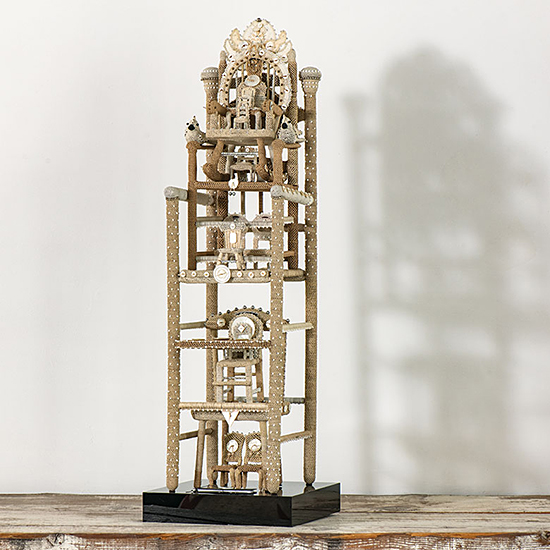
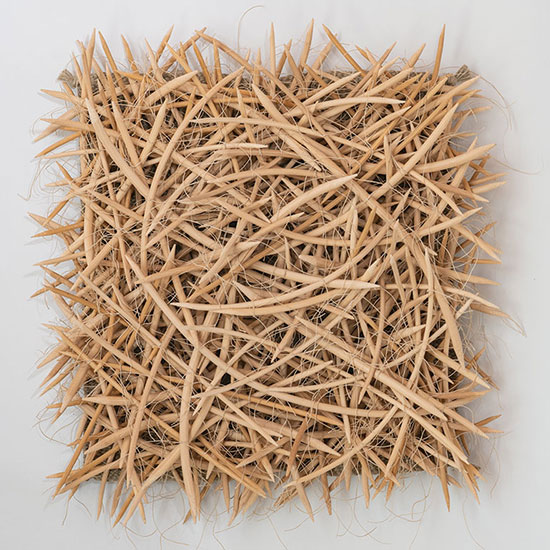
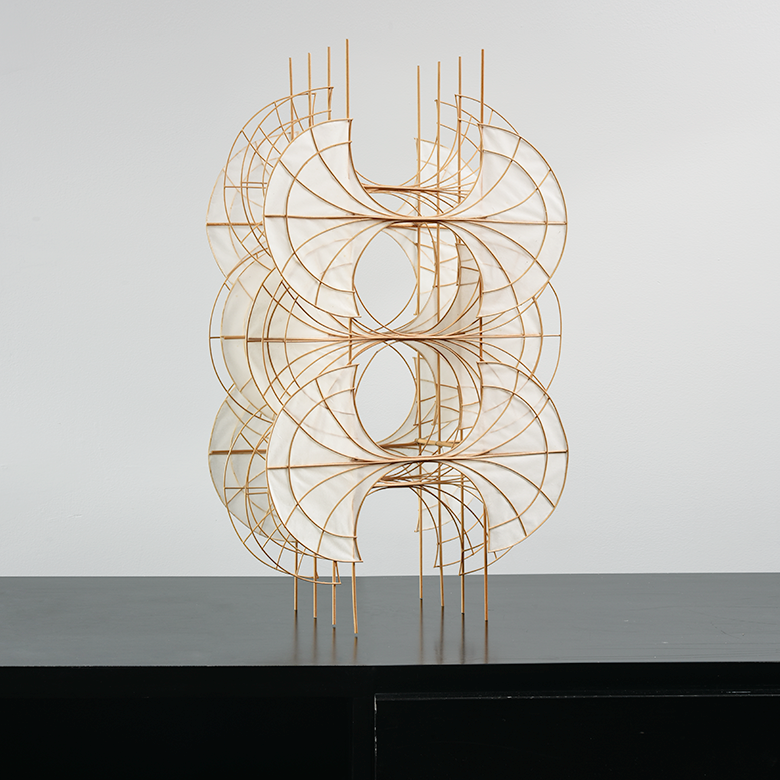



Art & Identity: A Sense of Place
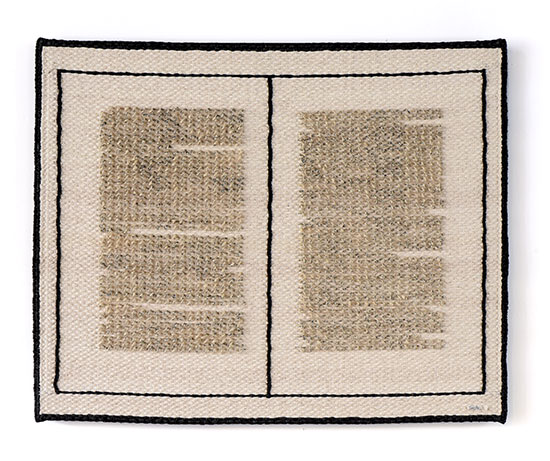
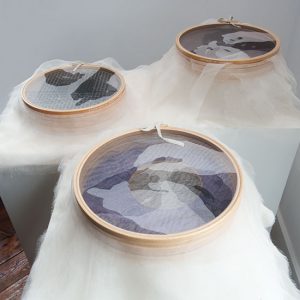
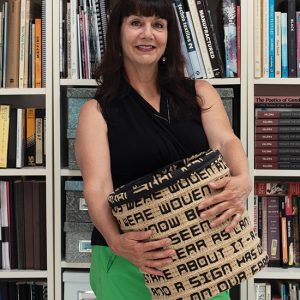
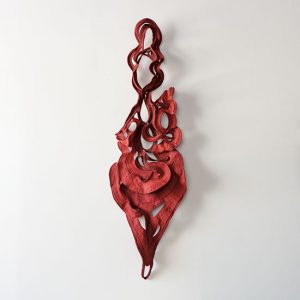
In our 2019 Art in the Barn exhibition, we asked artists to address the theme of identity. In doing so, several of the participants in Art + Identity: an international view, wrote eloquently about places that have informed their work. For Mary Merkel-Hess, that place is the plains of Iowa, which viewers can feel when viewing her windblown, bladed shapes. A recent work made a vivid red orange was an homage to noted author, Willa Cather’s plains’ description, “the bush that burned with fire and was not consumed,” a view that Merkel-Hess says she has seen.
The late Micheline Beauchemin traveled extensively from her native Montreal. Europe, Asia, the Middle East, all influenced her work but depictions of the St. Lawrence River were a constant thread throughout her career. The river, “has always fascinated me,” she admitted, calling it, “a source of constant wonder” (Micheline Beauchemin, les éditions de passage, 2009). “Under a lemon yellow sky, this river, leaded at certain times, is inhabited in winter, with ice wings without shadows, fragile and stubborn, on which a thousand glittering lights change their colors in an apparent immobility.” To replicate these effects, she incorporated unexpected materials like glass, aluminum and acrylic blocks that glitter and reflect light and metallic threads to translate light of frost and ice.
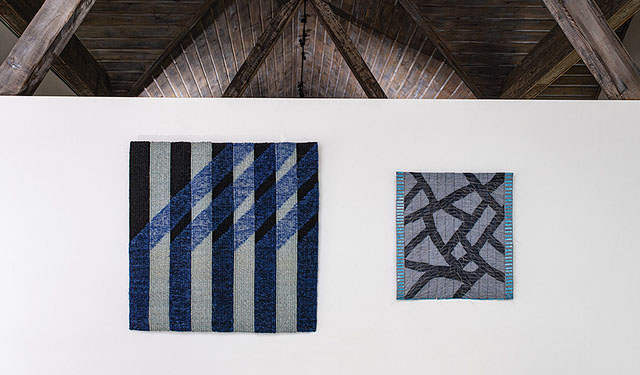
Mérida, Venezuela, the place they live, and can always come back to, has been a primary influence on Eduardo Portillo’s and Maria Davila’s way of thinking, life and work. Its geography and people have given them a strong sense of place. Mérida is deep in the Andes Mountains, and the artists have been exploring this countryside for years. Centuries-old switchback trails or “chains” that historically helped to divide farms and provide a mountain path for farm animals have recently provided inspiration and the theme for a body of work, entitled Within the Mountains. Nebula, the first work from this group of textiles, is owned by the Cooper Hewitt Museum.
Birgit Birkkjaer’s Ode for the Ocean is composed of many small woven boxes with items from the sea — stones, shells, fossils and so on — on their lids. ” It started as a diary-project when we moved to the sea some years ago,” she explains. “We moved from an area with woods, and as I have always used materials from the place where I live and where I travel, it was obvious I needed now to draw sea-related elements into my art work.”
“I am born and raised in the Northeast,” says Polly Barton, “trained to weave in Japan, and have lived most of my life in the American Southwest. These disparate places find connection in the woven fabric that is my art, the internal reflections of landscape.” In works like Continuum i, ii, iii, Barton uses woven ikat as her “paintbrush,” to study native Southwestern sandstone. Nature’s shifting elements etched into the stone’s layered fascia reveal the bands of time. “Likewise, in threads dyed and woven, my essence is set in stone.”
For Paul Furneaux, geographic influences are varied, including time spent in Mexico, at Norwegian fjords and then, Japan, where he studied Japanese woodblock, Mokuhanga “After a workshop in Tokyo,” he writes, “I found myself in a beautful hidden-away park that I had found when I first studied there, soft cherry blossom interspersed with brutal modern architecture. When I returned to Scotland, I had forms made for me in tulip wood that I sealed and painted white. I spaced them on the wall, trying to recapture the moment. The forms say something about the architecture of those buildings but also imbue the soft sensual beauty of the trees, the park, the blossom, the soft evening light touching the sides of the harsh glass and concrete blocks.”