Summer Stock: Artist Lectures, Classes and Workshops

Here’s a list of opportunities to connect this summer with artists that browngrotta arts promotes:

Dorothy Gill Barnes in her studio

Dorothy Gill Barnes
May 30th to June 11th

From Nature: Textiles/Sculpture, Penland School of Crafts, Penland, North Carolina ;
Using mostly materials gathered from the Penland landscape, students in this class will construct vessels or sculptures that honor nature using a variety of techniques: carpentry, sewing, weaving—whatever is appropriate to local materials and suitable to individual inspiration. We will work with respectfully harvested heavy and delicate barks, grasses, wood, vines, and roots.

Dail Behennah at COLLECT 2009

Dail Behennah
May 30th to June 11th

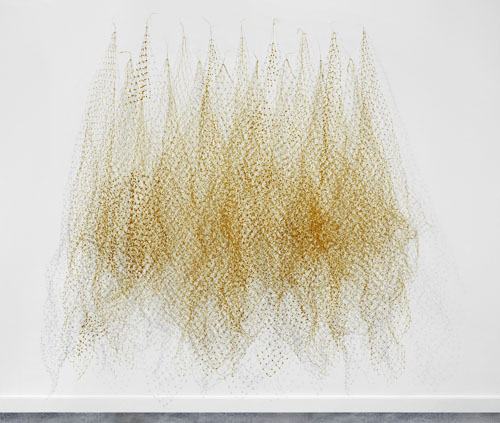
Line, Light, and Shadow: An Approach to Basketry Construction, Haystack Mountain School of Crafts, Deer Isle, Maine;
The shadows that baskets cast and contain are often complex and beautiful and you will be encouraged to consider this aspect of the structures that you make. Ways of joining hard and soft materials will be demonstrated and, if necessary, invented in order that 2D and 3D forms can be constructed. Demonstrations, exercises, and discussions will provide inspiration, which will enable you to develop your own ideas. Participants will be encouraged to make samples, 3D sketches, and a more considered piece of work.

Nancy Moore Bess holding Glacial Planes at SOFA NY 2010

Nancy Moore Bess
May 16th to 22nd

Japanese-Inspired Baskets, Snow Farm, Williamsburg, Massachusetts;

Some traditional Japanese Baskets require only fifteen minutes and a smile. Others can consume the length of an entire workshop, no matter its length. Each example in this workshop can lead to hours of experimentation and dozens of variations.

July 23rd

Wrapping Flowers — Japanese Style , Berkshire Botanical Garden, Stockbridge, Massachusetts.
In Japan, presentation influences so much – food, flowers, tea. But Japan is not the only culture this worksop will be inspired by. Their are wonderful exsiting flower arrangement traditions from many cultures and this worksop will draw from them.

August 6th to 10th

Pillow Baskets: Screen and Paper, Peters Valley Craft Center, Layton, New Jersey; Contact: Jennifer Brooks; www.petersvalley.org
A wide variety of hardware store screening can be cut, folded, woven and stitched into lovely vessels. A covering of bits of handmade papers creates a luminescent skin. Years of travel to Japan and teaching has exposed Nancy Moore Bess to a wide range of vessel forms. Her passion for Japanese Packaging influences all that she creates.

Green Sculptures by Ceca Georgieva

Ceca Georgieva
Weekends from May to September

Green Summer Workshops, Ceca’s garden in the Vitosha Mountains near Sofia, Bulgaria. Email us at art@browngrotta.com if you’d like more details. The workshops will focus on dyeing with natural dyes using old traditional Bulgarian recipes.

Sheila Hicks Reflected in her Deck Weaving

Sheila Hicks
July 2010; exact date to be determined

Global Intrigue II 4th International Textile and Fibre Triennial , Museum of Decorative Arts and Design, National Museum of Art, Riga, Latvia
The exhibition opens July 9th at the Arsenals Exhibition Hall and runs through September 5, 2010. Sheila Hicks, one of two specially invited artists, will speak and exhibit work.

Lewis Knauss in Front of RETURNING GRASSES

Lewis Knauss
August 10th to August 14th

Fiber and Handmade Paper into Sculpture (and Artist in Residence) , The Bascom, P.O. Box 766, Highlands, North Carolina 28741

Mia Olsson TRACES 6 RELIEF Detail

Mia Olsson
June 28th to July 4th

Dyeing with Plants , Sätergläntan, College of Handicrafts, Knippbodarna 119, SE-793 4, Insjön, Sweden

August 9th to 13th

Free Embroidery, Black on white, White on black, White on white…, Sätergläntan, College of Handicrafts, Knippbodarna 119, SE-793 4, Insjön, Sweden

Technorati Tags:
Ceca Georgieva, Dail Behennah, Dorothy Gill Barnes, Lewis Knauss, Nancy Moore Bess, Sheila Hicks, Artist Lectures, Artist Workshops, Artist Classes


Sneak Peek: Ritzi Jacobi at SOFA New York 2010

browngrotta arts will present two recent works by art textile pioneer Ritzi Jacobi in its exhibit at SOFA New York 2010. Since the late 1960s, Jacobi’s work, created first with Peter Jacobi, and since the 80s alone, has produced large tapestry reliefs that underscore the sculptural possibilities of fiber. In these works, Jacobi “draws” in three dimensions, creating light and shadow with fiber cables and bundles of wrapped fibers. Jacobi places viewers in the midst of a “shingled, edgeless terrain,” writes Robert Bell, Senior Curator of Decorative Arts and Design at the National Gallery of Australia, “allowing us to navigate its complexity with our senses of touch, smell and sight. Without the distraction of a visible or literal narrative, we are encouraged to examine the minutiae of the structure, and become an active partner in Jacobi’s textile architecture as we subconsciously reconnect its discordances.”

Jacobi’s individual and collaborative works are found in museums around the world, including the Museum of Arts and Design, New York, New York; Detroit Institute of Art, Michigan, National Museum of Modern Art, Kyoto, Japan; Stedelijk Museum, Amsterdam, the Netherlands; National Gallery of Modern Art, Rome, Italy; and Bellerive Museum, Zurich, Switzerland.

We are excited about exhibiting two quite different, yet representative, works by Ritzi Jacobi at SOFA New York. The tension and tactically in her work is always exciting for viewers. In Blue Zone myriad shades and tones of a single color create additional intensity. In Floating Matter there is a complexity of surface and structure — by summarizing cable elements in various techniques, the single particles generate a vivid, pulsating pattern. In either case, technique has become secondary to the overall composition.

Technorati Tags:
Contemporary Tapestry, SOFA NY, Tapestry, Ritzi Jacobi, Coconut Fiber


Sneak Peek: Wendy Wahl’s branches at SOFA New York 2010

wendy.install.comp.jpg

Next month, Rhode Island-based artist Wendy Wahl will exhibit branches, an imposing interactive sculpture constructed from discarded and deconstructed Encyclopedia Britannicas inside the Park Avenue Armory in New York for the Sculpture, Objects and Functional Art (SOFA) exposition. From April 15th through the 19th, branches will flank SOFA’s entrance inside the Armory and stand approximately nine-feet high, six-feet deep, and eleven-feet wide. Viewers will be encouraged to move through the sculpture, whose form and materials will serve as a contemporary reflection on the ancient idea of the Tree of Knowledge, “We are thrilled to have Wahl frame this year’s edition of SOFA New York with her provocative work that will doubtlessly energize veterans and newcomers alike,” added Mark Lyman, President, The Art Fair Company and Founder/Director of SOFA.

“I love the materiality of books,” explains Wahl, “and branches is a tribute of sorts to a medium in transition. It’s a wonderful opportunity to continue my exploration at SOFA in New York City—the center of the rapidly changing publishing industry. I want the fair’s audience to think about how they get their knowledge and to question their relationships to the natural world. What are the connections between nature and language? How does the existence of a multitude of new ways to communicate alter our understanding of meaning and significance?” The installation will continue a series that Wahl began in 2005, which addresses a set of ideas including accessibility and accumulation, synthesis and sustainability. Previous installations in the series have appeared at the Newport Art Museum and the Bristol Art Museum in Rhode Island and the Fuller Craft Museum of Art in Brockton, Massachusetts.

“Digital media has led such artists as Wendy Wahl to re-evaluate the potency of the printed word,” Akiko Busch wrote last fall in an essay in the catalog The 10th Wave III, “Wahl finds different ways to reconfigure the pages of the Encyclopedia Britannica; the leaves may be stacked into forms that suggest an alternative forest of knowledge or tightly scrolled and packed within a frame, making for a composition that suggests a cabinet of hidden knowledge, those archives of information that are at once visible and concealed, at hand and remote.”

Wahl’s work is represented by browngrotta arts of Wilton, Connecticut. The gallery will feature other examples of Wahl’s work in its SOFA New York 2010 installation in booth 204. Wendy Wahl ‘s work can be found in the permanent collection of the Cooper-Hewitt National Design Museum (New York, NY) and the American Embassy in Tashkent, Uzbekistan (through the Art in Embassies Program). She has exhibited throughout the world at venues such as the Contemporary Jewish Museum (San Francisco, CA), the Newport Art Museum (Newport, RI), the University of Wollongong (Australia), and the International Textile Convention (Kyoto, Japan).

Technorati Tags:
SOFA NY, Art Installation, Wendy Wahl, Encyclopedia Britannica


In Progress: Helena Hernmarck’s Tabula Rasa

hernmarck-purdue.1.jpg

Here are rare in-progress images of Helena Hernmarck’s major commission for Pao Hall at Purdue University in West Lafayette, Indiana. The finished work will be approximately 10 x 14.5 feet and is due to be completed later this year. Hernmarck was recommended to the University by Lisa Lee Peterson. Peterson is an artist and professor in the Department of Art and Design in the Patti and Rusty Rueff School of Visual and Performing Arts at Purdue, where she has taught fiber arts and textile design for twenty-five years.hernmarck.purdue.2.jpg


Check Out: “On Thin Ice: Two Russians Skate Off the Reservation,” in the WSJ


Oksana-Domnina-and-Maxim-Shabalin

Contemporary textile artists’ work is often rich in references to other cultures. Traditional techniques are used to generate new forms; images and themes from other cultures are re-envisioned and contemporized. Through her study of Peruvian gauze weavings, Lenore Tawney discovered a reed that she was able to adapt to create the innovative slits and openings that characterized her work.

Shrouded River detail by Lenore Tawney

Carol Eckert’s coiled sculptures feature animal figures that are inspired by African ceremonial head dresses of the Yorubas; Kirsten Wagle and Astrid Løvaas

use old Norwegian tapestry techniques on unconventional materials from aluminum cladding to pantyhose;

Løvaas & Wagle create tapestries that are visually captivating, beautiful, surprising, and rich in references to art historical sources

Nancy Moore Bess’s baskets are informed by her travels to Japan, most recently re-interpretations of the jakago/snake baskets used in Asia to bind stones at the edge of a river or lake to prevent soil erosion; and Jin-Sook So reinvents Korean pojagi by creating patchworks of gold-plated steel mesh instead of the traditional scraps of ramie and hemp.

(Pojagi-inspired work) by Jin-Sook So

Is there a point at which cultural “borrowing” stops being an acceptable compliment and becomes unacceptable co-option? That’s the criticism being made of Russian figure-skaters Oksana Domnina and Maxim Shabalin, whose multicultural ice-dancing theme, based on aboriginal costumes, music and dance, have drawn the ire of Australian Aboriginal activists. On January 28, 2010 in the Wall Street Journal, Eric Felten reviewed the Olympic controversy, similar arguments made about white musicians having no right to play jazz, and recent cross-cultural creations by the likes of Paul Simon and Vampire Weekend.
In “On Thin Ice: Two Russians Skate off the Reservation,” Felten cites T.S. Eliot as endorsing artistic appropriation, quoting him as saying, “bad poets deface what they take, and good poets make it into something better, or at least something different.” Felten argues that it is too much to expect “cultural interlopers” to make something better; it should be enough that the borrowing “makes for something different”. And sometimes that something different will be more than different. It will be art.


In Print: Weave Arrived, in how to spend it, the Financial Times

weave.arrived.jpg

Basketry has graduated from country-fair staple to sophisticated urban art form, Emma Crichton-Miller wrote in Weave Arrived, an article in the December 5, 2009 issue of the Financial TImes‘ glossy weekly magazine, how to spend it. Over the last 15 years, Crichton-Miller observes, “basket-making has experienced not just a revival but a reinvention.” The transformation to an expressive medium has been led in the UK by Mary Butcher, recently designer-in-residence at the Victoria and Albert Museum. Butcher learned traditional skills from artisan basketmaker, Alwyne Hawkins, but as a research fellow she began to use the materials to create work that “slipped its leash” — cones that hang from the ceiling, chains of bark rings and densely woven sculptural shapes. Crichton-Miller notes that outside the UK, art basketmaking has had a high profile for sometime as a result of artists like Markku Kosonen of Finland, and John McQueen and Ed Rossbach in the US.

With the vessel no longer the “first priority,” says Butcher, basketmakers are able to address other exploratory concerns. Lizzie Farey’s willow spheres and soaring wall pieces are animated by her attachment to the landscape of Scotland, where she lives and works. Dail Behennah, who studied geography, creates forms of steel, willow and other woods that are constructed, rather than woven. Her grids, scaffolds and spheres explore ideas about line and light and shadow. Joe Hogan rescues ancient wood from bogs and the sea that he incorporates into his woven forms. The result is often unexpected, highly individual and energetic. Artists like these have ended “basketry’s 20th-century obsession with the past,” Crichton-Miller concludes, and entered “a new world of pure function-free aesthetic pleasure.”


Dispatch: American International Fine Art Fair, Palm Beach, February 3rd-8th

Tawney-Colles-at-AIFAF.jpg

Lenore Tawney collages, In Chaco and The Loftiest Word and sculpture, Boy with Duck, at AIFAF

From February 3rd to the 8th. browngrotta arts will join more than 80 international galleries exhibiting at the American International Fine Art Fair (AIFAF) in Palm Beach, Florida. AIFAF is recognized as the “crown jewel” of American art fairs and is the only American art and antiques fair rated 5 stars by The Art Newspaper. AIFAF is a fully vetted fair, featuring prestigious international dealers presenting a mix of paintings, sculpture, jewelry, antiques, contemporary design and decorative arts. In cooperation with the Baruch Foundation and the Lenore G. Tawney Foundation, browngrotta arts will feature the work of Magdalena Abakanowicz and Lenore Tawney at AIFAF, artists whose work redefined weaving and sculpture in the 20th Century.

Abakanowicz is the best-known Polish artist in the world. She initially gained acclaim for her “Abakans,” monumental woven works of sisal, ropes and other fibers that hung free in space. Next were headless human forms of burlap and later bronze. Large groupings of her sculptures are installed around the world, from Chicago’s Millennium Park to Olympic Park in Seoul to the Israel Museum in Jerusalem. In presenting her a Visionaries! award in 2000, the Museum of Arts and Design cited her for “her powerful explorations, dealing with the impact of social and political reality on individual identity, that have demonstrated the potential of fiber as an effective and expressive sculptural material.”

Abakans-at-AIFAF.jpg

Weavings by Magdalena Abakanowicz at AIFAF. The weavings on the far right and far left were woven in the 1980s; the piece in the center is from the 1960s.

At AIFAF, browngrotta arts will exhibit three weavings by Abakanowicz, one from the 1960s and two, from the Anne and Jacques Baruch Collection, Ltd., created in the 1980s. The Baruchs opened a gallery in Chicago in the late 1960s, bringing work to the U. S. from Central Europe in order to give exposure to the Slavic art that Jacques, who died in 1986, once described as “the finest work of tomorrow…not what is known…the new blood.” Jacques was unable to travel after 1970, but Anne continued to travel to Central Europe to search for art. As the political situation in the area tightened, Anne, began smuggling art into the US, often at great risk. Government agents would seal her packages of approved art before she left; with the help of artists, she would often unseal the packages and reseal them in order to add unsanctioned works. She would travel with a bright red Hartman suitcase with a false bottom, filled with art supplies that the artists could not buy. On her return trip, artworks would be hidden inside. In this manner, Anne amassed a singular collection of contemporary textiles and historical and contemporary Czech photography. The Baruch Foundation was established in 2008, subsequent to Anne’s death in 2006 and is comprised of her personal art collection and the artwork inventory of The Anne and Jacques Baruch Collection, Ltd. The missions of the Foundation are to preserve and foster the growth of the visual arts of Eastern and Central Europe through donations of artwork to museums and schools, and to fund educational programs and scholarships by the sale of artwork.

Tawney Weavings.jpg

Works by Lenore Tawney on display in the browngrotta arts booth at AIFAF.

At AIFAF, browngrotta arts will also show weavings, drawings, collages and mixed media assemblages by Lenore Tawney, who died in 2007 at the age of 100. “Luminous is an apt word to describe the entire career of the American artist Lenore Tawney,” wrote Holland Cotter in the New York Times in 2004. In the 1950’s, he noted, “she created a series of monumental open-weave sculptures that were like nothing seen before or since. Astonishing.” About her collages Cotter has written, “Whether she sets cut-up bits of handwriting spinning around a reproduction of a Michelangelo sibyl or turns strips of antique German books into suspended grids, she touches on the roots of the collage medium in language and personal history with a reticent orginality.” The Lenore G Tawney Foundation was established in 1989 by Tawney for charitable and educational purposes. Its aim is to support other artists in their own artistic efforts and to support special projects at art museums and non-profit educational arts organizations; its highest priority is to nurture emerging artists and to provide them with learning opportunities through established educational programs.


Dispatch: Artpalmbeach, art+photography+design

We’ve exhibited in Palm Beach, Florida in January for the last seven years. In that time, the exhibition has had three different owners, three different names and differing emphases each year. Despite the difficulty the fair has had finding a footing, we’ve returned each year. We are convinced there is a good audience in the Palm Beach area and we are always happy to catch up with our existing Florida clients, and family and friends.

artpalmbeach.preview.jpg

This year, however, the news is better. The latest incarnation, artpalmbeach, art+photography+design, seems to have found a workable formula. The crowds at the fair were large; the composition of the show varied and exciting, we added new clients to our list and the other dealers we spoke to seemed pleased sales. In this economic environment, those are impressive achievements. David Lester, of International Fine Art Exhibitions, who founded the fair in 1998 with his wife, Lee Ann, and resumed ownership a year ago, told Artinfo, “I want this fair to have broad appeal, quality art, and accessibility. My goal is to go out and bring in much more interesting art from around the globe.” The global emphasis was evident in the mix of galleries and work. The 70 galleries came from the US and abroad, including the Netherlands, Ukraine, UK, Sweden Argentina and Dubai. Chinese, Vietnamese, Icelandic and Latin American artists were featured. In the browngrotta arts booth alone was work created by artists from 15 countries.

“That power of attraction, admirable for any fair in an inhospitable economic climate, bodes well for the process of reinvention that the Lesters have only just begun, ” concluded Margery Gordon in her Artinfo article, “Art Palm Beach Mixes Media — and Messages.” http://www.artinfo.com/news/story/33659/art-palm-beach-mixes-media-and-messages. We were so optimistic, in fact, we are turning around and returning next week to participate in IFAE’s American International Fine Art Fair from February 2nd – 8th at the Palm Beach Convention Center http://www.aifaf.com. More on that to come.


Sneak Peek: Artpalmbeach, January 14th -19th

Palm-Beach-Ad.jpgWe’re leaving the ice and snow (sigh) for sunnier climes next week, where browngrotta arts will join more than 50 other galleries exhibiting at the Palm Beach County Convention Center at Artpalmbeach, art + photography + design. The fair opens on January 15th and lasts through the 19th. A theme of this year’s Artpalmbeach,  art + photography + design is “going global.” As always, browngrotta arts will do its part; we are exhibiting the work of artists from 15 countries. Our installation in Booth 204 will include some of the highlights of this fall’s 10th Wave III exhibitions as well as new works by several artists including a significant wall sculpture by Ritzi Jacobi; pieces made of fish scales by Marian Bijlenga and new works of repurposed encyclopedias by Wendy Wahl. We’ll present the work of two artists in Palm Beach for the first time: We’ll present the work of two artists in Palm Beach for the first time: Jennifer Falck Linssen of the US and Carolina Yrarrázaval of Chile. US Artist Norma Minkowitz will be at the booth on Monday, January 18th from 2-4 p.m. to discuss her work; Dawn MacNutt of Nova Scotia will be at the booth to discuss her work on Tuesday, January 19th, from 2-4 p.m.


Stitching on the Silver Screen: A List in Progress

Writing about needlework in the film Bright Star last month got me wondering — and Googling — about other portrayals of sewing, weaving, embroidery, and the like in film. I poked around the web for a couple of weeks and contacted film experts and friends of long-standing Cari Beauchamp and Sloan Seale for suggestions. (Cari is the author of a host of books on film including: Without Lying Down: Frances Marion and the Powerful Women of Early Hollywood Joseph P. Kennedy Presents: His Hollywood Years and Adventures of a Hollywood Secretary: Her Private Letters from Inside the Studios of the 1920s with Valeria Belletti and Sam Goldwyn Jr.) The result is the highly idiosyncratic list below. I am indebted to artist Sabrina Gschwandtner and Fiberarts editor Marci Rae McDade who compiled a list of feature-length fiber-related films in the April/May 2009 issue of Fiberarts (their selections are asterisked below). I have added the parantheticals and other nominees in developing my own compilation. For a much more extensive list (132!) of films that feature just knitting, see Knitting in the Movies; there’s another at Knit Flix.

Films that Feature Handwork (a highly selective view):

The Addams Family; Addams Family Values, 1991;1993 (In the films and tv series, Mother Morticia often knits odd two-headed, three-legged items for family members.)

Amelie, 2001 (tobaccionist is crocheting).

Babette’s Feast, 1987 (Babette sews with her sisters in the kitchen.)

Bend It Like Beckham, 2002 (Mrs Bhamra (Shaheen Khan) is knitting for her expected grandchild.)

BAT02.jpg

Breakfast at Tiffany’s, * 1961 (Includes the famed line: “Jose brought up the blueprints for a new ranch house. I have this strange feeling that the blueprints and the knitting instructions got switched. I may be knitting a ranch house!” For more Audrey check out Breakfast at Tiffany’s Audrey Hepburn stitchalong for across-stitch pattern of Audrey Hepburn as Holly Golightly.)

City Lights, Charlie Chaplin, 1931 (Skein winding.)

coraline-credit-in-thread.png

Coraline,* 2009 (see Thread for Thought for a comprehensive discussion of the “loving attention” given to handcrafts in this film.)

Dancing at Lughnasa,* Pat O’Connor, 1998, (Meryl Streep knits socks.)

DSC02393.JPG

Fargo, 1996 (Jean in a bobble and cable sweater, knitting her next project. (thank you Vickie Howell.)

Gone with the Wind,* Victor Fleming, 1939 (When Melanie is reading while the women are waiting, one of them is crocething).

Handmade Nation,* Faythe Levine, 2009 (Includes portraits of crafters across the US, including knitters and embroiderers.)

The Heiress, 1949 (Olivia deHaviland begins an embroidered sampler when her lover abandons her on the night they were to elope.) (In 1999, artist Elaine Reicker who uses embroidery to explore aesthetics in art created a video, When This You See . . ., that combined nine appropriated film clips that show women knitting, sewing, or weaving — including The Heiress. “Each segment reveals a pivotal moment in the source movie’s drama and is punctuated by a freeze-frame and the superimposition of a single word written in bright pink cursive script: ‘obsession,’ ‘betrayal,’ ‘revolution,’ ‘revenge,'” wrote Margaret Sundell, in Art Forum (6/22/99). In this way, Reichek captures cinema’s structural interplay between repetition and temporal unfolding, and – as the viewer starts anticipating the arrival of her interpretative captions – the rhythm of expectation and delivery that drives its narrative engine.”)

Heavenly Creatures, 1994 (Kate Winslet knits.)

Hitchhiker’s Guide to the Galaxy,* 2005 (At one point, the entire cast is turned into stop-animation knitted dolls. One of them vomits multicolored yarn.)

How to Make an American Quilt, 1995 (The story centers on the stories of several women in a quilting bee as they construct a wedding quilt as a gift for a member’s granddaughter, Finn Dodd (Winona Ryder).)

Like Water for Chocolate,* 1992 (Tita crochets onto a bedspread when upset, as a way of coping with disappointment.)

Mr. Lucky, 1943 (Cary Grant learns to knit.)

Now, Voyager, 1942. Bette Davis operates a loom at the sanatorium where she goes to stave off a nervous breakdown and later on in the film she knits on deck on a cruise.


The Odyssey, 1997 (Penelope (Greta Saatchi) weaves a shroud by day and unravels it by night — having promised to pick a suitor when her weaving is finished, and having no intention of ever reaching the end, certain that Ulysses will yet return home.)

The Lone Wolf battles Nazi spies, including Valerie King, intent on stealing military plans. At one point, Valerie’s purse spills open and a patch of crocheted lace falls out. Later, The Whistler, a mercenary, approaches the Lone Wolf and reveals that King delivered the lace to a laundry and has arranged to pick it up at midnight. The Whistler gets hold of the lace, and when he and another mercenary, unravel the lace, they decipher a code directing Valerie to a midnight meeting with a submarine.

Pluto’s Sweater, 1949, animated (Pluto is teased when he wears a red sweater knit for him by Minnie.).

Preparez vos Mouchoirs (Get Out Your Handkerchiefs) 1978 (The leading lady knits for her lovers and when her knitting shows up on other men, they immediately know what’s up — as does the audience.)

The Price of Milk,* 2000 (key role for patchwork quilt.)

Repo Man, 1984 (A knitting security guard.)

The Science of Sleep,* 2006 (Knit objects take on an animated life.)

The Secret Code, 1918 (The villainess crochets coded messages into mufflers)

Tale of Two Cities, 1935 (Madame DeFarge knits a register of names of those headed to the guillotine); also A History of the World, Part I, Mel Brooks, 1981 (Madame Defarge (played by Cloris Leachman) has become so poor she has run out of wool, simply rubbing her knitting needles together.)


Wallace & Gromit
: The Curse of the Were-Rabbit 2005 (Gromit, knits a scarf while waiting in the car for Wallace); also Wallace and Gromit in A Close Shave,* 1995 (this one’s just 30 minutes, but it’s all about hand knitting and knitting machines.)

Wanted,* 2008 (A mild-mannered man leaves a dead-end job to join a fraternity of assassins headquartered in an unassuming textile mill. The group is giving its assignments by the Loom of Fate, a loom that gives the names of the targets through binary code hidden in weaving errors of the fabric.)

Wool 100%,* 2006 (In this Japanese film, two elderly sisters live in a mansion piled to the roof with things they have found in the trash, including a jumble of brilliant red yarn. A strange, wild girl breaks into their house and starts to knit the yarn into a formless sweater.)

And What’s with handwork and the criminal element?

In A Cry In The Dark, 1988, Meryl Streep knits while discussing the trial where her baby is carried off by a dingo in Australia. In Chicago, 2002, Roxie Hart (Renee Zellweger) knits during her murder trial and in Murder Most Foul, 1964. Margaret Rutherford knits in jury box. In No Escape, 1999, male prisoners are seen spinning and knitting. And in Foul Play, 1978, Goldie Hawn uses a knitting needle as a weapon and so does a seemingly mild-mannered grandmother in George Romero’s The Crazies, 1973).

Add your nominees to the list by posting a comment here or writing us at art@browngrotta.com. Thanks!