
Four Mondays in April; four highlighted works for review.
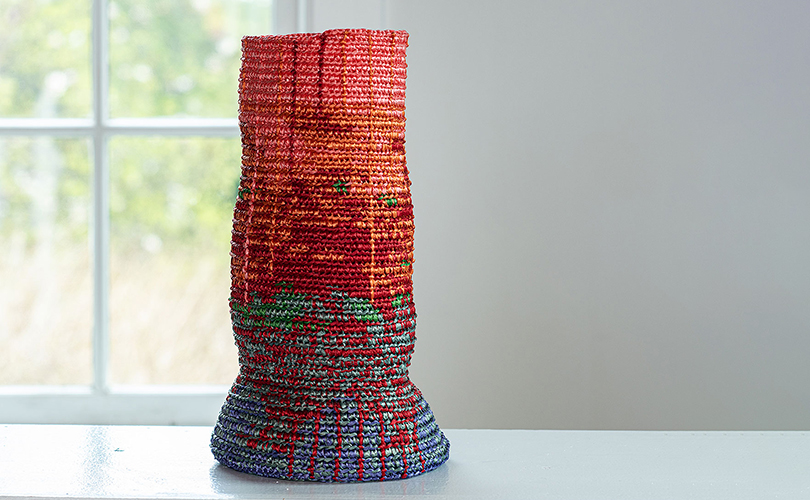
First this month was Burning Bush by American Katherine Westphal. Westphal concentrated on surface, pattern, and decoration in textiles, quilts and clothing, as well as vessels. The use of fractured and random images, as featured in Burning Bush, became a signature of her work. In the catalog for the OBJECTS USA exhibition in 1970, Westphal wrote, “I was trained as a painter. I see things from that viewpoint. I build up; I destroy. I let the textile grow, never knowing where it is going or when it will be finished. It is cut up, sewn together, embroidered, quilted, embellished with tapestry or fringes, until my intuitive and visual senses tell me it is finished and the message complete.”
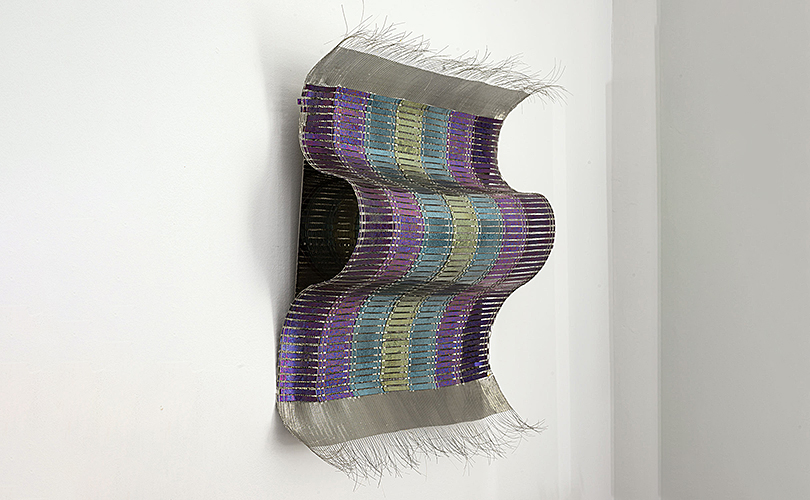
Next up was Aurora, an intriguing piece in titanium by Kyoko Kumai of Japan. In 1975, Kumai began using metallic thread for the warp in her tapestries. She started first with with stainless steel, then added titanium, which comes in many colors. Aurora, which is featured in Transformations: dialogues in art and materials (May 9-17), the upcoming exhibition at browngrotta arts, is made of crystal-finished titanium in artfully blended colors. “I am supremely happy if these works create a rich environment that surrounds the viewer,” she says, “arousing various mental images and liberating the spirit.”
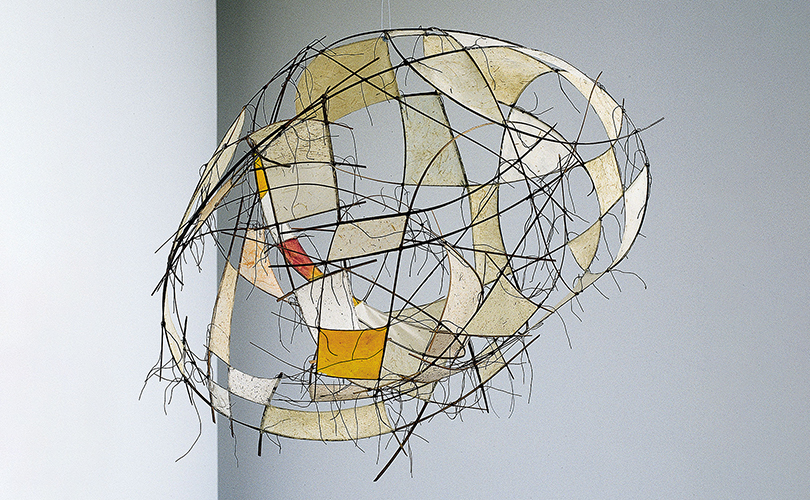
Jane Balsgaard is a Danish sculptor and painter Initially, working with paper did not interest her, but its potential for flight and refracting light captured her attention. Balsgaard spent time in Japan in the 90s, preparing for exhibits there. Works of paper and twigs, like Paper Sculpture 4, were the result. In her work, white paper often contrasts the dark color of the willow twigs, the skeleton framing the paper. Balsgaard is the recipient of an Artist’s Lifetime Grant from the Government of Denmark.
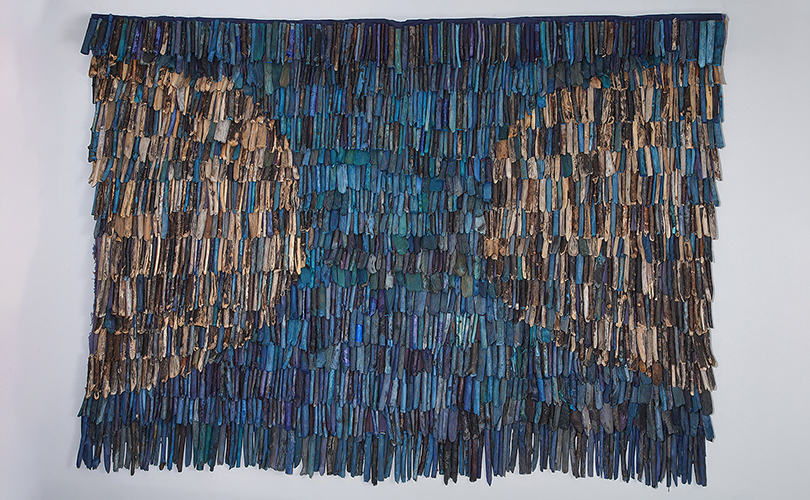
Between Two Sunsets by Baiba Osite explores the fragile threshold between collapse and regeneration, using materials that carry ecological and emotional weight. Driftwood washed ashore and fragments of plastic collected after the destructive floods in Jūrmala in Latvia become markers of the intertwined vulnerability of humans and nature. These remnants of civilization return as a visual reminder of the layers of pollution that shape our environment. Osite is known for her work with different fiber materials including driftwood, glass beads, wire, metal spirals, wool, and linen. Reconstruction is a means to new possibilities, multiple paths to renewal, she says. Osite’s work incorporating metal springs will be featured in Transformations.
See more at Transformations at browngrotta arts this May 9 -17: https://browngrotta.com/exhibitions/transformations-dialogues-in-art-and-material