Monthly archives: March, 2026

Celebrating Asia Week New York with Extraordinary Art from India, Japan, and Korea

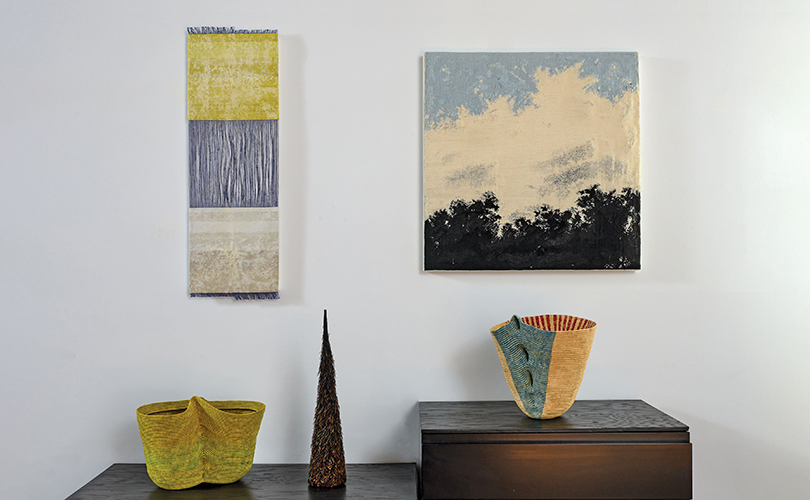
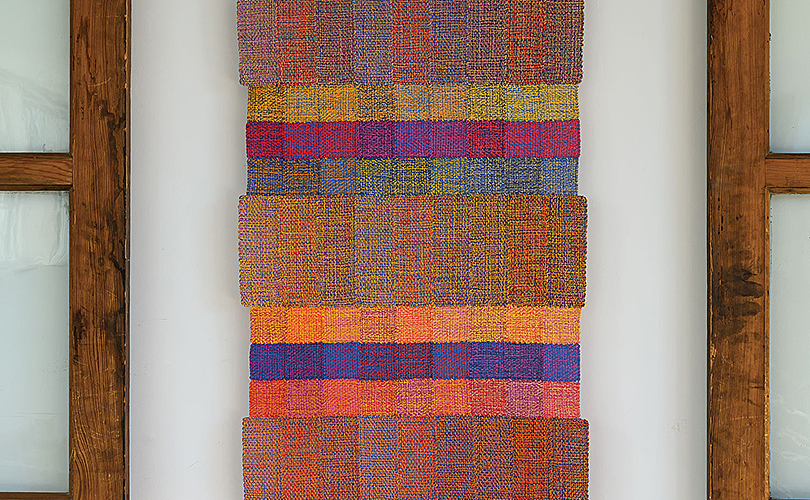
Shin Young-Ok weavings
Young-Ok Shin, 6sy Lyric Space, 2014 and 7sy Harmony of Yin Yang, 2014. Photo by Tom Grotta

Each March, New York becomes a global gathering place for collectors, curators, and lovers of Asian art. Asia Week New York (March 19 – 27, 2026) brings together the world’s foremost galleries, auction houses, and museums for 10 days of exhibitions and cultural programming. Here’s a guide to museum exhibits – https://asiaweekny.com/asia-week-march-2026-museum-exhibition-guide/ – from Chinese Porcelain at the Frick, to Hindu Devotional Prints, 1860–1930 at the Met, to a solo exhibition of work by Choong Sup Lim at the Korean Cultural Center. 

At browngrotta arts, it might as well be Asia Week all year long as we have a glorious group of contemporary textile and ceramic artists from India, Japan, and Korea whose work we promote. Asia Week 2026 gives us a good excuse to highlight a select group of their works. Whether you’re a seasoned collector or simply curious, it’s a great time to explore works from these countries in depth.

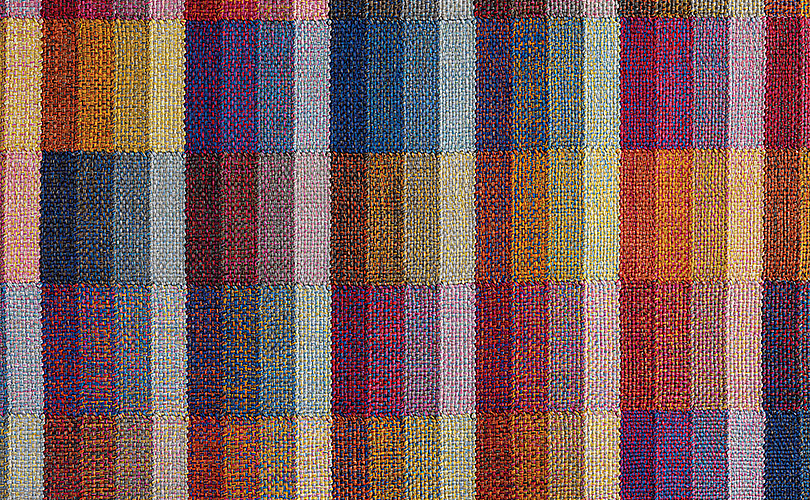
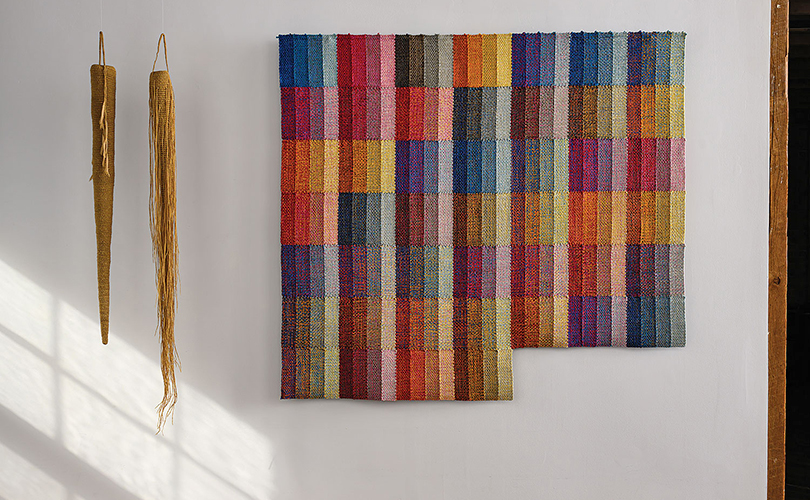
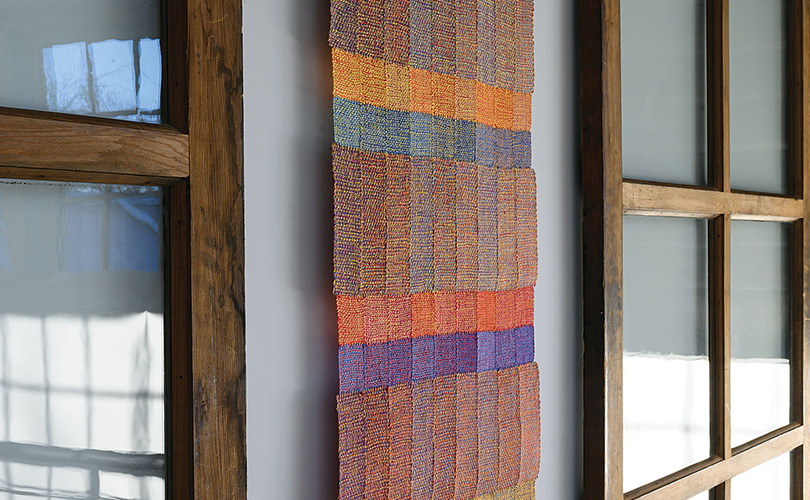
Neha Puri Dhir weavings
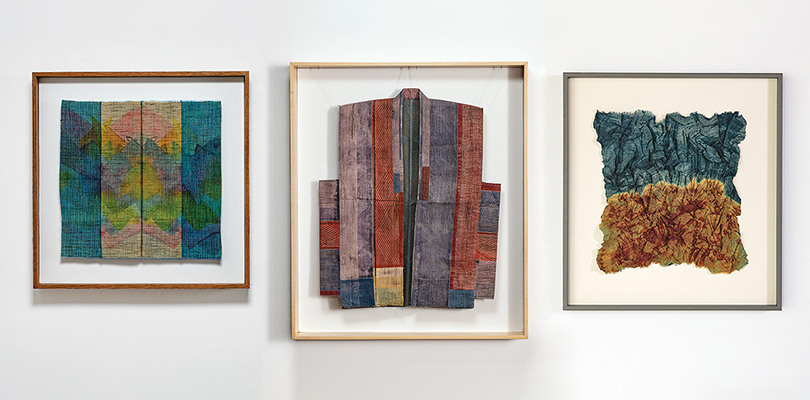
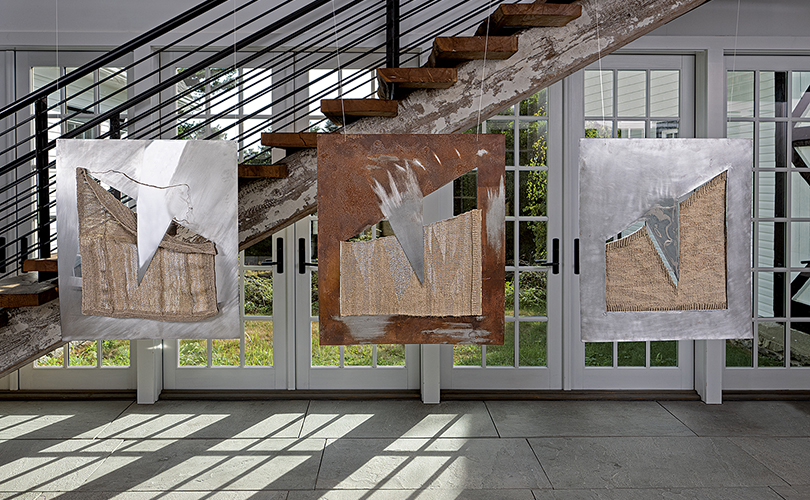
Neha Puri Dhir, Shifting Horizons, 2023; Farmer’s Jacket, 2016; Forest Fire, 2017. Photos by Tom Grotta

First up, are stitched and resist-dyed textiles from India by Neha Puri Dhir. Her works explore negative and positive space, reflecting ideas of balance and contrast. The textured surfaces, shaped by stitches and dye migration, add a tactile depth, emphasizing the labor-intensive process she undertakes.

Kohyama, Kobayashi, Sekijima
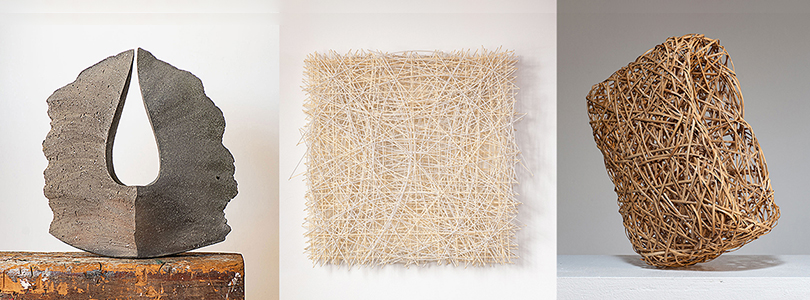
Yasuhisa Kohyama Ceramic 11, 2001; Masakazu KobayashiBow – White, 1998; Hisako SekijimaStanding, 2001. photos by Tom Grotta
Toshio Sekiji Counterpoint 8, 2009; Jiro Yonezawa, Dance of the Sash, 2024; Chiyoko Tanaka, Grinded Fabric 4215-6 Sienna W B #215-6, 1998. photos by Tom Grotta

browngrotta arts also promotes singular ceramics, sculpture, basketry, and wall works created by more than 20 artists from Japan. Among these works are ceramics by Toshiko Takaezu and Yasahisu Kohyama. We also show vessels and sculptures by several inventive basketmakers including a group that has studied with Hisako Sekijima — Norie HatakeyamaKazue HonmaNoriko TakimayaTsuruko Tanikawa, and Masako Yoshida — as well as Shoko FukudaJiro Yonezawa, and Kosuge Kogetsu. Remarkable weavers are also represented, including Hiroyuki ShindoMasako Nakahira, Jun TomitaChiyoko Tanaka, and Naomi and Masakazu Kobayashi.

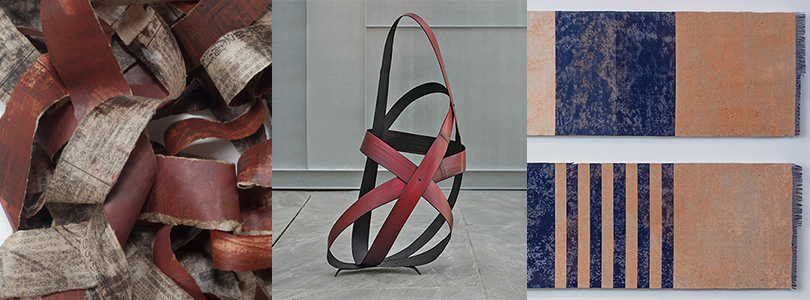
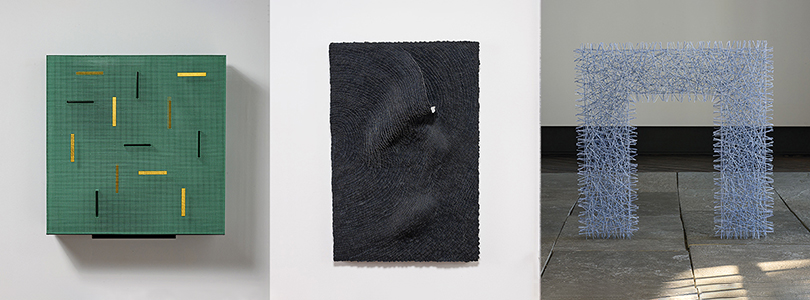
Yeonsoon ChangThe Path Which Leads to the Center III, 2022; Yong Joo Kim , No.2: 21 days, 2023; Sung Rim Park, Beyond 180623, 2023. Photos by Tom Grotta

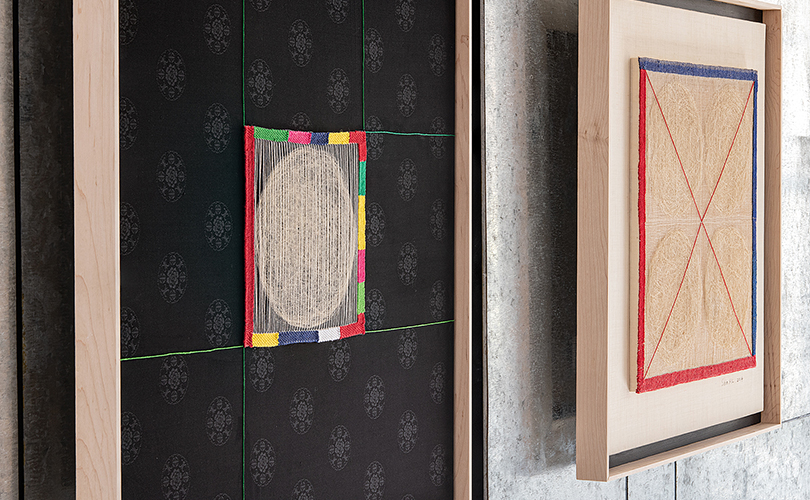
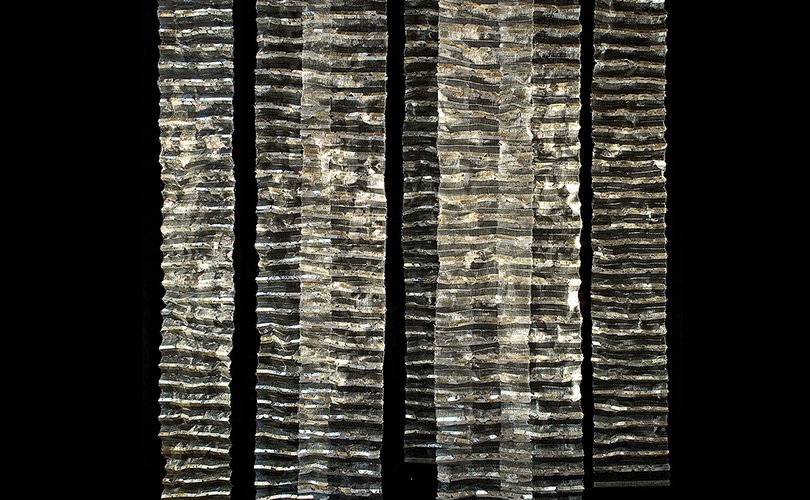
Five Korean creators of innovative art textiles made of steel, paper, velcro, silk, and ramie are among those whose work we highlight. The effects of light and color in Jin-Sook So’s works of stainless steel reflect her years living in Korea and Sweden. Yong Joo Kim has reinvented velcro as a fabric to create evocative sculptures while Young-ok Shin explores ramie with great impact. Yeonsoon Chang transforms the “softness” of fiber, and transcends the material’s limitations with structures made of abaca fibers and Teflon-coated, glass-fiber mesh to which she attaches gold leaf. Sung Rim Park uses knots of paper, determining the shape and size of each knot based on the meanings and symbolism it holds. While the knots and fibers works that result may appear delicate, they have the power to shape space. 

Pictured here are just a sampling of the Asian artworks at browngrotta arts. Visit our website to see the entire group, by name, or filter by country: Yeonsoon Chang, Neha Puri Dhir, Shoko Fukuda, Norie Hatakeyama, Kazue Honma, Matsumi Iwasaki, Kiyomi Iwata, Yong Joo Kim, Naomi Kobayashi, Masakazu Kobayashi, Yasuhisa Kohyama, Kosuge Kogetsu, Kyoko Kumai, Maki, Nakahira, Nio, Park, Hiroyuki Sato-Pijanowski, Toshiko Sekiji, Hisako Sekijima, Kay Sekimachi, Naoko Serino, Young-ok Shin, Hiroyuki Shindo, Jin-Sook So, Toshiko Takaezu, Noriko Takamiya, Chiyoko Tanaka, Hideho Tanaka, Tsuroko Tanikawa, Jun Tomita, Mariyo Yagi, Jiro Yonezawa, Masako Yoshida. 


Artist Focus: Lilla Kulka — Where Thread Meets Shadow

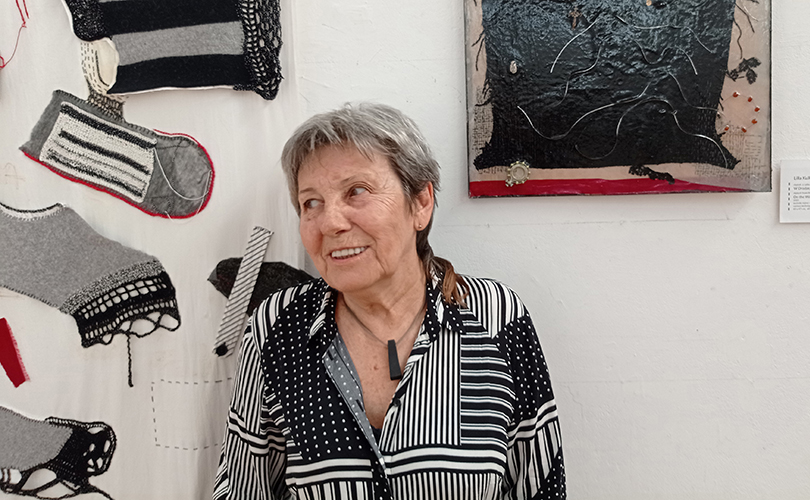
Lilla Kulka Portrait
Lilla Kulka portrait by portrait by Anthony Kulka-Sobkowicz

There’s a moment in weaving — the Polish textile artist Lilla Kulka has described it — when the work surprises you. When the loom leads rather than follows. For Kulka, that surrender to process is fundamental: “In the process of weaving, I am often surprised at the direction my work takes,” she says. It’s a quietly radical statement from an artist whose career has been defined by refusing the expected.

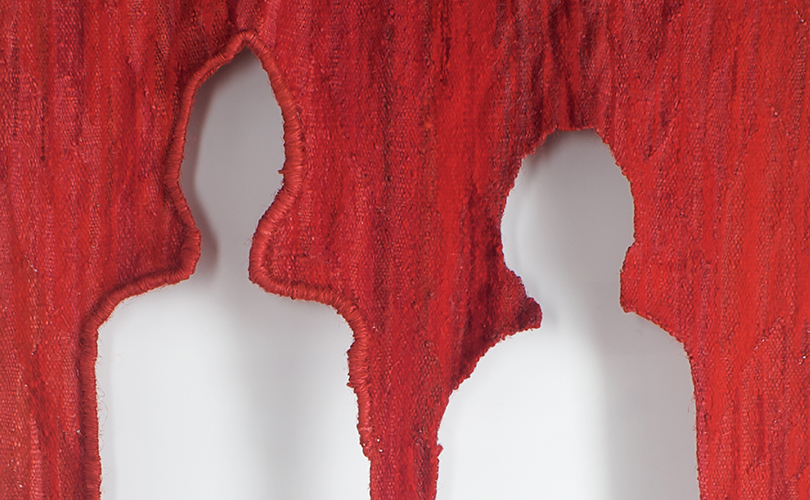
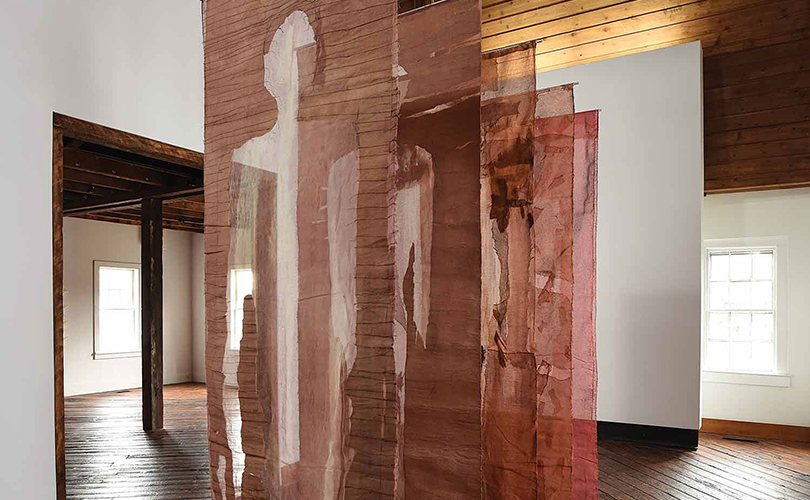
Detail of large red tapestry by Lilla Kulka
Detail of Lila Kulka’s, Pair, sisal, wool, stilon, 125″ x 77″, 1989. Photo by Tom Grotta

Born in 1946 in Kraków, Poland, Kulka came of age in one of the great centers of European textile art — a city where the Academy of Fine Arts carries a legacy stretching back to 1818, and where fiber art was being radically reimagined in the postwar decades. She went on to become a professor at that same institution, shaping generations of Polish artists in her unique fabrics studio.

Steel weavings by Lilla Kulka
14lk Interference: (Ingerencja): LL; 15lk Interference: (Ingerencja): LK; lk Wall and Secrets: (Mur i Tajemnica): Two Worlds, Lilla Kulka, steel, linen, cotton, and fine jewelers’ silver thread, 36.5” x 32.75” each, 2007-2013. Photo by Tom Grotta

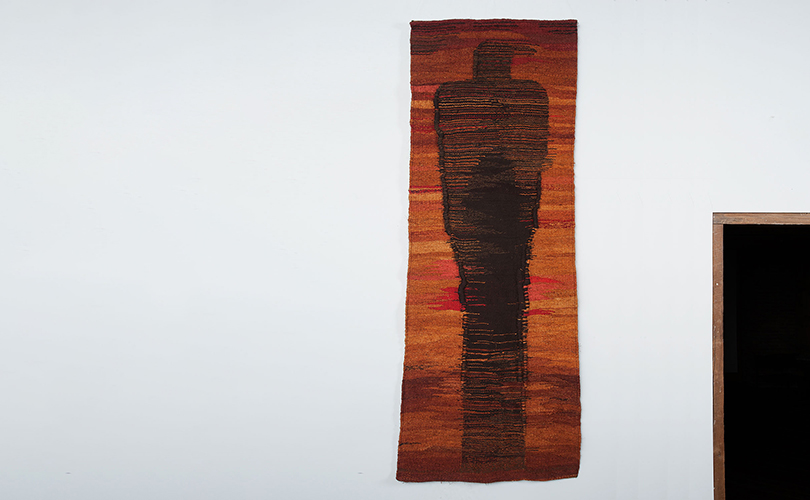
Kulka’s work defies easy categorization, which is precisely the point. She creates art on the intersection between fiber art, painting, and sculpture, and has spent her career dismantling the hierarchies that place one above another. As she puts it: “Rather than locking myself within the bounds of any one artistic tradition, I have disregarded such artificial barriers to expression.” The results are monumental. Works like Traces (1979) — woven in sisal and handspun wool, stretching nine feet tall — pulse with human presence without depicting it literally. Her early figurative vocabulary evolved into something more elusive: human shadows, outlines, traces of bodies rather than bodies themselves. These were meditations on the great mysteries of life — pain, power, love, faith — rendered in the language of horizontal and vertical lines. 

Lilla Kulka installation
16lk Tunnel Pamieci (Tunnel of Remembrance), Lilla Kulka, cotton, gauze, various threads and paper, 108″ x 40″ x 92″, 1992. Photo by Tom Grotta

What makes Kulka’s work particularly charged is its context. She has acknowledged that the political situation in Poland made it difficult to present all of her work publicly in the 1970s and early 1980s. That the work survived and circulated internationally is a testament both to her determination and to the peculiar freedom that fiber art, long dismissed as craft rather than fine art, sometimes enjoyed under censorial regimes.

Blue Lilla Kulka tapestry
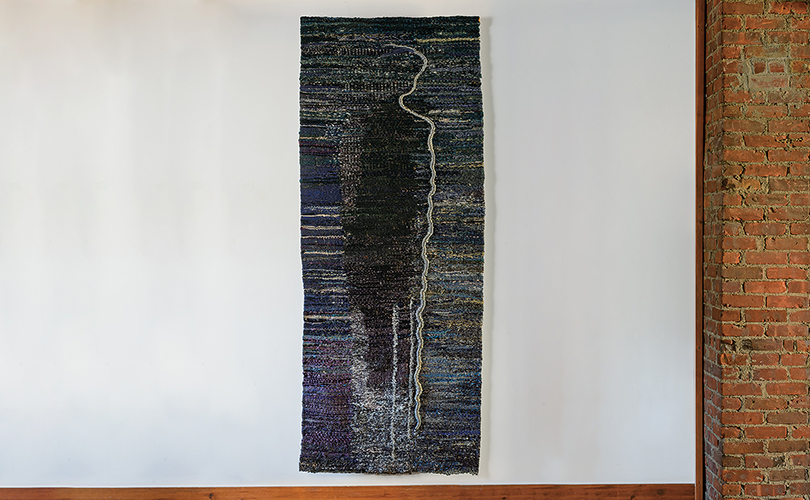
7lk Odchodzacy (DEPARTURE II) , Lilla Kulka, wool, cotton & stilon, 92″ x 36″, 1993. Photo by Tom Grotta

Her materials speak their own language. Sisal, wool, cotton, steel — she juxtaposes materials with diametrically different connotations, sometimes combining industrial slabs of steel with meticulously handwoven gobelin tapestries. Softness and hardness. The handmade and the industrial. The personal and the structural. It’s a visual argument about what it means to live in a body in a political world. Kulka’s work will be included in browngrotta arts’ upcoming exhibition, Transformations: dialogues in art and material (May 9 – 17, 2026).

Small Lilla Kulka collage
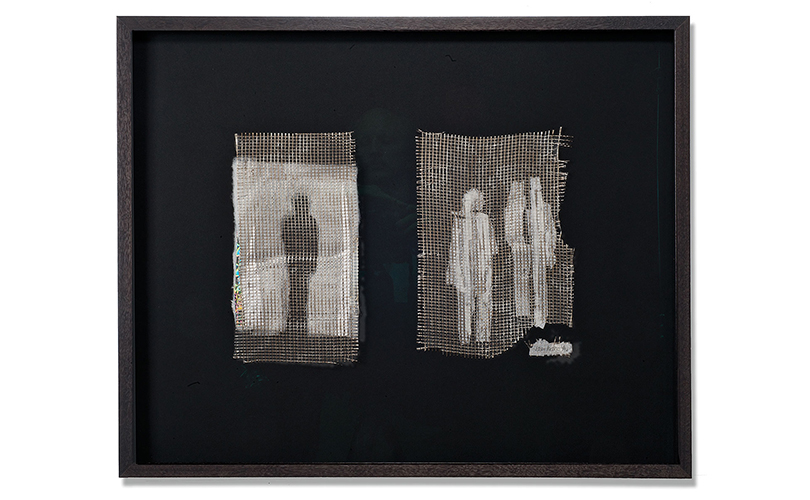
10lk Small Collages I & II, Lilla Kulka, Collage I (2 figures), 1994 , Collage II (1 figure), 22.75″ x 28.5″, 1993-94. Photo by Tom Grotta

Kulka’s work spans tapestry, painting, drawing, interdisciplinary activities, and exhibition design, and she has participated in over 300 exhibitions across 17 countries in Europe, the United States, Canada, Mexico, Brazil, and Israel. She has shown at venues ranging from the Central Museum of Textiles in Łódź — home of the prestigious International Triennial of Tapestry — to galleries in Vienna, Düsseldorf, Chicago, and beyond. 

Orange tapestry by Lilla Kulka
8lk Traces, Lilla Kulka, sisal and hand spun wool, 108″ x 42″, 1979. Photo by Tom Grotta

The enduring relevance of Kulka’s vision was celebrated in 2025 in Krakow in a three-venue exhibition, Tempus Omnia Revelat (Time Reveals All). A comprehensive catalogue raisonné of the same name was published to accompany the exhibition that includes over 300 pages of illustrations and essays. Included are a lengthy interview with the artist and excerpts from a 2003 review by Professor Magdalena Abakanowicz. “Lilla Kulka works in techniques that did not exist before,” she wrote. “The blindness of convention may label them as weaving, yet they are magical, multilayered, and thought-provoking objects, appearing today with particular clarity against the backdrop of society’s dependence on mechanical techniques.”

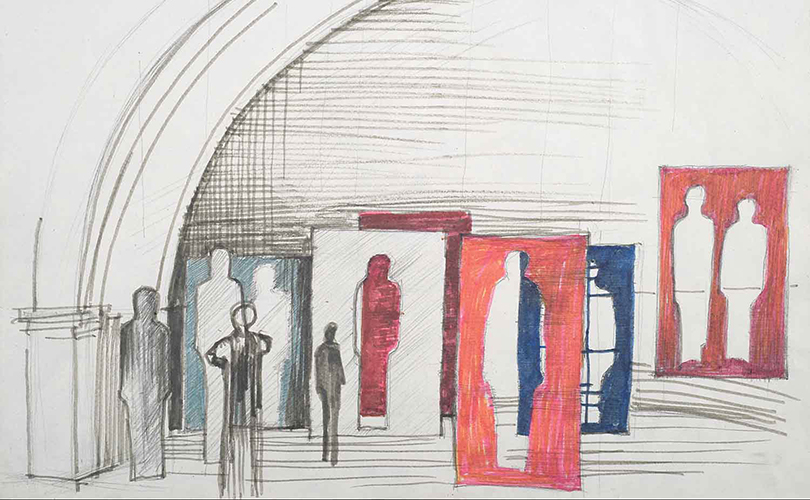
Lilla Kulka Exhibition drawing
10lk Drawing I , Lilla Kulka, paper drawing, 11.75″ x 16.5″, Exhibition Drawings for the Chicago International New Art Forms Exposition at Navy Pier in 1989. Photo by Tom Grotta

For those encountering her work for the first time, the invitation is open. As Kulka herself says: “The abstract content of my work cannot be easily explained by the titles of each piece. I invite each viewer to search for and find an individual meaning in my work.”


Light Effects: the extra element

Light plays a key role in our experience of art. Artists create dramatic, immersive environments with light, shifting the focus from mere representation to a sensory experience Sometimes light is used to create an emotional impact — soft light for tranquility; cool light for tension; dark tones for despair.  Masters, such as Rembrandt and Caravaggio, used dramatic contrasts between light and dark to create mystery and theatrical focus. Symbolically, light has been used to represent divinity, knowledge, and revelation — often in religious contexts. In other works, light creates the illusion of depth, sculpting form and volume. In contemporary works light is the medium itself — LEDs, neon, optical fiber.

Light can also impact a viewer’s experience — influencing the narrative, highlighting focal points. In the works pictured here, light influences the viewer’s experience, creating one — or more —  works when light is shown on the art and a very different second work when shown without a light source. Straight on, light may turn a metallic-tinged work a brilliant white. When light is indirect, the highlight dim and new qualities emerge.

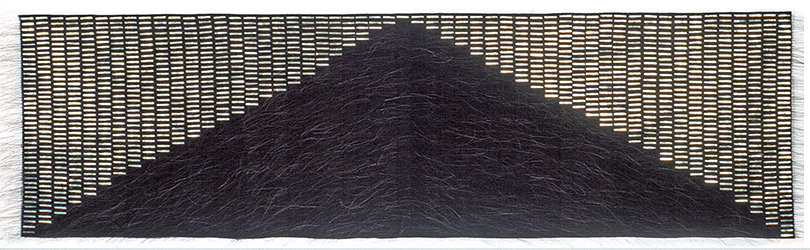
Adela Akers Night Pyramid tapestry
17aa Night Pyramid, Adela Akers, linen, horsehair and metal, 28” x 100”, 1999. Collection of the Metropolitan Museum of Art. Photo by Tom Grotta
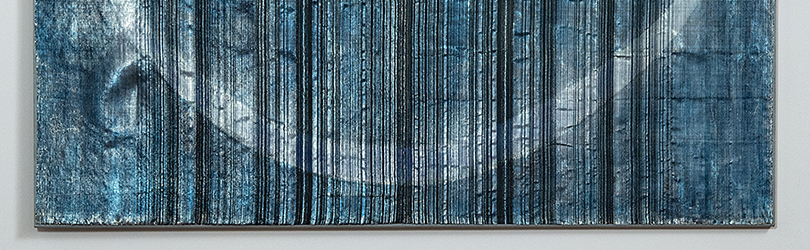
Polly Barton Serence Countenenace textile
11pd Serene Countenance, Polly Barton, Japanese silk and metallic monofilament warp with indigo pigment and soy milk; metallic thread weft woven in two panels, 47″ x 57″, 2013. Photo by Tom Grotta

In Adela Akers’s Night Pyramid, a mountainscape comes into sharp focus when illuminated. The image is formed from small strips of foil integrated into the weaving. In Serene Countenance by Polly Barton, the artist uses metallic monofilament and metallic thread to create a subtle glimmer in shadow that transforms into a glowing orb when a light source is introduced. The weft’s metallic thread is brass wrapped around a nylon core, while the warp is a striped combination of silk and metallic-coated monofilament. Other examples of works incorporating metallic threads are Baiba Osite’s Lauks (Field in Autumn) and Animal by Lija Rage.

Gold leaf Glen Kaufman
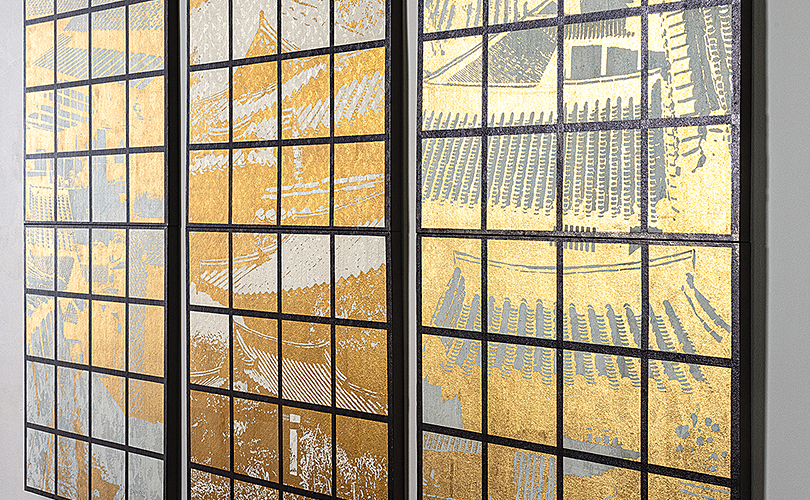
Glen Kaufman: 12gk Yoshikawa, Noto; 233gk Murgang-sa Namsan; 13gk Pulguk-sa, Kyong-Ju, silk damask, silver leaf; screenprint, impressed metal leaf, 48” x 24” x 1” (each), 1990. Photo by Tom Grotta

While living in Japan in the 1980s, Glen Kaufman developed a unique and complex technique in which light provides the finishing touch. He began by weaving a twill pattern in silk, composing collages of photographic imagery and silk-screening those images onto the cloth. He then further abstracted the imagery by applying metal leaf. “When I began using … photography, photo silk screen, metal-leaf application,” Kaufman said, “[it] was a unique use of those materials.”

22cy The Moon, The Stars, The Sun, Chang Yeonsoon , eco-soluble resin, pure gold leaf, teflon mesh, Hung square they are 34” x 34” x 7”, 2019. Video by Tom Grotta

Yeonsoon Chang also employs metallic materials, developing a method to adhere gold leaf to fibers. Her striking works blend innovative technique with references to classical Eastern philosophy. In works such as The Moon, the Stars, the Sun, light reveals shifting perspectives and diverse experiences. In one video, illumination transforms an already intriguing piece into something entirely new, bringing the metal leaf into sharp focus and casting compelling shadows through the mesh structure

Kyoko Kumai, stainless steel sculpture
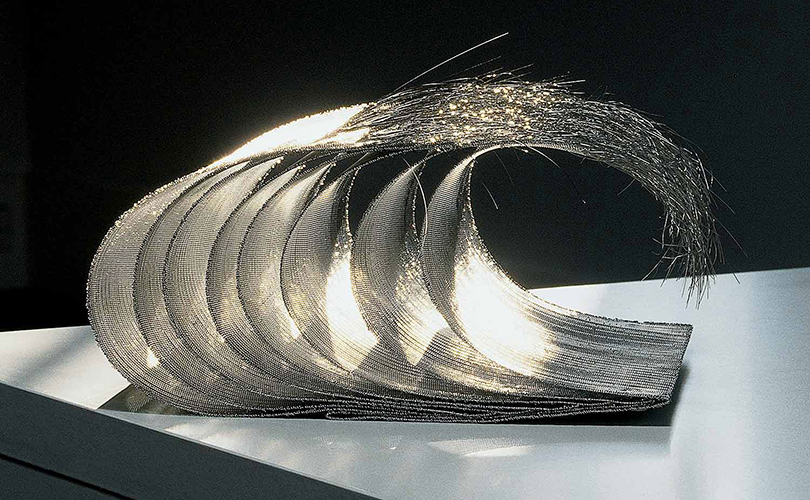
3kk Blowing in the Wind-W, Kyoko Kumai, stainless steel filaments, 2001. Photo by Tom Grotta
Mica and steel wall hanging by Agneta Hobin
9ah En Face, Agneta Hobin, mica and steel, 70” x 48”, 2007. Photo courtesy of Agneta Hobin

In Kyoko Kumai’s hands, stainless steel mesh appears infused with light, an effect heightened when an external light source is added. Agneta Hobin’s works pull glimmers of light through stainless steel mesh and the unexpected use of mica.

Fiber Optic weaving by Wlodzimierz Cygan
20wc Totems, Wlodzimierz Cygan, linen, sisal, fiber optic, 37″ x 37″ x 7″, 2022. Photo by Tom Grotta
Elégante fiber optic weaving by Mariette Rousseau-Vermette
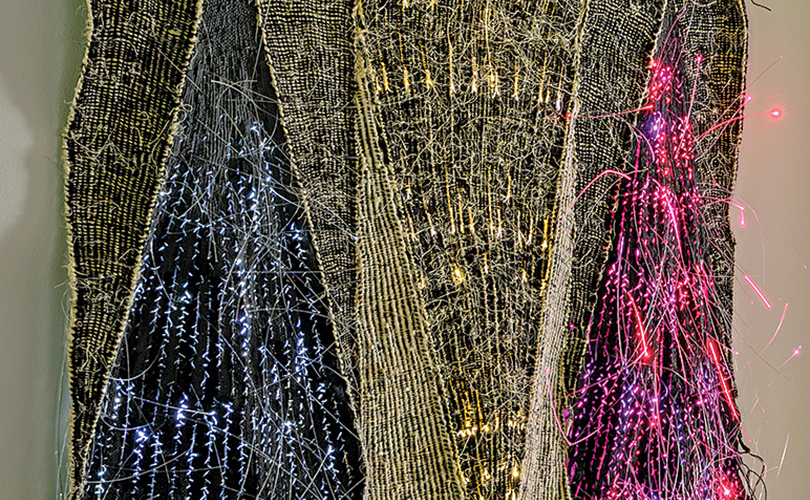
Detail: 626mr Elégante, Mariette Rousseau-Vermette, wool, optical fiber, metallic thread, mylar, 48″ x 48″, 2000. Photo by Tom Grotta

Optical fiber provides an exciting medium for artists Wlodzimierz Cygan and Mariette Rousseau-Vermette. In Totems, a complex weaving takes on a new character when the optical fiber is lit and shifts in color. In Mariette Rousseau-Vermette’s Élégante, a slash of shimmering optical fiber creates subtle intrigue when unlit and serves as a dramatic counterpoint when illuminated. 

Several works for which light is an element or an enhancement will be included in browngrotta arts’ upcoming exhibition, Transformations: dialogues in art and materials (May 9 – 17).