Tag: Polly Barton

Art Assembled — New this Week in January

Off to a good start in 2026 — we’ve brought four interesting works to you attention in January. 
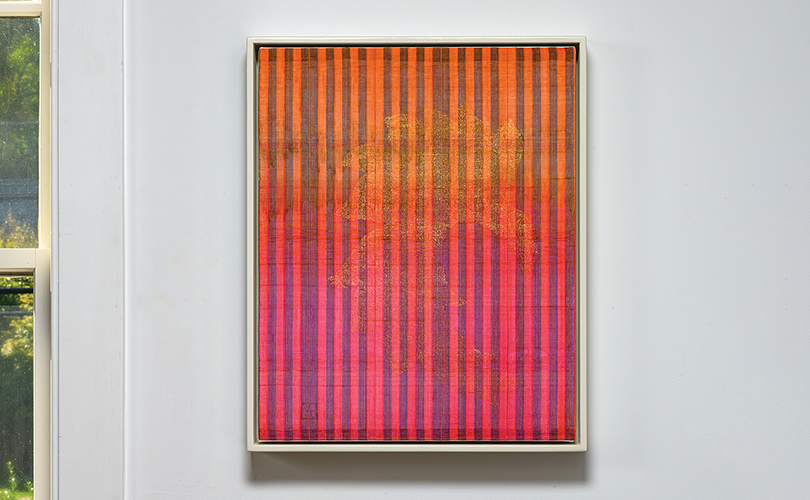
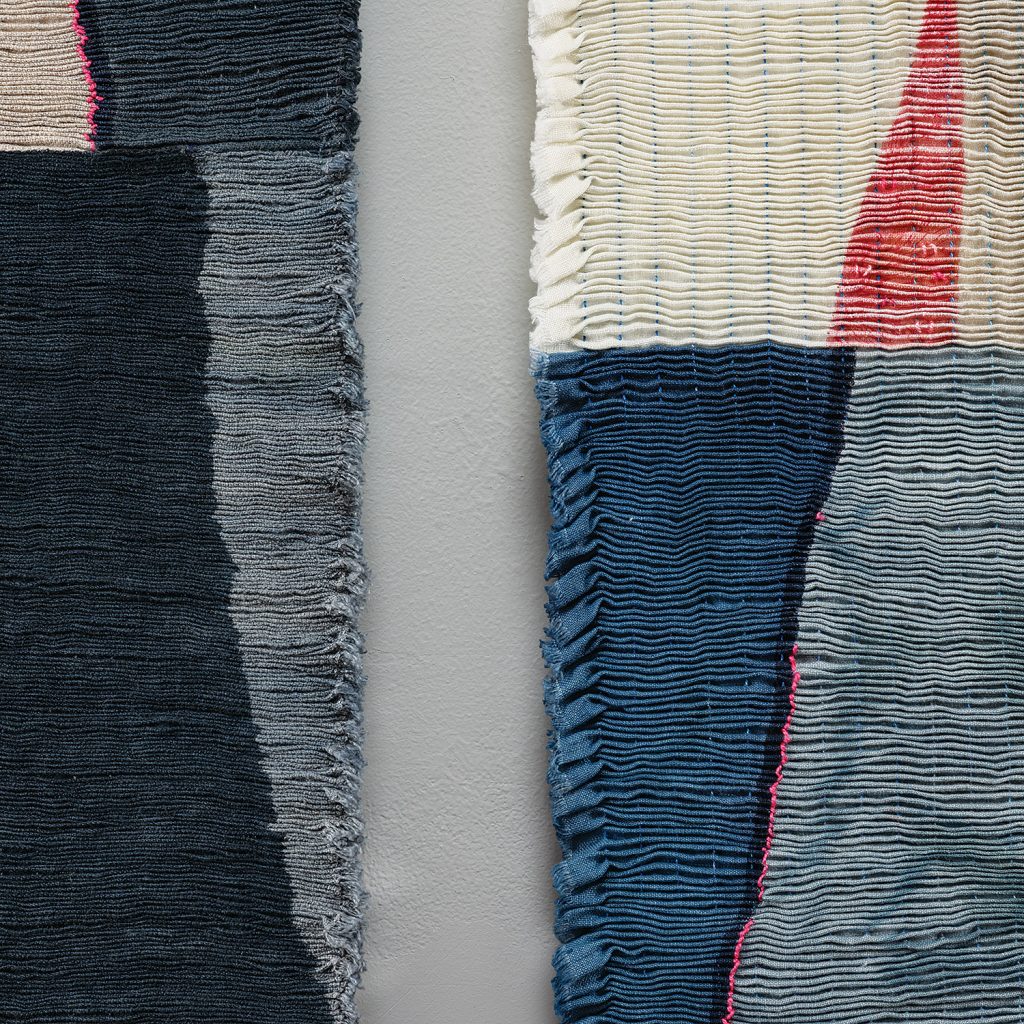
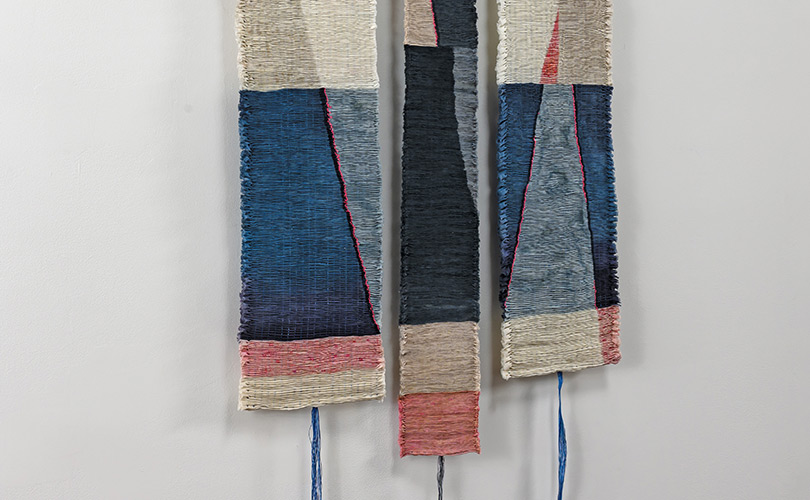
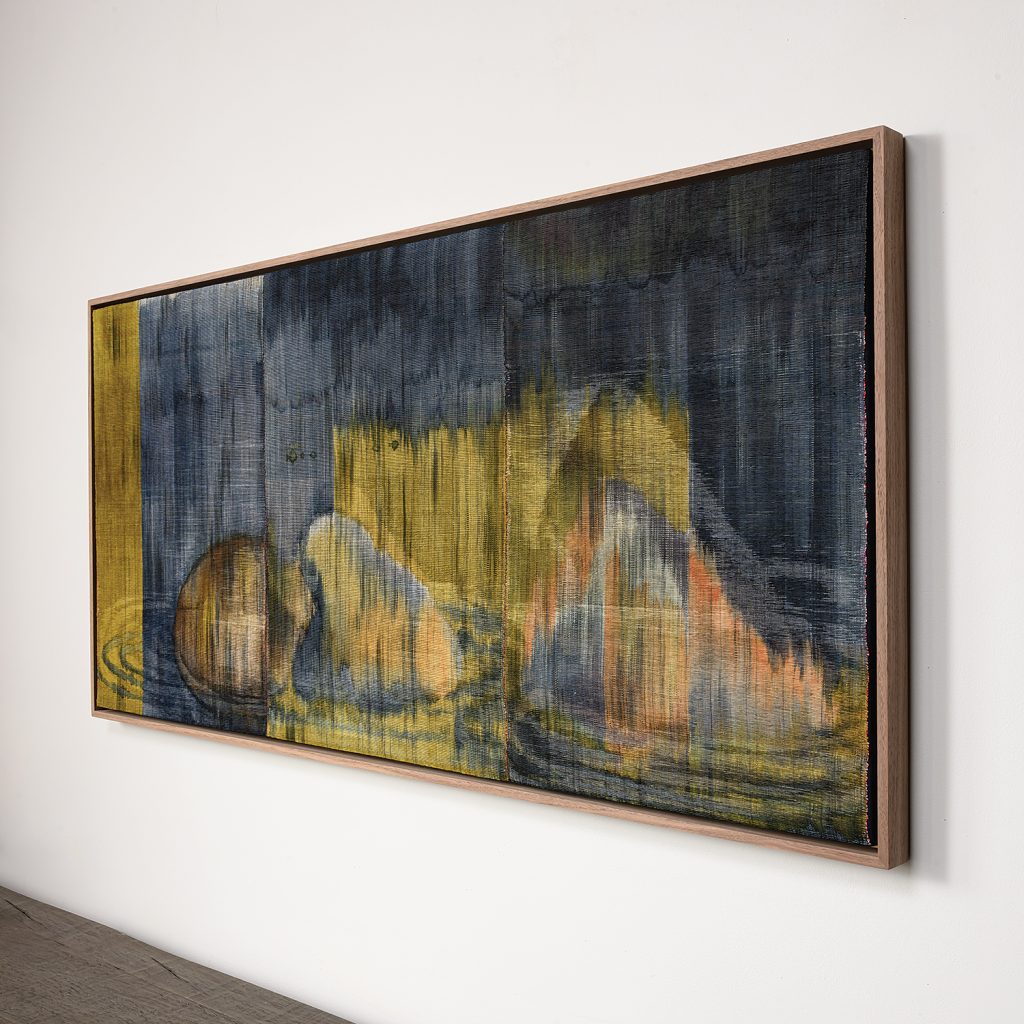
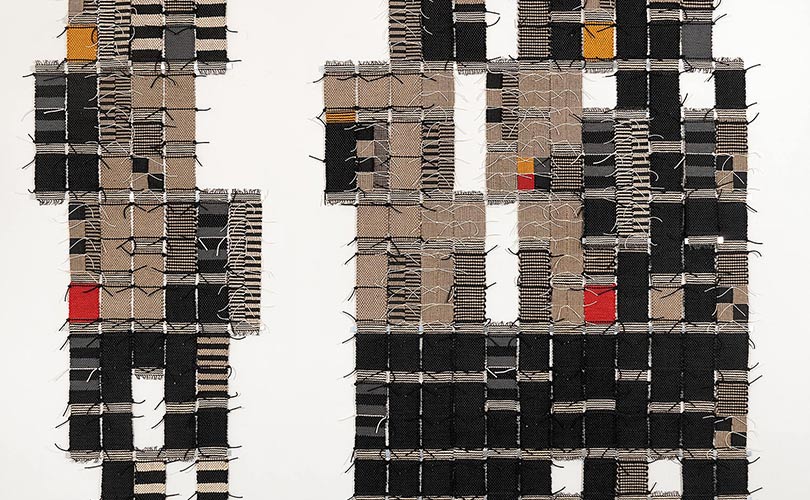
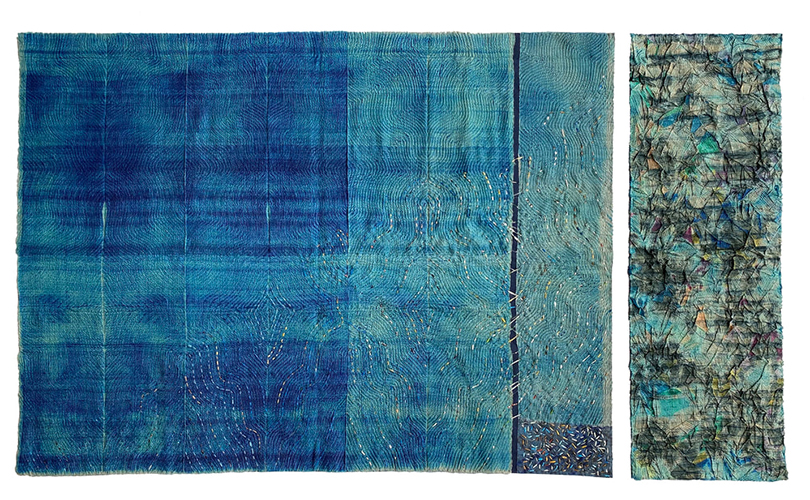
Polly Barton textile
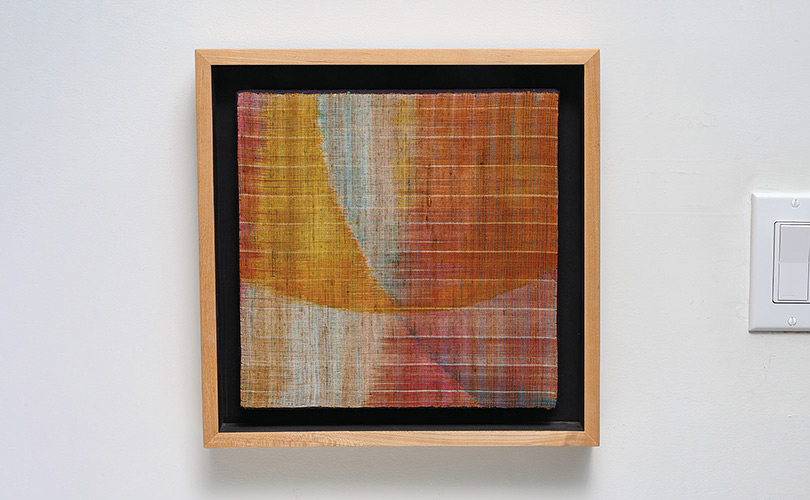
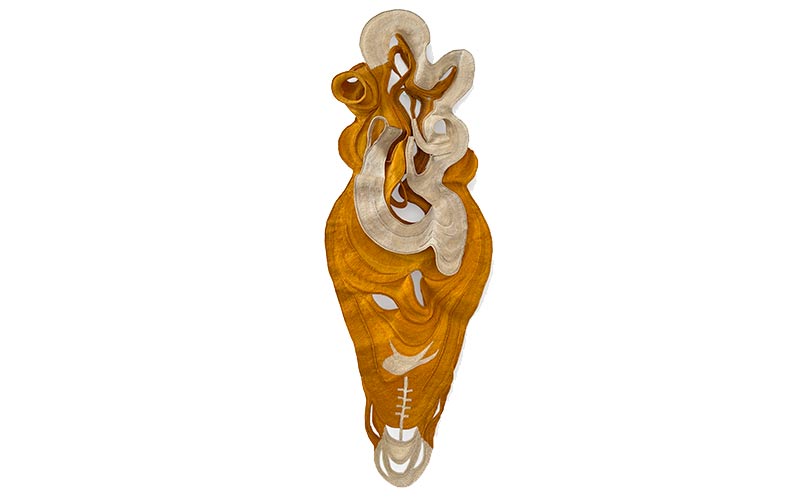
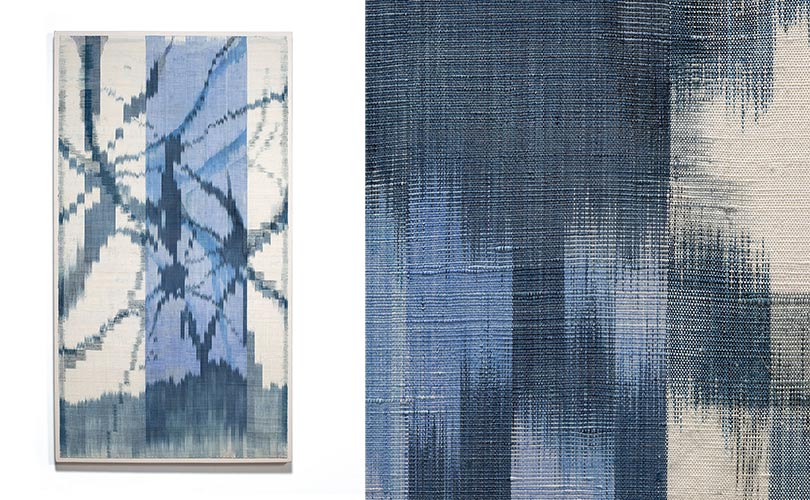
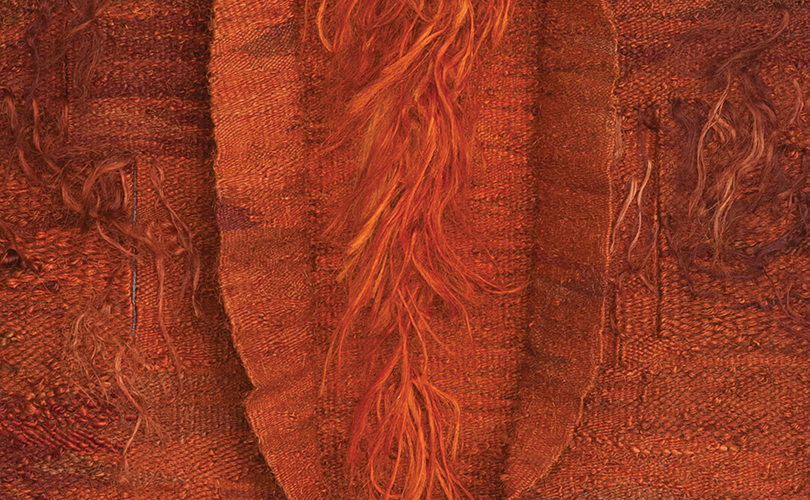
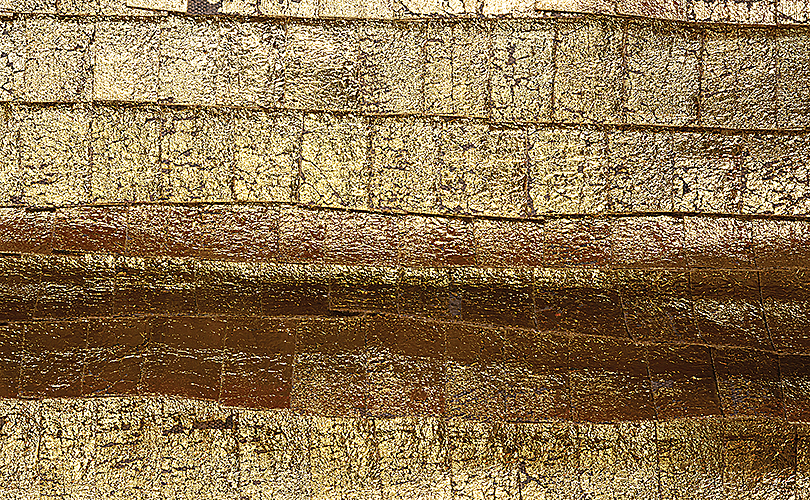
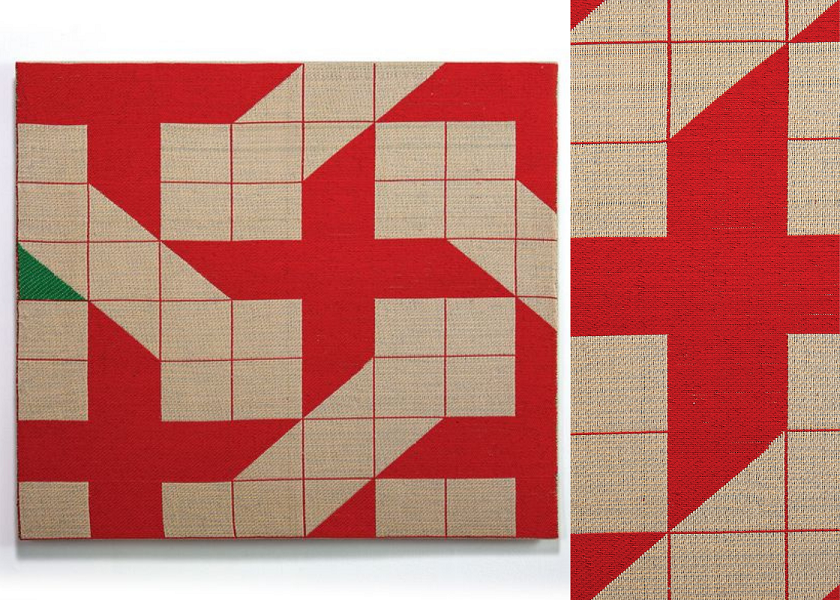
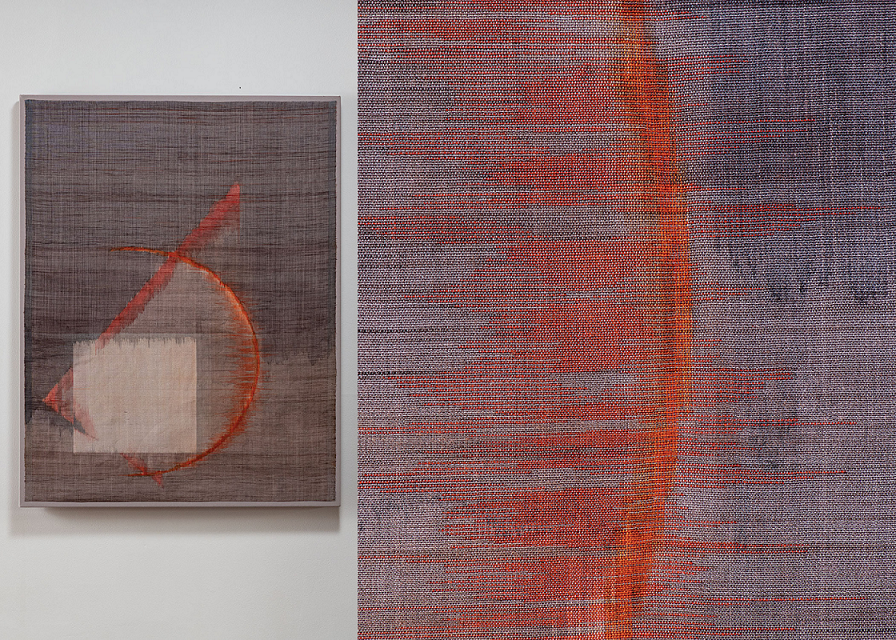
19pb Salvia Sclarea (Clary Sage), silk warp with gold leaf, silk weft around a metal core, 22.125” x 18.125” x 2.75”, 2025. Photo by Tom Grotta

We began with Polly Barton’s Salvia Sclarea (Clary Sage)In 1978, Barton went to Japan as an exchange student where she visited a weaving studio filled with incredibly colored dyed silk. She returned to Japan in 1981 to study weaving at the Oomoto School of Traditional Arts where she discovered that weaving was her calling. She learned silk weaving from the man who warped the looms of living national treasure Fukumi Shimura. As Barton developed her artistic process, she realized that seeing how painter Helen Frankenthaler — for whom Barton had served as an assistant — impregnated her canvases with pigment, gave her “permission” to build up layers of color in her woven ikat works.

In Salvia sclerea — which inspired the title of this piece is the herbaceous plant clarey sage. This work incorporates an image of the plant that moves in and out of view depending on thow the light hits it.
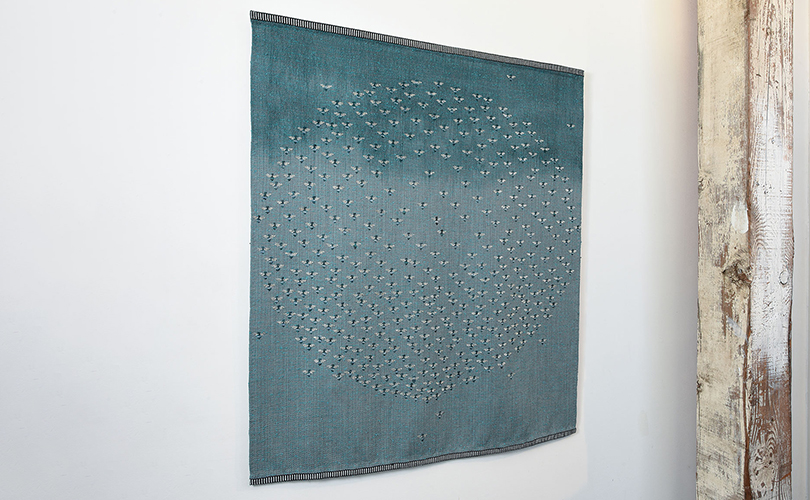
Laura Foster Nicholson Tapestry of Bees
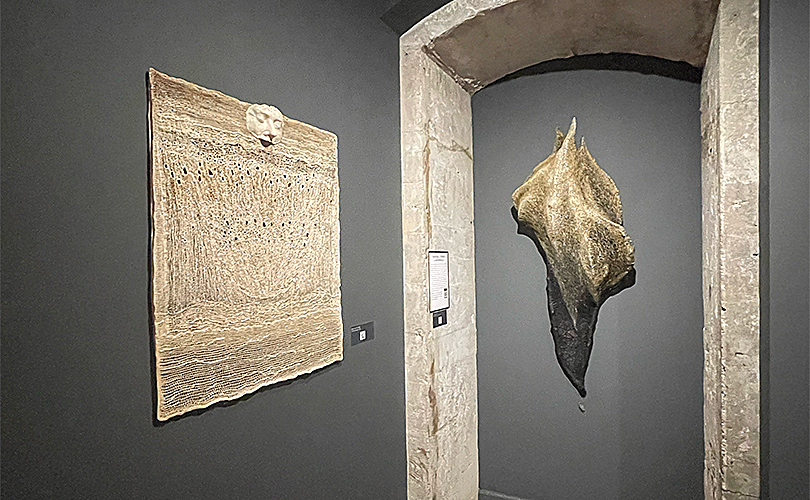
18lf Being Here, Laura Foster Nicholson, wool with metallic, 41” x 34”, 2011. Photo by Tom Grotta

Another work that connects with Nature is Laura Foster Nicholson’s Being HereBees are a metaphor for the soul, Nicholson says. Her work Being Here, is from a series of works involving bees and bee hives. Nicholson often reflects gardens and scenes of domesticity in her tapestries. “I have been a beekeeper, and always felt that it was magical and a true privilege to don a bee suit and stand among thousands of busy, humming honeybees. Being Here is the culmination of a body of work about moving through pain to the state of grace that is acceptance.  The orb of shimmering insects represents the final opening up to the transformation.”
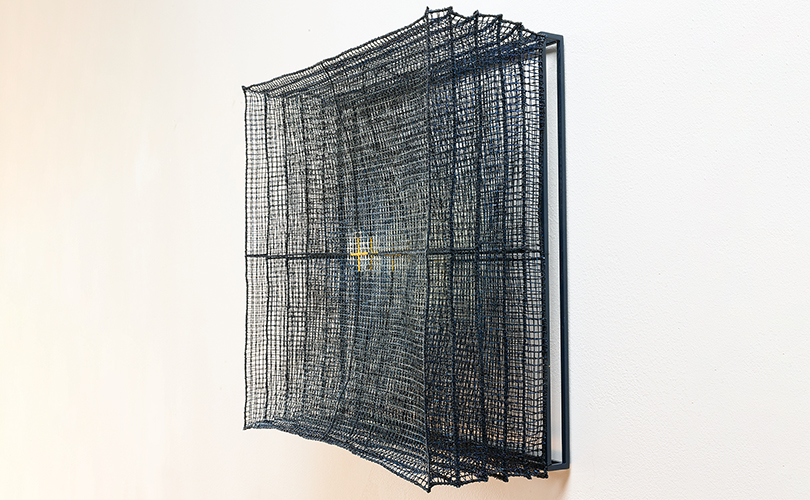
Yeonsoon Chang dimensional grid
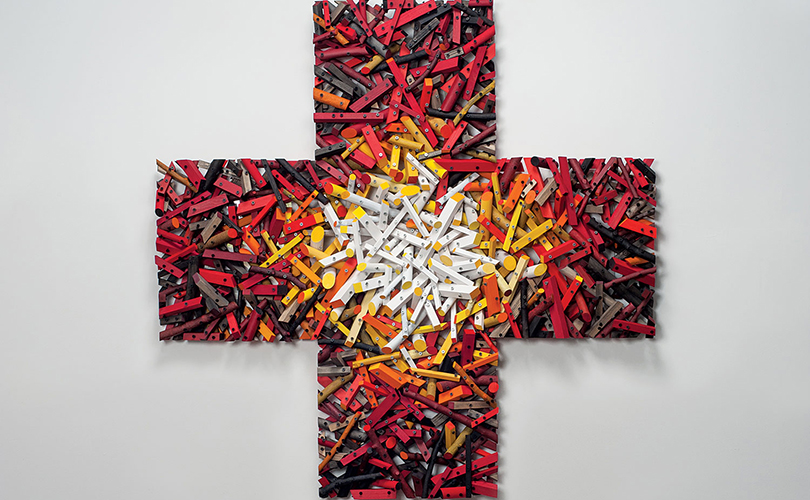
18yc Matrix III-201612, Yeonsoon Chang, polyester mesh, machine sewn, 14” x 14” x 4.75”, 2017. Photo by Tom Grotta

Yeonsoon Chang has created an eco-friendly resin to use in creating sculptural works of hemp and polyester mesh. Recurring themes in Chang’s work include time, space, and the myriad relationships that intertwine them. Chang’s process requires 12 complex and meticulous steps, including refining, dying, ironing, and sewing, all of which require considerable mental focus. She considers it her calling to bring to life the spirit of Korean craft, allowing it to breathe and resonate through works like Matrix III-201612. Chang was a Loewe Foundation Prize nominee and the first Korean artist to have her works acquired by the renowned Victoria & Albert Museum in the UK. Her work was also featured in the Cheongju Craft Biennale in 2025.
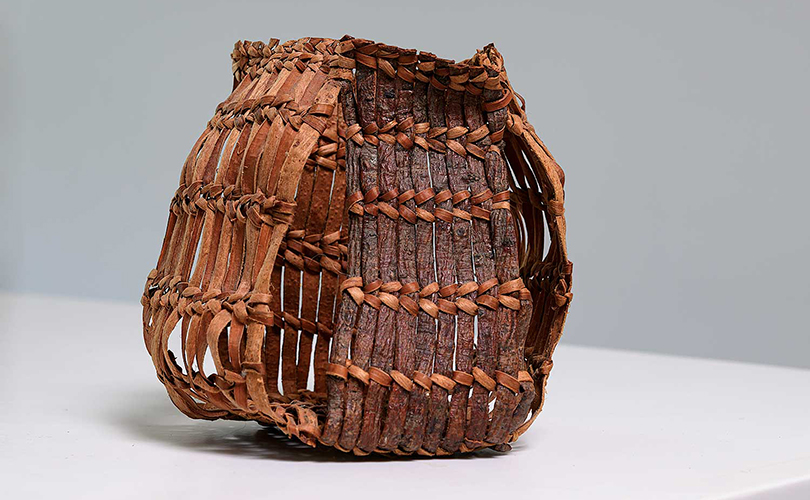
Small Dorothy Gill Barnes Pine Bark Basket
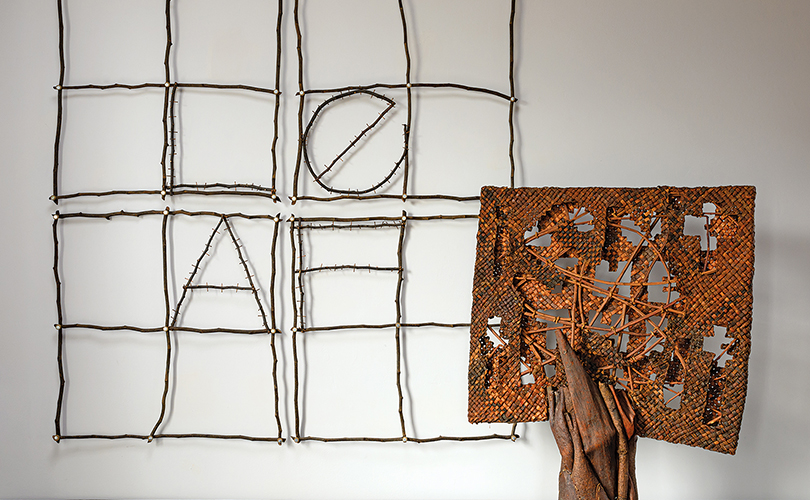
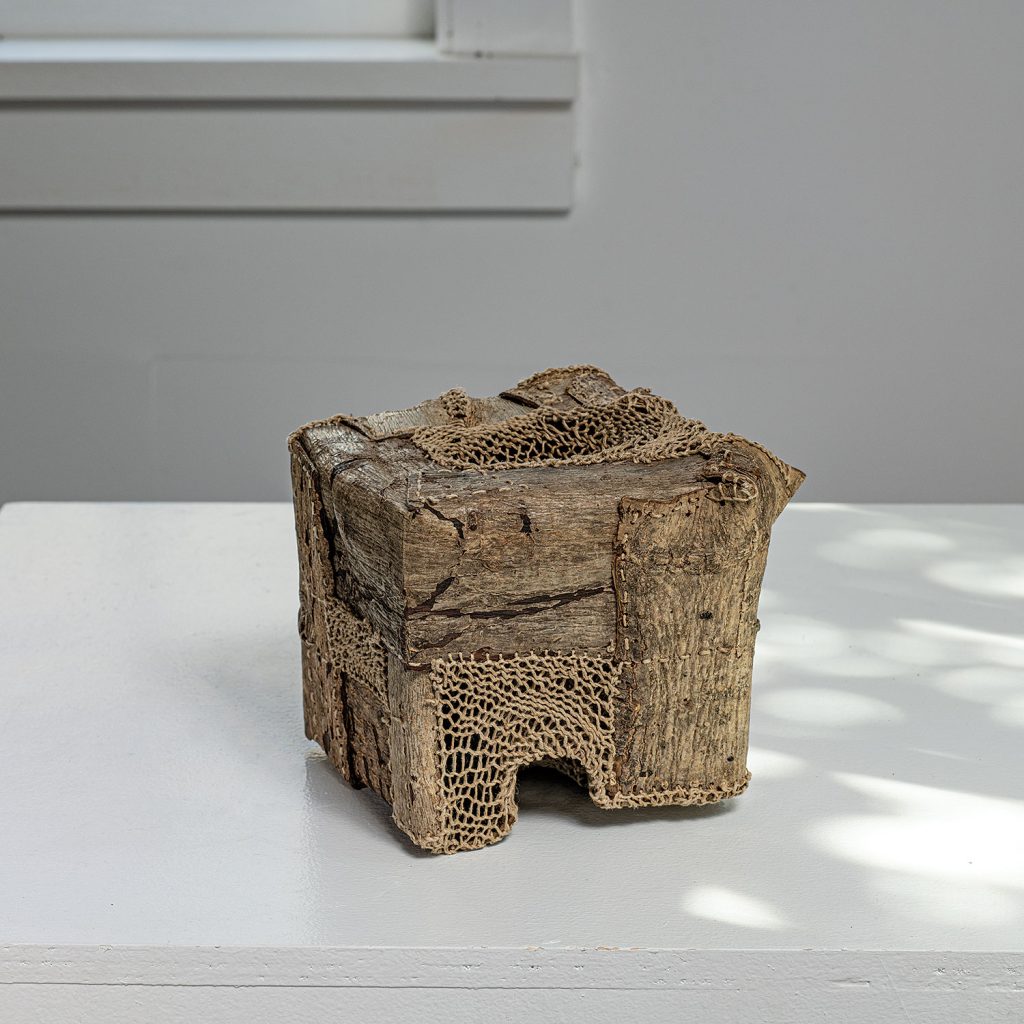
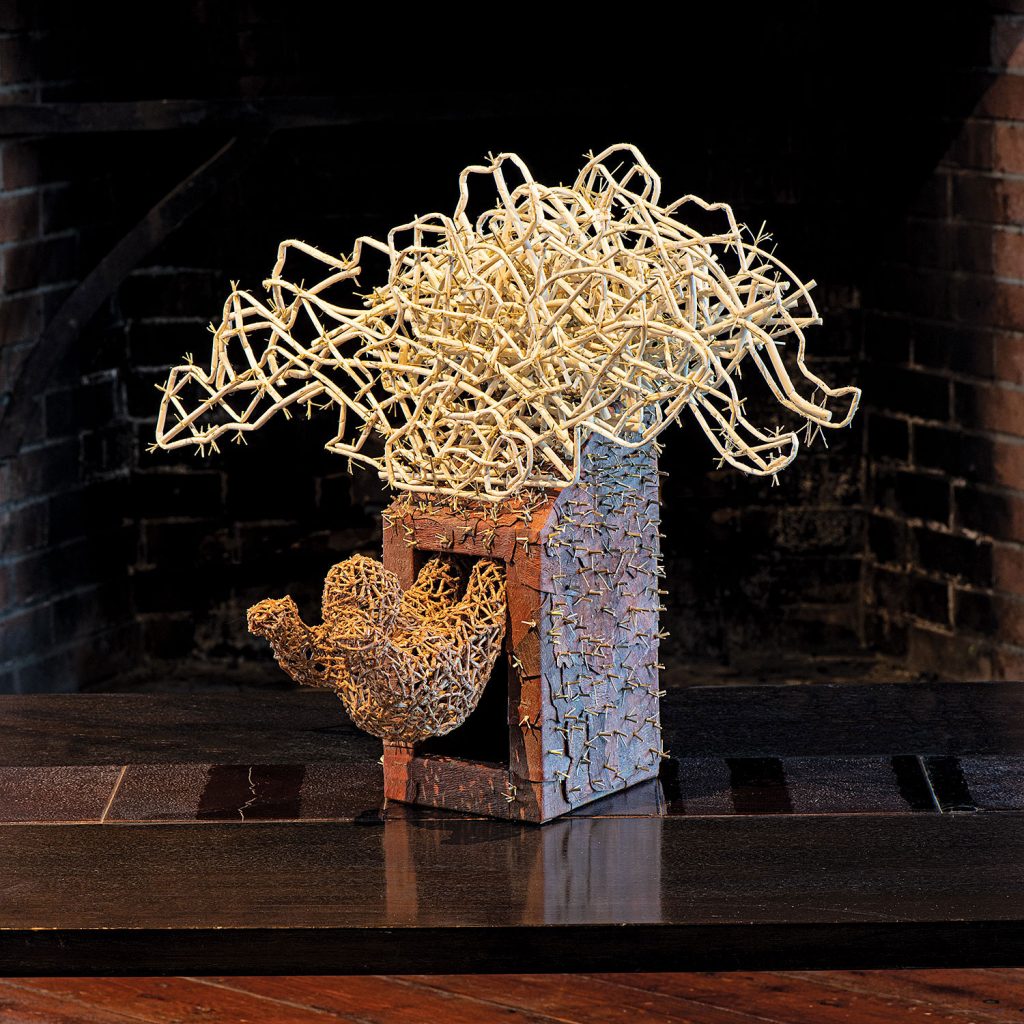
91dgb Inside-Outside, Dorothy Gill Barnes, woven pine bark, 3.5” x 3” x 3.5”, 1990’s. Photo by Tom Grotta

Inside-Outside by Dorothy Gill Barnes is an excellent illustration of the artist’s remarkable way with wood (the name of browngrotta arts’ 2023 monograph, Dorothy Gill Barnes: A Way with Wood, in fact).  Bark—from pine, spruce, elm, basswood, mulberry, and many other trees—played a seminal role in her work. She cut or tore bark in strips and wove it into basket- or vessel-like forms, folded it into rectangular boxes and windows, pulled it back like a banana peel, and wrapped it around rocks. To add tension and contrast, she paired bark from different species of trees, different textures of bark from the same tree, and peeled or unpeeled surfaces. In Inside-Outside, she has paired wood strips with bark and strips without bark, weaving them to form the base and stitching the strips to form the sides.  

More works to come in February!
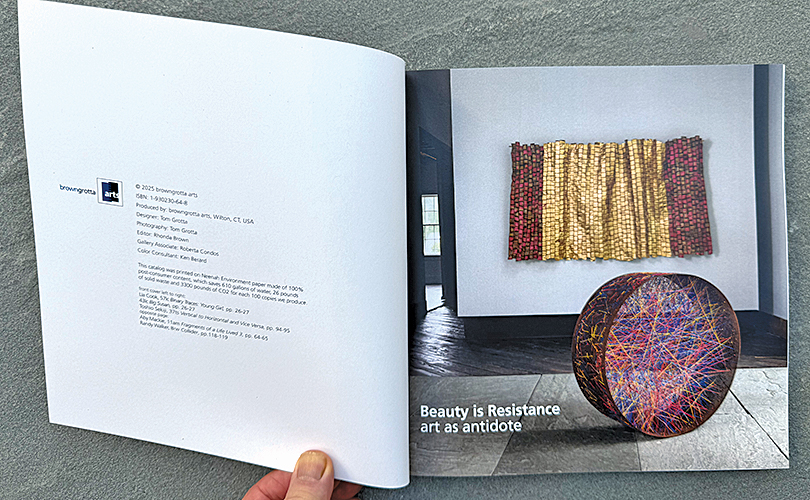

In Print: Beauty is Resistance

Title Page Beauty is Resistance Catalog
Works by Abby Mackie and Randy Walker. Photo by Tom Grotta

If an exhibition takes place but there is no catalog to document it, did anyone see it? Certainly not enough people have seen it, as far as browngrotta arts is concerned.  That’s why we produce a catalog for nearly every exhibition we host.

Nnenna Okore spread

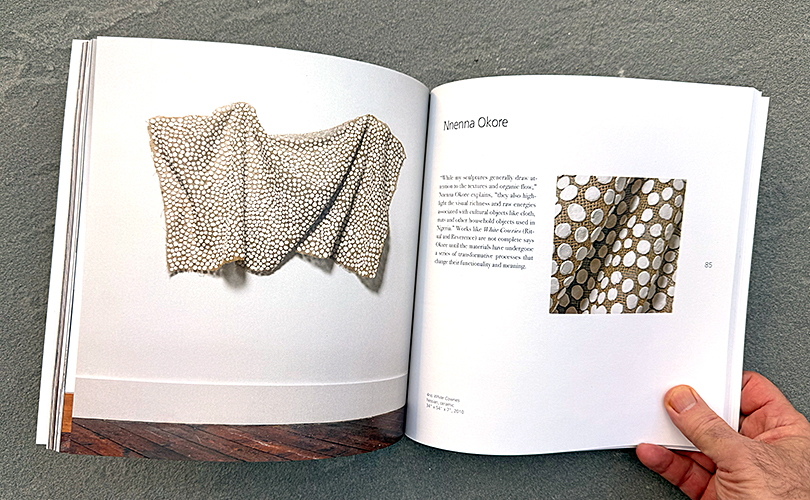
We had hundreds of people visit our Fall 2025 exhibition,  Beauty is Resistance: art as antidote. But we also cowry to share the remarkable works in Beauty with even more people through our installation video and Zoom talkthrough, both on our YouTube channel, and through the print version of the show, a catalog (our 61st), available on our website.

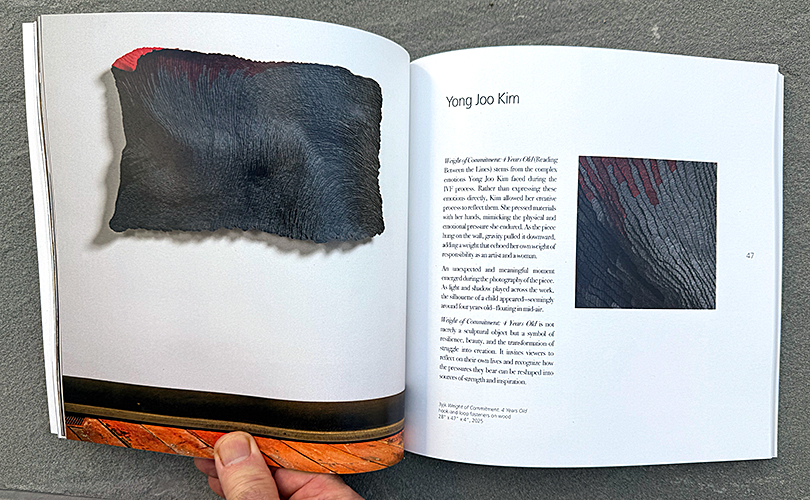
Yong Joo Kim Spread

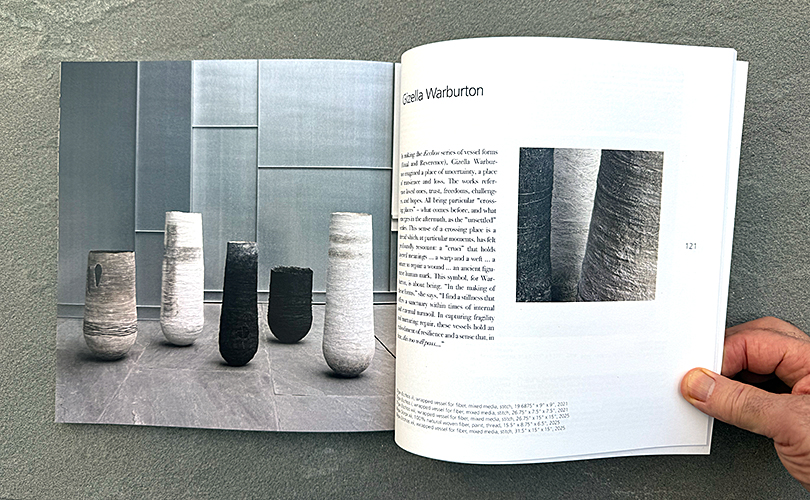
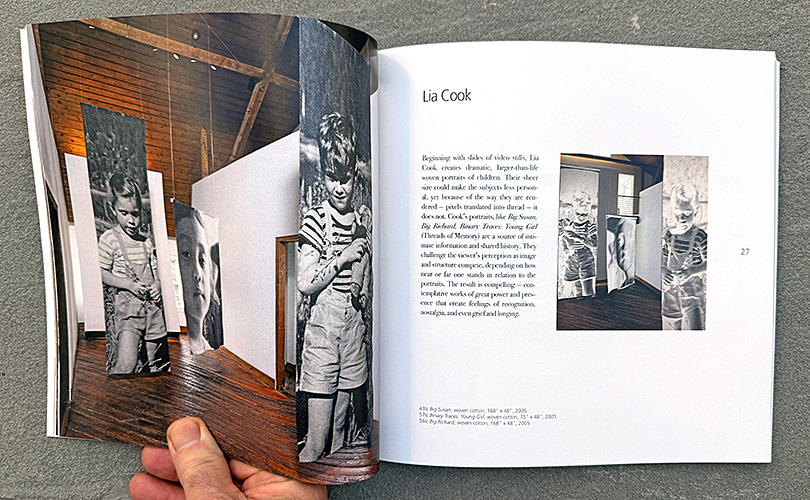
The 132-page catalog contains 125 full-color images. There are full view and detail images of each of the featured works in the exhibition. There are statements about each work in the catalog. The works in the exhibition fell loosely into four subthemes: Reading Between the Lines, Threads of Memory, Radical Ornament, and Ritual and Reverence, and the catalog identifies the category that each work falls into.

Gizella Warburton Spread

Elizabeth Essner, Windgate Associate Curator at the Museum of Art, Houston contributed an insightful essay to the catalog, “Looking at Beauty.” Essner writes about the role of nature in many of the artists’ work — for materials, lessons, and poetic inspiration. She examines varying historic conceptions of beauty, subjective, objective, and embodied, and discusses the significance of prevailing cultural aesthetics. in summarizing beauty’s pivotal place in art, Essner quotes late art critic Peter Schjeldahl (1942 – 2022) who predicted that in the future, “beauty will be what it always has been and, despite everything, is now in furtive and inarticulate ways: an irrepressible, anarchic, healing human response without which life is a mistake.”

Lia Cook Spread

Order your copy on our website. If it’s a gift, let us know at art@browngrotta.com before December 15th and we will gift wrap your copy before we send it.

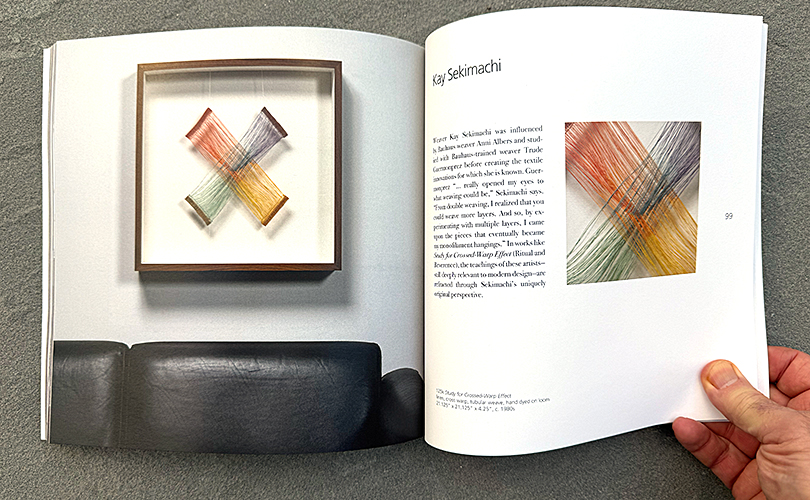
Kay Sekimachi Spread

Art Assembled

We have had a busy May. We presented Field Notes: an art survey in person at browngrotta arts in Wilton, CT and online.  We have partnered with the Silvermine Art Galleries on three exhibitions that run through June 19, 2025 (IFiber 2025; Masters of the Medium: CT; Mastery and Materiality: International), and loaned several works to the thoughtfully curated exhibition WEFAN in West Cornwall, CT (through June 28, 2025). And, we highlighted a new work online in New this Week each Monday for your review.

Cat's Eyes wall hanging by Keiji Nio
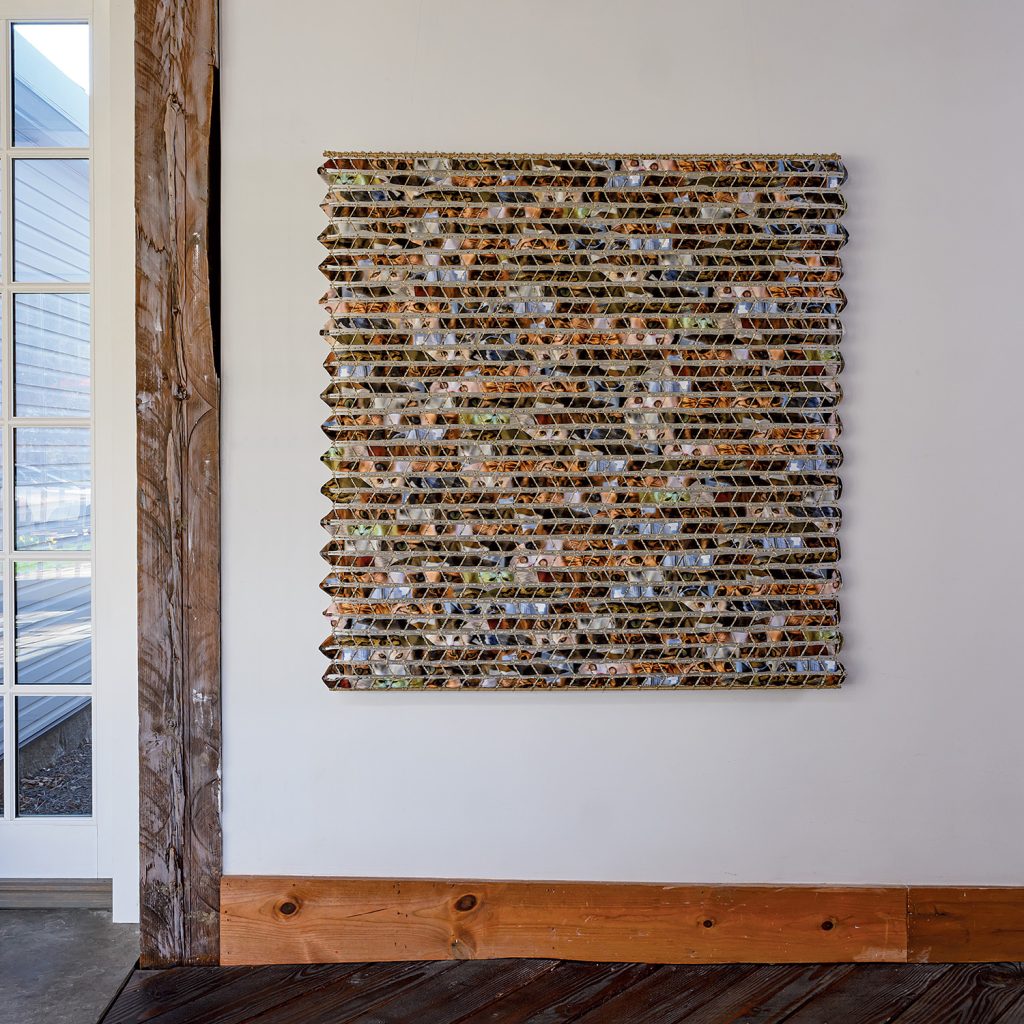
Keiji Nio, 33kn Cat’s Eyes, polyester, aramid fiber, 48” x 47” x 1”, 2025. Photo by Tom Grotta

In recapping those intriguing offerings, we begin with Keiji Nio’s captivating Cat’s EyesNio is captivated by these enigmatic animals. “When I suddenly feel a gaze and turn my eyes, I sometimes find a cat staring intently at me,” he says. “Especially quiet cats, who do not meow much, whooften keep their expression unchanged, gazing without blinking, as if trying to convey something unknowable. When I return the gaze, there are moments when we slowly exchange blinks.” Nio sought to confront his memories and emotional response to cats through images he silk-screened onto aramid fabric, with which he created a wall work edged in sand.

Polly Barton No Strings Attached tapestry
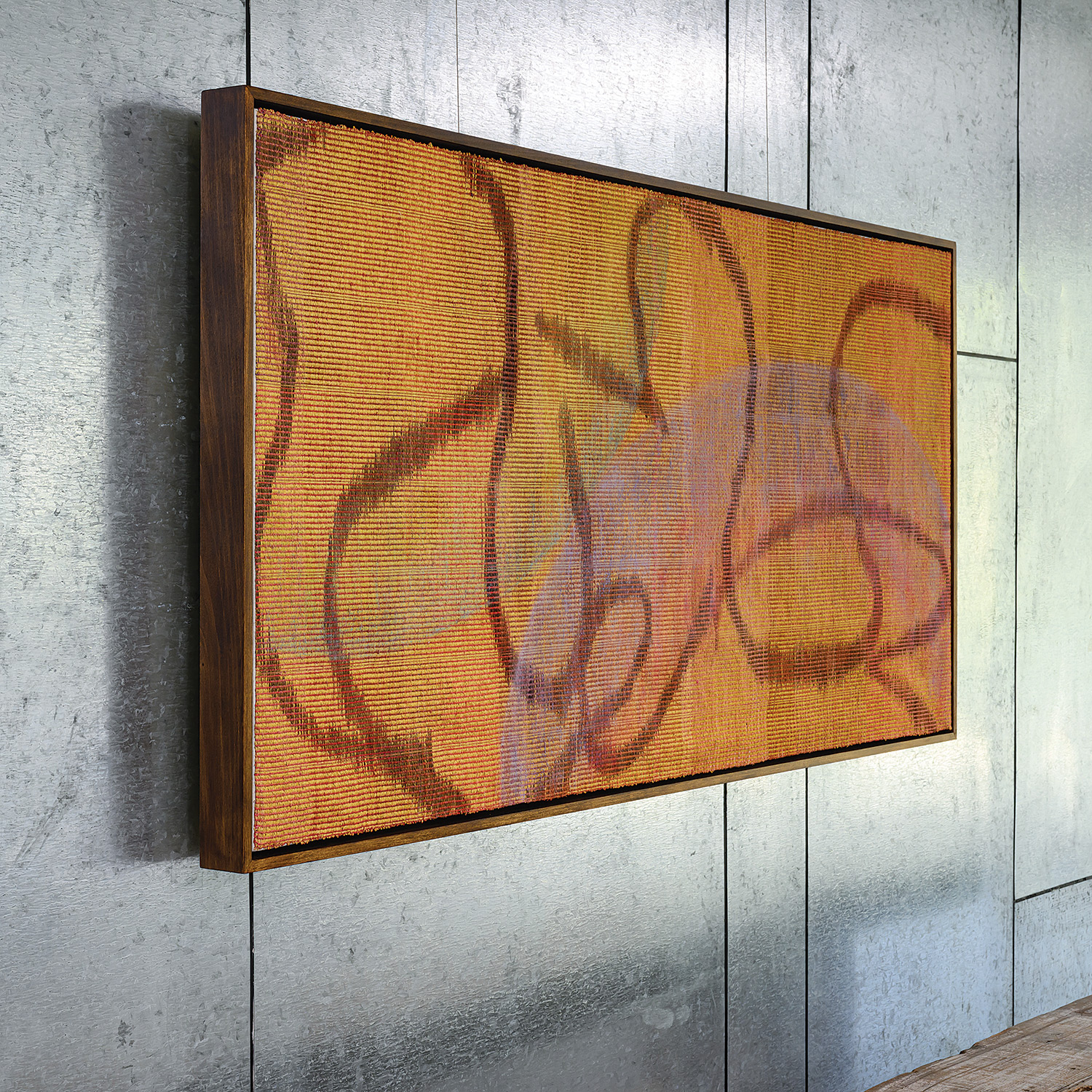
Polly Barton, 16pb No Strings Attached, silk, double ikat with pictorial weft ikat. Natural dyes, walnut ink, rubbed pigment. 31” x 62″ x 2.5”, 2025. Photo by Tom Grotta

Polly Barton finds solace in following the thread, which she calls “a kind of wayfinding.” She creates a surface to rub color in a variety of forms; dye, pigment, pastel, ink. “Working at the loom where my threads are in order and my fingers work with what feels real, chaos is temporarily kept at bay,” she says. No Strings Attached began as a small watercolor sketch — a memory of petroglyphs — field notes from the past carved into basalt stones found while hiking paths in canyons. “My sketch,” she says,”like a voice from the past, beckoned to be woven as a fluid path forward into our spinning world. In my studio, Sheryl Crow sings: ‘Everyday is a winding road.I get a little bit closer … to what is really real.’

Christine Joy Peak in the Clouds rock and willow basket
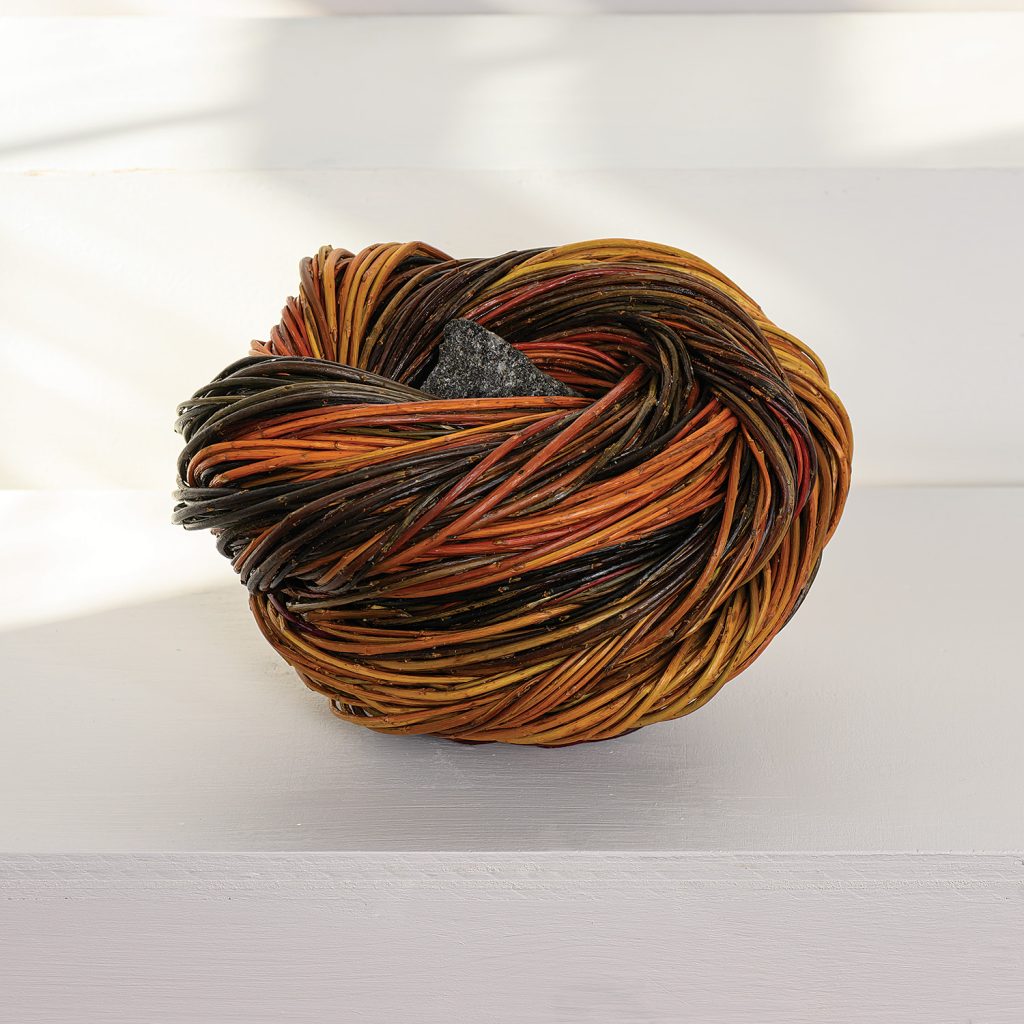
Christine Joy, 52cj Peak in the Clouds, willow, rock, 7″ x 9″ x 6″, 2024. Photo by Tom Grotta

Peak in the Cloudsis the first of a short series of “landforms,” that Christine Joy started in 2022 when she was on Washington Island, Wisconsin at a willow-gathering retreat. (You can read more about Joy’s willow-gatherine process in an earlier arttextstyle post.) She picked up the rock on the shores of Lake Superior noting that it was very different rock there than in Montana where she lives. “It was so black, sparkly, and geometric with a sharp point,” she says. “It occurred to me that rocks are just small landscapes. I started weaving around the rock during the retreat. Then, I let it sit for over a year; I just didn’t have the right color willow to work on it.” Eventually, she added more yellow. “I really like the color, like sunset in the clouds. The yellow changes colors slowly as it dries, losing some of its vibrancy, but blending better with the brown willow.” 

Caroline Bartlett wall hanging
Caroline Bartlett, 26cb Juncture, Linen, cotton thread, perspex battening, 61″ x 26.5″, 2025. Photo by Tom Grotta

Caroline Bartlett explores the historical, social, and cultural associations of textiles, their significance in relation to touch and their ability to trigger memory, in her work. She Imprints, stitches, erases, and reworks cloth, folding and unfolding, and often integrating textiles with other media such as porcelain. Her new work, Juncture, she says, “suggests ‘a point of time, especially one made critical or important by a concurrence of circumstances’ while disjuncture suggests ‘a disconnection between two things. The language of textiles speaks of entanglements and connectivity, of continuity and severance, and pink might be considered as a field for nurture. Blocks of intersecting color are revealed through a manipulated surface and hold firm with concepts of control. Simultaneously, they become squeezed and threads displaced as notions of old certainties and understandings fall away. The whole becomes a metaphor for the personal or for the wider social, ecological, and political sphere.”

Thanks again to all the artists we work with who continually send us such marvelous work. Keep watching; we’re committed to showing and sharing more art online and in person.


Through a Rose-Colored Lens – Art in the Pink

Peach Fuzz was the Pantone Color of the Year for 2024, but artists at browngrotta arts don’t seem to be finished with color and adjacent tones just yet. Our Spring exhibition, FIeld Notes: an art surveyfeatured several works including pink, rose, and related shades.

As the mix between red’s passion and white’s purity, traditionally, pink symbolizes love, nurture and compassion. It also evokes feelings of comfort, warmth and hope. And these are the themes that many of our artists were channeling in these unsettling times. 

Caroline Bartlett
26cb Juncture, Caroline Bartlett, linen, cotton thread, perspex battening, 61″ x 26.5″, 2025. Photo by Tom Grotta

“The language of textiles speaks of entanglements and connectivity ” explains Caroline Bartlett, “of continuity and severance, and pink might be considered as a field for nurture.” For Bartlett, her work Juncture, suggests “a point of time, especially one made critical or important by a concurrence of circumstances.”

Stéphanie Jacques
24sj Retournement en cours IV, Stéphanie Jacques, electric cable, 12″ x 19″ x 4.125″, 2025. Photo by Tom Grotta

Stéphanie Jacques works with a dark pink wire cable in works like Retournement en cours IV to create figures that illustrate transformation. “The cable consists of two twisted copper wires sheathed in plastic film; one white, the other dark pink,” she says. “The varnish that covers them gives a beautiful finish. Sometimes the white is twisted with a red or orange thread, but it’s the dark pink that I prefer.”

Polly Barton Pivot
17pb Pivot, Polly Barton, silk double ikat with painted warp, 12.5” x 12.5” x 2”, 2008. Photo by Tom Grotta

Polly Barton’s Pivot is imbued with pink and other colors. Barton finds solace in “[C]reating a surface to rub color in a variety of forms; dye, pigment, pastel, ink. I weave the liminal space between a painted surface and the woven structure.”

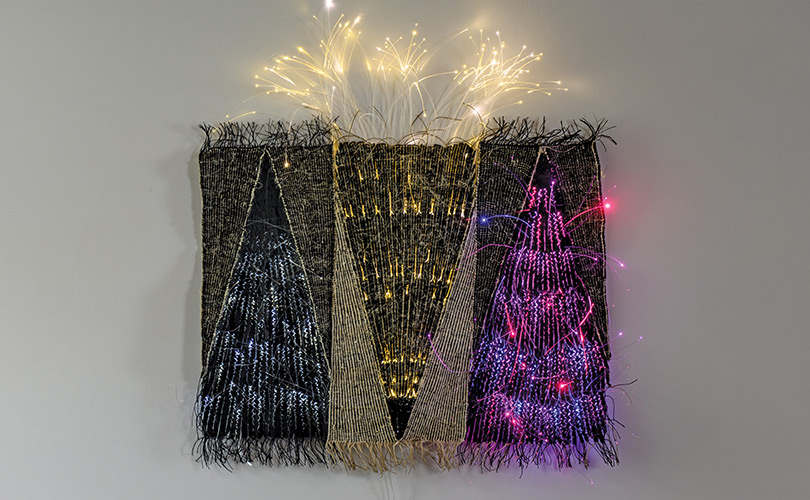
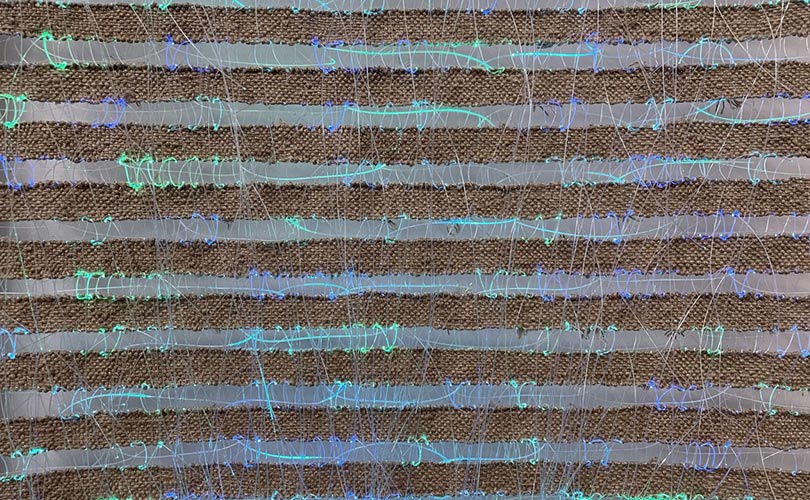
20wc Totems, Wlodzimierz Cygan, linen, sisal, fiber optic, 37″ x 37″ x 7″, 2022. Photo by Tom Grotta

Totems, by Wlodimierz Cygan, is a study in color — pink is only one of the shades it reveals through fiber optic lighting. “The introduction of the motif of changing light into this system,” he observes, “turned this small weaving form into a magical, magnetizing object, encouraging meditation.”

Neha Puri Dhir
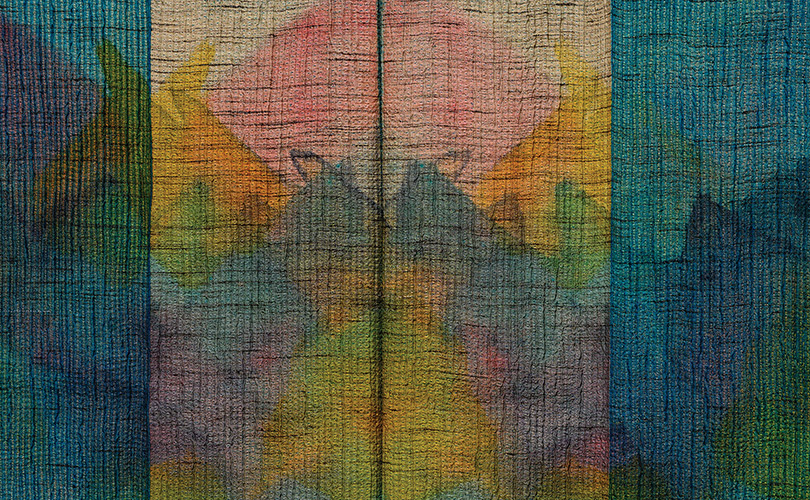
Detail: 9npd Shifting Horizons, Neha Puri Dhir, Hand painting and stitch-resist dyeing on handwoven silk
26.5″ x 26.5″ x 2.5″, 2023. Photo by Tom Grotta

Neha Puri Dhir writes eloquently about the color in her work Shifting Horizons. This intimate textile artwork, inspired by Akbar Padamsee’s Metascapes, transforms handwoven silk into a whisper of unseen change. “I have painted the silk with earthy colors,” she says, “gentle teals for my quiet unease, warm yellows for a flicker of hope, and soft pinks for the tender ache in my heart — capturing a shift I feel but cannot see, like a storm brewing beyond the horizon.”

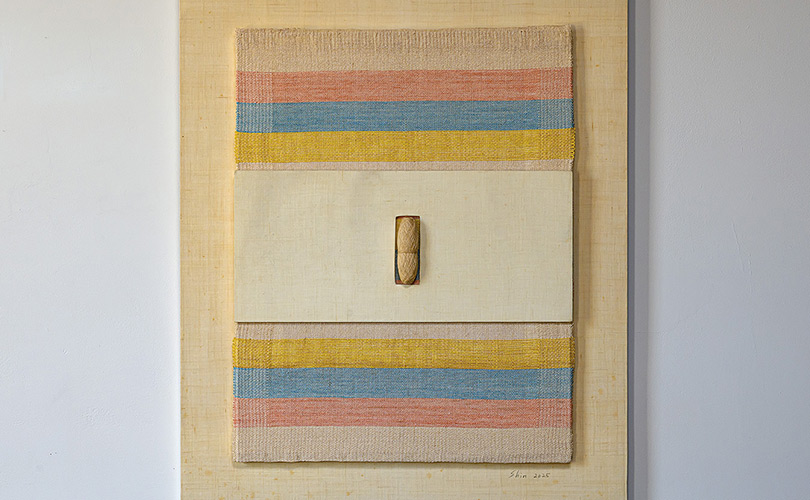
10sy Emotional Summer, Young-ok Shin, Hand-wound mosikuri, ramie, linen thread, 24″ x 18.5″ x 1.6″, 2025. Photo by Tom Grotta

In her work, Emotional Summerwhich includes pink and other pastels, Young-ok Shin has a message to convey. “I want to express the power passed down from tradition as work full of vitality that is given meaning, rather than innovation.”

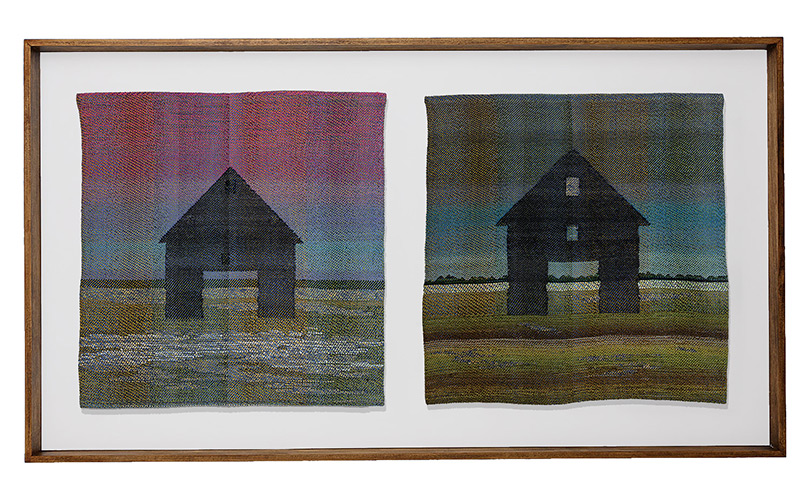
Shed on Ice and Dark Shed, Laura Foster Nicholson
27lfn Shed on Ice and Dark Shed, Laura Foster Nicholson, wool, cotton, 55” x 30.5” x 2.625”, 2024.. Photo by Tom Grotta

Also expressing a message are Shed on Ice and Dark Shed. “Since moving to a rural community in southern Indiana nearly 20 years ago,” Laura Foster Nicholson reports, “I continue to be fascinated by the simple forms and light of the landscapes.” The mood in Shed on Icewith its early-morning, rose-colored sky reflects Nicholson’s concern about climate change. “The farms, which seem so evocatively beautiful,” she says, “are contributing radically to climate change.”

You can see more on our website: browngrotta.com.


Art Assembled – New This Week in May

May has brought with it a fresh wave of inspiration as we embrace the new opportunities that Spring offers. Alongside the launch of our exhibition, Discourse: art across generations and continents, we’ve been thrilled to introduce our audience to a diverse array of New This Week features, showcasing the work of talented artists we’ve had the privilege of collaborating with over the years.

Now, as the month comes to a close, we’re excited to recap each artist we’ve highlighted.

Polly Barton
14pb Guardians, Polly Barton, silk warp with pictorial weft ikat in rayon and viscose, woven in 3 panels. walnut frame, 24 x 49.875”, 2023. Photos by Tom Grotta.

To kick off the month, we featured the remarkable artwork of Polly Barton. In the art world, Barton is a nationally recognized artist who has been working in fiber for 40 years. Trained in Japan, she is known for working with traditional methods of binding and dyeing bundles of fiber to weave contemporary imagery.

In her practice, Barton incorporates a wide range of materials in her work including pigment, soy milk, pastel, metallic threads, stitching, papyrus, and metal leaf. She was also one of the many talented artists featured in Discourse, which is now live on Artsy.

Neda Al-Hilali
1na Crystal Planet, Neda Al-hilali
plaited color paper, acrylic, ink drawing, paper, 43″ x 49″ x 2.5″, 1982

Next, we highlighted the work of talented artist Neda Al-Hilali. This Czechoslovakian artist, who works in the US, is known for for vibrant, detailed works of paper created in the 80s and previously, dramatic “Rope Art,” (featured in Life magazine in the 70s). Al-Hilali is one of the artists included in Subversive, Skilled, Sublime: Fiber Art by Women, that opens at the Smithsonian American Art Museum this week.

Her work has been long recognized, and we are honored to be able to exhibit this strong work by Al-Hilali!

Michael Radyk
8mra Lift, Michael Radyk, cotton jacquard, 66” x 52” x 1”, 2014.

We then turned our spotlight to artist Michael Radyk. Radyk is an artist who explores woven textiles and the qualities inherent in their structure, production, design, craft, and history. He uses both the hand loom and Jacquard loom to produce his work. Radyk designs, weaves, cuts, sculpts, and manipulates his textiles into both two and three-dimensional sculptural forms.

In his artistry, Radyk’s work involves the reinvention of manufactured materials and familiar textiles such as corduroy. He creates work that is based in place and material research using mainly recycled and repurposed materials. ​

Ésme Hofman
4eh Dialogue No.4 (a study in black and white willow skeins), Ésme Hofman, peeled and boiled willow skeins, 7.625″ x 5.75″ x 5.75″, 2024

To close out the month, we highlighted the work of artist Ésme Hofman. Hofman is a traditionally trained basketmaker who learned the foundations of my craft at the German basketry school. When creating, Hofman looks beyond the borders of this traditional handcraft. This gives her freedom to explore creative possibilities, and generates other ways of making. 

Her techniques and materials now vary from the traditional to the contemporary using natural stems, leaves, bark, wire, plastics, vellum, paper and occasionally color. Although fascinated by different possibilities, her my main focus is with the very time-consuming willow skeinwork, a nearly-extinct basketry technique that results in an extremely fine surface texture. Almost like textile, it enables her to create fine objects.

We hope you’ve enjoyed discovering these remarkable works as much as we have. Stay tuned for more exciting updates and features in the months ahead!


Art Out and About

This Spring in Connecticut brings an abundance of daffodils and in the US and abroad a slew of art exhibitions. From Scotland to San Francisco to Seoul, we’ve rounded up some suggestions for you:

Jane Balsgaard
April 6 – May 5, 2024
Vejle Kunstforening
Søndermarksvaj 1
Vejle, Denmark 7100 
https://www.vejlekunstforeningmoellen.dk/

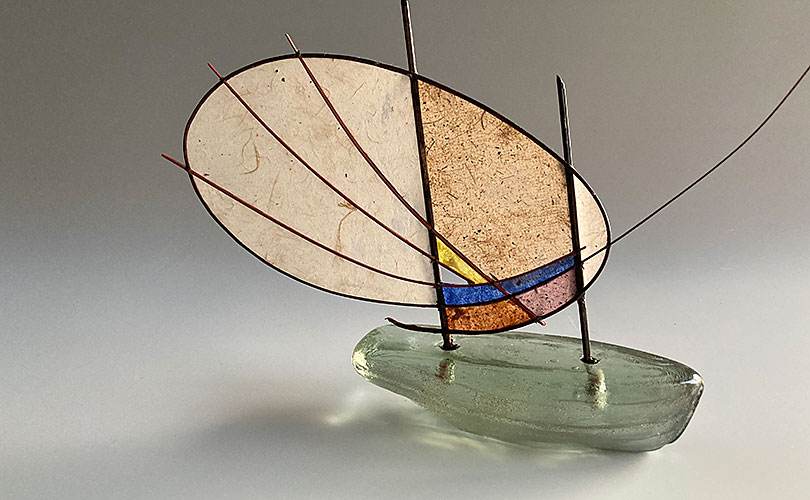
Jane Balsgaard paper and glass boat
Glass and handmade paper Boat by Jane Balsgaard. Photo by Jane Balsgaard

This exhibition of Jane Balsgaard’s art work of glass twigs and plant paper will open in Velje, Denmark this April.

Four Stories of Swedish Textile: Inger Bergstöm, Jin Sook So, Katka Beckham Ojala, Takao Momijama
March 20 – April 2, 2024
Suaenyo 339,
339 Pyeongchang-gil, Jongno-gu
Seoul, Korea 
http://sueno339.com/?ckattempt=1

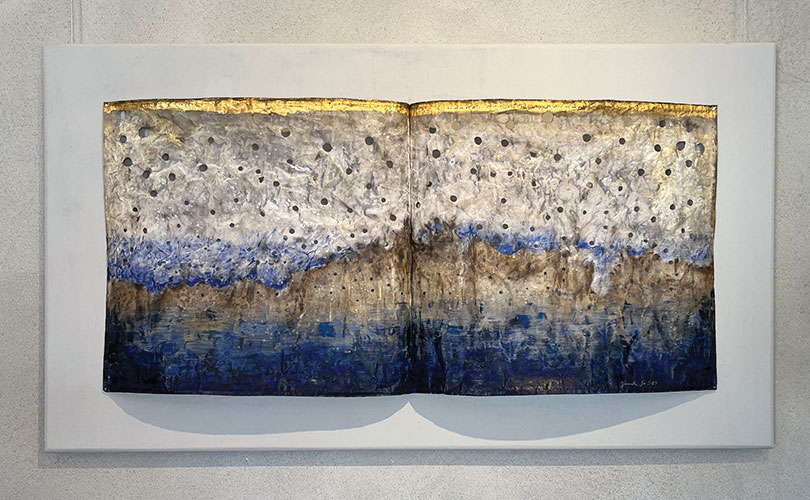
Jin Sook Blue Wall painting
Blue and Gold electroplated wall textile by Jin-Sook So. Photo by Jin-Sook So

This is an exhibition of four very different art practices, including work in stainless steel mesh by Jin-Sook So. “Using textiles as an artistic medium opens up a world of possibilities, interpretations and expectations,” write the exhibition’s curators. “How the individual artist works in this realm is unpredictable and can lead to totally different genres and contexts. The exhibition, 4T – Four Swedish Stories of Textile, shows the works of a group of artists who despite their different expressions are united by an interest specifically for textile surfaces.”

Andy Warhol: The Textiles
Through May 18, 2024
Dovecot Studios
10 Infirmary Street
Edinburgh, SCOTLAND EH1 1LT
https://dovecotstudios.com/whats-on/andy-warhol-the-textiles

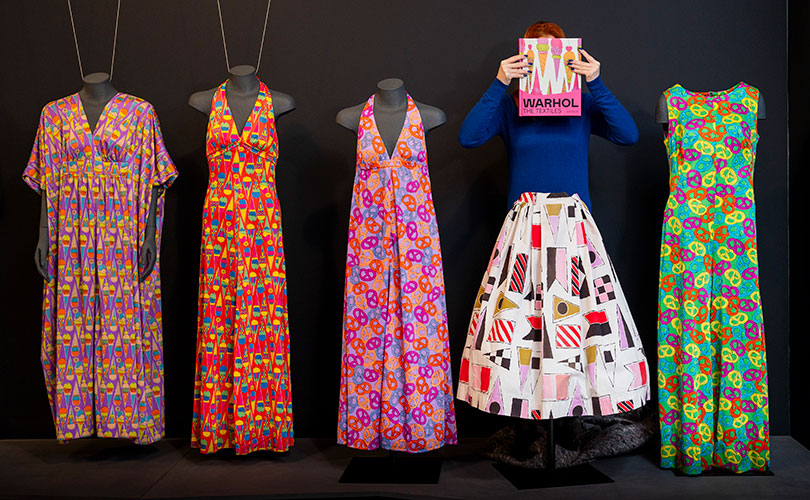
Andy Warhol Textiles
Andy Warhol Artworks © 2024 The Andy Warhol Foundation for the Visual Arts, Inc. Licensed by DACS, London.

Andy Warhol: The Textiles takes viewers on a journey through the unknown and unrecorded world of designs by the influential artist before his Silver Factory days. As the originators explain, by showcasing over 35 of Warhol’s textile patterns from the period, depicting an array of colorful objects; ice cream sundaes, delicious toffee apples, colorful buttons, cut lemons, pretzels, and jumping clowns, this exhibition demonstrates how textile and fashion design was a crucial stage in Warhol becoming one of the most iconic artists of the 20th century. A book accompanies the exhibition: Warhol: The Textiles.

Irresistible: The Global Patterns of Ikat
Through June 1, 2024
George Washington University and Textile Museum
701 21st St. NW
Washington, DC 20052 
museuminfo@gwu.edu

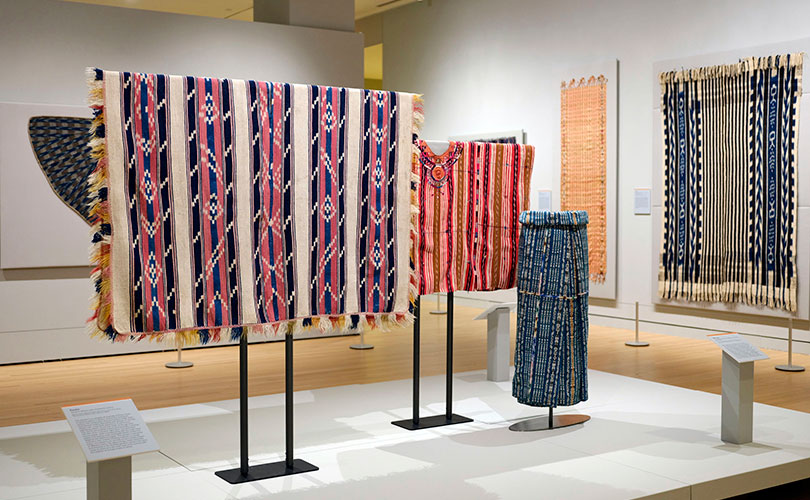
Irresistible Americas installation
Irresistible Americas photo by Kacey Chapman

Prized worldwide for producing vivid patterns and colors, the ancient resist-dyeing technique of ikat developed independently in communities across Asia, Africa and the Americas, where it continues to inspire artists and designers today. This exhibition explores the global phenomenon of ikat textiles through more than 70 masterful examples — ancient and contemporary — from countries as diverse as Japan, Indonesia, India, Uzbekistan, Côte d’Ivoire and Guatemala. Included are works by Polly Barton, Isabel Toledo, and Ed Rossbach.

Weaving Abstraction in Ancient and Modern Art
Through June 16, 2024
Metropolitan Museum of Art
1000 Fifth Avenue
New York, NY 10028
https://www.metmuseum.org/exhibitions/weaving-abstraction-in-ancient-and-modern-art

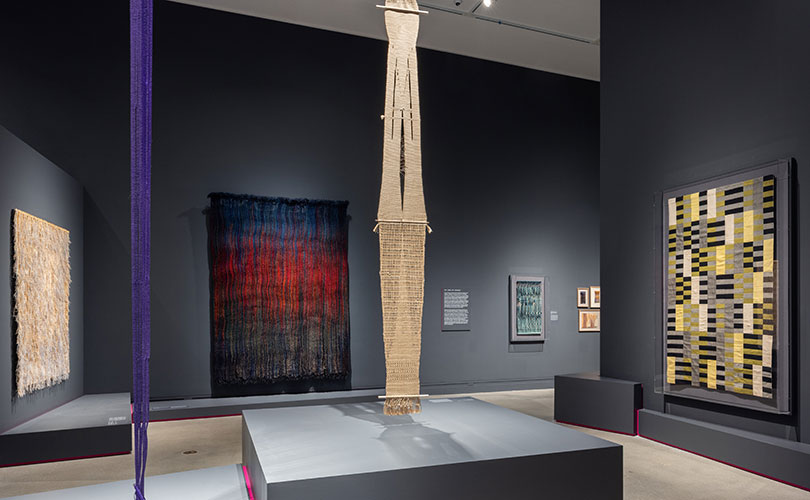
Lenore Tawney in the Center of MET exhibit
Weaving Abstraction in Ancient and Modern Art at The Metropolitan Museum of Art,
© The Metropolitan Museum of Art, photo by Hyla Skopitz

The process of creating textiles has long been a springboard for artistic invention. In Weaving Abstraction in Ancient and Modern Art, two extraordinary bodies of work separated by at least 500 years are brought together to explore the striking connections between artists of the ancient Andes and those of the 20th century. The exhibition displays textiles by four distinguished modern practitioners—Anni Albers, Sheila Hicks, Lenore Tawney, and Olga de Amaral—alongside pieces by Andean artists from the first millennium BCE to the 16th century.

On and Off the Loom: Kay Sekimachi and 20th Century Fiber Art
Lecture and Video with Melissa Leventon and Ellin Klor
April 20. 2024
1 p.m. EDT
de Young Museum
50 Hagiwara Tea Garden Drive
Golden Gate Park
San Francisco, CA 94118
https://www.textileartscouncil.org/post/on-and-off-the-loom-kay-sekimachi-and-20th-century-fiber-art

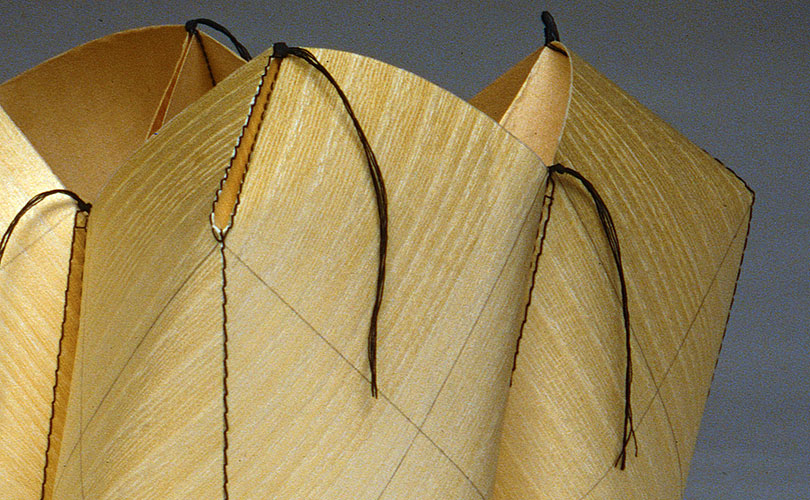
Kay Sekimachi Kiri Wood Paper Vessel
Kiri Wood Paper Vessel by Kay Sekimachi. Photo by Tom Grotta

Kay Sekimachi is esteemed as an innovator in contemporary fiber art. Her vision has had an impact on many outstanding artists. Sekimachi came of age at a boom time for fiber art, when many artists were experimenting with dimensional weaving both on and off the loom and were challenging old art world hierarchies in the process. In this talk in person and on Zoom, Melissa Leventon will discuss Sekimachi’s oeuvre within the wider context of fiber art in the 20th century.

Woven Histories: Textiles and Modern Abstraction
Through July 28, 2024
National Art Gallery
East Building, Concourse Galleries
4th Street and Constitution Avenue, NW
Washington, DC 
https://www.nga.gov/exhibitions/2024/woven-histories-textiles-modern-abstraction.html

Ed Rossbach Weaving and basket
Ed Rossbach, Damask Waterfall, 1977, LongHouse Reserve, © Ed Rossbach, photo © Charles Benton, courtesy The Artist’s Institute. Ed Rossbach, Lettuce Basket, 1982, Los Angeles County Museum of Art, Gift of Dr. Milton and Martha Dalitzky (M.2021.163.1), © Ed Rossbach, photo © Museum Associates/LACMA.

This transformative exhibition has moved from the Los Angeles County Museum of Art to the National Gallery in DC. It explores how abstract art and woven textiles have intertwined over the past hundred years.This transformative exhibition explores how abstract art and woven textiles have intertwined over the past hundred years. In the 20th century, textiles have often been considered lesser—as applied art, women’s work, or domestic craft. Woven Histories challenges the hierarchies that often separate textiles from fine arts. Putting into dialogue some 160 works by more than 50 creators from across generations and continents, including Katherine Westphal, Dorothy Gill Barnes, and Ed Rossbach, this exhibition explores the contributions of weaving and related techniques to abstraction, modernism’s preeminent art form.  The book that accompanies the exhibition, Woven Histories: Textiles and Modern Abstraction, can be found on our website.


Art Out and About: Spring 2023

US or abroad we’ve got lots of suggestions — 10 in fact — of exhibitions you can visit in June and beyond.

1) Christine Joy and Sara Mast: Passage 
Yellowstone Art Museum 
Billings, MT 
through July 16, 2023

Christine Joy Connecting to the Sky sculpture
Christine Joy, Connecting to the Sky, 2016. Photo courtesy of Christine Joy

https://www.artmuseum.org/project/christine-joy-and-sara-mast-passage/

Christine Joy and Sara Mast explorethe mystery of nature through the transformation of materials, texture, and form.

The large, twisted willow forms by Christine Joy are the result of a rhythmic process beginning with the hunt and harvest of willow in autumn — followed by sorting, bunding, and storing. Joy began rug braiding in the 1970s. Over time, Joy moved on from rug braiding, leading her to a period of experimentation, and ultimately to reclaiming and reorienting her love of gathering and process with willow, grounding her to the earth. Sara Mast, a descendant of miners from Cornwall, England, resides on the site of Storrs, Montana, an early Anaconda Company mining town. Today, she incorporates PEM (plasma enhanced melter) glass into her work. PEM is a byproduct of plasma gasification, an advanced waste management technology that turns any kind of trash into inert, non-toxic glass and clean fuels. Mast writes, “PEM glass is not just another art material, but represents a profound paradigm shift in using technology to heal our environmental dilemma by keeping waste out of landfills and greenhouse gases out of the air. My use of PEM glass is one way I am able to reclaim a healthy relationship with the earth.”

2) International Linen Biennial in Portneuf (BILP)
Heritage sites throughout Deschambault-Grondines 
Quebec, Canada
June 18 – October 1, 2023
https://biennaledulin.com/

Blair Tate, from the 10th Linen Biennial in Quebec
Dialogue, detail, Blair Tate, from the 10th Linen Biennial in Quebec. Photo courtesy of Blair Tate

Anneke Klein (the Netherlands) Blair Tate (United States of America) Stéphanie Jacques (Belgium), Carole Frève (Québec) will all participate in the upcoming biennial of Linen — the 10th in Portneuf. The biennial will feature two exhibitons; the work of 20 professional artist; 20 emerging artists; multiple mediation activities and a day of converences. 

3) Couples in Craft
Craft in America Museum
Los Angeles, CA
through September 24, 2023
https://www.craftinamerica.org/exhibition/couples-in-craft/

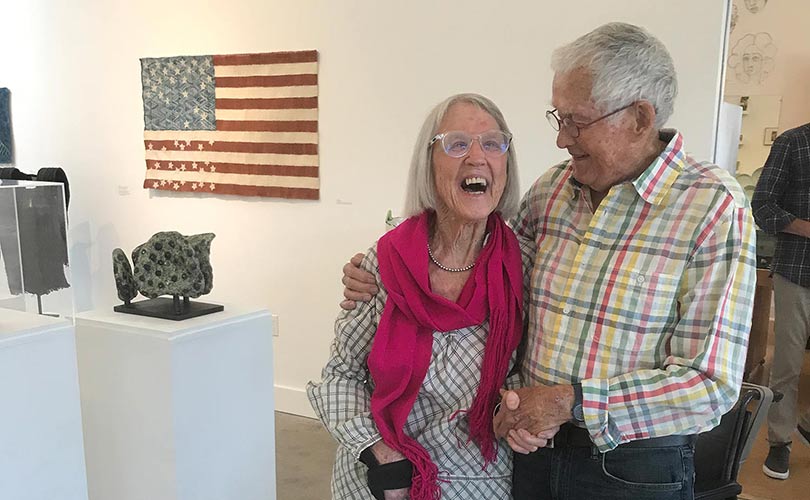
Jim and Veralee Bassler
Jim and Veralee Bassler at the opening of Couples at the Craft in America Gallery in LA.

Couples in Craft highlights artist couples that specifically work in fiber and ceramics, either collaboratively or independently. While very different in their physical qualities—malleable and rigid, vegetable and mineral—both media require methodical construction processes that can take years to master. Many of these artist couples met during their formative educational years and thus share a lifelong dedication to each other and to their respective craft. These partners support and inspire each others’ extensive pursuit of mastering materials and continued exploration of their potential. Their intuitive knowledge of process allows for layers of meaning to become integrated into the works as they are made.

Among the artists included in this exhibition are Veralee Bassler and Jim Bassler. Veralee Bassler graduated from the UCLA Art Department with a concentration in ceramics. She shared her passion for creativity, teaching, and ceramics with the students of the Los Angeles School District for 25 years. Jim Bassler graduated from UCLA with an MA in Art in 1968 and later served there as professor and department chair between 1975–2000. Jim, recipient of the American Craft Council 2022 Gold Medal, is a renown weaver whose work adapts ancient Peruvian techniques and explores a range of materials and concepts. Veralee and Jim live and work in Palm Springs, CA.

4) At Own Pace: Włodzimierz Cygan 
7th Riga International Textile and Fibre Art Triennial
Mentzendorff’s House 
Grēcinieku iela 18, Riga, Latvia
through July 27, 2023

Włodzimierz Cygan Fiber Optic weaving detail
From the series Between the LinesDetail, Włodzimierz Cygan, Linen, optic fiber, weaving, artist’s own technique. 2021. Courtesy of the artist. 

https://www.lnmm.lv/en/museum-of-decorative-arts-and-design/news/programme-of-the-7th-riga-international-textile-and-fibre-art-triennial-quo-vadis-139

Baiba Osīte: Exodus
7th Riga International Textile and Fibre Art Triennial
Art Station Dubulti 
Z. Meierovica prospekts 4, 

Baiba Osīte. XXX. 1993.
Baiba Osīte. XXX. 1993. linen, cotton, wood, artist’s own technique. Collection of the Latvian National Museum of Art. Publicity photo

Jūrmala, Latvia https://www.lnmm.lv/en/museum-of-decorative-arts-and-design/news/programme-of-the-7th-riga-international-textile-and-fibre-art-triennial-quo-vadis-139

The 7th Riga International Textile and Fibre Art Triennial,  QUO VADIS? unites 79 artists from 30 countries who were selected by an international jury from 237 submissions. Responding to the motto of the triennial, QUO VADIS? (Where Are We Going?), the authors, through their works, partake in conversations about the evolution of art and this particular field today as well as global geopolitical and social problems, engaging in self-reflection through the perspective of their time and art form. 

The Triennial features an exciting solo exhibition by the internationally acclaimed Polish guest-artist Włodzimierz Cygan at the Mentzendorff’s House in Riga and one featuring Latvian artist Baiba Osite.

5)  Ferne Jacobs: A Personal World
Claremont Lewis Museum of Art
Claremont, California
through September 24, 2023

Origins by Ferne Jacobs
Origins, Ferne Jacobs, 2017-2018, Craft in America, Metro Madizon

https://clmoa.org/exhibit/ferne-jacobs-a-personal-world/

Ferne Jacobs: A Personal World at the Claremont Lewis Museum of Art presents the work of Ferne Jacobs, a pioneer in fiber arts who creates unique three-dimensional sculptural forms using ancient basket-making techniques. Ferne Jacobs: A Personal World features a broad selection of her sculptures as well as books of her psychological drawings and collage diaries. 

6) Jane Balsgaard
Galleriet Hornbæk
Hornbæk, Denmark
Summer 2023

http://xn--galleriethornbk-bmb.dk/category/jane-balsgaard/

Paper Ship by Jane Balsgaard
Paper Ship by Jane Balsgaard. Photo courtesy of Jane Balsgaard

Jane Balsgaard’s work is available this summer at Susanne Risom’s Galleriet Hornbæk in Denmark.

7) Scandinavian Design and the United States, 1890 – 1980
Milwaukee Art Museum
Milwaukee, Wisconsin
through July 23, 2023

https://mam.org/exhibitions/scandinavian-design/

Scandinavian Design and the United States, 1890–1980 is the first exhibition to explore the extensive design exchanges between the United States and Denmark, Sweden, Finland, Norway, and Iceland during the 20th century.  It includes works by Helena Hernmarck who moved from Sweden to the US, and Lenore Tawney, who studied with noted Finnish weaver Martta Taipale at Penland School of Crafts in North Carolina.

8) Indigo 
Denver Botanic Garden
York Street Location
Denver, Colorado
July 2 – November 5, 2023 

Synapse indigo weaving byPolly Barton
Synapse, Polly Barton, to appear in Indigo, at the Denver Botanical Gardens. Photo by Tom Grotta

https://www.botanicgardens.org/exhibits/indigo

Rich and alluring, the striking blue color known as indigo has inspired weavers, dyers, designers, and sculptors across the globe. This exhibition, which  contemporary artists from the United States, Nigeria, Japan and South Korea Includes several works loaned by browngrotta arts  from artists Polly BartonEduardo Portillo and Mariá DávilaChiyoko TanakaHiroyuki Shindo, and Yeonsoon Chang.

9) Shaped by the Loom: Weaving Worlds in the American Southwest
Bard Graduate Center Gallery
New York, New York
through July 9, 2023

https://www.bgc.bard.edu/exhibitions/exhibitions/117/n-a

Shaped by the Loom: Weaving Worlds in the American Southwest invites you to explore the world of Navajo weaving. This dynamic gallery and online experience presents never-before-seen textiles created by Diné artists. These historic blankets, garments, and rugs from the American Museum of Natural History are situated alongside contemporary works by Diné weavers and visual artists, such as Barbara Teller Ornelas and Lynda Teller Pete.

10) Expressing Cloths: Oceanian Modeling and Shigeki Fukumoto/Shigeko Fukumoto
Aomori Contemporary Art Center
Aomori, Japan
through June 14, 2023

https://acac-aomori.jp/program/2023-1/

This exhibition features Fukumoto, who has pursued an expression that can only be achieved through “dyeing” through his insight into the theory of craftsmanship in Oceania and Japan, and handcrafted fabrics that have been handed down since before textiles, such as tapa (bark cloth) and knitted fabrics from Melanesia in the South Pacific. In recent years Shioko Fukumoto has developed works using old natural fabrics that were made and used in rural life and labor. Three works. By group, we will think about the expression that can only be achieved with cloth, and the possibilities of cloth as a medium of expression. Both Fukomotos have visited Papua, New Guinea on more than one occasion.


Art Out and About: In the US and Abroad

So many exhibitions to visit this Spring from Sweden, Australia and the UK to California, Washington and New York — and two in Connecticut. Check them out.

Beauty and the Unexpected
Modern and Contemporary American Crafts
National Museum
Södra Blasieholmshamnen 2
Stockholm, Sweden
March 30, 2023 – January 21, 2024

Gyöngy Laky Incident
Incident, Gyöngy Laky, from Beauty and the Unexpected exhibition in Stockholm, Natural and commercial wood, paint,
bullets for building (screws), 50” x 50” x 4.5”, 2012. Photo by Tom Grotta

National Museum has invited Helen W. Drutt English, pioneering craft educator and gallerist of American Modern and Contemporary Crafts since the 1960s, to assemble a collection of objects drawn from the field of “American Crafts.” The selection of 81 works from the 1950s until today will in future enrich National Museum’s collections and will provide a possibility to look at American Crafts in the Nordic context.

International Textile Art Biennale 
(Fibre Arts Australia)
Emu Park Art Gallery
EMU Park
13 Hill Street
Queensland, Australia 
From April 15 – June 10, 2023

Neha Puri Dhir handwoven silk
Overflow by Neha Puri Dhir, stitch-Resist Dyeing on Handwoven Silk (Diptych), 95 x 128cm 95 x 32cm, 2022. Photo by Neha Puri Dhir

Fibre Arts Australia is highlighting the contemporary practice within Art Textiles as an art form.

​The International Art Textile Biennale (IATB) seeks to exhibit the best of contemporary art textiles and invited submissions, from Australia and Internationally, that reflect a wide range of works related to the textile medium. Thirty-five artists were selected to participate, including Neha Puri Dhir. The works are exhibited at various locations throughout Australia.

Wendy Wahl Installation
Wendy Wahl Installation. Photo by Brooke Yung, assistant curator

Paper Town
Fitchburg Art Museum
185 Elm Street
Fitchburg, MA 01420
Through June 4, 2023

This exhibition takes paper out of the two-dimensional into a world that is fantastical, intricate, colorful, and personal. Inspired by the materiality of paper and the metamorphic quality of the papermaking process, Paper Town explores paper in pulp, cast, folded, and cut forms. The exhibition includes artwork by several artists located in New England:  May Babcock, Erik and Martin Demaine, Andrea Dezsö, Tory Fair, Hong Hong, Fred Liang, Michelle Samour, Heidi Whitman and browngrotta artist Wendy Wahl.

Polly Barton Irate
Works by Polly Barton, James Bassler and others in Ikat: A World of Compelling Cloth. Photo by Polly Barton.

Ikat: A World of Compelling Cloth
Seattle Art Museum
1300 First Avenue
Seattle, WA 98101
Through May 29, 2023

Visitors to Ikat: A World of Compelling Cloth, will enter the woven world of ikat, a complex textile pattern that knows no borders. Presenting over 100 textiles from the museum’s global collection with gifts and loans from a dedicated Seattle-area collector, Ikat: A World of Compelling Cloth is an introduction to the meticulous and time-honored processes of dyeing threads to create complicated hand-weaving. Contemporary work in the exhibition includes tapestries by Polly Barton and James Bassler, and an extraordinary installation by Rowland Ricketts.

Connective Threads
Palos Verde Cultural Center
Fiber Art from Southern California
Curated by Carrie Burckle and Jo Lauria
Through April 15, 2023

Carol Shaw-Sutton installation
Persephone’s Filters by Carol Shaw-Sutton. Photo by Carol Shaw-Sutton

Connective Threads provides a window into what is currently engaging fiber artists, even as this discipline continues to evolve and change. Emanating from artists’ studios in Southern California, the exhibition offers unique perspectives on the complicated identities of fiber art as a genre. Collectively they offer a penetrating examination of fiber’s possibilities. Exhibiting artists include Jim Bassler, Cameron Taylor-Brown, Ben Cuevas, Mary Little, Michael F. Rohde, and Carol Shaw-Sutton. 

Detail Magdalena Abakanowicz
Magdalena Abakanowicz’s Montana del Fuego detail by Tom Grotta

Magdalena Abakanowicz: Every Tangle of Thread and Rope
Tate Modern
Bankside
London SE1 9TG
Through May 21, 2023

In the ’60s and ’70s, the Polish artist Magdalena Abakanowicz created radical sculptures from woven fibers. They were soft, not hard; ambiguous and organic; towering works that hung from the ceiling and pioneered a new form of installation. They became known as the “Abakans.” Many of the most significant Abakans are brought together at the Tate Modern in a forest-like display in a 64-meter long gallery space.

The exhibition explores this transformative period of Abakanowicz’s practice when her woven forms came off the wall and into three-dimensional space. With these works she brought soft, fibrous forms into a new relationship with sculpture. A selection of early textile pieces and her little-known drawings are also on show.

And of course, there are the four “don’t miss” events browngrotta arts is involved in this Spring.

Norma Minkowitz installation
Norma Minkowitz: Body to Soul installation. Photo by Tom Grotta

Norma Minkowitz: Body to Soul
Fairfield University Art Gallery
Bellarmine Hall
Fairfield, CT
Through April 6, 2023

Gyöngy Laky and John McQueen
Out on a Limb by Gyöngy Laky and Billboard by John McQueen from the WordPlay exhibition.

Wordplay: Messages in Branches & Bark 
Flinn Gallery: Greenwich Library
101 West Putnam Avenue 
Greenwich, CT
March 30 – May 10, 2023

Aby Mackie detail
Detail: We Can All Be Saved 10 by Aby Mackie, gilded gold lead decontructed and reconfigured antique textiles, 2022. Photo by Tom Grotta

Making a Mark: The Art of Self Expression
Bay Street Theater
1 Bay Street
Sag Harbor, NY
Through May 7, 2023

And last, but not least, our Spring Art in the Barn at browngrotta arts:

Dominic Di Mare installation
The Mourners, Dominic Di Mare from the Acclaim! Works by Award-Winning Artists exhibition, waxed linen, wood, 46.5″-50.5″(h) x 24″each, 1962. Photo by Tom Grotta.

Acclaim! Work by Award-Winning International Artists
browngrotta arts
276 Ridgefield Road
Wilton, CT
April 29 – May 7, 2023


Books Make Great Gifts, Part 1

Another year, another interesting and eclectic round up of reading recommendations. There are so many good choices from our artists this year that we are dividing them into two posts. This week, a plethora of art books. Next week, a mix of fiction, nonfiction and browngrotta arts’ suggestions.

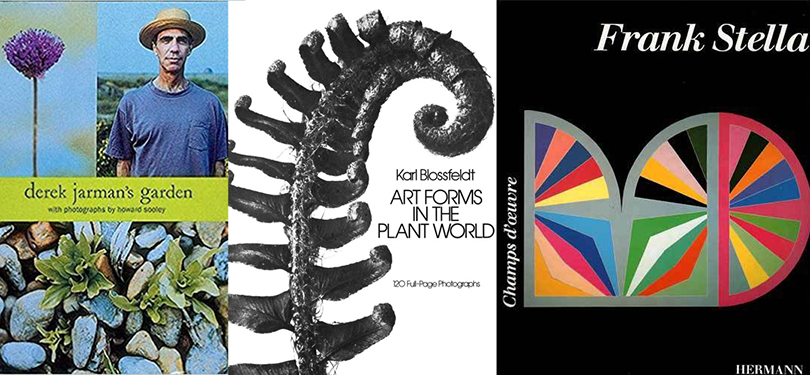
Garden, by Derek Jarman, Art Forms in the Plant World by Karl Blossfeldt, and  Champs D’Oeuvre by Frank Stella
Garden, by Derek Jarman, Art Forms in the Plant World by Karl Blossfeldt, and  Champs d’Oeuvre by Frank Stella

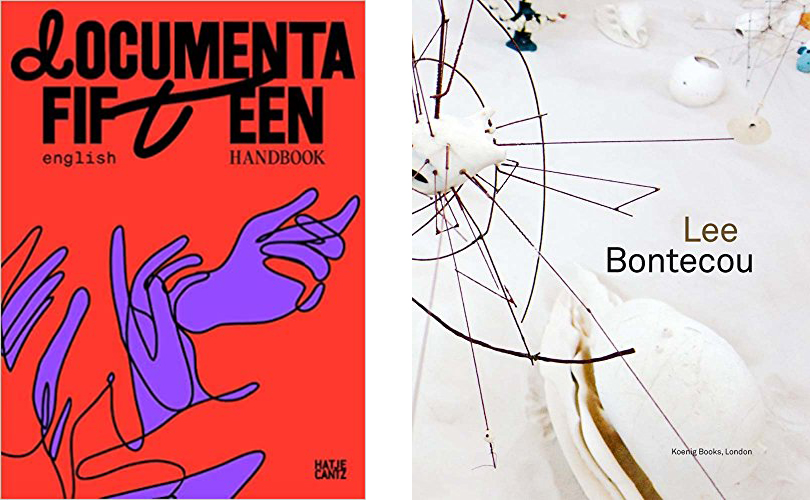
Art books always make up a good portion of our list, and this year is no exception. Shoko Fukuda told us about three books: Garden, by Derek Jarman, Art Forms in the Plant World by Karl Blossfeldt, and  Champs d’Oeuvre by Frank Stella. Heidrun Schimmel says that “in spite of all the trouble and problems with the documenta fifteen exhibition in Kassel, Germany this year,  it was an important exhibition event with a good catalog: Documenta Fifteen: Handbook, (English ed., Hatje Cantz, Stuttgart, Germany, 2022). 

Documenta Fifteen: Handbook, Lee Bontecou
Documenta Fifteen: Handbook and Lee Bontecou

Stéphanie Jacques discovered an artist that she did not know this year and a catalog about her, Lee Bontecou, that was “a good door to go inside her world.” Jacques says she was “overwhelmed by her sculptures and her engravings, her drawings. And how she always continued to invent and manufacture her unusual materials.”

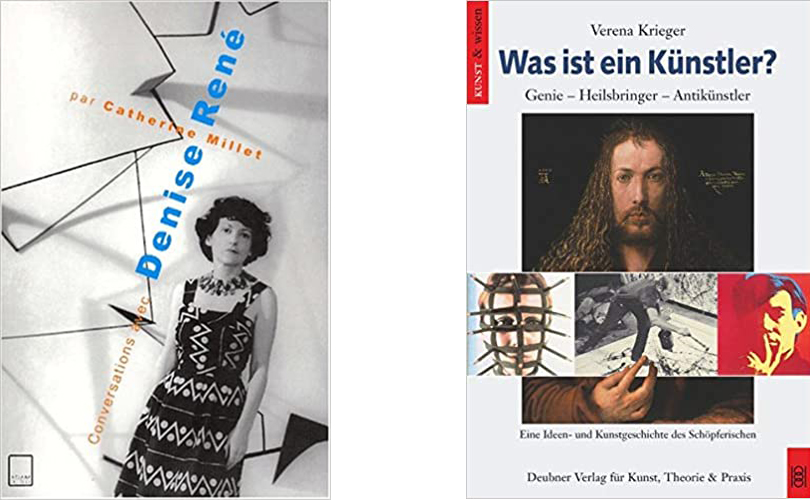
Conversations Avec Denise René and Was ist ein Künstler? by Verena Kreiger

From Korea, Young-ok Shin read the following book “with great interest” this year: 5000 Years of Korean Textiles: An Illustrated History and Technical Survey by Yeon-ok Sim (available in libraries). She also recommends Conversations Avec Denise René (in French). Denise René was a gallerist in France who specialized in kinetic and op art. And, another look at art (in German), Was ist ein Künstler? by Verena Kreiger.

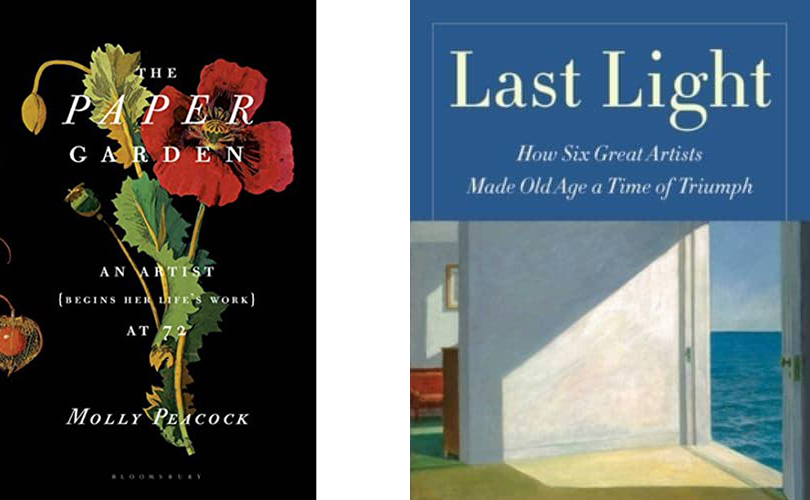
Artist Begins Her Life's Work at 72, by Molly Peacock and Last Light, How 6 great artists made old age a time of triumph by Richard Lacayo
The Paper Garden: An Artist Begins Her Life’s Work at 72, by Molly Peacock and Last Light, How 6 great artists made old age a time of triumph by Richard Lacayo

This year, Polly Barton “loved” The Paper Garden: An Artist Begins Her Life’s Work at 72, by Molly Peacock. “Mary Delaney’s work with color, dyes and flowers through collage, as well as her life story was deeply inspiring to me,” Barton writes. “In the contemplation of each flower as a product of a period in the artist’s life, I found myself reflecting on my own forty years of work in woven ikat. It is a quiet, absorbing, book. The images a treat for the eyes.” She highly recommends it. Polly Sutton found the stories of older artists of interest, too. She has been reading Last Light, How 6 Great Artists Made Old Age a Time of Triumph by Richard Lacayo. “The book is heavy in more ways than one, while reading myself to sleep!” she writes. “But it is compelling to understand these artists’ productive later years.” Gertrud Hals also recommended 

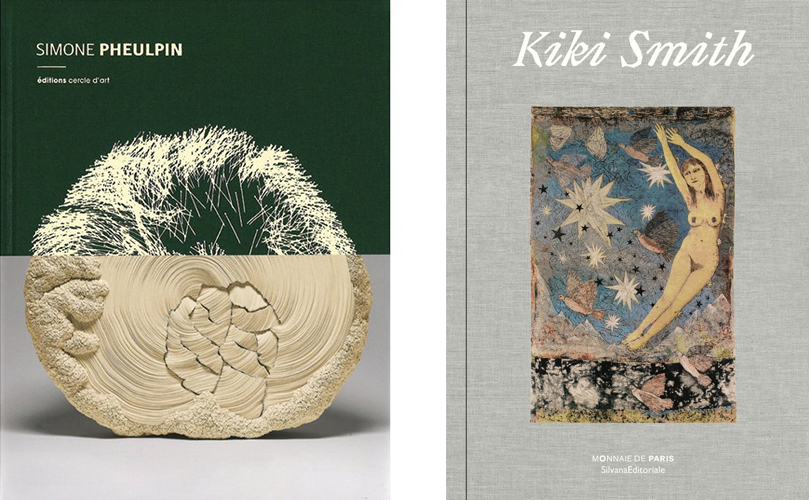
Simone Pheulpin: Cercle d’art and  Kiki Smith, Camille Morineau, SilvanaEditoriale
Simone Pheulpin: Cercle d’art and  Kiki Smith, Camille Morineau, Silvana Editoriale

Simone Pheulpin: Cercle d’art (available from browngrotta arts) about the 81-year old French artists’ unique works of cotton tapes and stainless steel pins and the monograph from Kiki Smith’s major exhibition in France in 2019 and 2020, Kiki Smith, Camille Morineau, Silvana Editoriale.

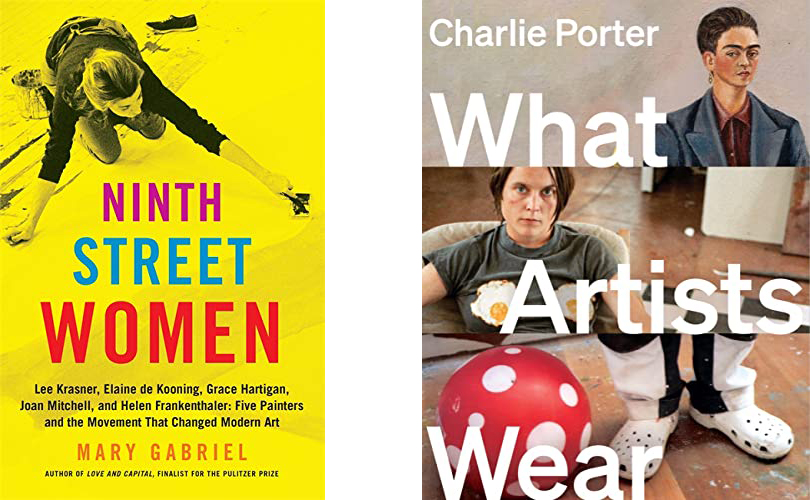
Ninth Street Women by Mary Gabriel and What Artists Wear by Charlie Porter
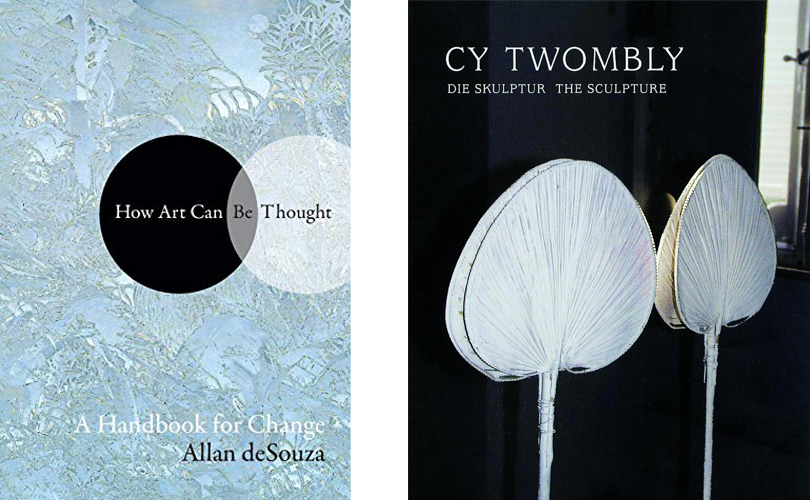
How Art Can Be Thought by Allan deSouza and Cy Twombly: The Sculpture by Hatje Kantz

Aby Mackie tells us that her “all-time favorite art book” is Ninth Street Women by Mary Gabriel. The publisher describes the book as, “Set amid the most turbulent social and political period of modern times, Ninth Street Women is the impassioned, wild, sometimes tragic, always exhilarating chronicle of five women who dared to enter the male-dominated world of 20th-century abstract painting — not as muses but as artists. From their cold-water lofts, where they worked, drank, fought, and loved, these pioneers burst open the door to the art world for themselves and countless others to come.” Aby has been reading this year, and recommends, an additional group of art books: What Artists Wear by Charlie Porter and How Art Can Be Thought by Allan deSouza; and Cy Twombly: The Sculpture by Hatje Kantz. 

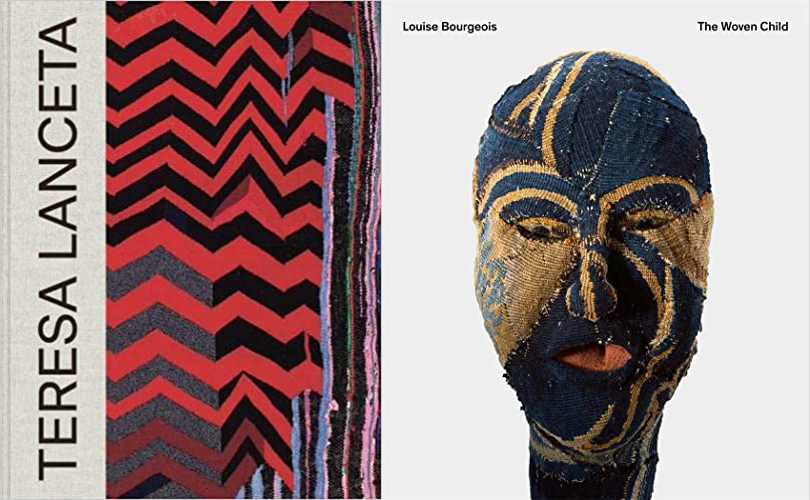
Teresa Lanceta Weaving as Open Source by MACBA and Louise Bourgeois: The Woven Child by Hatje Kantz

Two of the recommended books reference weaving:  Teresa Lanceta Weaving as Open Source by MACBA and Louise Bourgeois: The Woven Child by Hatje Kantz, which documents that artist’s fiber works from the last two decades of her life.

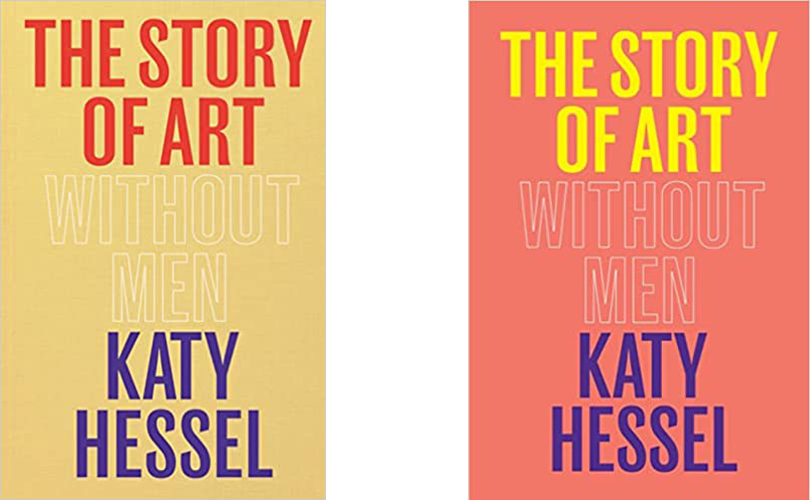
The Story of Art Without Men by Katy Hessel

Her last recommendation is a book that redresses an historic imbalance: The Story of Art Without Men by Katy Hessel which promises you will have “your sense of art history overturned and your eyes opened to many artforms often ignored or dismissed,” through 300 works of art from the Renaissance to the present day.

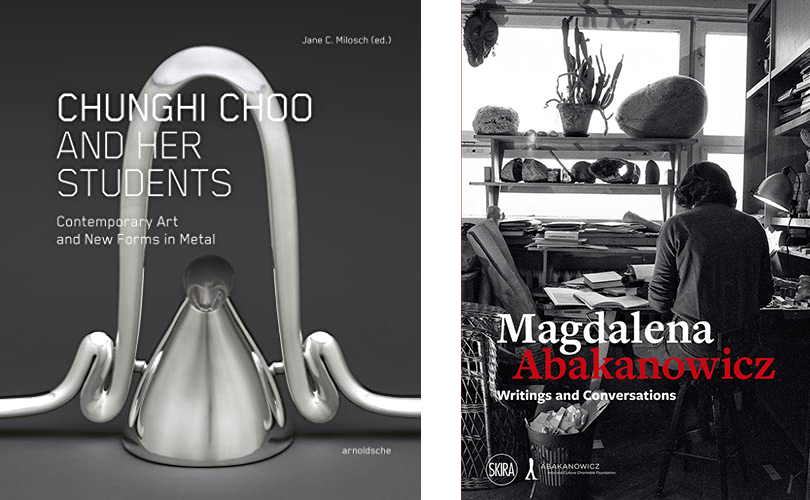
Chunghi Choo and Her Students: Contemporary Art and New Forms in Metal and Magdalena Abakanowicz, Writings and Conversations

Just out this past fall, Chunghi Choo and Her Students: Contemporary Art and New Forms in Metal, a large-sized book of lush photographs of Choo’s work in fiber and metal, is recommended by Mary Merkel-Hess (and browngrotta arts). “Jane C. Milosch, the editor, has written a fascinating biography of Choo’s life from her childhood in South Korea through her study at Cranbrook, her teaching at the University of Iowa and her rise as a world-famous artist,” she writes. The book also includes short sections and photographs of work by 30 of her students, including Mary Merkel-Hess, Sun-Kyung Sun, Jocelyn Chateauvert and Sam Gassman. The students’ works show how techniques learnt in a metal program are impressively transferred to other fields of art.

Last, but certainly not least, Rachel Max calls out a “amazing” book: Magdalena Abakanowicz, Writings and Conversations, which she is reading after seeing the brilliant Abakanowicz show at the Tate in London. “It’s an incredible compendium of archival material and a fascinating insight into Abakanowicz’s creative mind,” Rachel says. “She talks of her necessity to create and of soft materials and weaving as something which enabled her to realize her ideas. She also talks of her pieces as compositions in space, of their scale and sense of movement and ours as we walk through her installations. Her Abakans, she says, are ‘shelters’, objects of protection, a second skin and even to some extent mobile homes, giant pockets of interior and exterior spaces. Hardly surprising given that Abakanowicz’s whole life was in her own words, ‘formed and deformed by wars and revolutions of various kinds’.  Art, she says, tells about reality because it springs from the reality from which it develops.” Rachel wishes to some extent that she’d started reading this book before visiting the exhibition, that artist’s “voice feels so present and strong and her words and thoughts so insightful.”

So many books, so little time!

Good gifting and great reading.


Art Assembled: New This Week in April

Although launching our spring exhibition, Crowdsourcing the Collective: a survey of textiles and mixed media art, has kept us busy, we still had no shortage of new art to introduce you to in April. We presented art from many talented artists, including work from: Masako Yoshida, Ethel Stein, Polly Barton, and John McQueen. Just in case you missed out, we’re covering all the details about these artists and their art! Read on for more.

Masako Yoshida
14my Air Hole #838, Masako Yoshida, walnut and flax, 8″ x 8″ x 7″, 2017

This artwork comes from Japanese basketmaker, Masako Yoshida. Yoshida created this piece by interlacing sheets of walnut bark with string made of nettle. When asked about her work, Yoshida said:

“My work provides a means of release, allowing the truth to emerge and open the mind. In the process, I ask myself, ‘what is my connection to society?'”

Ethel Stein
56es Touch of Green, Ethel Stein, mercerized cotton, 31.5” x 36” x 1/4”, 2008. Photo by Tom Grotta.

Touch of Green comes from the late Ethel Stein, who was an exceptional American textile artist. Within her career, Stein created countless intricate textile pieces, and browngrotta arts has had the honor of representing her work for nearly 15 years.

Within Stein’s work, she has been known for using reproposed items that have been discarded as a medium and creating something miraculous with them. Often, her artwork is distinguished by its rhythmic simplicity, although it’s created with extraordinary technical complexity.

Polly Barton
8pb Thistledown, Polly Barton, handwoven double ikat with Japanese silk warp and Japanese silk wrapped around a metal core, 41” x 31” x 1.125”, 2016. Photo by Tom Grotta.

Thistledown was created by nationally recognized American fiber artist, Polly Barton. Trained in Japan, Barton is known for working with traditional methods of binding and dyeing bundles of fiber to weave contemporary imagery. More specifically, Barton is known for her talent in adapting the ancient weaving technique of ikat into contemporary woven imagery.

Barton has been charting the way for fiber art over the past 40 years. In fact, early in here career in 1981, Barton moved to Kameoka, Japan to study with master weaver, Tomohiko Inoue.

John McQueen
John McQueen, 32jm Out From Under, wood, willow, bark, and held together with tiny spikes of bamboo 20.75” x 25.25” x 16”, 2021. Photo by Tom Grotta.

This artwork was created by American artist, John McQueen. Within his work, viewers can often find themes of prominent world associations. Often, his three-dimensional works are created with natural materials like twigs, bark, cardboard – he prides himself on being able to create with found objects.

McQueen has discussed how plastic and metal are ubiquitous in landfills and our own trash and he hopes to draw attention to this waste problem with his art, as we are burying ourselves in waste without seeing it.

If you like the art you see – keep your eye out for even more in May! You’ll even have the opportunity to see art in person at our spring exhibition launching this weekend. Visit: https://bit.ly/38QiXCe to join us.