Tag: Misako Nakahira

In Print: Beauty is Resistance

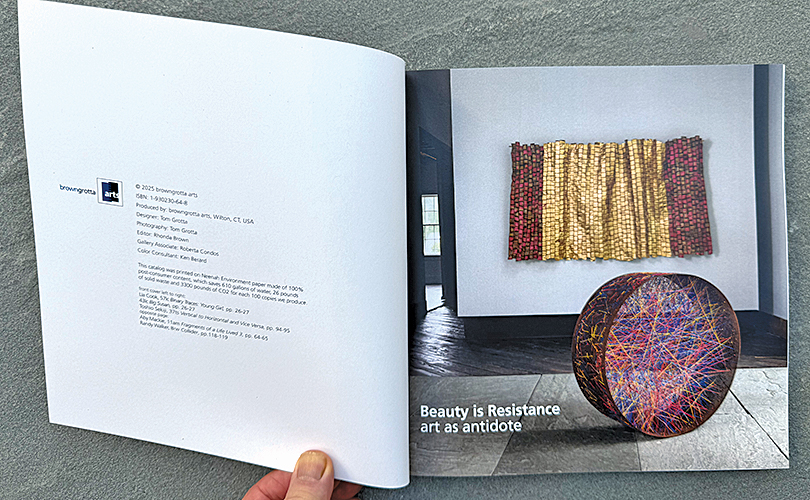
Title Page Beauty is Resistance Catalog
Works by Abby Mackie and Randy Walker. Photo by Tom Grotta

If an exhibition takes place but there is no catalog to document it, did anyone see it? Certainly not enough people have seen it, as far as browngrotta arts is concerned.  That’s why we produce a catalog for nearly every exhibition we host.
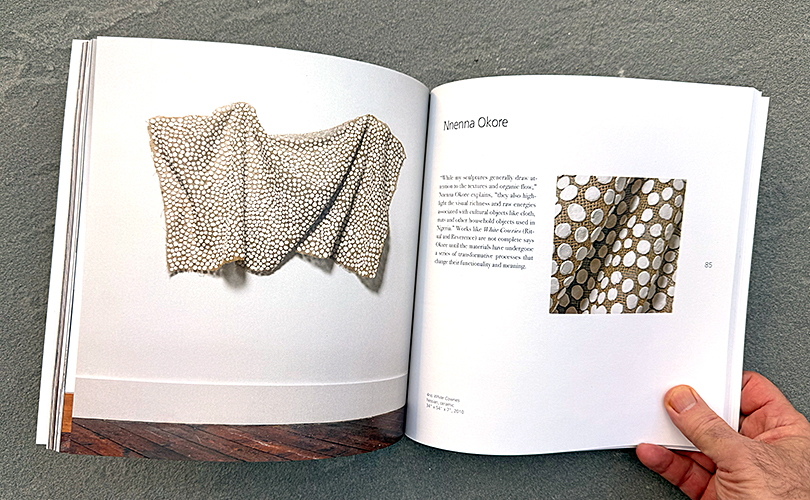
Nnenna Okore spread

We had hundreds of people visit our Fall 2025 exhibition,  Beauty is Resistance: art as antidote. But we also cowry to share the remarkable works in Beauty with even more people through our installation video and Zoom talkthrough, both on our YouTube channel, and through the print version of the show, a catalog (our 61st), available on our website.
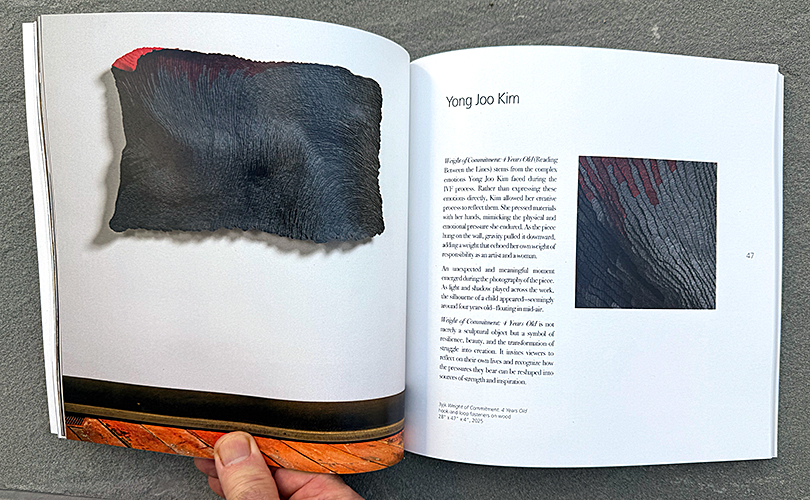
Yong Joo Kim Spread

The 132-page catalog contains 125 full-color images. There are full view and detail images of each of the featured works in the exhibition. There are statements about each work in the catalog. The works in the exhibition fell loosely into four subthemes: Reading Between the Lines, Threads of Memory, Radical Ornament, and Ritual and Reverence, and the catalog identifies the category that each work falls into.
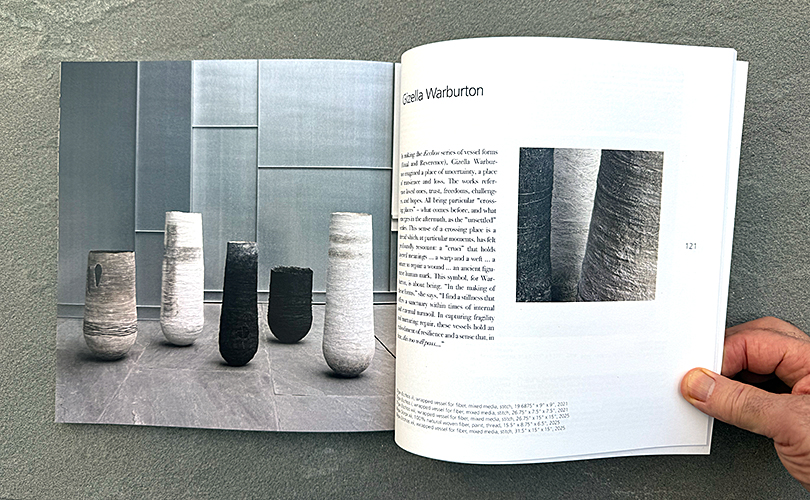
Gizella Warburton Spread

Elizabeth Essner, Windgate Associate Curator at the Museum of Art, Houston contributed an insightful essay to the catalog, “Looking at Beauty.” Essner writes about the role of nature in many of the artists’ work — for materials, lessons, and poetic inspiration. She examines varying historic conceptions of beauty, subjective, objective, and embodied, and discusses the significance of prevailing cultural aesthetics. in summarizing beauty’s pivotal place in art, Essner quotes late art critic Peter Schjeldahl (1942 – 2022) who predicted that in the future, “beauty will be what it always has been and, despite everything, is now in furtive and inarticulate ways: an irrepressible, anarchic, healing human response without which life is a mistake.”
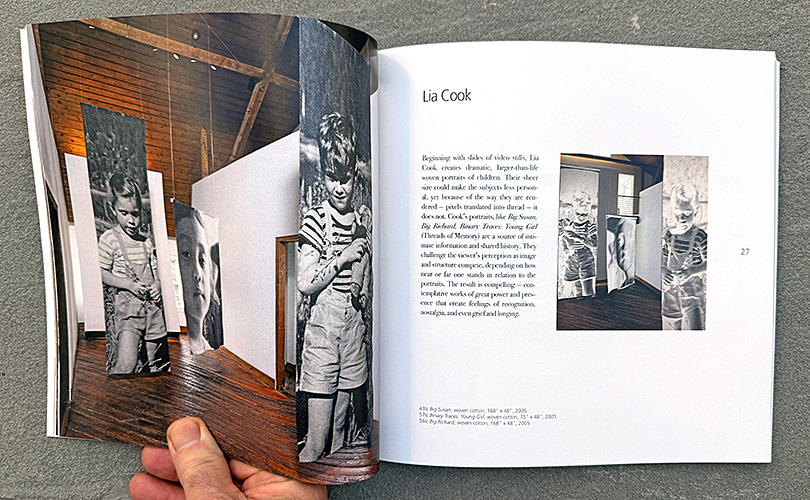
Lia Cook Spread

Order your copy on our website. If it’s a gift, let us know at art@browngrotta.com before December 15th and we will gift wrap your copy before we send it.
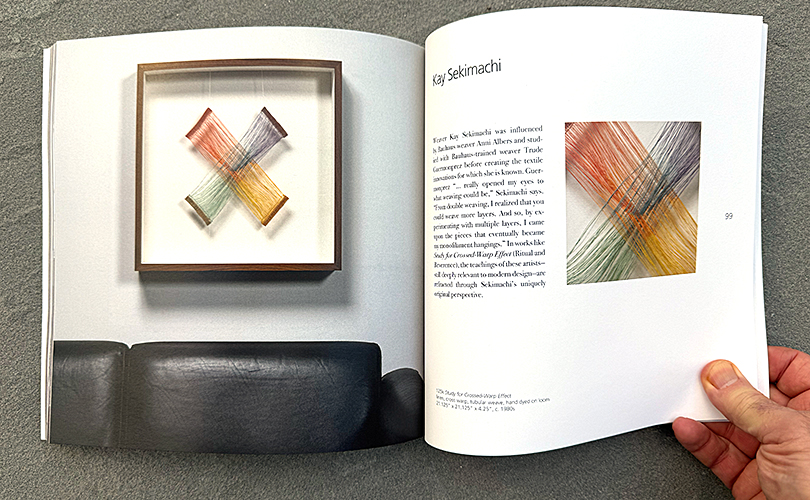
Kay Sekimachi Spread

Sneak Peek – Beauty is Resistance: art as antidote Opens in Less than a Month

The opening of our Fall 2025 “Art in the Barn” exhibition, on October 11, is just a few weeks away.

Despite headwinds from tariff confusion and new shipper policies, we have compiled an expansive group of works from Europe, Asia, and North and South America. The few examples below illustrate the breadth of ways that the artists in Beauty is Resistance have made aesthetic attractiveness a purposeful mode of expression. 

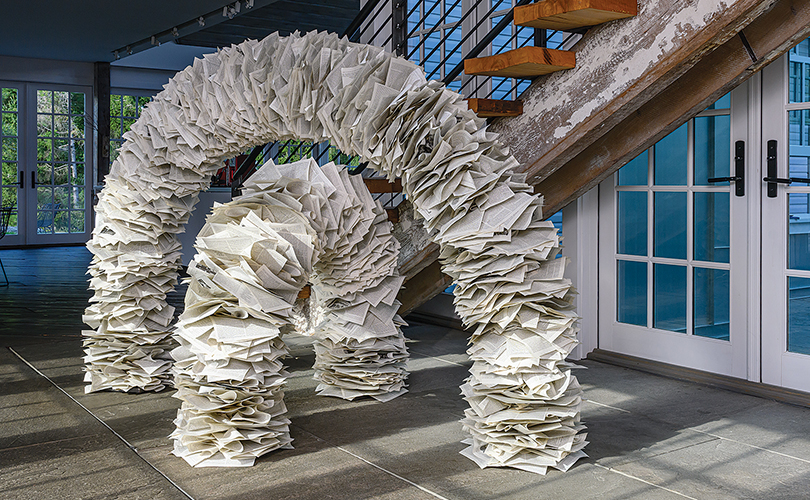
Wendy Wahl Rebound Overlap
Wendy Wahl, Rebound Overlap 2025, Photo by Tom Grotta

Twenty years ago, Wendy Wahl noticed that the printed and bound versions of encyclopedias were being disposed of at an alarming rate, and soon after, most encyclopedias were no longer obtainable in that format. Encyclopedias have existed for around 2,000 years. From the specific to the general, the encyclopaedia can be described as a summation of knowledge from a particular worldview. Wahl uses these discarded volumes to make art — such as the three pieces in this exhibition, Book Matched, Curiosity Under Fire, and Rebound Overlap — that brings awareness to what can happen when access to information is denied and discarded.

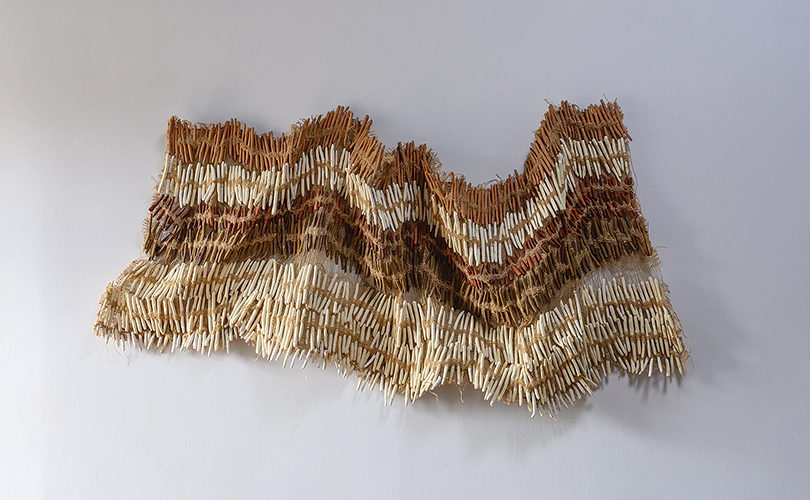
Nnenna Okore, Vogue
Nnenna Okore, Vogue, 2009. Photo by Tom Grotta

Artist, educator, and environmentalist Nnenna Okore who studied in Nigeria uses ordinary materials, repetitive processes, and varying textures to make references to everyday Nigerian practices and cultural objects. “ I am invested in changing the function, meaning, and historical or social context of my materials,” she says. “By transforming them from their original state of being and employing deconstructive and reconstructive techniques, these materials inevitably assume new lives, different personalities, and cultural significance.” 

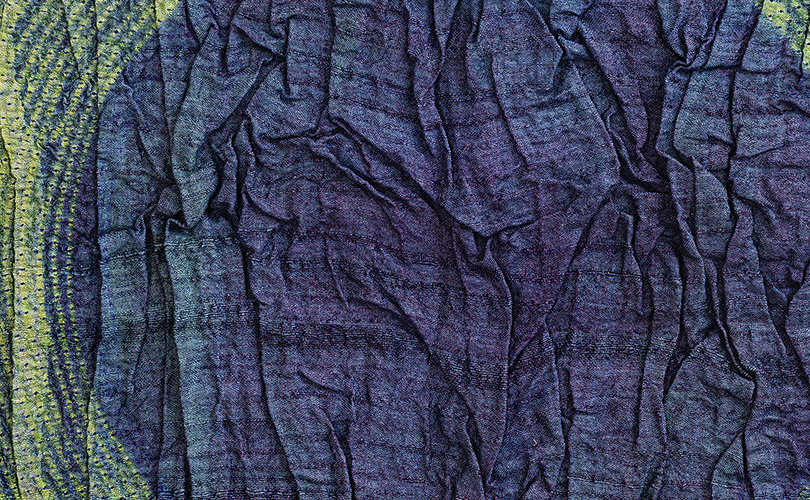
Neha Puri Dhir, Detail of Luster of Time
Neha Puri Dhir, Detail of Luster of Time, 2023. Photo by Tom Grotta

Neha Puri Dhir’s Luster of Time reflects on the beauty of aging and the stories embedded in the passage of time. The work, which involves pleating and stitch-resist dyeing on silk, reveals delicate lines and textures that evoke the growth rings of a tree or the patina formed on weathered metal. The deep circular form at the center suggests a meditative stillness, grounding the viewer amidst the rhythmic folds. Each stitch and crease becomes a quiet testimony to memory, impermanence, and transformation. “This piece celebrates time as a collaborator,” Dhir says, “turning fabric into a canvas where aging itself becomes a mark of grace and resilience.” 

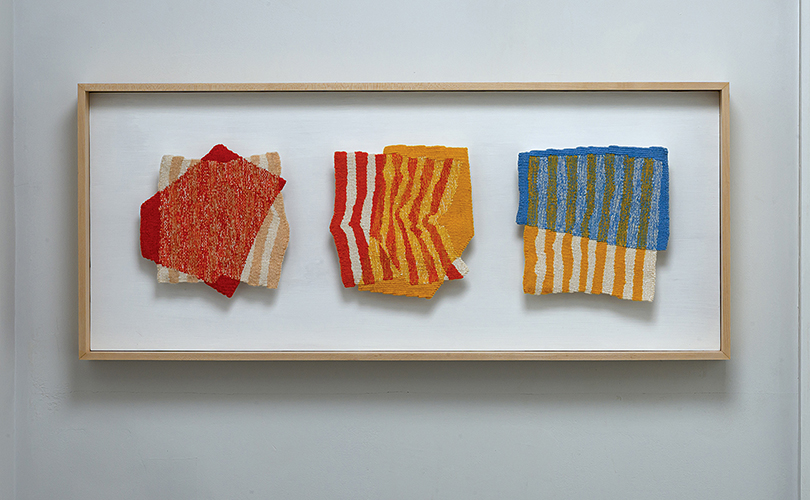
Misako Nakahira, Triptych
Misako Nakahira, Unlayered #HPO, Y, B, 2025. Photo by Tom Grotta

Masako Nakahira continues her exploration of stripes in these small but animated set of weavings. Inspired by “illusions,” a method of expression used in painting, these works are based on the theme of overlapping layers. Although this image appears to overlap visually, the layers do not actually exist in the structure. “This makes us wonder what human perception seeks between reality and illusion,” she says. “I would like to continue to question the boundary between the two through textiles.”

Join us in October to view work by these and 30+ other international artists who celebrate beauty as a form of defiance, cultural preservation, and political voice. 

Exhibition Details: Beauty is Resistance: art as antidote
October 11 – 19
browngrotta arts
276 Ridgefield Road Wilton, CT 06897 

Times:
Saturday, October 11th: 11AM to 6PM [Opening & Artist Reception] 
Sunday,  October 12th: 11AM to 6PM
Monday, October 13th through Saturday, October 18th: 10AM to 5PM
Sunday, October 19th: 11AM to 6PM [Final Day]

Schedule Your Visit

Safety Protocols: No narrow heels, please. We have barn floors.


Retreat and Regenerate: the appeal of an artist’s residency

Paul Furneax residency in  Sweden
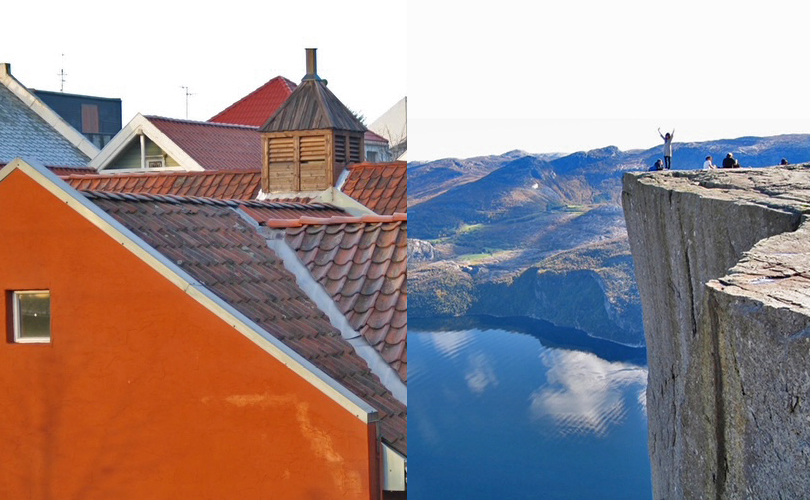
Paul Furneaux images of Norway. Photo courtesy of the artist

Residencies are prized by artists — they offer dedicated time, space, and resources for artists to focus on their creative work, often in a novel and inspiring environment.  “[B]y inserting artists into a different environment, a residency lifts them out of their ordinary routines and obligations, conferring new perspectives as a result, and potentially fostering new creative works.” (Katy Wellesley Wesley, “Sweet retreats: everything you need to know about artist residencies,” The Art Newspaper, May 27, 2022.)  Specifically, they offer time and space — dedicated periods free from daily distractions, allowing artists to immerse themselves in their work, experiment with new ideas, and develop their practice; new environments — Living and working in a new place can spark creativity and offer fresh perspectives. financial support — Residencies can provide financial assistance making it easier for artists to focus on their work without financial strain; professional development — Some residencies offer opportunities for mentorship, workshops, and networking; and opportunities to experiment and innovate — the freedom and resources of a residency can encourage artists to take creative risks, explore new mediums, and push the boundaries of their artistic practice.

Sue Lawty Residency in Sweden
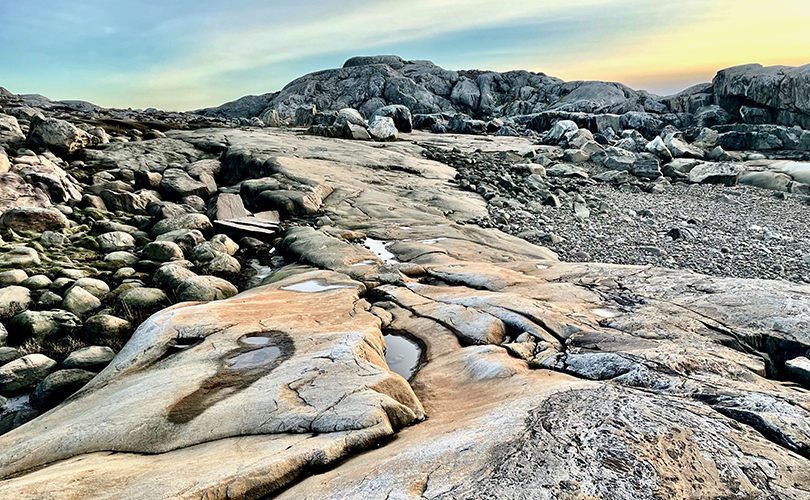
Sue Lawty’s image of Sweden. Photo courtesy of the artist

Many of the artists who work with browngrotta arts have used residencies for just these purposes — to explore, experiment and engage in a new environment. Sue Lawty of the UK took part in the highly selective International Artists Studio Programme In Sweden (IASPIS). Occupying nine visual art studios + a dance studio in an old tobacco factory in Södermalm, Stockholm, a 50/50 bunch of diverse Swedish and International practitioners met, lived and worked alongside each other for three wonderful creative months. “I approached the opportunity with a completely open mind –– no agenda –– simply to be available to what Sweden had to offer and to my response to that,” Lawty says. “I found myself standing back from my work, an observer, assessing.” The north northern hemisphere had its effect, “SO good and now lodged deep in my soul …” In the west she found inspiration in: “keen winds and the intense low sunglow of the winter solstice across icy slabs of rock – visceral experiences of living within feet of the ocean on the tiny outcrop island of Rörö at the north of the Gothenburg archipelago.” In the east: “bright/ low/north light/ greys and blues, textures of snow/ ice/ water/snörök and the crumpled frozen Baltic Sea stretching towards the horizon.”

Neha Puri Dhir at the Mark Rothko Art Centre in Latvia
Neha Puri Dhir at the Mark Rothko Art Centre in Latvia. Photo courtesy of the artist

Location impacted Neha Puri Dhir, too, who travelled from India to Latvia for a residency at the Mark Rothko Art Centre. In her case it was aesthetic proximity and contact with the natural environment. What Dhir realized studying in the environs of the legendary artist was that Rothko was expressing essential human emotions that are invariably layered and multifaceted like his work. “The layering of colors and mixing of oil and egg-based paints for expression — have all left an indelible mark on my art,” she says. Dhir’s resist-dyeing based art practice also involves extensive interplay of colors brought in by layering and multiple levels of dyeing, but in her case the genesis is one thought or emotion, which has been triggered by some experience or conversance.  “The works that I created at the Mark Rothko Art Centre were solely influenced by the environment, the emotions which were triggered by the abundance of maple leaves in the glorious fall.”

ba Osite at the Icelandic Textile Centre in Blönduós
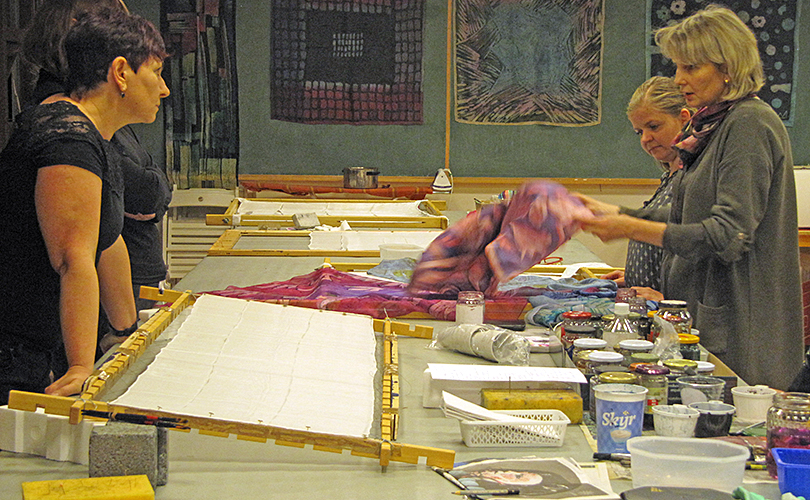
Baiba Osite at the Icelandic Textile Centre in Blönduós, Iceland. Photo courtesy of the artist

“The time we spend in a residency always adds up to a new result,” Baiba Osite says. Osite travelled from Latvia to the Icelandic Textile Centre in Blönduós. The Centre has extensive facilities: a weaving room with looms and a professional specialist who helps residents realize ideas, a large workshop space with tables and a beautiful view of the sea, another workshop space in a smaller building across the yard, with yarn-dyeing capabilities, where digital looms are located. Osite pursued her own projects, offered a workshop on silk painting to local artists, and traveled to northern Iceland and Reykjavik. “The Icelandic landscape has not directly influenced my work. But the harsh northern nature of Iceland with its open spaces, mountains, sea and strong winds left a deep impression.” It’s trite, but true, she concludes, travel broadens horizons.

ne Joy residency in Willow Creek, Montana
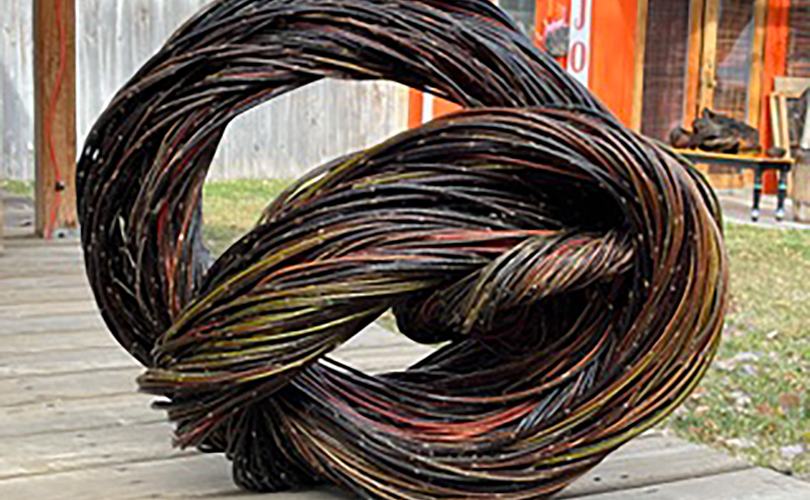
3 Circles, created by Christine Joy at a residency in Willow Creek, Montana. Photo courtesy of the artist

For Christine Joy, it was less a change of surroundings than the “quiet and uninterrupted time to think and work and weave” that she found at a solitary residency in Willow Creek, Montana. “I am still trying to capture the movement of nature,” she says. There were two pieces she worked on while there. “I think just getting out of my studio and looking at them in a new place and with new perspective helped me see the direction they needed to go. I really found the direction for 3 Circles at Willow Creek. I love the movement it developed. Now it is like weaving on a big knot and trying not to lose the looseness.”

Misako Nakahira-Australian Tapestry Workshop
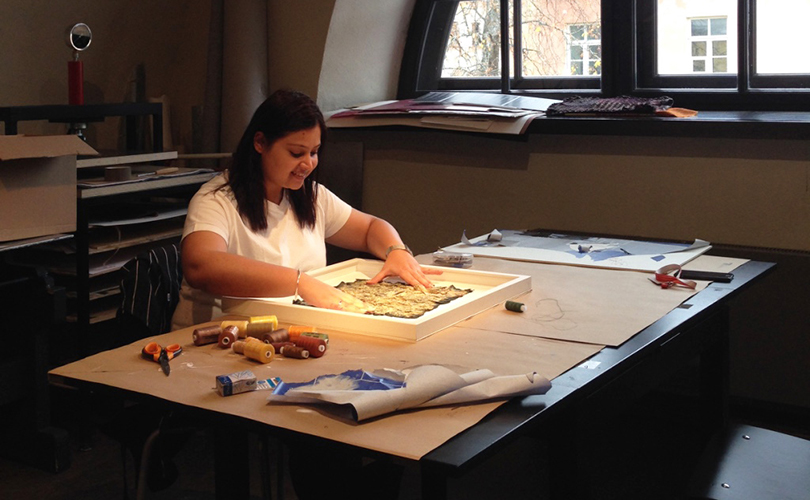
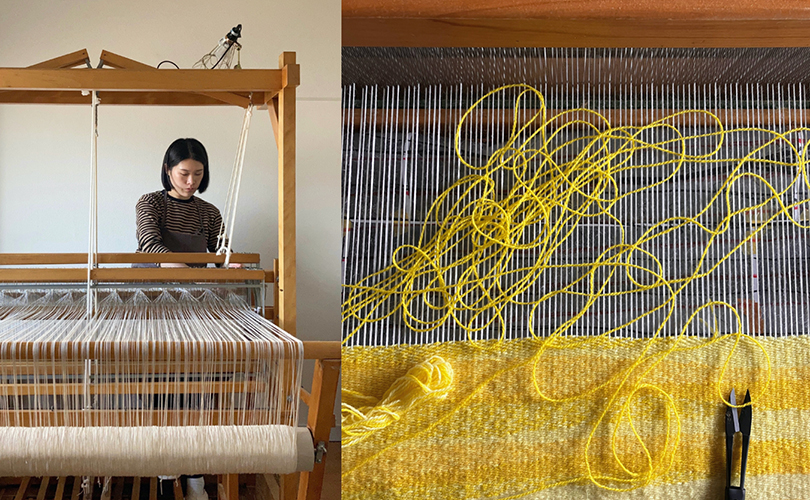
Misako Nakahira-Australian Tapestry Workshop. Photo courtesy of the artist

Misako Nakahira found her residency an opportunity to learn new techniques. “Last year, I stayed in Melbourne, Australia, as an artist-in-residence at the Australian Tapestry Workshop. ATW is one of the leading tapestry studios in Australia, and I became deeply interested in their work,” she says. “I was particularly influenced by their high level of technique and use of color. Since returning to Japan, I have been incorporating the methods I learned from them into my own work.” 

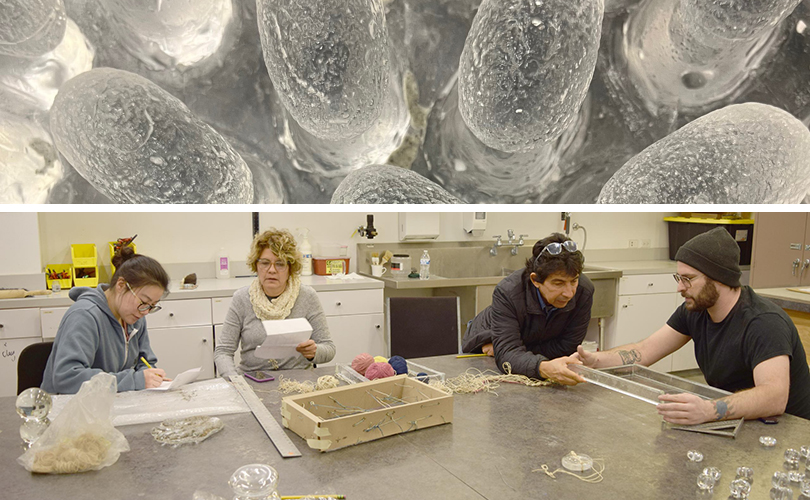
María Dávila and Eduardo Portillo at Glass Pavilion at the Toledo Museum of Art.

During  the month of February, María Dávila and Eduardo Portillo were Artists in Residence at the Glass Pavilion of the Toledo Museum of Art in Ohio. The Museum invites artists who work in other mediums to experiment in glass. “We had an extraordinary time getting to know a fascinating material and amazing process,” the artists wrote. “We had the support from great artists and specialists of the Glass Pavilion team and we were able to make some pieces that link our textile practice and glass.”

Paul Furneax residency in  Sweden
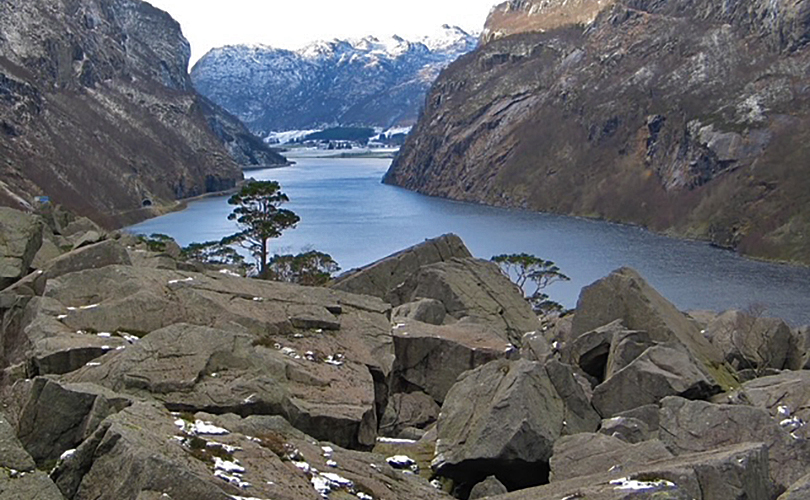
Paul Furneaux image from Norway. Photo courtesy of the artist

Paul Furneaux’s experience underscores how impactful a residency can be. He ventured north from Scotland to Norway, near Stavanger and the work that resulted transformed his art practice. In Norway, he had a pivotal day. “I was surrounded by huge fjords, full of magic, with colors that were intensified by rich sunlight. I observed the immense powerful nature that surrounded me, looking from one side of an enormous fjord to the other and down towards the sea,” he says. “That evening, I worked on a small series of prints, simple prints about that physical, yet abstract step of land into sea; I worked and worked, slightly frantic and frustrated.  It was two o’clock in the morning and I decided to wrap and paste one of the small prints around the oval date box from which I had been snacking. I went to bed exhausted but early in the morning I ate more dates for breakfast so that I could wrap another print around another box. There I found a conceptual shift in my work.” Furneaux returned to Scotland and decided to try to work full time as an artist and began to wrap other objects in mokuhanga (Japanese wood block prints) in earnest. “The immense overpowering fjords, the shadow casting and echoing of one side of the fjord to the other, was what I was trying to reflect in this new artistic dialogue,” Furneaux says.

“A new beginning, a unique voice, an undiscovered method,” what Paul Furneaux found in his residency aptly summarizes the appealing potential of an artist’s residency.