
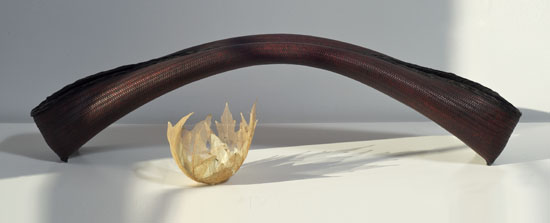
Jiro Yonezawa bamboo Bridge and Kay Sekimachi Leaf bowl. photo by Tom Grotta
We’ve had a busy fall season at browngrotta arts. First was Stimulus: art and its inception, which you can still see in the catalog http://www.
browngrotta.com/Pages/c36.php and online through the end of the month http://www.browngrotta.com/Pages/StimulusOnlineExhibit.php. Next up, is Green from the Get Go: International Contemporary Basketmakers at the Wayne Art Center, Pennsylvania http://www.
wayneart.org/exhibition/green-from-the-get-go-international-contemporary-basketmakers which runs from December 2, 2011 to January 21, 2012. Green from the Get Go is curated by Jane Milosch, former curator of the Renwick Gallery, Smithsonian American Art Museum in collaboration with browngrotta arts. The exhibition features an exciting compilation of more than 40 works by artists who take inspiration from nature and the history of basketry. Since prehistoric times artists and craftspeople have been highly attuned to the beauty and resources of the natural world, whether depicting a pristine landscape, untouched by man, or harvesting plants and minerals for pigments and brushes. Sustainability is part of the design and craft process, which requires a heightened sensitivity to materials, one that honors the caring for, replenishing and repurposing of materials. Artist Dorothy Gill Barnes captures this eco-friendly position well when she explains, “my intent is to construct a vessel or related object using materials respectfully harvested from nature.”
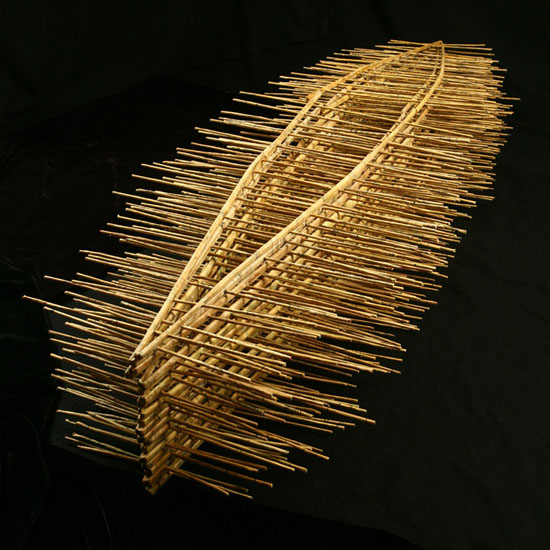
CROSSING OVER Dona Anderson bamboo kendo (martial art sticks), patterned paper, thread 15″ x 94″ x 30″ 2008. photo by Richard Nicol
Some of the sculptural baskets in Green from the Get Go are made from both flora and fauna, from bamboo, pine, sea grass, and willow to emu feathers and bayberry thorns. The tactile nature of these fiberous works stimulates all of the senses—sight, smell, touch and even sound. Each maker brings his or her own conceptual approach and expression to the design and fabrication process. Some works are small enough to nestle in the hand or rest table-top, while others are monumental or hang on the wall. Green from the Get Go stretches our imagination in terms of what materials and forms constitute a basket and how art bespeaks the interconnected relationship of man and nature.
The exhibition includes artists from Australia, Canada, Japan, the UK, Scandinavia and the US, featuring innovators in the genre of 20th-century art basketry as well as emerging talent: Dona Anderson, Jane Balsgaard, Dorothy Gill Barnes,Dail Behennah. Nancy Moore Bess, Birgit Birkkjaer, Jan Buckman, Chris Drury, Lizzie Farey, Ceca Georgieva, Marion Hildebrandt, Kiyomi Iwata, Christine Joy, Virginia Kaiser, Markku Kosonen, Gyöngy Laky, Dawn MacNutt, John McQueen, Mary Merkel-Hess, Norma Minkowitz, Valerie Pragnell, Ed Rossbach, Hisako Sekijima, Kay Sekimachi, Naoko Serino, Klaus Titze, Jiro Yonezawa and Masako Yoshido.
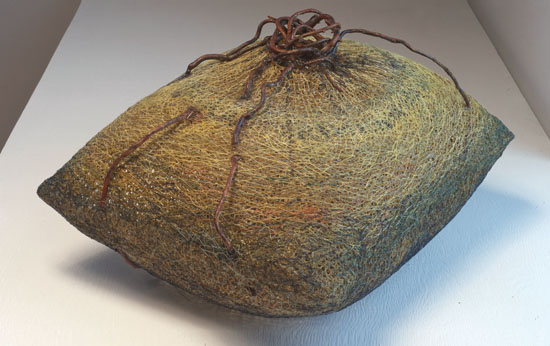
PILLOW, Norma Minkowitz, fiber, wood, paint, 2011
The preview party for Green from the Get Go: International Contemporary Basketmakers and Craftforms 2011, juried by Elisabeth Agros of the Philadelphia Art Museum, takes place on the evening of December 2nd and we’ll be there. For more in formation, contact the Wayne Art Center: http://www.wayneart.org/events/?id=48.
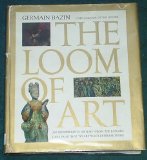
 by Germain Bazin, curator of the Louvre (Simon Schuster, NY, 1962) probably way out of print! The book is beautiful and I have it and love it still.
 (with Alexandra Quinn, Gibbs Smith, 2008). It is a wonderful book. He collects street trees and mills them and uses them in his work so he is dear to my heart.
 IF (Getty Publications; J. Paul Getty Museum; First Edition edition 1995) by another artist friend of mine, Sarah Perry.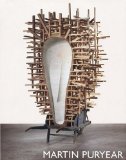
 (The Museum of Modern Art, New York 2007) by John Elderfield, Elizabeth Reede, Richard Powell, Michael Auping, Martin Puryear.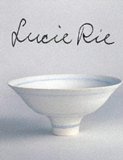
 by Tony Birks (Marston House 1994). I feel this book documents her work very well. I am always amazed at the “drawing” she could do with glaze.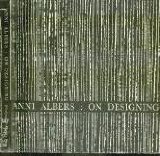
 (Wesleyan 1971). It was my weaving “Bible”. In fact everything she wrote makes so much sense to me.
 by Mildred Constantine/Jack Larsen (Van Nostrand Reinhold 1972) it just turned my ideas and work upside down. I saw what was possible with the materials I was using and what else was out there. That book opened up a whole new world to me.
 by Soetsu Yanagi (Kodansha International, Revised edition, 1990). One of my first trips after arriving in Tokyo three weeks ago was to the Mingeikan, Yanagi’s museum and home. It was a delight, after so many years, to see some of the work pictured in the book. Yanagi’s theory that hard, repetitive practice resulted eventually in the disengagement of self and led to work of merit produced with ease was an inspiration to me. I was a young grad student when I first read the book and at the time every day was a struggle.
 by Claude Levi-Strauss (University Of Chicago Press, 1968). The introduction made me think about the role of an artist and about materials.