Tag: Gizella K Warburton

Books Make Great Gifts, 1 of 2

We’ve got book and exhibition recommendations from artists on tap this week and recommendations from browngrotta arts next.
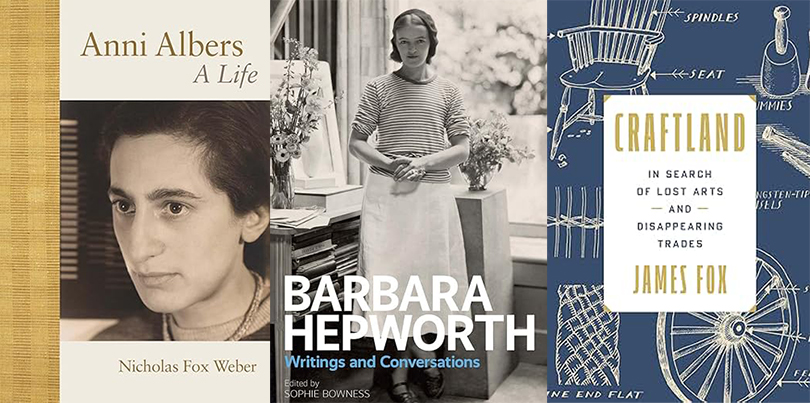
Anni Albers, Barbara Hepworth, Craftland

Rachel Max is  looking forward to reading a new biography of Anni Albers, by Nicholas Fox Weber (Anni Albers: a life), which is coming out in April next year. “But,” she writes, “whenever I need a burst of inspiration, I dip into the Writings and Conversations, by Barbara Hepworth. I’ve always loved her work. Max also recommends Craftland by James Fox as a thoughtful and timely journey through Britain’s “endangered” crafts and heritage. 
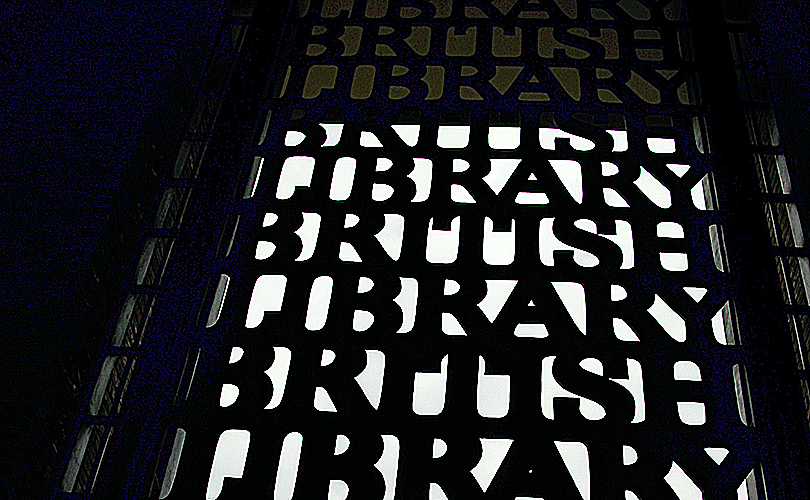
British Library

“In a digital age where handmade skill is gradually being chiseled away by mass production and AI, Fox traverses both time and land to meet some of the people keeping our need for craftsmanship alive. As a maker, I am extremely conscious of techniques – not reviving them as such, but reviewing them to make something new. Admittedly, and perhaps because I live and work in a city, I take lots for granted – how agriculture, for example, has shaped our landscape with hedgerows and stone walls. I’ve always known that Sheffield is famous for its steel production, that Birmingham has a long history of jewelery making, and that Somerset is known for willow weaving. Each area has its own unique way of doing things – stone walls and baskets vary from region to region. I’ve walked past the British Library many times without considering who designed and carved the lettering on the facade. The bells of Big Ben toll across our screens every New Year, but, like many, I take for granted the skill and expertise that went into making and tuning them. 

Fox’s writing is poetic and contemplative but what comes acoss most in this book are the skills, dedication and determination of all the people he met along the way,” Max says. “Aside from the rush weaver, Felicity Irons, many names were unknown to me, but these names and their workmanship are hardly invisible, they are part of a far greater picture – our social and cultural history. So much so that once forgotten trades have become embedded in our own names and language. Fox reminds us to look around, to notice and to take note of crafts enduring legacy.”
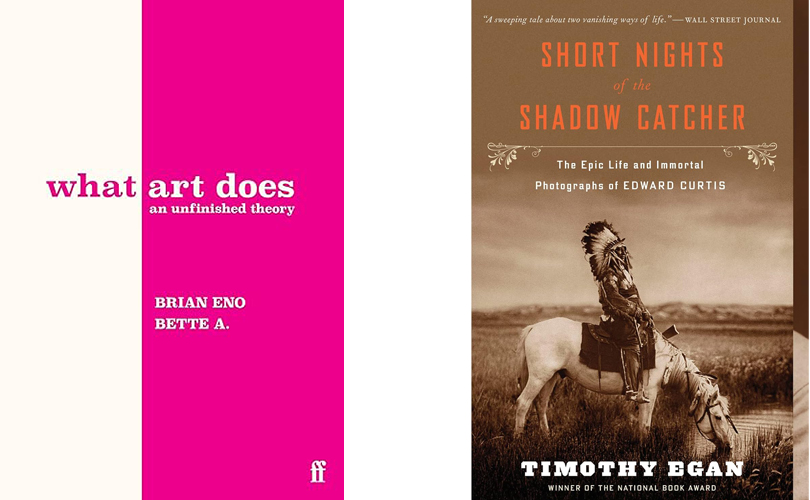
What Art Does, Short Nights of the Shadow Catcher

“I can recommend What Art Does: An Unfinished Theory, by Brian Eno and Bette A.,” Randy Walker writes. “It’s a small book (literally 3” x 5”) consisting of 122 refreshing pages written and illustrated in children’s book fashion — just my style. I savor the thoughts, and only read a few pages at a time so I can contemplate them for a while.” The book is billed as “an inspiring call to imagine a different future.”

“My favorite book of the year was about photographer, Edward Curtis — Short Nights of the Shadow Catcher: The Epic Life and Immortal Photographs of Edward Curtis by Timothy Egan,” writes Polly Sutton. “I recently got to view photos at the Rainier Club in Seattle where he lived for many years and paid for his room and board with pictures.” 

According to the publisher’s notes, Curtis spent three decades documenting the stories and rituals of more than 80 North American tribes. It took tremendous perseverance  ​— ​ 10 years alone to persuade the Hopi to allow him to observe their Snake Dance ceremony. And the undertaking changed him profoundly, from detached observer to outraged advocate. Curtis would amass more than 40,000 photographs and 10,000 audio recordings, and he is credited with making the first narrative documentary film. The Ranier Club has an important collection of his works.
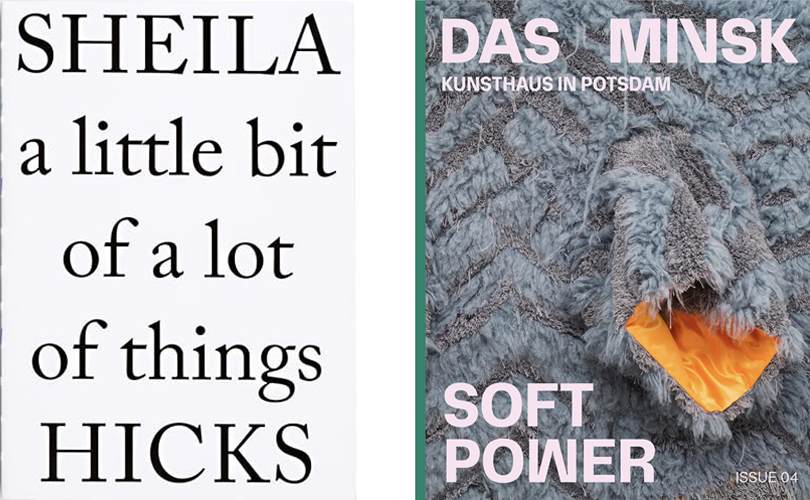
Sheila Hicks, Das Minsk

Exhibition catalogs often inspire recommendations; Europe was apparently the source for fiber exhibitions in the last 12 months, based on Heidrun Schimmel’s update. The expansive exhibition of Sheila Hicks: a little bit of a lot of things was a highlight this year In Germany, Schimmel writes. The exhibition was shown in Kunsthalle Düsseldorf from October 2024 to February 2025.  “A very good catalog of the same name was published,” she writes. It chronicles 50 years of the artist’s work and features a lay-flat sewn binding and an exposed spine, A Little Bit of a Lot of Things is designed to emulate Hicks’ playful, imaginative practice. 
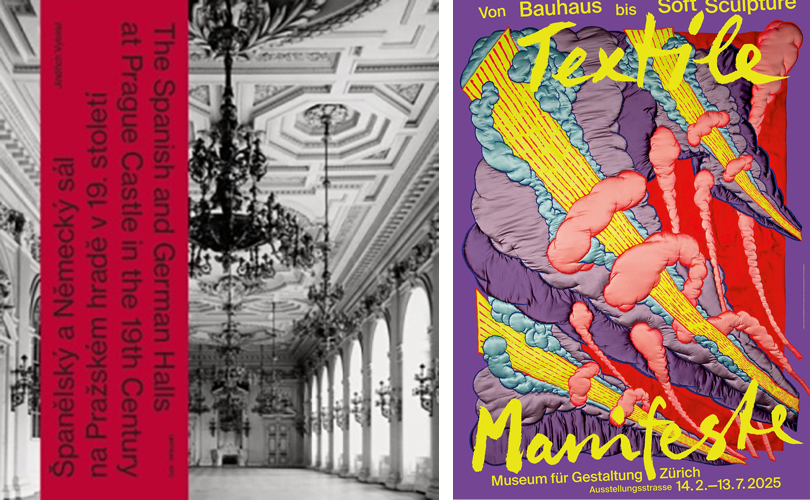
The Spanish and German Halls at the Prague Castle in the 19th Century, Manifeste Museum für Gestating Zurich

“Another good exhibition, Soft Power, was shown in the Museum Das Minsk, Potsdam, Germany, in 2024, she says. You can order the exhibition catalog (112 pages) and take on line tour here: https://dasminsk.de/en/exhibitions/4478/soft_power.  A truly comprehensive exhibition, Textile Manifestos—From Bauhaus to Soft Sculpturewas displayed in Switzerland, in the Museum für Gestaltung, Zürich, she says. In addition to the fiber all-stars — Hicks, Tawney, Abakanowicz — the exhibition included intriguing artists Gunta Stölz, Elsi Giaque, Lia Cook, and Masakazu Kobayashi. In conjunction, the Museum recommends the volume, Textiles Manifestos.
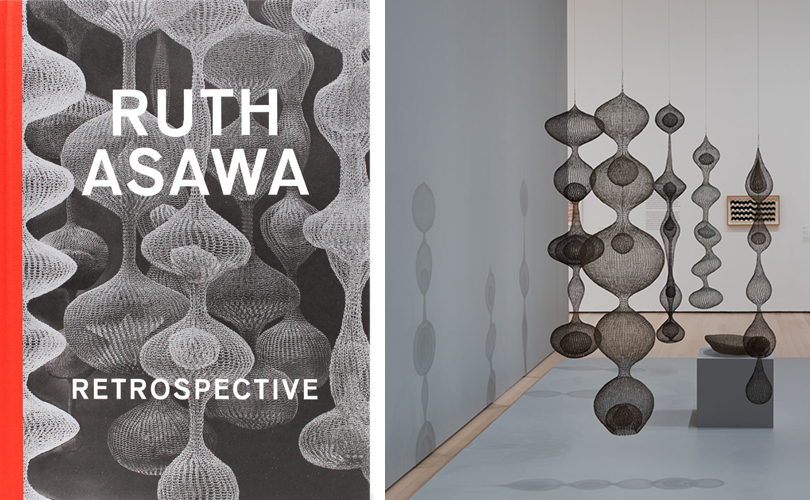
Ruth Asawa
Installation view of Ruth Asawa: A Retrospective on view at The Museum of Modern Art from October 19, 2025, through February 7, 2026. The Museum of Modern Art, New York. Digital Image © 2025 The Museum of Modern Art, New York. Photo by Jonathan Dorado. Artwork © 2025 Ruth Asawa Lanier, Inc., Courtesy David Zwirner.

Exhibition catalogs were also the inspiration for both Karyl Sisson’s and Gyöngy Laky’s recommendation: the Ruth Asawa retrospective — first in San Francisco, now in New York. (If you are on the East Coast, you have until February 7, 2026 to see it at MoMA.) “The breadth of her work is astounding,” Karyl Sisson says. Gyöngy Laky also recommended the retrospective catalog, Ruth Asawa: RetrospectiveShe and her husband Tom Layton were friends with Ruth Asawa. “Thinking about Ruth Asawa reminds me that the US has overcome threats to our Democracy before,” Laky writes. “During another time challenging our democratic values, in World War II, the Asawa family members were sent to internment camps. The terrible and misguided 1942 Executive Order eventually incarcerated 120,000 people of Japanese descent. It was, however, as a child in those wretched concentration camps, that the talent and creative interests of Ruth Asawa were nurtured. In 1946, at the age of 20, Ruth went to Black Mountain College where she met her future husband, architect Albert Lanier. At Black Mountain College her drawing teacher, Ilya Bolotowsky, connected her drawing with her wire work describing it as drawing in space. She began her looped-wire sculptures there after being introduced to basketry techniques in Mexico”. The following year Asawa’s work was shown at SF MoMA for the first time — only to be the subject of an extensive retrospective nearly 75 years later.

Asawa left her mark on cultural history in other ways. She married her husband Albert in 1949 in San Francisco when interracial marriages were still illegal in many parts of the US. The partnership lasted 59 years!  Asawa left a legacy within the larger Bay Area community, too. She co-founded the Alvarado Arts Workshop for elementary school children in 1968 – – now the Ruth Asawa San Francisco School of the Arts. She was deeply devoted to arts education. Laky writes that an Imogen Cunningham photo from the 1950s greeted visitors to the SFMoMA exhibition accompanied by a quote: “An artist is an ordinary person who can take ordinary things and make them special.” And, Laky says, Asawa did just that. 
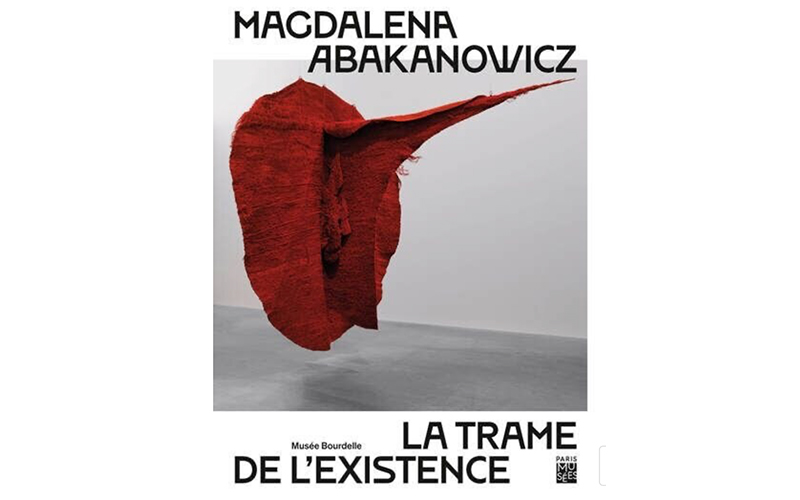
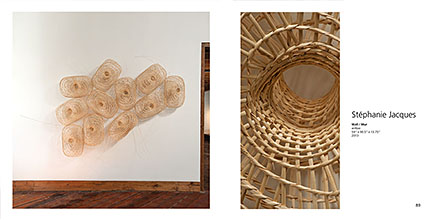
Stéphanie Jacques is looking forward to visiting Magdalena Abakanowicz: The Fabric of Life through April 12, 2026 at the Bourdelle Museum in Paris. “I love this museum and I’m excited to experience the works of Magdalena Abakanowicz. The catalog looks fascinating.” https://www.bourdelle.paris.fr/visiter/expositions/magdalena-abakanowicz-la-trame-de-lexistence In additional to exhibition attendance, Jacques has an ambitious reading list planned for next year. “Books are there to recharge us and open us up to other perspectives,” she writes. There are five books she’d like to read in early 2026:
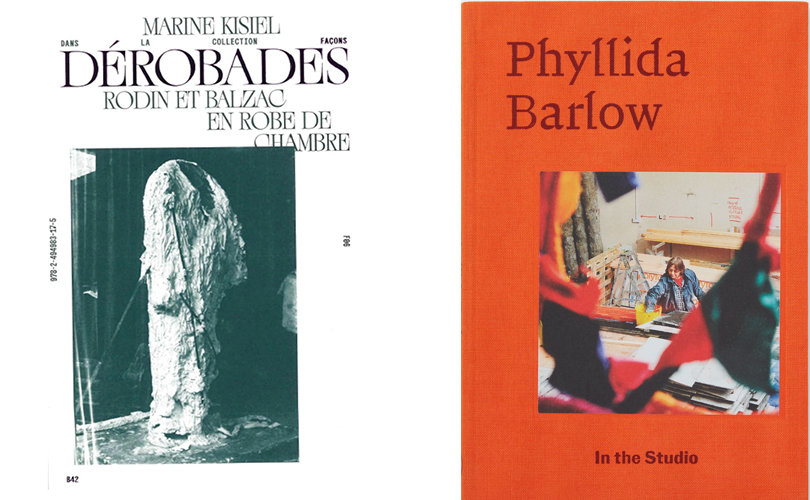
To learn more about the path Rodin took to create his sculpture of Balzac: his approach, his doubts, his relationship to the real body, etc, Jacques is going to read Dérobades: Rodin et Balzac en robe de chambre by Marine Kisiel — only available in French. “Phyllida Barlow is an artist whose work I admire,” she writes. “I haven’t yet had the chance to see her pieces in person, and this book, In the Studio: Phyllida Barlow , text by Frances Morris, seems like an opportunity to discover more about her work and her creative process. Reading about other artists’ work is enriching and often prompts me to reflect on my own practice.” Three books on basketry in all its complexity and variety are also on Jacques’ list. She describes these as, “an inexhaustible source of inspiration and wonder; skills where the universal and the unique meet.”
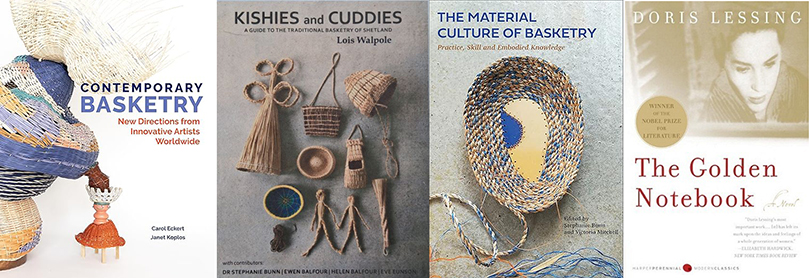
Contemporary Basketry, Kishies and Cuddies, The Material Culture of Basketry, The Golden Notebook

They are Contemporary Basketry: New Directions from Innovative Artists Worldwide by Carol Eckert and Janet Koplos, Kishies and Cuddies: A Guide to the Traditional Basketry of Shetland, by Lois Walpole, and The Material Culture of Basketry: Practice, Skill, and Embodied Knowledgeeds. Stephanie Bunn and Victoria Mitchell. And Jacques may return to The Golden Notebook by Doris Lessing, since she has done so regularly since first reading it over two years ago. “I have even opened it at random just to hear her voice,” she says. “It has everything: history and the upheavals of personal lives, political engagement, love, men, women, creation…” 
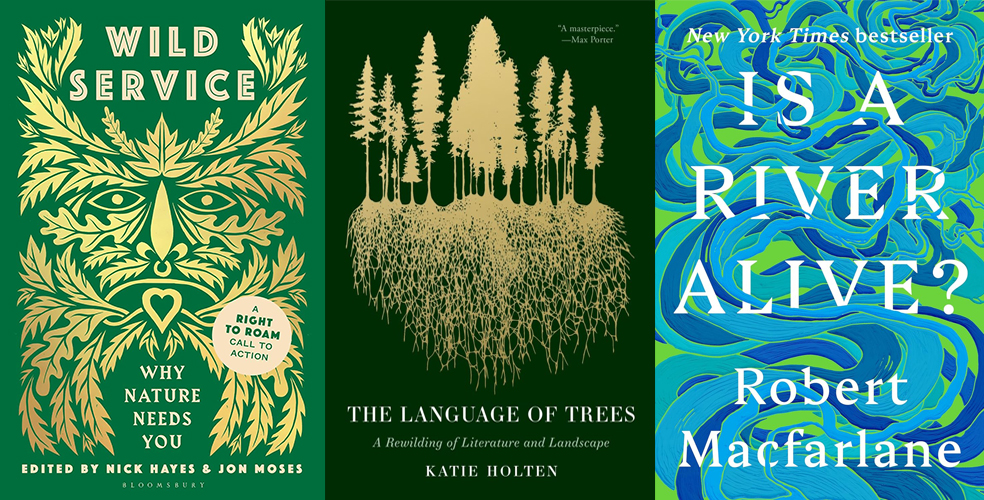
Wild Service, The Language of Trees, Is a River Alive

Gizella Warburton recommended three books about our relationship to nature: Wild Service: Why Nature Needs You, eds. Nick Hayes and Jon Moses, The Language of Trees: a Rewilding of Literature and Language, by Katie Holten and Is a River Alive? by Robert MacFarlane. Wild Service calls for mass reconnection to the land and a commitment to its restoration. A national bestseller, The Language of Trees invites readers to discover an unexpected and imaginative language to better read and write the natural world around us and reclaim our relationship with it. MacFarlane has been called “the great nature writer … of this generation.” The publisher says that Is a River Alive? is a joyful, mind-expanding exploration of an ancient, urgent idea: that rivers are living beings who should be recognized as such in imagination and law. They are not textile-related, says Warburton, but each offers “a hopeful and meaningful read.” Amen to that!

Next Week:
More book recommendations— this time from browngrotta arts …
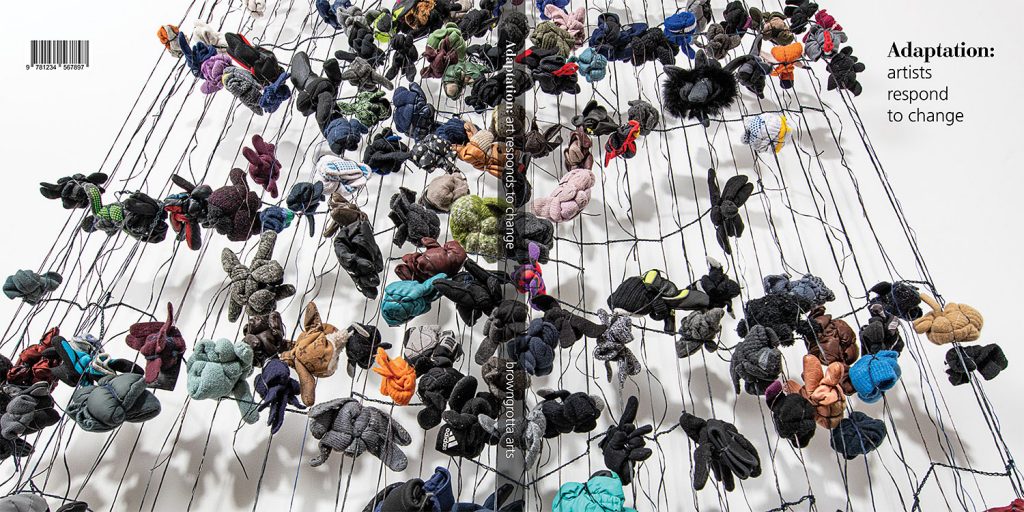

Our 51st Catalog – Adaptation: Artists Respond to Change

The theme of our most recent exhibition, Adaptation: Artists Respond to Change was intentionally broad, to cover all sorts of external circumstances — besides the pandemic — that might influence an artists process. 

Adaptation: artists respond to change cover

Artists who work with browngrotta arts coped with the changes of the last year various ways — moving locations, taking up art photography, taking new inspiration from nature. But COVID and lockdowns are just some of the many reasons artists make changes in others include adapting when a material becomes unavailable (willow) or a new one suggests itself (fiber optic, bronze, copper, steel, kibisio, akebia), making a move in the US from the East to the South or from one country to another or from the city to the desert, facing a change in physical abilities (allergy, injury), an altered personal relationship, or a commission opportunity or an exhibition challenge. Our 51st catalog tells the stories of 47 artists from 14 countries, how their art has changed and why.

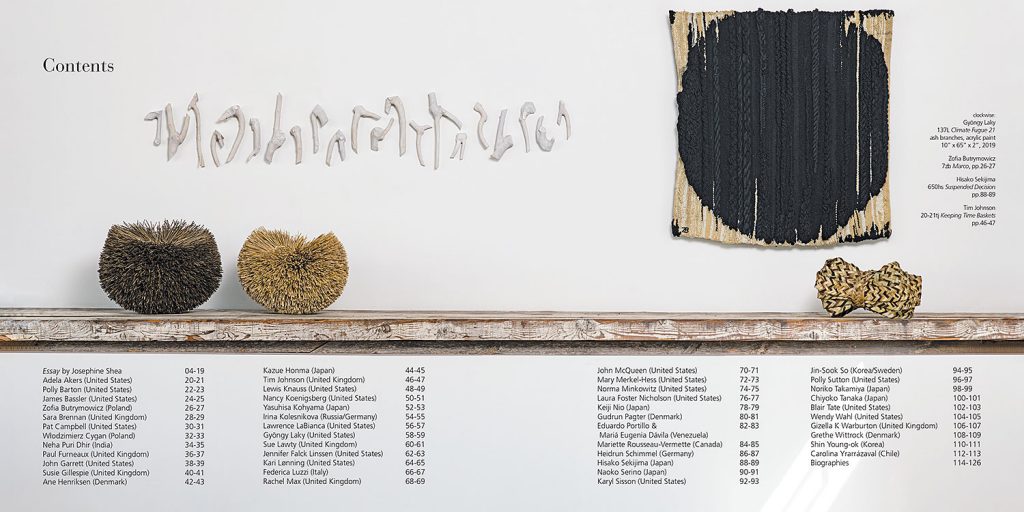
Adaptation: contents page

Replete with photos of work, installation and detail shots the catalog also includes an essay by Josephine Shea, Art Bridges Initiative, American Art at the Philadelphia Museum of Art. 

“Every year brings losses and change, but 2020 brought them on a global scale. In the US, election-year politics and racial injustice, were layered on top of the pandemic,” writes Shea. “Some of the artists in Adaption created work that responded to the challenges of moment, while others looked at long-term issues, like climate change.  Work by these artists also reveals the impacts of lockdown constraints, some imposed and some self-imposed, as studio space access was interrupted and available supplies a variable for experimentation …. And, that art aids resilience, providing artists a way to find calm, express emotional turmoil and turn adversity — like injury or a mudslide or trip on a vine — into opportunity.”

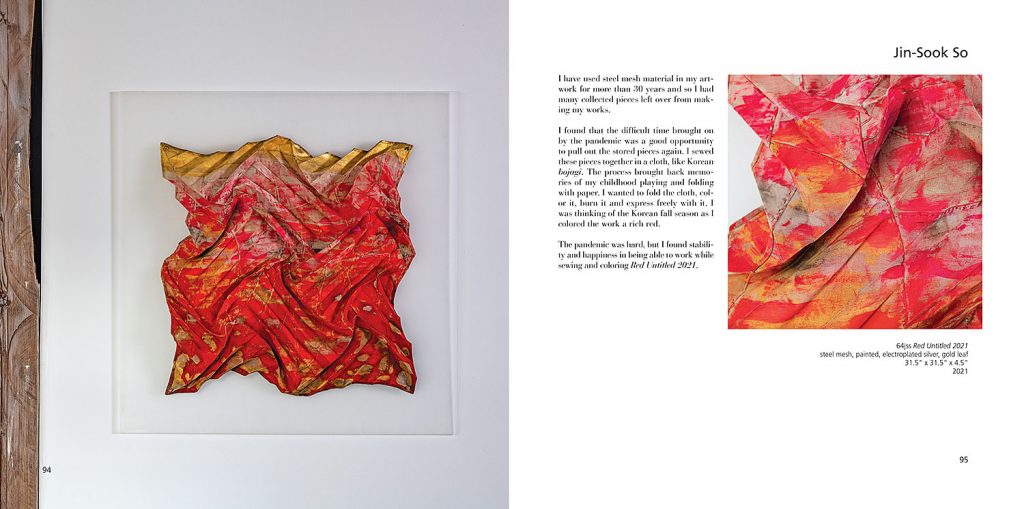
Jin-Sook So spread

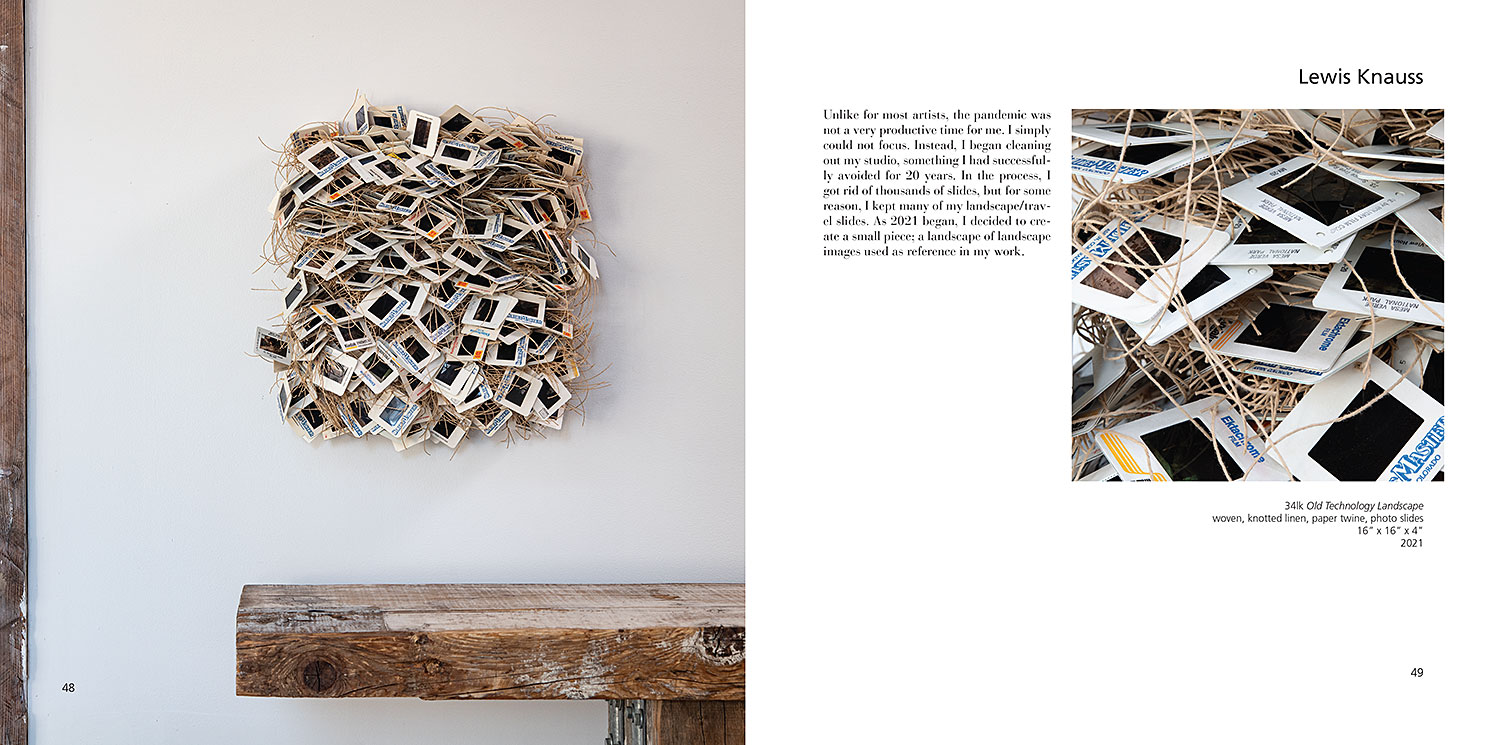
The artists included in the exhibition and catalog are: Adela Akers (US), Polly Barton (US), James Bassler (US), Zofia Butrymowicz (Poland), Sara Brennan (UK), Pat Campbell (US), Włodzimierz Cygan (Poland), Neha Puri Dhir(India), Paul Furneaux (UK), John Garrett (US), Ane Henriksen (Denmark), Kazue Honma (Japan), Tim Johnson (UK), Lewis Knauss (US), Nancy Koenigsberg (US), Yasuhisa Kohyama  (Japan), Irina Kolesnikova(Russia/Germany), Lawrence LaBianca (US), Gyöngy Laky (US), Sue Lawty (UK), Jennifer Falck Linssen (US), Kari Lønning (US), Federica Luzzi (Italy), Rachel Max (UK), John McQueen (US), Mary Merkel-Hess (US),Norma Minkowitz (US), Laura Foster Nicholson (US), Keiji Nio (Japan), Gudrun Pagter (Denmark), Eduardo Portillo & Mariá Eugenia Dávila (Venezuela), Mariette Rousseau-Vermette (Canada), Heidrun Schimmel (Germany), Hisako Sekijima (Japan), Naoko Serino (Japan), Karyl Sisson (US), Jin-Sook So (Korea/Sweden), Polly Sutton (US), Noriko Takamiya (Japan), Chiyoko Tanaka (Japan), Blair Tate (US), Wendy Wahl (US), Gizella K Warburton (UK), Grethe Wittrock (Denmark) and Shin Young-ok (Korea), Carolina Yrarrázaval (Chile).

Lewis Knauss Spread

For a copy of Adaptation: Artists Respond to Change, visit our website: http://store.browngrotta.com/adaption-artist-respond-to-change/


Creative Quarantining: Artist Check-in 3

In our third set of reports creating under corona, artists in Japan, the UK and the US weigh in.

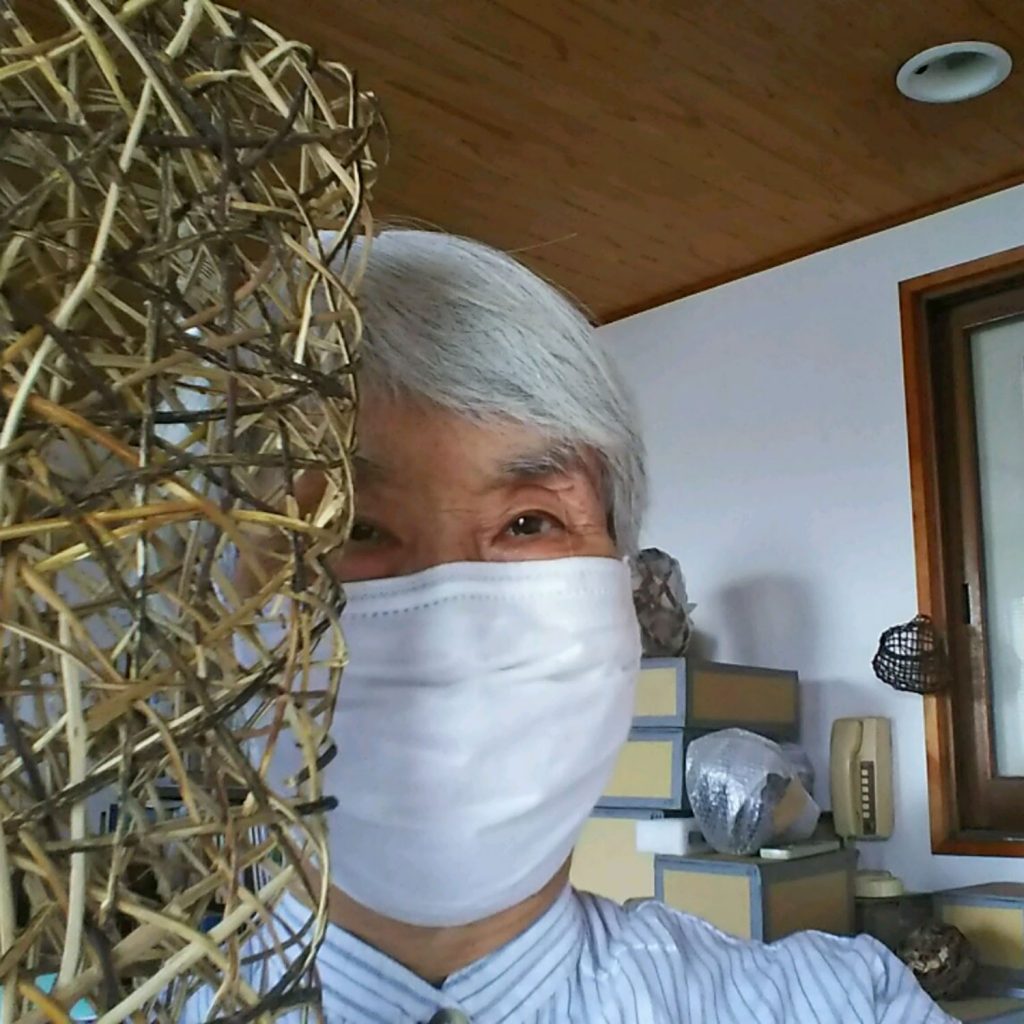
Hisako Sekijima at home wearing a mask
Hisako Sekijima at home wearing a Mask. Photo by Hisako Sekijima

For Hisako Sekijima, writing from Japan, wearing a mask is not that unusual. “Wearing sanitary masks has long been my mother’s remedy against flu and all kinds of infections. In my childhood, I felt awkward that I was always wearing  a mask of white gauze (of course handmade!) while no other friends in my class had to do so,” Hisako recalls. “But she might have learned by experience through the harder health situation of wartime when there was a lack of proper medicine and infection control required tangible protection.  My mother was born in 1919 when the Spanish Flu was pandemic. She is living her 100th year now. When the senior citizens home allows the families to visit, I will print and show her photos of fashionable masks. What will be her reaction? I cannot wait for that normal day to come.” 

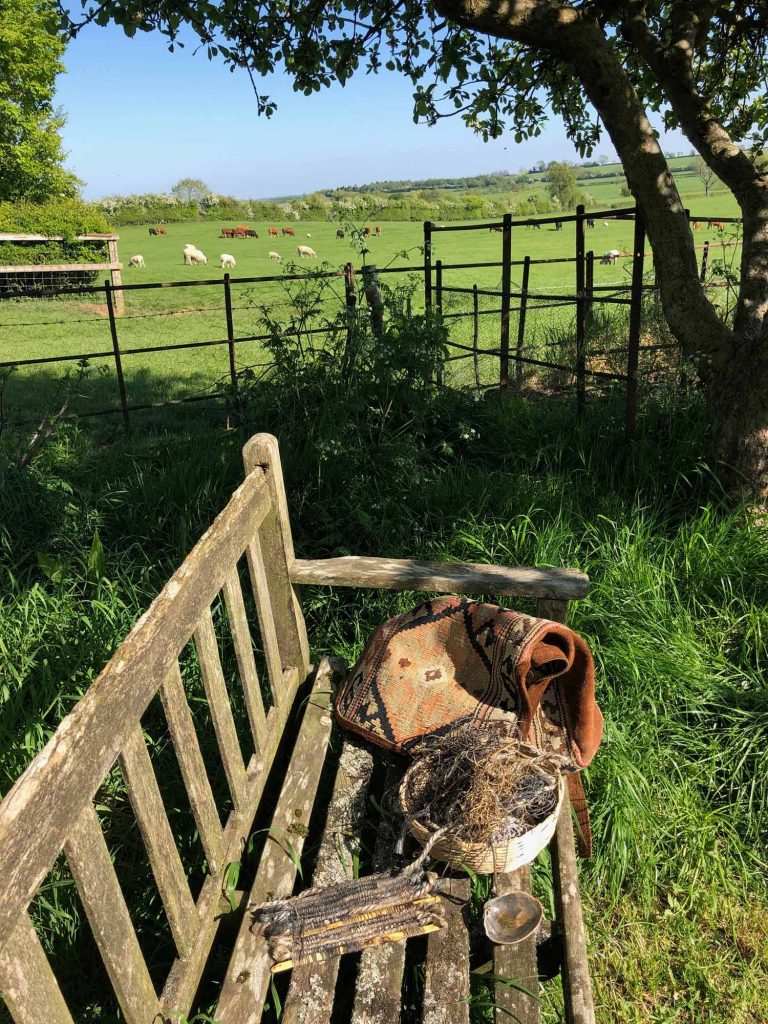
Gizella Warburtons view from the bottom of her garden
Gizella Warburtons Garden view. Photo by Gizella Warburton

“… I have taken the ‘weaving’ out to the bottom of my garden,” says Gizella Warburton who is in the UK. “… listening to the birds… a rare and precious moment. I am busy developing new pieces, in-between planting veg and battling slugs.” And, she has tentatively launched an Instagram page: www.instagram.com/gizellakwarburton.

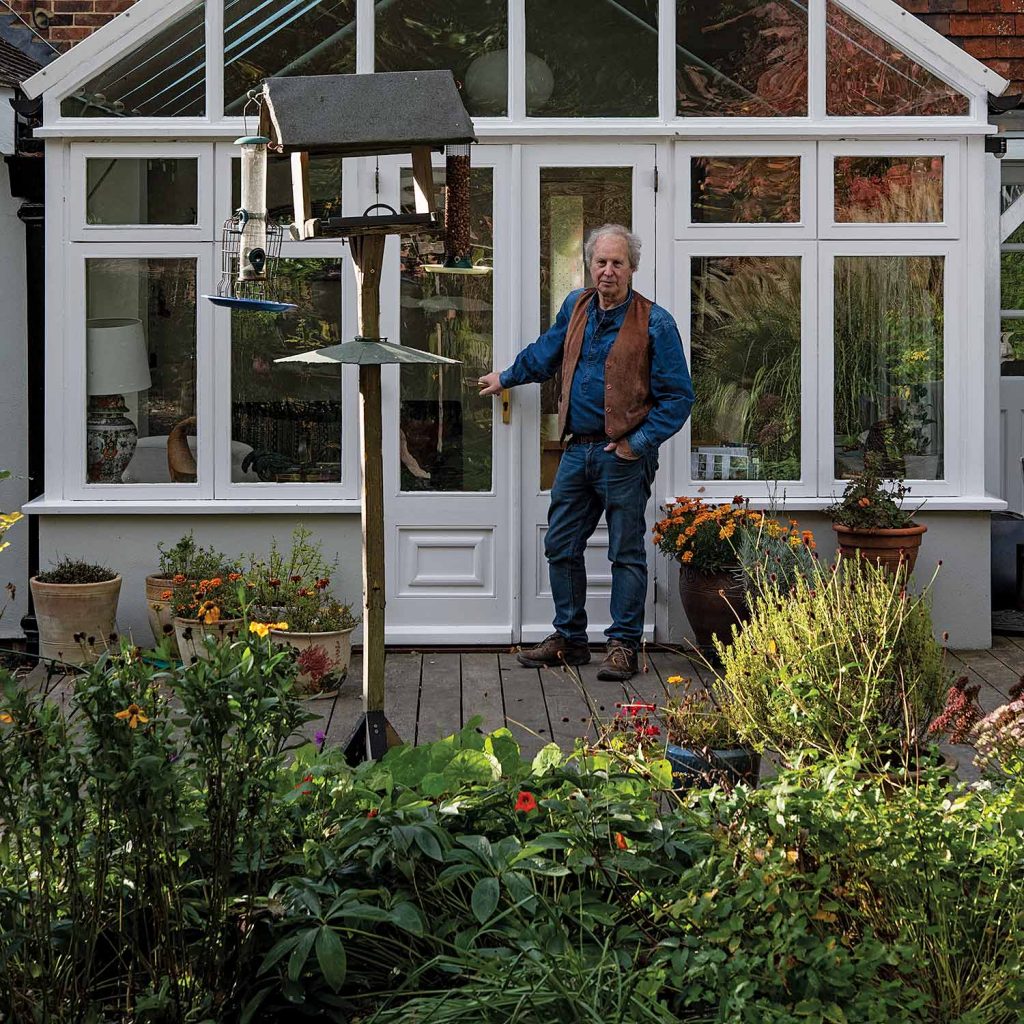
Chris Drury at Home
Chris Drury at Home. Photo by Tom Grotta

“We are on lockdown here,” writes Chris Drury of he and his wife, poet Kay Syrad who are also in the UK, “but it is as good a place to be as ever and we are both busy. Luckily for me, my third year of the Lee Krasner award come through. Gives me the time to work on my retrospective book – Edge of Chaos.”

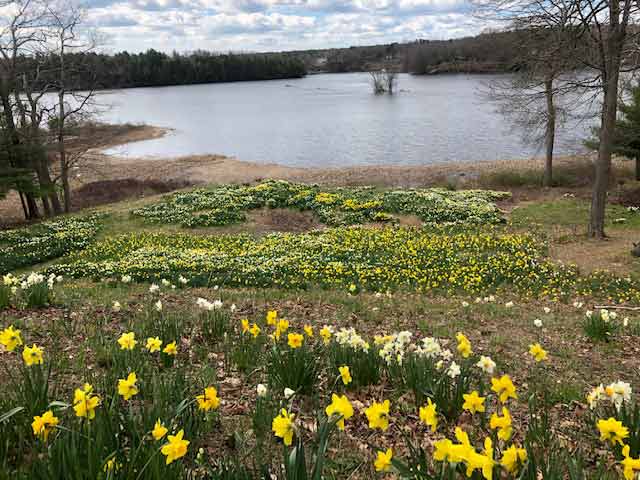
Pat Campbells view from th across the street
Pat Campbell’s view from across the street

“Just to let you know that Maine is in full spring bloom,” writes Pat Campbell. “I am back in the studio, now that it is warm and beautiful to work out there. I am making smaller pieces. Just across the street from me is a hill of thousands of daffodils  with the river beyond it. This is where I walk. I also walk on the beach. That is quite wonderful especially on a nice warm day. All goes well.”

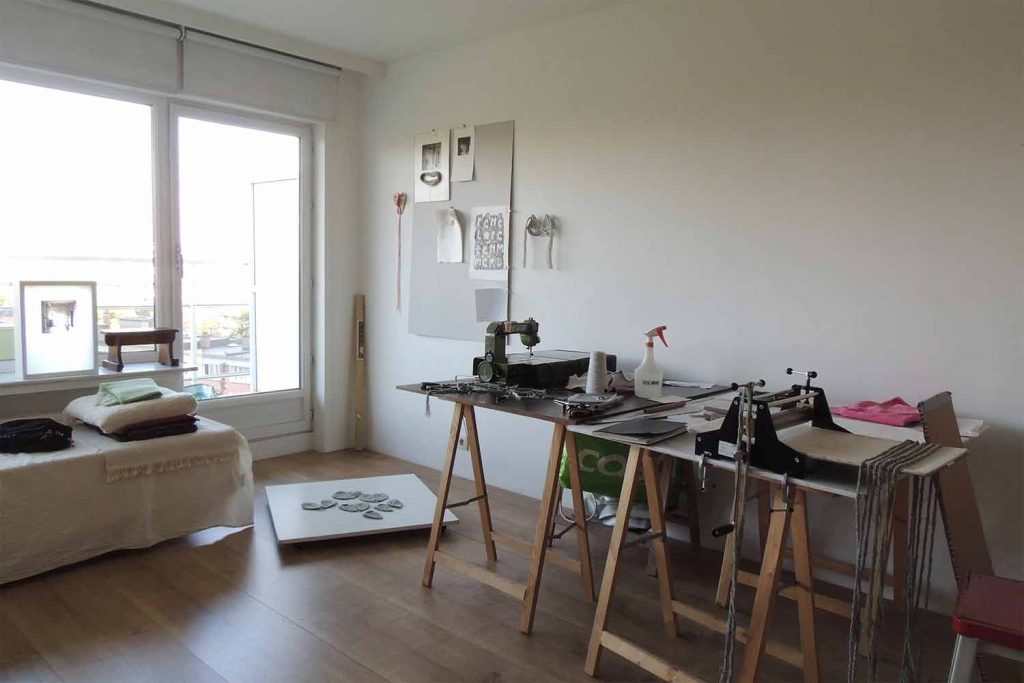
Stéphanie Jacques home studio. Photo by Stéphanie Jacques

“At the begining of the lockdown,” wrote Stéphanie Jacques from Belgium, “I continued to drive to my studio which is on the other side of Brussels. But it was too depressing to meet no one there. So I moved my etching press and my needlework to my living room (and put my big dining table in my small kitchen). In the beginning, it was difficult to concentrate — too much information in my mind and too many emotions. I’ve tried to stopped listening to the news. To sew and to cycling are my remedies (Oh and Spotify also:-). I’m lucky, my apartment is very close to the countryside, so I can catch some feelings of freedom on my bike everyday. Lockdown does not change my way of working so much (well, that’s not completely true, in April I had to work on a community project that is postponed, until I don’t know when). But even as I try to focus on the positive, there is something frightening to see our lives reduced to fetching food … all this has further strengthened me in my desire to pursue the path of creation!”

Stay Safe, Stay Separate, Stay Inspired!


Art Acquisitions: Part 2

A few weeks ago we published the first installment of our Art Acquisition series. Just as the first one did, the second installment reviews pieces browngrotta arts artists have had acquired by major institutions over the last year.

Studium Faktur, Magdalena Abakanowicz, sisal, 54" x 43" x 9", 1964. Photo by Tom Grotta.

Studium Faktur,
Magdalena Abakanowicz, sisal, 54″ x 43″ x 9″, 1964. Photo by Tom Grotta.

Norma MinkowitzMuseum of Texas Tech University and Boston Museum of Fine Arts , Massachusetts

Norma Minkowitz has had several pieces go to major institutions in the last year. Minkowitz’  piece Journey was acquired by the Museum of Texas Tech University, which is located in Lubbock, Texas. Minkowitz’ piece The Gamble,  which was part of the Daphne Farago Collection, has moved to the Boston Museum of Fine Arts.

Magdalena Abakanowicz – Boston Museum of Fine Arts and Minneapolis Institute of Arts, Minnesota

Magdalena AbakanowiczStudium Faktur was acquired, through browngrotta arts, by the Boston Museum of Fine Arts. Studium Faktur, which was one of Abakanowicz’ earlier works (made in the 1960s), was originally part of weaver Mariette Rousseau-Vermette’s collection. Additionally, Abakanowicz’ piece Montana del Fuego was acquired, also through browngrotta arts, by the Minneapolis Institute of Art. Montana del Fuego is a strong example of how Abakanowicz was able to fuse weaving and sculpture to create a spectacular three-dimensional wall hanging. The work was part of the Anne and Jacques Baruch Foundation Collection.

Simone Pheulpin at The Design Museum in London. Photo: Maison Parisienne

Simone Pheulpin at The Design Museum in London. Photo: Maison Parisienne


Maria Laszkiewicz – Minneapolis Institute of Art, Minnesota

Maria Laszkiewicz’s Mask, also a part of the Baruch collection, was acquired, through browngrotta arts, by the Minneapolis Institute of Art.  Laszkiewicz, born in 1898, encouraged a generation of textile artists (such as Abaknaowicz), and was an innovator in the tapestry field.

Simone Pheulpin – V&A, London and Chicago Art Institute, Illinois 

Morphus vii, Gizella K Warburton. Photo: Chris Large

Morphus vii, Gizella K Warburton. Photo: Chris Large

The Victoria & Albert Museum in London recently acquired a piece from Simone Pheulpin’s Eclipse series. One of the textile sculptor’s works was also acquired by the Chicago Art Institute.

Jiro Yonezawa – Musée du Quai Branly-Jacques Chirac, Paris

The most recent acquisition is a piece by Jiro Yonezawa by the Musée du Quai Branly-Jacques Chirac, Paris, France. The museum has commissioned a piece for an exhibition of Japanese bamboo art that opens in November of this year (November 27 – April 9).

Gizella K Warburton – Fitzwilliam Museum, Cambridge, England

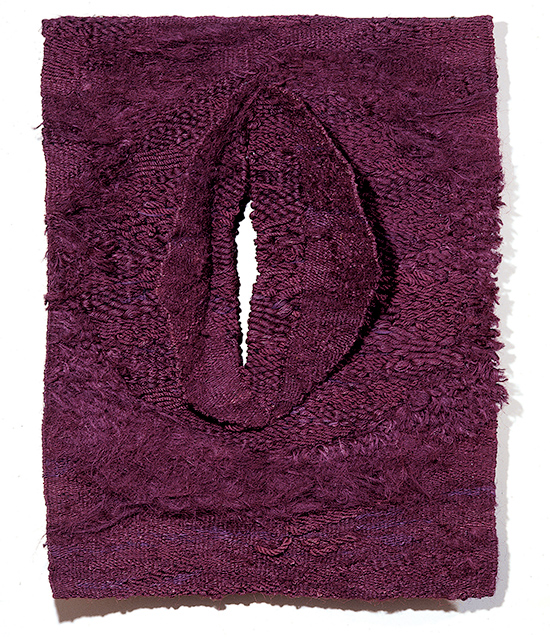
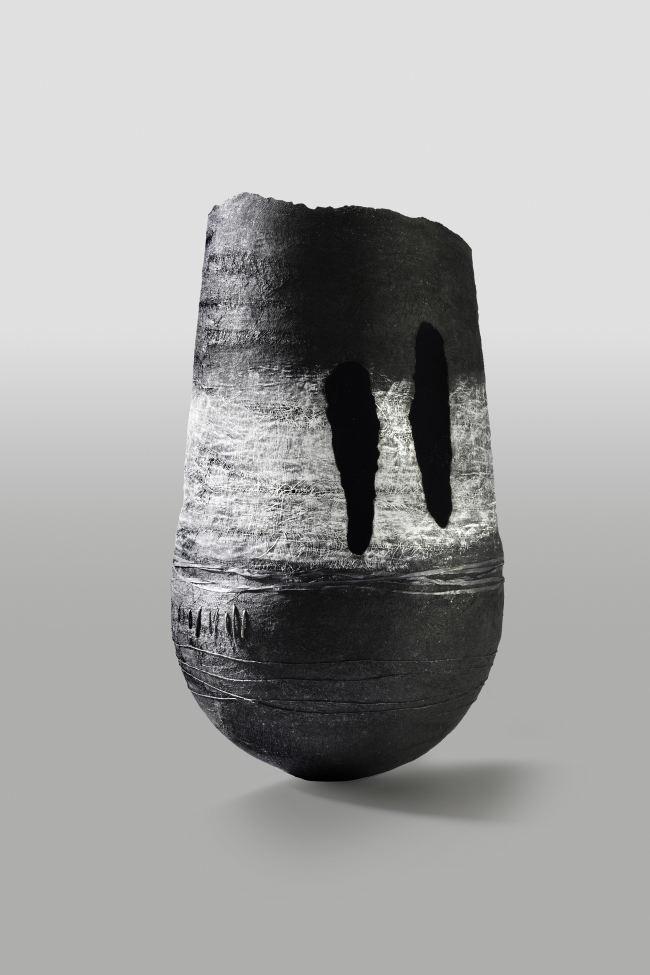
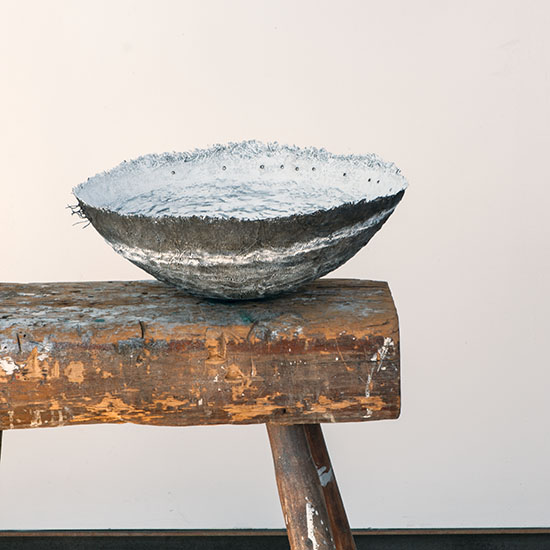
The Fitzwilliam Museum acquired Gizella Warburton’s piece Morphus vii. The wrapped and sculpted vessel forms in Warburton’s ‘Morphus’ series are “quietly resonant of internal and external skins, of scarred and fissured surfaces, of abrasions, bindings and sutures.”

Jennifer Falck LinssenTexas Tech University in Lubbock Texas

The Museum of Texas Tech University has also acquired a wall sculpture by Jennifer Falck Linssen. The sculpture, titled Acumen, was acquired for a new building underway at the university.


Still Crazy…30 Years: The Catalog

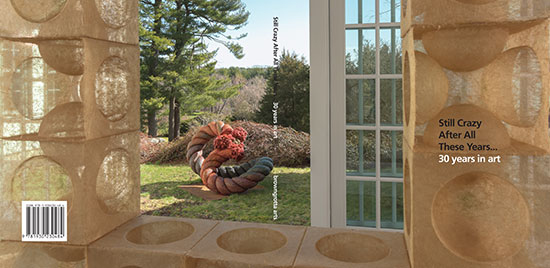
Still Crazy...30 Years: The Catalog Cover Naoko Serino and Mary Yagi

Still Crazy…30 Years: The Catalog

It’s big! It’s beautiful (if we do say so ourselves –and we do)! The catalog for our 30th anniversary is now available on our new shopping cart. The catalog — our 46th volume — contains 196 pages (plus the cover), 186 color photographs of work by 83 artists, artist statements, biographies, details and installation shots.

Still Crazy...30 Years: The Catalog

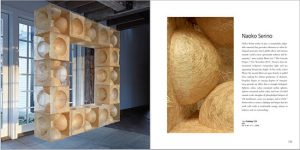
Naoko Serino Spread

Still Crazy...30 Years: The Catalog

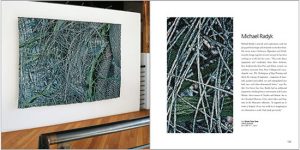
Michael Radyk Spread

Still Crazy...30 Years: The Catalog

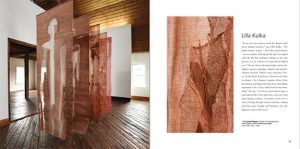
Lilla Kulka Spread

Still Crazy...30 Years: The Catalog

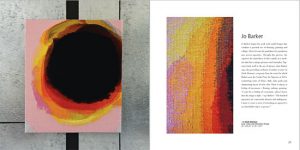
Jo Barker Spread

The essay, is by Janet Koplos, a longtime editor at Art in America magazine, a contributing editor to Fiberarts, and a guest editor of American Craft. She is the author of Contemporary Japanese Sculpture (Abbeville, 1990) and co-author of Makers: A History of American Studio Craft (University of North Carolina Press, 2010). We have included a few sample spreads here. Each includes a full-page image of a work, a detail shot and an artist’s statement. There is additional artists’ biographical information in the back of the book. Still Crazy After All These Years…30 years in art can be purchased at www.browngrotta.com http://store.browngrotta.
com/still-crazy-after-all-these-years-30-years-in-art/.
Our shopping cart is mobile-device friendly and we now take PayPal.


Influence and Evolution: The Catalog is Now Available

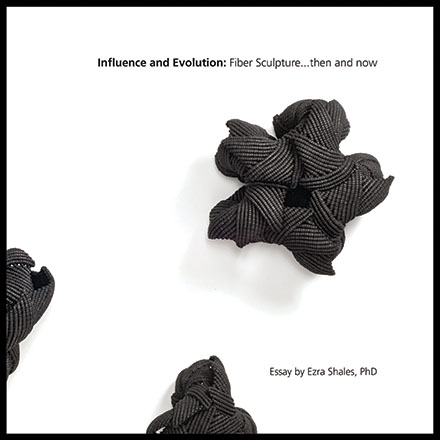
Influence and Evolution: Fiber Sculpture...then and now catalog cover artwork by Federica Luzzi

Influence and Evolution: Fiber Sculpture…then and now
catalog cover artwork by Federica Luzzi

Our Spring exhibition Influence and Evolution: Fiber Sculpture…then and now explored the impact of artists – Sheila Hicks, Ritzi Jacobi, Lenore Tawney, Ed Rossbach and others – who took textiles off the wall in the 60s and 70s to create three-dimensional fiber sculpture. In Influence and Evolution, we paired early works by Magdalena Abakanowicz, Lia Cook, Kay Sekimachi and Françoise Grossen — artists who rebelled against tapestry tradition — with works from a later generation of artists, all born in 1960 or after. Fiber sculpture continues to evolve through this second group of artists, including María Eugenia Dávila and Eduardo Portillo of Venezuela,

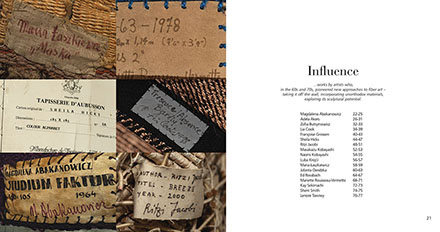
Influencers Title page  Influence and Evolution catalog

Influencers Title page Influence and Evolution catalog

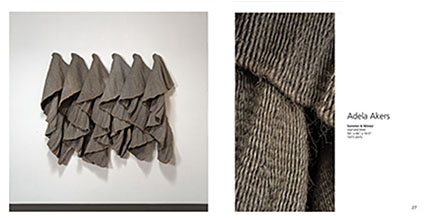
Stéphanie Jacques of Belgium, Naoko Serino of Japan and Anda Klancic of Slovenia. In our 160-page color exhibition catalog, Influence and Evolution: Fiber Sculpture…then and now, you can see the works in the exhibition. Each artist is represented by at least two works; images of details are included so that readers can experience the works fully. The catalog also includes an insightful essay, Bundling Time and Avant-garde Threadwork by Ezra Shales, PhD, Associate Professor, History of Art Department, Massachusetts College of Art and Design in Boston. Influence and EvolutionShales write in his essay, “poses rich comparisons and asks the mind to sustain historical linkages. We feel the uneven texture of time, luring us into a multiplicity of artistic pasts and an open road of varied fibrous futures. An emphasis on plural possibilities makes this exhibition quite distinct from a tidy biblical story of genesis or masters and apprentices. We witness multiple intra-generational passing of batons as well as many artists changing horses midstream, as well they often do.” The three works in Influence and Evolution by Adela Akers that traverse five decades provide a fascinating view of the artistic progression Shales refers to. The curvilinear, draped forms of Summer and Winter 

Influence and Evolution, Adela Akers spread

(1977; restored 2014), he notes, resemble “both a ruffle and a row of ancient mourners.” Midnight, from 1988, by contrast, is hard-edged, “a monumental window into an alternative architectural space.” And Akers recent work, Silver Waves, completed in 2014, is “an intimate surface with linear imagery” whose horsehair bristles “almost invite a caress if they did not seem to be a defensive adaptation.” Juxtapose Silver Waves with American Michael Radyk’s Swan Point (2013) and and Dutch artist, Marianne Kemp’s Red Fody (2013) that also features horsehair,  and catalog readers are likely to understand  Shales’ query: should we categorize woven forms as a logical temporal narrative or inevitable sequence of linked inquiries? Shales is a guest curator of Pathmakers: Women in Art, Craft and Design, Midcentury and

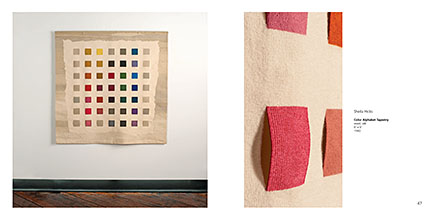
Influence and Evolution, Sheila Hicks spread

Influence and Evolution, Sheila Hicks spread

Today currently at the Museum of Arts and Design in New York which features more than 100 works, by a core cadre of women—including Ruth Asawa, Sheila Hicks, Karen Karnes, Dorothy Liebes, Toshiko Takaezu, Lenore Tawney, and Eva Zeisel—who had impact and influence as designers, artists and teachers, using materials in innovative ways. To order a copy of Influence and Evolution: Fiber Sculpture…then and nowour 43rd catalog, visit browngrotta.com.

80.89

Influence and Evolution, Stéphanie Jacques spread


Influence and Evolution Introduction: Gizella K Warburton

Gizella K Warburton Basket

Gizella K Warburton, Corpus Vessel IV, textile, mixed media, stitch, 5” x 14” x 14”, 2015. Photo by Tom Grotta

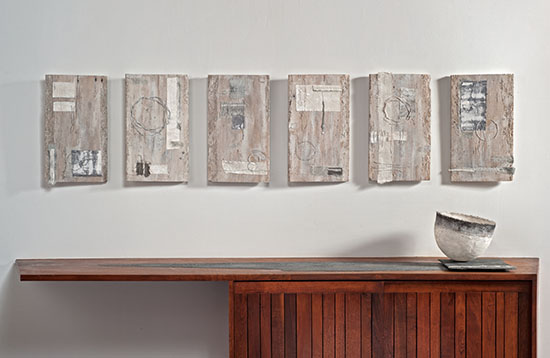
Gizella K Warburton is another of the artists whose work will be included in Influence and Evolution: Fiber Scuplture…Then and Now at browngrotta arts in Wilton, Connecticut from April 24th – May 3rd. Warburton creates unique objects — framed, hanging and sculptural artworks and installations, including works on slate and weathered wood grounds, printed and woven elements, and sculptural forms and vessels. She has a BA Hons (First Class), Printed, Woven & Constructed Textiles from Manchester School of Art and a Postgraduate Certificate in Arts Practice with the University of Derby. In addition to making exhibition work, Warburton has been commissioned to deliver numerous creative learning projects in partnership with Galleries and Museums and Heritage organizations. This includes roles as both practicing artist and Creative Agent with government- led initiatives such as Creative Partnerships. She has undertaken the “Artists Professional Development Programme: Developing Arts for Health” at Staffordshire University, which she credits with enriching her insight and understanding of the creative process, and its connections and impacts on human health and wellbeing.

Gizella Warburton Basket Detail

Gizella Warburton,
Corpus Vessel VI, textile, mixed media, stitch, 6” x 13.5” x 13.5”, 2015. Photo by Tom Grotta

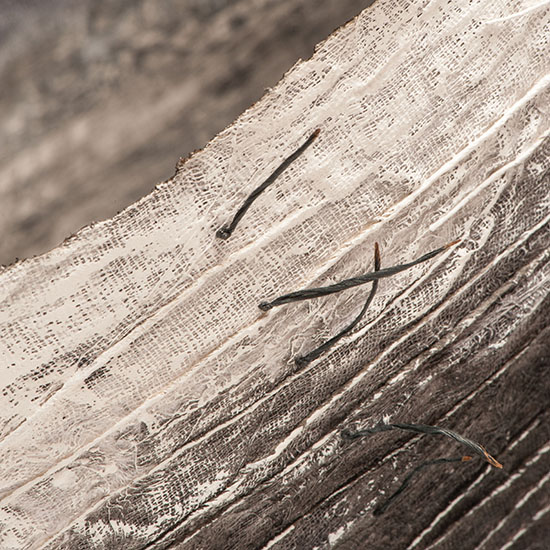
Mark making is an intrinsic part of Gizella K Warburton’s practice: shadowed, scratched, stained, scarred, pierced, wrapped and stitched. The materiality of cloth, paper, thread, wood and paint connects her work to an innate human urge to make marks, to decipher the meaning of our physical and emotional landscapes, and the transient nature of the warp and weft of our lives. She describes the slow tactile intimacy of stitching as “a mantra.” Warburton has always found ancient and humble textiles and primitive vessel forms particularly compelling; the raw and worn simplicity of the weaving, stitching, binding and repairing bearing the patina of our human histories. She is drawn to materials that suggest a fragile balance; strength and legacy, yet with susceptibility to wear and tear, which she permeates with their own intrinsic tactile qualities. A

Gizella K Warburton Installation

Gizella K Warburton, Notes on Pale Board I-VI, textile, mixed media, stitch, weathered board, 19.5” x 81.5” x 2.25”, 2013
Ritual Form III, textile, mixed media, stitch, weathered slate, 9.25” x 11.5” x 11.5”, 2013. Photo by Tom Grotta

series of Warburton’s fabric vessels and mixed media textiles on weathered board will be featured in Influence and Evolution, which opens at 1pm on April 24th. The Artists Reception and Opening is on Saturday April 25th, 1pm to 6pm. The hours for Sunday April 27th through May 3rd are 10am to 5pm. To make an appointment earlier or later, call: 203-834-0623.