Objects of Desire – Artful Gifts Under $2500

Here’s another selection of singular art works by prestigious artworks from the US, Europe, Asia and Israel.
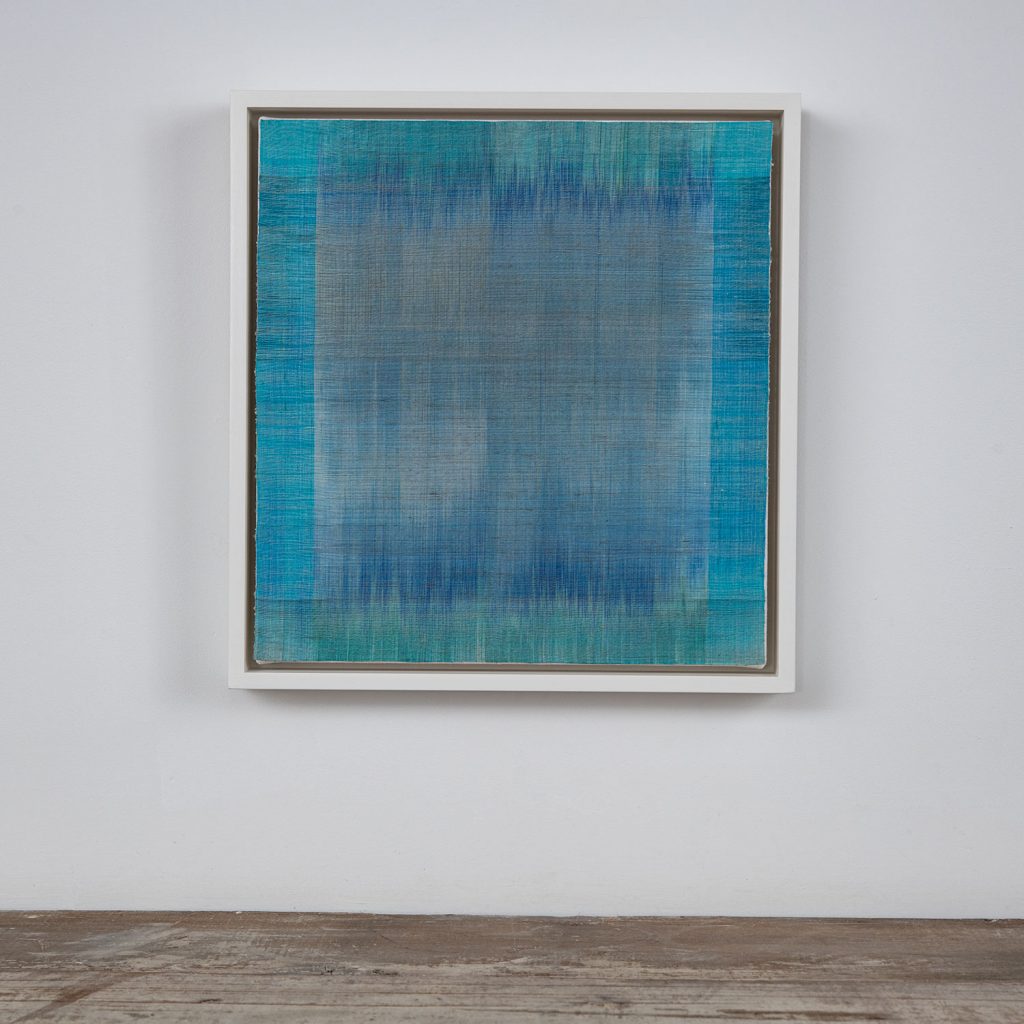
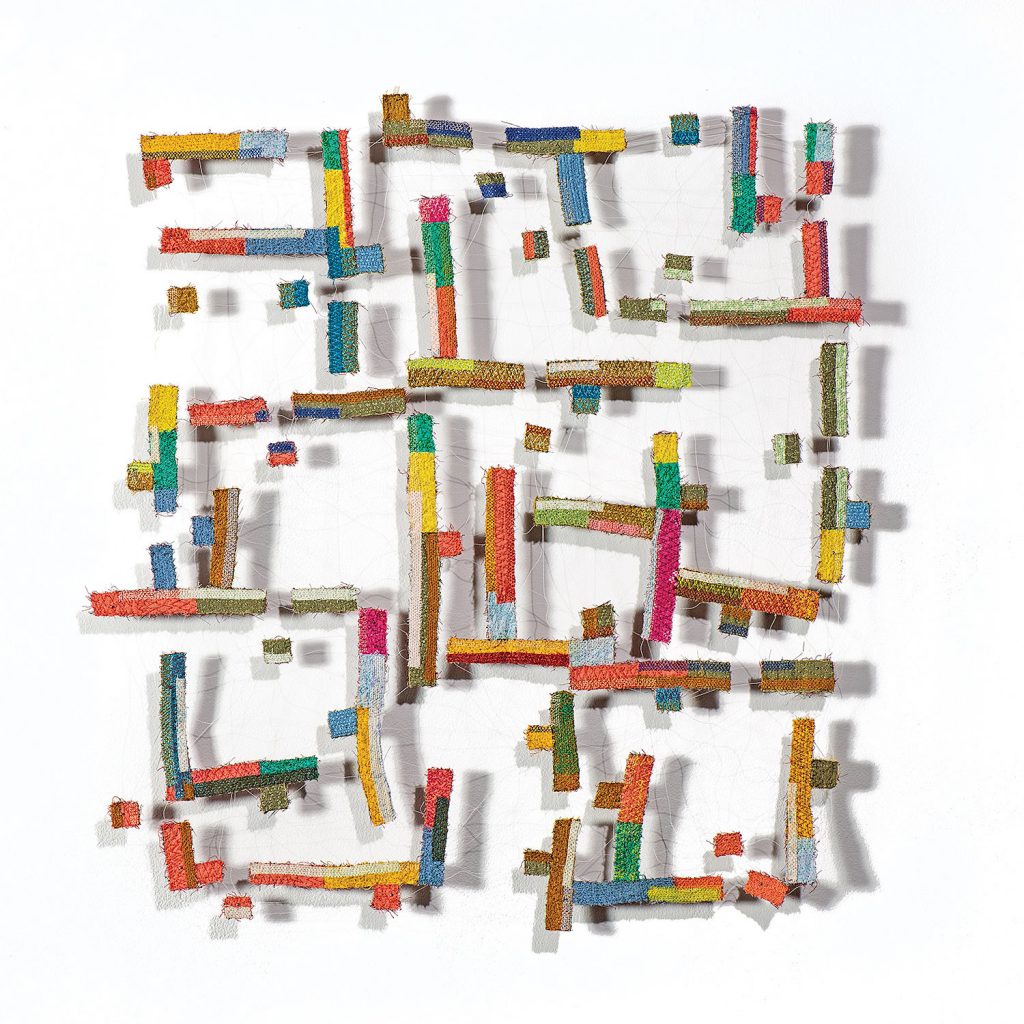
By the Sea, Polly Barton, silk, double ikat, 17.5” x 16.5” x 2”, 2019.
Photo by Tom Grotta

Polly Barton’s woven ikat “paintigs” like By the Sea, are influenced by geography. Barton was born and raised in the Northeast, trained to weave in Japan, and has lived most of her life in the American Southwest. Her work reflects these disparate locales. 
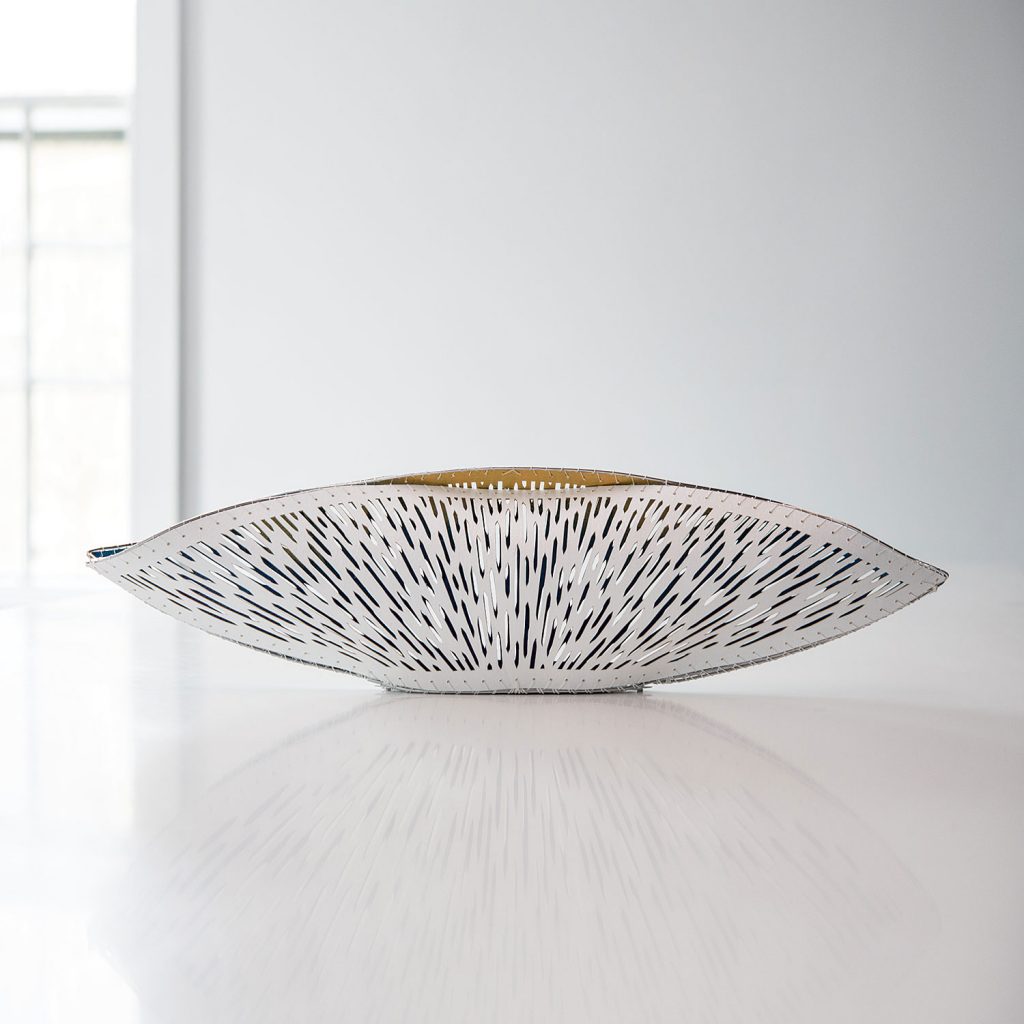
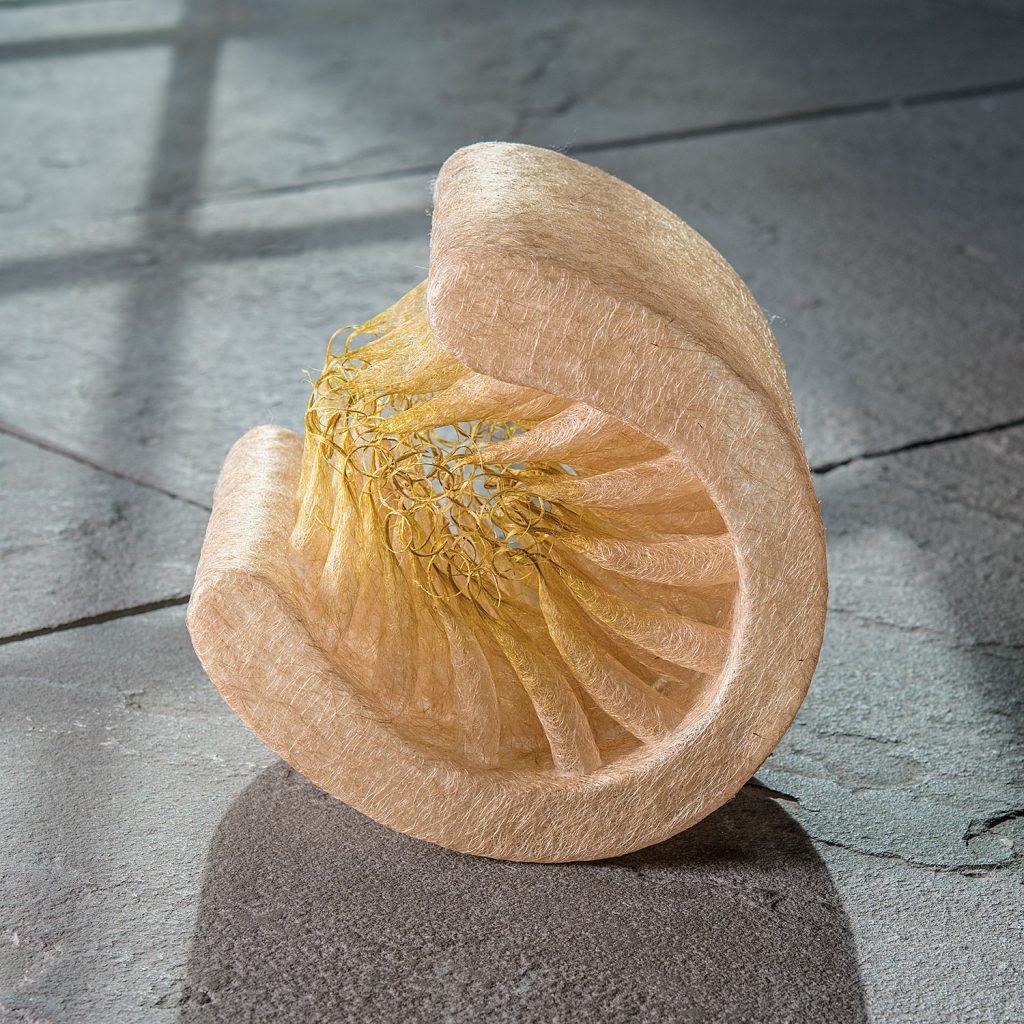
Enfold, Jennifer Falck Linssen, handcrafted vessel of katagami-style handcarved paper. Materials include archival cotton paper, aluminum, waxed linen, paint, varnish, freshwater pearl, and sterling silver, 5.5″ x 20″ x 3″, 2008.
Photo by Tom Grotta

In Jennifer Falck Linssen’ elegant vessel, Enfoldthe Japanese stencil (katagami) has been recontextualized. Linssen explore the stencil’s sculptural possibilities, combining carving, stitching and metalwork. She starts with a series of sketches, exploring and refining the form, pattern, and identity of the piece. In the sculpture’s final state, it is dyed, painted patinaed, and varnished. Linssen, who also studied in Japan, now lives and works in Wisconsin.
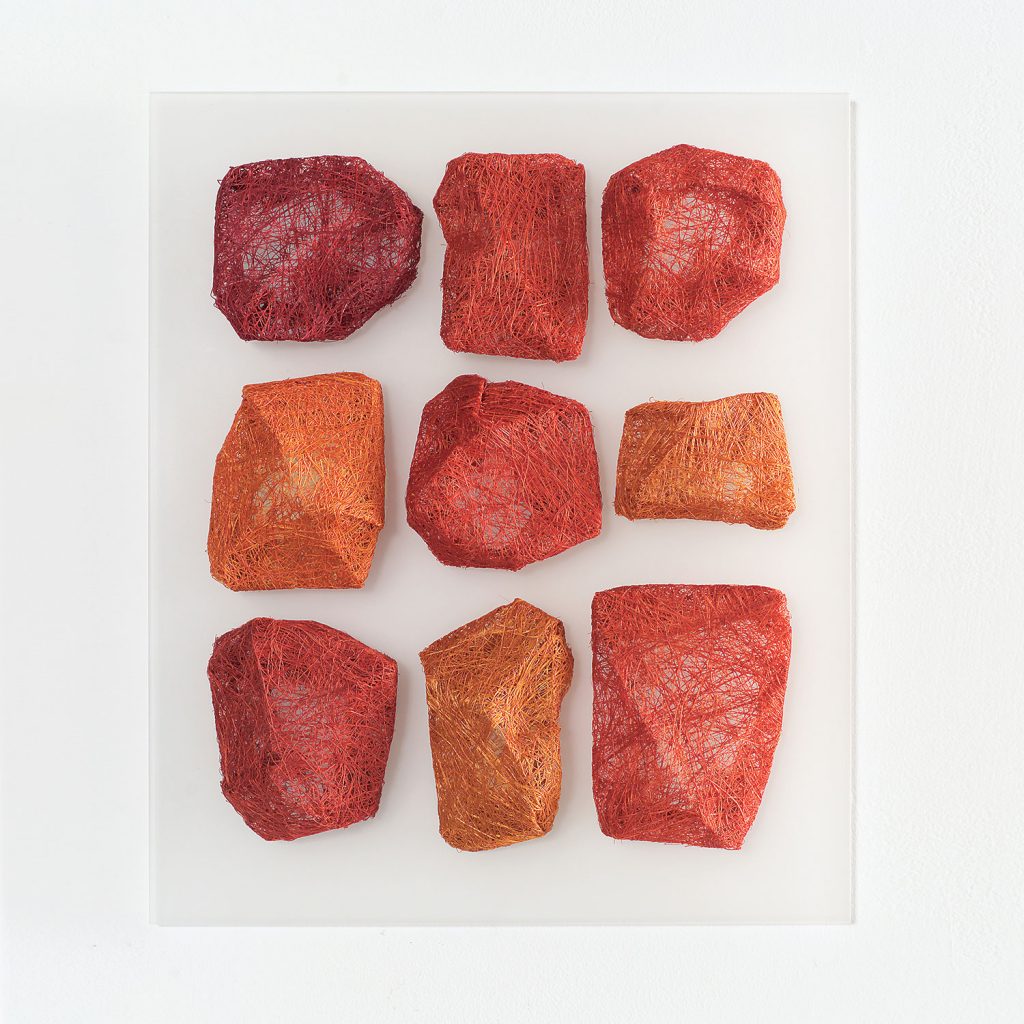
Traces 4 Relief, Mia Olsson, sisal and coconut fiber, acrylic glass, sisal on blastered acrylic glass, 14″ x 11.875″ x 1.25″, 2006.
Photo by Tom Grotta

Mia Olsson’s pieces, like Traces 4 Reliefare made of sisal fibers, dyed and formed in a technique of her own. The sisal fibers used by the Swedish artist are shiny and reflect the light, even more when formed in relief. The colors are richly saturated — engaging the viewer on each viewing.
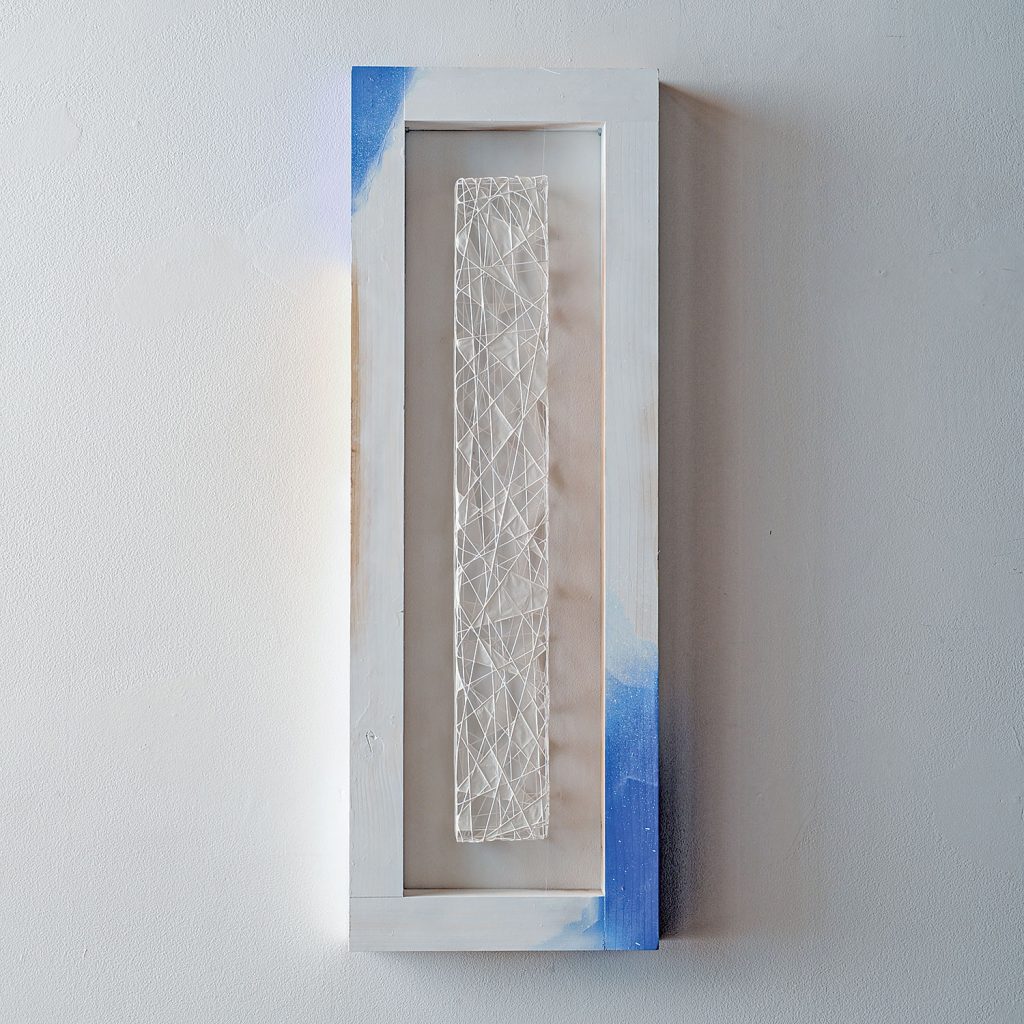
At Grands Montets, Naomi Kobayashi, kayori thread, paper & wood, 31.5” x 11” x 2”, 2008. Photo by Tom Grotta

In At Grand MontetsNaomi Kobayahsi presents a framed paper-and-thread construction. Well-known Japanese artist Kobayashi is known for such sculptures that are generally much larger, filling a wall as panels or a ceiling in a circular shape. With At Grand Montets, the viewer can appreciate the light and stillness that are highlighted in her work, on a smaller scale. 
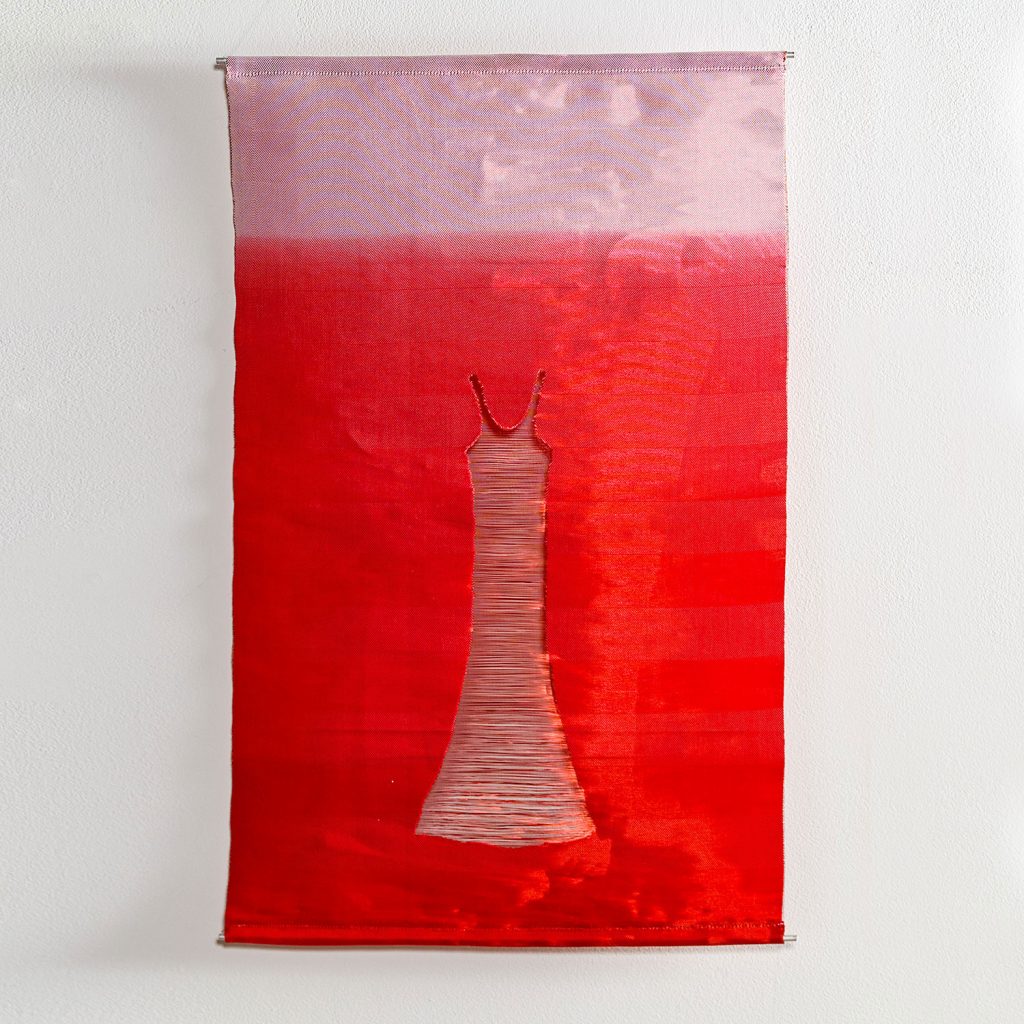
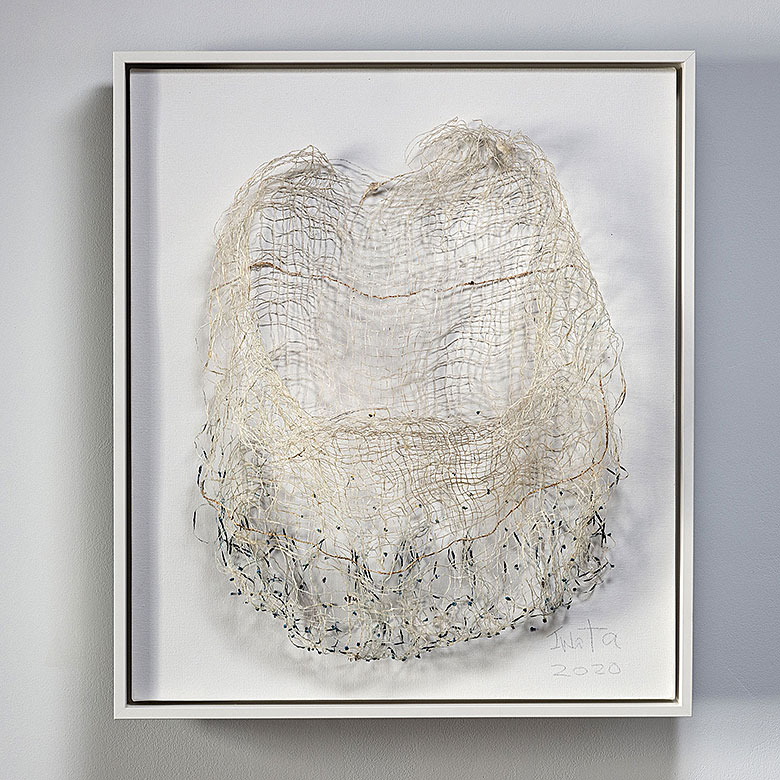
Red Dress, Gali Cnaani, copper, cotton, 21.75″ x 14″, 2006
Photo by Tom Grotta

A whimsical Red Dress of red copper threads is the creation of Gali Cnaani of Israel. Cnaani is interested in the linear structure of textiles and in exploring the light and its affects on the exposed copper threads.

The fine print: Order today and we’ll ship by tomorrow (though due to COVID we can’t guarantee the shippers’ delivery schedule). If you’d like us to gift wrap your purchase, email us at art@browngrotta.com, as soon as you have placed your order. To ensure we know you want gift wrapping, don’t wait to contact us — we generally ship as soon as the orders are received. Quantities are limited.


The Artful Gift Guide: 5 Under $2000

If you have reached those people on your list who have everything, and you are still stumped, we may be able to help you out. Below is a select grouping of objects and wall art from accomplished artists around the world. We guarantee there’s a one-of-kind choice here for anyone aesthetically oriented.

Little Star, willow, beeswax, damar resin, 10” x 8” x 6”, 2019. Photo by Tom Grotta

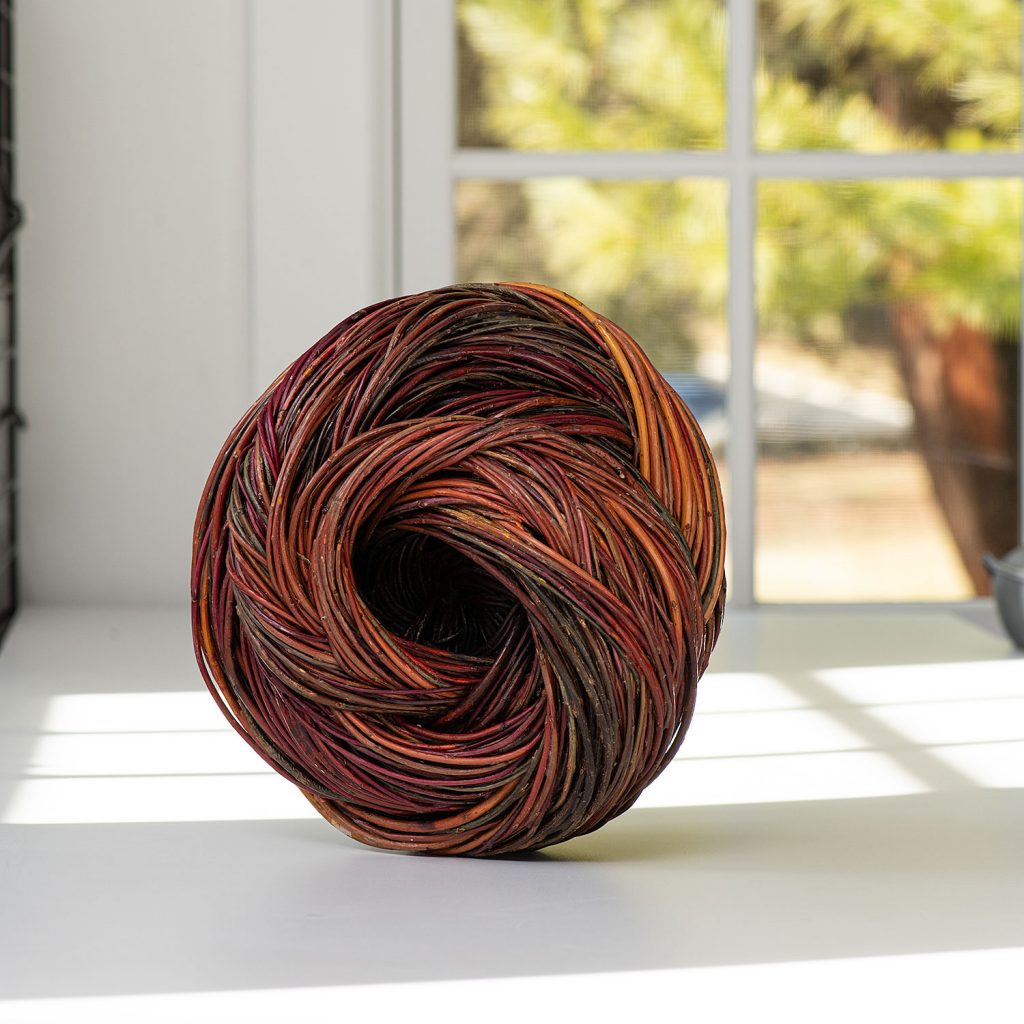
Little StarChristine Joy’s willow sphere without beginning or end, evokes the eternal and nature in a single object. Joy, a Montana artist,constructs her sculptures to appear as if they are moving, growing and animated, as though the shapes had been cut from a tree or pulled from moving water. “I want them to sit still,” she says, “unchanging, yet to the eye of the viewer to flow, to move around and back again, to carry the movement of life.” 

Existence, Naoko Serino, Jute, 8.5″ x 7.75″ x 8.5″, 2018. Photo by Tom Grotta

Japanese artist, Naoko Serino, works in jute, a remarkably adaptable material that provokes references to biological structures. Serino’s three-dimensional sculptures, like Existence, encapsulate light and air, appearing deceptively fragile. Her work that exudes a comfortable energy, always in balance with its surroundings.

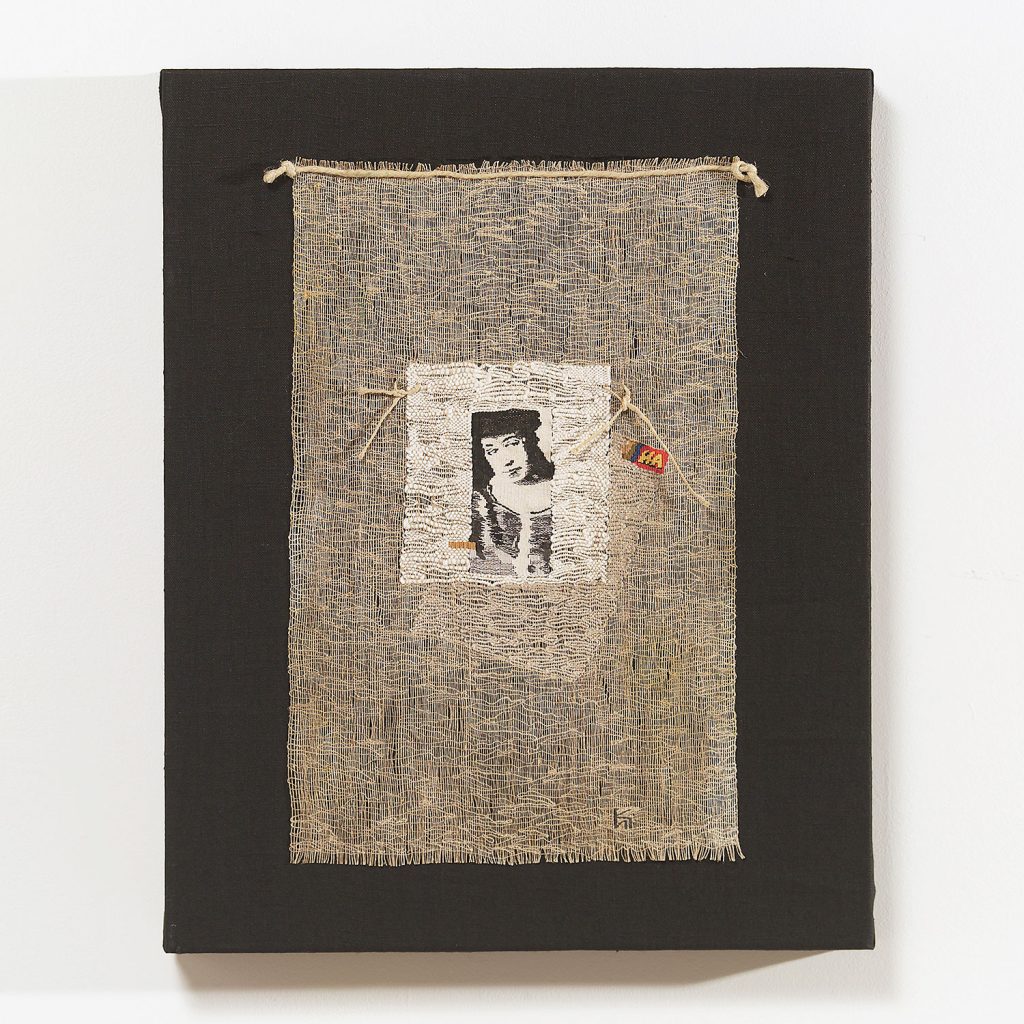
Photoatelier #10, Irina Kolesnikova, flax, silk, hand woven, 15.5″ x 11.75″; 20″ x 16″, frame, 2004. Photo by Tom Grotta

A paradoxical combination of contemporary art language and ancient handweaving technique is evident in the work of Irina Kolineskova who has emigrated from Russia to Germany. I like old, black-and-white photos very much,” she says,”and I play with images from these pictures, using silhouettes, details of dress, signs of a profession. I make collage and then replicate collage in woven technique.”

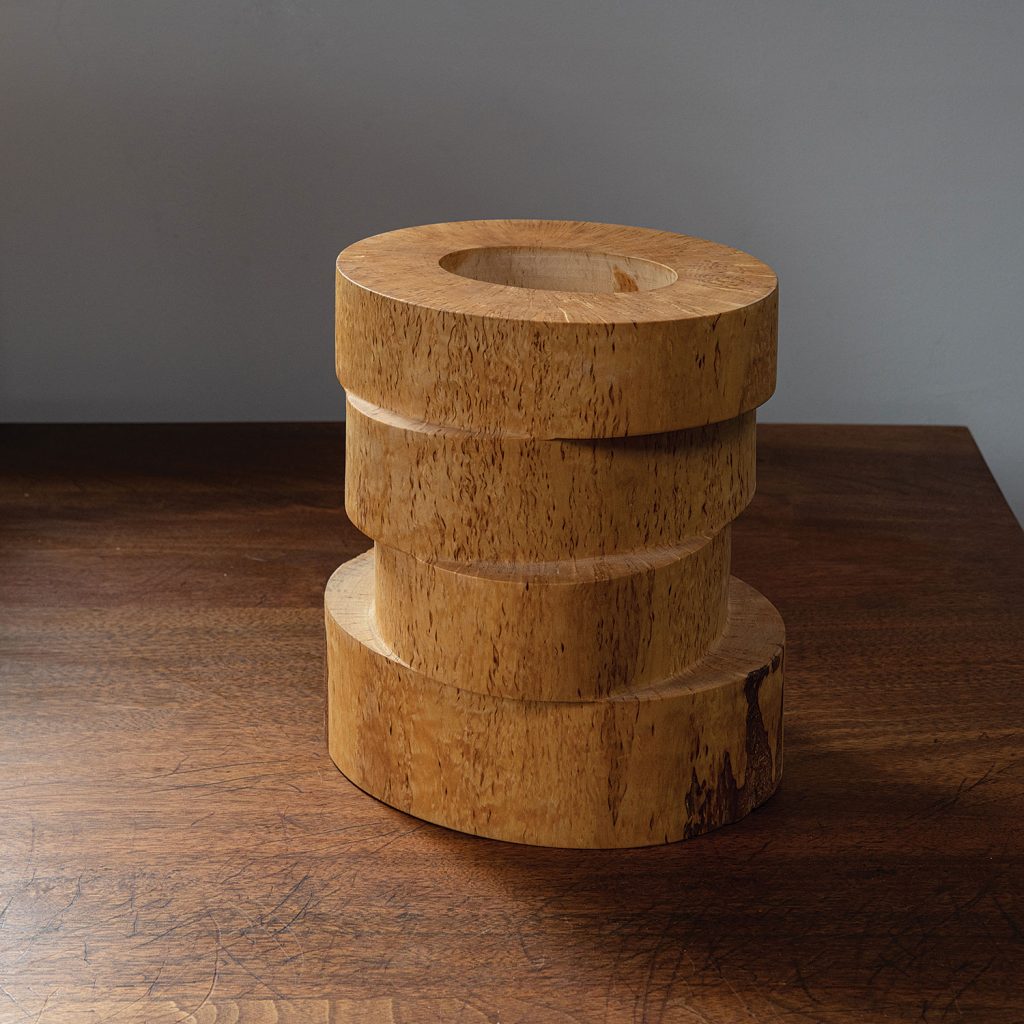
Four Tier Curly Birch Wood Bowl, Markku Kosonen, curly birch, 10.5″ x 10″ x 11″, 2001. Photo by Tom Grotta

Wood was integral to the artistic practice of the late Markku Kosonen of Finland who created this ingenious Four-Tier Curly Birch Bowl. An important aspect of his work was the ability to express things; craftsmanship alone was not enough. “What begins as an ordinary utilitarian object soon turns into a creative work” he said. “The purpose of work such as this is to appeal to one’s emotions. For me, arts and crafts entail a spiritual processing of material, linking humanism to objects.”

Color Grid, Marian Bijlenga, korean bojagi, horsehair and fabric , 22″ x 20″, 2017. Photo by Tom Grotta

Marian Bijlenga of the Netherlands has a fascination with dots, lines and contours that is evident in artworks like, Color GridRather than draw on paper, she draws in space, using textile as a material and leaves enough distance between the structure and its aligning wall to create what she refers to as a “spatial drawing.”

The fine print: Order for the holidays by December 14th and we’ll ship by the 15th (though due to COVID we can’t guarantee the shippers’ delivery schedule). If you’d like us to gift wrap your purchase, email us at art@browngrotta.com, as soon as you have placed your order. To ensure we know you want gift wrapping, don’t wait to contact us — we generally ship as soon as the orders are received. Quantities are limited.


Lives Well Lived: Dorothy Gill Barnes (1927-2020)

We are heartbroken to report that innovative contemporary basketmaker and fiber sculptor Dorothy Gill Barnes, passed away peacefully on November 23, 2020 at age 93, after a short battle with COVID-19. Barnes was a revered member of the browngrotta arts community — she taught our son to harvest materials and mark trees when he was just three.

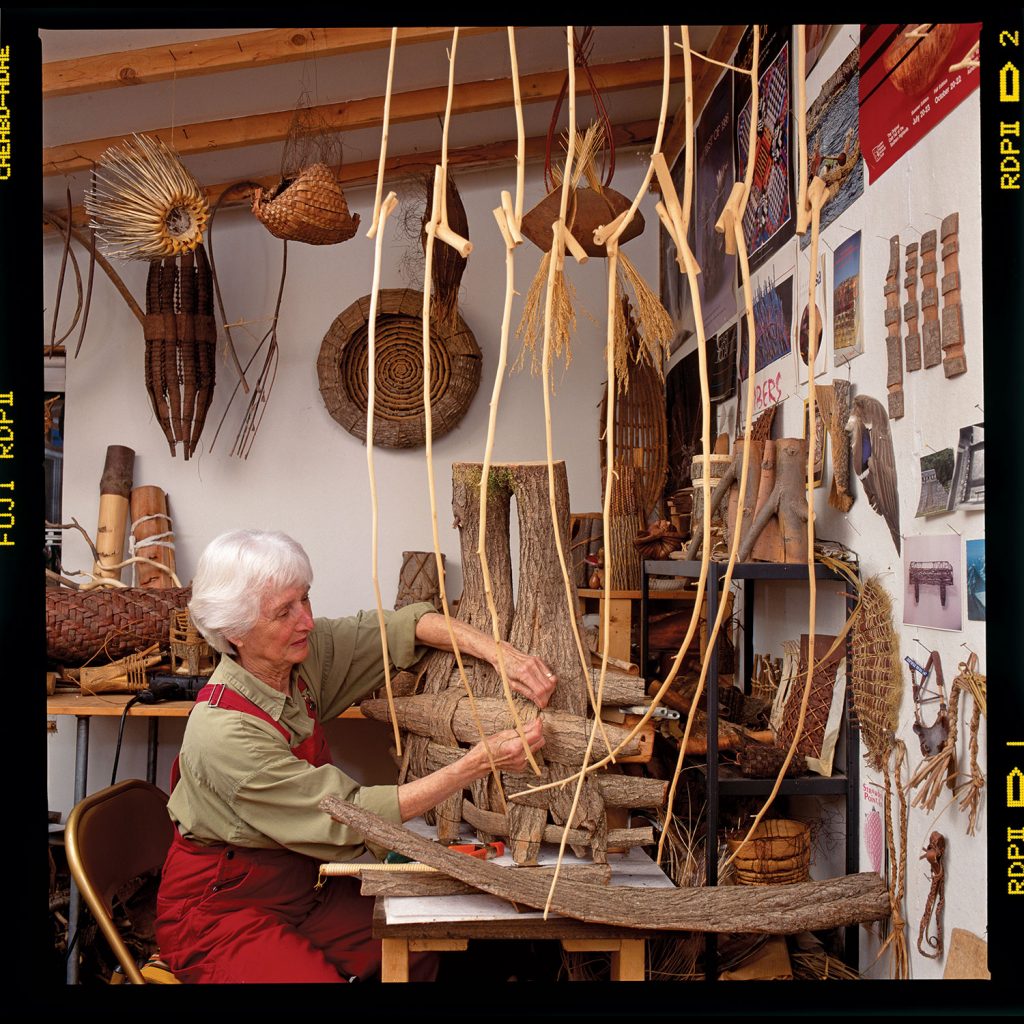
Portrait of Dorothy Gill Barnes in studio. Photo by Tom Grotta

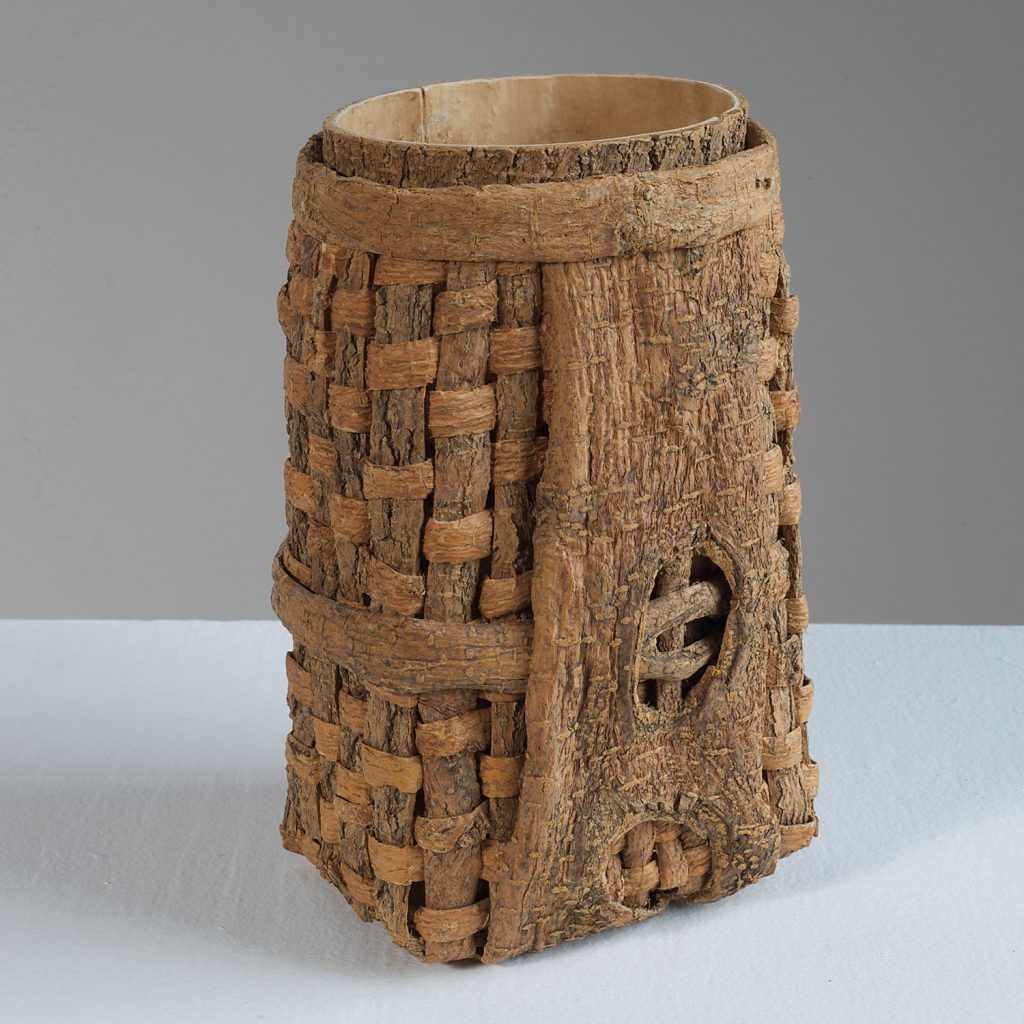
Barnes was known for developing a distinct working process that included scarring trees that had been marked for eventual removal and returning years later, after the trees had been cut, to harvest the scarred and overgrown bark for use in her baskets. This process enabled her to create dendroglyphs—literally, “tree drawings” — in which tree and time became her collaborators. “The unique properties I find in bark, branches, roots, seaweed, and stone suggest a work process to me,” Barnes said. “I want this problem solving to be evident in the finished piece.”

Born in Iowa, and a longtime resident of the Columbus, Ohio area, Barnes studied at Coe College, Minneapolis School of Art and Cranbrook Academy, as well as at the University of Iowa, where she earned BA and MA degrees in art education. Barnes taught fibers as an adjunct faculty member at Capital University in Columbus, Ohio, from 1966 until her retirement from university teaching in 1990. Throughout much of her career, Barnes was a sought-after teacher, participating in residencies and workshops in Denmark, New Zealand, Australia, Fiji and Canada, as well as throughout the United States. Barnes’ early influences were the artist and teacher Ruth Mary Papenthien, who taught at Ohio State University, and Dwight Stump, an Ohio-based traditional basketmaker. She also credited the works of John McQueen and Ed Rossbach as spurring her experiments using natural materials to make contemporary sculpture.

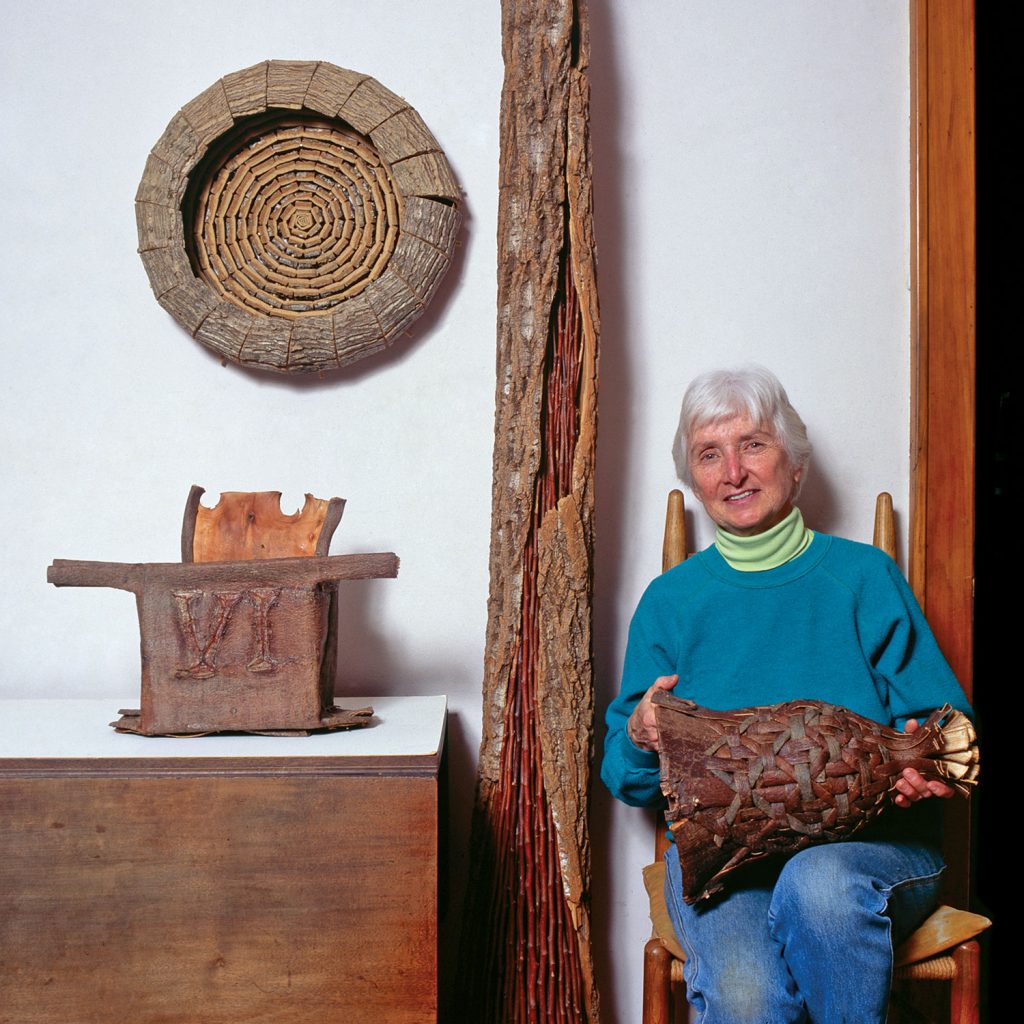
Portrait of Dorothy Gill Barnes. Photo by Tom Grotta

Barnes’ technical investigations placed her at the forefront of contemporary fiber art. She used electric tools to expand the scale, scope and complexity of her pieces and she credited power equipment as the source for ideas that handwork alone would not have suggested. She was comfortable incorporating nails, metal wire and staples along with traditional woven assembly methods. In all of her sculptures, Barnes sought to create structures that honored the growing things from which they came, her materials “respectfully harvested from nature.” Like Rossbach and McQueen, she prized experimentation, spontaneity, inventiveness. She continued to expand her artistic practice into her 90s, as a visiting artist working with students in glass in the Department of Art at Ohio State University until 2018.

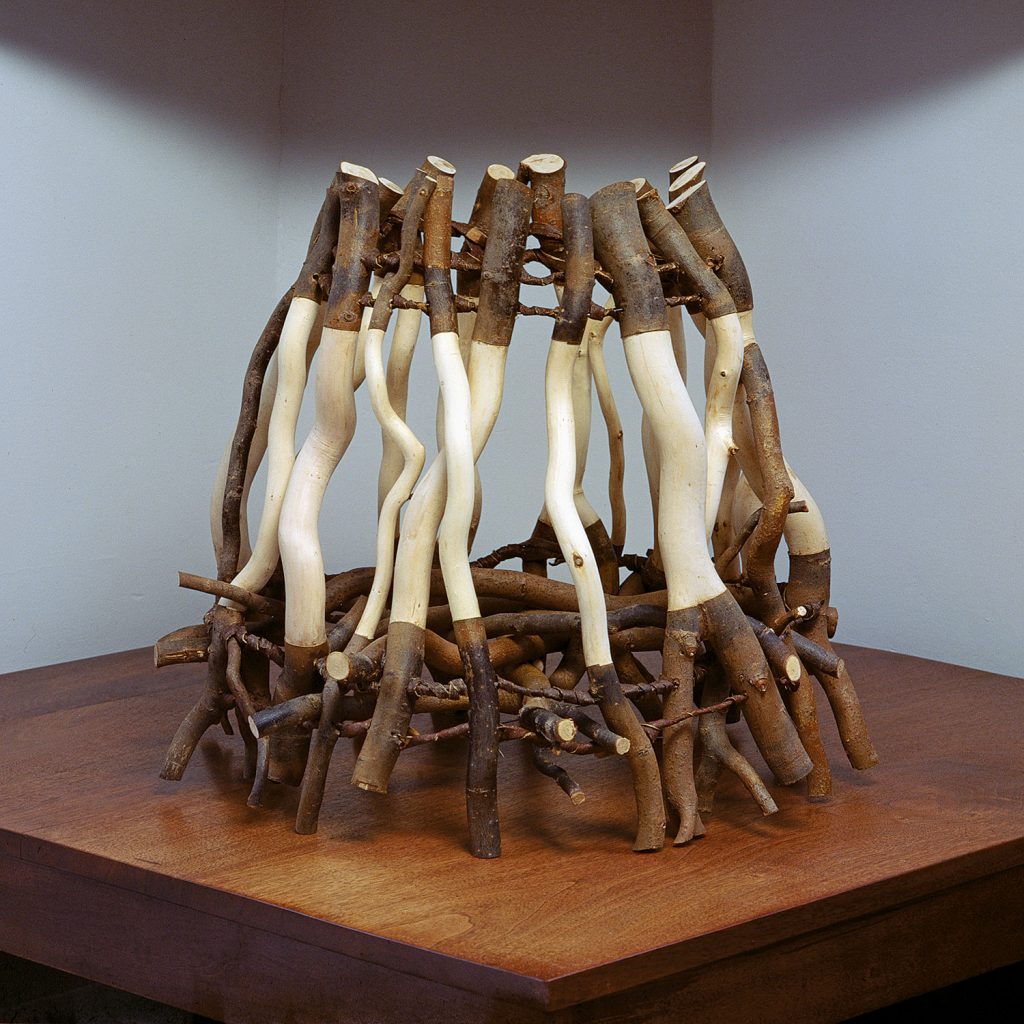
Millcreek Willow, 1996. Photo by Tom Grotta

A Fellow of the American Craft Council, Barnes received lifetime achievement awards from the National Museum of Women in the Arts in Washington, DC and the National Basketry Organization. Other awards include the Raymond J. Hanley Award, Outstanding/Artist Educator from Penland School of Crafts, an Individual Artist Governor’s Award for the Arts in Ohio, and four Ohio Arts Council Individual Artist Fellowships. Her work is in the collections of the Columbus Museum of Art; the de Young Museum of the Fine Arts Museums of San Francisco; the Mint Museum, Charlotte North Carolina; Museum of Arts and Design, New York, New York; Racine Art Museum, Wisconsin; Longhouse Reserve, East Hampton, New York; Arkansas Arts Center, Little Rock; the Renwick Gallery, Smithsonian’s Museum of American Art, Washington, DC; Museum of Fine Arts, Houston, Texas, among others. In Nature, a comprehensive retrospective, was held at the Mansfield Arts Center in 2018. The Ohio Craft Museum hosted From the Woods: Dorothy Gill Barnes, a major mid-career survey in 1999. 

Barnes’ work has been represented by browngrotta arts in Wilton, Connecticut since the 90s. “Barnes’ ability to showcase the natural materials with which she worked, yet enhancing them through weaving, plaiting, scarring, stacking and sflaying, placed her at the forefront of contemporary fiber art,” observes Tom Grotta, co-curator of browngrotta arts. 

“[Barnes] is attentive to the innate characteristics of a given wood in her aesthetic decision making and rarely forces a wood into an unnatural or artificial mold,” wrote Jeanne Fryer-Kohles in From the Woods: Dorothy Gill Barnes, the eponymous catalog for Barnes’ solo exhibition at the Ohio Craft Museum. “At the same time, she works intuitively with an experimental turn of mind and integrity of vision …. Barnes’ works are rarely preplanned; she prefers to wend her way toward and into a piece, accepting detours and possible pitfalls as a matter of course. Barnes takes raw nature as a starting point. Rather than subjugating it, as [John] McQueen does, with a ‘civilizing’ impress, Barnes guides and amplifies it – in a sense, keeping its ghost enshrined.”

Dendroglyph Band Mulberry, 2000. Photo by Tom Grotta

Barnes also had a long history of activism in the civil rights and anti-war movements. She could be found every Saturday for many years, on the Worthington Village Green with her friends from Central Ohioans for Peace, encouraging drivers to “Honk for Peace” as they passed. She encouraged others to think globally and have empathy for all, regardless of differences. She supported environmental conservation, Honduras Hope and Habitat for Humanity, where she was a longtime volunteer. 

Friends are invited to attend a virtual celebration of life to honor Dorothy Gill Barnes on Sunday, December 13th from 3-5 PM EST. Details are available at www.schoedinger.com. Donations in Barnes’ memory can be made to The Nature Conservancy (www.nature.org), Sierra Club (www.sierraclub.org), or to a charity of your choice. Please visit www.schoedinger.com to send online condolences.


The Artful Gift Guide: 5 Under $1500

Is there someone special on your gift list? Or maybe it’s you who deserves an inspirational, one-of-kind item to wake up to each morning?

One of these five works of art from our crated collection might fill the bill.

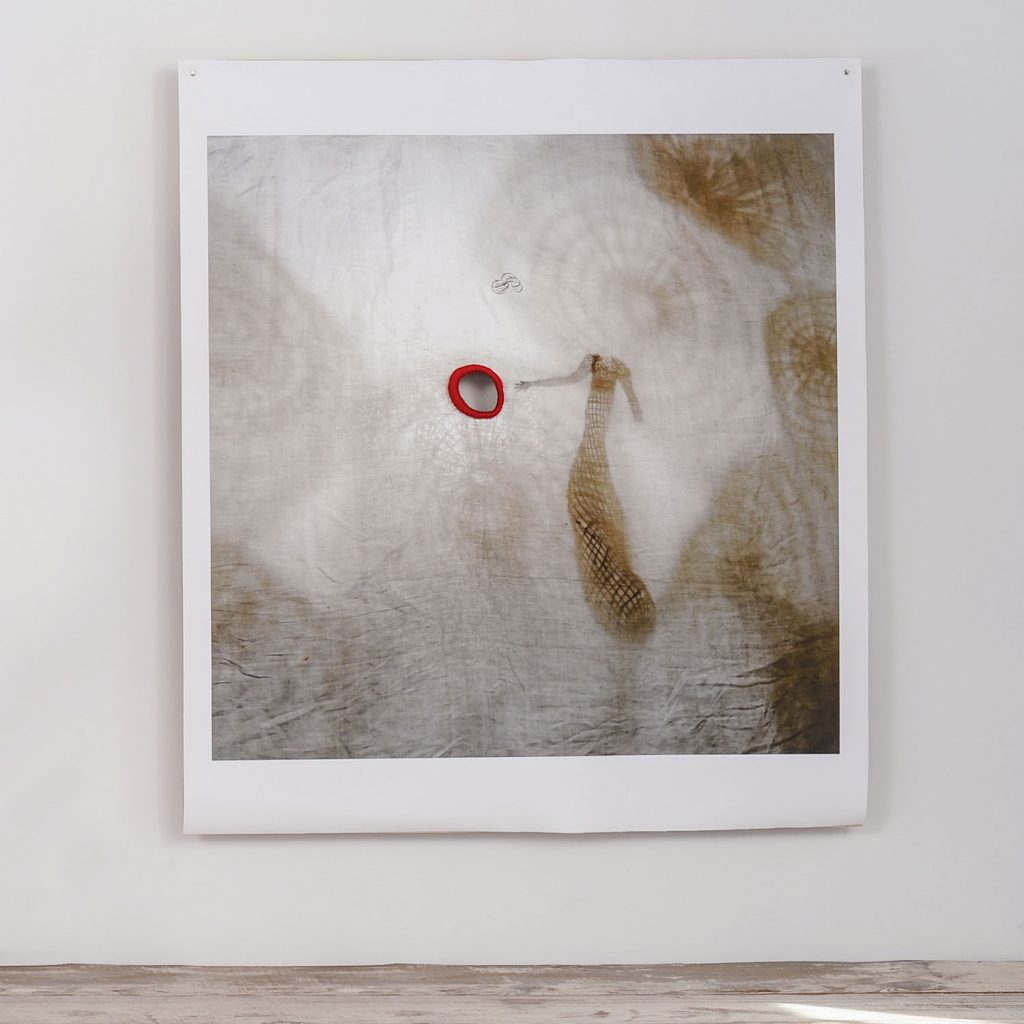
Tissus d’ombres, Stéphanie Jacques, print on canvas, wool embroidery, 35.5”x 35.5”, 2014

Tissues d’ombres is a stitched, image of basketry by Stéphanie Jacques of Belgium. Jacques works in a variety of media. She uses volume to give life to an unfilled interior space in her vessels and prints. This space allows her to speak of something other than what is shown by the visible form: the movements of the body, the desire, the intuitions, a certain savagery, something that remains alive despite everything, that pushes from the inside, cracks the carapaces, overflows. 

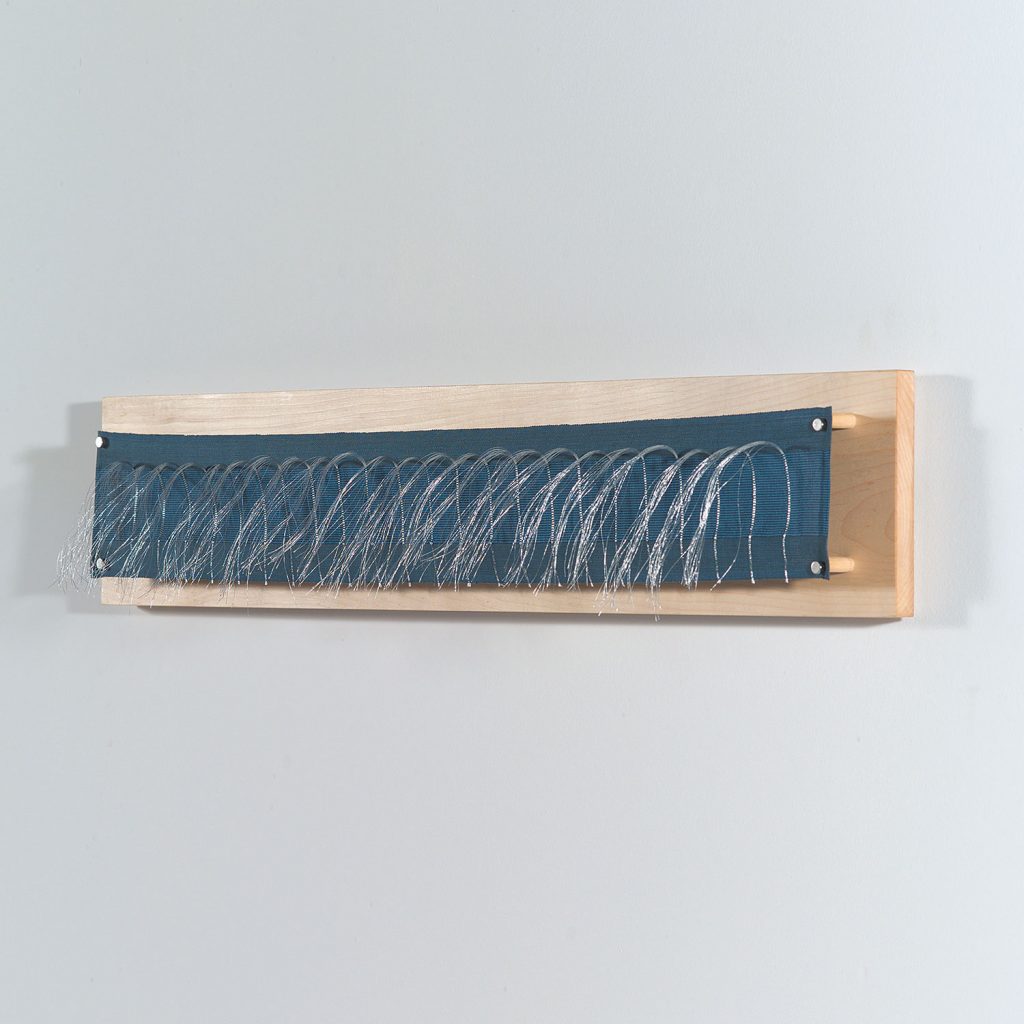
Silver Stream II, Greg Parsons, mercerized cotton, metallis, maple and magnets, 6″ x 30.5″, 2002

Silverstream II by Greg Parsons evokes a sparkling stream or a sky full of swift-moving cirrus clouds. Parsons is is a curator and a textile and product designer who has worked for Burberry among others. 

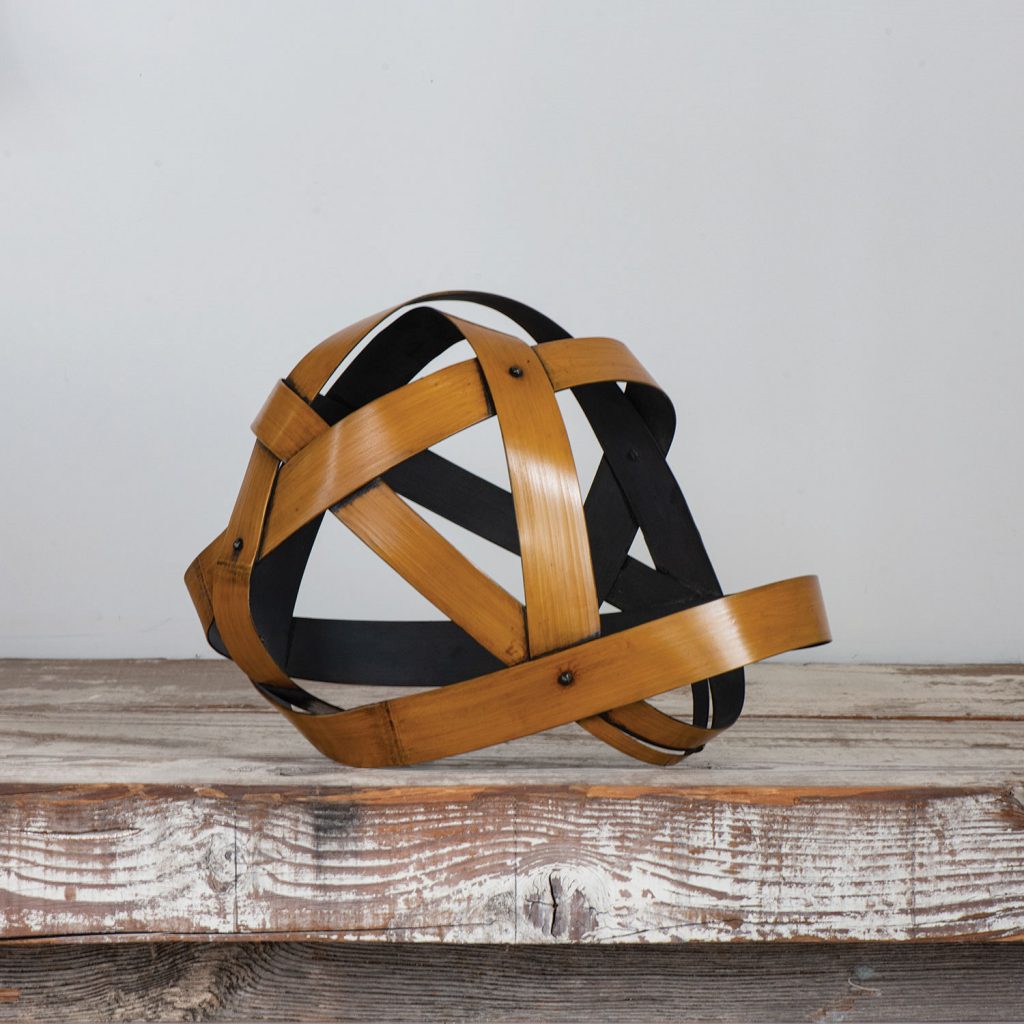
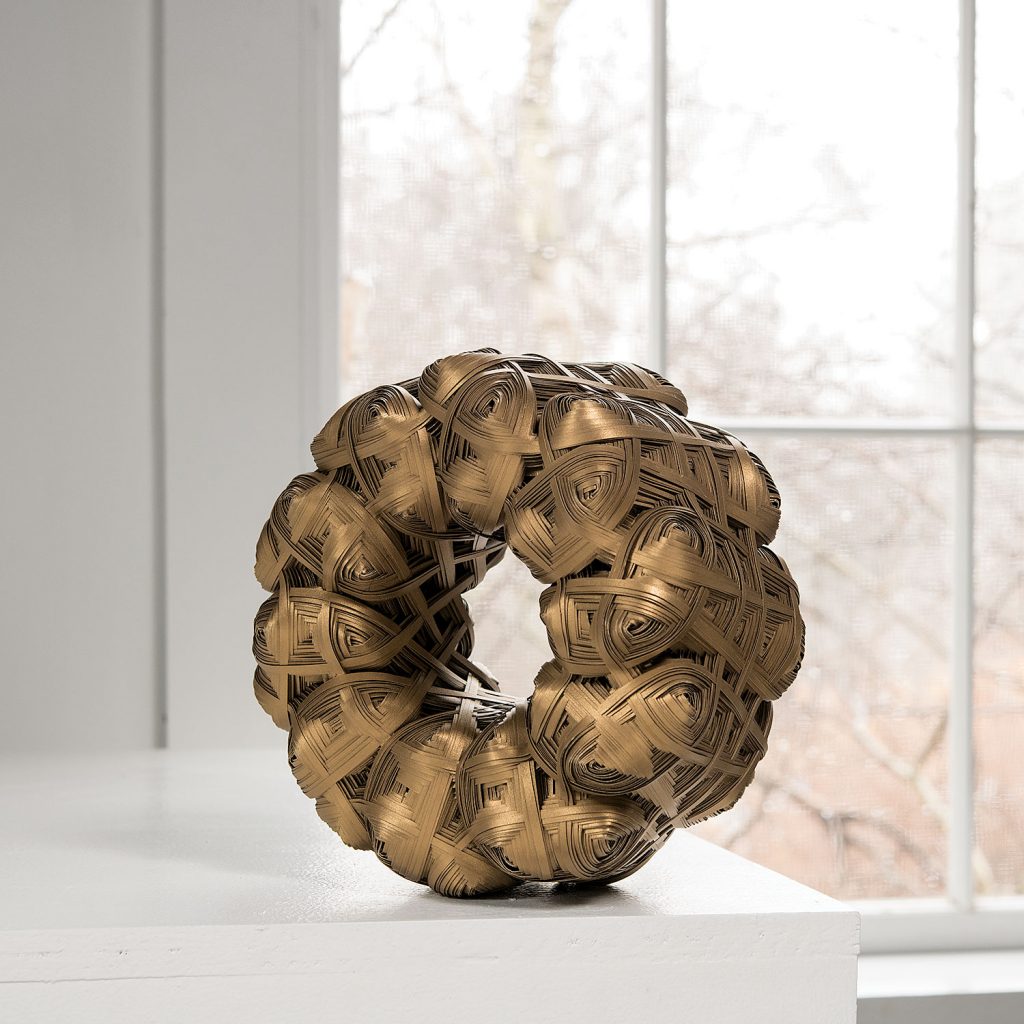
Orbit, Jiro Yonezawa, bamboo, urushi lacquer, 9.75″ x 13″ x 7.75″, 2019

Jiro Yonezawa is a master Japanese bamboo basketmaker. For Yonezawa, bamboo basketry is an expression of detailed precision. In baskets like Orbit, you can see the contrast of disciplined formality in technique and natural freedom in form that is characteristic of his work.

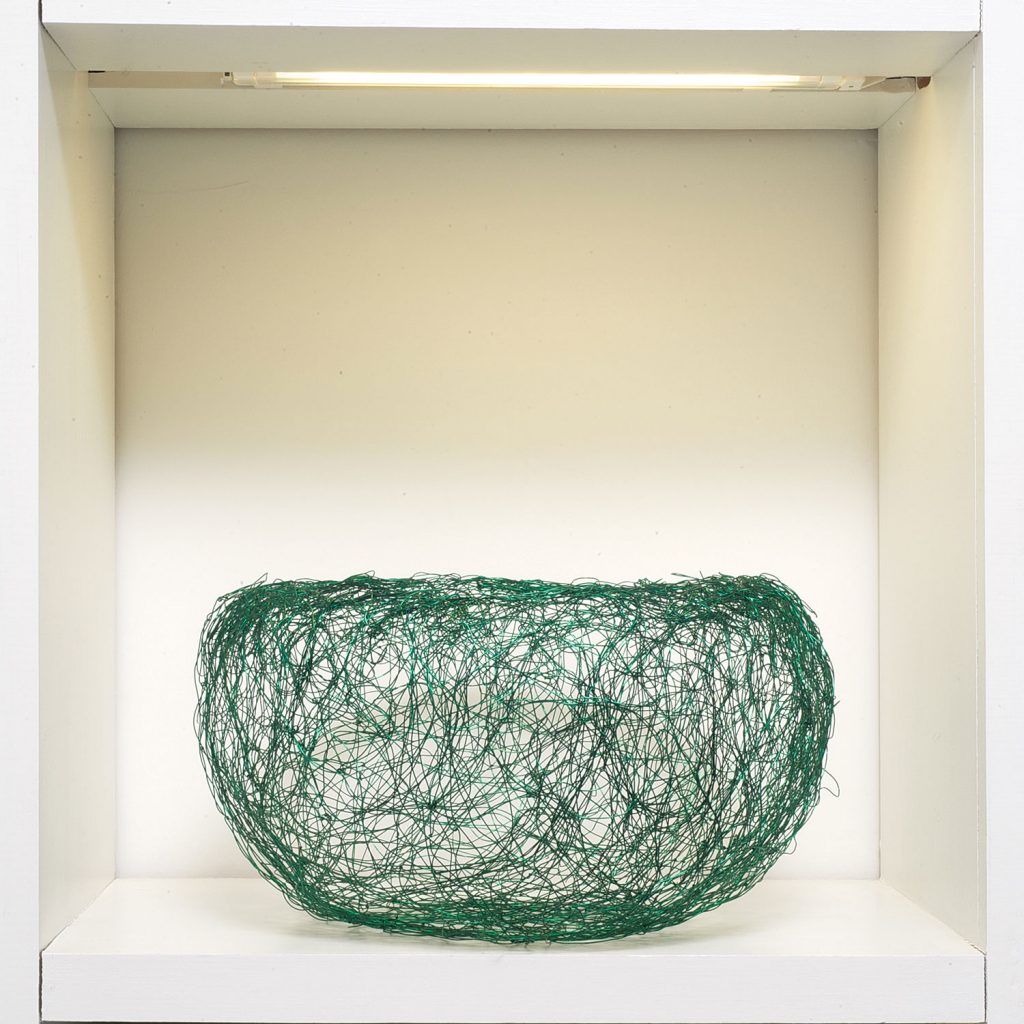
Aurora, Nancy Koenigsberg, coated copper wire, 8.5″ x 13″ x 13″, 2011

Nancy Koenigsberg sculpts works of copper and steel narrow gauge wire. In Aurora, lace-like layers allow for transparency, the passage of light and the formation of shadows. Lines cross and re-cross to create a complex network.

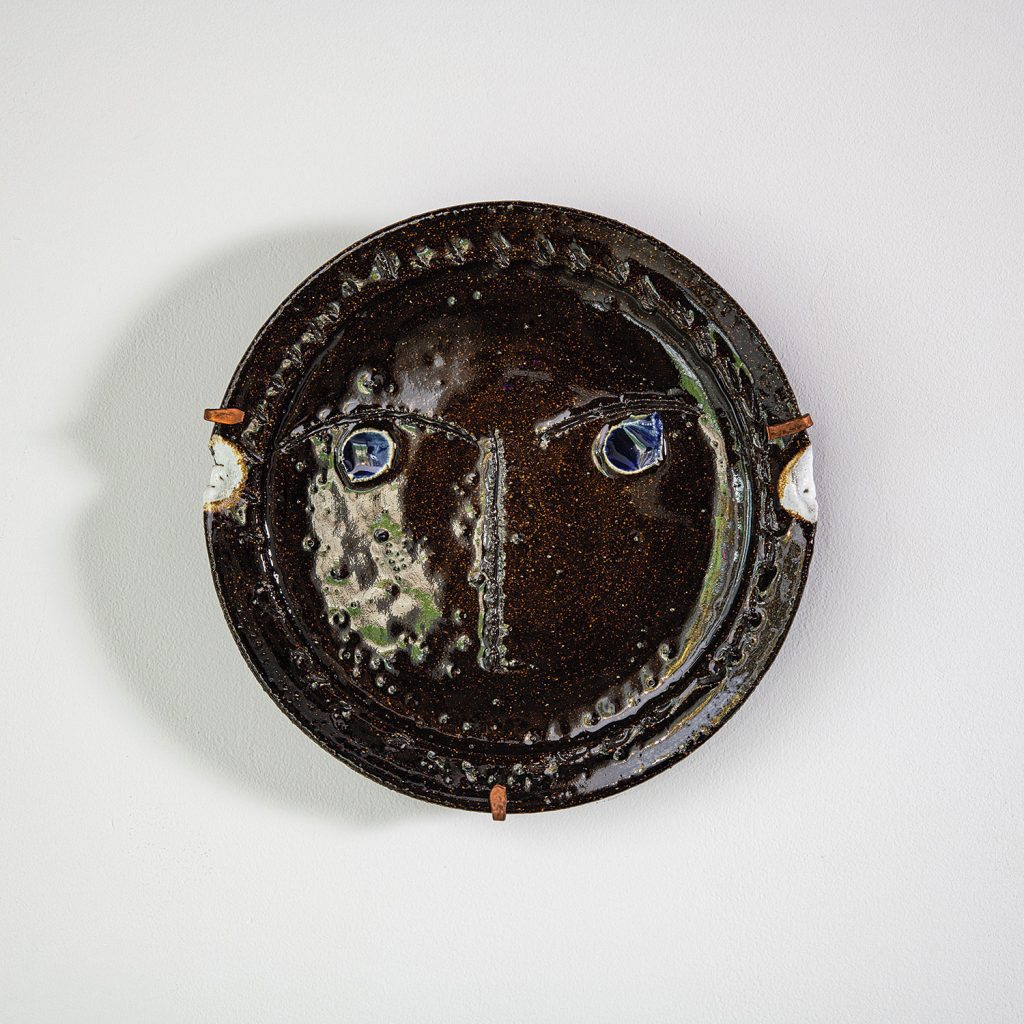
Ceramic Plate, Claude Vermette, ceramic, 9.75″ x 9.75″, 1980

This charming ceramic plate is by Claude Vermette, a artist from Montreal, Canada. Early in his career, Claude Vermette concentrated his efforts on architectural ceramics for which he created new forms of composition for clay, a wider variety of modules for tiles and bricks, and patented, new enamels. In his 25 years as ceramist, he produced large works in more than 100 public buildings, more than a dozen Montreal subway stations, and the General Motors building in New York. The latter part of his career was spent as painter.

These works can all be found at our store at http://store.browngrotta.com/art/.


The Artful Gift Guide: 5 under $900

Five carefully curated gift ideas from $600 to $900 to gladden your every day. Artists from the US, the UK and Japan have created a range of inspiring items to please you or those on your gift list.

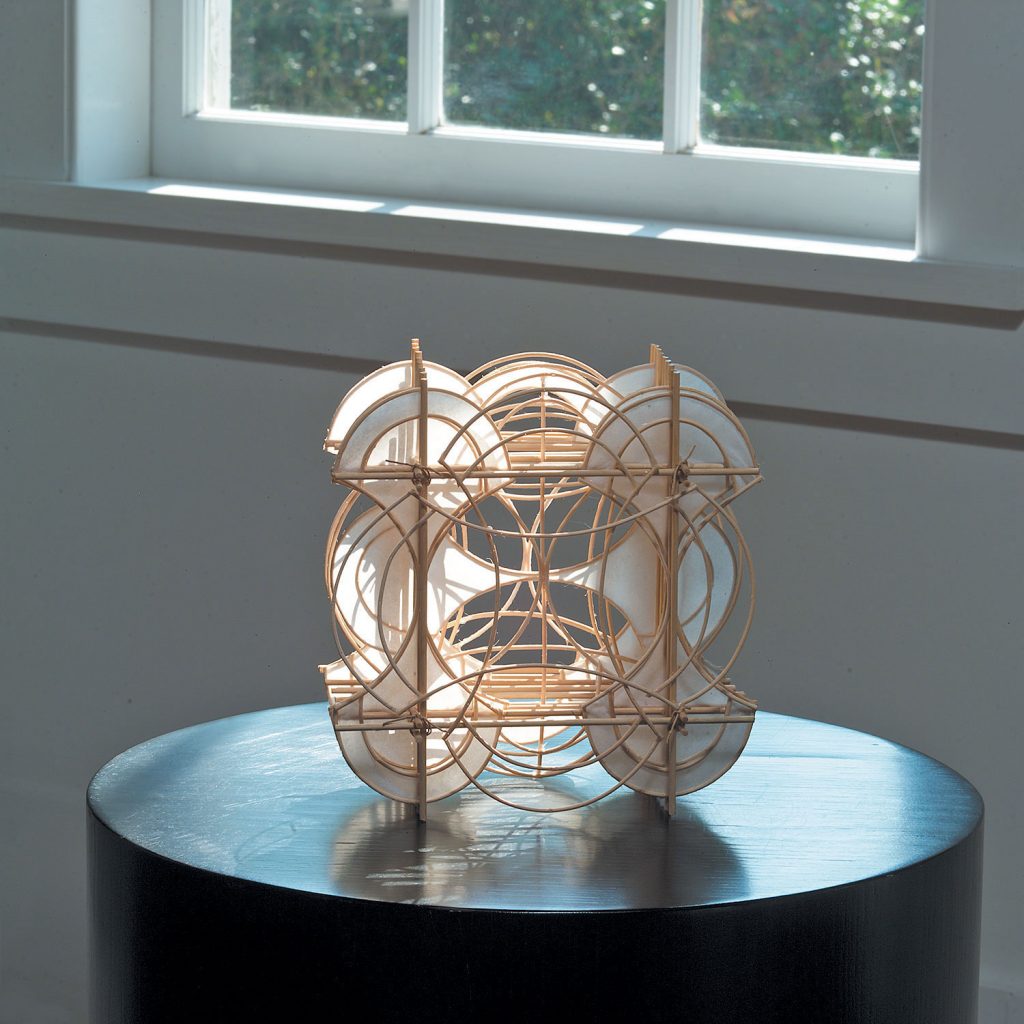
Construction III, Pat Campbell
32pc Construction III, Pat Campbell
rice paper, reed,  
8″ x 7.5″ x 5.5″, 2002
$600

Pat Campbell’s work, which has been featured in the Lausanne Biennial, is influenced by the Japanese shoji screen, traditionally made of rice paper. “Paper is exciting to work with. It is a fragile material that can be easily ripped or torn,” Campbell says.”It is a natural choice of material for my work. It provides the translucency I am seeking in constructions.” Campbell says. The graceful and symmetrical paper and reed objects that result, like Constructions III,  have a sculptural presence enhanced by the interplay of shadows.
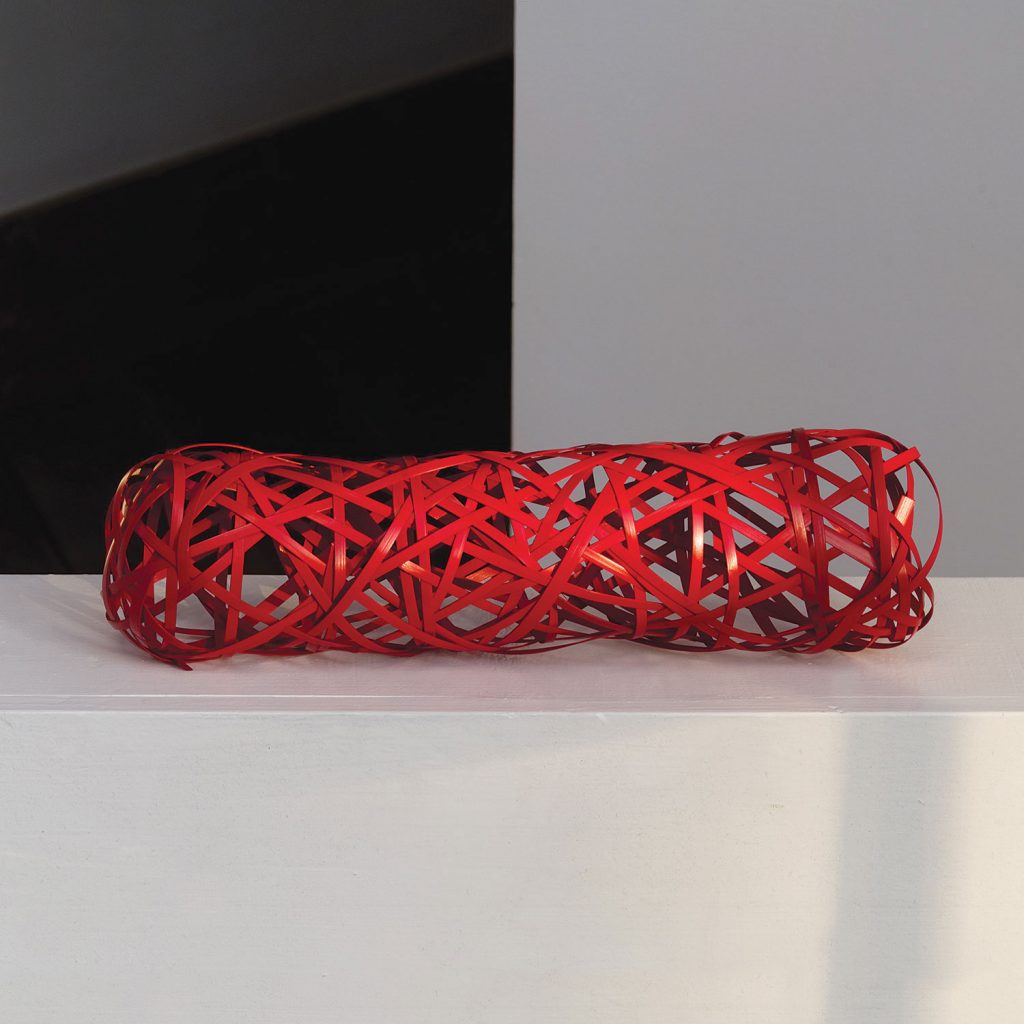
Red Jakago by Nancy Moore Bess
73nmb Red Jakago, Nancy Moore Bess
dyed kilm-dried Japanese bamboo, 3.25″ x 12.5″ x 3.25″, 2007
$600

California basketmaker Nancy Moore Bess works in bamboo, which she studied in Japan, Hawaii and New York. She often creates baskets within baskets, dying the bamboo and waxed linen and cotton, creating forms that are closed and open at the same time. They invite touch and movement and accentuate the beauty and versatility of bamboo. 
Renewal by Marion Hildebrandt
45mh Urban Renewal, Marion Hildebrandt
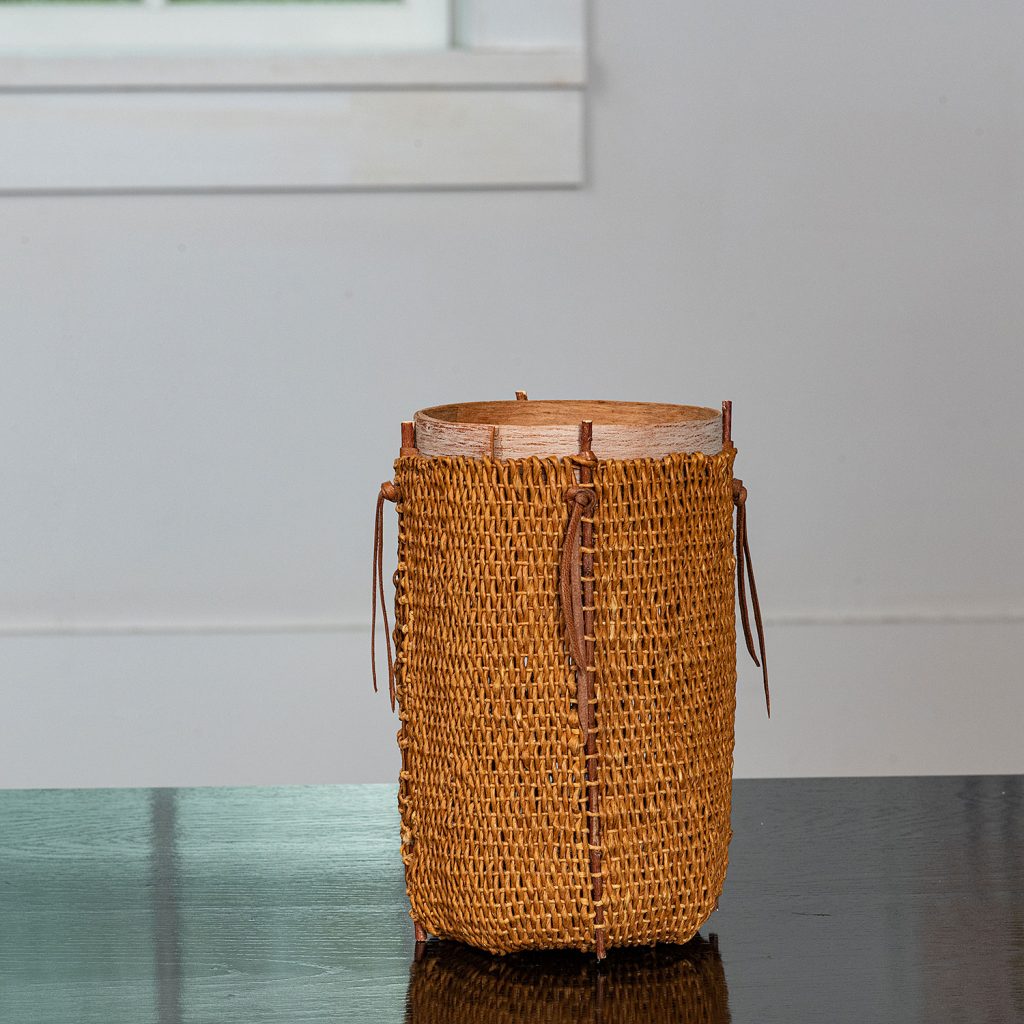
papertwine, waxed linen twine, CA spice bush branches, bark, leather ties
7.25″ x 5″ x 5″, 2002
$850

The late Marian Hildebrandt created this basket of natural materials that she gathered near her home in Napa Valley, California.
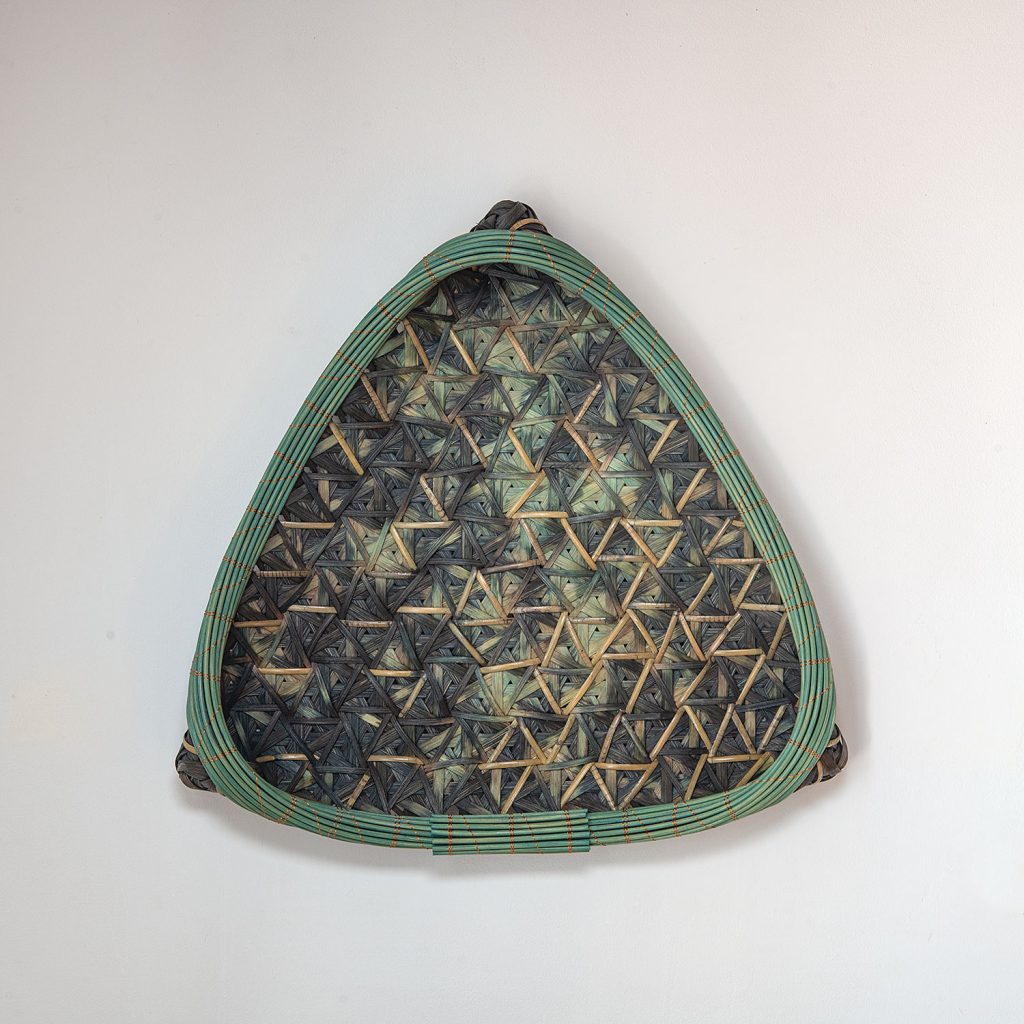
Triangular Dish by Maggie Henton
9207mh Triangular Dish, Maggie Henton
dyed cane and copper wire, 3.75″ x 19″ x 19″, 1992
$850

UK Maggie Henton trained in textiles. Her interest in the structure of weaving and the creation of three- dimensional forms led her to work with cane and making baskets. She found she could dye and weave the cane as easily as a textile fiber, She often mixes found 
materials such as wire and plastic with cane. This weave pattern was developed from the study of South-East Asian weaving techniques. A similar work is found in the permanent collection of the Victoria and Albert Museum in London.
When Green is Gold: Cube connection 14 by Noriko Takamiya
68nt When Green is Gold: Cube connection 14, Noriko Takamiya
paper, 8.5” x 8.5” x 4.5”, 2018
$900

When Green is Gold: Cube connection 14, Takamiya puts a modern twist on traditional Japanese basketmaking methods through her experimentation with weaving techniques. When working on a basket, Takamiya winds hundreds of layers of thin strips of paper around and in between one another until she reaches her desired form. The end result is a three-dimensional, puzzle-like basket.

The small print: Order for the holidays by December 14th and we’ll ship by the 15th (though due to COVID we can’t guarantee the shippers’ delivery schedule). If you’d like us to gift wrap your purchase, email us at art@browngrotta.com, as soon as you have placed your order. To ensure we know you want gift wrapping, don’t wait to contact us — we generally ship as soon as the orders are received. Quantities are limited.
The Artful Gift Guide: 5 under $400

As we spend more time in our homes — working, playing, learning —the desire to surround ourselves with artful items that inspire is all the more acute. Here are five unique items from $55 to $400 to delight you or a friend or family member at the holidays and beyond.

The small print: Order for the holidays by December 14th and we’ll ship by the 15th (though due to COVID we can’t guarantee the shippers’ delivery schedule). If you’d like us to gift wrap your purchase, email us at art@browngrotta.com, as soon as you have placed your order. To ensure we know you want gift wrapping, don’t wait to contact us — we generally ship as soon as the orders are received. Quantities are limited.
Volume 50: Chronicling Fiber Art for Three Decades Catalog
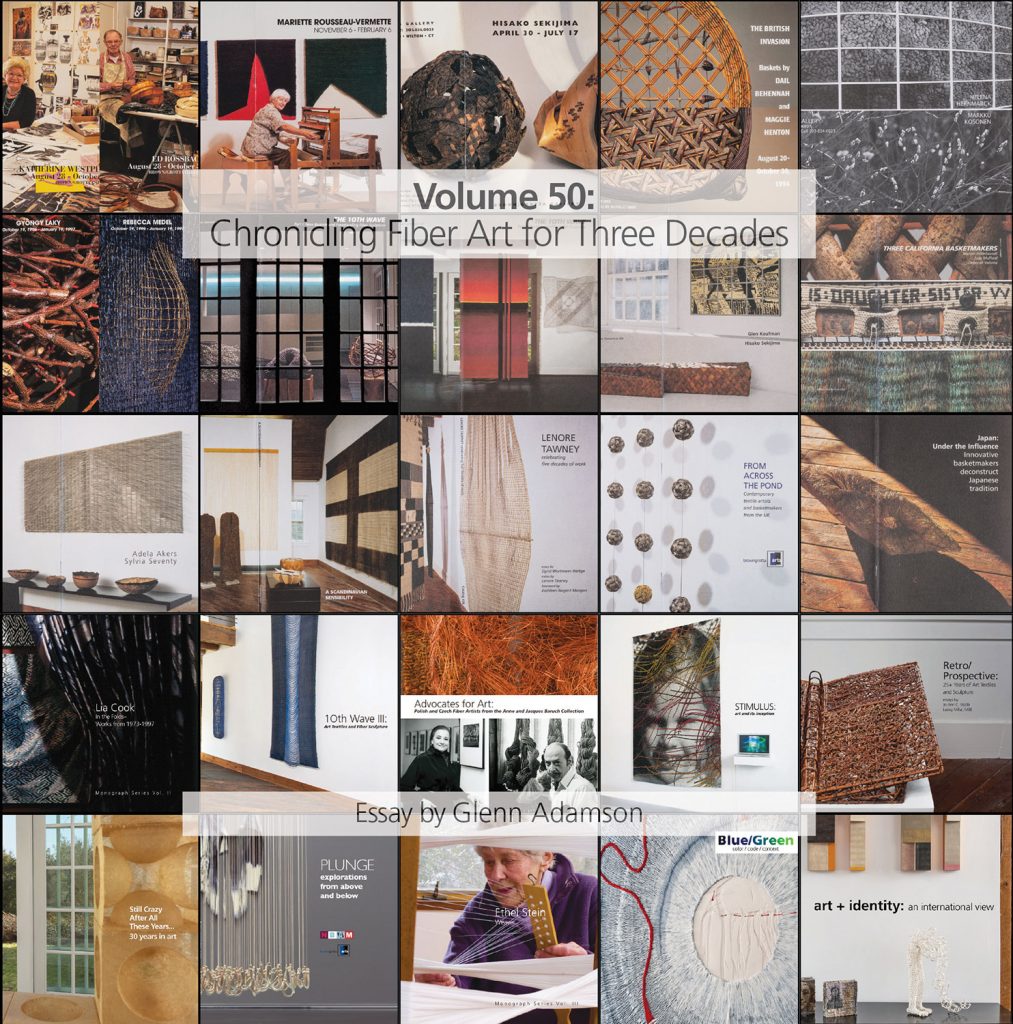
Volume 50: Chronicling Fiber Art for Three Decades
Essay by Glenn Adamson, Photography and design by Tom Grotta,
164 full color pages, 9″ x 9″, 221 color images
published by browngrotta arts
$55.00
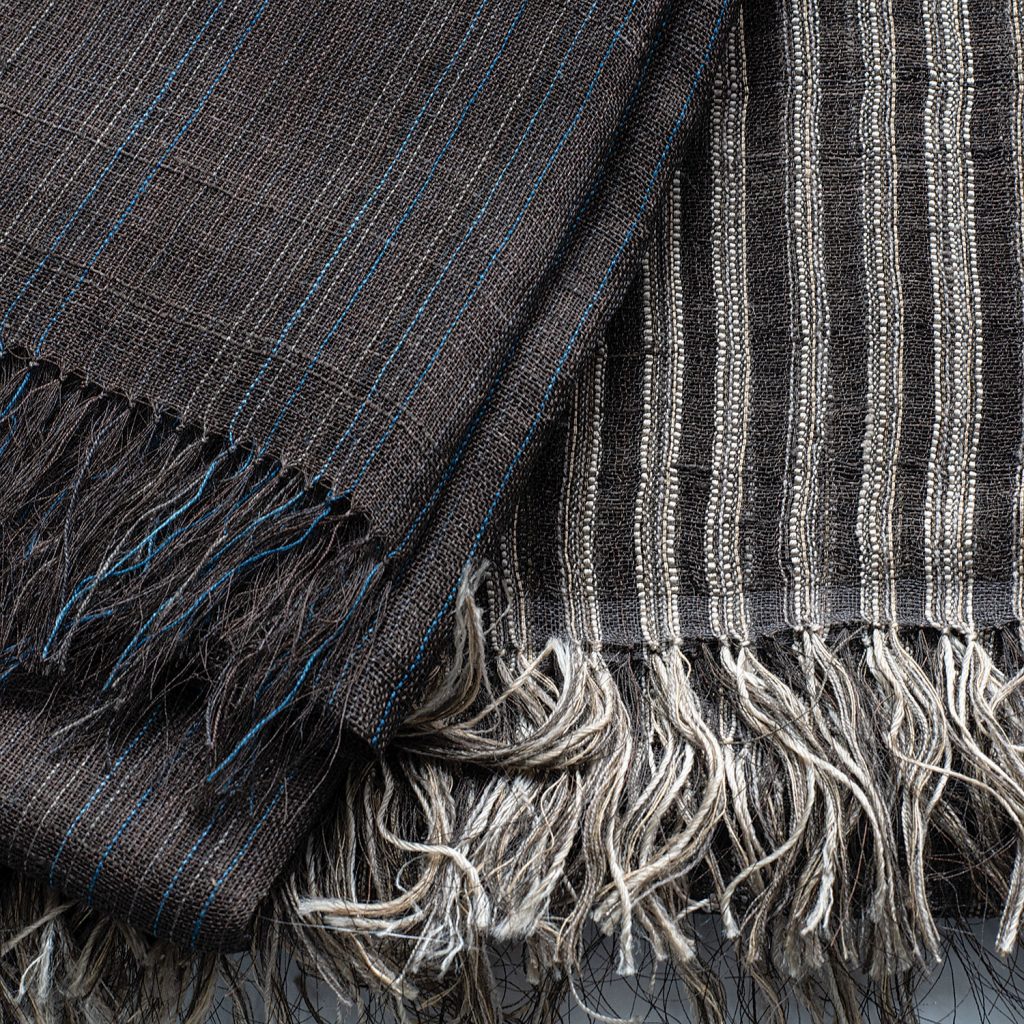
Handmade Japanese Silk Shawls by sisters Chiaki and Kori Maki
24km Tesu Shawl, Kaori Maki
malda and tassar silk, dyes/harad, indigo, 86″ x 25”; 1998
$380
1chm Silk Shawl/Check, Chiaki Maki
80% malda and tassar silk, 20% wool, yarn dyed by natural material, 82″ x 31″, 1998
$400
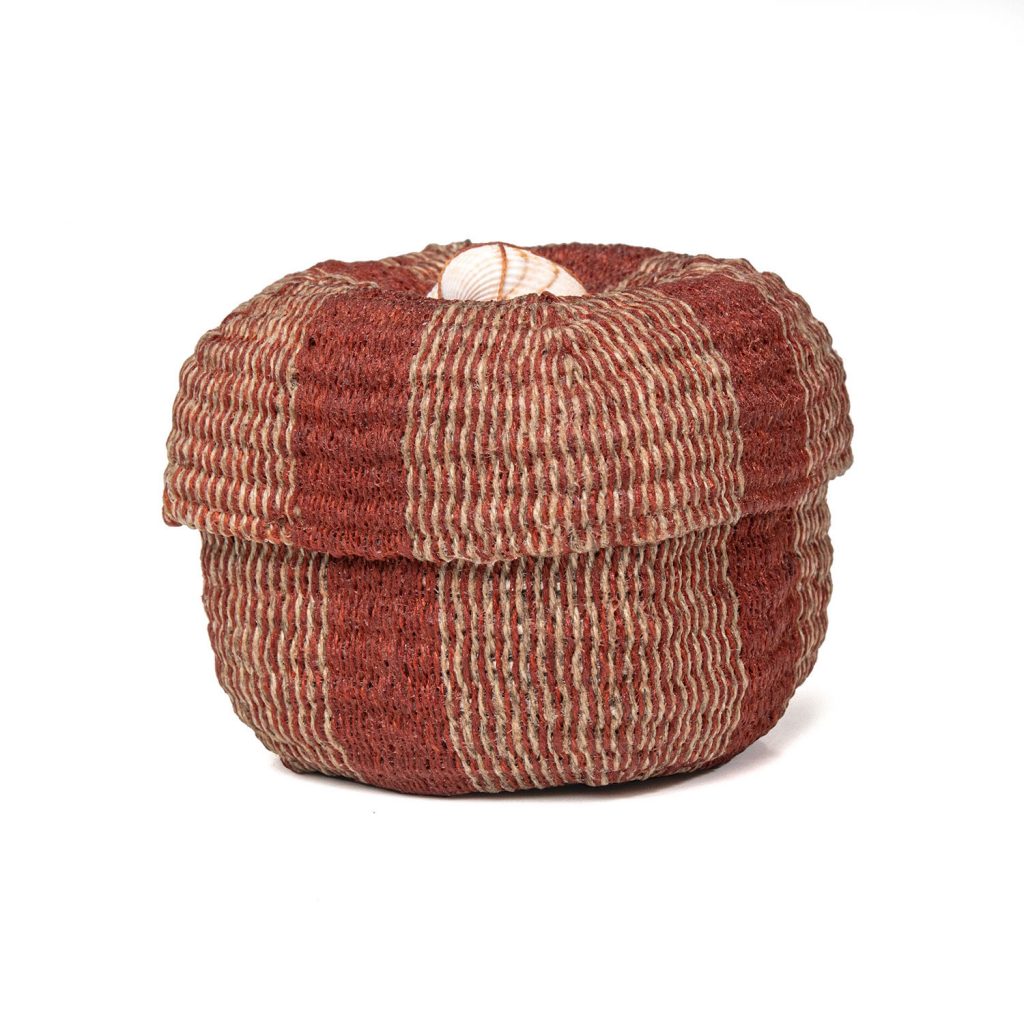
Small Red Basket by Danish basketmaker Birigit Birkkjaer
Birgit Birkkjær
65bb.17 Ode for the Ocean 17
linen and stones, shells, fossils, etc. from the sea
2.5″ x 3″ x 3″, 2019
(other colors available)
$130
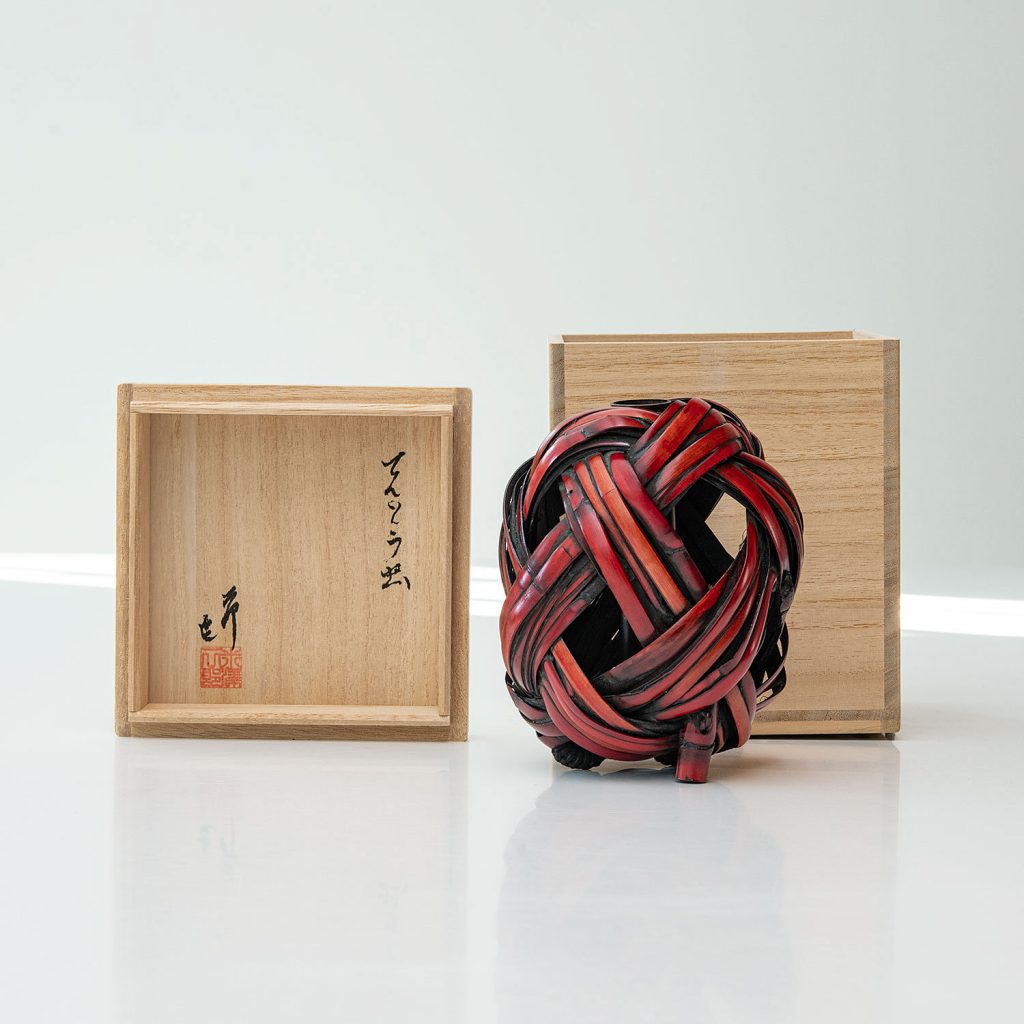
Japanese Bamboo Vase by Jiro Yonezawa
70jy Ladybug, Jiro Yonezawa
bamboo, glass, kiribako box
7″ x 5″ x 5″, 2009
$400
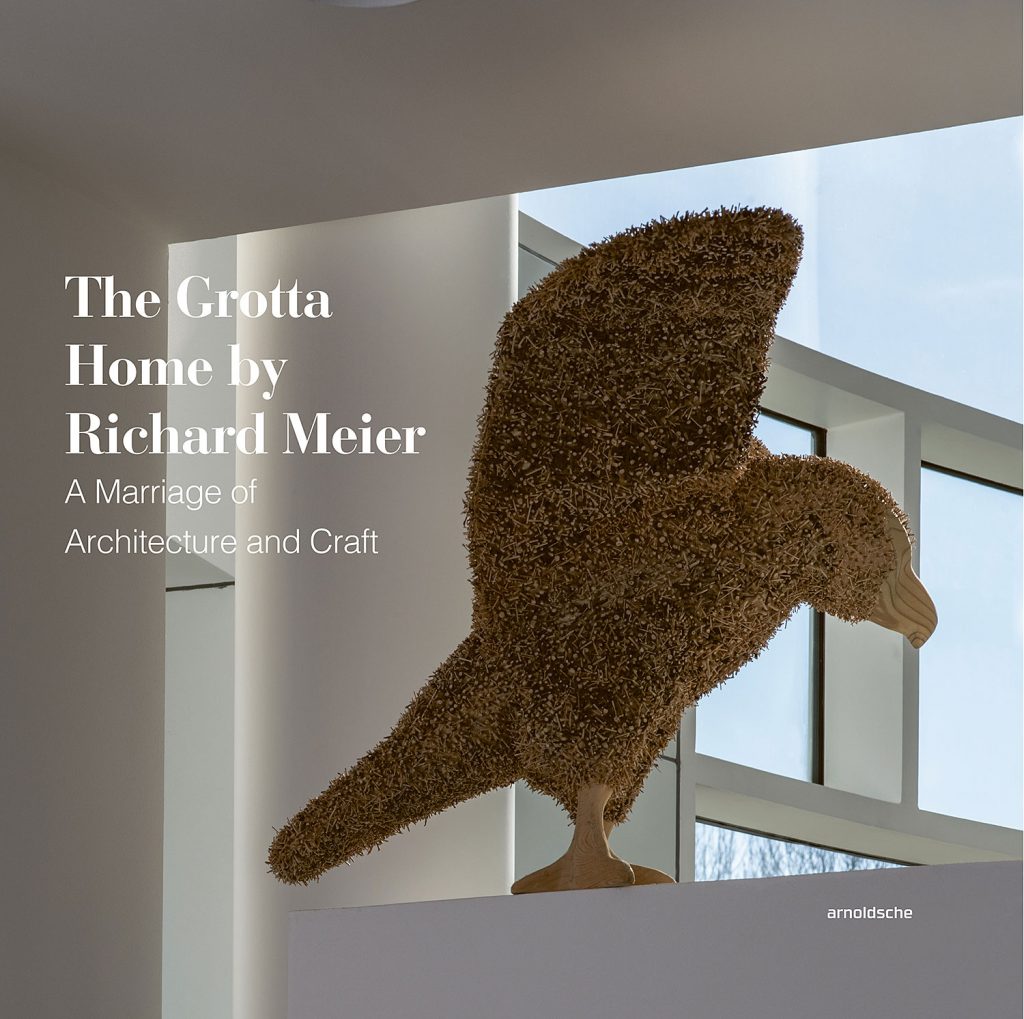
Coffee Table Book The Grotta Home by Richard Meier
The Grotta Home by Richard Meier: A Marriage of Architecture and Craft
with contributions by Glenn Adamson, Matthew Drutt, Sheila Hicks,
Joseph Giovannini, Louis Grotta, Jack Lenor Larsen, John McQueen,
Richard Meier, Wendy Ramshaw and David Watkins
336 pp., 28 x 30 cm, approx. 300 ills, hardcover English
$85.00

A Victory for Future Art Funding

Big Bird
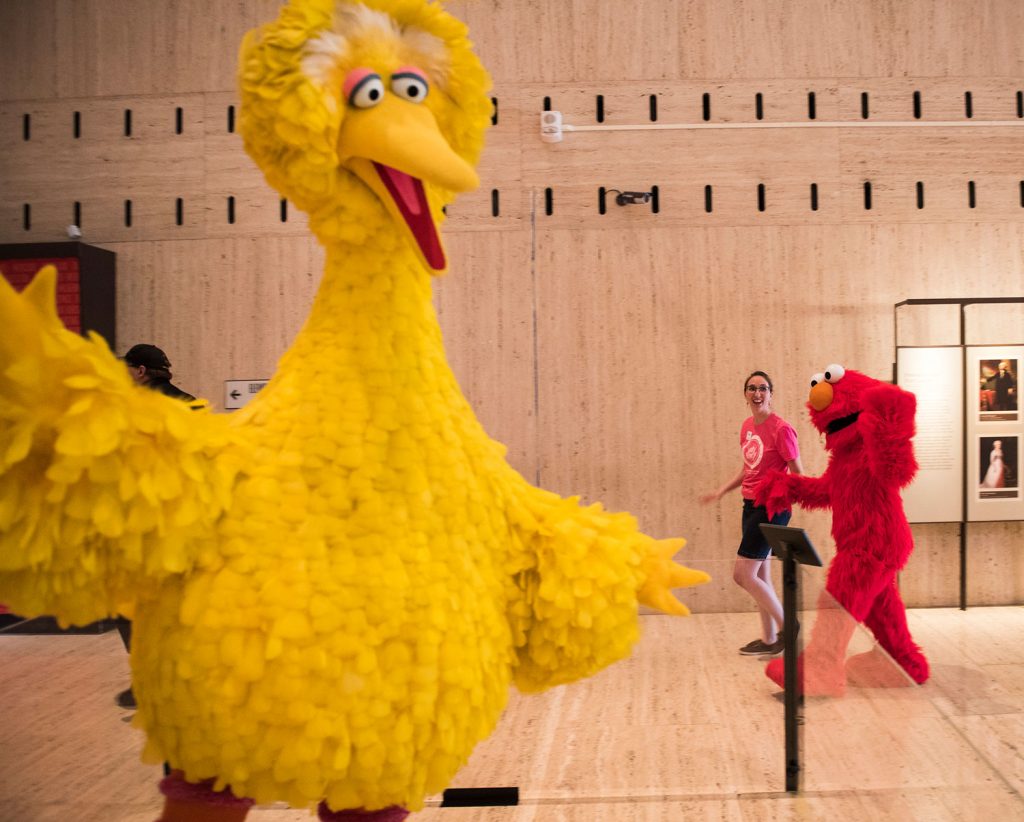
The LBJ Presidential Library exhibition, On the Air: 50 Years of Public Broadcasting, 2017, in Austin, Texas. On Nov. 7, 1967, President Lyndon B. Johnson signed into law the Public Broadcasting Act of 1967, establishing the Corporation for Public Broadcasting (CPB) and, eventually, the Public Broadcasting Service (PBS), and National Public Radio (NPR).  Characters © 2017 Sesame Workshop LBJ Library photo by Jay Godwin 06/24/2017

Elections have consequences, as they say, and 2020 election will be no different. Donald Trump tried to make the world to his artistic tastes. His reach was sweeping in efforts to cut funding for the arts and simultaneously oddly specific. I.e., DC should have no more contemporary architecture (www.npr.org); and duck stamps should feature hunting paraphernalia www.thedailybeast.com. He oversaw the disbanding of the President’s Committee on the Arts and the Humanities, after a mass resignation of private committee members in response to his comments on right-wing violence in Charlottesville, VA in August 2017. And, of course, there would be four years of budgets that included cuts to federal arts programs — National Endowment for the Arts, National Endowment for the Humanities, Corporation for Public Broadcasting, even Museum and Library Services.

President-elect Joe Biden’s record is quite different. As The New York Times described him, he’s “No RBG, but a Loyal Promoter of Culture “https://www.nytimes.com/2020/10/30/arts/biden-arts-culture.html. Biden’s attitude, wrote The Times, is “less from a consumer point of view and more about the inspirational value and transformational value of the arts,” quoting Robert L. Lynch, president and chief executive of Americans for the Arts. “It’s not, ‘Look, I loved this piece, or this song.’ It’s more about the bigger role of the arts in society.” 

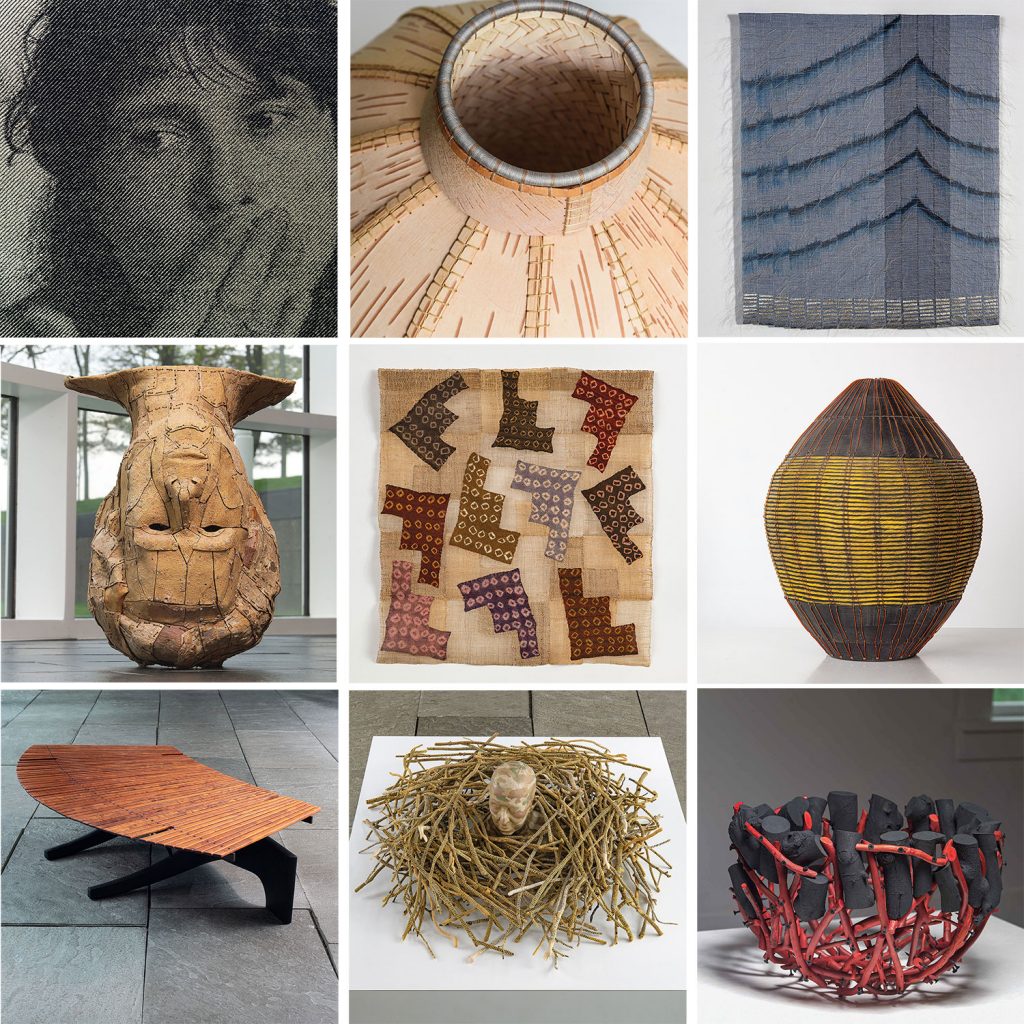
National  Endowment for the Arts Recipients; Lia Cook, Dona Look, Adela Akers, John McQueen, James Bassler, Debra Sachs, Thomas Hucker, Norma Minkowitz and Gyöngy Laky
Funding for the Arts in Action: work by nine National Endowment for the Arts Fellowship Recipients; Lia Cook, Dona Look, Adela Akers, John McQueen, James Bassler, Debra Sachs, Thomas Hucker, Norma Minkowitz and Gyöngy Laky

Actors’ Equity endorsed Biden’s candidacy. “Vice President Biden understands that the arts are a critical driver of healthy and strong local economies in cities and towns across the country,” said Kate Shindle, president of Actors’ Equity. That could bode well for passage of Americans for the Arts Creative Workplace Proposal — 16 specific actions for the next administration to take in order to put creative workers to work rebuilding, reimagining, unifying, and healing communities in every state and territory, as well as within tribal lands www.americansforthearts.org. Among the suggestions from Proposal: Put artists to work addressing public and mental health in communities; Complete the launch of an ArtistCorps within AmeriCorps; and Direct and incentivize the integration of creative workers and creative organizations at the municipal, county, state, and tribal levels during disaster relief and recovery efforts.

Private efforts will continue to be key to the arts’ support, too, of course. For a comprehensive look at new philanthropic initiatives, including #ArtistSupportPledge and Artists for Artists appeal, read “Funding the Future of the Arts,” by Gareth Harris, November 2, 2020. https://www.sothebys.com/en/articles/funding-the-future-of-the-arts?

browngrotta arts wants to play its part, too. From now until the end of the year if you make a purchase from us, we’ll contribute 5% of any sales we make to the American for the Arts Action Fund. 


Art Assembled: New This Week in October

October was a busy month for us at browngrotta arts. Between our Volume 50 exhibition, election buzz and the new art we brought into our fold – there was never a dull moment. Last month we highlighted some talented artists and their exceptional work, including: Polly Barton, Mary Giles, Gudrun Pagter, Dail Behennah and Kiyomi Iwata.

Polly Barton
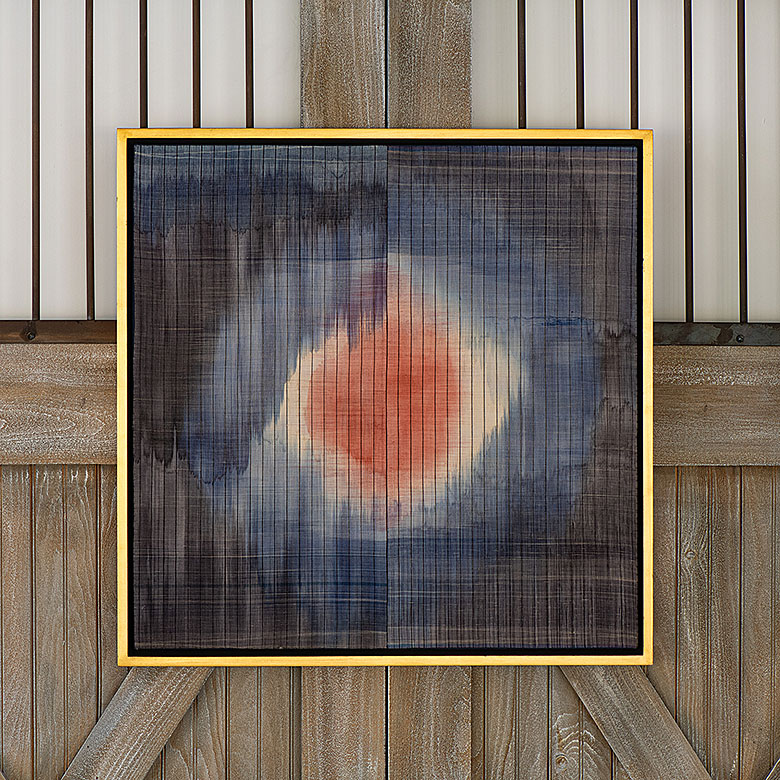
Blue Veil by Polly Barton, handwoven double ikat in 2 panels. Framed in a gold leaf shadow box, 34” x 34”, 2000. Photo by Tom Grotta.

Polly Barton is a New Mexico-based artist known for her eye-catching handwoven art pieces.

“To greet the day, I weave,” said Polly Barton. “I weave to find my gesture. I weave to regain solitude. I weave to discover the texture of the day. I weave to build shimmering color in layers of dyed silk threads. I weave to find the thread of understanding. I weave because it connects me to the world of weavers. I weave pulled along the threads of history and tradition. I weave to break tradition. I weave happily when I have a dye pot simmering on the stove. I weave to keep my brain nimble. I weave for joy and inspiration. I weave in sadness. I weave to feel calm. I weave while listening to the birds sing.”

Mary Giles
Annointed Manstick by Mary Giles, waxed linen, wire, paint, gesso, steel base, 33.5″ x 5” x 5” 1997. Photo by Tom Grotta.

Mary Giles provided insight on her work and where she found her inspiration from, and we must say that we admired her passion.

“I interpret and express my concerns about our environment and the human condition, through my work,” Mary Giles wrote before her death in 2018.  “I have explored communication and intimacy in relationships. The results are reflected in my figural work. I admire the directness and honesty I see in tribal art and I try to incorporate those qualities in my own. My baskets express both action and reaction to what I have loved in the past and what I am discovering today.”

Gudrun Pagter
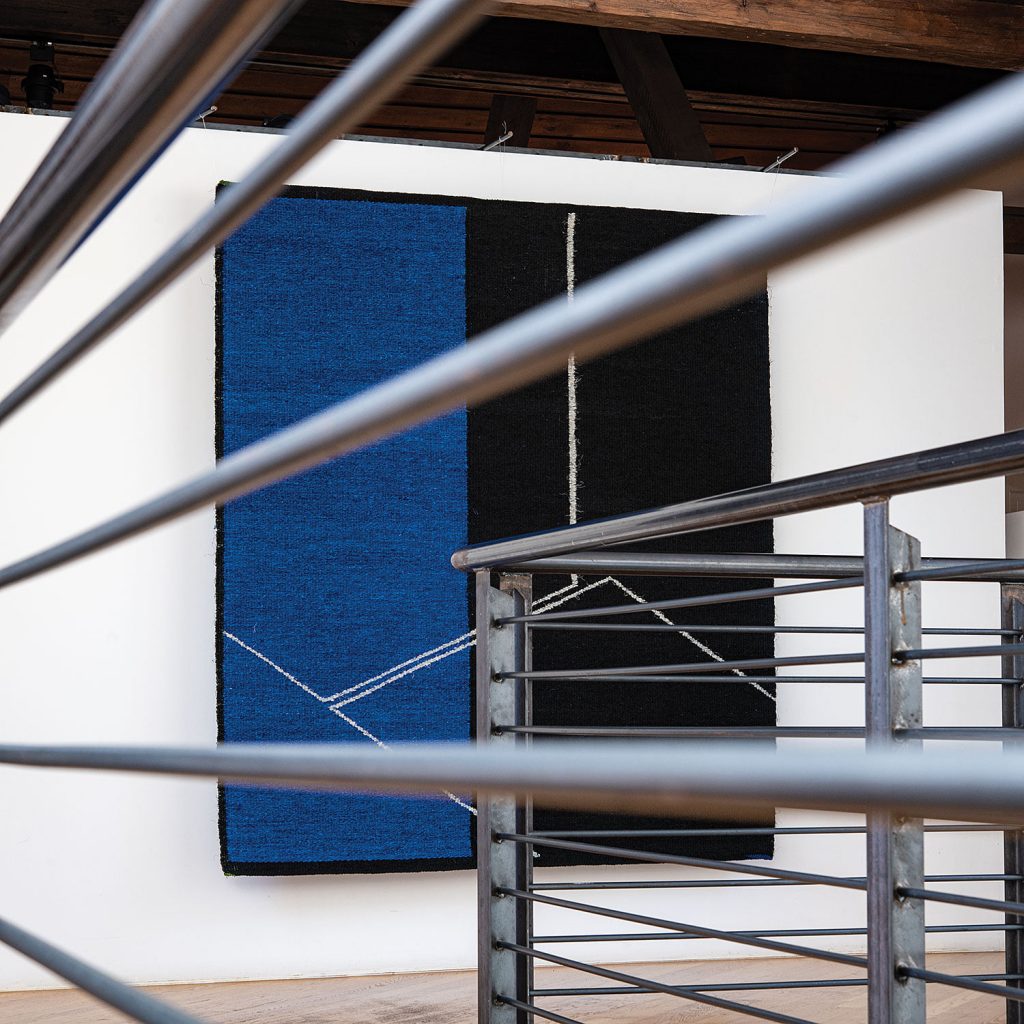
Tapestry by Gudrun Pagter: Form-on-Black-and-Blue, linen, sisal, and flax 63” x 55”, 2020. Photos by Tom Grotta. 

Gudrun Pagter is a Denmark-based artist that is known for creating exquisite woven tapestries.

“In my compositions, I use lines and shapes to achieve a tension and a spatial effect, with inspiration drawn from architecture,” said Gudrun Pagter. “The tapestries are woven on a foot-powered loom; the materials are mainly dyed sisal and flax.”

Dali Behannah
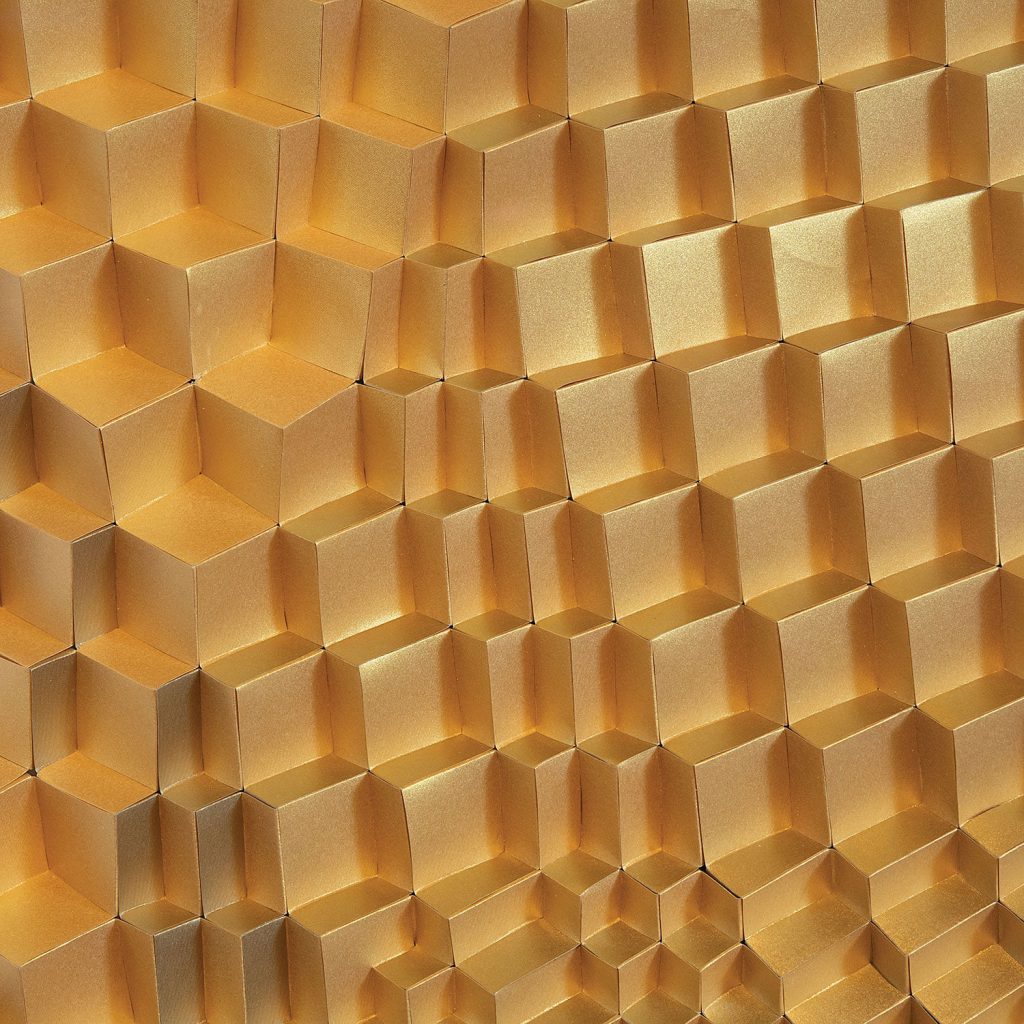
56db Two Golds, Dail Behennah, pleated and plaited paper, 37.25” x 25.25” x 2.25”, 2019. Photo by Tom Grotta.

Dail Behennah is a UK-based artist known for her impeccable and detailed artwork. When discussing this piece, Behannah said:

“Paper can be transformed beyond the mundane into something extraordinary. By creating this undulating and faceted surface I am drawing with the light that falls on it. Clouds may pass, light wax and wane, shadows fall and candlelight flicker. Each variation in light changes the work, and as you move past it and look back it will appear different again.

This is a strong and flexible textile made in a three dimensional, three directional plaiting technique. Two widths of strip are used and some of the wide strips have been split during the weaving, creating a rich surface. The different angles of the facets combine with the two shades of gold paper to create a shimmering effect.”

Kiyomi Iwata
23ki Baggage Five, By Kiyomi Iwata woven fine Kibiso, embellished with French embroidery knots, 27” x 23.375” x 8,” 2020. Photo by Tom Grotta.

Kiyomi Iwata was born in Japan, and although she’s living in the United States now, she has said her roots have a great influence on her work.

“After decades of living in the United States, I am still surprised that my work continues to be influenced by the cultural tradition of my upbringing in Japan,” Iwata says. “In my work, I explore the boundaries of East and West through absence and presence, void and volume.”

These talented artists each bring a unique, thought-provoking perception on the world, and intriguing creative works to match. Keep your eye out for all the new art coming your way next month. In the meantime, if you have yet to view our online exhibition, Volume 50: Chronicling Fiber Art for Three Decades, check it out while you still can by visiting this link.


When Words Aren’t Enough: Artists and Politics, Part III

War and violence are often influences for artistic works. In the last of our three columns on Art and Politics we look at three works in which artists have commented on specific conflicts and three that address the futility violence in differing contexts.

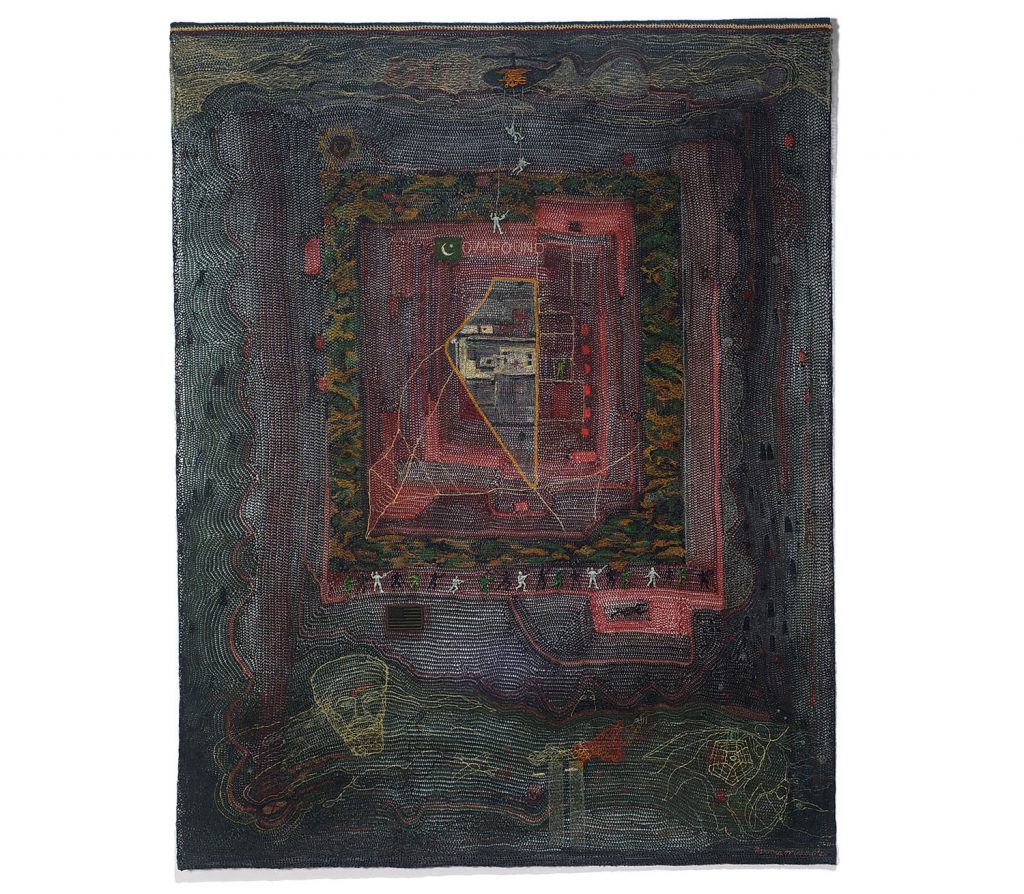
Compound, Norma Minkowitz, mixed media, 70” x 54.75” x 1.5”, 2011

Concerns about war animate Compound, a work by Norma Minkowitz a large panel that chronicles a nightmare scenario, the last moments of Osama Bin Laden’s life.  It features a tiny-mesh crocheted surface. It has a powerful push me/pull me effect once the subject matter– which includes stylized soldiers, SEALS parachuting from a helicopter, the compound where Bin Laden was hiding, and the World Trade Center — clarifies itself. This whole is an unforgettable image.

Responding to a call for art for a browngrotta arts’ exhibition entitled Stimulus: art and its inception in 2011, Norma Minkowitz began, as she usually does, to sketch.  “I began in a spontaneous, unplanned manner,” Minkowitz explains, “arranging lines and subtle patterns, until I had a feeling of the direction it would take. Suddenly, I realized that the linear image had become the apparition of an aerial view of the compound where Osama Bin Laden was found, which I had seen in a newspaper article. Compound combines a replica of the space and my vision of the event.

“This is not my usual way of working,” she says. It is more literal because of its historic significance. I enjoyed this different approach and found it quite timely as we remembered the attack on our country on September 11, 2001. I wanted to commemorate courage, justice and the resolve of the USA.”

Women Warriors, Dona Anderson, mixed media, 2005-2011. Photo by Tom Grotta

The war in Iraq influenced Dona Anderson, as well and resulted in a series of “armor” pieces, including Women Warriors. Anderson’s granddaughter was in the army stationed in Japan while the granddaughter’s husband was in Iraq.  When he came home for a break, he said he did not have any body armor. Anderson was so bothered by this information that she used her art to create some stylized armor for him.

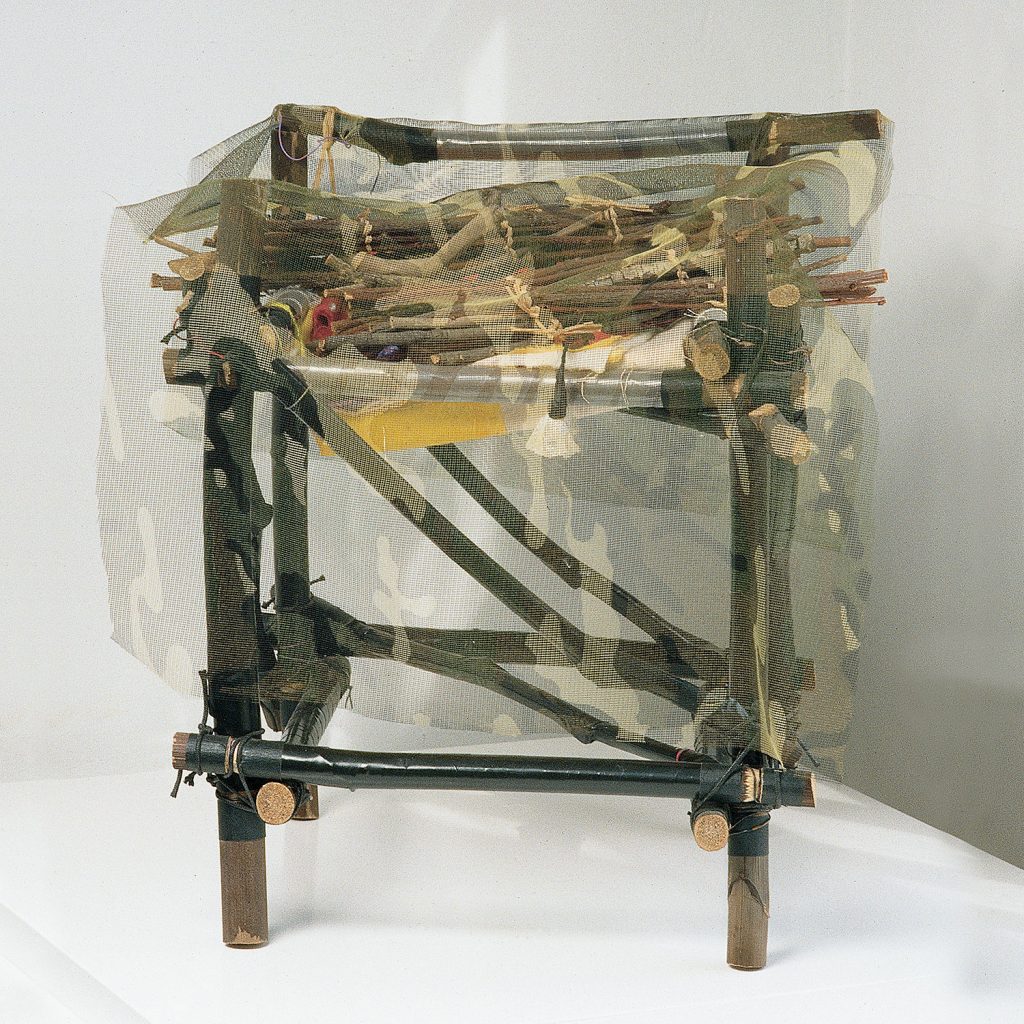
El Salvador, Ed Rossbach, muslin, camouflage netting, sticks, plastic, plastic tape, wire, tied, dyed, linoleum block printed, 1984. Photo by Tom Grotta

A previous conflict in Latin America led to the creation of a textile construction, El Salvador, by Ed Rossbach in 1984.  Here, the artist using very simple materials constructed a powerful anti-war statement. The death squads in El Salvador killed many thousands of people before the civil war ended. Rossbach pushed the bounds of conventional 1950’s design. His art used raw materials — like camo mesh — to create forms that explore context, scale and juxtaposition to create irony
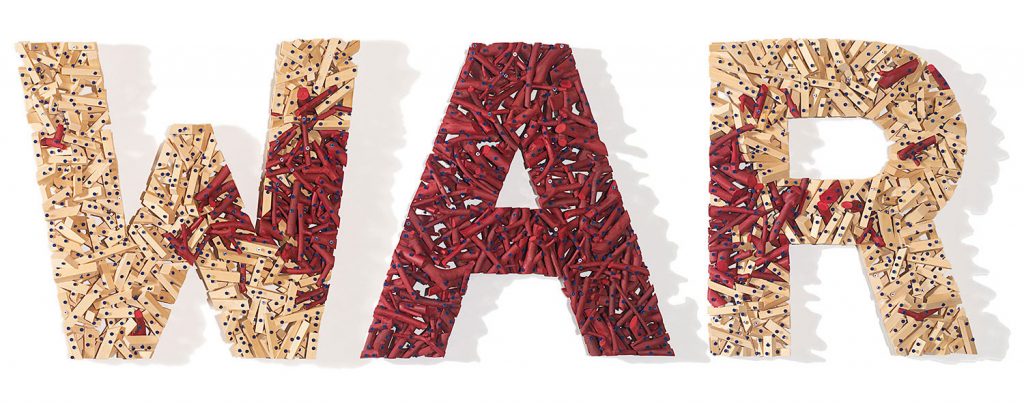
Globalization IV; Collateral Damage, Gyöngy Laky, ash, commercial wood, paint, blue concrete bullets, 2005. Photo by Tom Grotta
Globalization IV; Collateral Damage, Gyöngy Laky, ash, commercial wood, paint, blue concrete bullets, 2005. Photo by Tom Grotta

Gyongy Laky, a student of Rossbach’s, regularly addresses political issues in her work. Laky is a powerful advocate for the environment as well as a proponent of the hiring of more women at the University of California, Davis where the artist taught for many years. Through Globalization IV Collateral Damage, she speaks with great force and conviction about the utter waste of blood and treasure that is war. Constructed of ash and commercial wood scraps the three letters spell WAR but can also be rearranged to create other vivid elucidations of the subject: MAR, ARM, RAW, and RAM. Bullets for building and red paint are also used in the construction to dramatic effect.

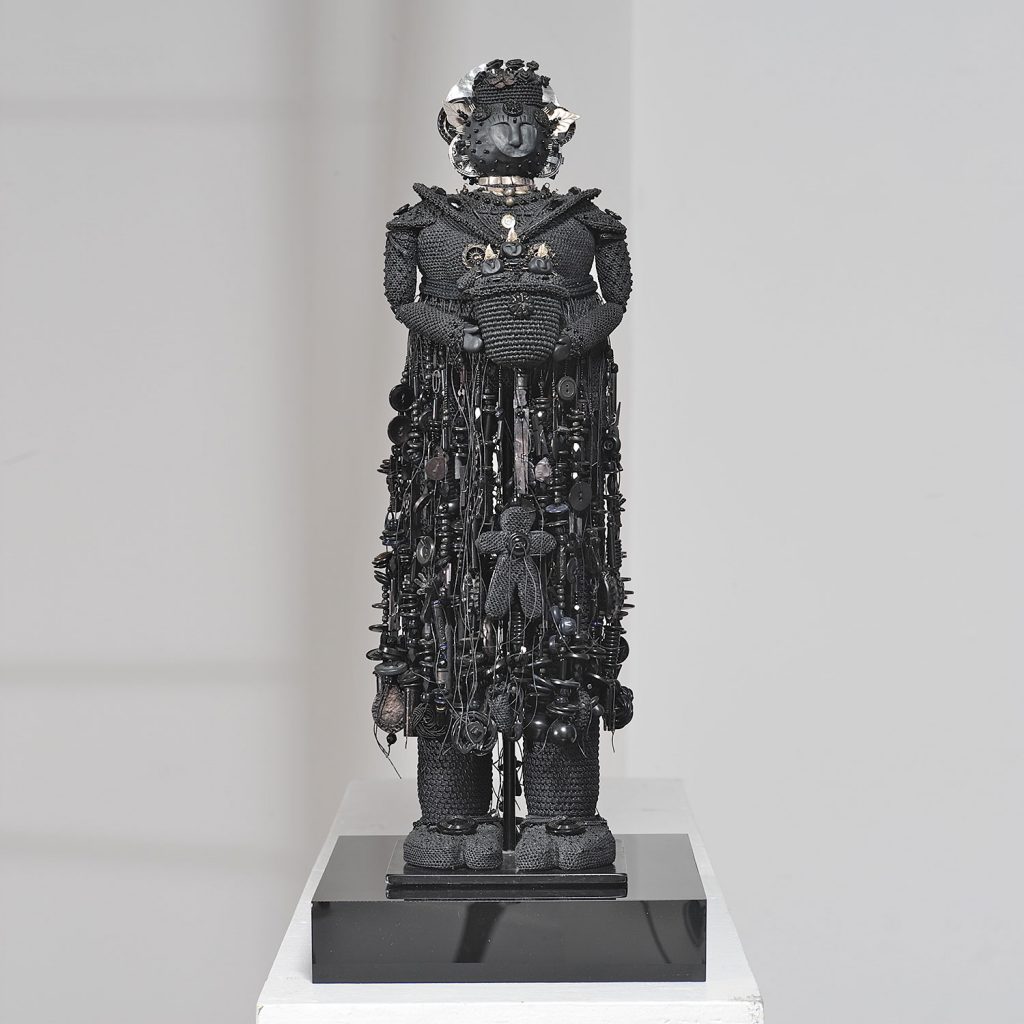
Help-Siring Soldiers to Sacrifice, Judy Mulford, waxed linen, buttons, beads, babies & bullet casings, 23" x 11" x 9.5", 2005. Photo by Tom Grotta
Help-Siring Soldiers to Sacrifice, Judy Mulford, waxed linen, buttons, beads, babies & bullet casings, 23″ x 11″ x 9.5″, 2005. Photo by Tom Grotta

In Help-Siring Soldiers to Sacrifice,  Judy Mulford, has created a female figure with bullet casings making up her skirt to illustrate the tragedy for mothers in war zones, whose children are served up as fodder for never-ending conflicts. “My art honors and celebrates the family,” says the artist. “It is autobiographical, personal, graphic and narrative. Each piece I create becomes a container of conscious and unconscious thoughts and feelings, one that references my female ancestral beginnings.”

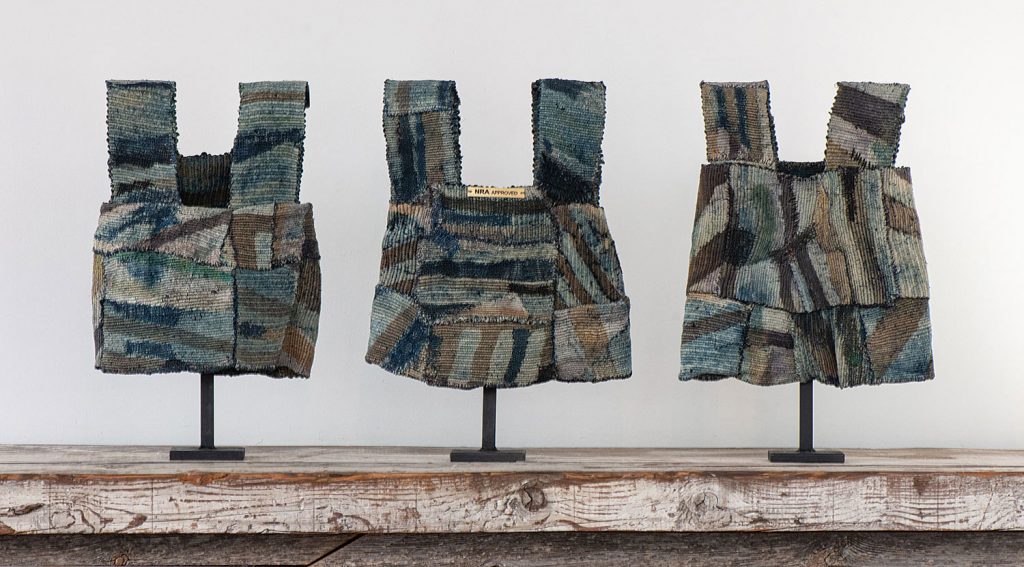
NRA Approved,  James Bassler, woven, stitched and batik dyed; silk and sisal; each 20”h X 12”w X 4”d (as mounted), 3 pieces in one box  with 3 custom stands, 2014.Photo by Tom Grotta
NRA Approved,  James Bassler, woven, stitched and batik dyed; silk and sisal; each 20” x 12”w x 4”d (as mounted), 3 pieces in one box  with 3 custom stands, 2014. Photo by Tom Grotta

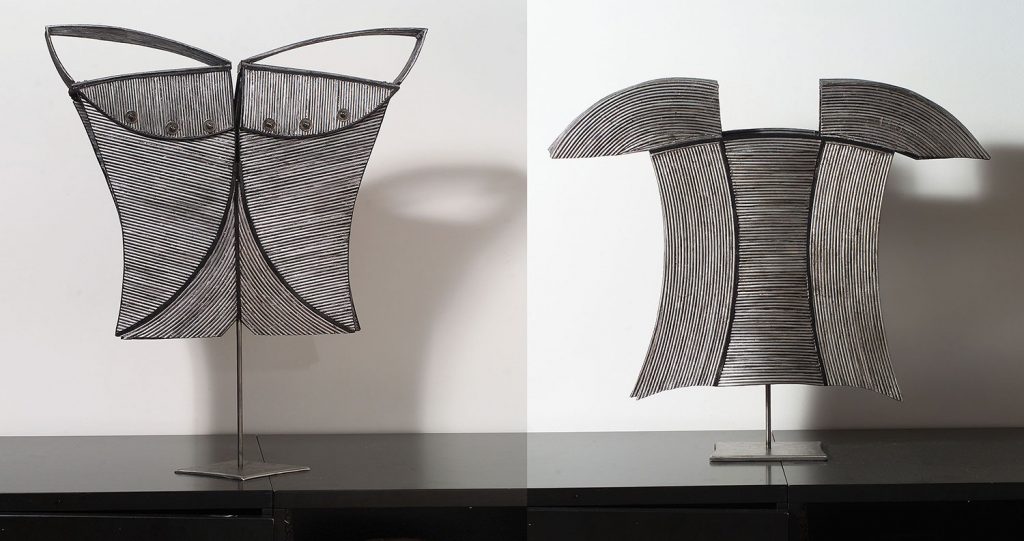
James Bassler commented on gun violence in schools in a series of vests that make up NRA Approved. “The cloth I wove, batik dyed and stitched, was inspired by the 19th Century Japanese fireman’s jacket,” he explains. “It was also inspired by our 21st Century public debate about gun violence and what we, as a nation, could do to make our schools safe from the tragic incidents of our times. The NRA has openly suggested that teachers and students wear bullet-proof vests. Often, our young students do wear waterproof aprons when doing creative work. Here, in these woven sculptural forms, I have added camouflage to help conceal children in harm’s way. Camouflage, indeed, has been used throughout.”
Artists can — and do — share their political observations through their work. The rest of us can do the same through our votes. Please do!


When Words Aren’t Enough, Artists and Politics, Part II

Art is not created in a vacuum. Artists have a keen eye that they often cast on current culture. California artists James Bassler and Gyöngy Laky have both been influenced by Donald Trump’s disruptive impact on our political lives, an influence that they have expressed in their art.

JAMES BASSLER
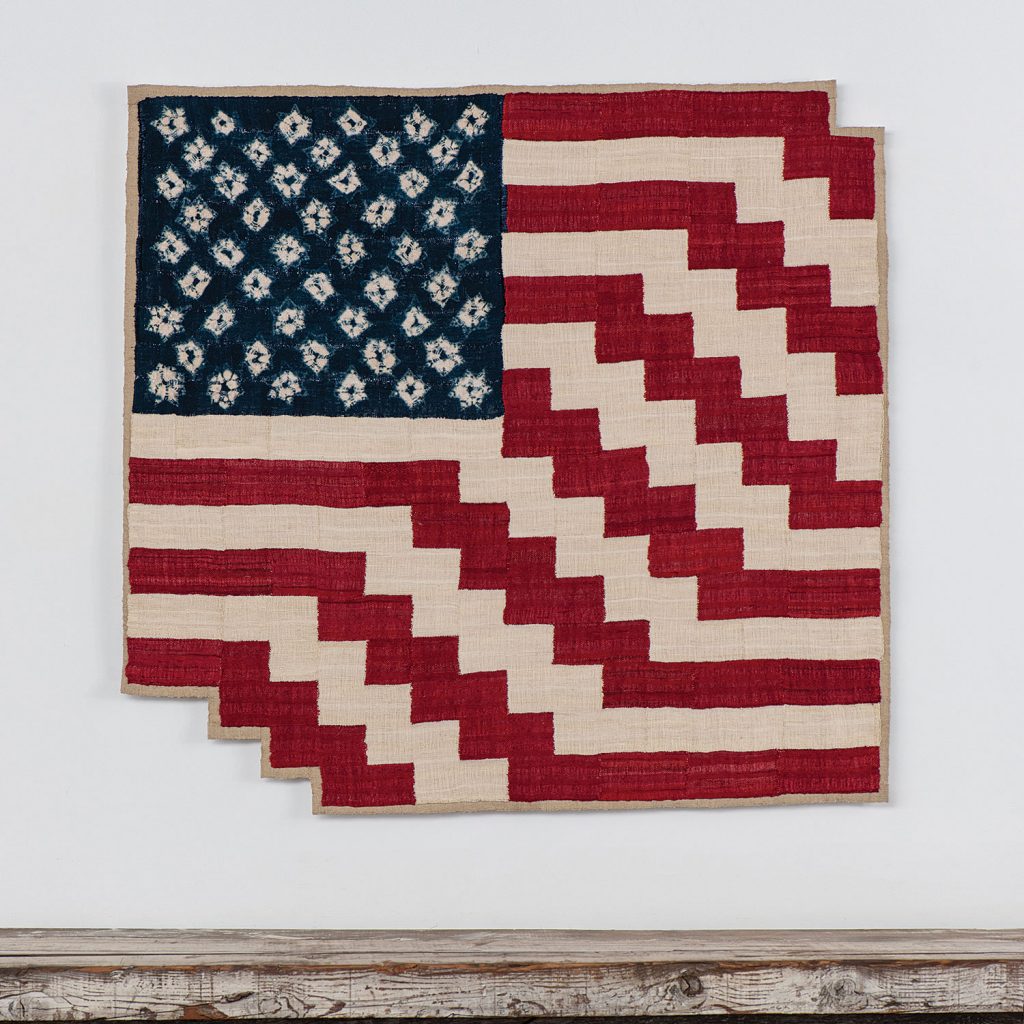
What’s Happening  2016
four-selvaged construction, with shibori star field; warp and weft are a mix of linen, silk, nettles, and cotton, with synthetic dyes. Photo by Tom Grotta.
JAMES BASSLER
What’s Happening  2016
four-selvaged construction, with shibori star field; warp and weft are a mix of linen, silk, nettles, and cotton, with synthetic dyes. Photo by Tom Grotta.

In early 2016. James Bassler, was invited to participate in the 10th Shibori International Conference, to be held in Oaxaca, Mexico that November. Each entry was to utilize some resist-dyeing technique. “I chose to attempt a field of stars in the American flag,” Bassler writes. “I also chose to weave the flag using the pre-Columbian four-selvage construction. The process is slow, but allows for design changes as the weaving proceeds.” He began in the early months of 2016, coinciding with the political preparations of electing a new president. “Those events,” he recalls, “in particular the dominance of Donald Trump, began to affect my design decisions in making the flag. The red and white stripes in my weaving began to incorporate definite agitation, the same agitation I felt watching the presidential debates. The more extreme the rhetoric, the more extreme the stripes.” The flag was completed and sent off, first to LongHouse, East Hampton for a summer exhibition, then to Oaxaca, Mexico by mid-October. The work was returned from Mexico in March of 2017. In early Spring, it was selected to be in an exhibition in Portland, Oregon. There, “as a result of the presidential election,” Bassler says, “the instructions to the exhibition staff were to hang the flag upside down.”

JAMES BASSLER
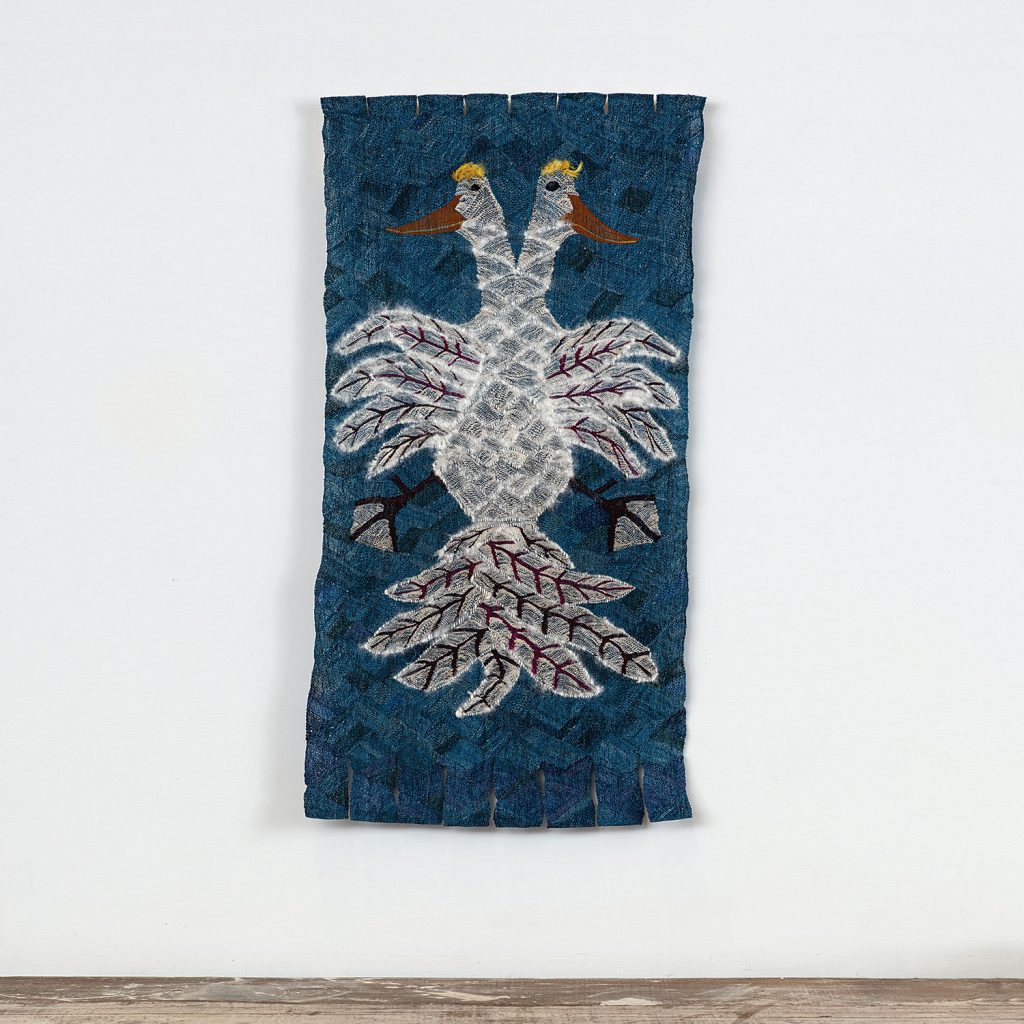
Donald and His Hapsburg Empire  2016
wedge weave construction; indigo-dyed linen warp; linen, handspun silk from Mexico, spun duck feathers from Mexico, commercial silk weft. Photo by Tom Grotta.
JAMES BASSLER
Donald and His Hapsburg Empire  2016
wedge weave construction; indigo-dyed linen warp; linen, handspun silk from Mexico, spun duck feathers from Mexico, commercial silk weft. Photo by Tom Grotta.

The same exhibition in Oaxaca in January 2016 inspired Donald and his Habsburg Empire. In this piece, Bassler tried to capture both the historical and the contemporary attitude of arrogance and entitlement that has existed throughout history. Historically, the Habsburgs, the ruling family of Austria, 1276-1918 and of Spain,1516-1700, gave the world elitism through birthright, with no regard to proven achievement. “Today in the United States,” he says, “the Kardashian and the Donald Trump model has made the acquisition of vast sums of money and profit an alarming societal objective, an elitism that values profits over people.” The concept was to have contemporary artists explore the use of spun feathers, relating back to their usage in the 17th and 18th centuries.  The invitation was accompanied by many visuals, including images of ceremonial textiles, from those distant centuries, housed in museums throughout the world. “In all honesty, it was a bit daunting to accept the invitation,” Bassler says. “As the only North American in the exhibition, what might I do?  After reviewing all of the material, I couldn’t help but notice that on many of the ancient textiles the feathers were used to promote the double-headed eagle of the Habsburg Empire, a reminder to those subjugated as to who was in charge.  With that in mind and the fact that the feathers came from Canadian ducks, it was a logical step to create the double-headed ducks. The Donald Trump arrogance factor developed as the presidential debates materialized,” he observes.

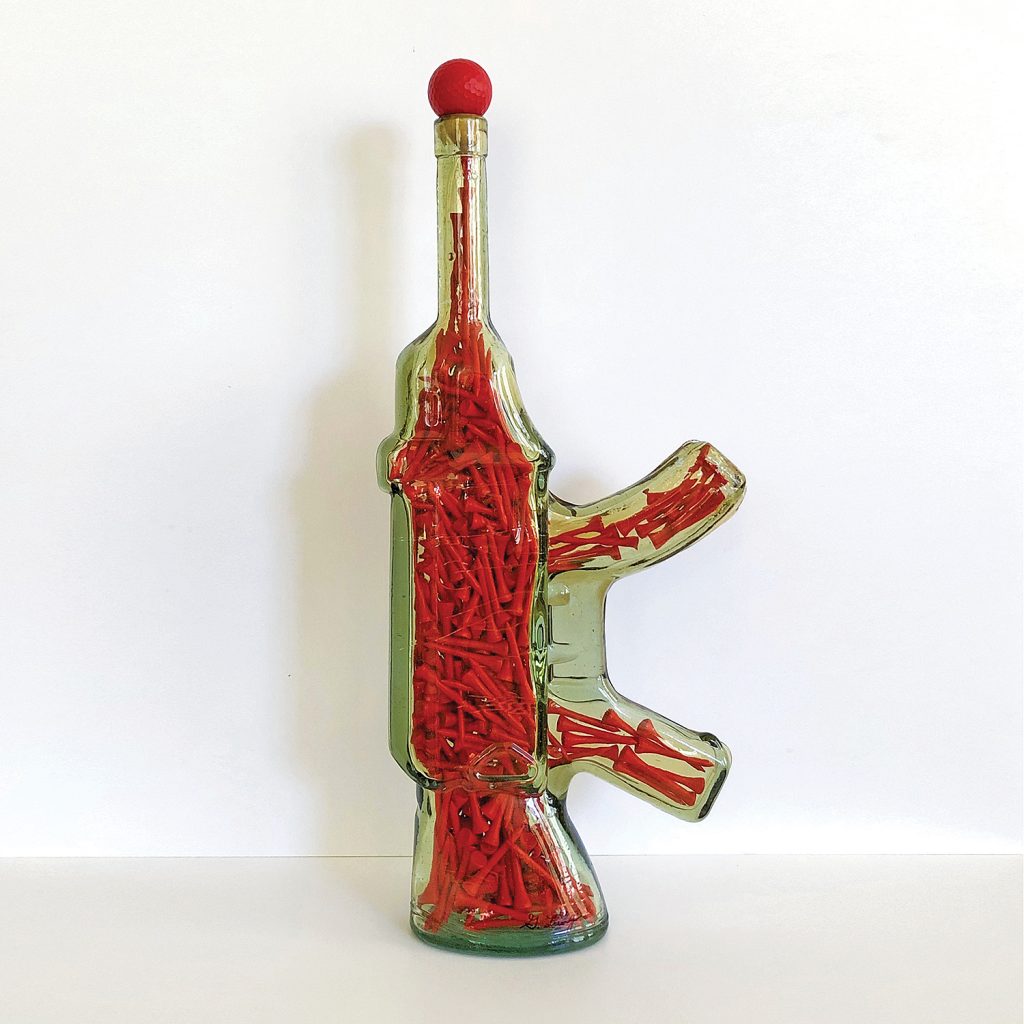
Donald Trump’s candidacy concerned Gyöngy Laky as a citizen and an artist. “When it became clear that Donald Trump was the Republican candidate” she remembers, “I cringed and told my husband I worried he could win the election and he did. I have been horrified by his demeanor, corruption and abuse of power.”  She was particularly disturbed by his comment shortly before the Iowa caucus, when he bragged that he could commit a crime and it would not deter his supporters. “I could stand in the middle of Fifth Avenue and shoot somebody, and I wouldn’t lose any voters, OK?” he said. “It’s, like, incredible.”  Laky’s best friend lived two blocks from Trump Tower on Fifth Avenue. “This man is joking about killing her or someone else,” she thought. The work that resulted was direct; with a wide-ranging message. “I knew I would have to make an art piece to address who he is… a racist, a sexist, a criminal, a liar, a tax cheat, an incessant golfer on our dime, a man who seems to enjoy making fun of and hurting people and destroying our institutions, someone who does not believe in science, someone who populates our government with incompetent people, someone who supports white supremacists… someone who said proudly that he could commit a crime killing a person without remorse or guilt nor suffering consequence.” The result was Fifth Avenue, 12/23/16 , made in 2019 out of an AK-T Tequila MX bottle, golf tees and a golf ball.

GYÖNGY LAKY
Fifth Avenue 1/23/16, 2019 
AK-T Tequila MX bottle, golf tees and golf ball. Photo by Gyöngy Laky
GYÖNGY LAKY
Fifth Avenue 1/23/16, 2019 
AK-T Tequila MX bottle, golf tees and golf ball. Photo by Gyöngy Laky

Art can help us to understand how to proceed and inspire us to join the fray, observes Laky, quoting Congresswoman Alexandria Ocasio-Cortez, “You can’t be what you can’t see.”  Laky also cites a sequel to last year’s Emmy-nominated short,  A Message From the Future with Alexandria Ocasio-Cortez is a new film, Message From the Future II: The Years of Repair, both illustrated by Molly Crabapple, which urges us to look forward with hope. “In Message II, Opal Tometi, co-founder of Black Lives Matter, and Gael Garcia Bernal, Nnimmo Bassey and Emma Thompson, call upon us to be hopeful, be strong, be active and take part.”

Looking forward, “I’m counting on our younger ones, joined by my generation who remember the 1960s, to turn us around,” says Laky. “With the many difficulties we face fumbling and scrambling toward the possibly most consequential election of our lifetimes, we’re called upon to lift our spirits and gather our strength, awakening our activist souls.”