We’ve received three comprehensive and attractive books in the last few months, Textiles: The Whole Story, Uses, Meaning, Significance; Tapestry: A Woven Narrative; and Yasuhisa Kohyama: The Art of Ceramics, and we have enjoyed them all. (We know they are attractive and comprehensive, because they include artists whose work we represent and, in some cases, photographs by Tom.)
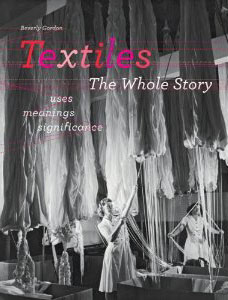 Beverly Gordon, author of Textiles: The Whole Story, Uses, Meaning, Significance from Thames & Hudson, has an ambitious aim. “My intention” she writes, “is to shine new light on the light on the taken-for-granted but fascinating subject of the roles and meanings that textiles hold in cultures throughout the world. I hope to make it undeniably evident that to be human is to be involved with cloth.” To do that, she takes readers on a dizzying trip across centuries and continents and beyond, from the linen strips that cover a mummy in Egypt circa 150-175 CE. to the fluropolymers protecting an astronaut as he walks in space in this century, with stops at Betsy Ross in colonial America, Mohandas Gandhi in colonial India, women glass spinners in Murano, Italy in 1905 and the Renaissance, where women worked on textiles in groups, along the way. In sections covering textiles and human consciousness, human survival, social meaning, money, status and control, meaning and beauty and the spiritual significance of cloth, Gordon provides insights and information for anyone with an interest in textiles and all they entail.
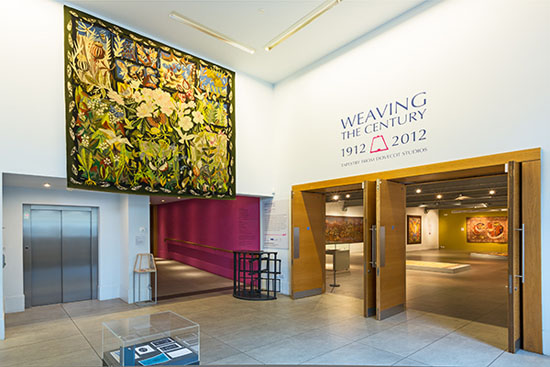
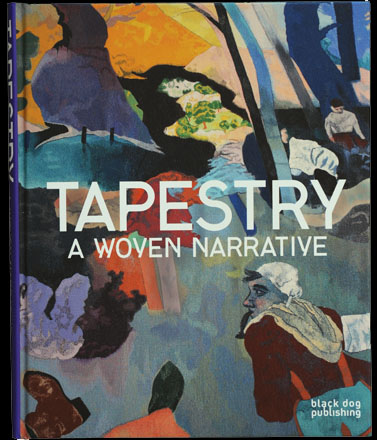 Tapestry: A Woven Narrative also takes the long view, providing a general introduction to the state of artisan tapestry weaving in the 21st century by way of contextual essays outlining developments from the Middle Ages to the modern age. In addition to the essays, the book also includes illustrated profiles of contemporary weavers, including Jo Barker, Sara Brennan and Sue Lawty — along with studio profiles of Dovecot and others. Tapestry: A Woven Narrative is available from browngrotta arts.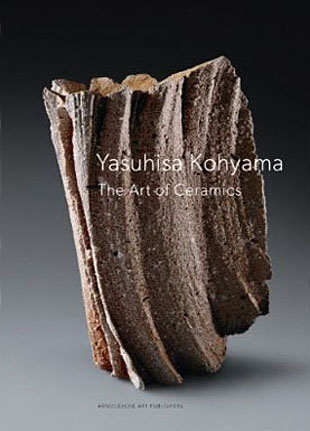
Also available from browngrotta arts is Yasuhisa Kohyama: The Art of Ceramics, which contains lush photos of dozens of Kohyama’s works as well as a foreword by Jack Lenor Larsen and essays by Susan Jefferies and others. What is important about Kohyama’s work, writes Jeffries, “is his embrace of contemporary life, and his bold and poetic use of line, mass and form; he is fully aware of the sculptural possibilities available to him. A love of nature and a life-long interest in sculpture and architecture have also inspired his work.”
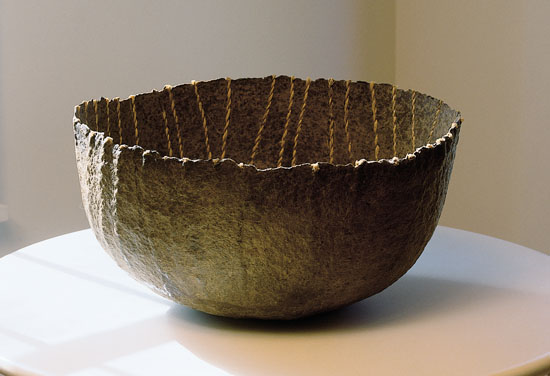
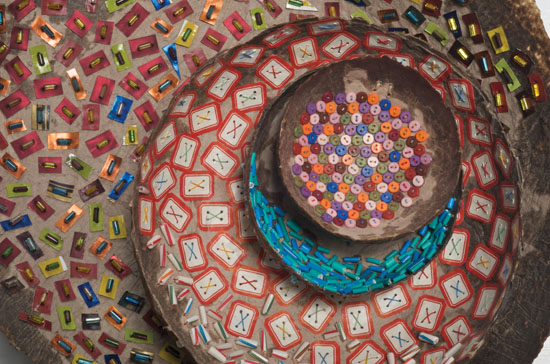
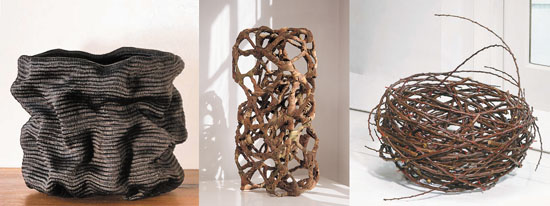
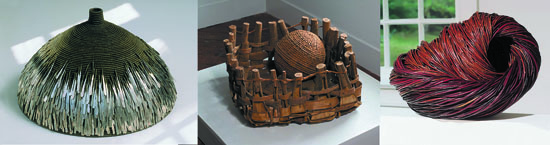
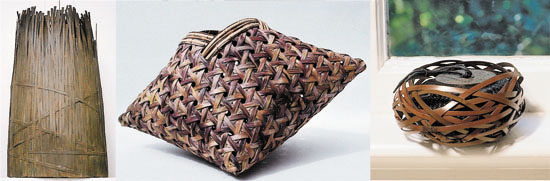
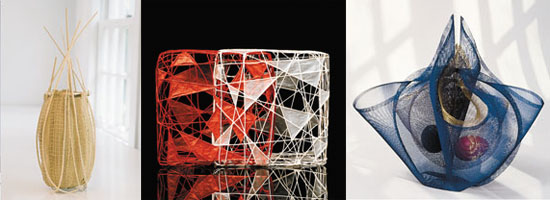

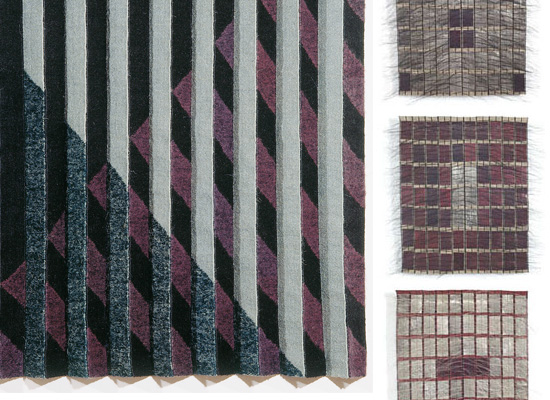
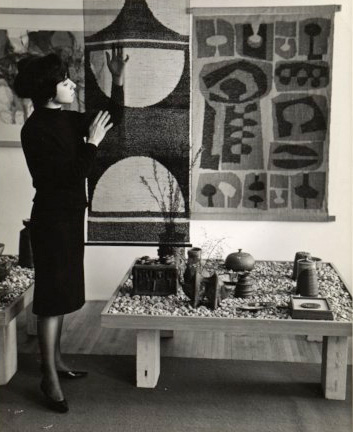

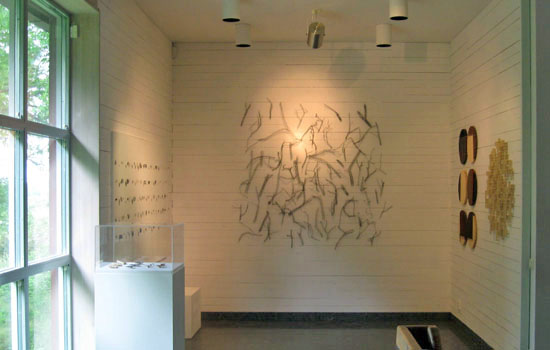
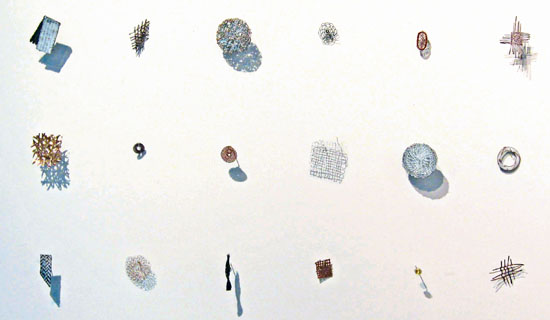


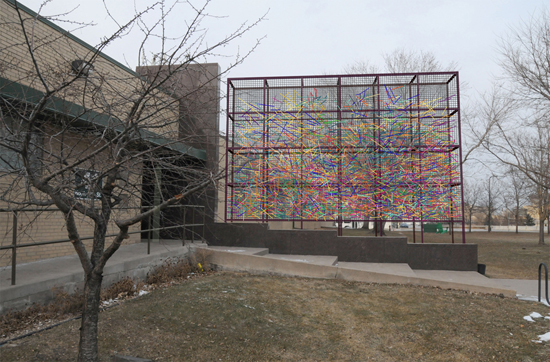
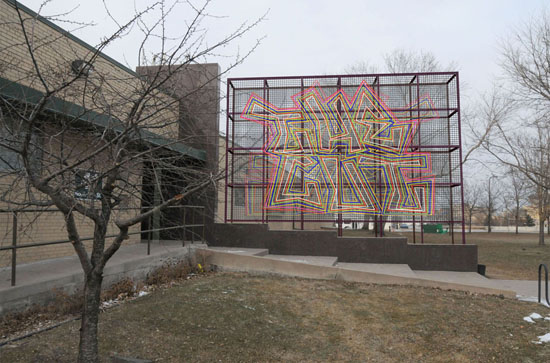
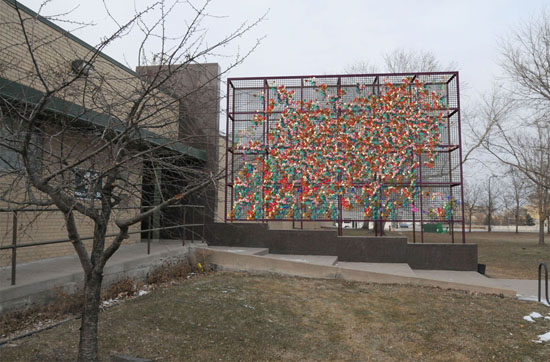
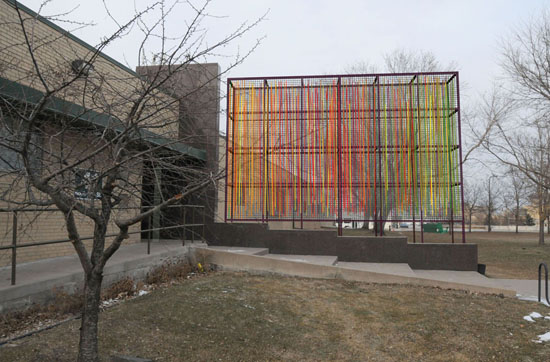
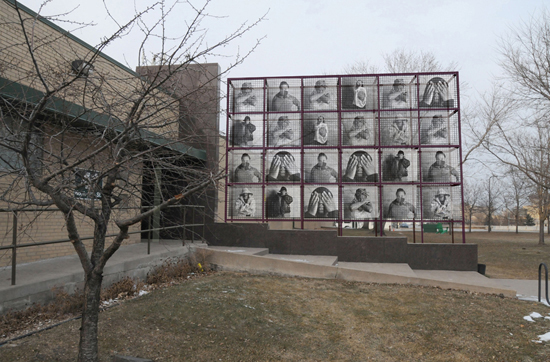
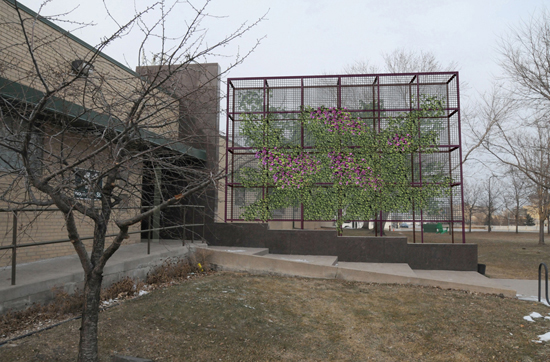
Looking Forward/Looking Back: John Perreault
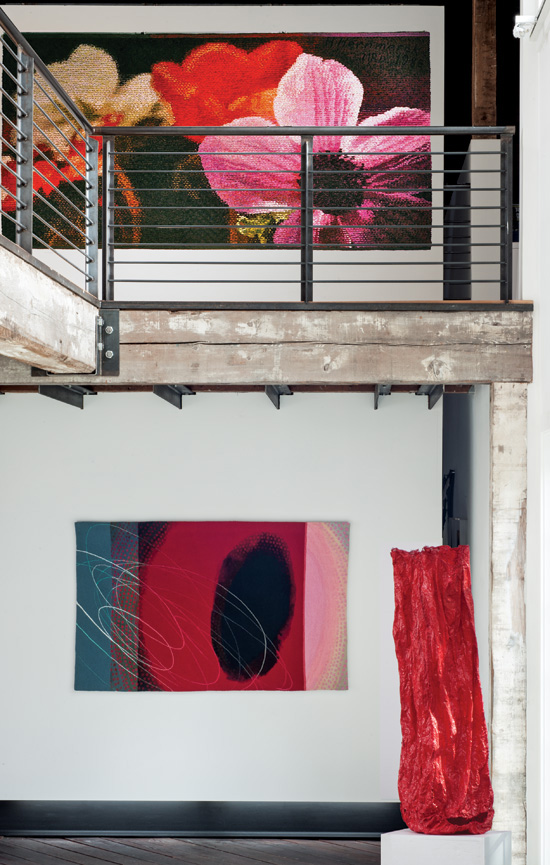
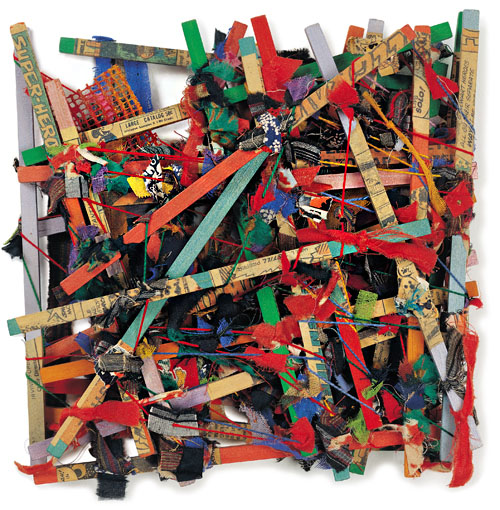
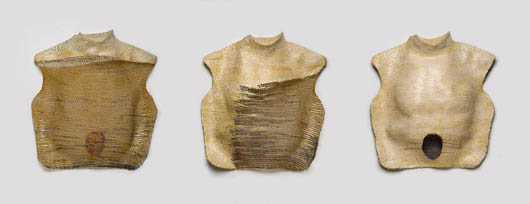
Anda Klancic, Lenore Tawney, Lewis Knauss
photos by Tom Grotta
“It is, in fact, the haptic, or touchable, nature of fiber art that throws off most art critics: they are only comfortable with the optic, granting tactile values a very low position on the aesthetic totem pole. In fiber art one cannot avoid the haptic and the haptic/optic conflict or, more graciously, the haptic/optic interplay. How fiber art looks is only part of the picture.
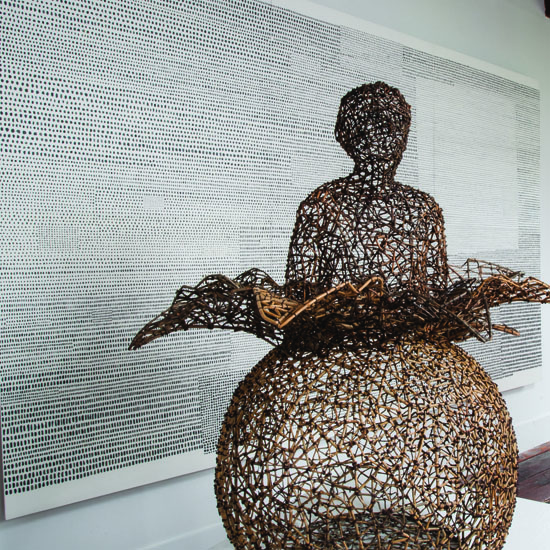
Dani Marti, Carolina Yrarrázaval, Sherrie Smith
Thus it is awkward, to say the least, that the English language and most particularly the critical language, is haptic-poor. Poetry can sometimes make amends, but is in itself an extremely specialized discourse, prone to enthusiasm at the expense of illumination. In the past the art critical language has been applied to some rather outrageous art: Earth Art, Anti-Form, Performance, Body Art, Conceptual Art, Patterning and Decoration. From this it may be gathered that any material criterion for art has been dislodged. Futurism and Dada insisted that art could be made of anything. If a pile of dirt, in certain cases, can be art, then why not a pile of fibers? If art can be made on a printing press, then why not on a loom? If art can be made by tossing molten lead against a wall, then why not by knotting threads? If art can quote the great “crafts” traditions, why cannot present day explorations of these materials and techniques be art too?”
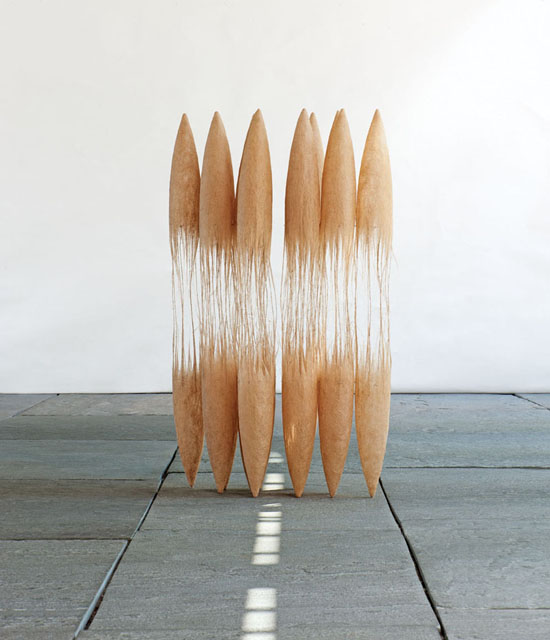
Marian Bijlenga, Eva Vargo, Carolina Yeonsoon
photos by tom Grotta
John Perreault
then-Visual Arts Director, The Cultural Center
Staten Island, New York
From “Fiber Art: Gathering the Strands,” Fiber r/evolution, Milwaukee Art Museum, 1986