Category: Art Textiles

Exhibition News: Cloth & Memory(2), Yorkshire, UK

Cloth & Memory

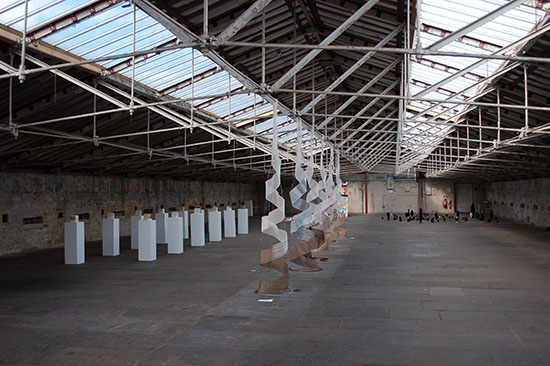
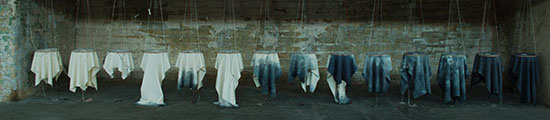
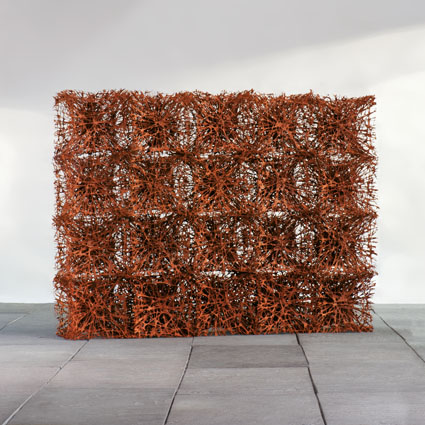
Installation shot Cloth & Memory {2} (Yoriko Murayama, Katusura Takasuka, Kari Steihaug)

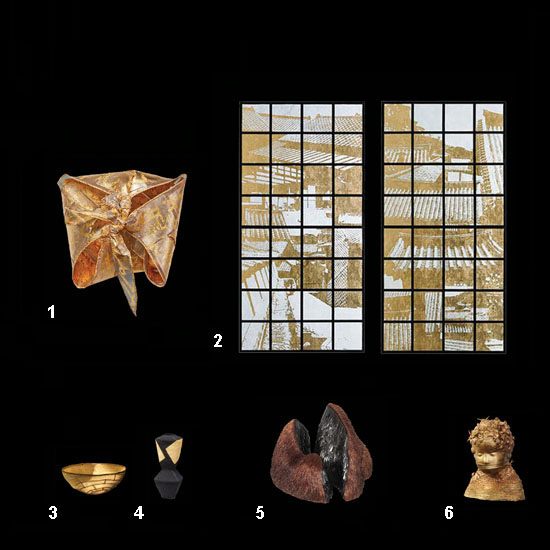
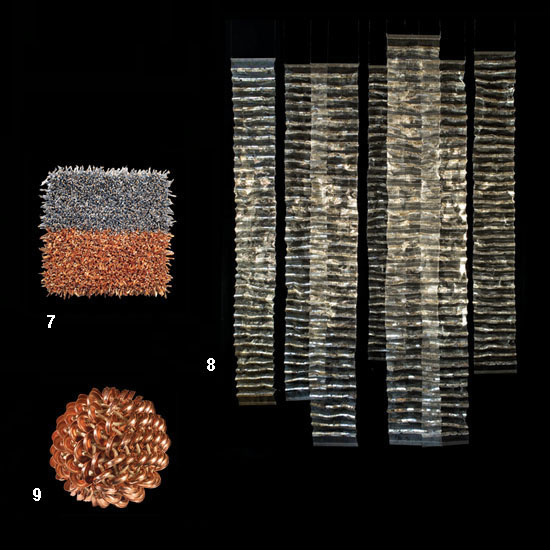
You have several weeks yet to visit Cloth & Memory(2), dramatic, site-specific exhibition located in the UNESCO World Heritage Site, Salts Mill, Saltaire Yorkshire UK. Cloth & Memory(2) takes place in the original Spinning Room (known as The Lobby), which when first built was thought to be the largest industrial room in the world. The extraordinary internal architecture, with its peeling walls and floors still retain the marks and smells of its original use. All the works engage with the palpable history of place that is evident at Salts Mill and The Lobby in particular, and range from large scale interventions in space to highly intimate placings within the fabric of the building.

Cloth & Memory

Koji Takaki. ‘Ma’. Cottpn & Polypropylene. Cloth & Memory {2}

The exhibition’s curator is bga contributor Professor Lesley Millar of the University of Creative Arts. Informed by the knowledge that “cloth holds the memory of our time and connects us with the memories of other times and other places…,” the exhibition features 23 artists drawn from Europe, Japan and the UK.

Caroline Bartlett. 'Stilled'

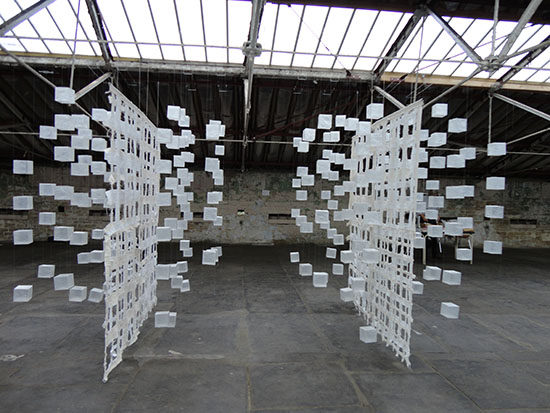
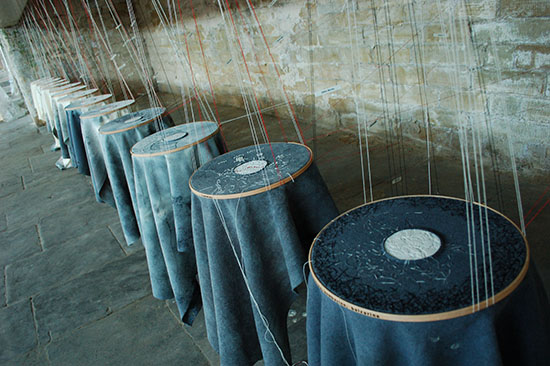
Caroline Bartlett. ‘Stilled’ Installation Cloth & Memory {2}

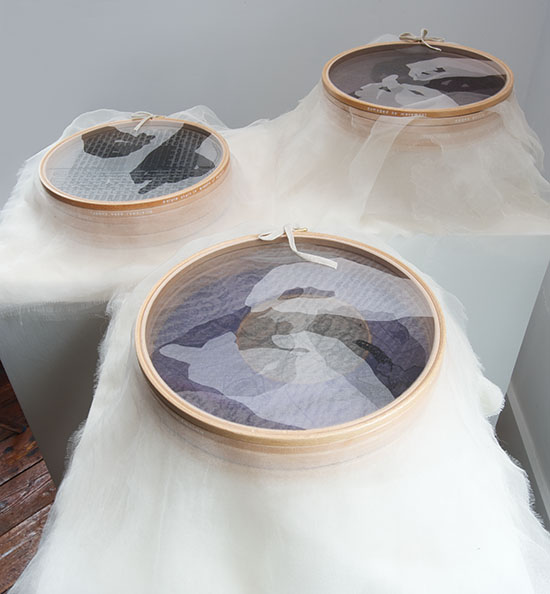
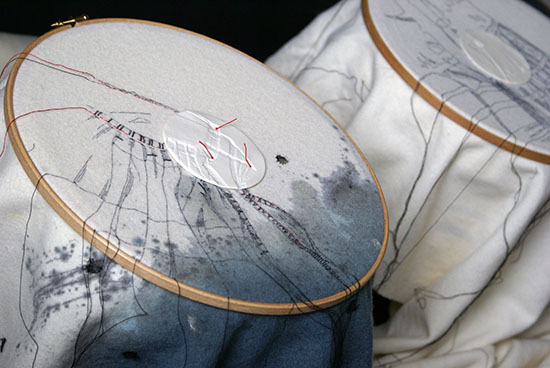
Among the participants is Caroline Bartlett (UK), whose work involves a number of large embroidery hoops within one of the wall bays. Each stretched, stitched, woolen cloth piece will be inset with a small porcelain round, imprinted with an impression taken from a fragment of textiles. Bartlett has long been interested in the indications of other histories being formed through textiles and the journey that they take.

Listening In, Caroline Bartlett, mixed media; wooden rings stretched with archival crepeline, wool, linen tape, perspex, 2.75” x 17” x 17”; 5” x 17” x 17”; 6” x 17” x 17”, 2011, photo by tom Grotta

Listening In, Caroline Bartlett, mixed media; wooden rings stretched with archival crepeline, wool, linen tape, perspex, 2.75” x 17” x 17”; 5” x 17” x 17”; 6” x 17” x 17”, 2011, photo by tom Grotta

Bartlett’s Listening In, for example, builds on a previous work of hers entitled Conversation pieces, commissioned by the Whitworth Art Gallery in Manchester, UK. These works evolved from observation and dialogue with the archivist and conservators who work with the Whitworth textile collection and generously shared with the artist some of the procedures and practices with which they are involved. “While an interest in the museological processes of collecting, archiving, storing and conserving guided my explorations,” Bartlett explains, “it was a random search through the accession cards[at the Whitworth] that provided the stimulus and gave focus to the work. It was these that bore witness to the health and state of each item, to the work undertaken to preserve and stabilize each artifact, to endeavors to fill in gaps in the history and making of the object across time and space.” Stilled, Bartlett’s work in Cloth & Memory(2), continues these explorations: “I think of skin, bone, membrane; a layered dermis, and of networks of social, industrial, public and private relations, processes and materiality connecting the building itself with the idea of cloth as silent witness to the intimacies and routines of daily lives.”

Caroline Bartlett. 'Stilled'

Caroline Bartlett. ‘Stilled’. Installation close up Cloth & Memory {2}

Cloth and Memory(2) runs through November 3, 2013. There are curator, coordinator and artist tours each Saturday through the exhibition’s closing. If you can’t visit Yorkshire in time, be sure to visit to exhibition’s website at: http://www.clothandmemory.com. There are images, a video tour, narrated by Lesley Millar and an order form for the comprehensive catalog.

Caroline-Bartlett.-Stilled

Caroline Bartlett. “Stilled” detail. Cloth-Memory


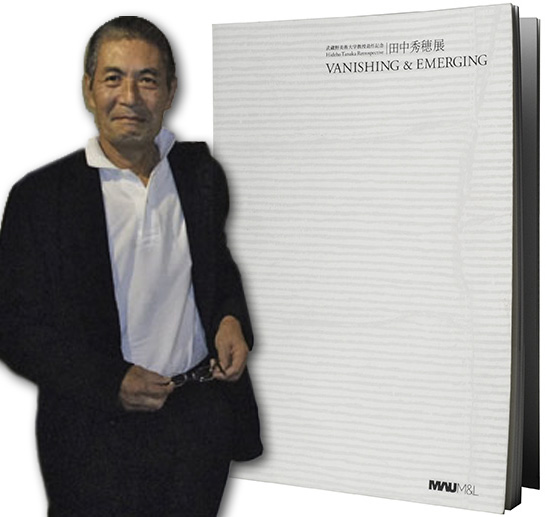
Vanishing and Emerging: Hideho Tanaka’s Retrospective in Tokyo

photo by Tom Grotta

In 2012, the Musashino Art University Museum & Library, Tokyo, Japan hosted, Hideho Tanaka Retrospective: Vanishing and Emerging, an exhibition commemorating the retirement of craft and industrial design professor, Hideho Tanaka. The exhibition featured Tanaka’s signature sculptures made of industrial fibers. In 1985, Tanaka reformulated his notions about the nature of fiber.

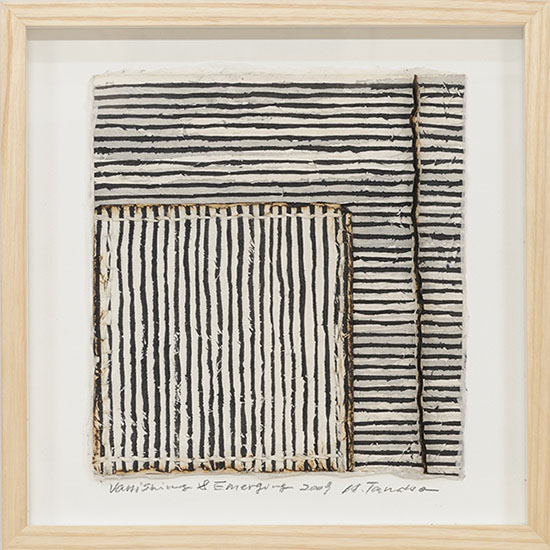
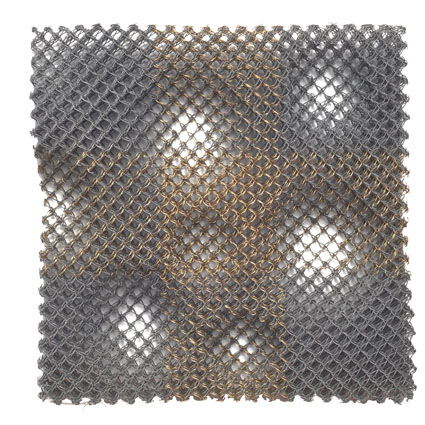
VANISHING & EMERGING 2009 I, stainless steel and paper, 22 x 21cm, photo by tanaka nahoshi

VANISHING & EMERGING 2009 I, stainless steel and paper, 22 x 21cm, photo by Jun Sanbonmatsu

Since then, he explained, as part of the Beyond the Surface: Japanese Style of Making Things, he shifted his form of expression “from a longing for eternity to an embracing of things born of relationships that incessantly change and develop.” Why cloth and fiber? Tanaka explains that, “in those days I was constantly inquiring into the nature of material attractions and the necessities of expression. I then became interested in creative forms peculiar to fiber materials, which emerge in time and space and yet which also metamorphose and disappear. This was also part of my realization that there was a kind of fascination in the hierarchy that places accidentals beneath conscious things. The creation of a contrast between what vanishes and what remains, and the moving of this indoors, allows me certain special kinds of expression.

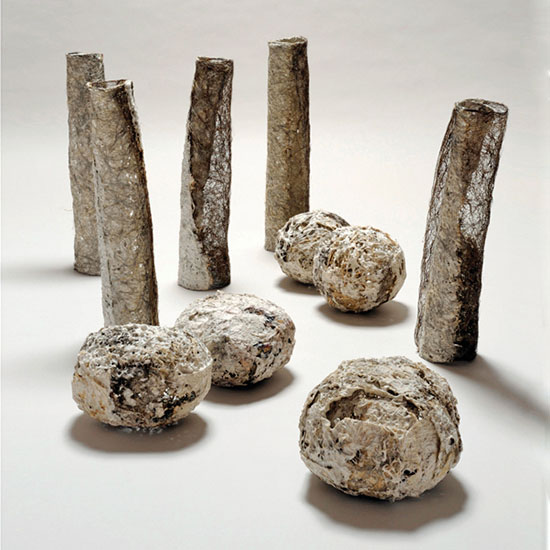
VANISHING 1995 Ⅰ Hideho Tanaka, stainless steel and paper, 27.5" x 59" x 59", photo by tanaka nahoshi

VANISHING 1995 Ⅰ
Hideho Tanaka, stainless steel and paper, 27.5″ x 59″ x 59″, photo by Jun Sanbonmatsu

These have developed into experiments in the intervention of fire into a combination of stainless steel wire (a contemporary inorganic material), and linen (an organic material).” The exhibition was accompanied by a 91-page catalog, Hideho Tanaka Retrospective: Vanishing and Emerging, which is available of $39.95 from browngrotta arts.


Intercultural Approaches: Artfully Connected at the Swedish Embassy in Tokyo

Artfully Connected

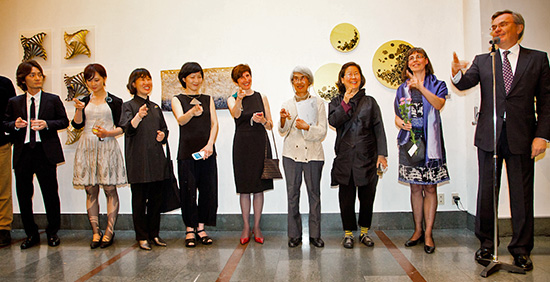
Artfully Connected artists and Swedish Ambassador Lars Vargö.

Earlier this year, the Embassy of Sweden in Tokyo presented Artfully Connected, a look at Sweden through the eyes of  an exciting group of artists from Japan, Korea, Sweden and the US, curated by artist

Eva Vargo Download me Korean paper cord, Korean old book paper, Japanese ink 48 x 48 cm, 2012

Eva Vargö, Download me (photo: Eric Micotto)
Korean paper cord, Korean old book paper, Japanese ink
48 x 48 cm, 2012

Eva Vargö. The artists who participated were: Young Soon CHA, Korea (Fiber),

CHO-Hikaru

CHO Hikaru, Every thing is not what it seems, Acrylic painting (Photo: Hikaru Cho), 60 × 42 cm, 2013

Hikaru CHO, Japan (Photos and videos), Miwha OH, Korea (Metalsmith – Jewelry), Hisako SEKIJIMA, Japan (Basketmaker),

Jin-Sook So, View the Storsjön (Photo: Pack Myung Re) Steel mesh, electroplated silver, gold painted acrylic color, 90 x 42 x 9 cm, 2012

Jin-Sook So, View the Storsjön (Photo: Pack Myung Re)
Steel mesh, electroplated silver, gold painted acrylic color, 90 x 42 x 9 cm, 2012

Jin-Sook SO, Sweden/Korea (Paintings on steel mesh), Naoki TAKEYAMA, Japan (Enamelled works on copper), Eva VARGÖ, Sweden(Paper weaving and paper Objects),

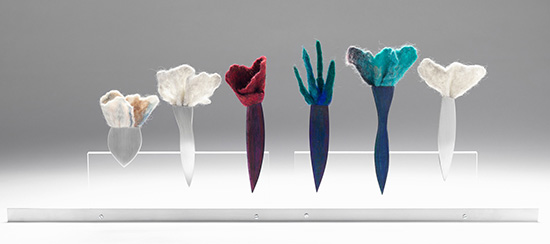
Lisa VERSHBOW Corsages, six brooches on a stand, Silver, Copper with color pencil patina and wet-felted wool Installation – 21 x 67 x 3 cm, (each brooch approx. 14 x 3 x 1 cm), 2013
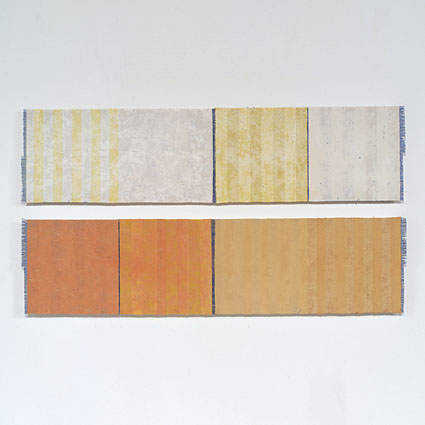
Lisa Vershbow, Corsages (photo: Eric Micotto) six brooches on a stand, Silver, Copper with color pencil patina and wet-felted wool, Installation – 21 x 67 x 3 cm, (each brooch approx. 14 x 3 x 1 cm), 2013

Lisa VERSHBOW, USA (Metalsmith – jewelry). Click the links on each name and you can read a brief “story” about the artists and the influence Sweden had on their works.

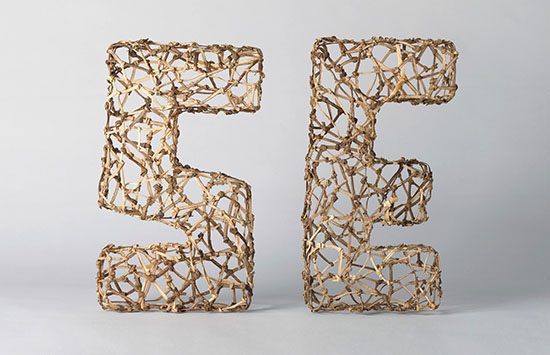
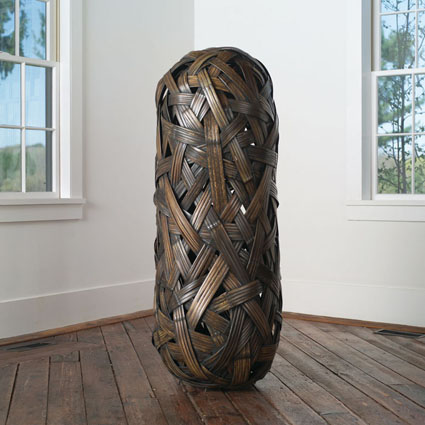
Hisako Sekijima SE, Kudzu vine, 33 x 20 x 17 cm, 2013

Hisako Sekijima
SE (photo: Eric Micotto) Kudzu vine, 33 x 20 x 17 cm, 2013

Hisako Sekijima, for example, describes the map of Sweden she found on the internet as influencing, SE, the basket she created for the exhibitionHikaru Cho’s Every Thing Is Not As it Seems speaks to discrimination.”We always bear prejudice and a sense of discrimination somewhere inside,” says the artist in her story. “Often, we don’t even notice it. I have experienced it many times while living in Japan with Chinese nationality. People differentiate the own ethnic group from others in order to strengthen the solidarity.” You can read more about Cho, in the Asahi Shimbun article, “Japan-born artist turns her eye to discrimination,” by Louis Templado, June 14, 2013, http://ajw.asahi.com/. The Embassy also teamed up with well-known Swedish cameramaker Hasselblad to create a behind-the-scenes video, filmed by Eric Micotto, that you can view here: http://vimeo.com/65644600.


Dispatches: Scottsdale, Old and New

photo by Tom Grotta

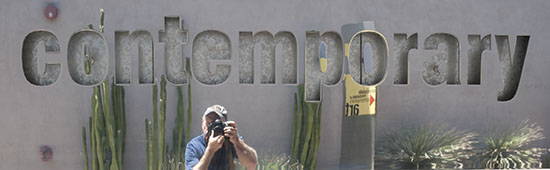
Tom in front of the Scottsdale Museum of Contemporary Art, photo by Tom Grotta

We had reason to visit my old high school haunts in Scottsdale, Arizona earlier this month. It was a picturesque and delicious trip replete with stirring desert vistas and intriguing art and architecture site-ings.

550px-Valley_Ho_Hotel

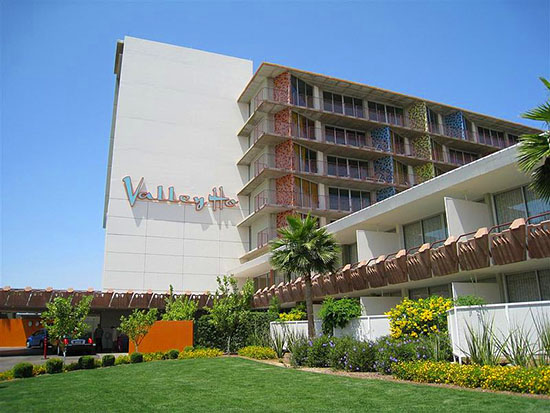
Hotel Valley Ho, photo by Dru Bloomfield

Among them, the mid-century modern Hotel Valley Ho. The Hotel Valley Ho opened in 1956 and was a hideaway for Hollywood stars including Zsa Zsa Gabor, Janet Leigh, Tony Curtis and Bing Crosby. It also hosted Robert Wagner and Natalie Woods’ 1957 wedding reception. The hotel was saved from the wrecking ball in 2003 and re-opened in 2005 after an $80 million restoration, which Chicago reporter Hoekstra noted retained  the original “Jetsons-in-the-desert flavor”. We had a terrific lunch outside the pop-colored, revamped bar area. We saw similar  splashes of lime and aqua and orange that people have added to adobe and concrete facades throughout the city — a lively change from the olive that predominated in the 70s.

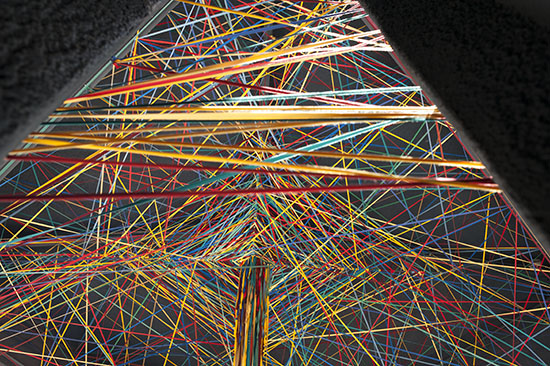
Rhonda and Carol underneath Randy Walkers "Entanglement"installation

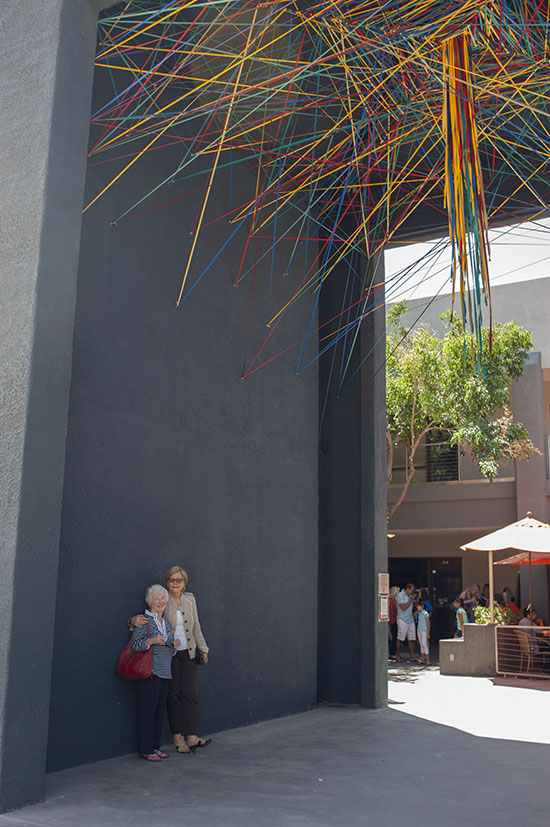
Rhonda and Carol underneath Randy Walkers “Entanglement”installation, photo by Tom Grotta

We also found two art installations sponsored by Scottsdale’s Public Art Project. The first was Randy Walker’s Entanglement, his installation of solution-dyed acrylic braid at Scottsdale’s Bell Tower, which we knew about and made a point of finding and photographing.

randy walkers "Entanglement" installation detail

Randy walkers “Entanglement” installation detail, photo by Tom Grotta

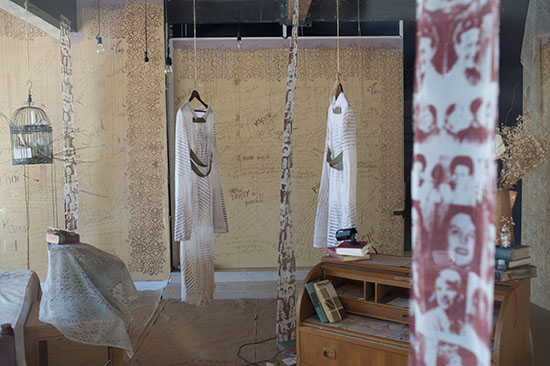
With Entanglement, Randy Walker asks “What if the boundary of container and contained was blurred?”   The other was Rachel Bowditch’s Memory Room, which we stumbled upon on Marshall Way, one of two art sites set up in empty storefronts, in the greatly diminished  gallery area of old Scottsdale. Loosely inspired by Virginia Woolf’s A Room of One’s Own and the concept of a “memory palace’” first attributed to the Greek poet Simonides (556-468 BC) and further developed by Giulio Camillo (1480-1544) , Memory Room is a durational multi-media performance installation that investigates the relationship between women, writing and memory.

Rachel Bowditch's Memory Room

Rachel Bowditch’s Memory Room

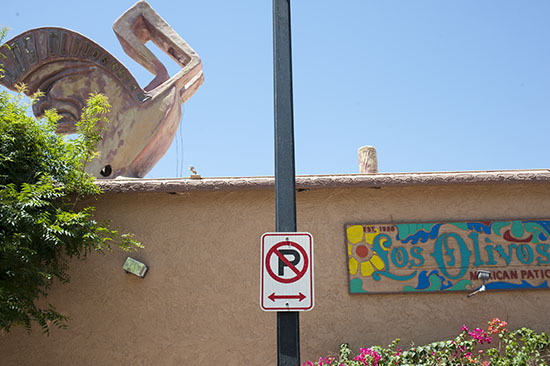
A “memory palace” is a mnemonic system to spatially organize memories using specific ‘loci’ or spatial locations organized along a predetermined path. When items need to be remembered, one walks along the path to recall one memory at a time.  Memory Room layers a series of “memory palaces” of women writers—Emily Dickenson, Zelda Fitzgerald, Simone de Beauvoir, Virginia Woolf, Audre Lorde, Anne Sexton and Sylvia Plath among many others—all women who made an indelible mark on the world of literature. There are live performances that are documented by video cameras, but the storefront site includes some exquisite textiles on which memories are written and women are memorialized in photos.  We did a bit of memory walking in the area ourselves, happy to see the Sugar Bowl  still holds its own on Scottsdale Road and even better, that the cheese crisp and Gaudi-esque decor at Los Olivios are just as good as we remembered.

Los Olivios, photo by Tom Grotta

Los Olivios, photo by Tom Grotta

More than 60 years since it opened, the restaurant is still family-owned and the tortillas and salsas are still homey and handmade.


Process Notes: Mary Giles on Inspiration and Influence

In April, Mary Giles received the Master of the Medium Award for Fiber from the James Renwick Alliance. In receiving the award, Giles spoke of her process and her sources of inspiration:

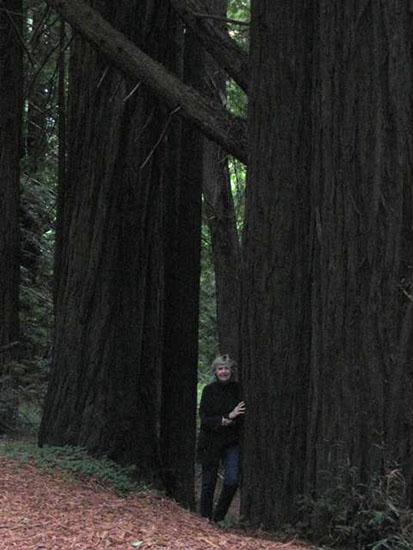
Mary Giles in Forest

Mary Giles amongst the California Redwoods, © Jim Harris

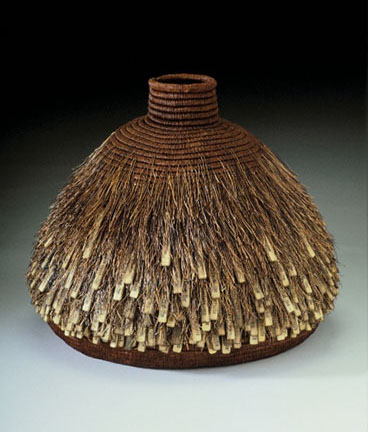
GIles Hairy Round Basket

“Copper Haze”, 2003, © John Koch


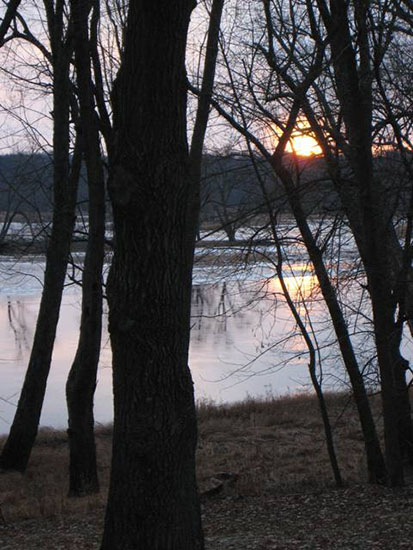
Giles Lakeview

Sunrise, St. Croix River, Minnesota, © Mary GIles

“I have always been influenced by place and especially the natural world in those places. In the early 80’s, having taken up scuba diving, I did a series based on sea life called “walking tentacles.” Later, during many trips to New Mexico, I discovered mesa forms as well as Native American kivas and petroglyphs. Those sources dominated my work for over 10 years. Most recently the changing light, colors, and patterns seen from our retirement home on the banks of the St. Croix River in Minnesota have informed by work. My ideas are an accumulation, my sources most often from nature and my pallet is drawn from the colors of earth, water, wood and stone.

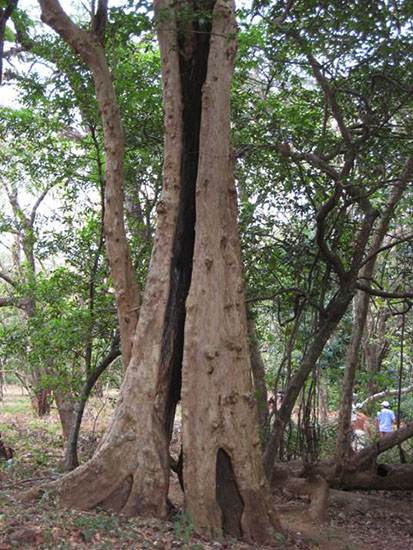
I’ve been drawn to the woods most of my life, from childhood summers at a log cabin in northern Minnesota, to the redwoods of northern California, to the tropical jungles of Costa Rica, and now at our current home on the banks of the St. Croix River. From the St. Croix shore I have photographed many sunrises, reflections, shadows and moonlit nights. These scenes continually change throughout the day, from day to day, and season to season.

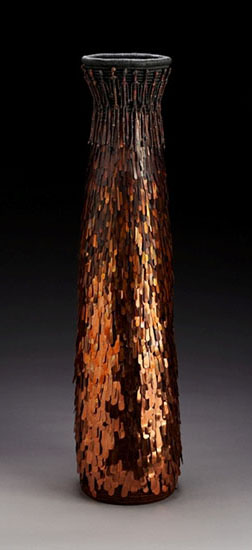
 "Sunrise", 2007, John Koch, St. Louis, MO

Detail, “Long Divide”, 2013, © Don Caspar

The materials I use on the surface of the coiled forms are often individually hammered pieces of twelve- to eighteen-gauge wire made of copper, tinned copper, iron, lead or brass.  In addition I use waxed-linen thread and fine wire. By torching the metals I am able to alter the colors in varying degrees enabling me to blend them from darks to brights.  I use this blending to interpret the colors, textures and light that I see in the natural settings.

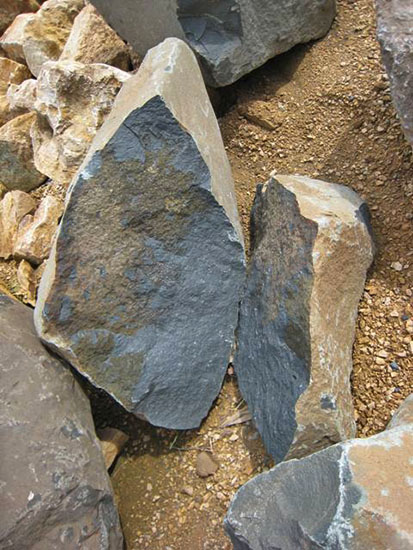
Giles Boulders

Stone Boulders, © Mary Giles

Detail Large Boulder Sculpture

Detail, “Long Divide”, 2013, © Don Caspar

I became particularly excited about rocks ten years ago when my husband and I decided to build an addition to what was to become our retirement home.  Because this home is on a river in an old glacial landscape, the dozer unearthed a mountain of boulders. Philip Johnson, the architect, said, “I never met anyone who can talk about a pile of rocks.” Well, I never met Philip Johnson. I have photographed rocks in many parts of the world. I’m interested in all sorts of rocks: broken rocks, large rocks, pebbles and boulders. I love their surfaces aged by wear or accumulations. I find many forms in their crevices and shadows.

Mary Giles Tree Shot

Costa Rica © Mary Giles

In the winter we often go to a relatively remote Pacific location in Costa Rica. I spend hours walking the beach photographing yet more rocks, driftwood, and wave and animal patterns in the sand. On the walks I always carry two bags, one for trash and one for treasure.

In my studio I begin a new idea with a sketch. Most recently I have been building clay models. The models have helped me work through details and attempt more complex forms. I’m often asked how long it takes to complete a vessel. I don’t usually keep track but I do remember my first basket from the late 1970’s, three inches high, took twelve hours. My most recent piece, which is fifty inches long, took five months.

Grey Breakby Mary Giles, photo by Tom Grotta

Grey Break by Mary Giles, © Tom Grotta

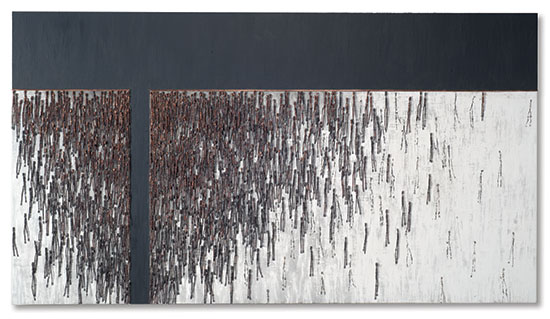
Six years ago I started doing wall panels that dealt with my concerns about population. They are not baskets but the men they incorporate have been on my vessels for nearly thirty years. The first expression of this theme was directly on a 10 X 30-foot gallery wall. It was composed of hundreds of torched copper wire men arranged outwardly from dense to sparse.  I am still working with these ideas of overpopulation, density and boundaries.

The architect Le Corbusier said “creation is a patient search.” I so enjoy this peaceful experience. I feel fortunate to have found this work for myself. I am very grateful for your generous support. Thank you. “

Mary Giles – April 2013


Book Notes: Not Quite Beach Reads, but Recommended

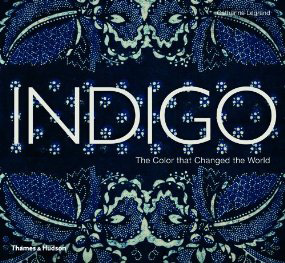
A series of attractive books have wound up in our mailbox this spring.  None are quite right for the beach, but each immerses a reader in another culture, locale or artist’s viewpoint — a bit of an adventure without leaving home. Even for fans of indigo, like me, 61DVt8IGxzL._SX285_Indigo: The Color that Changed the World by Catherine Legrand (Thames & Hudson 2012)  is a revelation. The book covers geographical regions (Japan, China, India, Laos and Cambodia, Africa, Central America and Europe — who knew?) where the ancient art is still practiced and indigo forms a part of the fabric of everyday life. The differences and similarities in the uses of indigo in these varied locales is fascinating. There are 500 glorious photographs, many of them a full page each. It’s not a reference in the typical sense as others have covered this material more comprehensively, but a visual one. I have found myself repeatedly returning to the book and leafing through the images again just to immerse myself in the patterns and hues.

41hsTQd0R3L._SY380_A Handbook of California Design, 1930-1965, Craftspeople, Designers, Manufacturers, edited by Bobbye Tigerman (Los Angeles County Museum of Art and MIT Press 2013) offers more of a trip through time. Designed by acclaimed book designer Irma Boom, the pages look like newsprint and are handcut and edged in day-glo orange, the same color used for the cover. The photos and illustrations are nearly all in black and white and convey the design sensibility of the period, which was a halcyon period for design — California was “a breeding ground for new ideas to flourish without constraints,” and design benefited from its many institutions of higher learning and the technical and material innovations that WWII brought to the aerospace and defense industries. The connections and collaborations of the book’s subjects — from Harry Bertoia to Mary Ann DeWeese (Catalina Swimwear) to Charles and Ray Eames to Trude Guermonprez to Gertrud and Otto Natzler to browgrotta arts’ artists Ed Rossbach and Katherine Westpahl (featuring photos by Tom Grotta) and Kay Sekimachi — are mapped on a helpful chart. In each biography, the names of other subjects in the book appear in day-glo orange so that the reader can look for cross references. The biographies are brief and insightful.

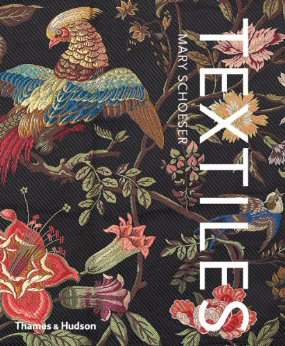
61z5mPsxGvL._SX285_In Textiles: The Art of Mankind (Thames & Hudson 2012) Mary Schlosser sets out to explore the “continuum of creativity” that links ancient textiles to those created in the 21st century. Her chapter on structure, in which she argues that all textiles, even lengths of yardage, are three-dimensional objects takes an interesting look at non-tensional techniques, primarily basketmaking. The book contains a wealth of resources, including website addresses for artists and designers, and a staggering 1,058 illustrations. We were puzzled, though, by the author’s failure to mention browngrotta arts‘ website which has more than 1,000 images of textile art among the resources or list any of the 40+ catalogs on art textiles that we have published. Most disappointing — though she includes more than two dozen illustrations of work by Ed Rossbach, Katherine Westphal, Sara Brennan, Kay Sekimachi and Karyl Sisson, she fails to provide a website reference for any of them, even though there are images and information on each at http://browngrotta.com. Despite that omission — it’s a remarkable book, and well worth seeking out.


Magdalena Abakanowicz Survey: Marlborough Gallery, New York through this Saturday, April 27th

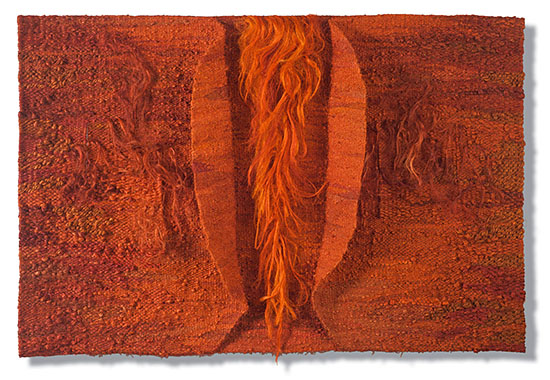
Just a few days remain to see the impressive survey of works by Magadalena Abakanowicz at Marlborough Gallery in New York. Marlborough’s exhibition includes 55 works created over a 21-year period from 1987 to 2009. Pieces from several of the artist’s various “cycles,” including War Games, Hoofed Mammal Heads, Coexistence and the Anatomy Cycle as well as three of the artist’s “crowd” figures, including Bambini, a group of 10 children, from 1998-99.

MONTANA DEL FUEGO, Magdalena Abakanowicz, 1983, photo by Tom Grotta

MONTANA DEL FUEGO, Magdalena Abakanowicz, 1983, photo by Tom Grotta

Abakanowicz who is recognized as among the most original and powerful sculptors working today, initially gained international recognition for her remarkable, over-sized dimensional works of fiber. In Warsaw, in the late 50s and early 60s, Abakanowicz worked with what was available. “I could not pick up stone or marble and go to a foundry because there was no stone, no marble and no foundry to cast it,” she told Rita Reif of The New York Times in 2001, The Jackboot Has Lifted. Now the Crowds Crush. “This absence brought me to what they call the ‘world of fiber.’ It would never have happened if everyday life had been different. I needed to build something around me like a fence, to shut out the unpleasantness.” She called her early works, made of sisal ropes salvaged from the docks on the Vistula River in Warsaw “constructions” Abakanowicz has said that she had no desire to learn weave. Nonetheless, one of her first woven works, Composition of white forms, created a sensation at the first international Biennial of Tapestry in Lausanne, Switzerland in 1962, not only because of the monumental scale — large enough to walk into, but because the work was such a departure from pictorial tapestry conventions. Though now far better known as a sculptor, Abakanowicz continued to create tapestry forms, albeit unconventional ones, through at least the mid-80s.

LUNE DE MIEL 1 sisal 55" x 78" x 8", 1986

LUNE DE MIEL 1, Magdalena Abakanowicz, 1986, photo by Tom Grotta

Magdalena Abakanowicz: A Survey 1987-2009, Marlborough Gallery, 40 West 57th Street, New York, NY, 10019, 212-541-4900. To see a sampling of the exhibition, visit: http://marlboroughgallery.com/exhibitions/magdalena-abakanowicz-a-survey-1987-2009.


Congratulations! Mary Giles is a Renwick Gallery Master of the Medium

Mary Giles details by Tom Grotta and Don Casper

Mary Giles details by Tom Grotta and Don Casper

Today, Mary Giles will receive the 2013 Master of the Medium award for fiber from the James Renwick Alliance and the Smithsonian Museum of American Art in Washington, D.C. The Masters of the Medium award recognizes artists of consummate craftsmanship who have contributed to and influenced their chosen fields. The Masters of the Medium awards were initiated in 1997 on the occasion of the fifteenth anniversary of the James Renwick Alliance and the twenty-fifth anniversary of the Renwick Gallery. The Masters of the Medium Awards are given biennially in odd numbered years.

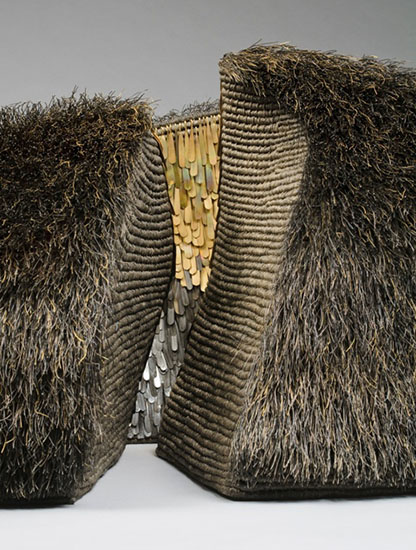
Mary Giles resides in St. Croix, Minnesota. She creates mixed-media coiled baskets that are sculptural in nature, totems and three-dimensional wall works. Giles’ recently created a 53-inch “boulder,” The Long Divide, of hammered waxed linen, torched tin-coated copper and brass.

The Long Divide by Mary Giles, photo by Don Casper

The Long Divide by Mary Giles, photo by Don Casper

Her 2012 work,Twist, has been added to the American Decorative Arts collection of the Yale University Art Gallery, New Haven, Connecticut.

Sentry Field by Mary giles, photo by Tom Grotta

Sentry Field by Mary giles, photo by Tom Grotta

The sculptural piece was made of waxed linen, iron twists, hammered tin and coated copper wire. Giles’ work is in several other museum collections, including that of the Minneapolis Institute of the Arts, Minnesota, Racine Art Museum, Wisconsin, Contemporary Art Museum, Honolulu, Hawaii, Detroit Institute of Arts, Michigan, Museum of Arts and Design, New York, New York. She has said of her work, “Today, I am very concerned about the environment and try to capture the forms, textures and light found in nature” and that she is influenced by the views out of her studio windows, “the light on the river, shadows in the woods, and the textures of the water, rocks and trees.”


In Honor of Asia Week: Eight More Japanese Artists

Among the museum offerings in Asia Week New York 2013 is the Guggenheim’s No Country: Contemporary Art for South and Southeast Asia, through May 22nd.The first exhibition in the Guggenheim UBS MAP Global Art Initiative features work by 22 artists and collectives representing some of the most compelling and innovative voices in South and Southeast Asia today. No Country: Contemporary Art for South and Southeast Asia revokes national borders as limits to understanding, revealing in their place networks of influence and resistance. It will be followed by art from Latin America and the Middle East. At the Solomon R. Guggenheim Museum, 1071 5th Avenue (at 89th Street), New York, New York. And, as our last tribute to Asia Week, the work of eight more artists from Japan — basketmakers, weavers and a ceramist.

Revolving Gaps Between 03 by Noriko Takamiya, photo by Tom Grotta

Revolving Gaps Between 03 by Noriko Takamiya, photo by Tom Grotta

Norkiko Takamiya (Japan)

Four Squares by Chiyoko Tanaka, photo by Tom grotta

Four Squares by Chiyoko Tanaka, photo by Tom grotta

Chiyoko Tanaka (Japan)

Vanishing: Emerging 1, 3 & 4 by Hideho Tanaka, photo by Tom Grotta

Vanishing: Emerging 1, 3 & 4 by Hideho Tanaka, photo by Tom Grotta

Hideho Tanaka (Japan)

A Harden Nest by Takaaki Tanaka, photo by Tom Grotta

A Harden Nest by Takaaki Tanaka, photo by Tom Grotta

Takaaki Tanaka (Japan)

Imyo by Tsuruko Tanikawa, photo by Tom Grotta

Imyo by Tsuruko Tanikawa, photo by Tom Grotta

Tsuruko Tanikawa (Japan)

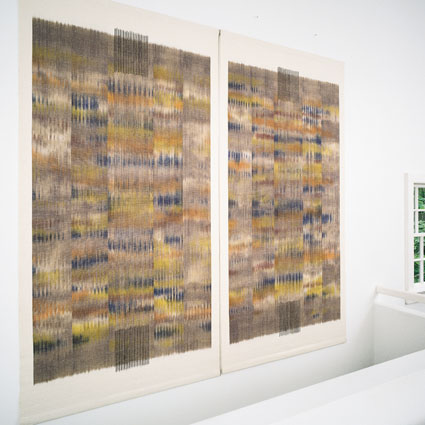
Kasuri Panels by Jun Tomita, photo by Tom Grotta

Kasuri Panels by Jun Tomita, photo by Tom Grotta

Jun Tomita (Japan)

Untitled by Jiro Yonezawa, photo by Tom Grotta

Untitled by Jiro Yonezawa, photo by Tom Grotta

Jiro Yonezawa (Japan)

Kuu 410 and 441 by Masako Yoshida, photo by Tom Grotta

Kuu 410 and 441 by Masako Yoshida, photo by Tom Grotta

Masako Yoshida (Japan)


In Honor of Asia Week: Seven More Japanese Artists

Traditionally, art of Asia Week New York has been Asian Contemporary Art Week. This spring, Asian Contemporary Art Week extends beyond its usual week-long format to last an entire season, capturing the best of contemporary art from Asia in New York. A complete list of contemporary offerings, which includes Bomb Ponds, Vandy Rattana’s installation of photographs and video that explores the U.S. bombing of Cambodia during the Vietnam War, is found on the ACAW webiste at http://www.acaw.info/?page_id=2062. Here is a selection of wall and three-dimensional work by seven more contemporary Japanese artists.

Large Silk Akiha Devider by Chiaki Maki, photo by Tom Grotta

Large Silk Akiha Devider by Chiaki Maki, photo by Tom Grotta

Chiaki Maki (Japan)

Large Tassar Spun Silk and Wool by Kaori Maki, photo by Tom Grotta

Large Tassar Spun Silk and Wool by Kaori Maki, photo by Tom Grotta

Kaori Maki (Japan)

Large Interlacing-R by Keiji Nio, photo by Tom grotta

Large Interlacing-R by Keiji Nio, photo by Tom grotta

Keiji Nio (Japan)

Shadow Alphabet by Toshio Sekiji, photo by Tom Grotta

Shadow Alphabet by Toshio Sekiji, photo by Tom Grotta

Toshio Sekiji (Japan)

A Hole to See II by Hisako Sekijima, photo by Tom Grotta

A Hole to See II by Hisako Sekijima, photo by Tom Grotta

Hisako Sekijima (Japan)

Generating 12 by Naoko Serino, photo by Tom grotta

Generating 12 by Naoko Serino, photo by Tom grotta

Naoko Serino (Japan)

Shindigo Square Series by Hiroyuki Shindo, photo by Tom Grotta

Shindigo Square Series by Hiroyuki Shindo, photo by Tom Grotta

Hiroyuki Shindo (Japan)