
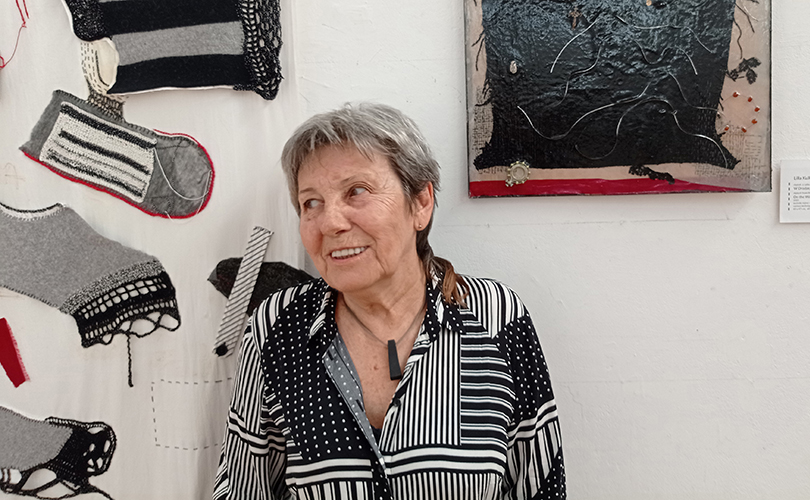
There’s a moment in weaving — the Polish textile artist Lilla Kulka has described it — when the work surprises you. When the loom leads rather than follows. For Kulka, that surrender to process is fundamental: “In the process of weaving, I am often surprised at the direction my work takes,” she says. It’s a quietly radical statement from an artist whose career has been defined by refusing the expected.
Born in 1946 in Kraków, Poland, Kulka came of age in one of the great centers of European textile art — a city where the Academy of Fine Arts carries a legacy stretching back to 1818, and where fiber art was being radically reimagined in the postwar decades. She went on to become a professor at that same institution, shaping generations of Polish artists in her unique fabrics studio.
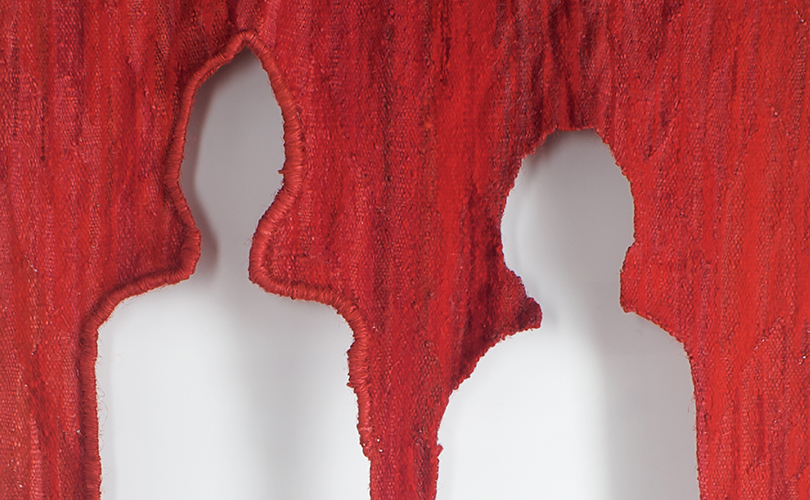
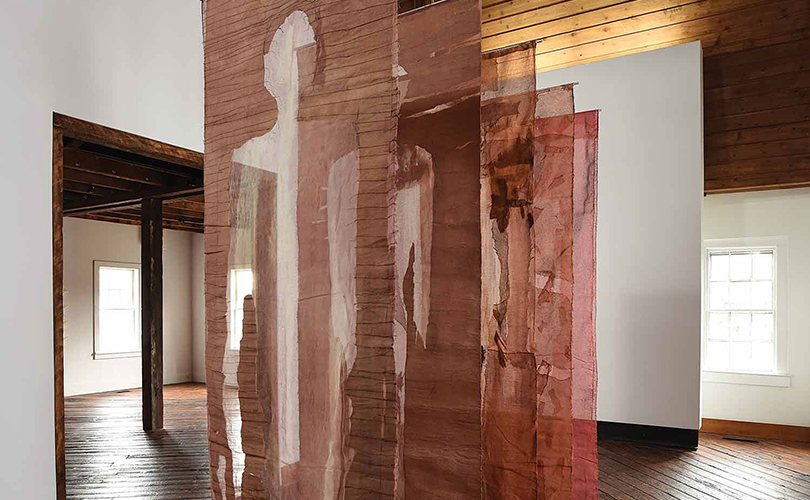
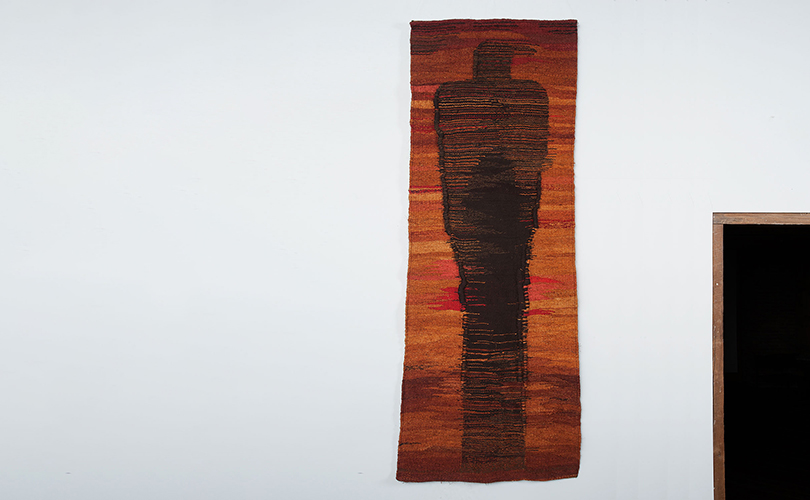
Kulka’s work defies easy categorization, which is precisely the point. She creates art on the intersection between fiber art, painting, and sculpture, and has spent her career dismantling the hierarchies that place one above another. As she puts it: “Rather than locking myself within the bounds of any one artistic tradition, I have disregarded such artificial barriers to expression.” The results are monumental. Works like Traces (1979) — woven in sisal and handspun wool, stretching nine feet tall — pulse with human presence without depicting it literally. Her early figurative vocabulary evolved into something more elusive: human shadows, outlines, traces of bodies rather than bodies themselves. These were meditations on the great mysteries of life — pain, power, love, faith — rendered in the language of horizontal and vertical lines.
What makes Kulka’s work particularly charged is its context. She has acknowledged that the political situation in Poland made it difficult to present all of her work publicly in the 1970s and early 1980s. That the work survived and circulated internationally is a testament both to her determination and to the peculiar freedom that fiber art, long dismissed as craft rather than fine art, sometimes enjoyed under censorial regimes.
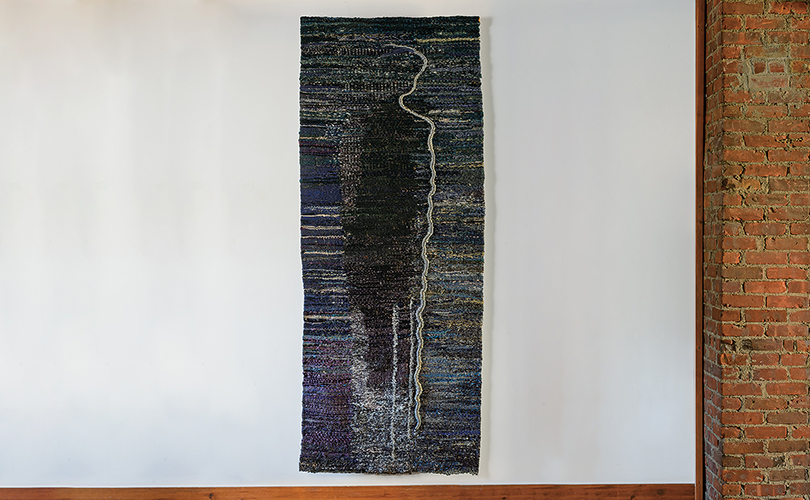
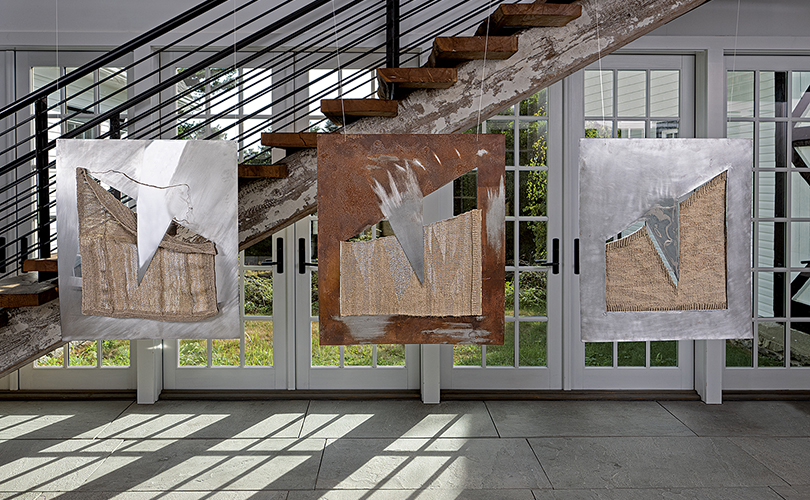
Her materials speak their own language. Sisal, wool, cotton, steel — she juxtaposes materials with diametrically different connotations, sometimes combining industrial slabs of steel with meticulously handwoven gobelin tapestries. Softness and hardness. The handmade and the industrial. The personal and the structural. It’s a visual argument about what it means to live in a body in a political world. Kulka’s work will be included in browngrotta arts’ upcoming exhibition, Transformations: dialogues in art and material (May 9 – 17, 2026).
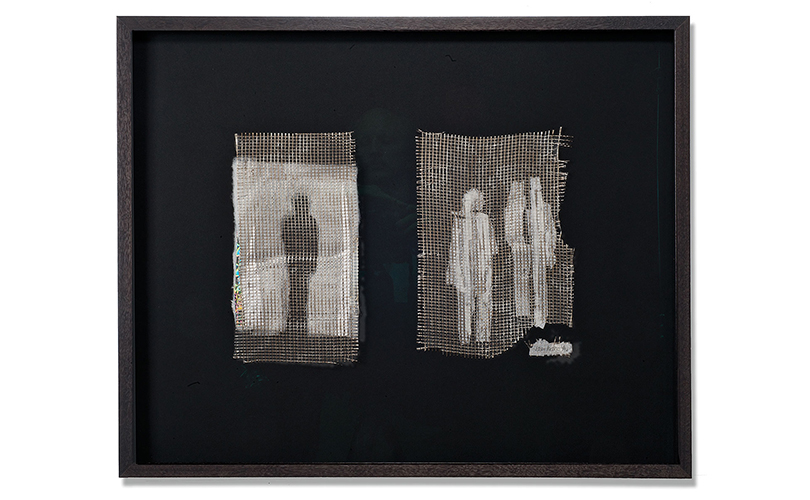
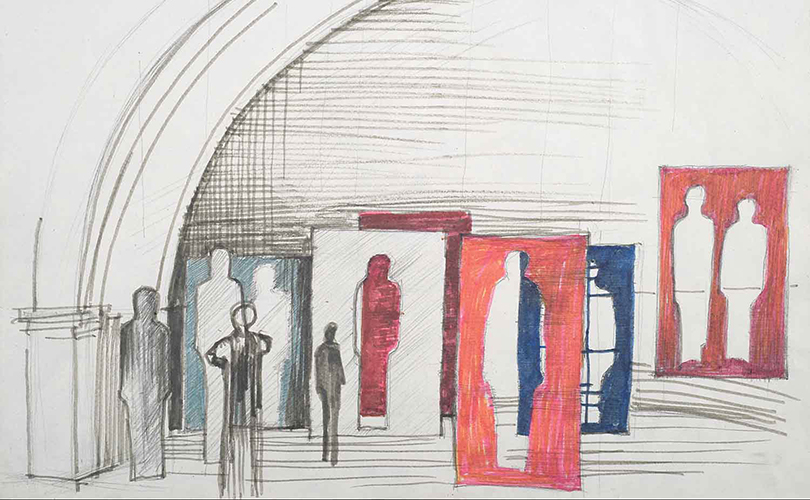
Kulka’s work spans tapestry, painting, drawing, interdisciplinary activities, and exhibition design, and she has participated in over 300 exhibitions across 17 countries in Europe, the United States, Canada, Mexico, Brazil, and Israel. She has shown at venues ranging from the Central Museum of Textiles in Łódź — home of the prestigious International Triennial of Tapestry — to galleries in Vienna, Düsseldorf, Chicago, and beyond.
The enduring relevance of Kulka’s vision was celebrated in 2025 in Krakow in a three-venue exhibition, Tempus Omnia Revelat (Time Reveals All). A comprehensive catalogue raisonné of the same name was published to accompany the exhibition that includes over 300 pages of illustrations and essays. Included are a lengthy interview with the artist and excerpts from a 2003 review by Professor Magdalena Abakanowicz. “Lilla Kulka works in techniques that did not exist before,” she wrote. “The blindness of convention may label them as weaving, yet they are magical, multilayered, and thought-provoking objects, appearing today with particular clarity against the backdrop of society’s dependence on mechanical techniques.”
For those encountering her work for the first time, the invitation is open. As Kulka herself says: “The abstract content of my work cannot be easily explained by the titles of each piece. I invite each viewer to search for and find an individual meaning in my work.”