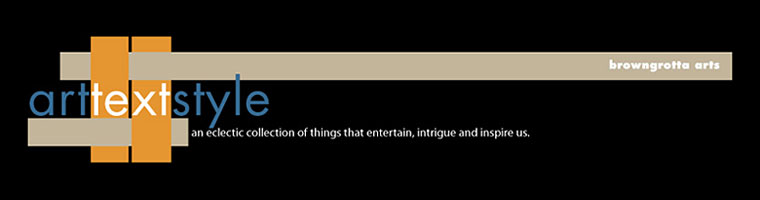
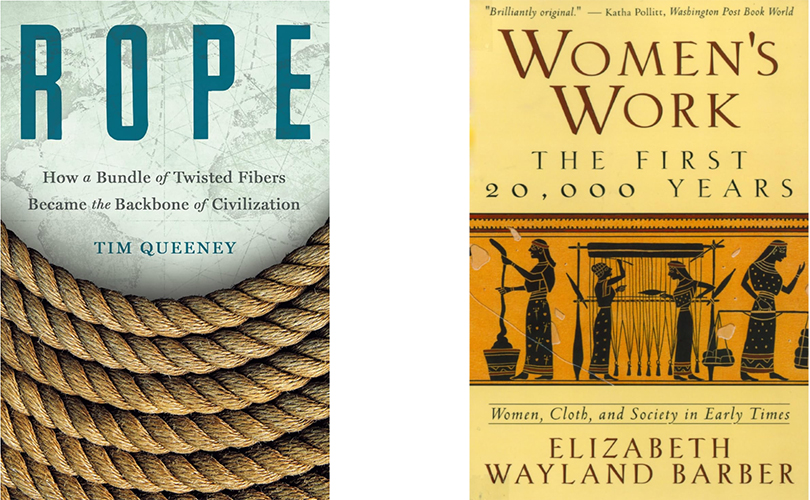
One more artist recommendation this week, from Wendy Wahl. “I came upon ROPE: How a Bundle of Twisted Fibers Became the Backbone of Civilization, by Tim Queeny, in The New York Times Book Review,” Wahl writes. “He had me lassoed when he gave credit to Elizabeth Wayland Barber’s Women’s Work, The First Twenty Thousand Years. Women, Cloth, and Society in Early Times. Queeney’s brief book is packed with history as he describes a rope fragment estimated to be 50,000 years old, discovered in southeast France, and a 4,000 year old Egyptian rope utilizing the “s” and “z” twist construction. For the nautical, you will find examples of fiber boats, lines, knots, the role in sailing navigation, and gathering food from the sea. He describes how the rope was used to build pyramids, the Incan Quipu, a portable rope with knots for communication, and rope as a means to reach the divine through mythology. He shows us how rope was used in underground mines, for travel in balloons and airplanes, for working with horses and livestock, for containment, inflicting punishment, and for magic and marriage. His concise chapters twist and turn, explaining how plant and animal materials were first used, the transition to metal and plastic rope making, and yarns of the future. He shares stories of mountain climbers and cavers, as well as Petit Philip, a tightrope artist who walked between the Twin Towers in 1974, and the use of rope in science and space exploration. I was hoping he would include the role of rope for looms, as well as its use as a material metaphor by artists. Otherwise, the book jacket is spot on, describing ‘A unique and compelling adventure through the history of rope, and its impact on civilization.‘”
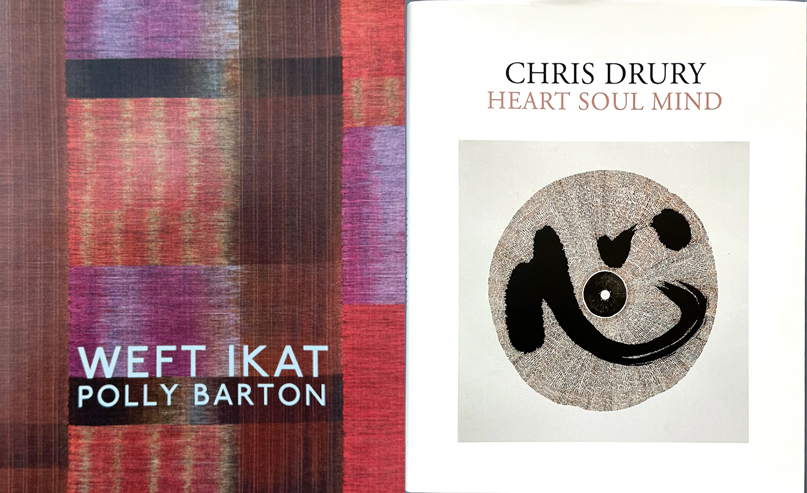
At browngrotta arts we’ve also come across a number of interesting books this year. On our website, you’ll find Weft Ikat: Polly Barton. Self published by the artist, Sutton shares the basic tying techniques for weft ikat and some techniques she has adapted to solve design problems. Ikat means a to bind a group or skein of fibers with a resist tie to create a pre-calculated design when the fibers are woven. The technique is one that is used in differing combinations by cultures across the world.
We can also recommend Chris Drury: Heart Soul Mind. The book, as advertised, “gives in images and the words of Chris Drury himself, a precious insight into this renowned artist’s practice over more than four decades.” Drury has long focused on patterns of energy, in plants, wind, water, and the flow patterns of blood in the human heart, relating systems in the body to systems on the planet. In the book, he tells stories behind his land art constructions of soil, wood, stone, and fungi in vastly different landscapes from Japan to South Korea to Nevada, Scotland, Antarctica, Wyoming, and Australia. Frequent collaborator, poet Kay Syrad, contributed the introduction. The photographs are large and affecting. As the book jacket concludes,”Drury’s works remind us that art too can transform the way we look at the world.” Of course, books can, too.

We were gifted a truly exquisite book when Tom, Rhonda, and Carter traveled to Paris in March. For its 15th-anniversary exhibition, Maison Parisenne commissioned 15 exceptional works by 15 renowned artists such as Simone Pheulpin, whose work we show in the US, Pierre Renart, Hervé Wahlen, Gérald Vatrin, and others. The works were showcased at the historic Hall des Maréchaux within the Musée des Arts Décoratif and documented in Maison Parisienne: 15 Years. The photos in the book are beautiful, the work striking, but what impressed us most was the accuracy of the title of the introduction, “Maison Parisienne, a gallery as a universal family.” Oliver Gabet, Director, Department of Objets d’Art, Musée du Louvre, describes the care with which the gallery’s founder, Florence Guillier-Bernard, selects the artists that she promotes so energetically and effectively, an approach familiar to us. “… [T]here can be no doubt that she also chose the name with equal care,” he writes, “maison conjuring up a house that is also a home and a focal point for a family of disparate kith and kin, linked by networks of hidden connections.” The portraits of Guillier-Bernard with various artists represented by the gallery are a testament those eviable connections. We are pleased to have our own connection to this meticulously curated collection.
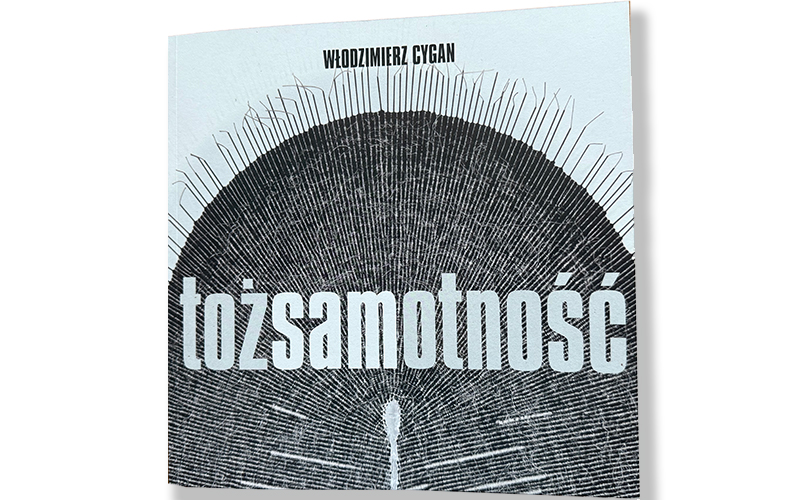
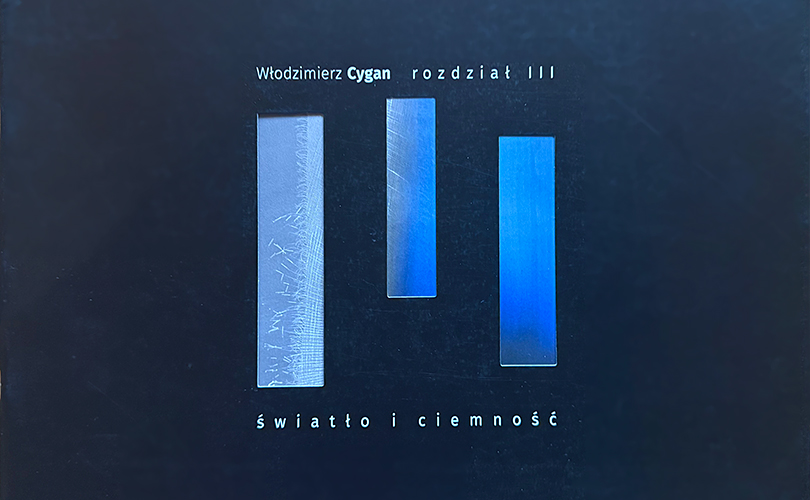
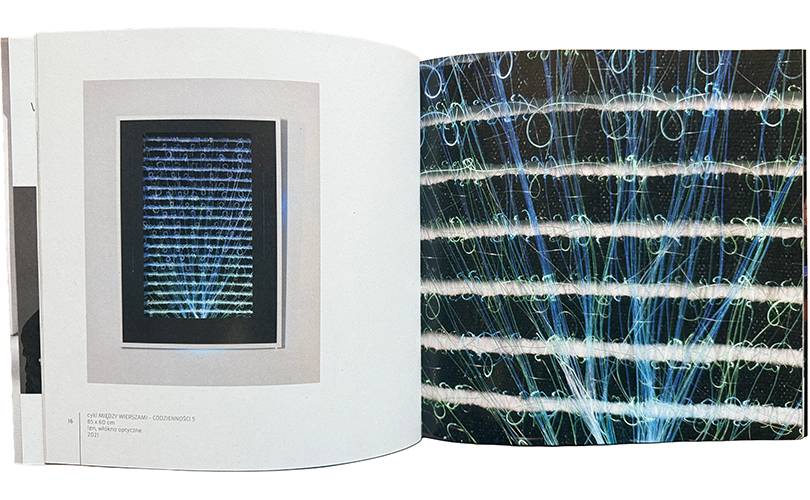
Wlodimirez Cygan shared two beautiful catalogs with us in May, Tożsamotność (Loneliness) and Światło i ciemność (Separation of Light and Darkness). Cygan wrote that the Tożsamotność (Loneliness) exhibition presented selected textiles created after 2008, when he finished working for Academy of Fine Arts in Gdańsk. “All of them make a reference to the textile – light and textile — interior relationship. In some works it is an interpretation of light; in others – light implemented in the living tissue of the creation.” The text of the catalog is in Polish, but the photographs — many of them full page — are luminous. We are excited that browngrotta arts will exhibit two of the works in this catalog — Organic 3 and Between the Lines of Everyday Life 5, in its May 2026 exhibtion. In the Światło i ciemność (Separation of Light and Darkness) catalog, the text is in Polish and English, and again, the illustrations are dramatic, many of them of the artist’s works in black and white. In a reference pertinent to this body of work, essayist Marta Kowalewska writes, “Deliberately limiting the range of colors and color effects, associated to a great extent with painting, as well as defending against purely sculptural treatments, [he] strengthens those values that make up the essence of textile art,” she writes. “The technical constraints become an ally of the artist; sensuality of the fiber builds sensuality of the pieces …. Range of black, gray, and white allows perception of the mastery of the weave, perfection of design, but ultimately leads viewers’ attention to poetics of the communication.”
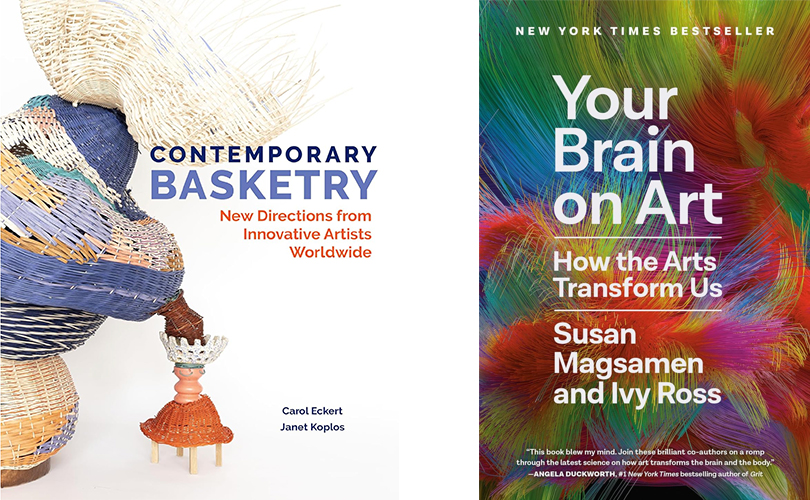
Contemporary Basketry: New Directions from Innovative Artists Worldwide is a new work by Janet Koplos and Carol Eckert. Inspired by Eckert’s blog, “Contemporary Basketry,” the book profiles 60 international artists (15 of whom have been promoted by browngrotta arts). A comment by each artist is included and Koplos has contributed an insightful essay, “Looking Into Baskets,” that discusses architecture, technique, allusion, and other attributes of contemporary practice. She borrows sculptor Phyllida Barlow’s term “restless objects,” noting baskets are restless in being unfixed in time, being portable and not fixed in place, and the artists who make them are restless, interested in defying expectations and distinguishing their works.
A book from 2024 was particularly relevant for us this year. From the perspective of artists, the browngrotta arts’ exhibition, Beauty is Resistance: art as antidote, explored the impact of art on anxiety, pain, mood, and memory. In Your Brain on Art: How the Arts Transform Us, authors Susan Magsamen and Ivy Ross report on the scientific research supporting those effects — on physical health, cognitive development, and memory. The findings cited are truly remarkable — engaging in art for 45 minutes straight can lower cortisol levels, learning music improves cognitive skills, striking tuning forks lower stress, and museum visits are prescribed to treat dementia and depression. Also featuring conversations with artists such as David Byrne, Renée Fleming, and evolutionary biologist E. O. Wilson, Your Brain on Art, is an authoritative guide to neuroaesthetics.
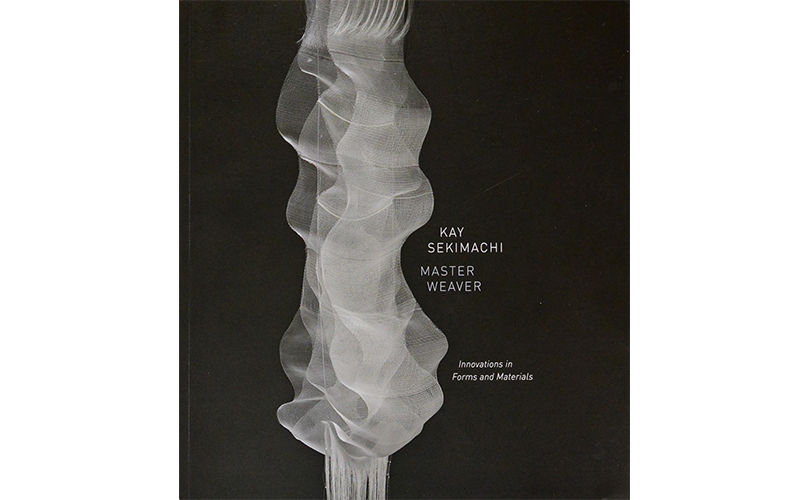
We have acquired more copies of Kay Sekimachi: Master Weaver, Innovations in Forms and Material, published by the Fresno Art Museum to celebrate Sekimachi’s selection for the Council of 100 Distinguished Women Artists for 2018. The catalog, available on our website, covers the expanse of Sekimachi’s career. It includes a comprehensive essay by Mija Riedel, “Thinking Through Thread,” a detailed chronology by Signe Mayfield, and exquisite photography by M. Lee Featheree. “Over six decades, Sekimachi has become a virtuoso of thread and form,” Riedel writes .… “She has bent, sewn, and molded paper into three-dimensional objects we haven’t seen before that can stand on their own and fill with light.”
May your 2026 reading list also be filled with light!