Monthly archives: December, 2025

Holiday Greetings!

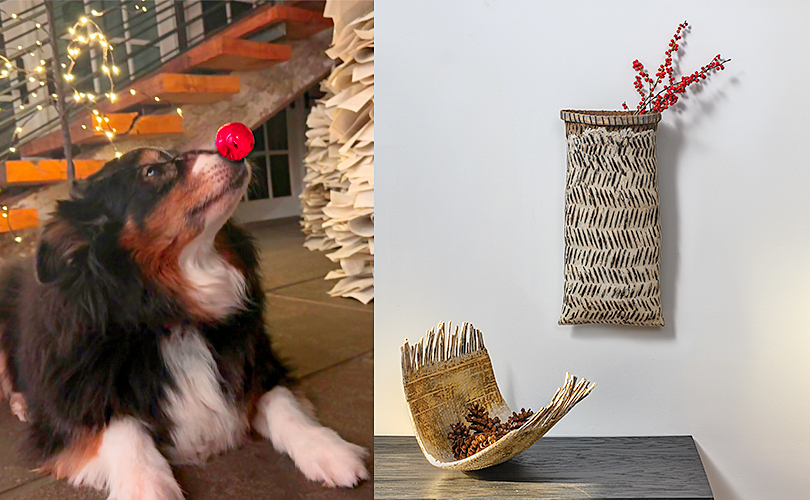
Tim Johnson Baskets
Tim Johnson, Curve VI , 2019 and Wall Pocket, 2023. Photos by Tom Grotta

We’re beginning our holiday revelry early this year!

Here’s round up of Holiday images.

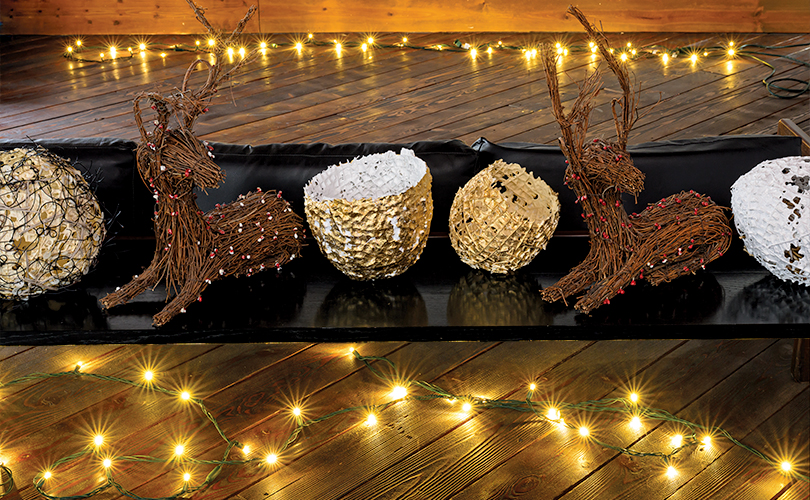
John Garrett Baskets
John Garrett Hardware Cloth Scrap Baskets, 2025. Photo by Tom Grotta
Cassidy Australian Shepherd
Cassidy. Photo by Tom Grotta
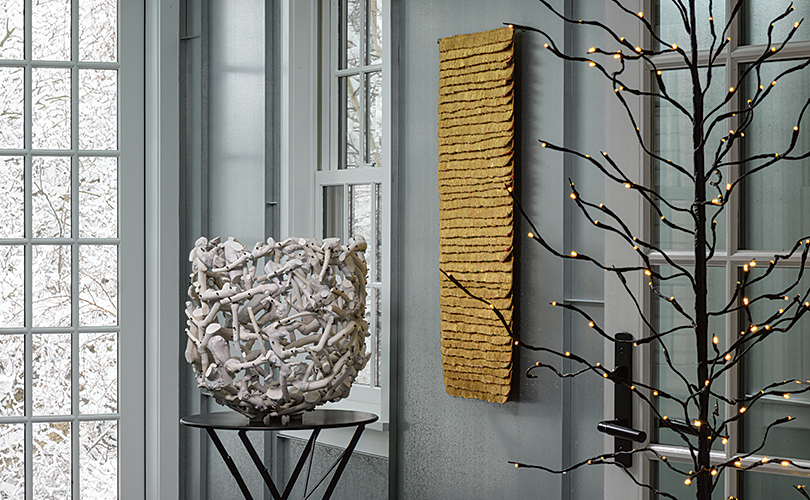
Gyöngy Laky Basket, Abby Mackie gold wall hanging
Traverser, Gyöngy Laky, 2016 and We Can All Be Saved 17, Aby Mackie, 2024. Photo by Tom Grotta
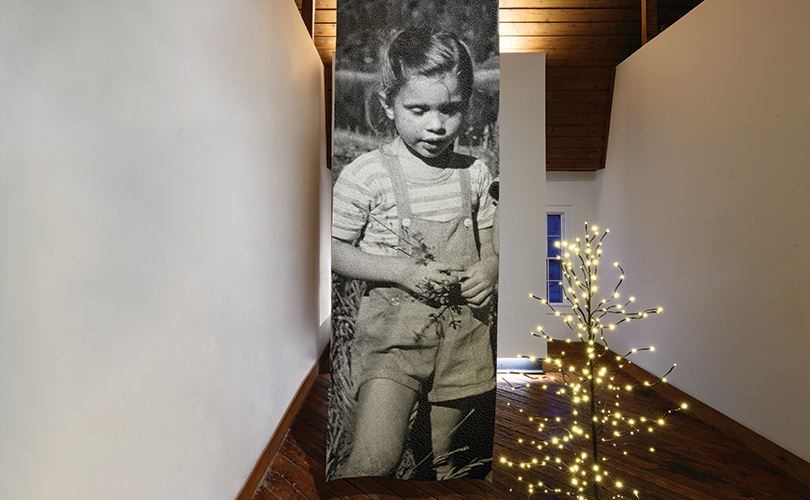
Lia Cook Tapestry
Big Susan, Lia Cook, 2005. Photo by Tom Grotta

Wishing you all a most enjoyable holiday season!


Books Make Great Gifts 2025, 2 of 2

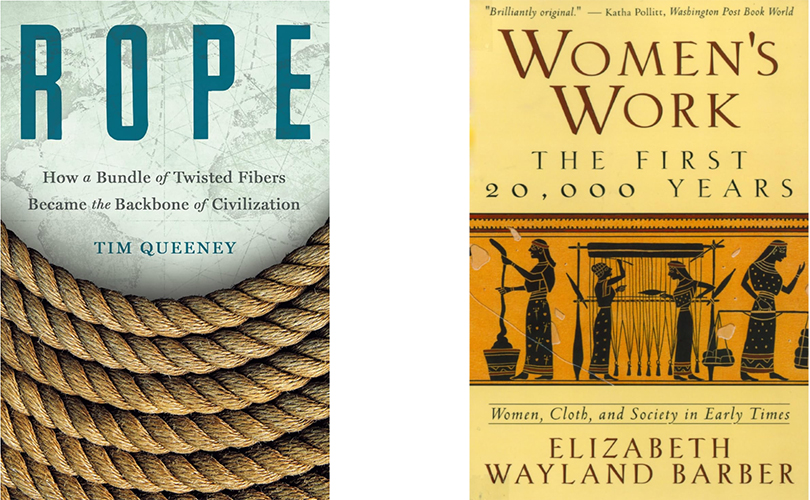
Rope and Women's Work Book Covers

One more artist recommendation this week, from Wendy Wahl. “I came upon ROPE: How a Bundle of Twisted Fibers Became the Backbone of Civilization, by Tim Queeny, in The New York Times Book Review,” Wahl writes. “He had me lassoed when he gave credit to Elizabeth Wayland Barber’s Women’s Work, The First Twenty Thousand Years. Women, Cloth, and Society in Early Times. Queeney’s brief book is packed with history as he describes a rope fragment estimated to be 50,000 years old, discovered in southeast France, and a 4,000 year old Egyptian rope utilizing the “s” and “z” twist construction. For the nautical, you will find examples of fiber boats, lines, knots, the role in sailing navigation, and gathering food from the sea. He describes how the rope was used to build pyramids, the Incan Quipu, a portable rope with knots for communication, and rope as a means to reach the divine through mythology. He shows us how rope was used in underground mines, for travel in balloons and airplanes, for working with horses and livestock, for containment, inflicting punishment, and for magic and marriage. His concise chapters twist and turn, explaining how plant and animal materials were first used, the transition to metal and plastic rope making, and yarns of the future. He shares stories of mountain climbers and cavers, as well as Petit Philip, a tightrope artist who walked between the Twin Towers in 1974, and the use of rope in science and space exploration. I was hoping he would include the role of rope for looms, as well as its use as a material metaphor by artists. Otherwise, the book jacket is spot on, describing ‘A unique and compelling adventure through the history of rope, and its impact on civilization.‘”

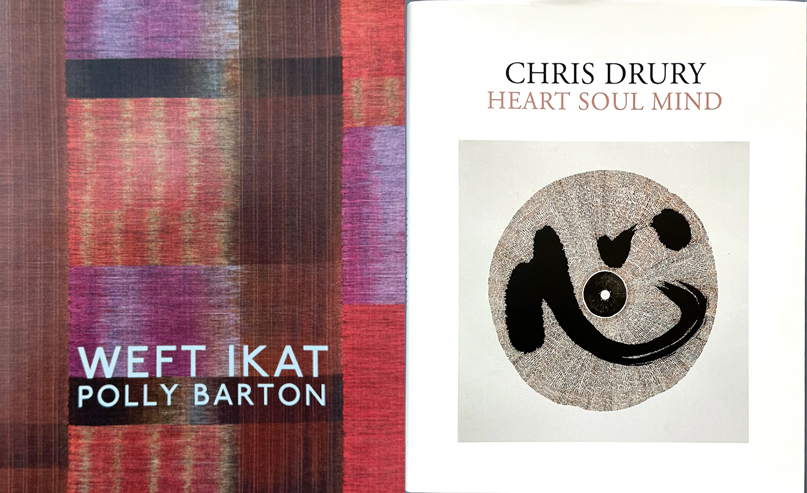
Weft Ikat and Chris Drury Book Covers

At browngrotta arts we’ve also come across a number of interesting books this year.  On our website, you’ll find Weft Ikat: Polly BartonSelf published by the artist, Sutton shares the basic tying techniques for weft ikat and some techniques she has adapted to solve design problems. Ikat means a to bind a group or skein of fibers with a resist tie to create a pre-calculated design when the fibers are woven. The technique is one that is used in differing combinations by cultures across the world.

We can also recommend Chris Drury: Heart Soul Mind. The book, as advertised, “gives in images and the words of Chris Drury himself, a precious insight into this renowned artist’s practice over more than four decades.” Drury has long focused on patterns of energy, in plants, wind, water, and the flow patterns of blood in the human heart, relating systems in the body to systems on the planet. In the book, he tells stories behind his land art constructions of soil, wood, stone, and fungi in vastly different landscapes from Japan to South Korea to Nevada, Scotland, Antarctica, Wyoming, and Australia.  Frequent collaborator, poet Kay Syrad, contributed the introduction. The photographs are large and affecting. As the book jacket concludes,”Drury’s works remind us that art too can transform the way we look at the world.” Of course, books can, too.

Maison Parisienne Book Cover

We were gifted a truly exquisite book when Tom, Rhonda, and Carter traveled to Paris in March. For its 15th-anniversary exhibition, Maison Parisenne commissioned 15 exceptional works by 15 renowned artists such as Simone Pheulpin, whose work we show in the US, Pierre Renart, Hervé Wahlen, Gérald Vatrin, and others. The works were showcased at the historic Hall des Maréchaux within the Musée des Arts Décoratif and documented in Maison Parisienne: 15 Years. The photos in the book are beautiful, the work striking, but what impressed us most was the accuracy of the title of the introduction, “Maison Parisienne, a gallery as a universal family.” Oliver Gabet, Director, Department of Objets d’Art, Musée du Louvre, describes the care with which the gallery’s founder, Florence Guillier-Bernard, selects the artists that she promotes so energetically and effectively, an approach familiar to us. “… [T]here can be no doubt that she also chose the name with equal care,” he writes, “maison conjuring up a house that is also a home and a focal point for a family of disparate kith and kin, linked by networks of hidden connections.” The portraits of Guillier-Bernard with various artists represented by the gallery are a testament those eviable connections. We are pleased to have our own connection to this meticulously curated collection.

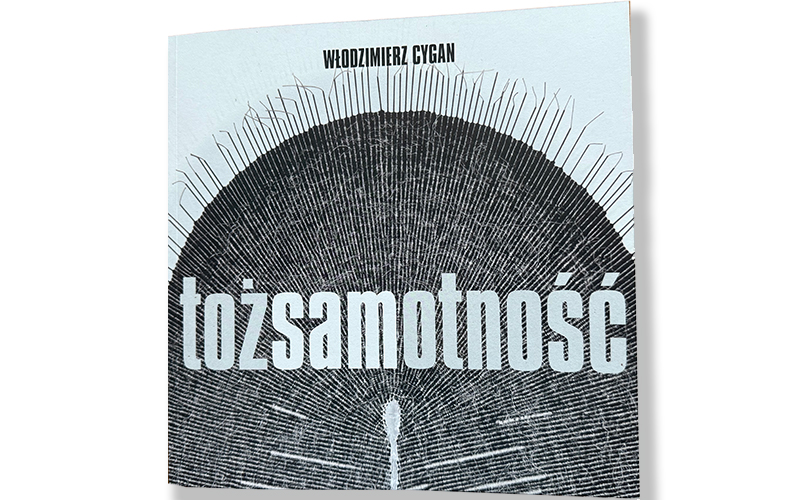
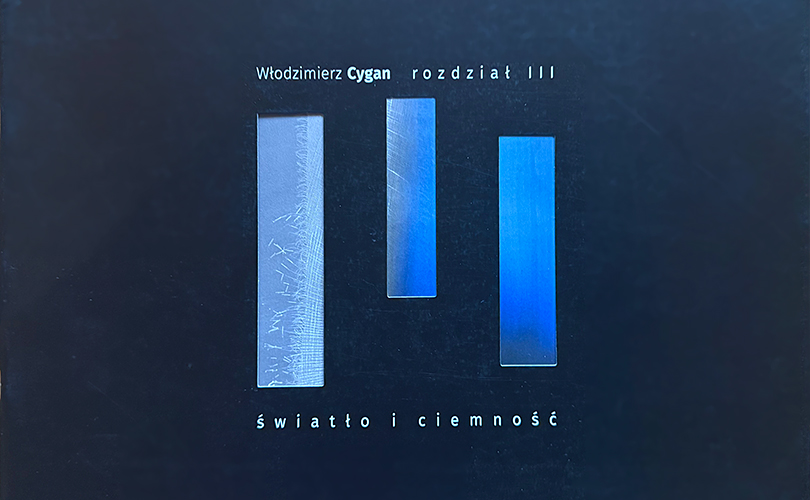
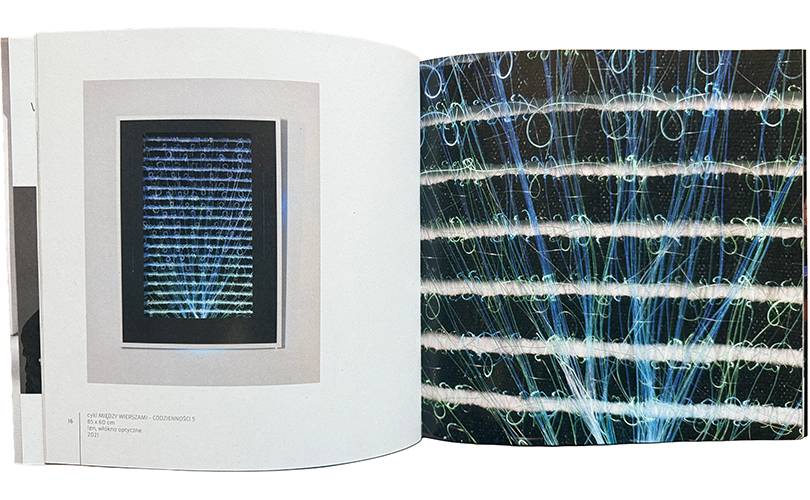
Wlodimirez Cygan shared two beautiful catalogs with us in May, Tożsamotność (Loneliness) and Światło i ciemność (Separation of Light and Darkness). Cygan wrote that the Tożsamotność (Loneliness) exhibition presented selected textiles created after 2008, when he finished working for Academy of Fine Arts in Gdańsk. “All of them make a reference to the textile – light and textile — interior relationship. In some works it is an interpretation of light; in others – light implemented in the living tissue of the creation.” The text of the catalog is in Polish, but the photographs — many of them full page — are luminous. We are excited that browngrotta arts will exhibit two of the works in this catalog — Organic 3 and Between the Lines of Everyday Life 5,  in its May 2026 exhibtion. In the Światło i ciemność (Separation of Light and Darkness) catalog, the text is in Polish and English, and again, the illustrations are dramatic, many of them of the artist’s works in black and white. In a reference pertinent to this body of work, essayist Marta Kowalewska writes, “Deliberately limiting the range of colors and color effects, associated to a great extent with painting, as well as defending against purely sculptural treatments, [he] strengthens those values that make up the essence of textile art,” she writes. “The technical constraints become an ally of the artist; sensuality of the fiber builds sensuality of the pieces …. Range of black, gray, and white allows perception of the mastery of the weave, perfection of design, but ultimately leads viewers’ attention to poetics of the communication.”

Contemporary Basketry and Your Brain on Art Covers

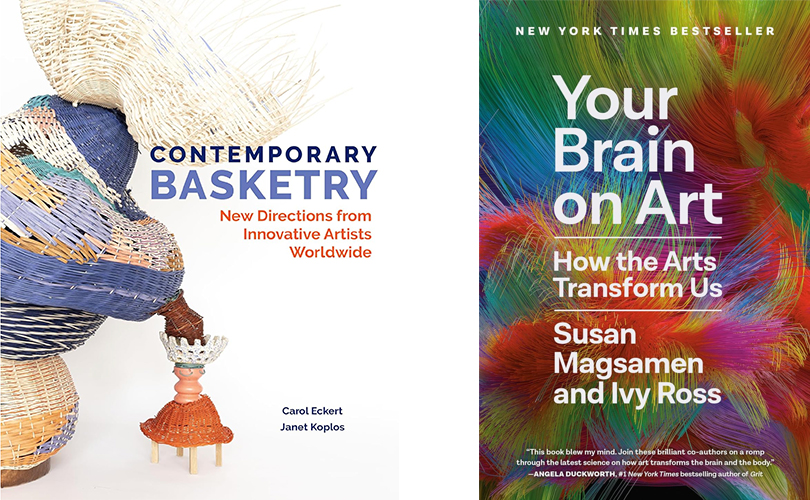
Contemporary Basketry: New Directions from Innovative Artists Worldwide is a new work by Janet Koplos and Carol Eckert. Inspired by Eckert’s blog, “Contemporary Basketry,” the book profiles 60 international artists (15 of whom have been promoted by browngrotta arts). A comment by each artist is included and Koplos has contributed an insightful essay, “Looking Into Baskets,” that discusses architecture, technique, allusion, and other attributes of contemporary practice. She borrows sculptor Phyllida Barlow’s term “restless objects,” noting baskets are restless in being unfixed in time, being portable and not fixed in place, and the artists who make them are restless, interested in defying expectations and distinguishing their works. 

A book from 2024 was particularly relevant for us this year. From the perspective of artists, the browngrotta arts’ exhibition, Beauty is Resistance: art as antidote, explored the impact of art on anxiety, pain, mood, and memory. In Your Brain on Art: How the Arts Transform Us, authors Susan Magsamen and Ivy Ross report on the scientific research supporting those effects  — on physical health, cognitive development, and memory. The findings cited are truly remarkable — engaging in art for 45 minutes straight can lower cortisol levels, learning music improves cognitive skills, striking tuning forks lower stress, and museum visits are prescribed to treat dementia and depression. Also featuring conversations with artists such as David Byrne, Renée Fleming, and evolutionary biologist E. O. Wilson, Your Brain on Art, is an authoritative guide to neuroaesthetics. 

Kay Sekimachi Master

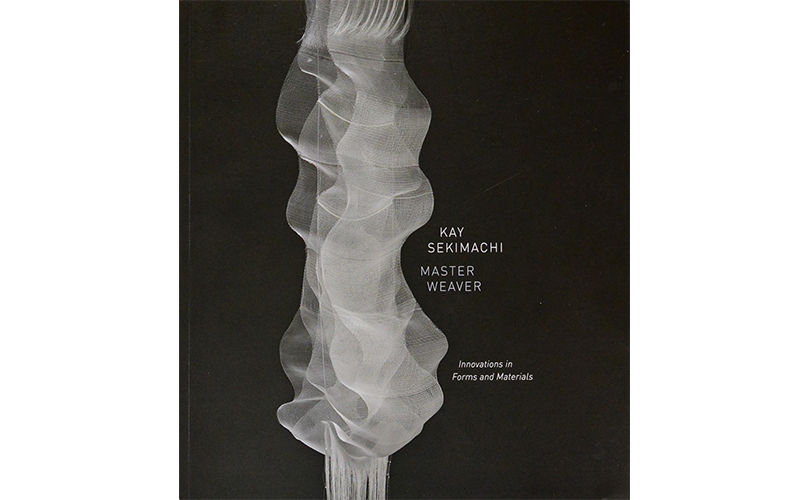
We have acquired more copies of Kay Sekimachi: Master Weaver, Innovations in Forms and Materialpublished by the Fresno Art Museum to celebrate Sekimachi’s selection for the Council of 100 Distinguished Women Artists for 2018. The catalog, available on our website, covers the expanse of Sekimachi’s career. It includes a comprehensive essay by Mija Riedel, “Thinking Through Thread,” a detailed chronology by Signe Mayfield, and exquisite photography by M. Lee Featheree. “Over six decades, Sekimachi has become a virtuoso of thread and form,” Riedel writes .… “She has bent, sewn, and molded paper into three-dimensional objects we haven’t seen before that can stand on their own and fill with light.”

May your 2026 reading list also be filled with light!


Books Make Great Gifts, 1 of 2

We’ve got book and exhibition recommendations from artists on tap this week and recommendations from browngrotta arts next.

Anni Albers, Barbara Hepworth, Craftland

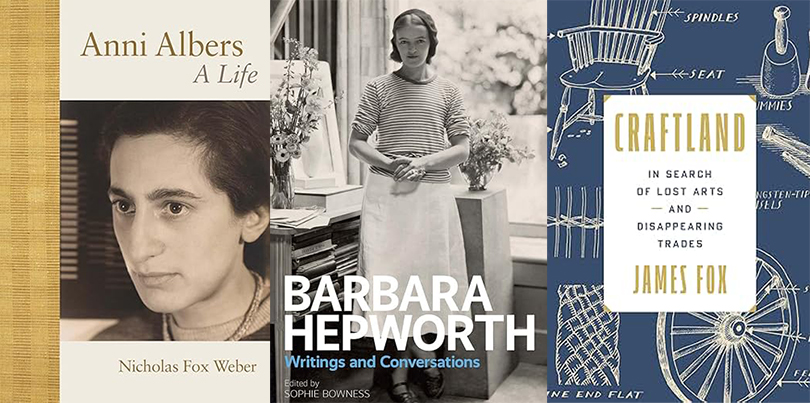
Rachel Max is  looking forward to reading a new biography of Anni Albers, by Nicholas Fox Weber (Anni Albers: a life), which is coming out in April next year. “But,” she writes, “whenever I need a burst of inspiration, I dip into the Writings and Conversations, by Barbara Hepworth. I’ve always loved her work. Max also recommends Craftland by James Fox as a thoughtful and timely journey through Britain’s “endangered” crafts and heritage. 

British Library

“In a digital age where handmade skill is gradually being chiseled away by mass production and AI, Fox traverses both time and land to meet some of the people keeping our need for craftsmanship alive. As a maker, I am extremely conscious of techniques – not reviving them as such, but reviewing them to make something new. Admittedly, and perhaps because I live and work in a city, I take lots for granted – how agriculture, for example, has shaped our landscape with hedgerows and stone walls. I’ve always known that Sheffield is famous for its steel production, that Birmingham has a long history of jewelery making, and that Somerset is known for willow weaving. Each area has its own unique way of doing things – stone walls and baskets vary from region to region. I’ve walked past the British Library many times without considering who designed and carved the lettering on the facade. The bells of Big Ben toll across our screens every New Year, but, like many, I take for granted the skill and expertise that went into making and tuning them. 

Fox’s writing is poetic and contemplative but what comes acoss most in this book are the skills, dedication and determination of all the people he met along the way,” Max says. “Aside from the rush weaver, Felicity Irons, many names were unknown to me, but these names and their workmanship are hardly invisible, they are part of a far greater picture – our social and cultural history. So much so that once forgotten trades have become embedded in our own names and language. Fox reminds us to look around, to notice and to take note of crafts enduring legacy.”

What Art Does, Short Nights of the Shadow Catcher

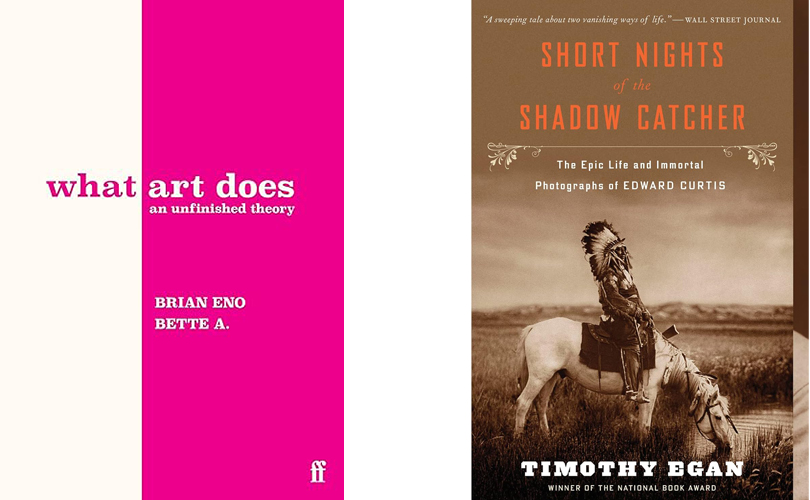
“I can recommend What Art Does: An Unfinished Theory, by Brian Eno and Bette A.,” Randy Walker writes. “It’s a small book (literally 3” x 5”) consisting of 122 refreshing pages written and illustrated in children’s book fashion — just my style. I savor the thoughts, and only read a few pages at a time so I can contemplate them for a while.” The book is billed as “an inspiring call to imagine a different future.”

“My favorite book of the year was about photographer, Edward Curtis — Short Nights of the Shadow Catcher: The Epic Life and Immortal Photographs of Edward Curtis by Timothy Egan,” writes Polly Sutton. “I recently got to view photos at the Rainier Club in Seattle where he lived for many years and paid for his room and board with pictures.” 

According to the publisher’s notes, Curtis spent three decades documenting the stories and rituals of more than 80 North American tribes. It took tremendous perseverance  ​— ​ 10 years alone to persuade the Hopi to allow him to observe their Snake Dance ceremony. And the undertaking changed him profoundly, from detached observer to outraged advocate. Curtis would amass more than 40,000 photographs and 10,000 audio recordings, and he is credited with making the first narrative documentary film. The Ranier Club has an important collection of his works.

Sheila Hicks, Das Minsk

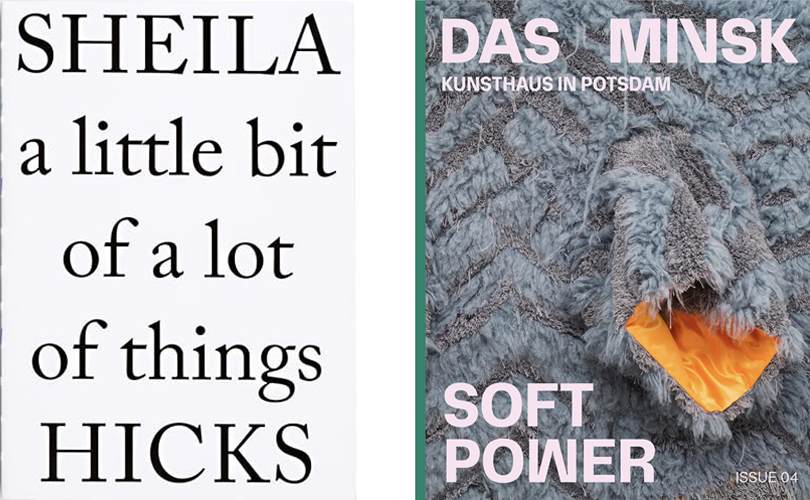
Exhibition catalogs often inspire recommendations; Europe was apparently the source for fiber exhibitions in the last 12 months, based on Heidrun Schimmel’s update. The expansive exhibition of Sheila Hicks: a little bit of a lot of things was a highlight this year In Germany, Schimmel writes. The exhibition was shown in Kunsthalle Düsseldorf from October 2024 to February 2025.  “A very good catalog of the same name was published,” she writes. It chronicles 50 years of the artist’s work and features a lay-flat sewn binding and an exposed spine, A Little Bit of a Lot of Things is designed to emulate Hicks’ playful, imaginative practice. 

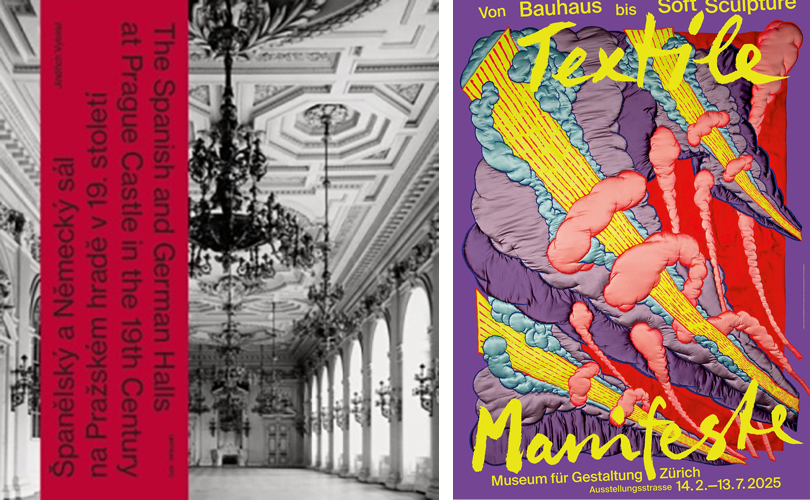
The Spanish and German Halls at the Prague Castle in the 19th Century, Manifeste Museum für Gestating Zurich

“Another good exhibition, Soft Power, was shown in the Museum Das Minsk, Potsdam, Germany, in 2024, she says. You can order the exhibition catalog (112 pages) and take on line tour here: https://dasminsk.de/en/exhibitions/4478/soft_power.  A truly comprehensive exhibition, Textile Manifestos—From Bauhaus to Soft Sculpturewas displayed in Switzerland, in the Museum für Gestaltung, Zürich, she says. In addition to the fiber all-stars — Hicks, Tawney, Abakanowicz — the exhibition included intriguing artists Gunta Stölz, Elsi Giaque, Lia Cook, and Masakazu Kobayashi. In conjunction, the Museum recommends the volume, Textiles Manifestos.

Ruth Asawa
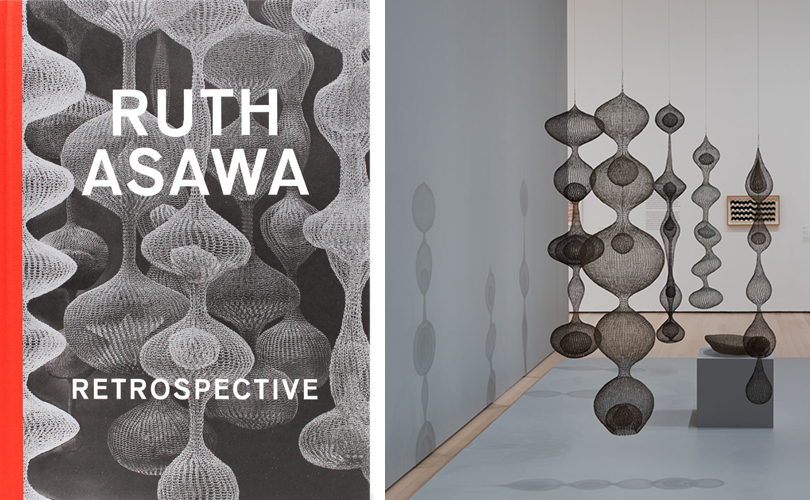
Installation view of Ruth Asawa: A Retrospective on view at The Museum of Modern Art from October 19, 2025, through February 7, 2026. The Museum of Modern Art, New York. Digital Image © 2025 The Museum of Modern Art, New York. Photo by Jonathan Dorado. Artwork © 2025 Ruth Asawa Lanier, Inc., Courtesy David Zwirner.

Exhibition catalogs were also the inspiration for both Karyl Sisson’s and Gyöngy Laky’s recommendation: the Ruth Asawa retrospective — first in San Francisco, now in New York. (If you are on the East Coast, you have until February 7, 2026 to see it at MoMA.) “The breadth of her work is astounding,” Karyl Sisson says. Gyöngy Laky also recommended the retrospective catalog, Ruth Asawa: RetrospectiveShe and her husband Tom Layton were friends with Ruth Asawa. “Thinking about Ruth Asawa reminds me that the US has overcome threats to our Democracy before,” Laky writes. “During another time challenging our democratic values, in World War II, the Asawa family members were sent to internment camps. The terrible and misguided 1942 Executive Order eventually incarcerated 120,000 people of Japanese descent. It was, however, as a child in those wretched concentration camps, that the talent and creative interests of Ruth Asawa were nurtured. In 1946, at the age of 20, Ruth went to Black Mountain College where she met her future husband, architect Albert Lanier. At Black Mountain College her drawing teacher, Ilya Bolotowsky, connected her drawing with her wire work describing it as drawing in space. She began her looped-wire sculptures there after being introduced to basketry techniques in Mexico”. The following year Asawa’s work was shown at SF MoMA for the first time — only to be the subject of an extensive retrospective nearly 75 years later.

Asawa left her mark on cultural history in other ways. She married her husband Albert in 1949 in San Francisco when interracial marriages were still illegal in many parts of the US. The partnership lasted 59 years!  Asawa left a legacy within the larger Bay Area community, too. She co-founded the Alvarado Arts Workshop for elementary school children in 1968 – – now the Ruth Asawa San Francisco School of the Arts. She was deeply devoted to arts education. Laky writes that an Imogen Cunningham photo from the 1950s greeted visitors to the SFMoMA exhibition accompanied by a quote: “An artist is an ordinary person who can take ordinary things and make them special.” And, Laky says, Asawa did just that. 

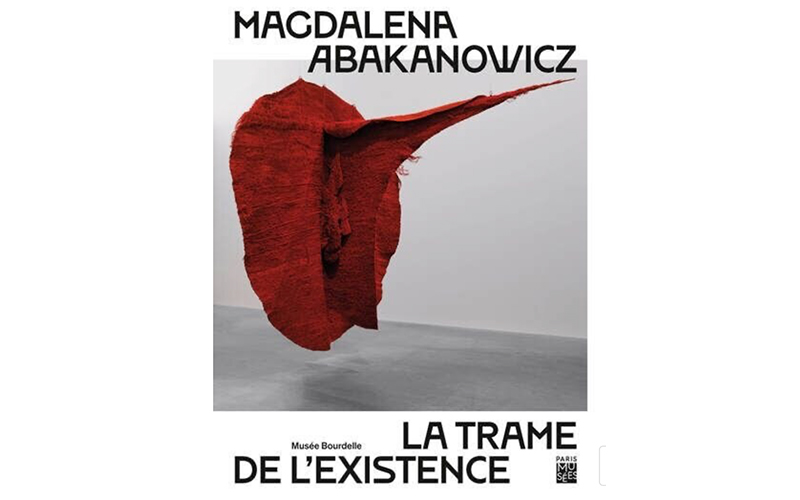
Stéphanie Jacques is looking forward to visiting Magdalena Abakanowicz: The Fabric of Life through April 12, 2026 at the Bourdelle Museum in Paris. “I love this museum and I’m excited to experience the works of Magdalena Abakanowicz. The catalog looks fascinating.” https://www.bourdelle.paris.fr/visiter/expositions/magdalena-abakanowicz-la-trame-de-lexistence In additional to exhibition attendance, Jacques has an ambitious reading list planned for next year. “Books are there to recharge us and open us up to other perspectives,” she writes. There are five books she’d like to read in early 2026:

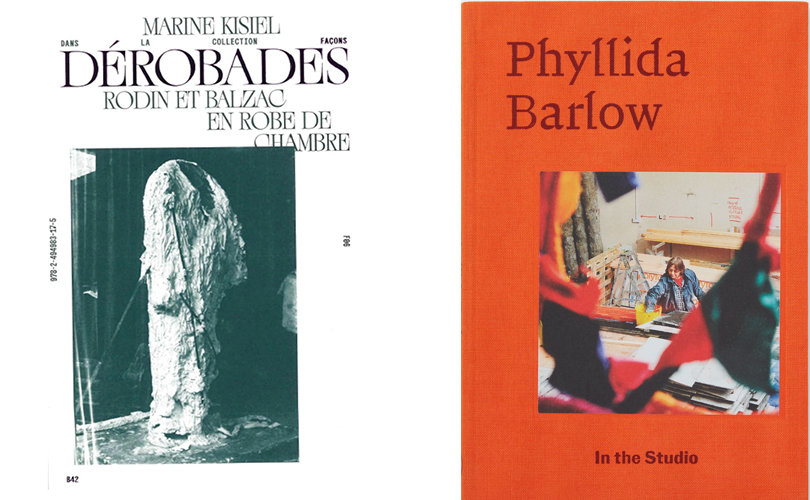
To learn more about the path Rodin took to create his sculpture of Balzac: his approach, his doubts, his relationship to the real body, etc, Jacques is going to read Dérobades: Rodin et Balzac en robe de chambre by Marine Kisiel — only available in French. “Phyllida Barlow is an artist whose work I admire,” she writes. “I haven’t yet had the chance to see her pieces in person, and this book, In the Studio: Phyllida Barlow , text by Frances Morris, seems like an opportunity to discover more about her work and her creative process. Reading about other artists’ work is enriching and often prompts me to reflect on my own practice.” Three books on basketry in all its complexity and variety are also on Jacques’ list. She describes these as, “an inexhaustible source of inspiration and wonder; skills where the universal and the unique meet.”

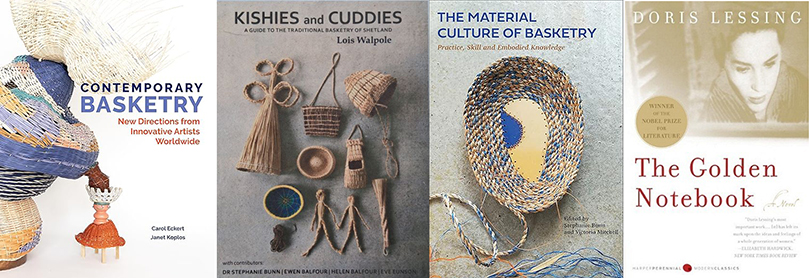
Contemporary Basketry, Kishies and Cuddies, The Material Culture of Basketry, The Golden Notebook

They are Contemporary Basketry: New Directions from Innovative Artists Worldwide by Carol Eckert and Janet Koplos, Kishies and Cuddies: A Guide to the Traditional Basketry of Shetland, by Lois Walpole, and The Material Culture of Basketry: Practice, Skill, and Embodied Knowledgeeds. Stephanie Bunn and Victoria Mitchell. And Jacques may return to The Golden Notebook by Doris Lessing, since she has done so regularly since first reading it over two years ago. “I have even opened it at random just to hear her voice,” she says. “It has everything: history and the upheavals of personal lives, political engagement, love, men, women, creation…” 

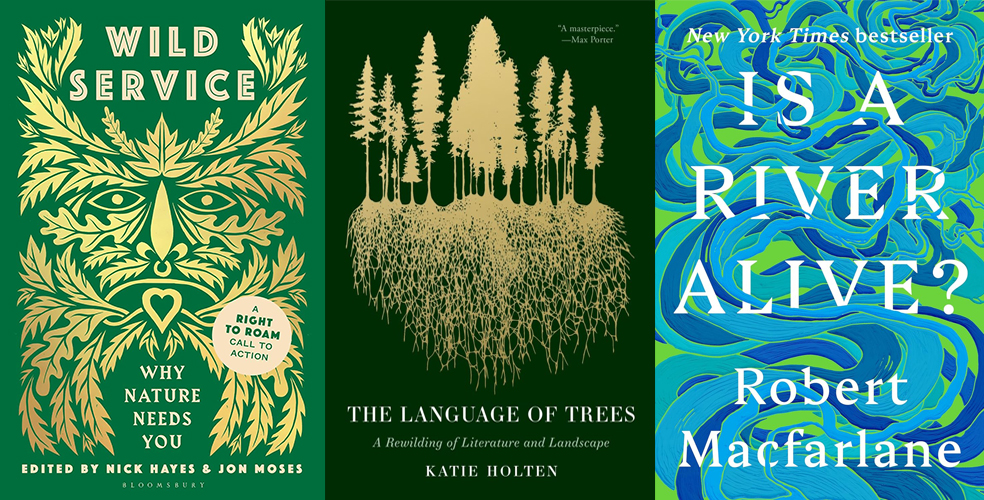
Wild Service, The Language of Trees, Is a River Alive

Gizella Warburton recommended three books about our relationship to nature: Wild Service: Why Nature Needs You, eds. Nick Hayes and Jon Moses, The Language of Trees: a Rewilding of Literature and Language, by Katie Holten and Is a River Alive? by Robert MacFarlane. Wild Service calls for mass reconnection to the land and a commitment to its restoration. A national bestseller, The Language of Trees invites readers to discover an unexpected and imaginative language to better read and write the natural world around us and reclaim our relationship with it. MacFarlane has been called “the great nature writer … of this generation.” The publisher says that Is a River Alive? is a joyful, mind-expanding exploration of an ancient, urgent idea: that rivers are living beings who should be recognized as such in imagination and law. They are not textile-related, says Warburton, but each offers “a hopeful and meaningful read.” Amen to that!

Next Week:
More book recommendations— this time from browngrotta arts …