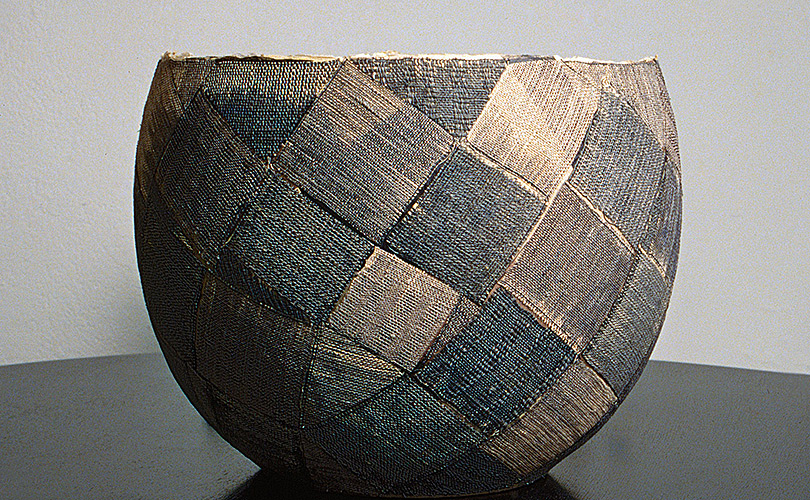
Tag: Åse Ljones

Art Out and About: Winter Edition

If you are game for getting out in this winter weather there are a batch of exhibitions around the world that are well worth your time. A couple close this week or next, so we’ve listed them in order of closing dates. Here’s our wrap up:

India Art Fair
NSIC Exhibition Grounds
February 5 – 8, 2026
Okhla, New Delhi
India, 110020
https://indiaartfair.in
Chanakya School tapestry
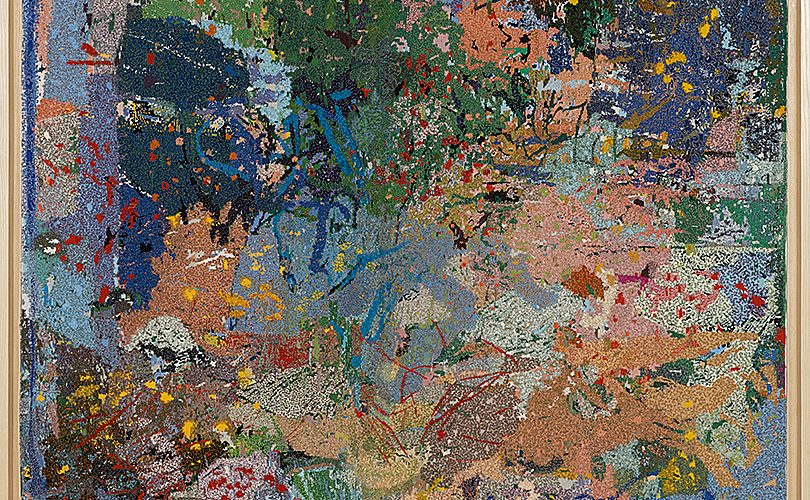
Detail: The Sky Below VI, 2025, Chanakya School, 5 x 6 feet, Cotton and silk embroidery with glass and seed beads on cotton textile.

A celebration of art, the India Art Fair features dozens of exhibitors who will present a number of artists whose practice involves art textiles and fiber sculpture. Among them, are Latitude 28, which represents Monali Meher who works in wool and paper, Dminti who is collaborating with Judy Chicago who created the What if Women Ruled the World? quilt, Chanakya School of Craft, which has collaborated with celebrated artists Mickalene Thomas and Faith Ringgold, and Morii Design, which works with artisans to reinterpret age-old stitch vocabularies through a contemporary design lens.

Ruth Asawa: A Retrospective
Museum of Modern Art
Through February 7, 2026
11 West 53 Street
New York, New York, 10019
https://www.moma.org/calendar/exhibitions/5768
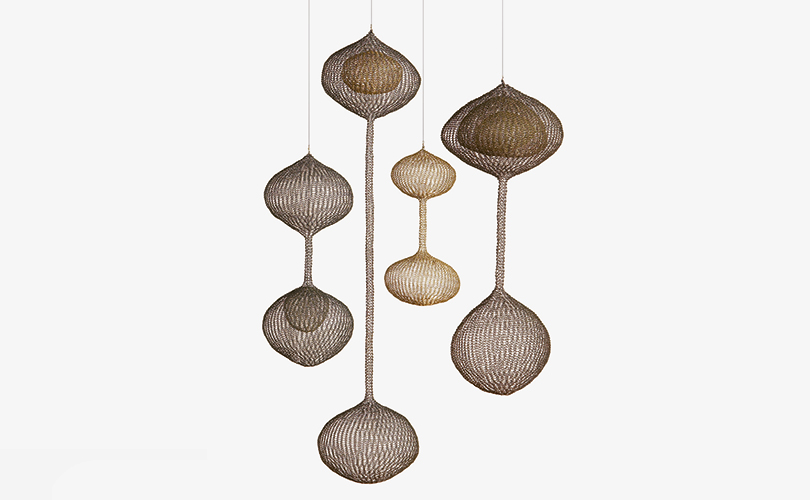
Ruth Asawa
Ruth Asawa, Untitled 
(S.046a – d, Hanging Group of Four, Two – Lobed Forms), 1961; Collection of Diana Nelson and John Atwater, promised gift to the San Francisco Museum of Modern Art; © 2025 Ruth Asawa Lanier, Inc., courtesy David Zwirner; photo: Laurence Cuneo

Just one week remains to see this expansive exhibition of Ruth Asawa’s extraordinary work.

“I’m not so interested in the expression of something. I’m more interested in what the material can do. So that’s why I keep exploring,” said Asawa, artist, educator, and civic leader. Featuring some 300 artworks, Ruth Asawa: A Retrospective charts the artist’s lifelong explorations of materials and forms in a variety of mediums, including wire sculpture, bronze casts, drawings, paintings, prints, and public works. This first posthumous survey celebrates the ways in which Asawa continuously transformed materials and objects into subjects of contemplation, unsettling distinctions between abstraction and figuration, figure and ground, and negative and positive space.

Martin Puryear: Nexus
Through February 8, 2026
Museum of Fine Arts, Boston
465 Huntington Avenue
Boston, Massachusetts 02115
https://www.mfa.org/exhibition/martin-puryear-nexus
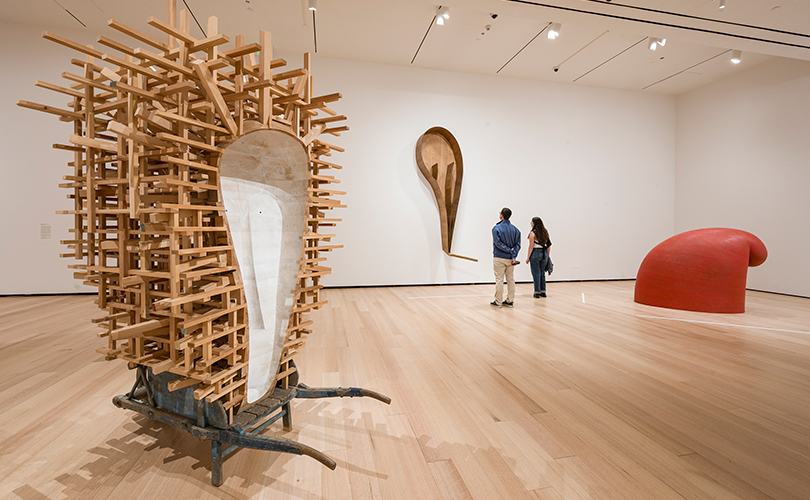
Martin Puryear: Nexus
Martin Puryear: Nexus exhibition at the Museum of Fine Arts, Boston.
September 27, 2025 to February 8, 2026
* Linde Family Wing for Contemporary Art
* Photograph © Museum of Fine Arts, Boston

We are big fans of Martin Puryear, and see his basket-like sculptures fiber art adjacent. Just a week remains to see Martin Puryear: Nexus in Boston.

For more than half a century, the preeminent American sculptor has captivated the public with works of beauty, elaborate craftsmanship, and sophisticated sources of inspiration—from global cultures, social history, and the natural world, including representing the United States at the 58th Venice Biennale in 2019. Assembling some 45 works from across his career, Martin Puryear: Nexus is the first substantial survey of the artist in almost 20 years. The exhibition focuses on the artist’s use of a rich variety of materials and media—from sculptures in wood, leather, glass, marble, and metal to rarely shown drawings and prints. It reflects Puryear’s singular artistic practice, one that combines the distinctive techniques of production with the formal histories he has encountered through a lifetime of movement, research, and study. (Note: You can also see a stunning “quilt” of aluminum, bottle caps, and copper wire by El Anatusi in the Richard and Nancy Lubin Gallery at MFA Boston while you are there.)

Enough Already: Women Artists from the Sara M. and Michelle Vance Waddell Collection
Museum of Contemporary Art, Connecticut (MoCA/CT)
Through February 15, 2026
19 Newtown Turnpike
Westport, CT 06880
https://mocact.org/exhibitions/
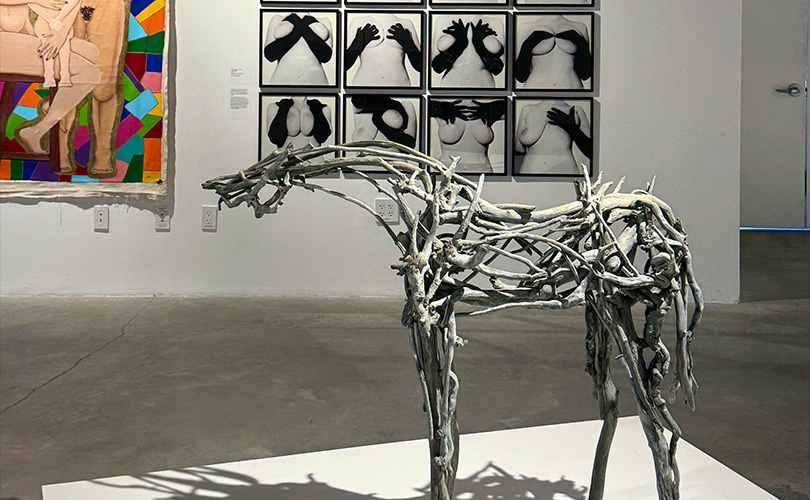
Deborah Butterfield at MOCA
Lilly Manycolors, Me, Myself and I ; Annie Sprinkle, The Bosom Ballet; Deborah Butterfield, Mare’s Nest at MoCA/CT. Photo by Tom Grotta

Just two weeks remain to see Enough Already in Westport, Connecticut.

The exhibition presents more than 80 extraordinary works by modern and contemporary women artists drawn from the significant private collection of Sara M. and Michelle Vance Waddell. This bold exhibition expresses the collectors’ personal interest in discovering emergent artistic voices and powerful artistic statements that speak to prominent social issues of the day, including domesticity, gender equality, motherhood, personal identity, and social transformation.

The show features lesser-known and renown artists, including Louise Bourgeois, Deborah Butterfield, Jenny Holzer, Barbara Kruger, Ana Mendieta, Catherine Opie, Cindy Sherman, Kiki Smith, and Carrie Mae Weems. There are also works by the Guerrilla Girls and a wall papered with cheeky observations, Phrases in My Head, by local artist, Constance Old.

Otobong Nkanga: “I dream of you in colors”
Musée d’Art Moderne de Paris
Through February 22, 2026
11 Avenue du Président Wilson 75116 
Paris, France
https://www.mam.paris.fr/fr/expositions/exposition-otobong-nkanga
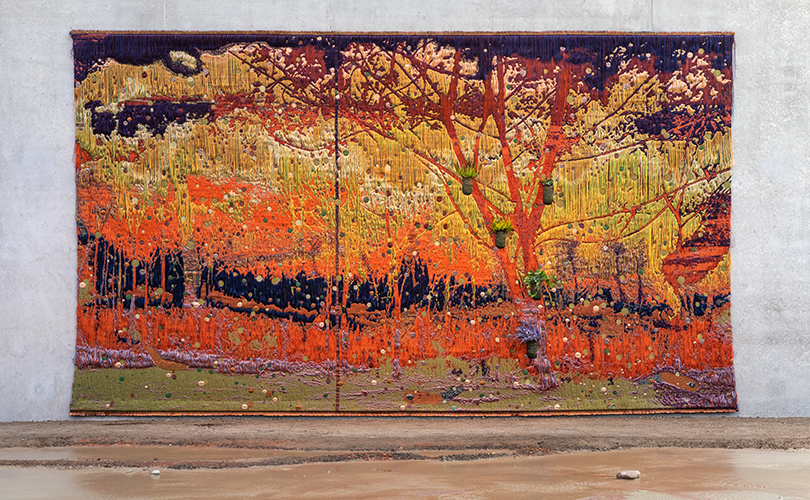
Otobong Nkanga, Unearthed Sunlight, the Musée d’Art Moderne de Paris.

Since the late 1990s, Otobong Nkanga (born in Kano, Nigeria in 1974 and living in Antwerp, Belgium) has addressed themes related to ecology and the relationship between the body and the territory in her work, creating works of great strength and plasticity. The Musée observes that, “[t]he concept of strata is central to the artist’s work—both in the materiality of her sculptures, interventions, performances, and tapestries, and in her way of thinking about the relationships between bodies and the land—relationships of exchange and mutual transformation. Otobong Nkanga explores the circulation of materials and goods, of people and their intertwined histories, as well as their exploitation, marked by the residues of environmental violence. While questioning memory, she offers a vision of a possible future.”

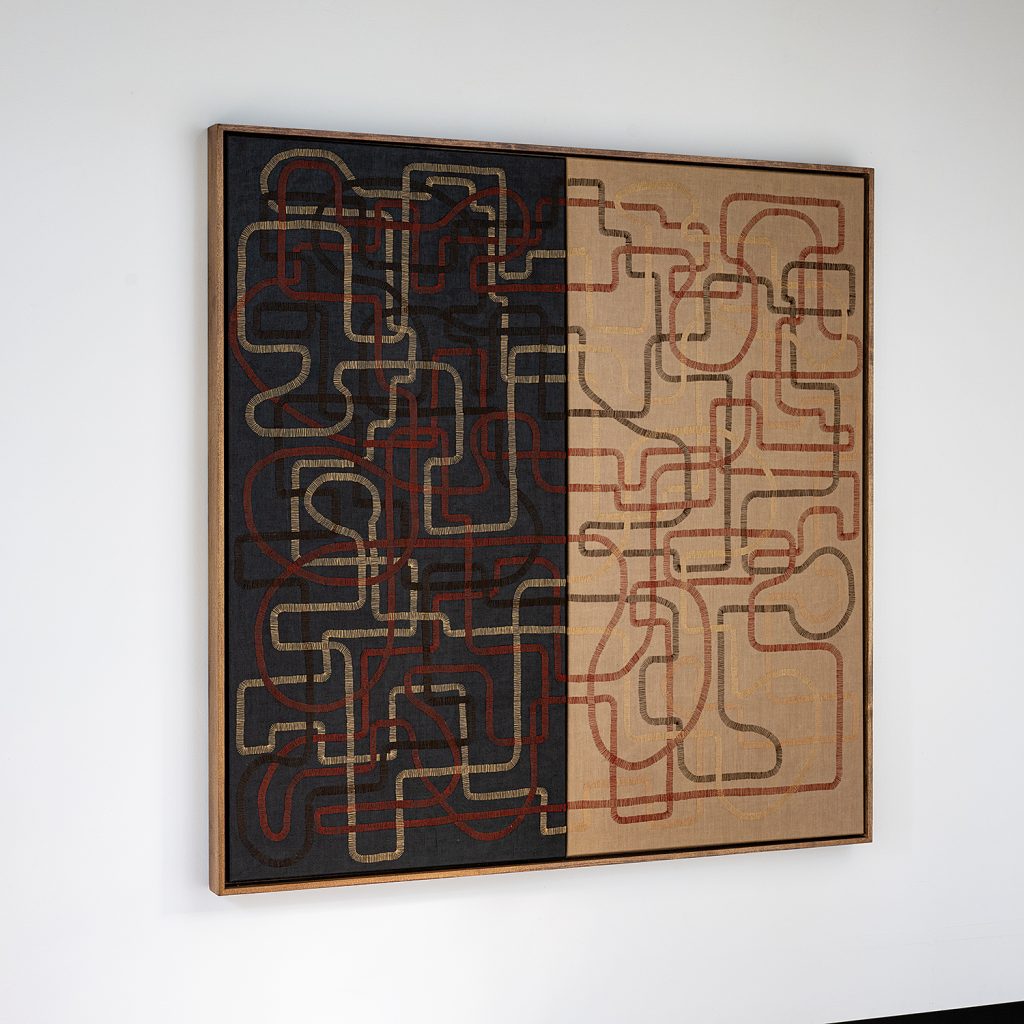
Åse Ljones: Light Broken
Visningsrommet
February 27 – March 8, 2026
USF Verftet
Georgernes Verft 12
5011 Bergen, Norway
https://www.visningsrommet-usf.no/ase-ljones/
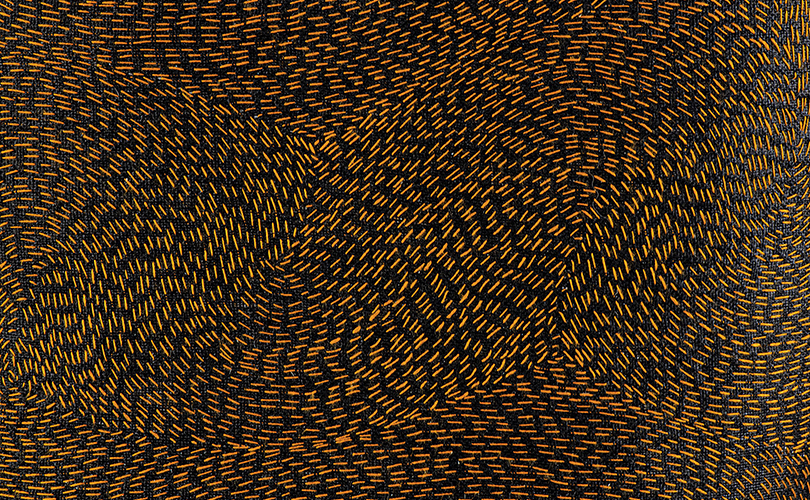
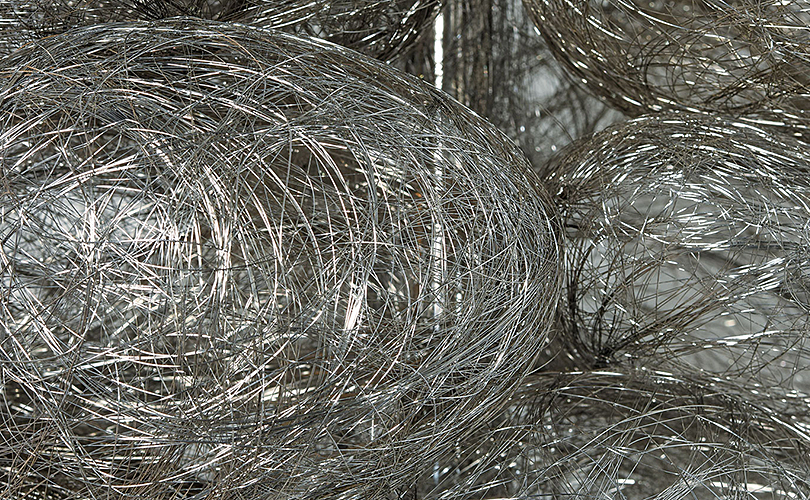
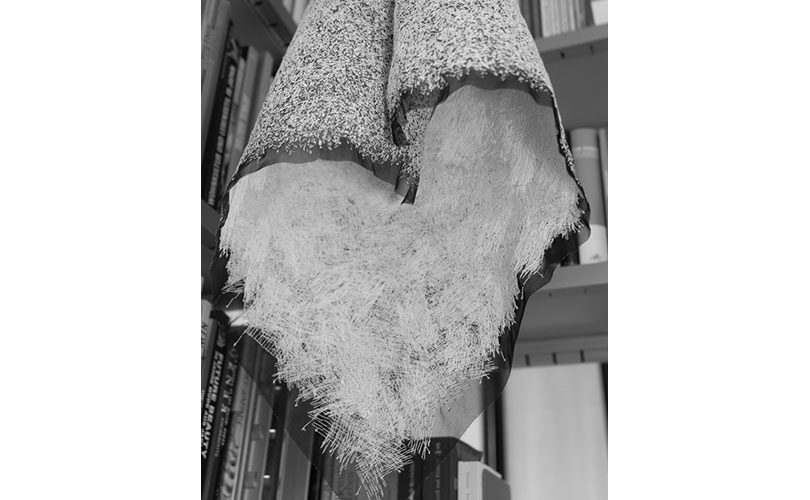
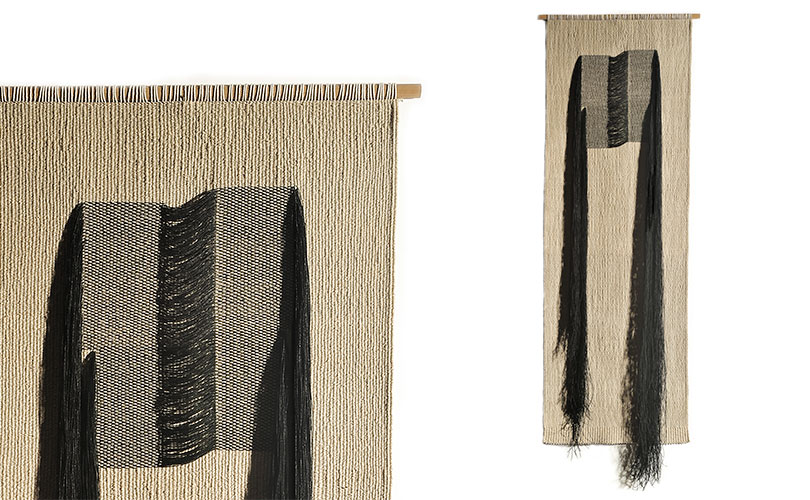
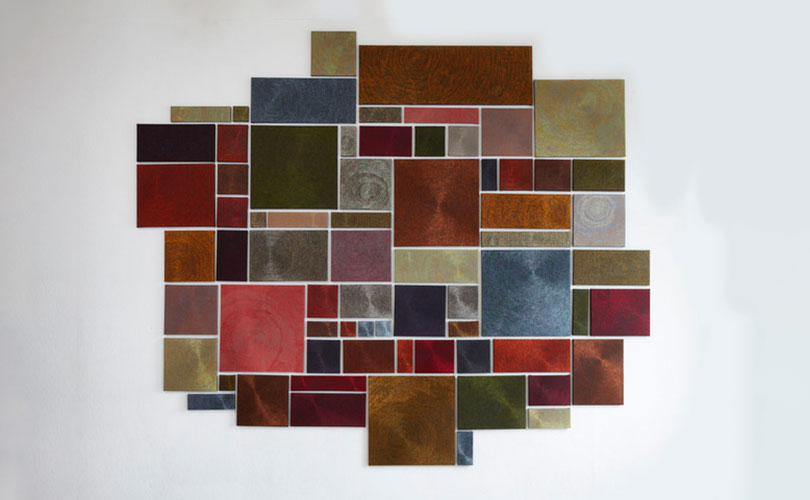
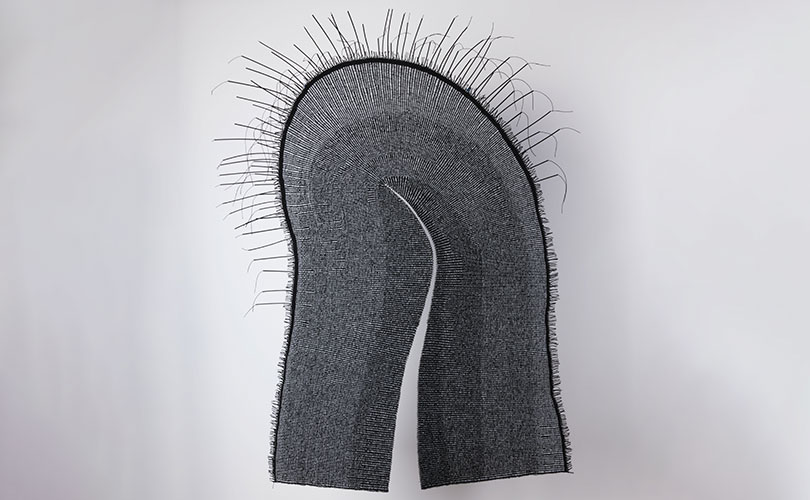
Detail: Oval 1, Åse Ljones, 2017. Photo by Tom Grotta

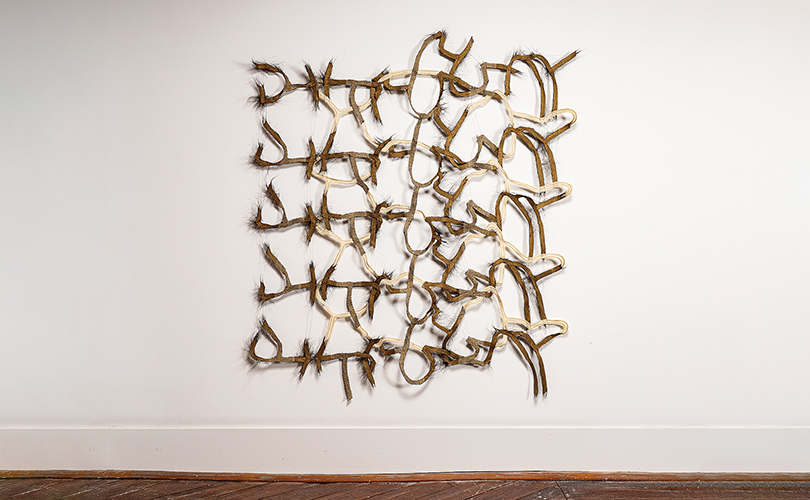
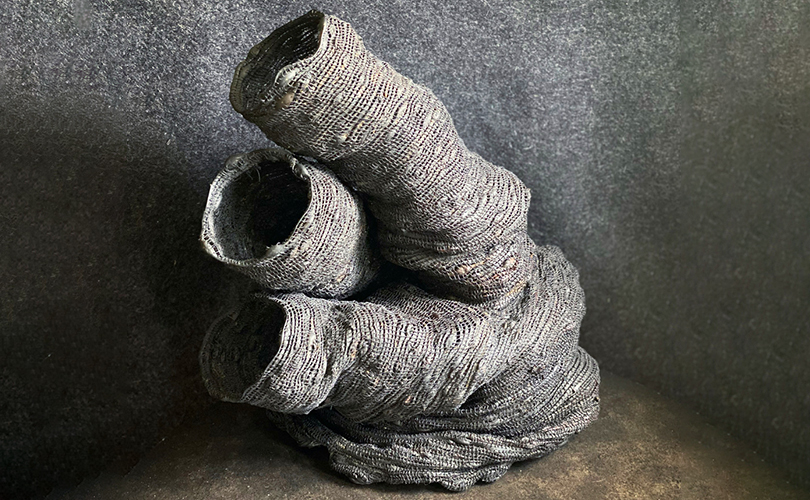
Åse Ljones writes that in her upcoming exhibition in Bergen, Norway, she investigates “the experience of colors and changes in colors in relation to light.” Her work changes character with the light depending on the direction the viewer sees it from. Then the shine and colors come into their own. “I am constantly looking for the shine, the light, the movement, and the restlessness in stillness.” Ljones’s technique is hand embroidery on linen, stretched on a frame. It is only when the embroidery is stretched that one can see the effect of the light refraction.

Magdalena Abakanowicz, the Thread of Existence
Musée Bourde
Through April 12, 2026 ️
18 rue Antoine Bourdelle
Paris, France
https://www.bourdelle.paris.fr/en/visit/exhibitions/magdalena-abakanowicz-thread-existence
Magdalena Abakanowicz
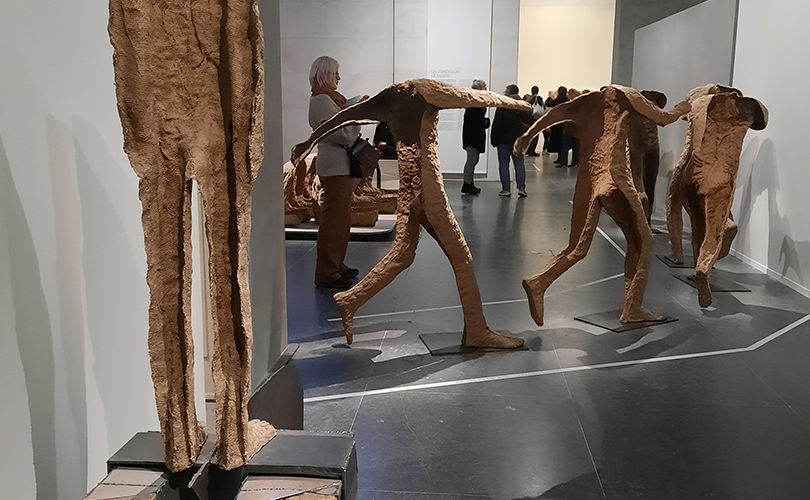
Magdalena Abakanowicz installation. Photo by Stéphanie Jacques.

A major artist on the Polish scene in the 20th century, Magdalena Abakanowicz (1930-2017) experienced war, censorship, and deprivation imposed by the communist regime from an early age. She produced immersive, poetic, sometimes disturbing and often political sculptures and textile works. Inspired by the organic world, by seriality and monumentality, her work possesses an undeniable power and presence, resonating with contemporary issues—environmental, humanistic, and feminist ones.

The Musée Bourdelle presents the first major exhibition dedicated to the artist in France, featuring 80 ensembles—40 sculptural installations, 12 textile works, drawings, and photographs. The Musée explains that the subtitle of the exhibition, the Thread of Existence combines two terms used by the artist to define her work. Abakanowicz considered fabric to be the elementary cell of the human body, marked by the vagaries of its destiny.

Beyond our Horizons: from Tokyo to Paris 
Through April 26, 2026
la Galerie du 19M
2 pl Skanderbeg 75019
Paris, France
https://www.le19m.com/en/agenda/beyond-our-horizons-from-tokyo-to-paris
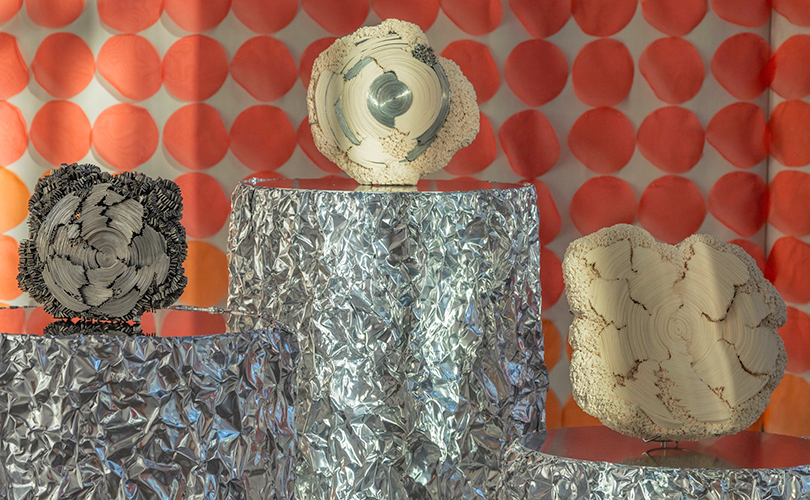
 Works from Beyond our Horizons: from Tokyo to Paris, including works by Simone Pheulpin at la Galerie du 19M, Paris/Aubervilliers. Photos courtesy of laGaleriedu 19M.

Building on the success of its Japanese counterpart, Beyond our Horizons: from Tokyo to Paris travels to France in a reimagined presentation, celebrating a creative dialogue between Japanese and French artisans and designers. Among these artists are Simone Pheulpin who created work of cotton webbing in Japan and worked with others designers created similar works in metal. A journey  through materials, creativity, and craftsmanship, the exhibition explores the deep connections between nature and creation, inspired by a conception by elemental forces — earth (土, do), water (水, sui), fire (火, ka), wind (風, fu) and void (空, ku). These principles describe a world in perpetual dialogue, where harmony and impermanence, stability and movement, body and spirit respond to one another.

Dawn MacNutt: Timeless Forms
Owens Art Gallery Through May 12, 2026
61 York Street
Sackville, NB
E4L 1E1 Canada
https://www.bourdelle.paris.fr/en/visit/exhibitions/magdalena-abakanowicz-thread-existence
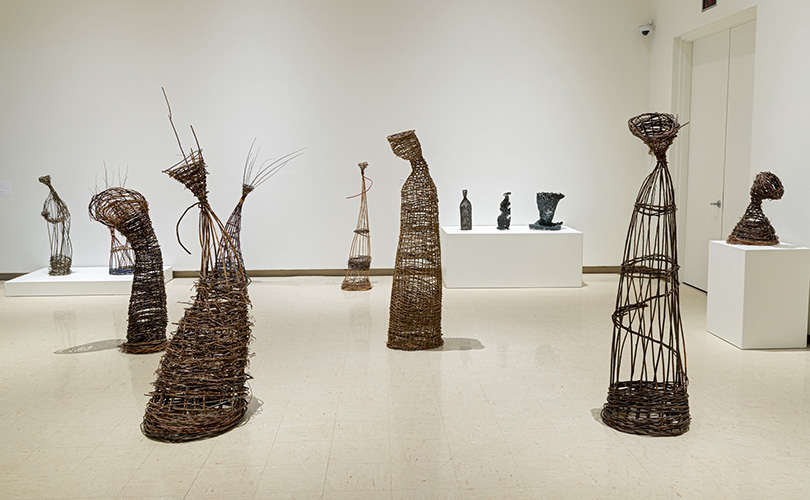
Dawn MacNutt, installation. Photo courtesy of Dawn MacNutt.

Spanning four decades of work, this exhibition, organized in partnership with MSVU Art Gallery, traces the evolution of Dawn MacNutt’s unique practice through a selection of key sculptural works. Moving from delicate miniatures crafted in silver and copper wire to impressive human forms woven from locally sourced willow, this gathering of works charts the development of a complex and nuanced oeuvre that explores the depths of the human condition. By the 1970s, her work had moved from on-loom weaving to life-size woven trees in hand-spun wool. Over the next decade, her work moved towards the haunting figural forms she is known for today.  

MSVU Art Gallery and Owens Art Gallery published a work in conjunction with the exhibition.Timeless Forms brings together over a hundred images of MacNutt’s sculptures and textiles, weaving them into the story of her life: from growing up in rural Nova Scotia during the Second World War; through her studies at Mount Allison University under the guidance of Alex Colville; to marriages, motherhood and finding, in her 40s, the courage to throw herself into art full time. Timeless Forms is available through browngrotta arts’ online bookstore.

The Baskets Keep Talking
Ongoing
Sharlot Hall Museum
415 West Gurley Street
Prescott, Arizona
https://sharlothallmuseum.org/museum_exhibits/sharlot-hall-building-exhibits/
Sharlat Hall Museum
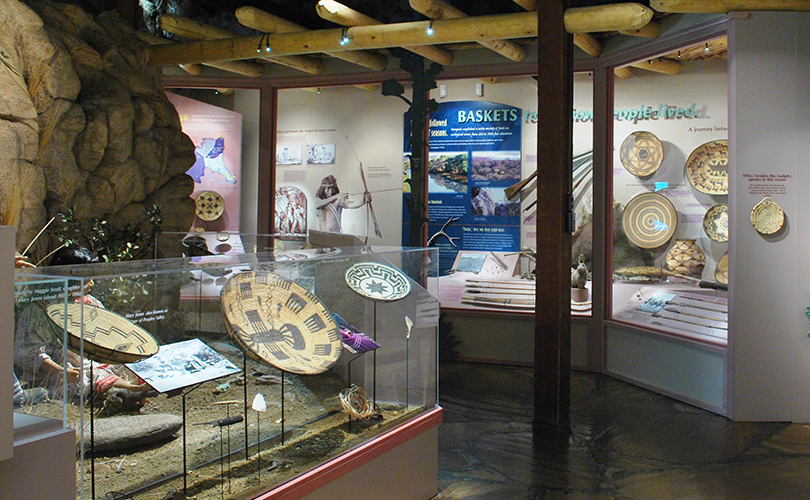
The Baskets Keep Talking exhibition. Photo courtesy of The Sharlot Hall Museum.

Housed in the Hartzell Room and opened in 2007, The Baskets Keep Talking tells the story of the Yavapai-Prescott Indian Tribe…in their own words. Viewers can explore their history and culture in this vibrant exhibit.

Enjoy!

.

.

We Get Great Press

We’ve been a bit lax at tooting our own horn this past year. Here’s a round-up of press mentions of artists that we work with and of browngrotta arts and our events — — digital and in print. 


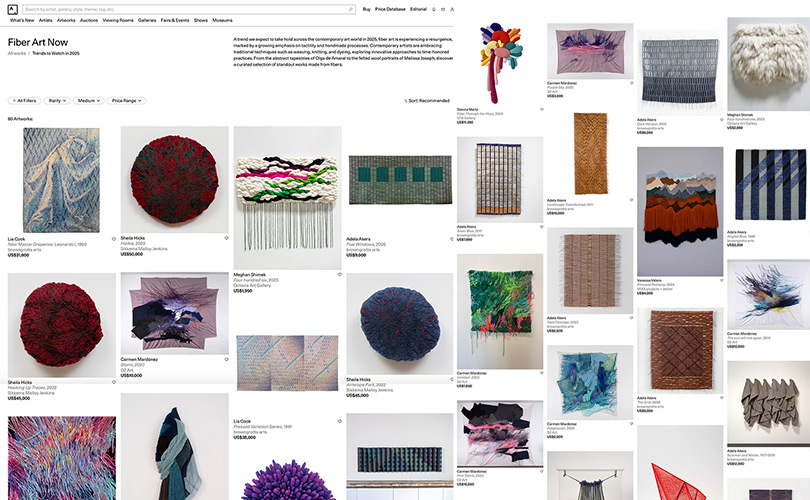
We were thrilled in January when Artsy reported that fiber art is experiencing a resurgence, a trend Artsy expects ” to take hold across the contemporary art world in 2025.” In its “Trends to Watch” item Artsy featured several artists, including Lia Cook, Adela Akers, and Sheila Hicks.  

Artsy Trends to Watch

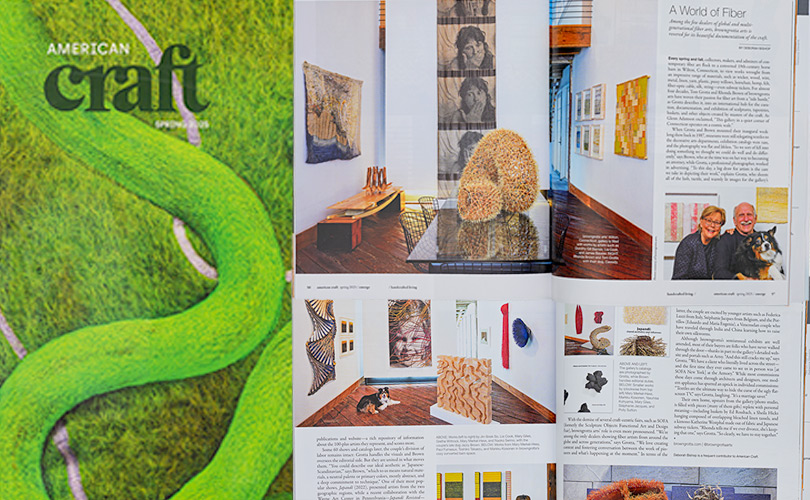
Shortly after that, American Craft Magazine asked to do a profile on Tom, Rhonda, and browngrotta arts. We are excited that the article, A World of Fiber,” by Deborah Bishop — out now — gave us the chance to showcase so many of the artists that we promote. We appreciated the care that Deborah Bishop took with all the details and her writing that, “Among the few decades of global and multi-generational fiber arts, browngrotta arts is revered for its beautiful documentation of the craft.”

browngrotta arts American Craft Magazine feature

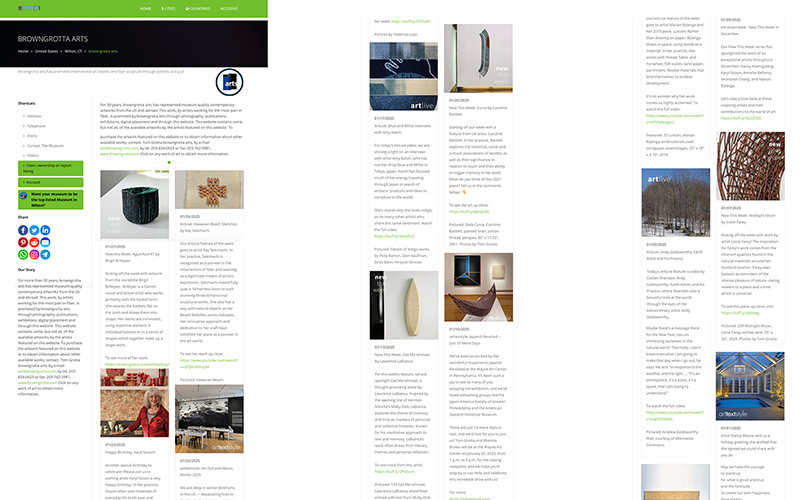
browngrotta arts got a nice listing in Museums1

Museums blog

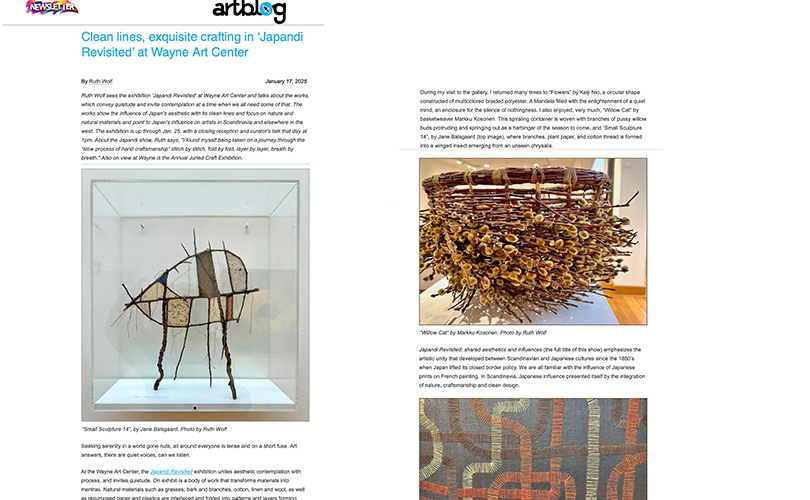
Our recent exhibition, Japandí Revisited: shared influences and aesthetics, at the Wayne Art Center in Pennsylvania got a nice review in artblog  

artblog

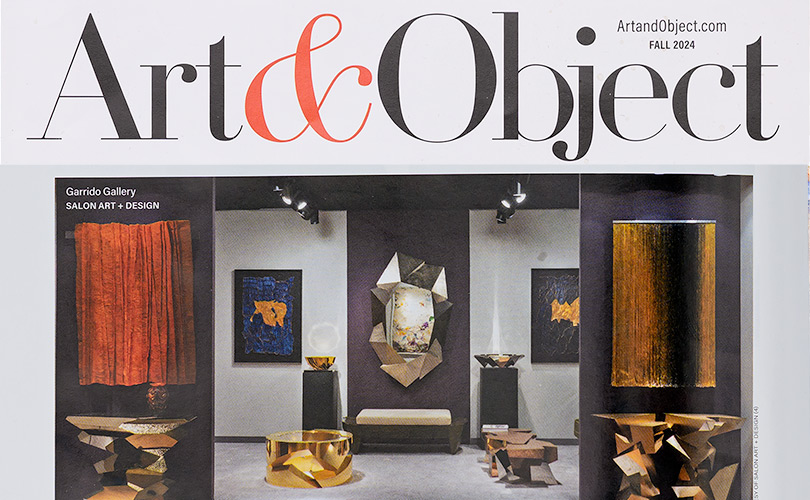
A nice photo of works by Ulla-Maija Vikman and Mia Olsson that we loaned to the Garrido Gallery for their exhibition at the Salon Art + Design show in 2023, appeared in the Fall 2024 issue of Art & Object.

Art & Object covers Salon Art + Design

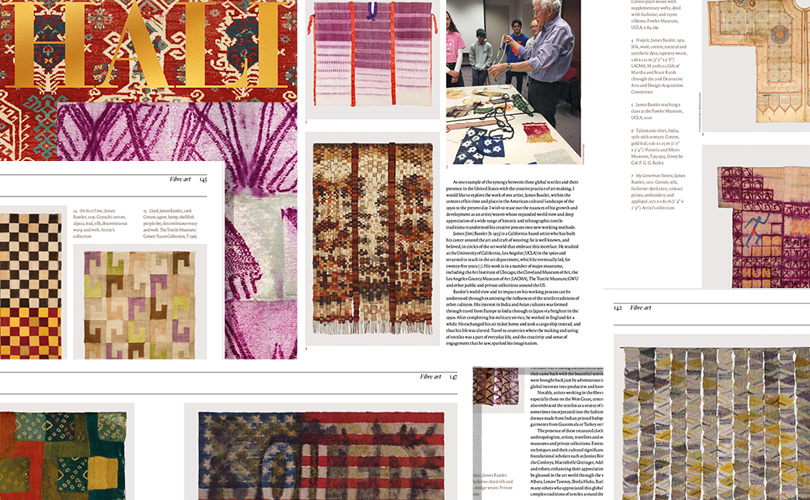
Meanwhile, artists we work with were getting good coverage for their artistic pursuits and more. Hali Magazine ran a detailed and beautifully photographed article about James Bassler, whose work will be included in our upcoming exhibition, Field Notes: an art survey. In “An artist’s life,” Elaine Phipps explores his work, “within the context of his time and place in the American cultural landscape of the 1950s to the present day.” Phipps tracks the nuances of his growth and development as an artist/weaver, and the expanded world view and deep appreciation of a wide range of historic and ethnographic textile traditions that “transformed his creative process into new working methods.”

Hali James Bassler feature article

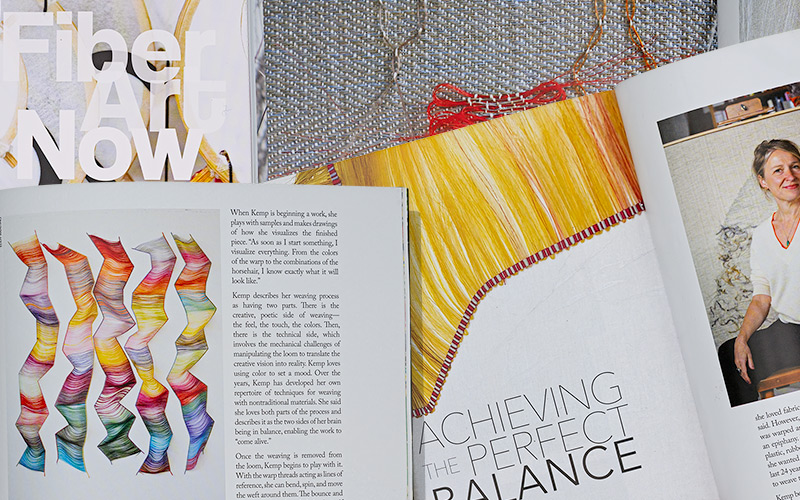
In its Fall 2024 issue, Fiber Art Now ran an insightful profile of Dutch Artist Marianne Kemp, “Achieving the Perfect Balance,” by Noelle Foye. Kemp’s work will also be in Field Works at browngrotta arts in May. Foye writes that Kemp has two parts to her weaving process. “There is the creative, poetic side of weaving — the feel, the touch, the colors. Then there is the technical side, which involves the mechanical challenges of manipulating the loom to translate the creative vision into reality.”

Marianne Kemp Fiber Art Now feature

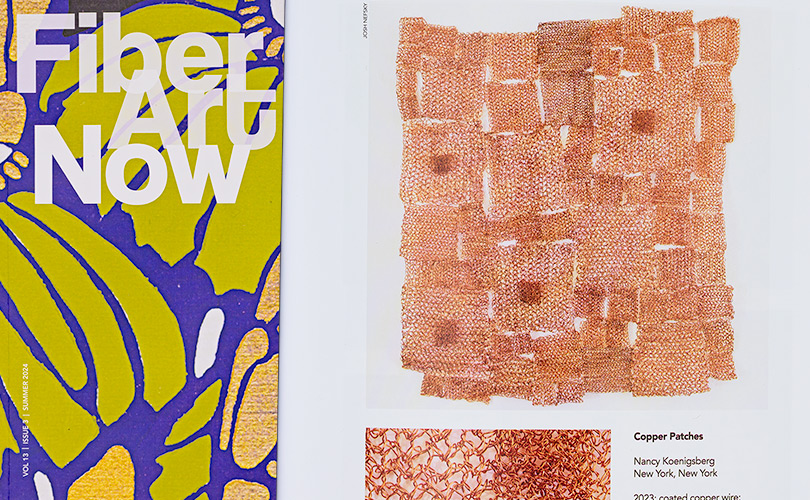
The magazine also headlined Nancy Koenigsberg’s work, Copper Patches, in its Summer 2024 issue.

Nancy Koenigsberg in Fiber Art Now

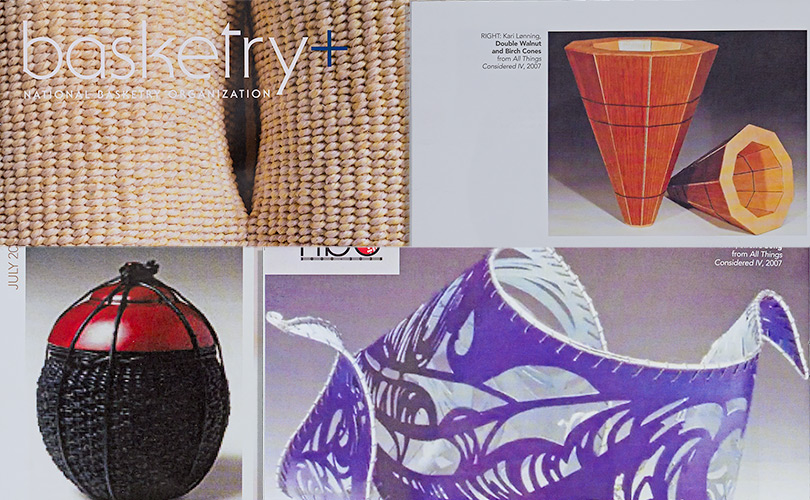
An article in the Fall 2024/Winter 2025 issue of basketry+ Magazine looked back at the first 10 years of the National Basketry Organization, illustrated with work by Jennifer Falck Linssen, Kari Lønning, and Nancy Moore Bess. Linssen’s work will be included in Field Notes.

basketry + Kari Lønning, Nancy Moore Bess, Jennifer Falck Linssen

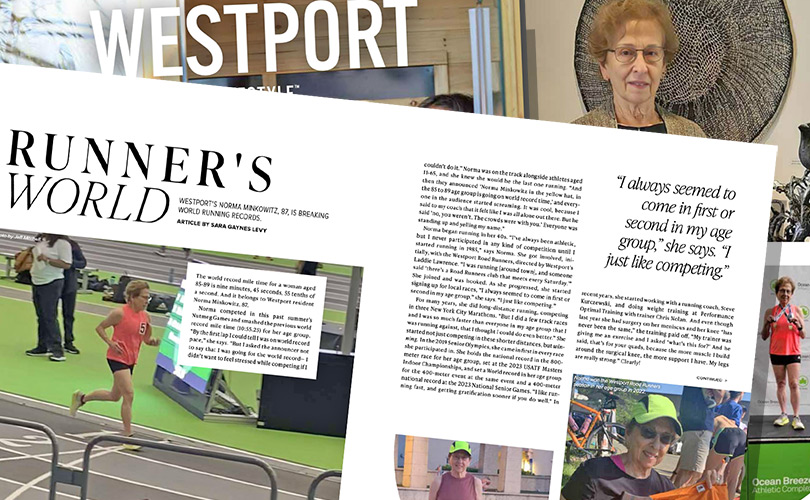
Norma Minkowitz’s achievements as an athlete and an artist were described in “Runner’s World” by Sara Gaynes Levy, in the January 2025 issue of Westport Lifestyle. Levy writes, “The world-record mile time for a woman aged 85-89 is nine minutes, 45 seconds, 45 tenths of a second. And it belongs to Westport resident, Norma Minkowitz, 87.” The article notes that Minkowitz is a world-renowned artist as well whose work is in 35 museum collections worldwide. “There’s a connection between running and art the way I do it,” the article quotes Minkowitz as saying. “My work is in fiber, and the process is to do this crochet stitch over and over. It’s very repetitive, as is running.” Minkowitz’s work will be included in Field Notes at browngrotta arts.

Norma Minkowitz in Westport Magazine

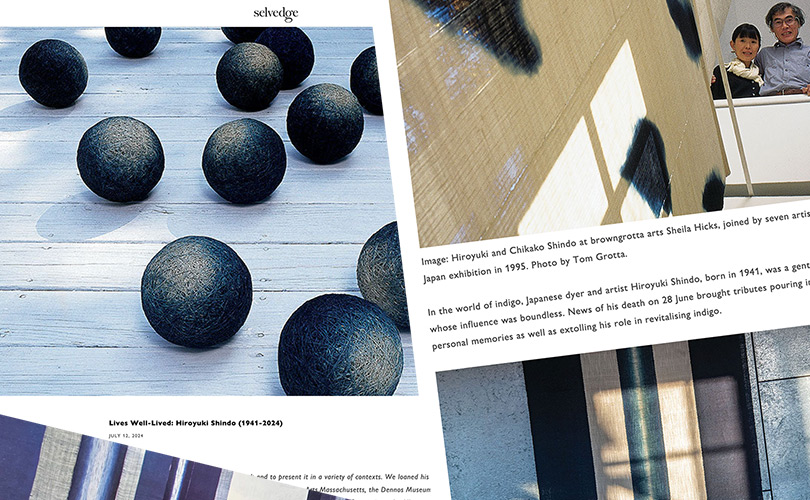
Last, but not at all least, the passing of Hiroyuki Shindo, an exceptional indigo artist from Japan was noted by in the selvedge blog,”Lives Well-Lived: Horoyuki Shindo (1941-2024).” 

Selvedge obituary: Hiroyuki Shindo

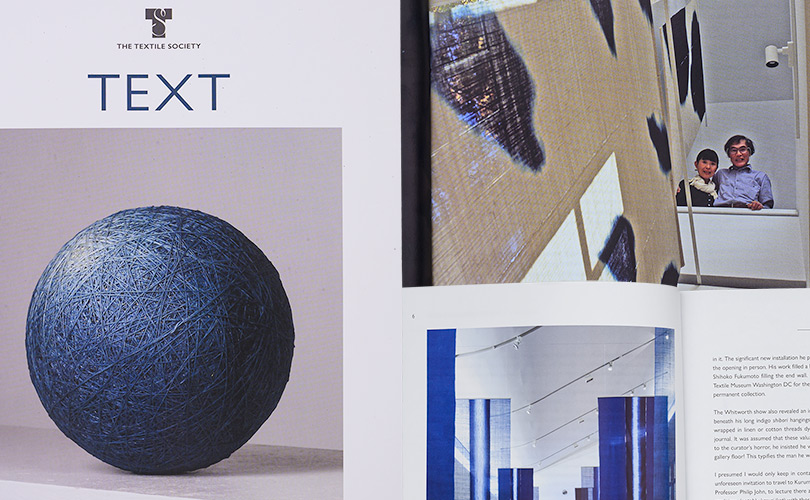
He was also remembered in Text, the Textile Society Magazine. Both remembrances were written by Jenny Balfour-Paul and each featured images of Shindo and his work by Tom Grotta.  

Text Magazine Hiroyuki Shindo obituary cover article

Pieces and Parts – Patchwork and Appliqué

Kay Sekimachi
5k Lava (Patched Pot), Kay Sekimachi, handwoven and laminated warp-dyed linen on 12 layers of japanese paper, 11” x 14” x 14”, 1991. Photo by Tom Grotta

We are on vacation and Maine and rather than post a “Gone Fishing” sign this week (only one of us fishes anyway) we decided to explore some pieced, patchworked, and appliquéd works made by artists who have worked with browngrotta arts. They include this striking patched pot by Kay Sekimachi and Resound, a large appliqué by Ase Ljones. Work by both artists will be featured in browngrotta arts’ fall exhibition, Ways of Seeing (September 20 – 29, 2024).

Åse Ljones
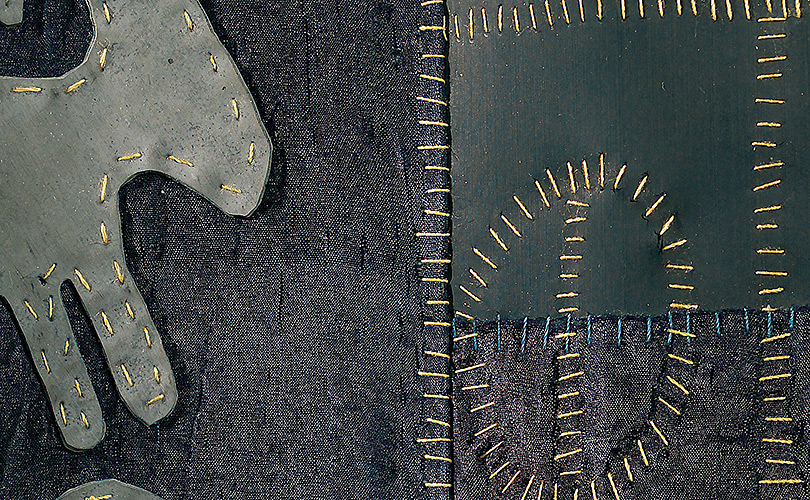
Detail: 4al Resound, Åse Ljones, rubber, silk, thread, 72” x 43.75″, 2001. Photo by Tom Grotta

Patchwork and appliqué have been integral to textile arts for centuries. Originating from the need to reuse and repurpose worn-out fabrics, patchwork involved stitching together various fabric pieces to create a larger, functional piece, often a quilt. Appliqué, on the other hand, involves sewing smaller pieces of fabric onto a larger base fabric to create decorative designs. Both techniques have roots in diverse cultures, from the elaborate quilts of 19th-century America to the intricate Indian patchwork and Japanese boro textiles.

Katherine Westphal
36w Untitled, Katherine Westphal, paper and linen, 32″ x 47″, 1983. Photo by Tom Grotta
Katherine Westphal
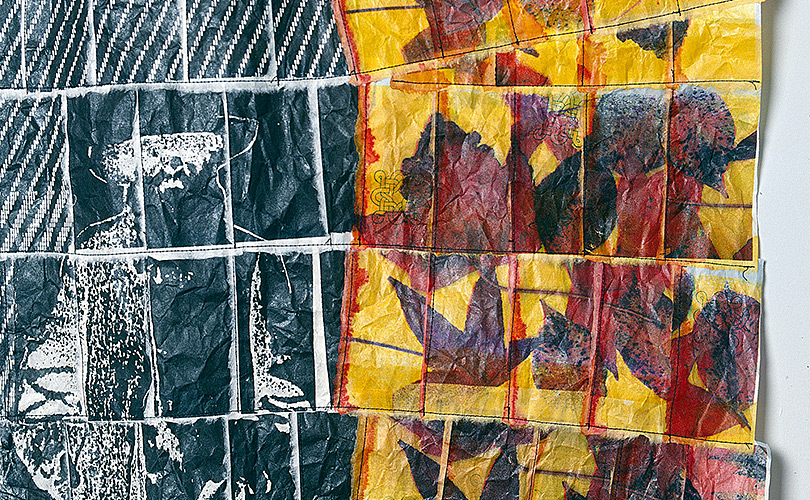
Detail: 1w October: A Walk with Monet, Katherine Westphal, paper, dyed, heat transfer photo copy, patched, 60″(h) x 51″, 1992. Photo by Tom Grotta

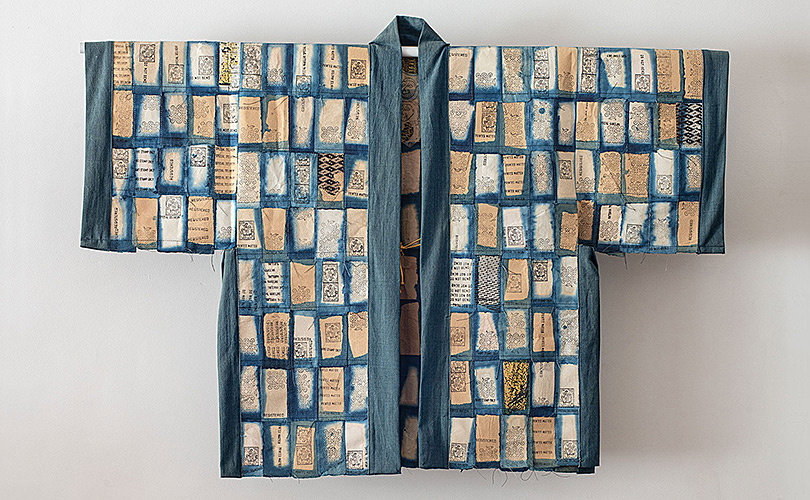
The techniques have continued relevance. They are used in mixed media works and in upcycling recycled fabrics, leather, and plastic, reflecting a broader cultural shift towards sustainability. Contemporary patchwork and appliqué often intersect with other art forms, including modern art, graphic design, and even digital art. This cross-disciplinary approach results in innovative works that challenge traditional boundaries and invite viewers to see these techniques in a new light. Noted surface designer Katherine Westphal, created a kimono by combining Japanese subway tickets and fabric. In another, October: A Walk with Monet, she patched together images she created using paper and heat transfer. Westphal is one of the artists in the upcoming exhibition Impact: 20 Women Artists to Collect (September 21-29, 2024), one part of Ways of Seeing.

Neha Puri Dhir
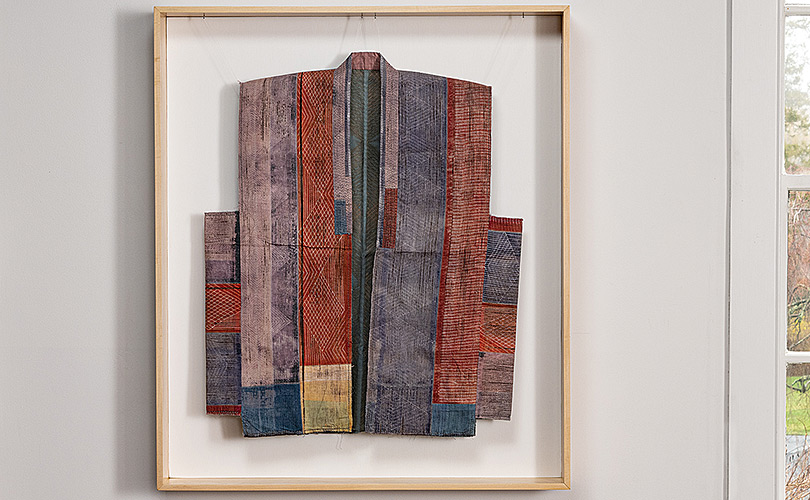
6npd Farmers Jacket, Neha Puri Dhir, cotton, reversible, Japanese 18th century woodcutter’s vest inspired, stitch-resist dyeing, discharge dyeing, patchwork, overdyeing, Sashiko on the collar, 2015. Photo by Tom Grotta
Anette Bellamy
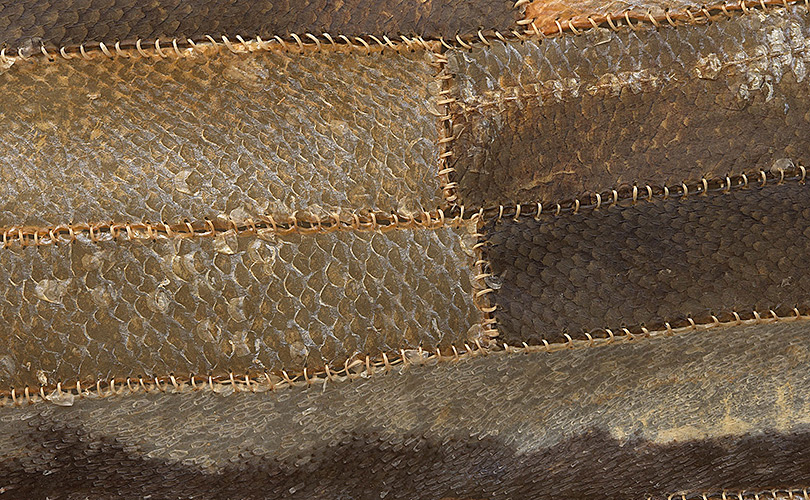
Detail: 3ab Food Chain, Annette Bellamy, halibut, sablefish, salmon (including smoked salmon skins) 36″ x 21.5″, 2017. Photo by Tom Grotta

Contemporary artists use patchwork and appliqué as a medium for personal storytelling. Annette Bellamy is a commercial fisherwoman in Alaska part of the year, a part of her life that is reflected in works like Food Chain, made of pieced fishskins from a variety of fish. Neha Puri Dhir’s Farmer’s Jacket reflects a interest in upcycling and Japanese stitching techniques.

Mia Olsson
Detail: 9mo Map of Warm Area, Mia Olsson, sisal, 24.75″x 19.75″, 2012. Photo by Tom Grotta

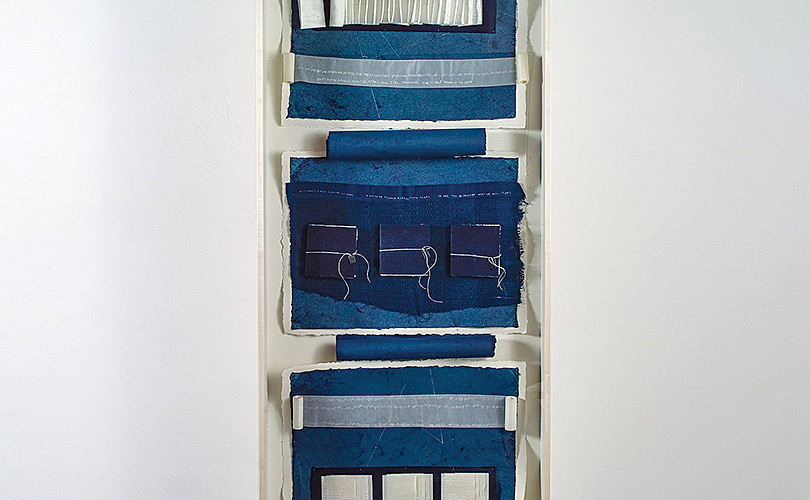
Patchwork and appliqué techniques are powerful tools for expressing individuality. In Aphelion, the late Lena McGrath Welker merged drawings and monotypes of Ptolomy’s diagrams, constellations, plus legible and illegible writing, and blackened copper prayer tabs in a statement about the universe and our role in it. The techniques may also be used to address contemporary issues, pieced works and intricate quilts that make social and political statements. Mia Olsson’s Map of a Warm Place, for example, uses pieces of sisal to make an environmental statement.

Lena Welker
Detail: 10lw Aphelion I, Lena Welker, Arches paper (white), Rives BFK, Cave flax, Twinrocker cotton, all hand-dyed indigo; shikibu gampi folios, silk thread, ink, handwoven and hand dyed indigo lace fragment (from The Labyrinth/Toward Illumination installation). Books have Hosho paper folios all drawn in, longstitch binding, and are tied shut with tow linen and blackened bronze prayer tabs. Mei-mei Berssenbrugge’s poem fragments are all stitched to the woven lace. You have a document with all the other citations. Silk paper scrolls stitched with silk thread. 79” x 34.75” x 6.5”, 2OO8.. Photo by Tom Grotta

For more contemporary patchwork and appliqué, checkout contemporary boro: https://upcyclestitches.com/contemporary-boro/, Yoshiko Jinzenji, and Natalie Chanin.


Art Assembled: New This Week in November

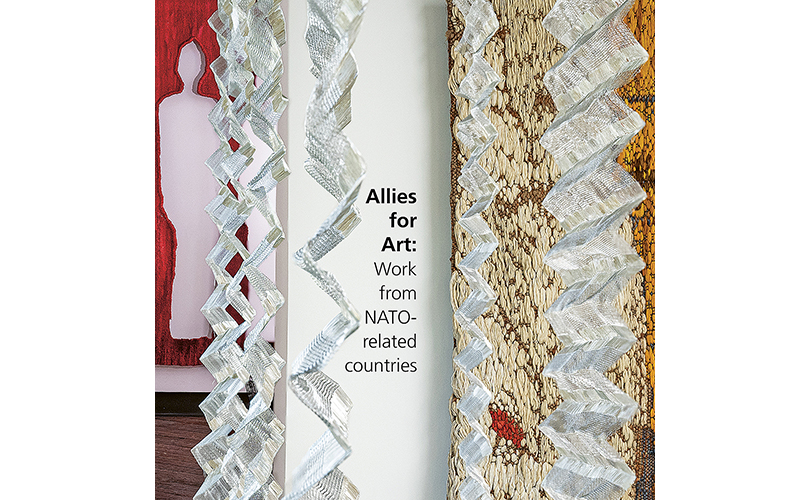
The holiday season has commenced and we are feeling extra grateful to have the opportunity to work with so many talented artists! In November we highlighted some of our favorite works; which are currently on display in our Allies for Art exhibition online on Artsy. Read on to see what art we think you should check out!

Esmé Hofman
Esmé Hofman (NL) 3eh Double Basket No 5 black willow, fine-skein, elmwood 11” x 10” x 19.75”, 2019

To kick off our New This Week series in November, we introduced the work of Esmé Hofman. Hofman is an artist that grew up and resides in the Netherlands. She is is known for taking a modern approach to her work. When asked about her process, she has said when creating she is often prepared to look beyond the borders of traditional handcraft – which gives her the freedom to explore creative possibilities.

 “As a traditional maker there are three pillars in my work, which are equally important,” said Esmé Hofman. “These are function, materials and technique. By letting the function go, I get more freedom to place an emphasis on form. This gives me freedom to explore new ways of making.”

Åse Ljones
16al Dobbel Domino, Åse Ljones, hand embroidery on linen, stretched on frame, 56.675″ x 57″ x 2.5″, 2015

The second piece we have for our readers is Dobbel Domino, which was created by Åse Ljones. Ljones is a renowned Norwegian artist who is widely known in the art world for her complex hand embroidered pieces, which incorporate stitch drawings that Ljones meticulously details. When asked about her art and process Ljones said:

“To embroider by hand takes time. It is a slow process that gives room for silence. I seek silence. In silence, I retrieve memories and find new paths forward. In all my work as an artist I have eliminated the extraneous. I’ve cultivated simplicity to approach the core of myself, in myself, with fewer measures.” 

Stéphanie Jacques
16sj Ce qu’il en reste IV, Stéphanie Jacques, osier, enduit, fil, 40.5″ x 16″ x 11″, 2015

Things got even more impressive throughout the month with art from Belgium-based artist, Stéphanie Jacques. She is known for being a relentless reinventer when it comes to her art. Figures created by Jacques are clearly humanoid, but less literal.

For a long time I have been trying to create a figure that stands upright,” said Stéphanie Jacques. “All of this is related to the questions I ask myself about femininity and sexual identity. My driving forces are the emotions, the wants and the impossibilities that are particular to me. Once all this comes out, I seek to make it resonate in others. My work is not a lament, but a place where I can transform things to go on.”

Wlodzimierz Cygan
16wc Proverbs V, Wlodzimierz Cygan, wool, sisal, 73″ x 49.25″, 2005. Photo by Tom Grotta.

Last, but not least, we bring you the work of Polish artist, Wlodzimierz Cygan. Cygan has been creating (and teaching) groundbreaking textile creations for years and has been exhibited all around the world. Growing up, Cygan lived in a city in Poland called Łódź, which has very strong textile traditions that inspired him to create the works of art you see today.

“When trying to determine why the means of artistic expression in tapestry was becoming archaic,” said Wlodzimierz Cygan. “I realized that one of the reasons might have to do with the custom of treating the threads of the weft as the chief medium of the visual message. . . These observations led me to wonder how the artistic language of textiles might benefit from a warp whose strands would not be parallel and flat but convergent, curved or three dimensional ….”
As always, we hope you enjoyed the art we’ve highlighted throughout November. If you’re keen on any of the pieces that we’ve highlighted, works from Allies for Art: Work from NATO-related countries are viewable and available for purchase on Artsy. The exhibition has been documented in a catalog produced by browngrotta arts. To get a print copy for yourself, click here.

Allies for Art: Exclusively Online on Artsy through November 18, 2022

Did you miss the in-person version of Allies for Art: Work from NATO-related countries at browngrotta arts? Good news! You can see the art that made up the exhibition exclusively on Artsy through November 18th.

Three dimensional embroidered leaf shaped wall sculpture
7ak Embraced by Nature II, Anda Klancic, embroidered viscose, flax, cotton, polyester, metal filament, PVA fabric 31” x 23” x 9.25”, 2004. Photo by Tom Grotta

The nearly 50 artists in Allies for Art are from 21 different countries — 18 NATO members and 3 NATO applicants. Their work reflects diverse perspectives and experiences. The exhibition includes art created under occupation, in the ‘60s through the 80s, art by those who left repressive governments in Hungary, Romania and Spain, and art by other artists who left Russia in later years. Allies for Art also includes current works created by European artists including Gudrun Pagter of Denmark, Åse Ljones of Norway, Włodmierz Cygan of Poland, Ceca Georgieva of Bulgaria and, artists new to browngrotta arts, including Esmé Hofman of the Netherlands, Aby Mackie of Spain and Baiba Osite of Latvia.

Abstract off the wall textile sculpture
20mb Giallo, Marian Bijlenga, cotton; horshair, 58″ x 53″, 1994. Photo by Tom Grotta.

You can also learn more about the exhibition in the Allies for Art full-color catalog, which includes lush images and details shots and an essay by Kate Bonansinga, Director, School of Art, College of Design, Architecture, Art, and Planning at the University of Cincinnati, Ohio available on our website.

VIEW EXHIBITION ONLINE: Artsy
VIEW EXHIBITION IN PRINT: Order an Allies for Art catalog


Art Out and About: Exhibitions Here and Abroad

It’s September and it’s not just schools that are opening their doors. Tanned, rested and ready — museums and galleries like browngrotta arts are presenting fall events. Here’s a round up of some fiber events to view in the next few months.

NYTM
New York Textile Month
New York City and nearby locations
https://www.textilemonth.nyc

In New York, it’s NYTM — New York Textile Month.  That means range of activities — talks, films, studio visits, workshops, an in-window exhibition at Bergdorf Goodman, exhibitions at Mana Contemporary and elsewhere, and Eva Hesse’s Expanded Expansion at the Guggenheim — all celebrating textile art, making and conservation. Check out the NYTM website for suggestions, times, and dates.

Contemporary Weaving Artist Series 6: Kyoko Kumai
Through November 6, 2022
Nakahechi Museum of Art
891 Kinro Nakahechi-machi
Tanabe-shi Wakayama-ken Japan
Tel; 0739-65-0390 
https://www.tokyoartbeat.com/en/events/-/2022%2Fcontemporary-weaving-artist-series-vi-kyoko-kumai

Detail of Memory, Kyoko Kumai, stainless steel filaments, 41” x 19” x 19”, 2017. Photo by Tom Grotta

Since 2017, Tanabe City Museum of Art has been presenting Contemporary Weaving, an exhibition series that showcases outstanding contemporary weavers who create world-class works by combining traditional and unique materials and techniques with new weaving expressions that reflect the times. This year’s Contemporary Weaving Artist Series 6 features the art of Kyoko Kumai (1943), who has expanded the world of weaving through her innovative use of metallic threads, and continues to develop a variety of expressions that evoke light and wind.

Intellectual Beauty
2nd International Exhibition of Textile Art and Mixed Media
Museu Textil 
September 1 – February 28, 2022
Virtual
https://www.museutextil.com

Vessel from Intellectual Beauty by Jeannet Leenderste. Photo by Jeannet Leenderste

Rodrigo Franzao founded a fully envisioned virtual museum that focuses on the work of artists who “use textile strategies as support for their creations.” For Intellectual Beauty, Fanzao has gathered 43 artists from 18 countries, who have used their “sensitive reality to introduce to the beholder the sensorial perceptions of a reality emancipated from rules and theory, free and absorbed by inspiration.” You can view the entire exhibition, 116 artworks, including two by Jeannet Leenderste, online.

Contextile 2022
September 3 – October 31, 2022
Guimarães, Portugal

Landscape Here West, by Åse Ljones from the Intellectual Beauty exhibition. Photo by Helge Hansen.
Anthropocene by Neha Puri Dhir from Contextile 2022. Photo by Neha Puri Dhir.

Contextile 2022 – Contemporary Textile Art Biennial celebrates its 10th Anniversary this year. The exhibition features 57 works by 50 artists from 34 countries chosen for their high creativity, originality and technical competence around the textile element, by construction, theme, concept or material used, as well as their adherence to the concept of Contextile 2022: RE-MAKE.  Among the artists included are Neha Puri Dhir of India. In addition, the Contextile organizers selected Norway as its invited country and are presenting work from 13 Norwegian textile artists including Åse Ljones.

X International Biennial of Contemporary Textile Art, “25 Years World Textile Art”
From November 3rd to December 15th, 2022
Miami International Fine Art (MIFA)
5900 NW 74th Ave
Miami, FL 33166
Colombia Consulate
280 Aragon Ave Coral Gables, FL 33134

https://wta-online.org/blog/x-biennial-of-contemporary-textile-art-wta-25-years/

This year 2022, WTA celebrates its 25th anniversary with the X International Biennial “25 YEARS WTA”, from October through December 2022. For the 10 th Biennial, more than ten countries will be interconnected to celebrate WTA history through salons featuring 25 artists each. A number of artists will have worked displayed in connection with this exhibition including Anneke Klein.

Allies for Art: Work from NATO-related countries
October 8-16, 2022
browngrotta arts
Wilton, Connecticut
http://www.browngrotta.com/Pages/calendar.php

Detail of River by Jolanta Owidzka, 1978 and Ultima Copper, Green, Orange vessels by Gertrud Hals, 2021. Photo by Tom Grotta.

Mindful of the impact that poitical events can have on artists and their art, browngrotta arts will present to work of nearly 50 artists from 21 NATO-related countries in Europe whose work reflects diverse perspectives and experiences. Allies for Art: Work from NATO-related countries (October 8 – 16, 2022) will include art created under occupation, in the ‘60s, ‘70s and ‘80s, art by those who left Hungary, Spain and Romania while occupied, and who left Russia in later years, including Jolanta Owidzka, Zofia Butrymowicz, and Krystyna Wojtyna-Drouet of Poland and Luba Krejci and Jan Hladik of Czechoslovakia, Ceca Georgieva of Bulgaria, Gyöngy Laky (Hungary/US), Ritzi Jacobi (Romania/Germany), Adela Akers (Spain/US), Aleksandra Stoyanov (Ukraine/Israel) and Irina Kolineskova (Russia/Germany). Allies for Art will also include recently created art by artists living in Europe, including works by Gudrun Pagter of Denmark, Åse Ljones of Norway, Ulla-Maija Vikman of Finland, Heidrun Schimmel of Germany, Lilla Kulka and Włodmierz Cygan of Poland, and, five artists new to browngrotta arts, including, Esmé Hofman of the Netherlands, Aby Mackie of Spain and Baiba Osite of Latvia.

Reserve your space on Eventbrite.


The Japandí Catalog (our 52nd) is Available

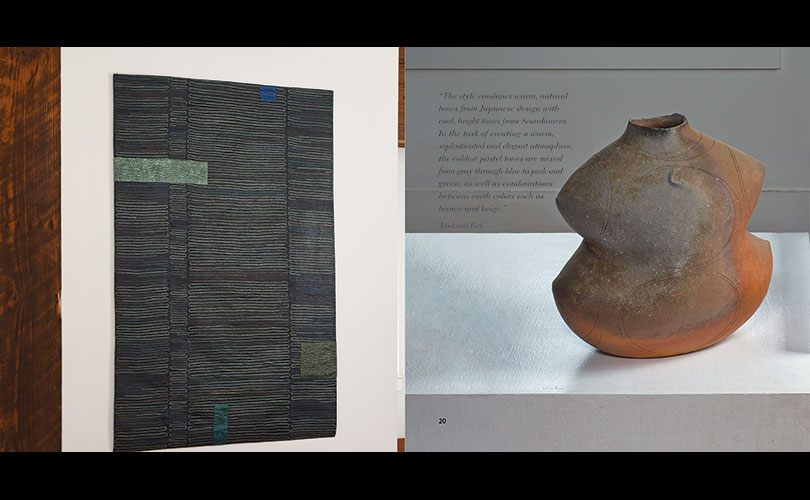
Birgit Birkkjaer and Kay Sekimachi spread
Birgit Birkkjaer and Kay Sekimachi spread from: Japandí: shared aesthetics and influences

For browngrotta arts, documentation of the field of contemporary art textiles is critically important. Like a tree falling in the forest, if we don’t document an exhibition we’ve curated it’s a bit like if it didn’t happen. Generally, our exhibitions include catalogs that feature individual images of each artwork included, and often, an artist’s statement for each work. In addition, we typically feature essays by curators and scholars who take a broader look at the work or the exhibition theme.

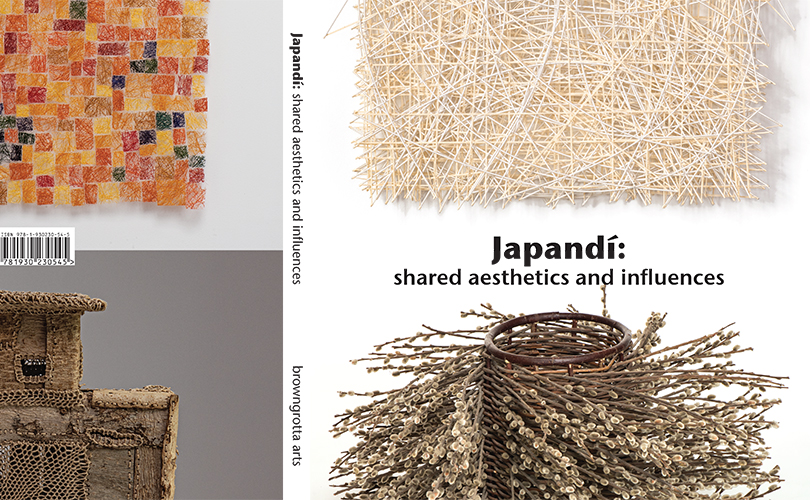
Japandí: shared aesthetics and influences catalog cover

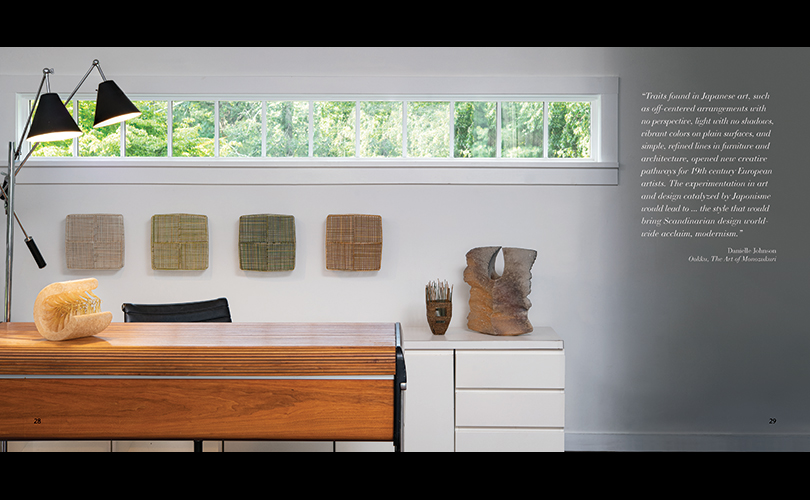
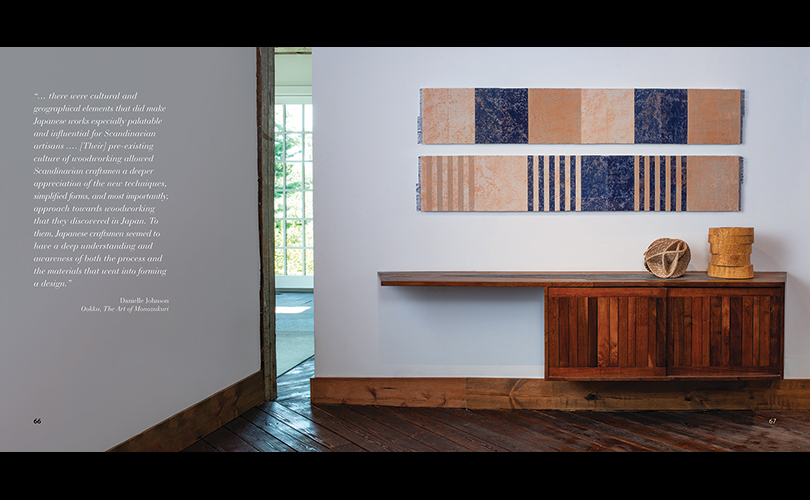
For our latest catalog, Japandí: shared aesthetics and influences https://store.browngrotta.com/catalogs/ (our 52nd), however, we took a slightly different approach. Japandi is a term that refers to the aesthetic kinship one sees between art and design of Japan and the Scandinavian countries. To illustrate affinities, we created spreads — room- or wall-sized groupings of works from each region, rather than highlighting individual artworks. We included the artists’ recollections about how they discovered another culture or how other cultures have influenced their work. We added statements from designers, architects and authors about the similarities they have observed. 

Japandí: shared aesthetics and influences catalog cover
Works by Merja Winqvist, Naoko Serino, Kari Lønning and Yasuhisa Kohyama from Japandí: shared aesthetics and influences

Instead of commissioning an essay, we shared with you what we discovered about Japandi as we researched this exhibition. The introductory text, Mapping Affinities, explains that the roots of Japanese/Nordic synergy extend to the 19th century. It also explains that the trendy term, Japandi, refers to four elements, which the introduction describes: appreciation for exquisite craftsmanship and natural and sustainable materials, minimalism and respect for the imperfect (wabi-sabi) and the comfortable (hygge). The introduction also describes how the artists included experience the Japandi elements differently — some through study, some through travel. Still others describe recognizing these parallels in ways as something they were always aware of and acted upon.

textile by Chiyoko Tanaka, basket by Kazue Honma and wood sculpture by Markku Kosonen
Textile by Chiyoko Tanaka, basket by Kazue Honma and wood sculpture by Markku Kosonen from Japandí: shared aesthetics and influences

Not all the work that is in the catalog appeared in the exhibition — we included these works to further illustrate our sense of the regions’ common approaches.

Åse Ljones wall hanging and Ceramic by Yasuhisa Kohyama spread
Åse Ljones wall hanging and Ceramic by Yasuhisa Kohyama spread from Japandí: shared aesthetics and influences

We hope you’ll get a copy of Japandí: shared aesthetics and influences https://store.browngrotta.com/catalogs/ and see for yourself. 


Acquisition News – Part II, Abroad

More on museum acquisitions of works by artists from browngrotta arts in the last two years. We have 18 works to report on that have been acquired by institutions outside the US — from Norway to Lithuania to Italy to Japan and places in between.

Heidrun Schimmel
One of two works that comprise Hanging by a thread IV, handstitched by Heidrun Schimmel, 1986-1987, acquired in 2021 by the Diocesan Museum in Bamberg, Germany. Photo by: Monika Meinhart.

Heidrun Schimmel

Seven works by Heidrun Schimmel have been acquired since 2020. Two by the Staatliche Kunstsammlungen in Dresden, two by Museum of Applied Art, Frankfurt and three by the Diocesan Musuem in Bamberg.

Kyoko Kumai
Furious Anger by Kyoko Kumai acquired by the Janina Monkute-Marks Art Museum in Kedainai, Lithuania. Photo by Takashi Hatakeyama

Kyoko Kumai

One work by Kyoko Kumai was acquired by the Angers Museums in Angers, France (Jean-Lurçat and the Museum of Contemporary Tapestry) and another by the Janina Monkute-Marks Art Museum in Kedainai, Lithuania.

Carolina Yrarrázaval
Medioevo, jute and linen, Carolina Yrarrázaval. One of two tapestries acquired by the National Museum of Contemporary Art in Kyoto. Photo by Patricia Novoa.

Carolina Yrarrázaval

Two tapestries were selected on May of this year at Yrarrázaval’s exhibition in Kyoto by the National Museum of Contemporary Art in Kyoto.

Åse Ljones

Åse Ljones

Åse Ljones‘ work, Atterskin, was purchased by Nordenfjeldske Art and Craft Museum in Trondheim , Norway in 2020 and Mylder was purchased The National Museum of Art, Architecture and Design in Oslo, March 2021. 

Federica Luzzi
Federica Luzzi’s work acquired by the Museum of Contemporary Art, Salerno, Italy. Photo by Federica Luzzi.

Federica Luzzi

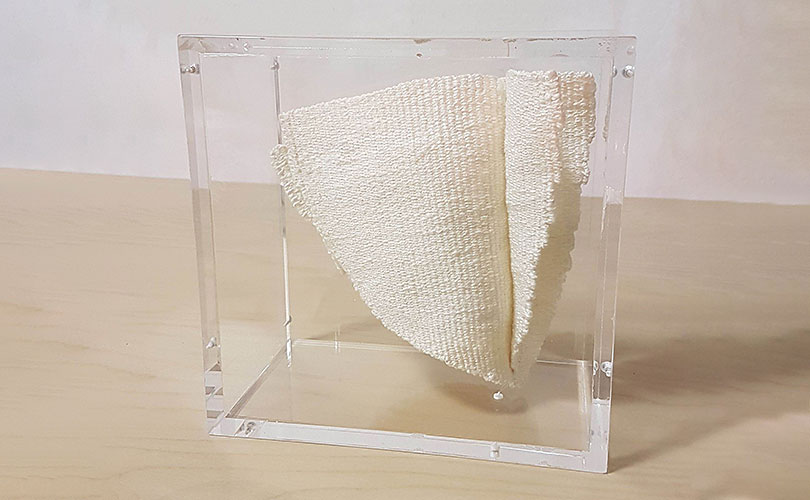
An encased textile, Shell-Omaggio a Costanino Dardi, by Federica Luzzi was acquired by the Museum of Contemporary Art, Salerno, Italy for a collection curated by Fondazione Filiberto e Bianca Menna – Centro Studi D’Arte Contemporanea.

The textile object is suspended and anchored with nylon thread in a plexiglass box. Like a seed, with an aerodynamic shape that is structured for long movements and transport, it is closed in a box that prevents its natural and complete movement, it is trapped in it. “This work was done just before the outbreak of the pandemic,” Luzzi says. “So without knowing what would happen, but continuing my research on envelopes, I visualized even better the containment condition of a body.”

Simone Pheulpin
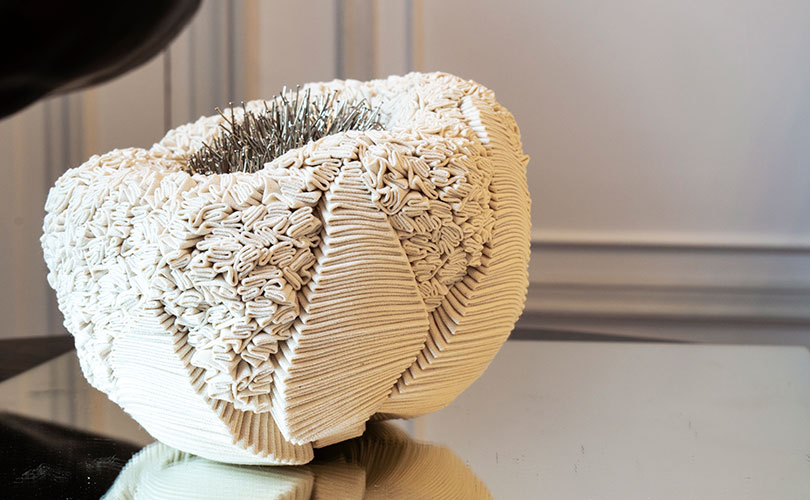
Eclosion Epingles by Simone Pheulpin, photo courtesy of Galerie Maison Parisienne.

Simone Pheulpin

Two artworks by Simone Pheulpin have been acquired by the Musée des Arts Décoratifs i(MAD) inn Paris in December 2019: Jéromine, Série Eclipse (2019); Eclosion Epingles (2019). Another, Détail VII (2021), will be acquired by the same museum in 2021. The acquisitions were organized by the Galerie Maison Parisienne in Paris.

Wlodzimierz Cygan
Organic by Wlodzimierz Cygan, acquired by TAMAT in Brussels, Belgium. Photo by This Way Design.

Wlodzimierz Cygan

In 2021, Organic (2018) by Wlodzimierz Cygan was acquired by the Musée de la Tapisserie et des Arts Textiles de la Fédération Wallonie-Bruxelles (TAMAT) in Tournai, Belgium.


Volume 50 Art Focus: The Salon Wall

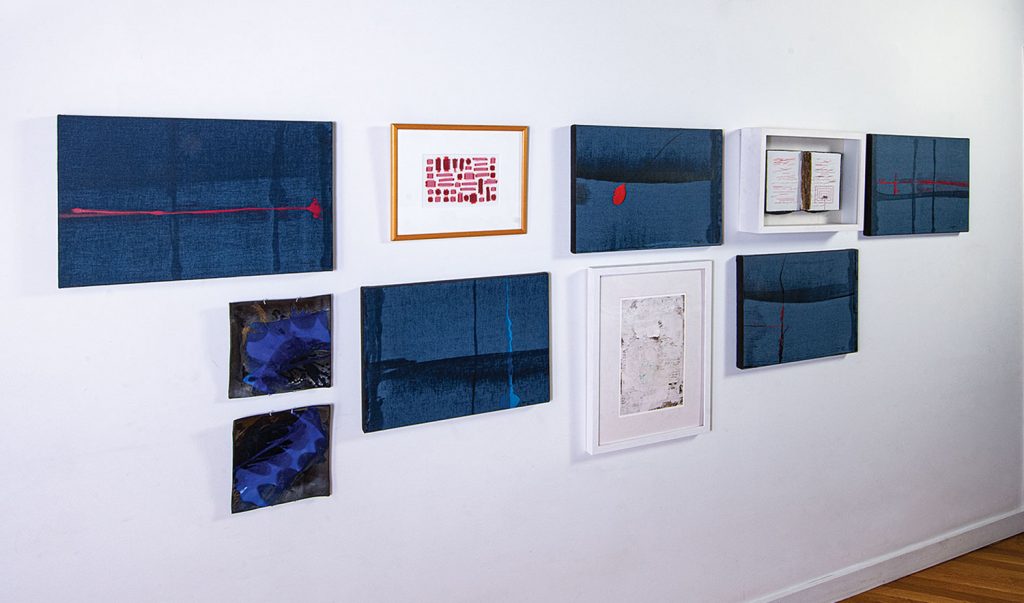
In our recent exhibition, Volume 50: Chronicling Fiber Art for Three Decadeswe featured a gallery wall with art by nine international artists from five countries.

works by Claude Vermette, Wendy Wahl, Caroline Bartlett, Toshiko Takaezu, Joyce Clear. Photo by Tom Grotta
Works by Claude Vermette, Wendy Wahl, Caroline Bartlett, Toshiko Takaezu, Joyce Seymore. Photo by Tom Grotta

Salon walls, or gallery walls as they are also called, are a favorite with designers, according to Invaluable, for a reason: they can be curated to fit an assortment of styles and work well in virtually any room. (“15 Gallery Walls to Suit Every Style,”  https://www.invaluable.com/blog/gallery-wall-ideas/utm_campaign=weeklyblog&utm_medium=email&utm_source=house&utm_content=blog092420 ) Salon walls “first became popular in France in the late 17th century,” according to the Invaluable article. “Salons across the country began displaying fine art from floor to ceiling, often because of the limited space, that encapsulated the artistic trends of the time. One of the first and most famous salon walls was displayed at the Palace of the Louvre in 1670, helping to establish the Louvre as a global destination for art.”

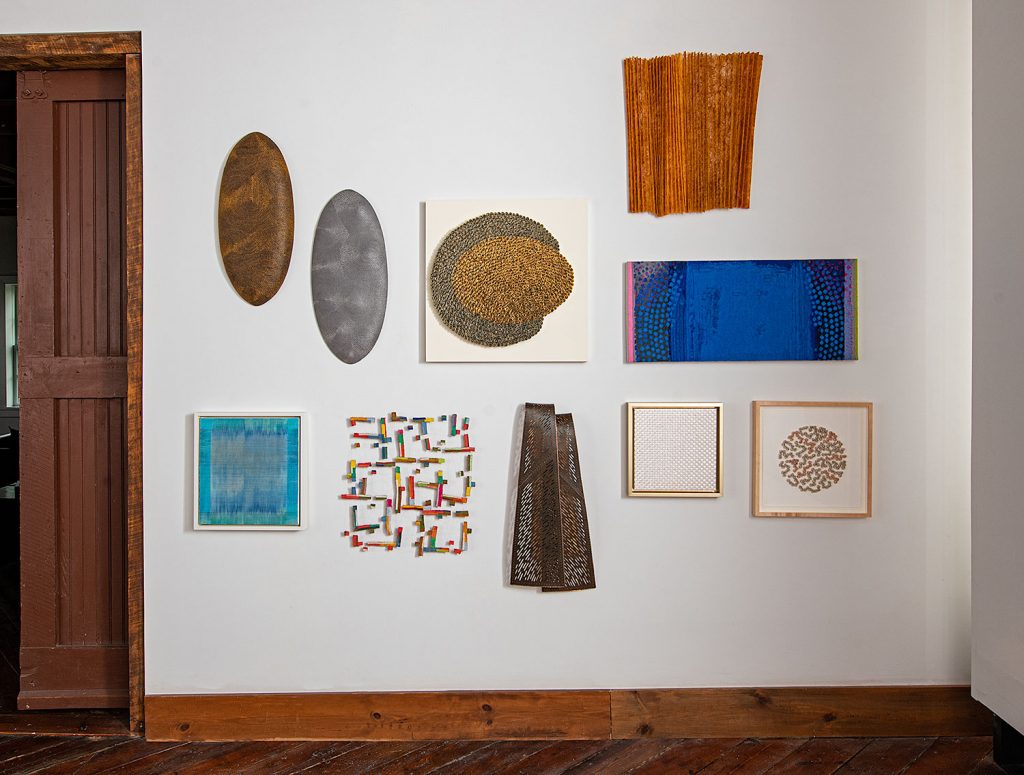
clockwise, from upper right: Mia Olsson, Jo Barker, Karyl Sisson, Debra Valoma, Jennifer Falck Linssen, Marian Bijlenga, Polly Barton, Åse Ljones. center: Wendy Wahl. Photo by Tom Grotta

Our Volume 50 salon wall was a fitting testament to the 50 catalogs we have produced and were celebrating in this exhibition. In our 50 catalogs we have featured 172 artists from 28 countries. Our salon wall featured works by nine of those artists from five countries. Wendy Wahl creates work from pages of encyclopedias, leading readers to think about changes over the time to the way acquire information. Mia Olsson of Sweden created a work of brightly colored sisal, inspired by traditional, pleated folk costumes. We included Jo Barker’s tapestry, Cobalt Haze. People often think Barker’s lushly colored tapestries are oil paintings until they are close enough to see the meticulous detail. Lewis Knauss imagined a landscape of prayer flags in creating Prayer Mountain. For Deborah Valoma, simplicity is deceptive. The truth, she says, “scratched down in pencil, lies below the cross-hatched embellishments.” 

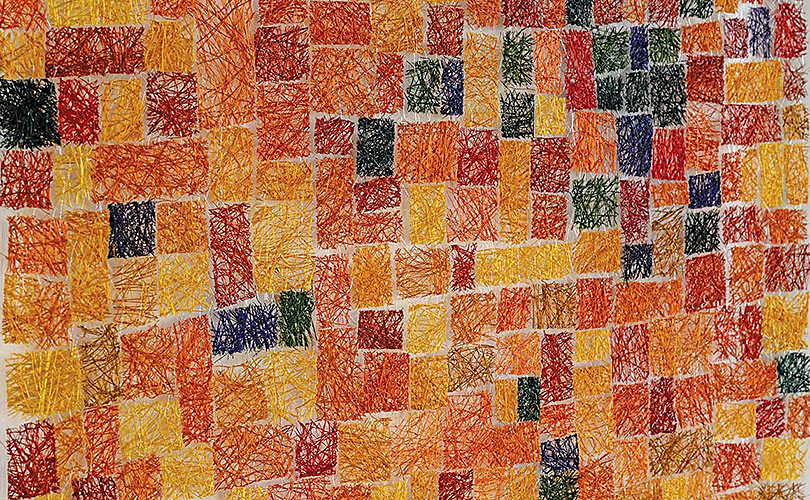
Jennifer Falck Linssen found inspiration in Asian ink paintings for her wall work, Mountain. The peaks in the paintings are a play of opposites: serene and forceful, solid and ethereal, strong and vulnerable. Mountain explores this duality and also the layered, often subtle, emotions of the human heart and its own dichotomy. Marian Bijlenga‘s graphic, playful work displays a fascination with patterning. This work was inspired by the geometric patterning of Korean bojagi, which is comparable to modernist paintings by such artists as Piet Mondrian and Paul Klee. In bojagi,small, colorful leftover scraps of fabrics are arranged and sewn together to construct larger artful cloths. The triple-stitched seams are iconic. This work, says the artist, specifically references the grid of these seams and the special Korean use of color. For Polly Barton, the technique of ikat serves as her paintbrush for producing contemporary works. From Norway, Åse Ljones uses a blizzard of stitches to create her works. “No stitch is ever a mistake,” she says. “A mistake is often what creates a dynamic in the work.” 

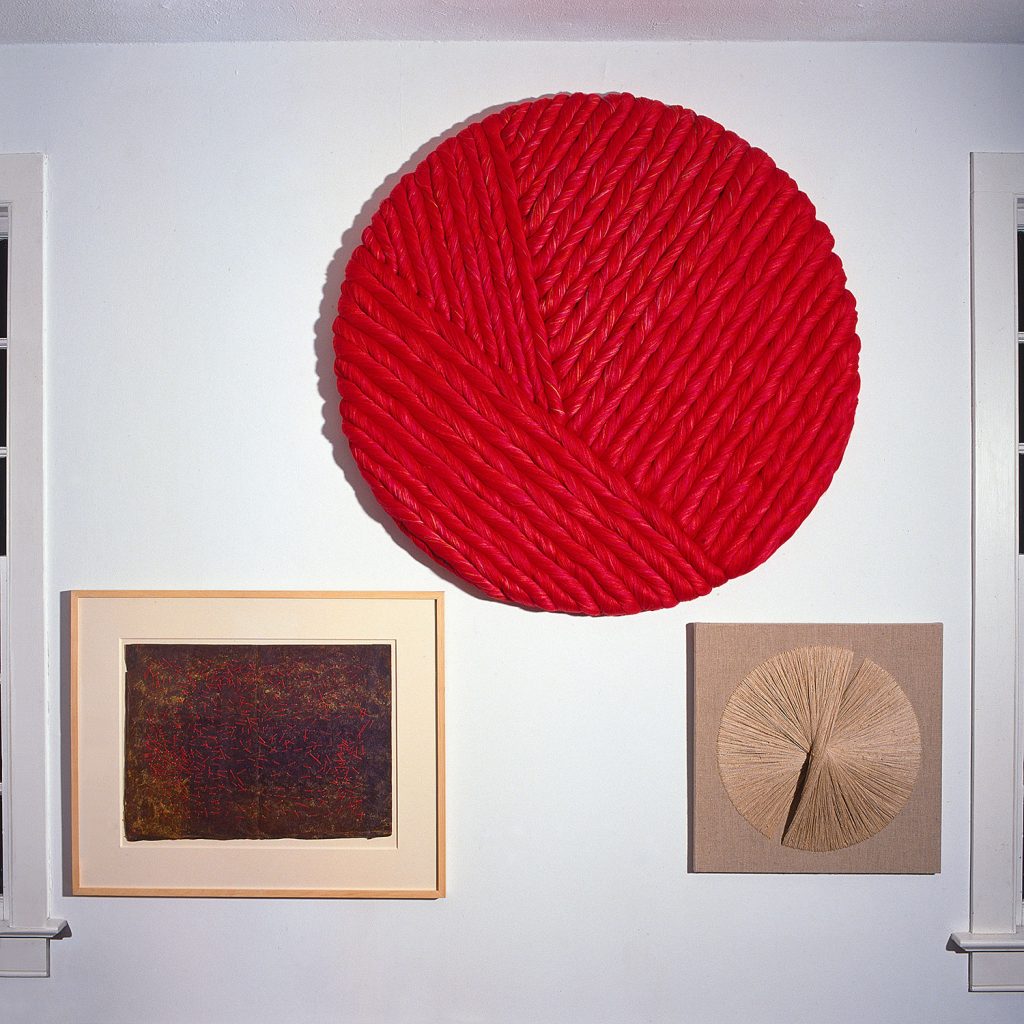
A salon wall is a great way to collect for people who are interested in different artists and different mediums. At browngrotta we’ve always suggested that clients had more wall space on which to display art — it just hadn’t been uncovered yet. We’ve created another salon wall in our non-gallery space. On it, we’ve combined oil paintings, fiber works, ceramics and photography. The wall can accommodate our continuing desire to collect — above, below and on the side.

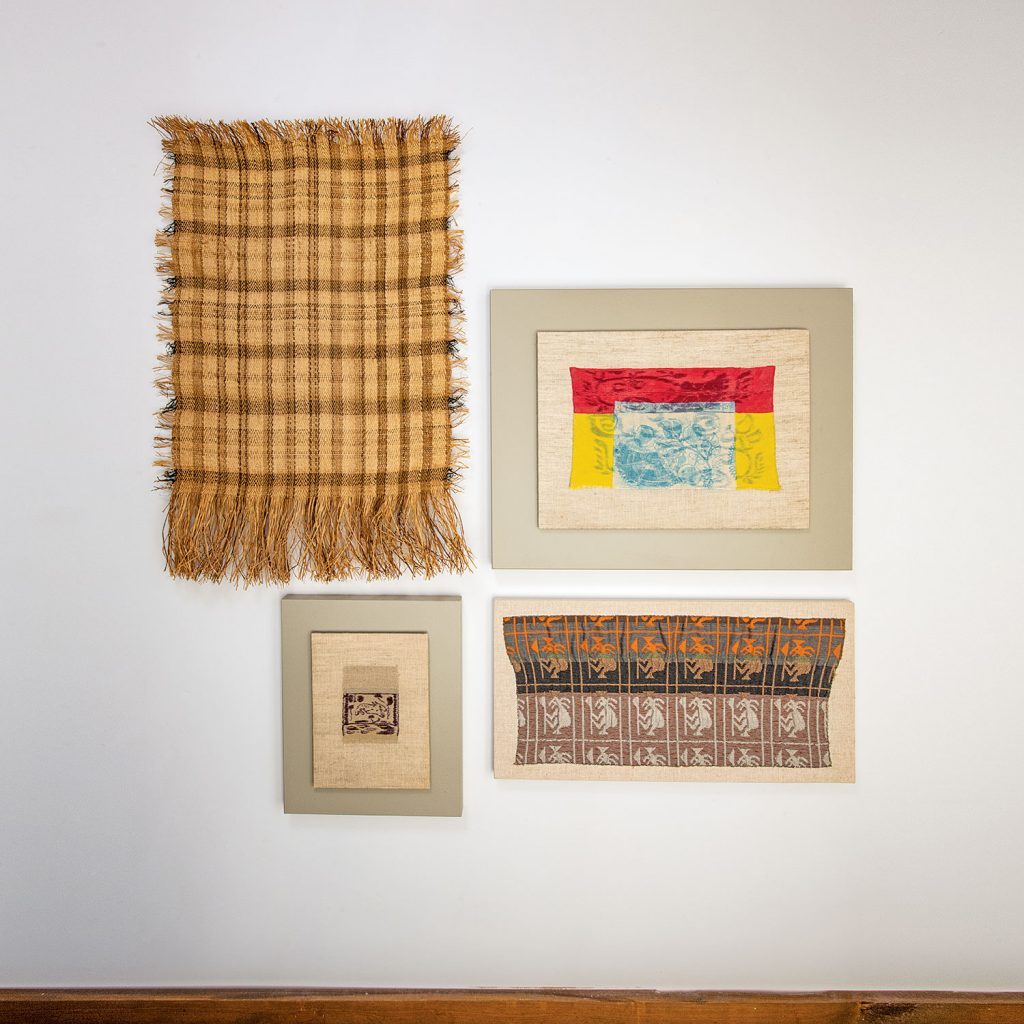
works by Ed Rossbach. Photo by Tom Grotta
A gallery wall highlights weavings by Ed Rossbach. Photo by Tom Grotta

“A gallery wall is absolutely ideal for a small apartment, as it can give a room real interest, depth and a properly decorated feel without taking up any floor space — and thereby minimizing clutter,” Luci Douglas-Pennant, told The New York Times in 2017. Douglas-Pennant founded Etalage, with Victoria Leslie, an English company specializing in antique prints, vintage oil paintings and decorative pictures for gallery walls. “If you don’t have one large wall, gallery walls can be hung around windows, around doors, above bed heads, above and around fireplaces or even around cabinets in a kitchen.”

Three works by Sheila Hicks from our 1996 exhibition: Sheila Hicks: Joined by seven artists from Japan
Sheila Hicks introduced us to the gallery wall in an exhibition she curated at browngrotta arts in 1996, Sheila Hicks: Joined by seven artists from Japan. In that exhibition, she displayed three of her works in the space between two windows.

For works of varying sizes and shapes to get you started on your own version of a salon wall, visit browngrotta.com, where we have images of dozens of available artworks to pique your interest.


Who Said What: Polly Leonard

Artist Thread details

“What is it about thread that is so appealing? Within contemporary society there is a hunger for sensual experiences that can only be satisfied by handle and texture. We are surrounded by smooth surfaces, from screens to kitchen counters, floors and cars. Clothing is increasingly constructed from a narrow range of nylon and cotton fibre – while appealing to the eye, these leave the hand starved of stimulus.” Polly Leonard, Founder/Editor, selvedge Magazine selvedge, Issue 84, Surface, September – October 2018To learn more about Polly and the founding of selvedge, access Threaded Stories: A Talk with Polly Leonard:https://classiq.me/threaded-stories-a-talk-with-polly-leonard

More Artist Thread Details