Category: Uncategorized

Save the Date! Transformations: Dialogues in Art and Material Opens in May

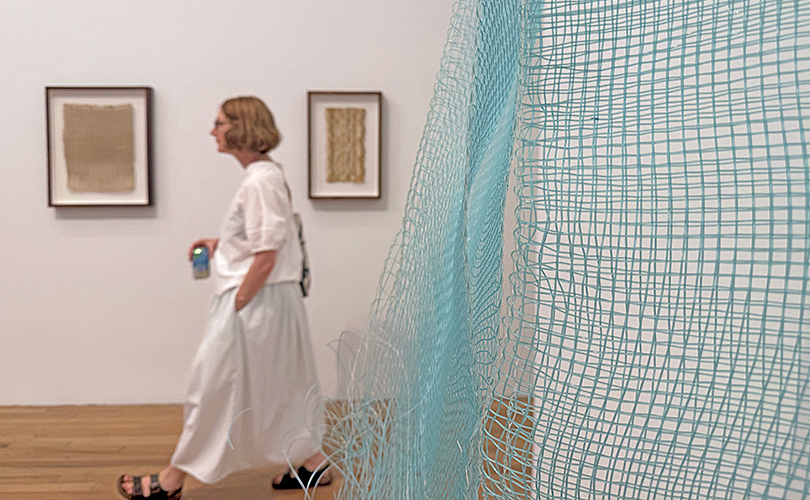
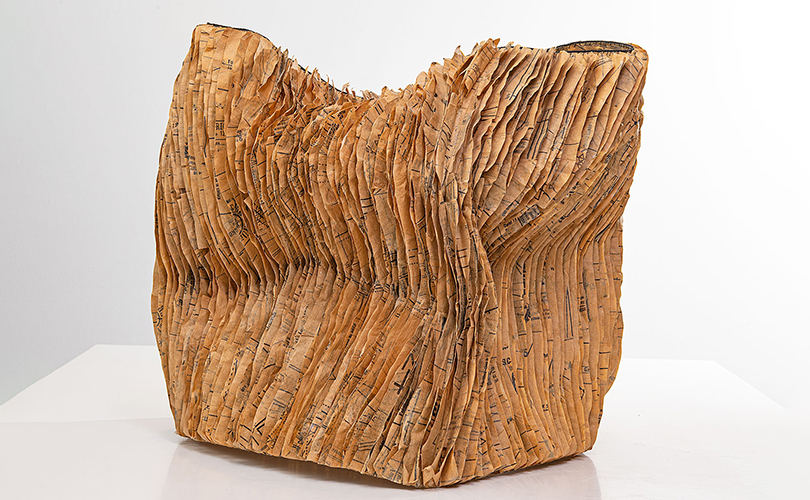
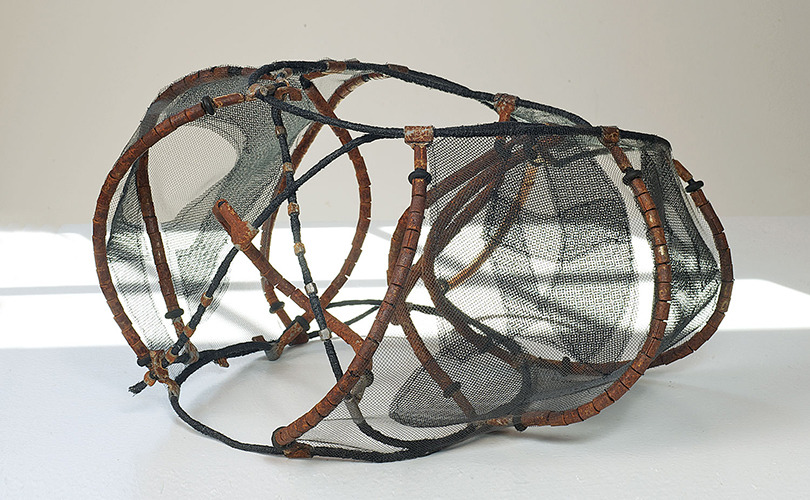
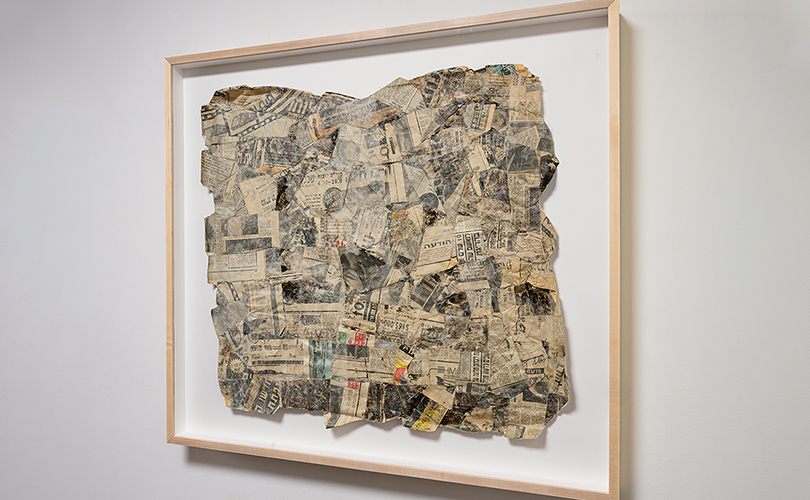
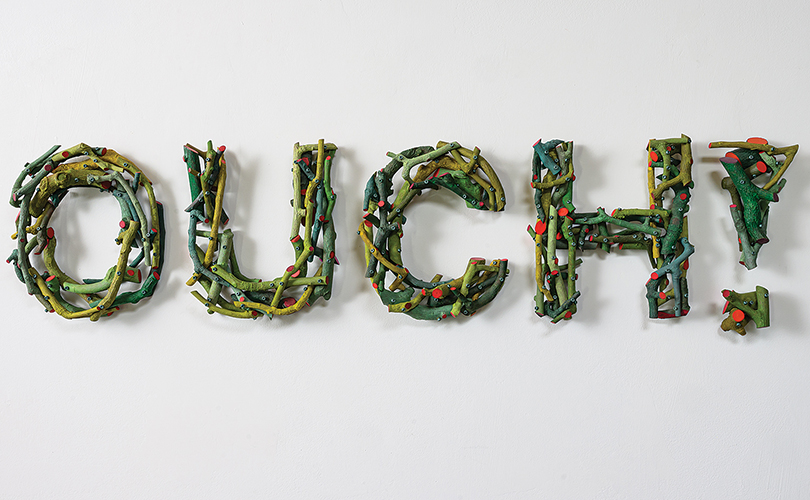
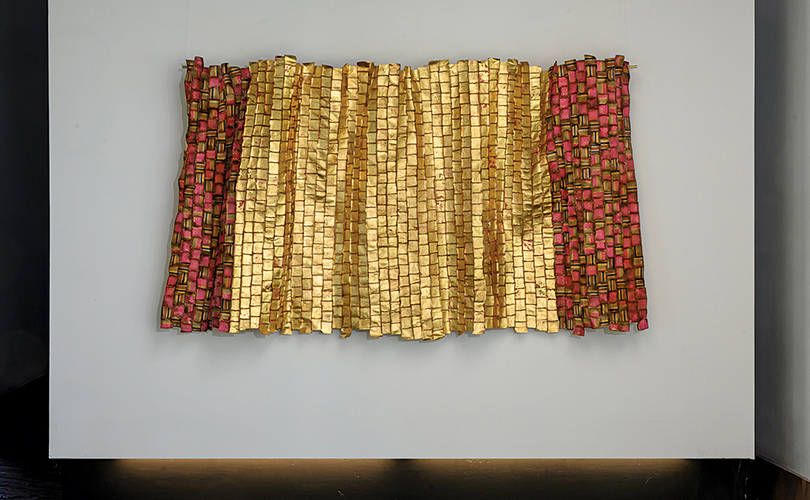
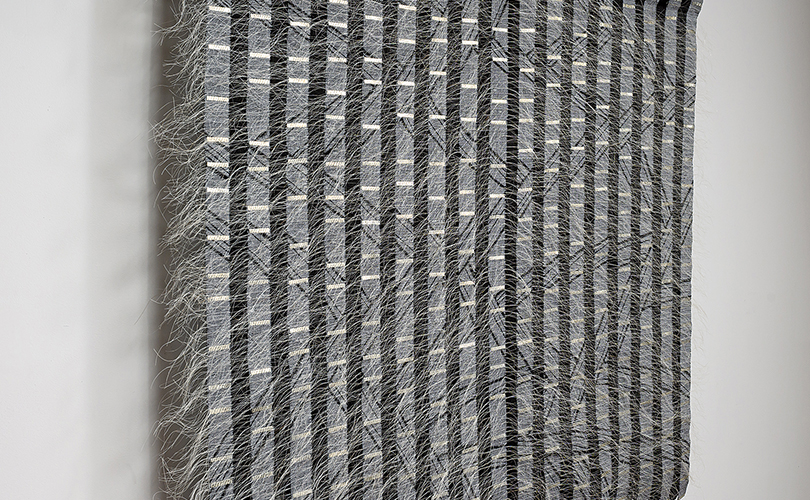
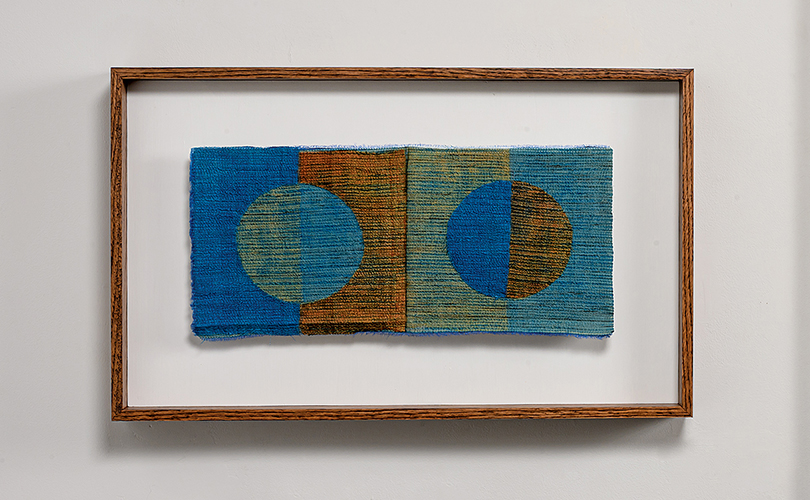
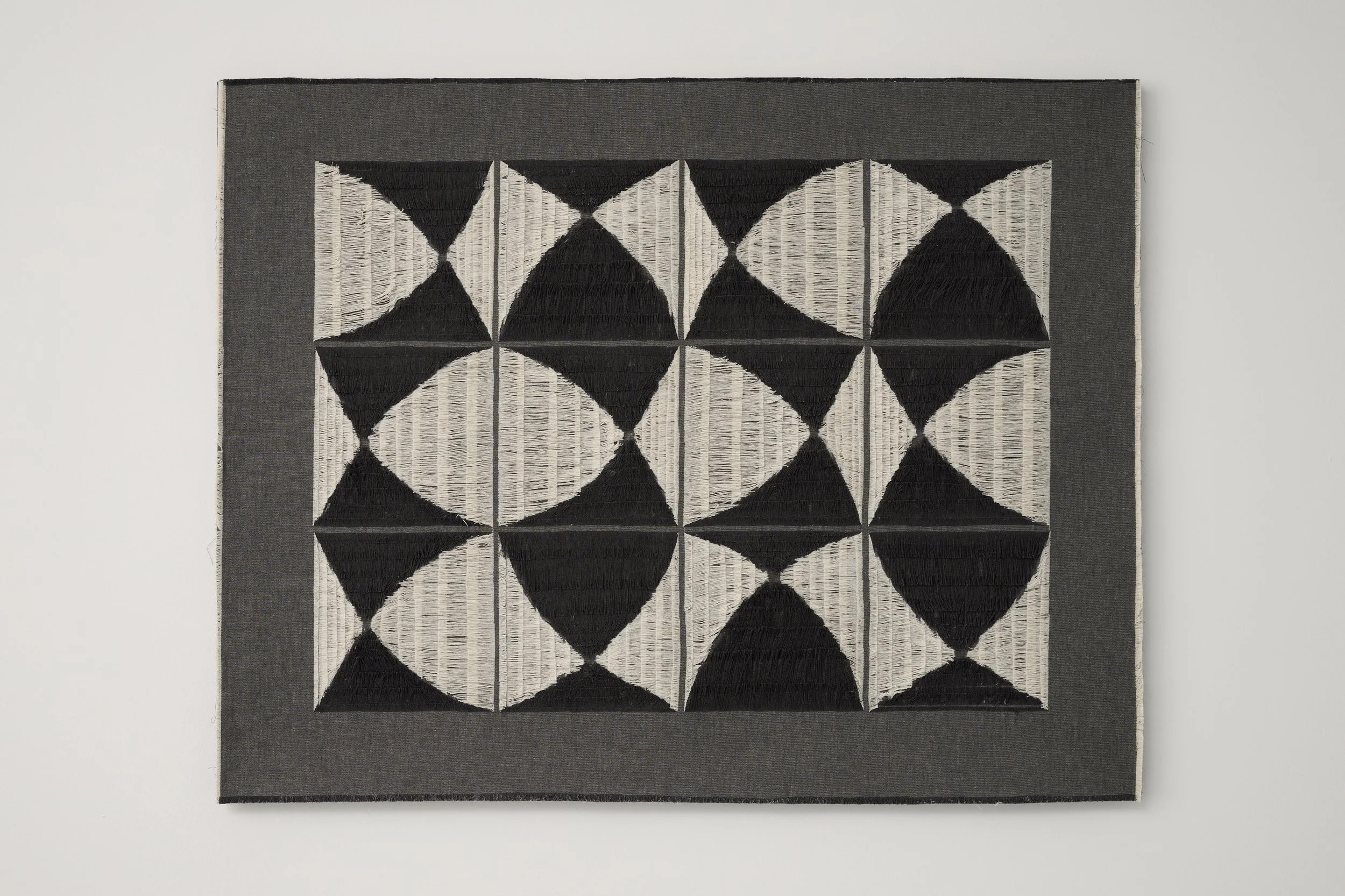
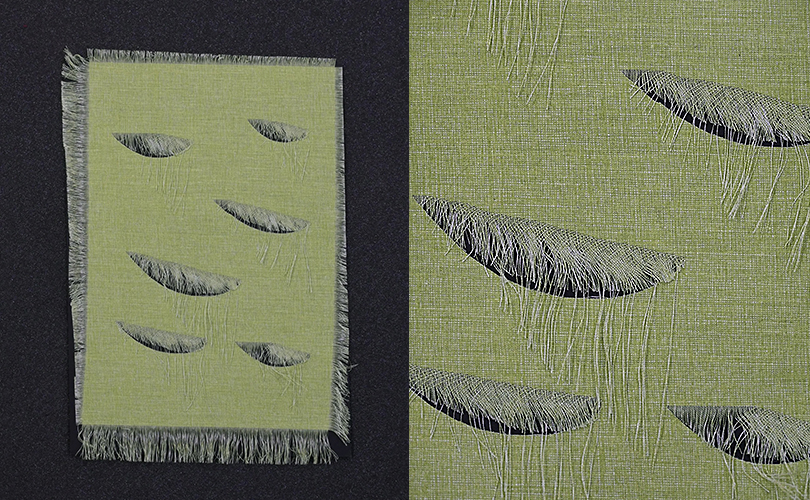
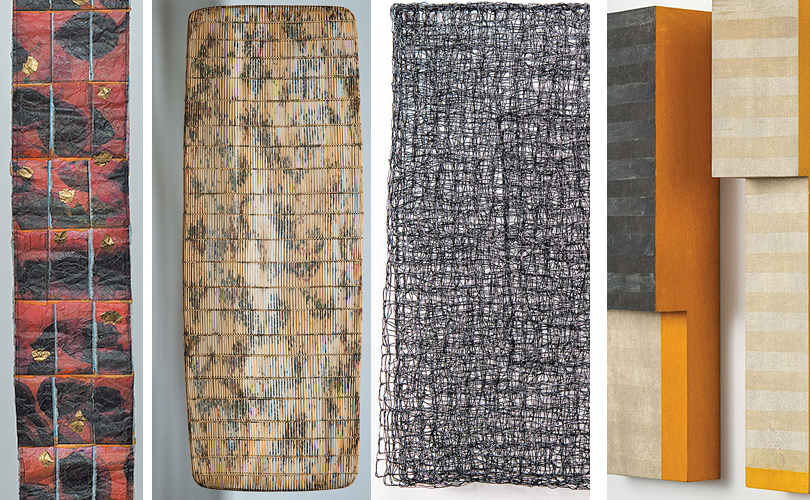
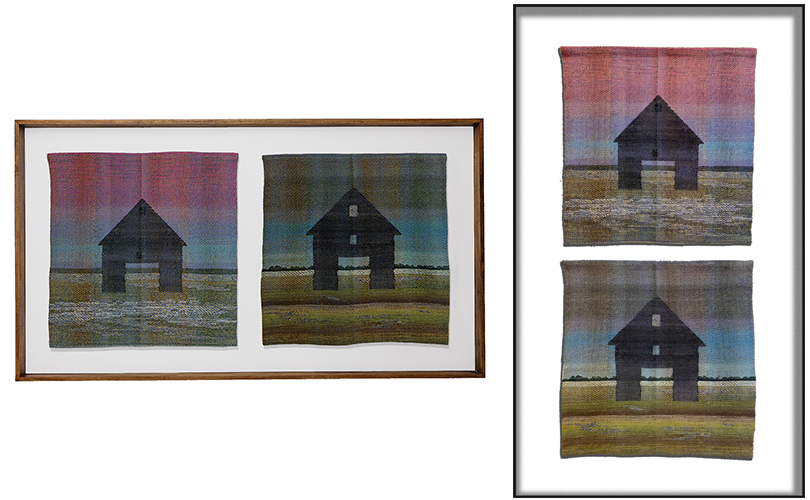
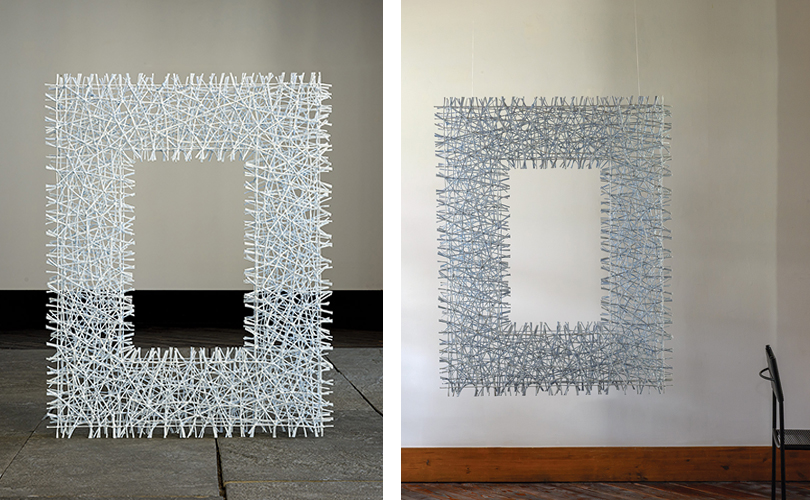
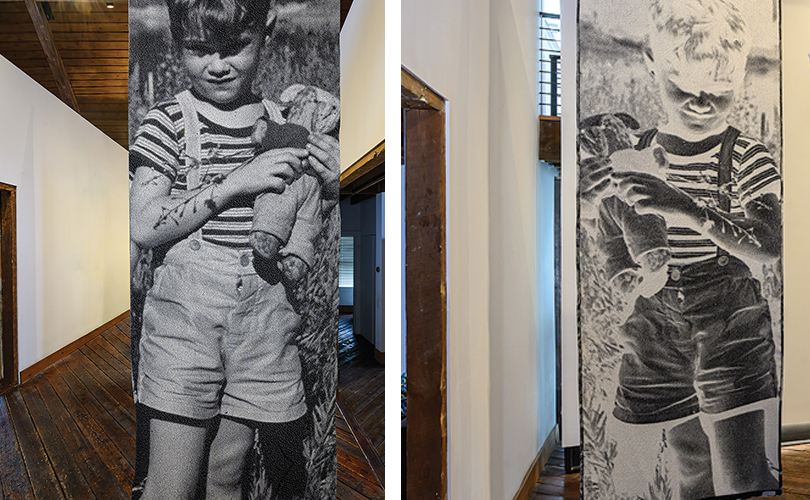
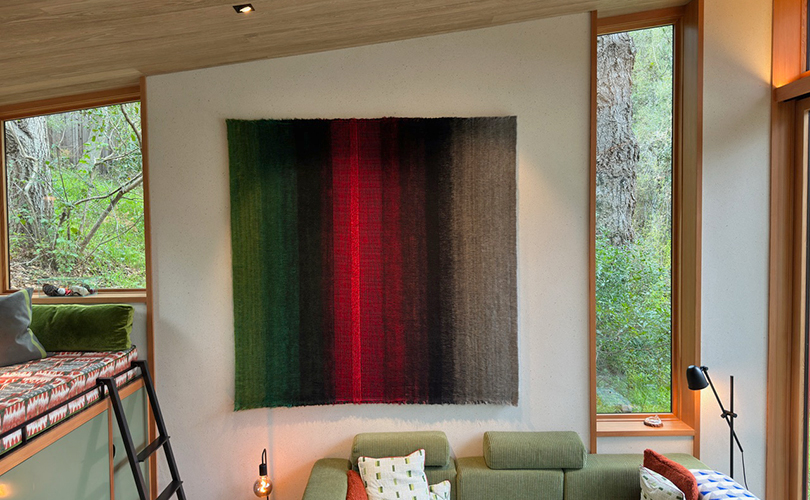
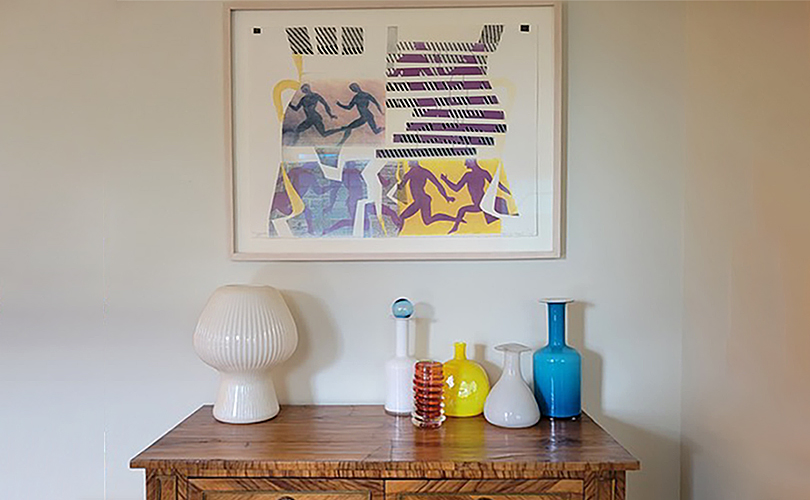
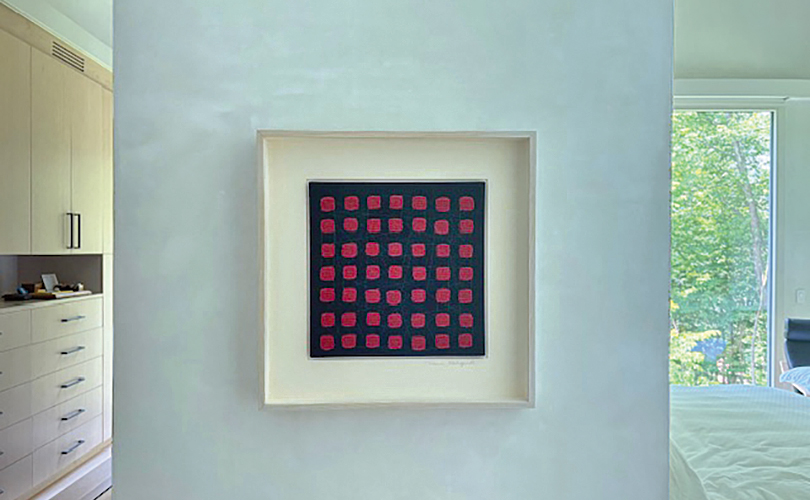
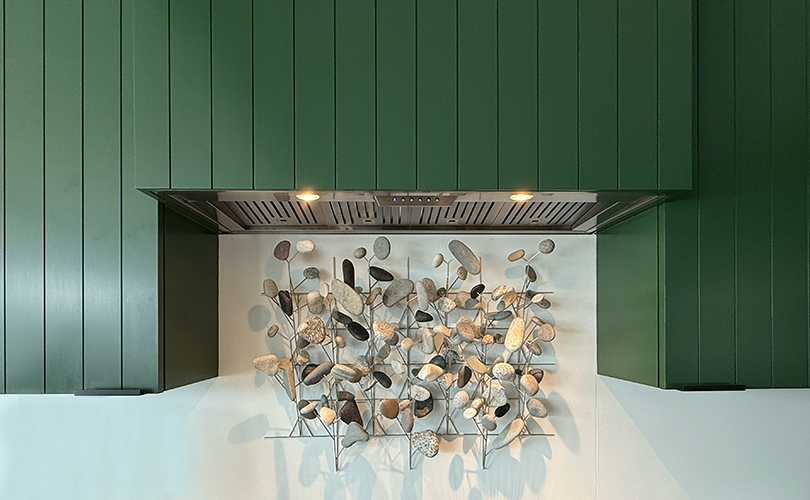
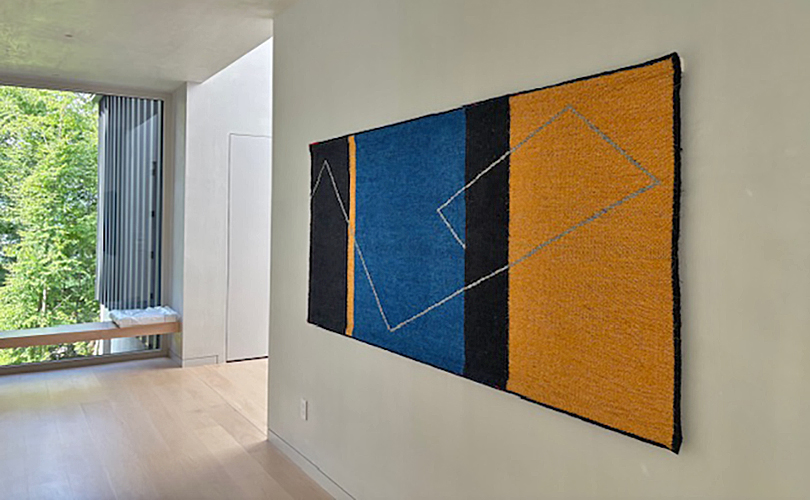
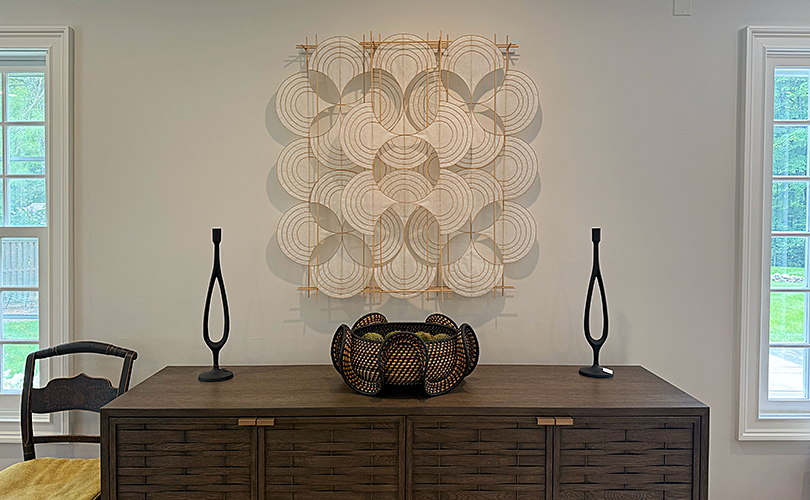
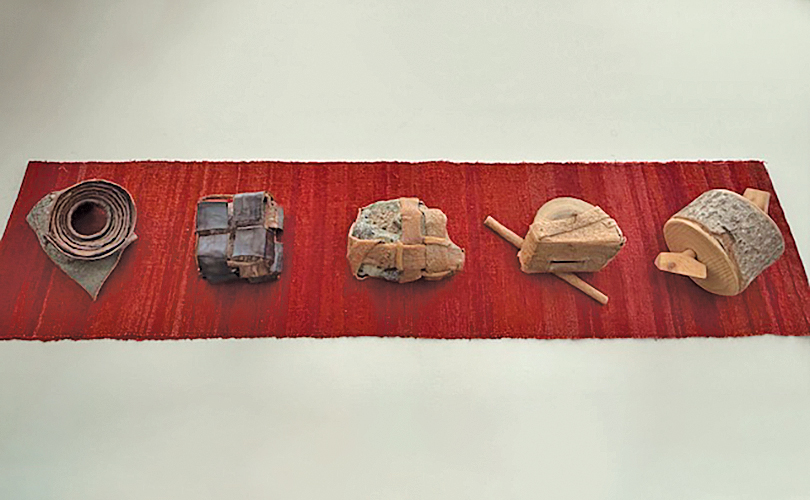
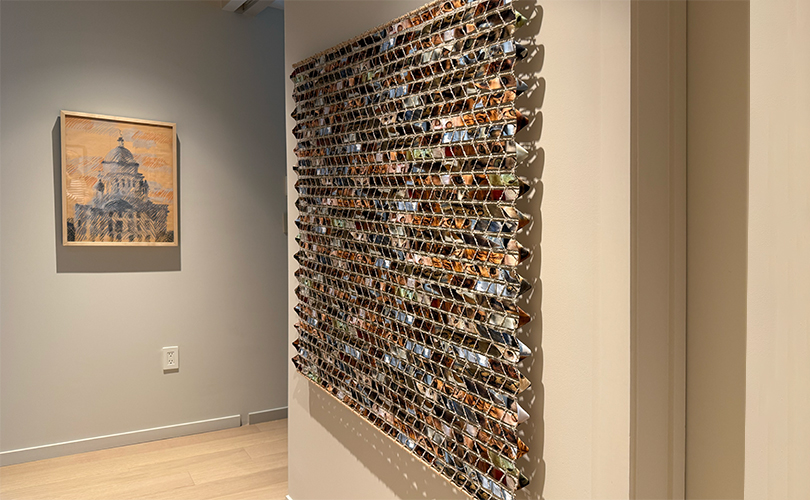
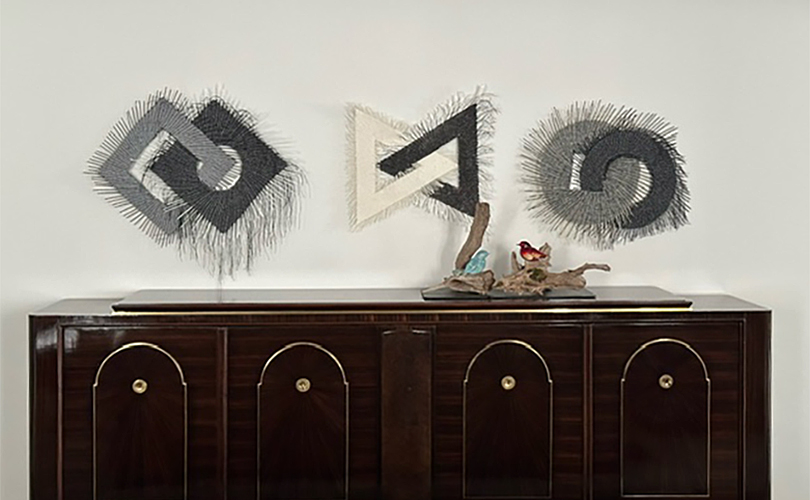
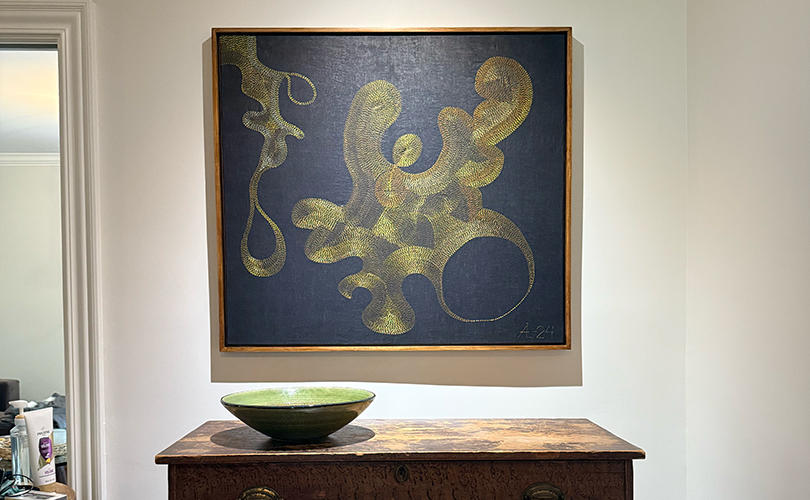
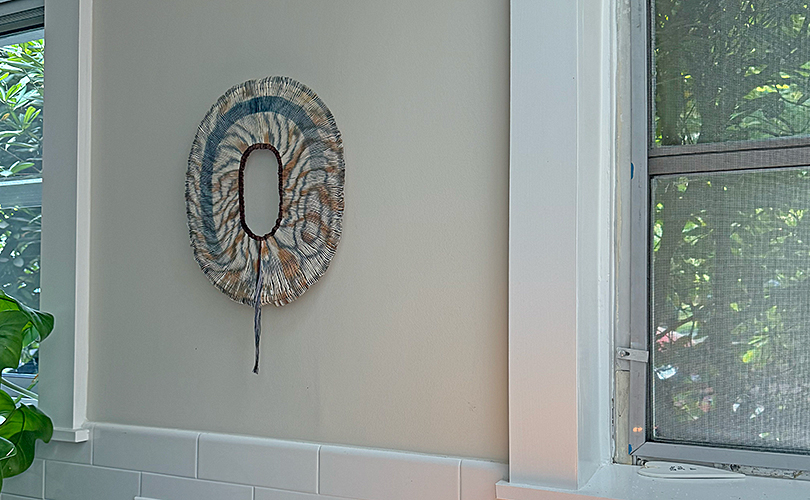
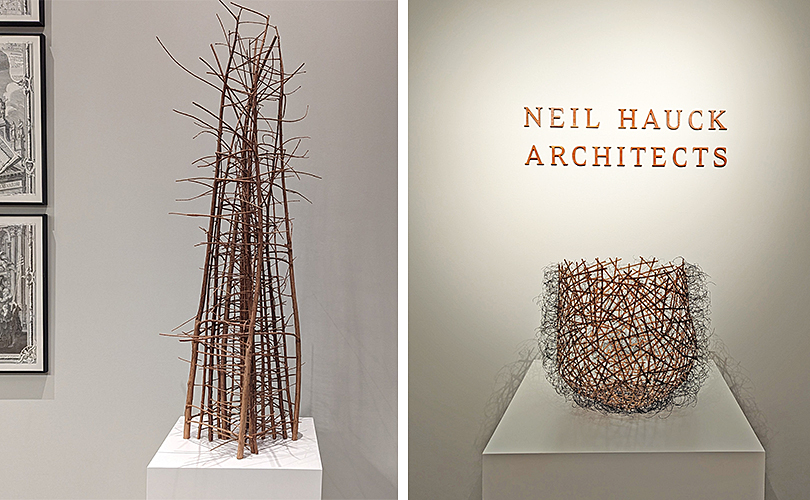
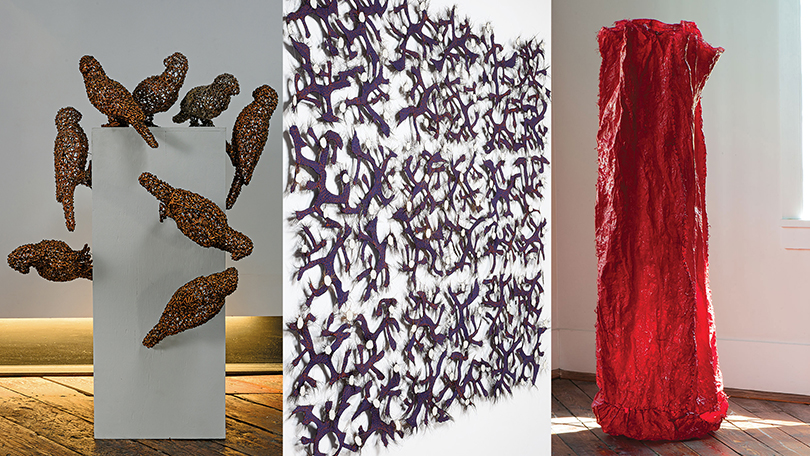
John McQueen, Marian Bijlenga, Kiyomi Iwata
works by John McQueen, Marian Bijlenga, Kiyomi Iwata. Photo by Tom Grotta

Mark your calendars! From May 9 through May 18, 2026, browngrotta arts will present Transformations: Dialogues in Art and Material, a Spring exhibition exploring the expressive power of materials and the inventive ways contemporary artists transform them.
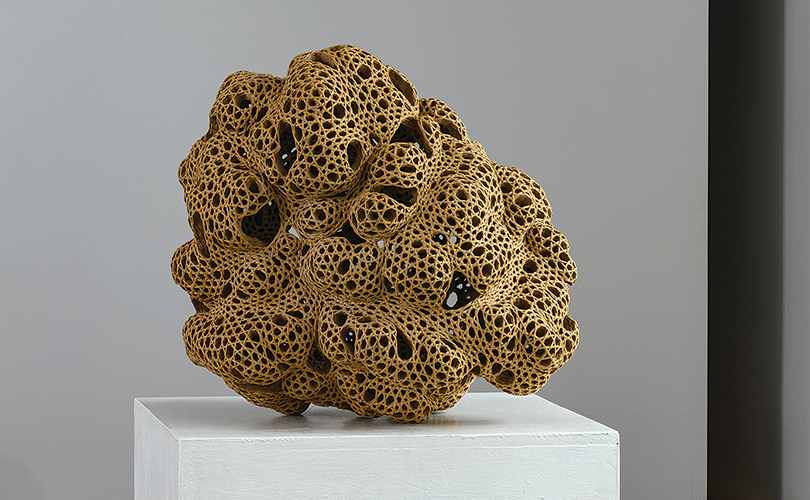
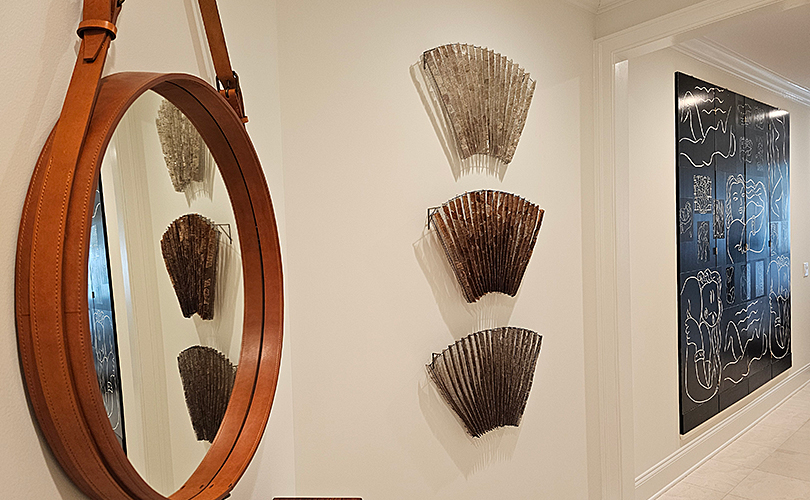
Norie Hatekayama sculpture
24nh Complex Plaiting Series – Connection I-9609, Norie Hatekayama, paper fiber strips, 21″ x 22″ x 19″, 1996. Photo by Tom Grotta

Featuring works by more than nearly three dozen international artists, Transformations will examine materiality as a central force in artistic practice. Clay, silk, steel, bark, seaweed, bamboo, horsehair, cotton, linen, flax, and other materials are not treated as passive elements, but as active agents—each with its own history, constraints, and expressive possibilities. The exhibition highlights both the remarkable diversity of materials and the distinct outcomes achieved when artists work within the same medium.
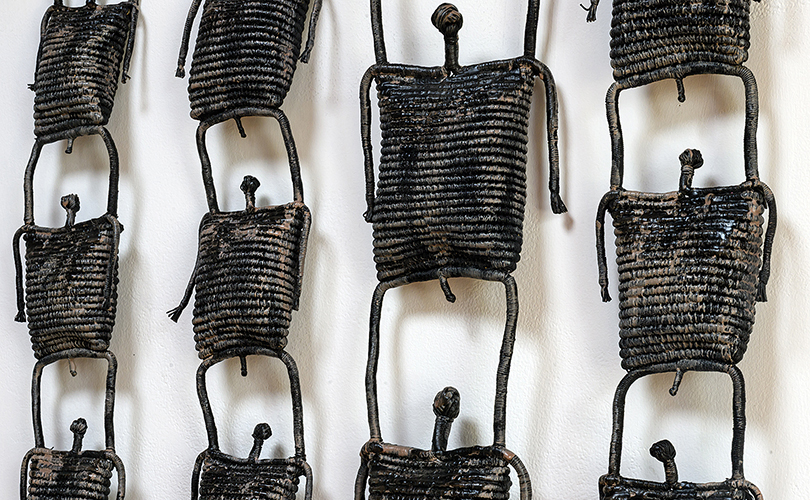
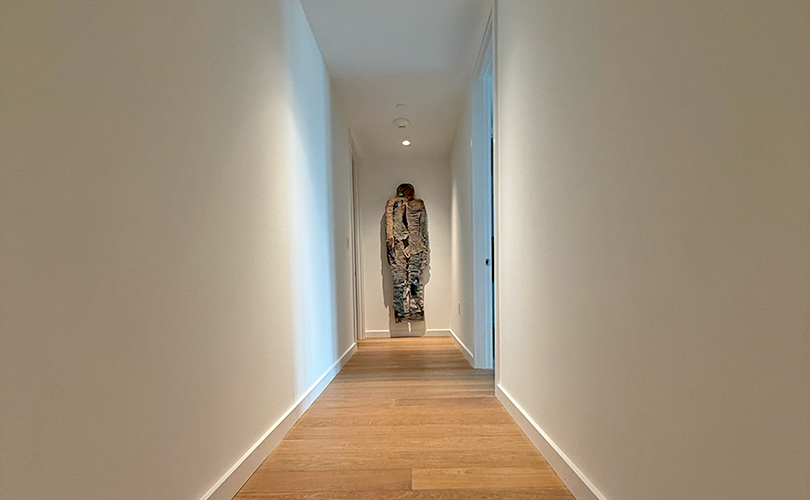
Waxed linen wall figures by Mary Giles
71mg Annointed Procession, Mary Giles, waxed linen, wire, 31″ x 19″, 1995. Photo by Tom Grotta

The artists in Transformations exemplify what curator and historian Glenn Adamson calls “material intelligence”: a deep understanding of the physical world and the skill to give materials new form and meaning. Through thoughtful engagement, abstract ideas are transformed into tangible, sensory experiences, bridging the conceptual and the corporeal.

“The artists inTransformations may begin with the same material but through their singular instincts and inspirations they generate strikingly different results,” says Tom Grotta, co-curator of browngrotta arts. “It’s a testament to the power of the artistic imagination.” Examples include Kiyomi Iwata who creates freestanding sculptures of spun silk and shimmering wall works of kibisio, the first silk from the cocoon and Polly Barton who weaves images from silk threads that she has bound and dyed. In cotton, Simone Pheulpin and Mercedes Vicente create objects of cotton webbing that seem to have emerged from nature — resembling coral, shells, and stones, while Kay Sekimachi uses split-ply and card-weaving techniques to create loops of cotton cord to hold shells and stones sourced from the beach. Toshiko Takaezu forms smooth columns of clay, Yasuhisa Kohyama’s clay vessels seem to have been carved directly from a mountainside, and Karen Karnes creates functional pots that incorporate color yet retain the natural cast of fired clay, defying all sense of the manmade.
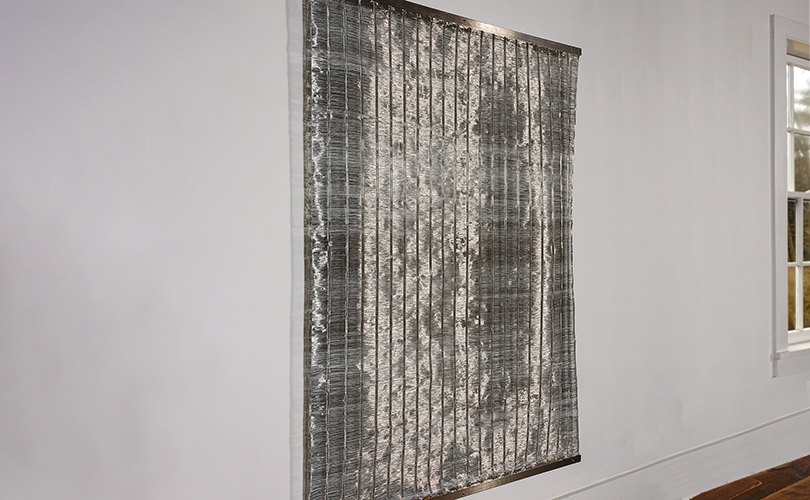
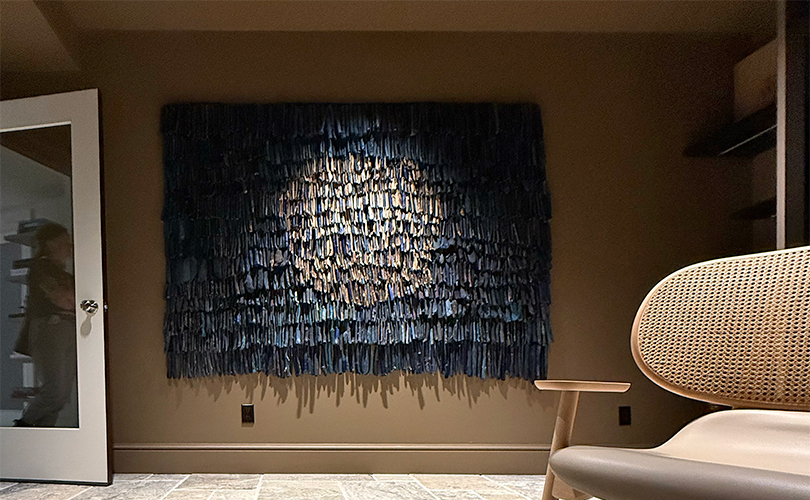
Kyoko Kumai Steel tapestry
46kk Sudare, Kyoko Kumai, stainless steel, 70.75″ x 50.75″ x 2″, 2000. Photo by Tom Grotta

A full-color catalog will accompany the exhibition.

Exhibition Details

Location:
276 Ridgefield Road, Wilton, CT 06897

Dates & Hours:

  • Saturday, May 9 (Opening & Artists’ Reception): 11 am–6 pm
  • Sunday, May 10: 11 am–6 pm
  • Monday–Saturday, May 11–16: 10 am–5 pm
  • Sunday, May 17: 11 am–6 pm

Schedule Your Visit

Stay tuned for more information—and we hope you’ll join us this spring for Transformations at browngrotta arts.
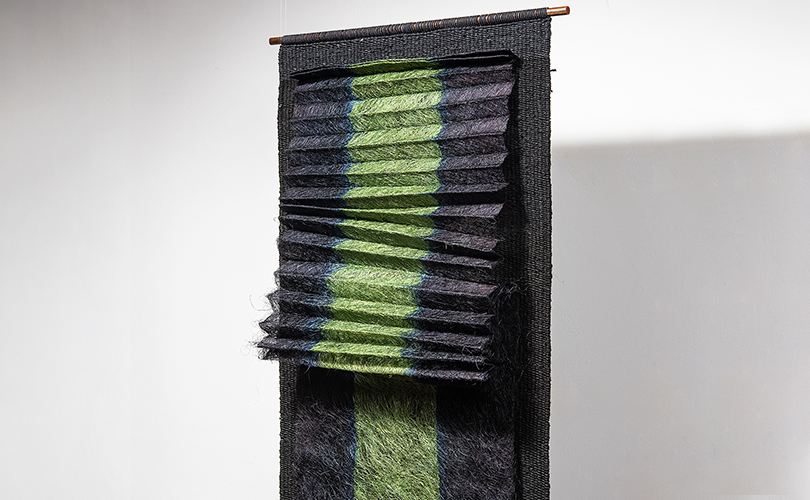
Coconut Fiber weaving by Carolina Yrarrazaval
23cy.1 Verde Esperanza, Carolina Yrarrazaval, linen and coconut, 62” x 26.75”, 2022. photo by Tom Grotta

Save the Date! The Spring 2026 exhibition at browngrotta arts, Transformations: Dialogues in Art and Material, scheduled for this May 9 – 17, 2026 in Wilton, Connecticut, will take a deep dive into materiality itself. It will explore the wide range of materials artists employ—including clay, silk, steel, bark, seaweed, bamboo, and horsehair—and the varied transformations these materials undergo in talented hands, even among artists working with the same medium. Transformations: dialogues in art and material will highlight the use of diverse materials and the varied ways in which artists reshape and reimagine a single material within their practices. 
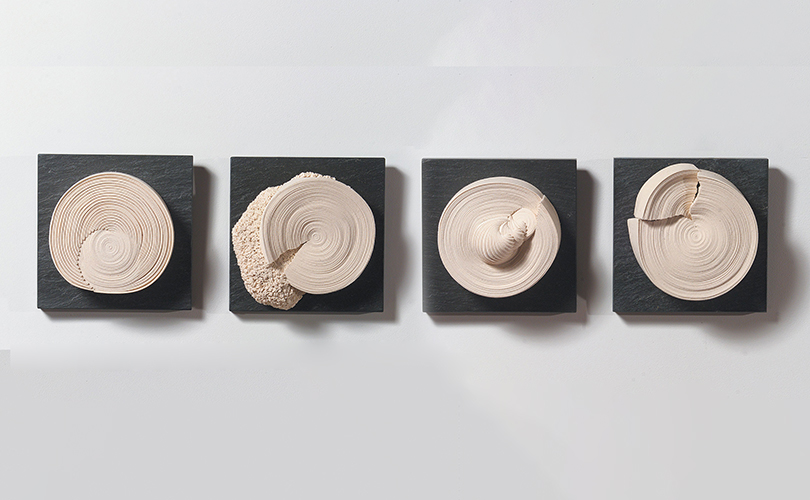
Tourbillons by Simone Pheulpin
17-20sp Tourbillons, Simone Pheulpin, cotton, slate, 7.75″ x 7.75″ x 2.25″ each , 2003. Photo by Tom Grotta

We’d like to display works by you, Polly Barton, and Kiyomi Iwata to show varying uses of silk, works by Kay Sekimachi, Simone Pheulpin, Mercedes Vicente, and Sophie Rowley in cotton, works by John McQueen, Hisako Sekimachi, Dona Look, Linda Bills and Polly Sutton in tree bark, and so on. The artists included will all meet curator and historian Glenn Adamson’s definition of material intelligence: “a deep understanding of the material world around us, an ability to read that material environment, and the know-how required to give it new form…”

Transformations examines the use of diverse materials in art and the many ways artists reshape and reimagine a single material within their practices. The Spring 2026 exhibition at browngrotta arts, Transformations: Dialogues in Art and Material, takes a deep dive into materiality itself. It highlights the wide range of materials artists employ—including clay, silk, steel, bark, seaweed, bamboo, and horsehair—and the remarkable transformations these materials undergo in their skilled hands, even among artists working with the same medium.
browngrotta arts’ 2025 Year in Review

We’ve had another busy 12 months. Below are the highlights. You can learn more about most of these events in previous arttextstyle posts or by using the search feature on our website. Thanks for being a part of another successful year celebrating art textiles, the artists that make them, and the fans that enjoy them.

Month by Month
January 2025:

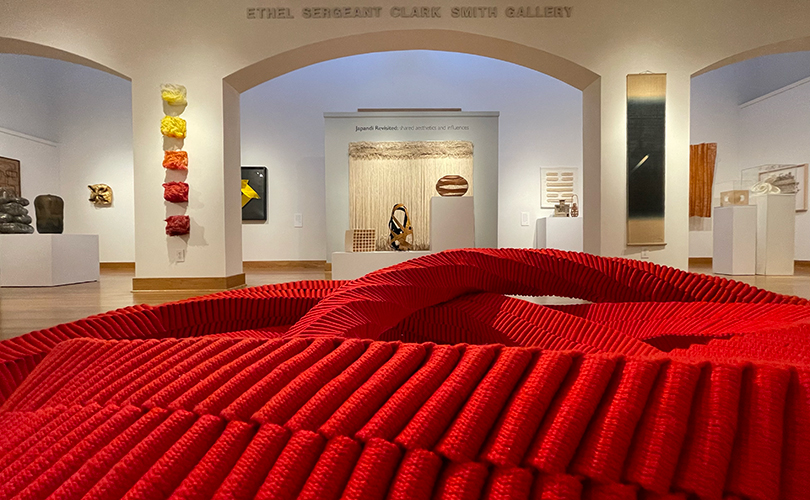
Japandí Revisited: shared aesthetics and influences, in Wayne Art Center, Pennsylvania
Japandi Revisted at the Wayne Art Center. Photo by Tom Grotta

• Japandí Revisited: shared aesthetics and influences, continued at the Wayne Art Center, Pennsylvania 

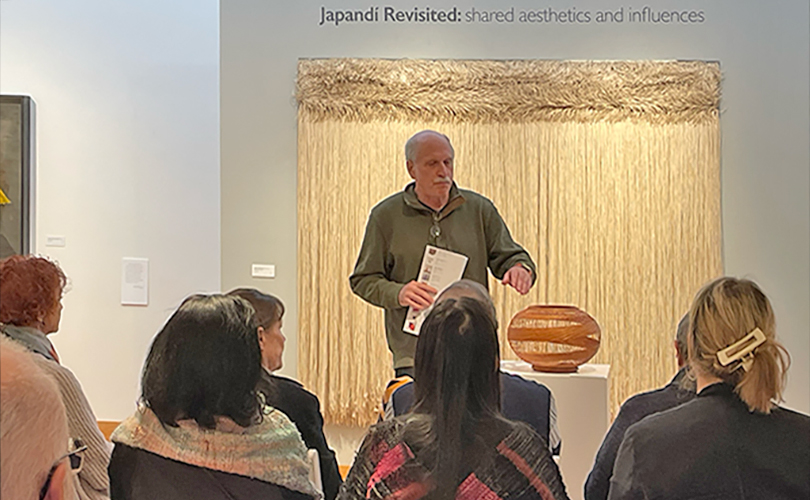
Japandí Revisited: shared aesthetics and influences walk-thru
Tom Grotta artist walkthrough, Japandi Revisted at the Wayne Art Center. Photo by Rhonda Brown

A Japandí Revisited walkthrough with Tom Grotta took place at the Wayne Art Center, Pennsylvania

February 2025:

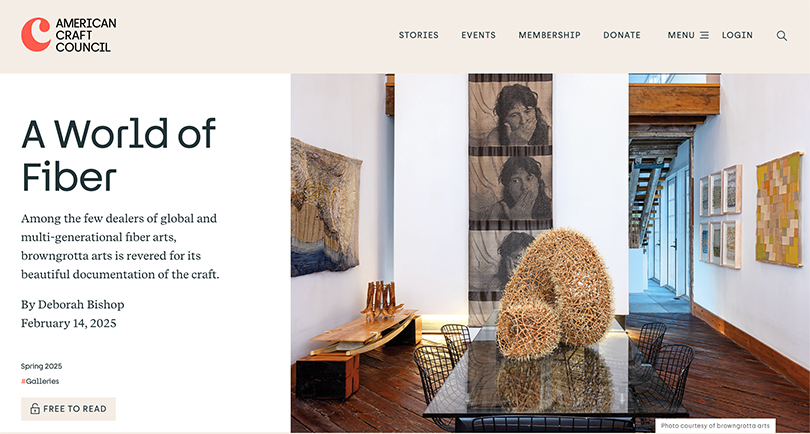
• American Craft magazine published: “A World of Fiber, browngrotta arts,” Deborah Bishop

browngrotta arts featured in American Craft Magazine
American Craft Magazine feature on browngrotta arts

March 2025:

Olga de Amaral,  at the Cartier Foundation and Simone Pheulpin
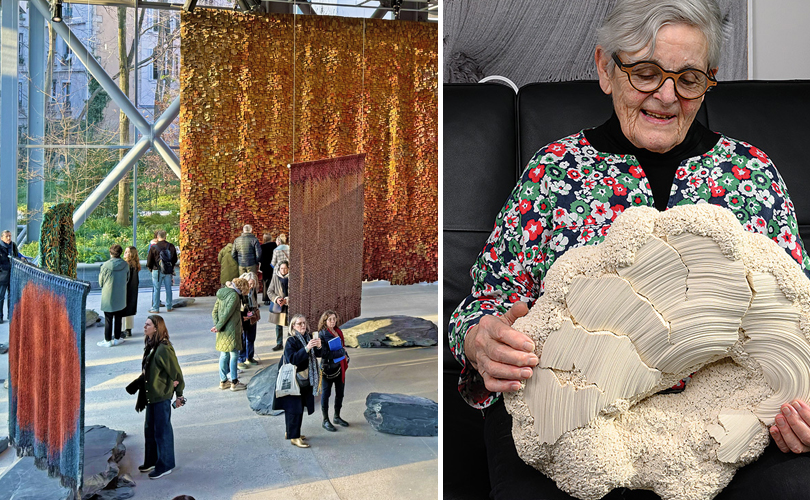
Olga de Amaral Cartier Foundation exhibition and Simone Pheulpin in her studio in Paris. Photos by Tom Grotta

• Tom and Carter Grotta and Rhonda Brown visited Paris to photograph exceptional artist Simone Pheulpin and view the extraordinary exhibition, Olga de Amaral,  at the Cartier Foundation

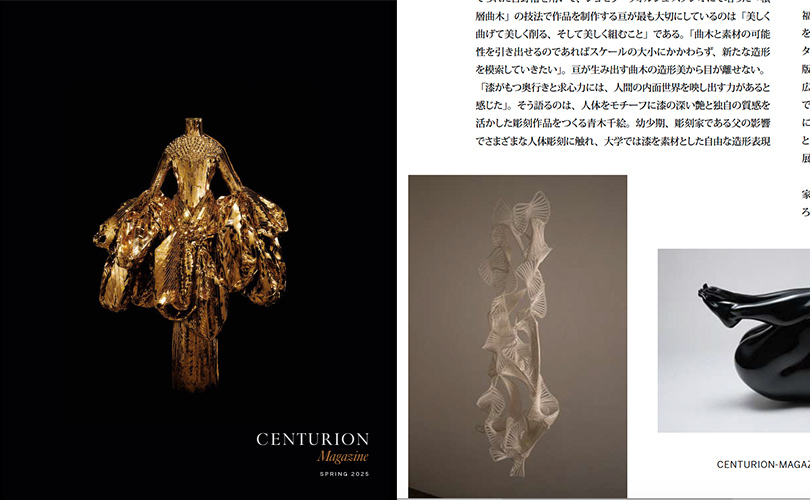
Shoko Fukuda featured in Centurion Magazine

• Centurion magazine published, “Shaping Heritage,” by Kaoru Kijima, which featured work by Shoko Fukuda

May 2025:

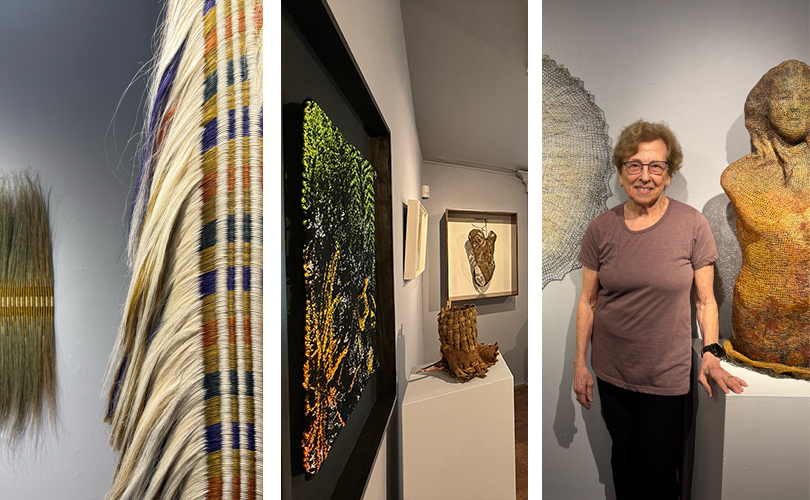
Three Silvermine exhibitions curated by browngrotta arts, Including Norma Minkowitz in front of her work in Masters of the Medium: CT. Photos by Tom Grotta

• The Silvermine Art Galleries in New Canaan, CT invited browngrotta arts to jury its FIBER 2025 invitational. We also installed two exhibitions in their galleries, Masters of the Medium: CT: Helena Hernmarck and Norma Minkowitz and Mastery and Materiality: International

• A FIBER 2025 walkthrough with Tom Grotta and Rhonda Brown took place at the Silvermine Art Galleries, New Canaan, CT

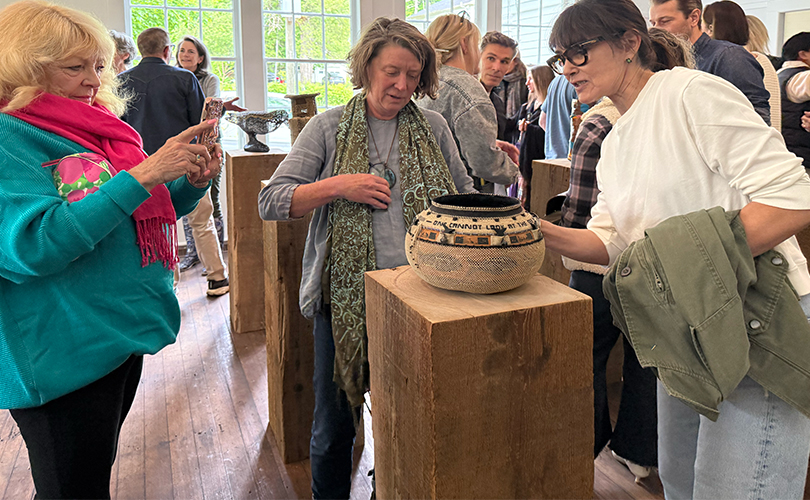
WEFAN opening reception at the Hughes Memorial Library, in West Cornwall, CT. Photo by Tom Grotta

• browngrotta arts loaned work to WEFAN, a group exhibition curated by Dina Lov Wright of Lov Art. Housed in the Hughes Memorial Library, in West Cornwall, CT, WEFAN featured works by 12 artists — including Dorothy Gill Barnes and Ed Rossbach — who work with fiber techniques and materials 

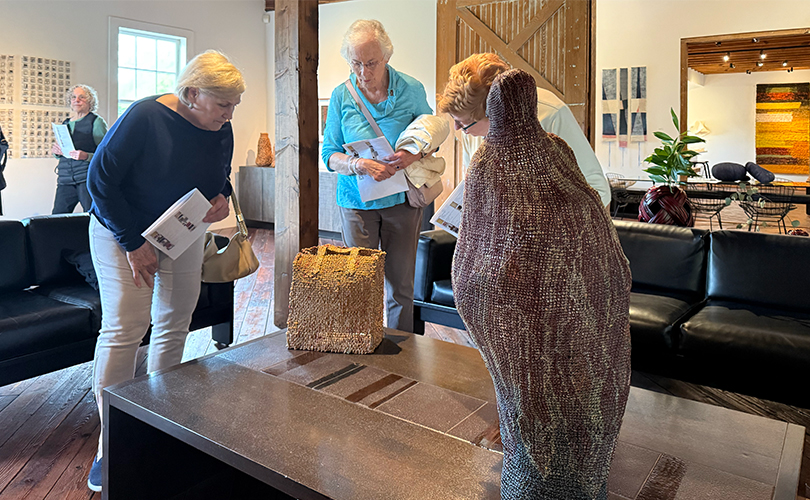
Field Notes: an art survey exhibition at browngrotta arts.
Field Notes: an art survey exhibition at browngrotta arts. Photo by Tom Grotta

• Field Notes: an art survey, browngrotta arts’ Spring Art in the Barn exhibition, opened

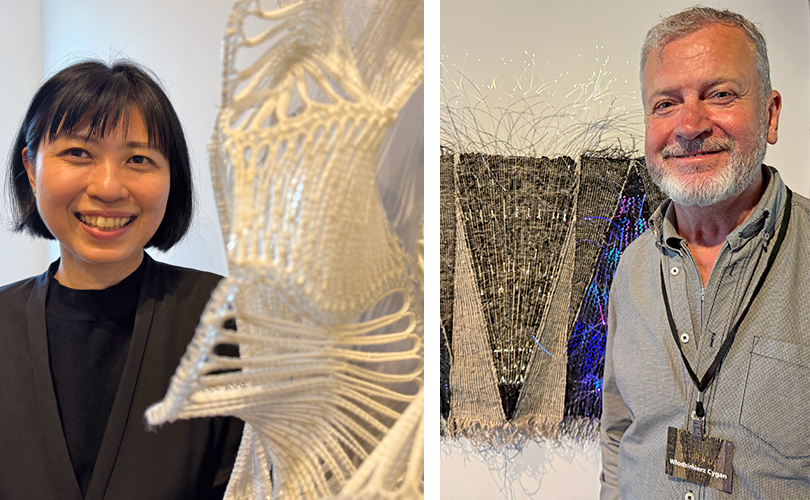
Shoko Fukuda and Włodzimierz Cygan
Shoko Fukuda and Włodzimierz Cygan at the opening of Field Notes: an art survey. Photos by Tom Grotta

• Out-of-the-area Artist Visits: Christine Joy (Montana), Wlodzimierz Cygan and granddaughter, Wiktoria (Poland), and Shoko Fukuda (Japan), visited the gallery, attending the opening of Field Notes and the artists’ dinner after.

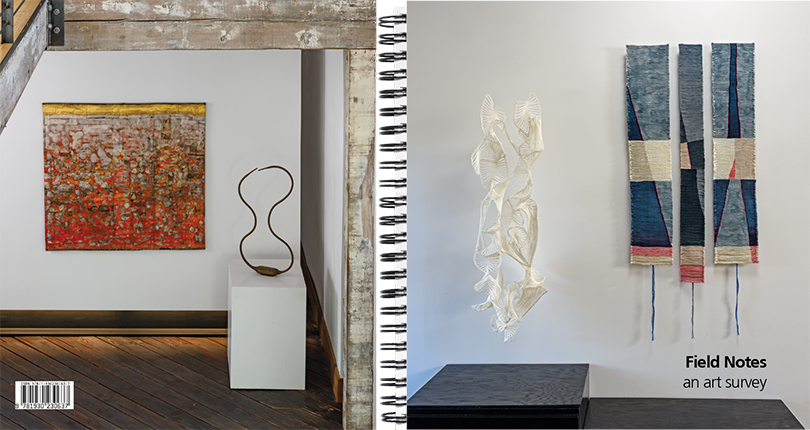
Field Notes: an art survey exhibition catalog
Field Notes: an art survey, the exhibition catalog

• Field Notes: an art survey, the catalog, is published (our 60th)

June 2025:

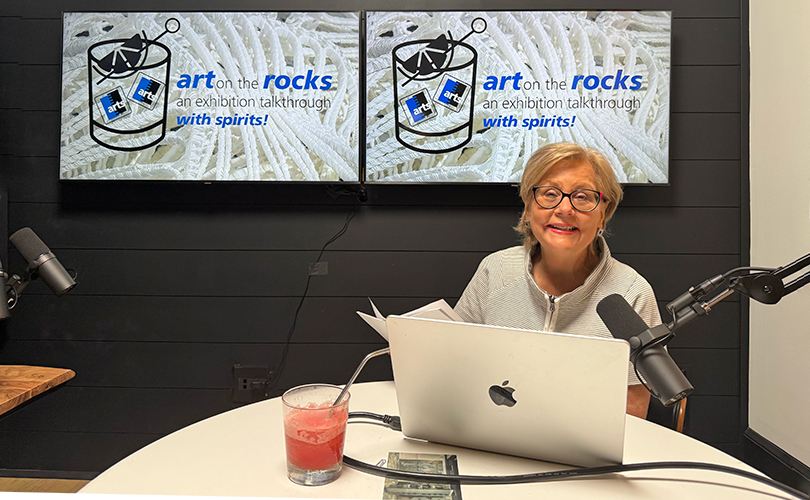
Rhonda hosts art on the rocks at studio 67 podcast studio
Rhonda hosts art on the rocks at studio 67 podcast studio. Photo by Tom Grotta

• Art on Rocks: an art walkthrough with spirits, Field Notes edition — is presented on Zoom

• Fiberworks then and now: Ruth Asawa and Kay Sekimachi and their remarkable innovations. a panel discussion with Melissa Leventon, Jill D’Alessandro, Yoshiko Wada, and Tom Grotta — was presented on Zoom

September 2025: 

Kay Sekimachi: a personal archive, a collaboration between browngrotta arts and the Andrew Kreps Gallery in New York City
Kay Sekimachi: a personal archive, a collaboration between browngrotta arts and the Andrew Kreps Gallery in New York City. Photo by Tom Grotta

• Kay Sekimachi: a personal archive, a collaboration between browngrotta arts and the Andrew Kreps Gallery in New York City opened — Sekimachi’s first solo exhibition in NYC since 1970

Yong Joo Kim in front of her work, Weight of Commitment: 4 Years Old
Yong Joo Kim in front of her work, Weight of Commitment: 4 Years Old. Photo by Tom Grotta

• Out-of-the-area Artist Visit: Yong Joo Kim, who splits her time between Chicago and Korea, visited the gallery in CT

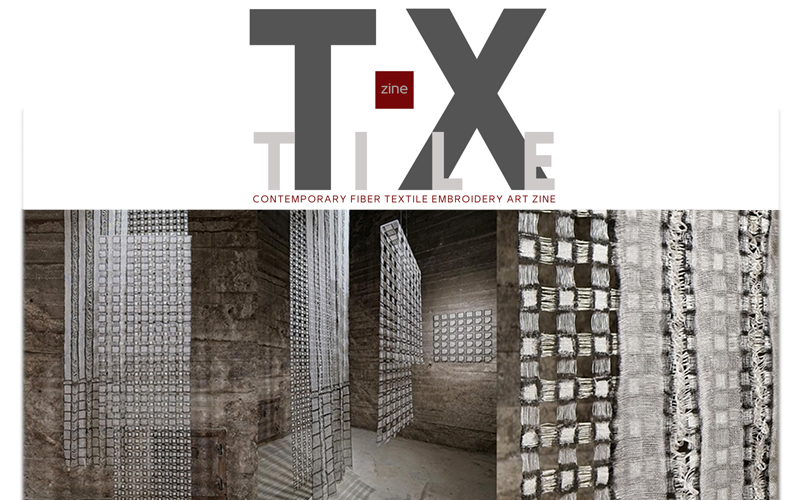
Weaves of Meaning: the Art of Anneke Klein Between Minimalism and Social Awareness, T-X txtilezine

• T-X, txtilezine  published,”Weaves of Meaning: the Art of Anneke Klein Between Minimalism and Social Awareness,” by Barbara Pavel

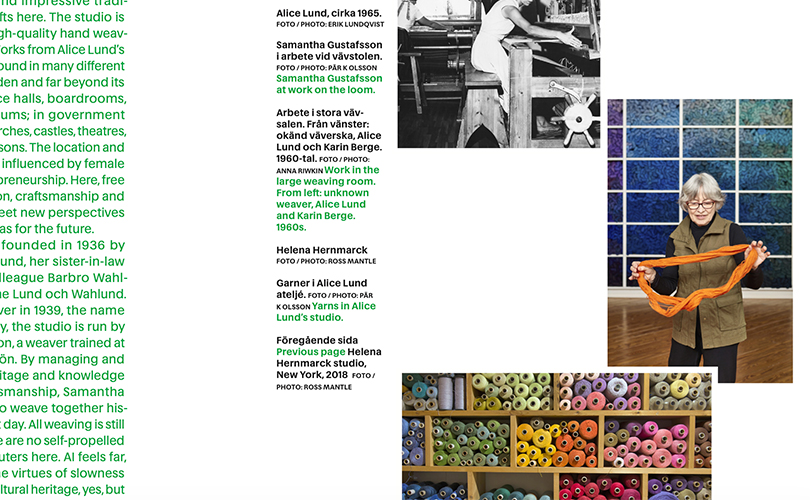
The Gently Monumental,” by Anneke Enquist about Helena Hernmarck in Form magazine

•  FORM magazine published “The Gently Monumental,” by Anneke Enquist, an article about artist Helena Hernmarck

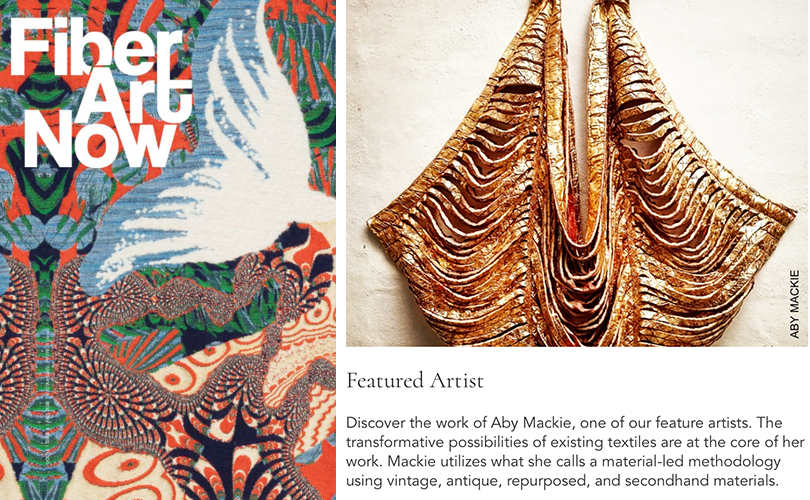
It All Starts With Materials: the Art of Aby Mackie
Fiber Art Now magazine Fall 2025 issue, It All Starts With Materials: the Art of Aby Mackie

October 2025: 

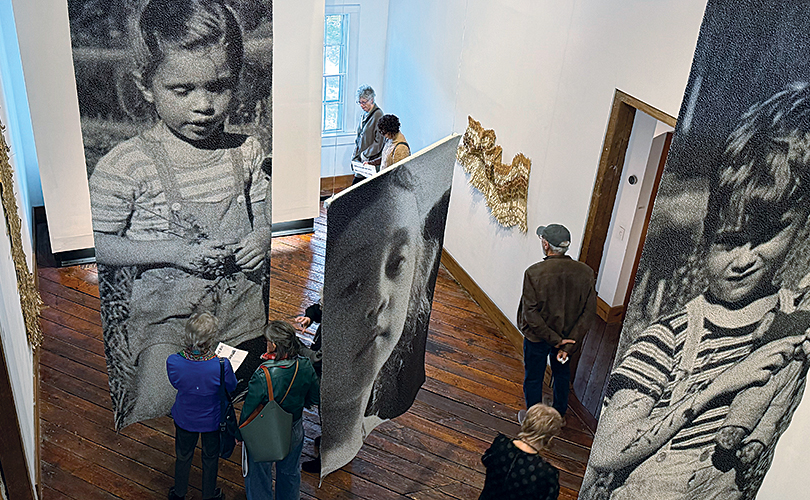
•  Beauty is Resistance: art as antidote, browngrotta arts’ Fall Art in the Barn exhibition, opened

Beauty is Resistance, subversive textile art at browngrotta arts
Beauty is Resistance, subversive textile art at browngrotta arts. Photo by Tom Grotta

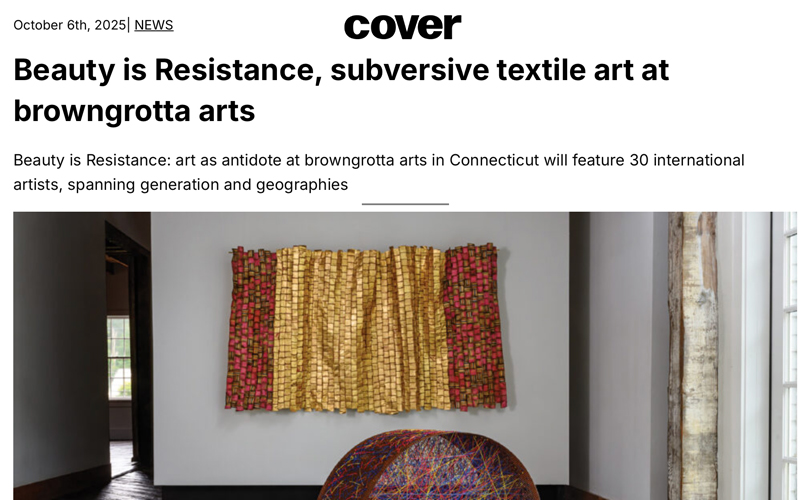
• Cover magazine published Beauty is Resistance, subversive textile art at browngrotta arts

Cover Magazine covers browngrotta arts Beauty is Resistance: art as antidote exhibition

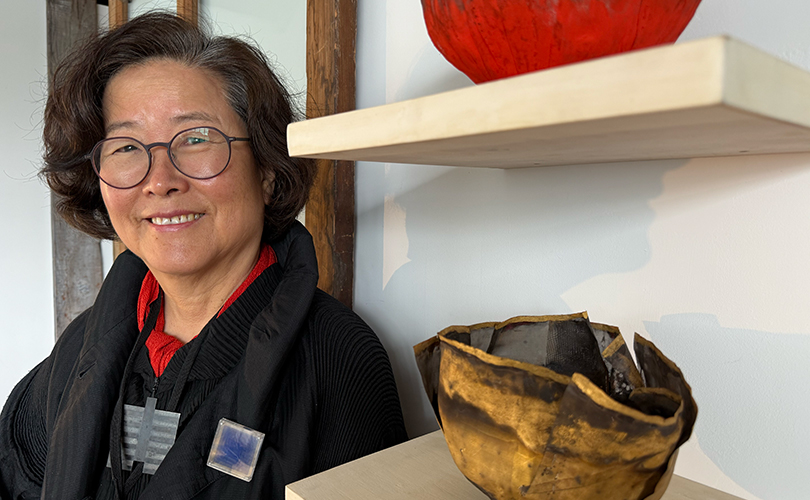
• Out-of-the-area Artist Visit: Jin-Sook So joined us at browngrotta arts for the opening of Beauty is Resistance and the artists dinner after.

Jin-Sook So besides her Soul of a Bowl series of wire mesh baskets
Jin-Sook So besides her Soul of a Bowl series of wire mesh baskets. Photo by Tom Grotta

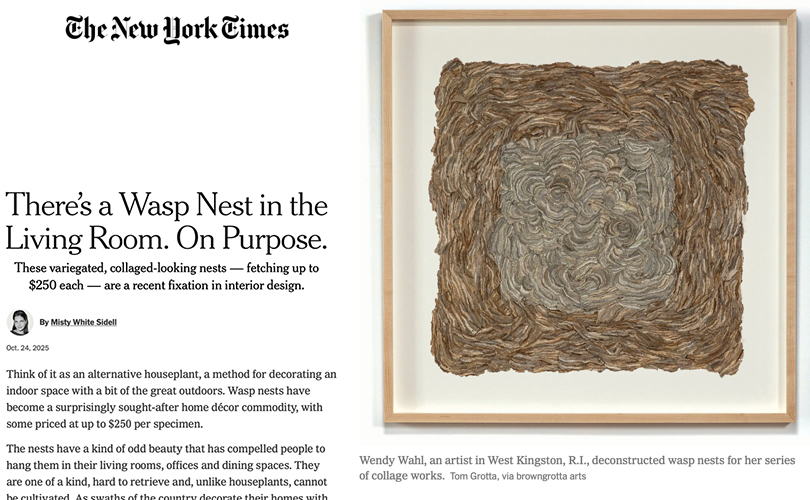
• The New York Times, publishes “There’s a Hornet’s Nest in the Living Room. On Purpose.” by Misty White Sidell, which featured Wendy Wahl and Kay Sekimachi• Beauty is Resistance: art as antidote, the catalog, is published (our 61st)

• Centurion magazine article, “A Stitch in Time,” by Jemima Sissons, is published, mentioning Kay Sekimachi, Mariette Rousseau-Vermette, Dominic DiMare, and John McQueen.

Centurion magazine article, “A Stitch in Time,” by Jemima Sisson’s

November 2025: 

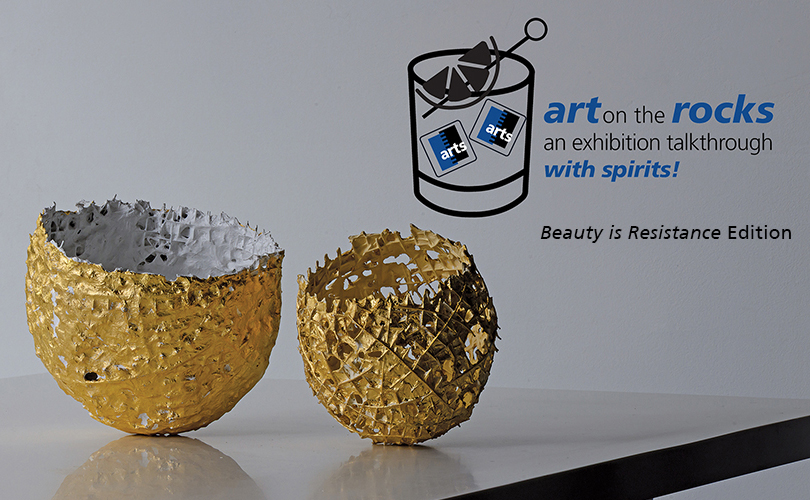
art on the rocks Beauty is Resistance edition
art on the rocks Beauty is Resistance edition, now on Zoom


• Art on Rocks: an art walkthrough with spirits, Beauty is Resistance edition — is presented on Zoom

December 2025:

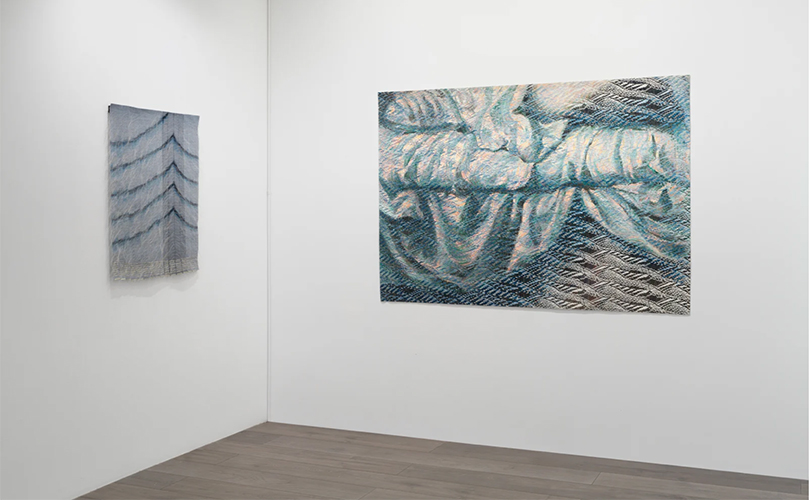
Adela Akers, Drape, 2017 and Lia Cook, Material Pleasures: Artemisia, 1993. photo courtesy of Hollis Taggart Gallery in New York City
Adela Akers, Drape, 2017 and Lia Cook, Material Pleasures: Artemisia, 1993. Photo courtesy of Hollis Taggart Gallery in New York City

• browngrotta arts loaned work by Adela Akers and Lia Cook to Drop, Cloth at Hollis Taggart Gallery in New York City. Curated by Glenn Adamson and Severin Deifs and spanning two Chelsea galleries, Drop, Cloth presented a 50-year lineage of draping in contemporary art.

Other News:
Acquisitions

Transition by Neha Puri Dhir, 2015. Photo by Tom Grotta

Transition by Neha Puri Dhir was acquired by the John and Mable Ringling Musuem in Sarasota, Florida

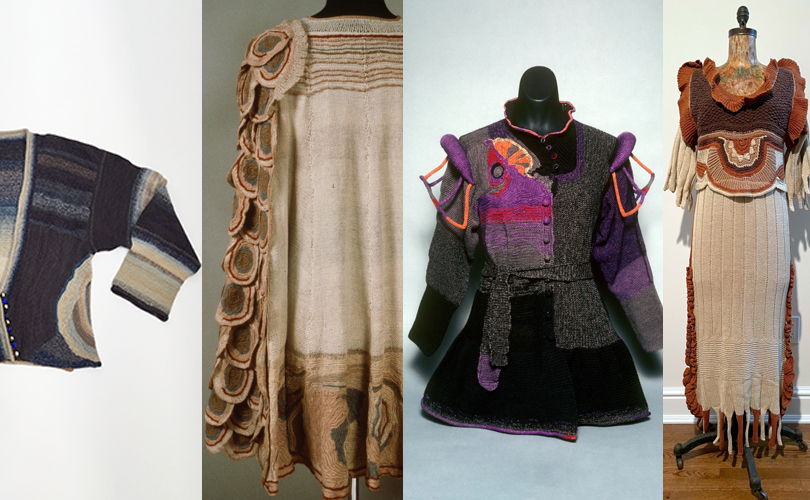
Four 1980s works of wearable art by Norma Minkowitz --  Outer Crater, Long Dress, Blue Jewel and Dusk — were acquired by the LACMA in Los Angeles, CA
Norma Minkowitz, Blue Jewel, Outer Crater, Dusk, Long Dress. 1980’s, photos courtesy of Norma Minkowitz

• Four 1980s works of wearable art by Norma Minkowitz —  Blue Jewel, Outer Crater, Long Dress, and Dusk — were acquired by the LACMA in Los Angeles, CA.

YouTube:
• browngrotta arts created 17 videos of artworks for its weekly artlive feature

• browngrotta arts created preview videos for Field Notes; Kay Sekimachi: a personal archive; and Beauty is Resistance

Social Media Outreach: 
• 31,911 emails from browngrotta arts were opened
• 41,822 people liked our Instagram content (a 14% increase over 2024)
• We gained 3,046 new followers to our Instagram account (a 90% jump over 2024)
• 24,819 people engaged with our Facebook posts (that’s a 96% increase over last year)
• We posted 52 times on arttextstyle.


Lives Well Lived: Dona Anderson

We were very sad to learn that Washington State artist Dona Anderson had passed away on December 19, 2025 at age 97. 

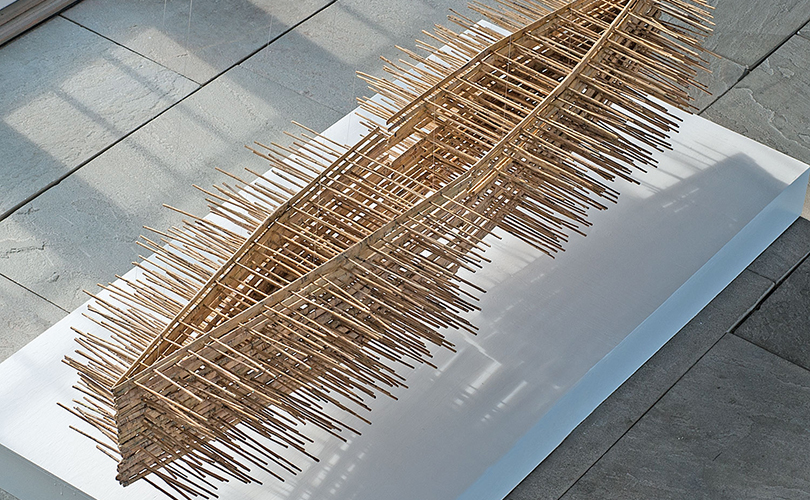
Large Bamboo stick kayak sculpture
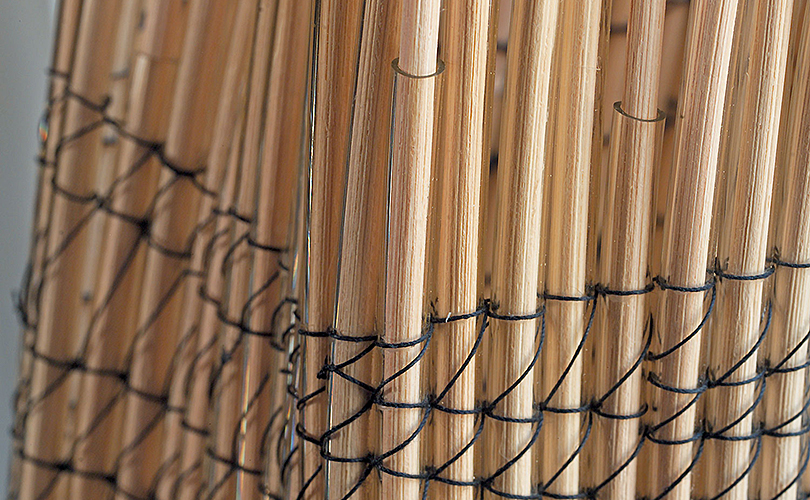
19da Crossing Over, Dona Anderson, bamboo kendo (martial art sticks); patterned paper; thread, 15″ x 94″ x 30″ , 2008. Photo by Tom Grotta

Anderson began studying and exhibiting art in the late 1960s. She studied with Everett Community College instructor Russell Day, who mentored such noted Northwest artists as Chuck Close and Dale Chihuly. Her reputation grew steadily beyond Washington. By the 2000s she had exhibited throughout the US and in Cheongju, Korea at the International Craft Biennial. Her large boat basket form, Crossing Over, traveled to Pennsylvania, New Jersey, and Michigan as part of the browngrotta arts’ exhibition Green from the Get Go: International Contemporary Basketmakers, curated with Jane Milosch.

medical tubing sculpture
5da Oxygen, Dona Anderson, round reed, thread, medical tubing, 23″ x 13″ x 5″, 2004. Photo by Tom Grotta

Anderson was known for her her use of diverse materials, including recycled hockey sticks, surgical tubing, and dental molds. When she was selected as Snohomish County Artist of the Year in 2003, the Snohomish County Times reported that Anderson had shopped at the Boeing surplus store in Renton, Washington, buying the same material used on the skins of 747s and driving over the stuff to flatten it to create art material. She fashioned bras out of automobile parts and immersed girdles in pink artist cement. (“Late Bloomer is local Artist of the Year,’ Diane Wright, Times Snohomish County bureau, February 26, 2003.)  “I love the touch of the materials whether they are paper, reeds, cement or metal,” she said, “shaping them into an image that satisfies me.” Her ideas or inspiration came from the routine of life, everyday things that surrounded her — her house, friends, architecture, even television.

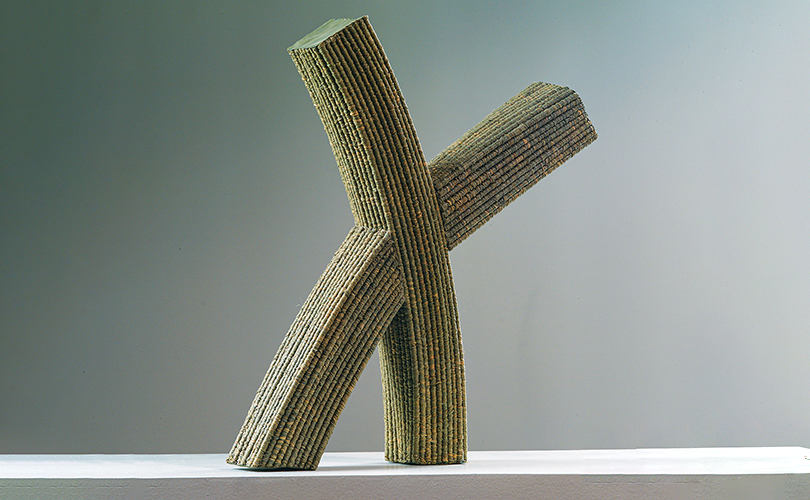
Letter X sculpture
1da X, Dona Anderson, round reed, thread, 18.5″ x 15″ x 2.75″, 2003. Photo by Tom Grotta

“In the mid-1980s when I was working with fiber,” Anderson told The Seattle Times in 2009, “I took a class in basketry at Wallingford’s Factory of Visual Arts. There we used raffia and did traditional coiling. As time went by, my work become more and more complicated.” She preferred to call her works “structures” rather than baskets.

Dress pattern paper basket
17da Undulating Surface #7, Dona Anderson, wire armature, pattern paper and polymer, 16″ x 17.5″ x 15″, 2010. Photo by Tom Grotta

A significant body of Anderson’s work involved the use of sewing patterns. “In 1988, I began using round reeds, and sewing them together to create architectural and more experimental forms,” she told The Seattle Times. “I started covering the reeds with pattern paper,…The black lines on the paper created interesting surface designs after I sewed the reeds into the desired shapes.”

tire chain basket sculpture
20da Re-Tire, Dona Anderson, tire chain, netting and window screen, 8.5″ x 16.25″ x 14.5″, 2011. Photo by Tom Grotta

For browngrotta arts’ 2011 exhibition, Stimulus: art and its inception, she turned a tire chain into a basket. ‘Walking through my neighborhood everyday,” she told us. ‘I took care to find that special something that appealed to my imagination. When I saw a rusty piece of metal wire tweaking out from a pile of dirt, my heart soared with possibilities. No one even knew what it had been until I cleaned it—a tire chain I turned into a basket.”

Anderson and her husband, Bob, were also significant promoters of the arts in their area, seeding an endowment for the visual arts among other supports. As an artist and advocate, she will be missed.


Art Assembled – New this Week in December

New this Week artworks are introduced by browngrotta arts every Monday. December 2025 featured five Mondays so our recap this month features one more artwork than usual. In this version of Art Assembled, you’ll see work by Toshio Sekiji, Gyöngy Laky, Aby Mackie, Asela Akers, and Neha Puri Dhir.

Toshio Sekiji Israeli Newspaper
24ts Neighbors, Toshio Sekiji, Israeli newspapers and lacquer, 37.125″ x 41″ x 3″, 1998. Photos by Tom Grotta

Toshio Sekiji’s Neighbors is an illustration of the woven collages for which he is known. In this case, he has plaited lacquered strips from various Israeli newspapers in order to make a plea for intergroup harmony. In other works, to make his point, Sekiji has mixed newspapers from Japanese and Korean newspapers, and used The New York Times, dust jackets from controversial books, and Indian and other Asian newspapers.

Gyöngy Laky Ouch wall sculpture
136L Lie Ability (OUCH), Gyöngy Laky, apple prunings, acrylic paint, screws, 9.5” x 42” x 2.5”, 2019. Photos by Tom Grotta

Gyöngy Laky has spent a lifetime bringing light to issues of the environment—joining branches and tree prunings — often from agricultural sites — with industrial materials. Laky’s work takes many forms, from baskets and vessels to text-based sculpture like Lie Ability (OUCH) which spell out her feelings on the current political climate in literal terms. Laky had heard many of the lies in the 2016 presidential campaign and feared the man now in charge. The title is a double entendre – a small hint to her thinking beyond the work itself. The word “OUCH” offers to viewers the opportunity to read into the work what is in their minds and hearts once Laky has attracted their attention — an example of the power of art to evade censorship.

Aby Mackie gold textiles
11am Fragments of a Life Lived 3, Aby Mackie, repurposed textile, gold leaf, shellac, 44″ X 72″ X 4″, 2025. Photos by Tom Grotta

Artist Aby Mackie’s textile-based artwork engages with themes of ecology, history, and resistance through a process of reclamation and transformation. Working with discarded historic textiles, she deconstructs and reconfigures, disrupting their original function to create new meaning. In Fragments of a Life Lived 3 she uses antique-ticking fabric as both material and metaphor. Once utilitarian, worn by time and use, it is reconstructed through stitching and further manipulated with paint and gold leaf. These interventions reimagine its surface—echoing stories of erosion, endurance, and renewal. The addition of gilding speaks to the overlooked value in what is often discarded, while the act of mending becomes a gesture of care and reclamation. The viewer is invited to read between the layers— to sense the life once lived through it, and to reflect on what we choose to preserve or let go. 

Adela Akers tapestry
68aa Interrupted II, Adela Akers, linen, horsehair, metal & paint, 44″ x 58″, 2007. Photos by Tom Grotta

A diverse and geographically disparate range of influences grounded Adela Akers work. Akers was born in Spain, educated at the University of Havana in Cuba and inspired by her extensive travels. A trip to the Democratic Republic of the Congo, where she observed the painting process of the Mbuti women of the Ituri Forest, led to the marks in Akers’s work, Interrupted II. “I’ve always been interested in looking at patterns of other cultures and other people,” she told a San Francisco television interviewer. When she transferred her drawing of Mbuti women’s marks to a larger scale she separated the lines and they no longer lined up. “It’s fine with me if they don’t,” she said. “But by spreading it out, then I have, of course, room for this other color to be in, again to add more dimension, so that the horsehairs (use of which is on of her trademarks) float over a lot more.”

Neha Puri Dhir textile
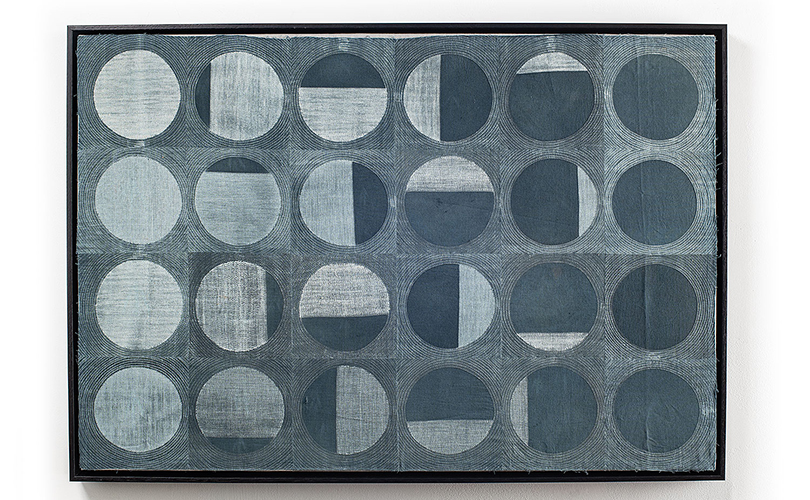
10npd Dualities, Neha Puri Dhir, stitch-resist dyeing on handwoven silk, 15″ x 25″ x 2.5″, 2024. Photos by Tom Grotta

Like Toshio Sekiji’s works, Dualities by Neha Puri Dhir invites contemplation on coexistence and transformation. The work, involving stitch-resist dyeing on handwoven silk, reminds viewers of the quiet harmony that emerges when opposites are held together in a single frame – a thoughtful message for these contentious times. The two circular motifs, one in negative and another in positive space, reflect ideas of balance and contrast. The earthy browns merge into deep indigo blues, evoking cycles of day and night, fullness and emptiness, presence and absence. 

Watch for more work in 2026!


Artist Focus: Sophie Rowley

Sophie Rowley handpainted cotton wall hanging detail
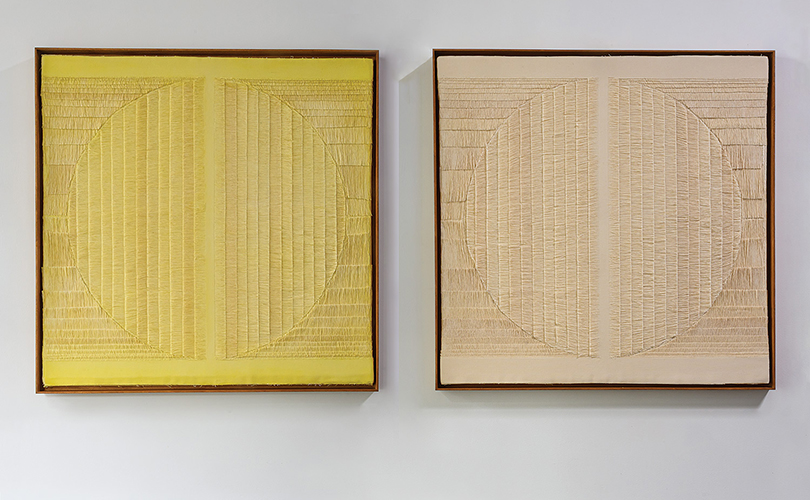
Sophie Rowley, 1sro Post-It (circle in a square), handpainted cotton, 39.375″ x 39.375″ x 1.875″, 2025. Photo by Tom Grotta

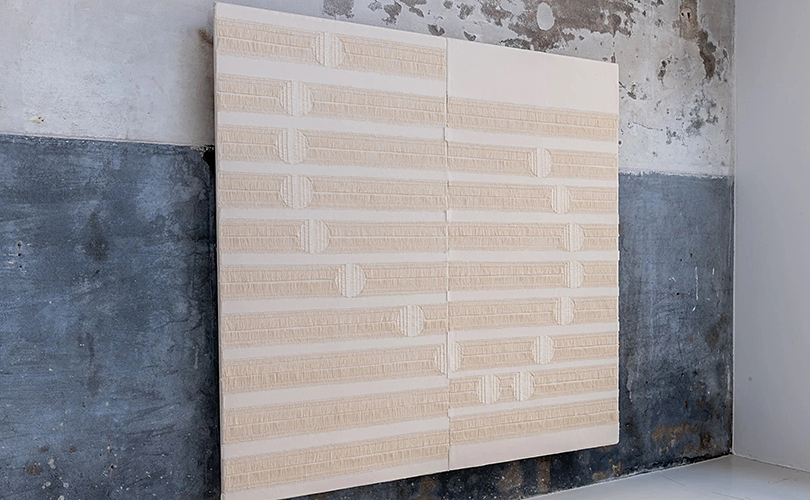
Sophie Rowley, a German and New Zealand artist with an MA from Central Saint Martins London, lives and works in Berlin. With a background in textiles, her work embraces the experimentation with techniques in fiber. Rowley’s work explores how repetitive gestures and modes of deconstruction can foster evolutionary change. Central to her approach, are self-developed techniques involving meticulous repetition. Unfolding across days, weeks, and months, the result is intricate, corporeal “paintings” that challenge the inherent structural norms and tangible aspects of canvas, redefining its role as a mere substrate to the very essence of the artwork itself.

Sophie Rowley wall hangings
Sophie Rowley, 1sro Post-It (circle in a square), handpainted cotton, 39.375″ x 39.375″ x 1.875″, 2025; 2sro Tipp-Ex (circle in a square), handpainted cotton, 39.375″ x 39.375″ x 1.875″, 2025. Photo by Tom Grotta

“I like to view deconstruction as not merely a visual or formal technique that I employ,” says Rowley. “I like to think of it also in a broader sense and to explore what lies between the material and the discursive: How do internal perceptions manifest in tangible form? What new insights emerge through the process of undoing? I believe it is essential to question known structures and challenge received ideas, not only on a material level but also in the intangible realms.” 

Sophie Rowley, Chain Diptych, canvas cotton, 190x210cm, 2024. Photo by Sophie Rowley

Rowley also disrupts conventional perceptions surrounding predetermined gender associations attributed to mediums and materials. Embracing a feminist ethos, she celebrates the utilization of traditionally female mediums that are historically rooted in domesticity. Her practice questions entrenched biases, inviting a reevaluation of societal constructs that dictate artistic expression along gendered lines. 

Sophie Rowley, Sway, Cotton, 80x100cm, 2023. Photo by Sophie Rowley

Rowley’s work has been exhibited internationally, including at Make Hauser & Wirth, Somerset, UK; the Scottsdale Museum of Contemporary Art, Arizona; Roche Court’s New Art Centre, Salisbury, UK; the Design Museum Gent, Belgium; and Isamu Noguchi Stone Heaven, Tokyo, Japan. In 2019, she was a finalist in the LOEWE Foundation’s Craft Prize, an internationally distinguished award for contemporary makers. Recently, in Repetition is a Form of Change, in the Fall of 2025 at Looiersgracht 60 in Amsterdam, Rowley reflected on her journey from a fundamentalist community at the age of 16 and the subsequent deconstruction of her faith. With site-specific installations and individual works, she merged views of the past and visions of the future. You can hear the artist in conversation about the exhibition with Francesca Raimondi, professor of philosophy at Free University Berlin, based both in Berlin and Amsterdam. Prof. Dr. Raimondi’s research spans aesthetics, critical social theory, feminism, and political philosophy, with a focus on how modern forms of subjectification and embodiment are critiqued and transformed through artistic practices: https://www.sophierowley.com/news.

Small Sophie Rowley thread weaving
Sophie Rowley, Small Work 7 (Untitled), cotton, 31 x 21cm, 2024. Photo by Sophie Rowley

Rowley’s works are represented in the collections of the V&A, London; Scottsdale Museum of Contemporary Art, Arizona; the Design Museum Gent, Belgium; and the Georgetown University Art Galleries, Washington, D.C. She has completed a residency at Carraig na gCat/Ireland with the Josef and Annie Albers foundation and has another upcoming residency with their Thread residency in Senegal.


Holiday Greetings!

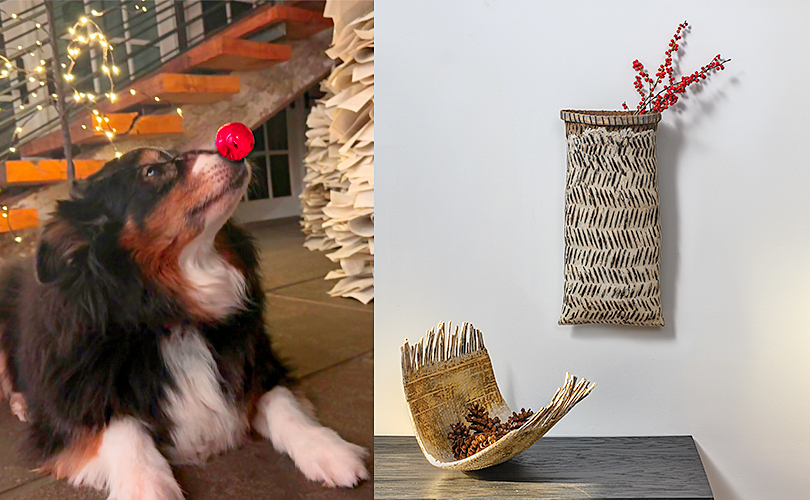
Tim Johnson Baskets
Tim Johnson, Curve VI , 2019 and Wall Pocket, 2023. Photos by Tom Grotta

We’re beginning our holiday revelry early this year!

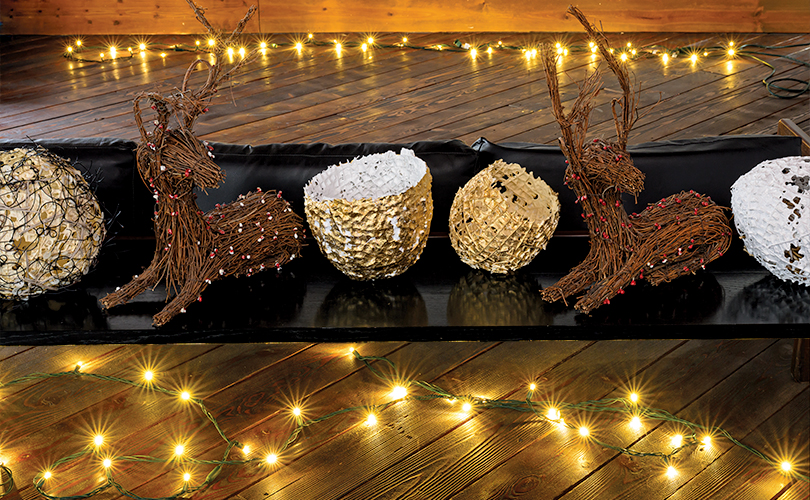
Here’s round up of Holiday images.

John Garrett Baskets
John Garrett Hardware Cloth Scrap Baskets, 2025. Photo by Tom Grotta
Cassidy Australian Shepherd
Cassidy. Photo by Tom Grotta
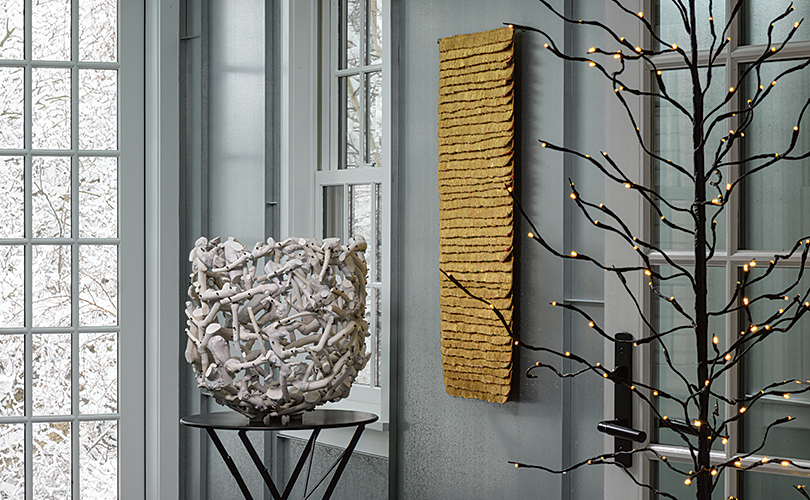
Gyöngy Laky Basket, Abby Mackie gold wall hanging
Traverser, Gyöngy Laky, 2016 and We Can All Be Saved 17, Aby Mackie, 2024. Photo by Tom Grotta
Lia Cook Tapestry
Big Susan, Lia Cook, 2005. Photo by Tom Grotta

Wishing you all a most enjoyable holiday season!


Books Make Great Gifts 2025, 2 of 2

Rope and Women's Work Book Covers

One more artist recommendation this week, from Wendy Wahl. “I came upon ROPE: How a Bundle of Twisted Fibers Became the Backbone of Civilization, by Tim Queeny, in The New York Times Book Review,” Wahl writes. “He had me lassoed when he gave credit to Elizabeth Wayland Barber’s Women’s Work, The First Twenty Thousand Years. Women, Cloth, and Society in Early Times. Queeney’s brief book is packed with history as he describes a rope fragment estimated to be 50,000 years old, discovered in southeast France, and a 4,000 year old Egyptian rope utilizing the “s” and “z” twist construction. For the nautical, you will find examples of fiber boats, lines, knots, the role in sailing navigation, and gathering food from the sea. He describes how the rope was used to build pyramids, the Incan Quipu, a portable rope with knots for communication, and rope as a means to reach the divine through mythology. He shows us how rope was used in underground mines, for travel in balloons and airplanes, for working with horses and livestock, for containment, inflicting punishment, and for magic and marriage. His concise chapters twist and turn, explaining how plant and animal materials were first used, the transition to metal and plastic rope making, and yarns of the future. He shares stories of mountain climbers and cavers, as well as Petit Philip, a tightrope artist who walked between the Twin Towers in 1974, and the use of rope in science and space exploration. I was hoping he would include the role of rope for looms, as well as its use as a material metaphor by artists. Otherwise, the book jacket is spot on, describing ‘A unique and compelling adventure through the history of rope, and its impact on civilization.‘”

Weft Ikat and Chris Drury Book Covers

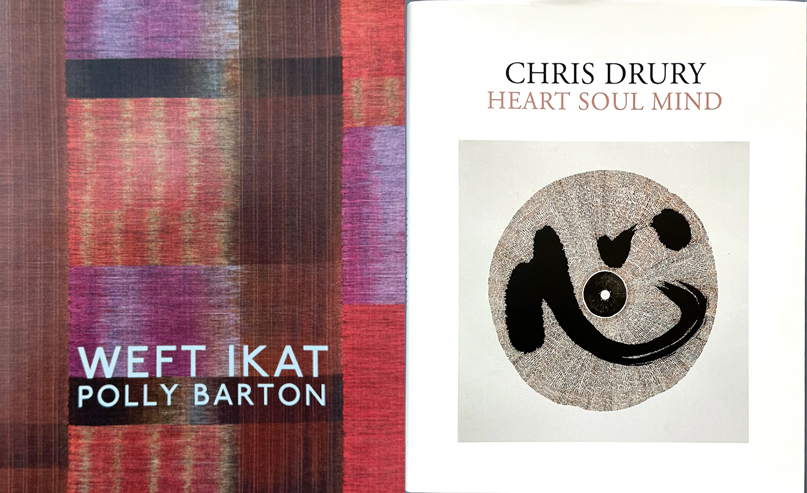
At browngrotta arts we’ve also come across a number of interesting books this year.  On our website, you’ll find Weft Ikat: Polly BartonSelf published by the artist, Sutton shares the basic tying techniques for weft ikat and some techniques she has adapted to solve design problems. Ikat means a to bind a group or skein of fibers with a resist tie to create a pre-calculated design when the fibers are woven. The technique is one that is used in differing combinations by cultures across the world.

We can also recommend Chris Drury: Heart Soul Mind. The book, as advertised, “gives in images and the words of Chris Drury himself, a precious insight into this renowned artist’s practice over more than four decades.” Drury has long focused on patterns of energy, in plants, wind, water, and the flow patterns of blood in the human heart, relating systems in the body to systems on the planet. In the book, he tells stories behind his land art constructions of soil, wood, stone, and fungi in vastly different landscapes from Japan to South Korea to Nevada, Scotland, Antarctica, Wyoming, and Australia.  Frequent collaborator, poet Kay Syrad, contributed the introduction. The photographs are large and affecting. As the book jacket concludes,”Drury’s works remind us that art too can transform the way we look at the world.” Of course, books can, too.

Maison Parisienne Book Cover

We were gifted a truly exquisite book when Tom, Rhonda, and Carter traveled to Paris in March. For its 15th-anniversary exhibition, Maison Parisenne commissioned 15 exceptional works by 15 renowned artists such as Simone Pheulpin, whose work we show in the US, Pierre Renart, Hervé Wahlen, Gérald Vatrin, and others. The works were showcased at the historic Hall des Maréchaux within the Musée des Arts Décoratif and documented in Maison Parisienne: 15 Years. The photos in the book are beautiful, the work striking, but what impressed us most was the accuracy of the title of the introduction, “Maison Parisienne, a gallery as a universal family.” Oliver Gabet, Director, Department of Objets d’Art, Musée du Louvre, describes the care with which the gallery’s founder, Florence Guillier-Bernard, selects the artists that she promotes so energetically and effectively, an approach familiar to us. “… [T]here can be no doubt that she also chose the name with equal care,” he writes, “maison conjuring up a house that is also a home and a focal point for a family of disparate kith and kin, linked by networks of hidden connections.” The portraits of Guillier-Bernard with various artists represented by the gallery are a testament those eviable connections. We are pleased to have our own connection to this meticulously curated collection.

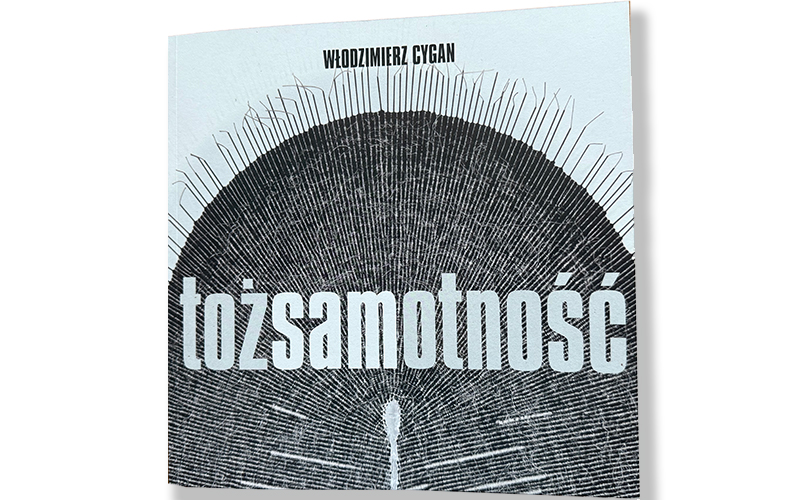
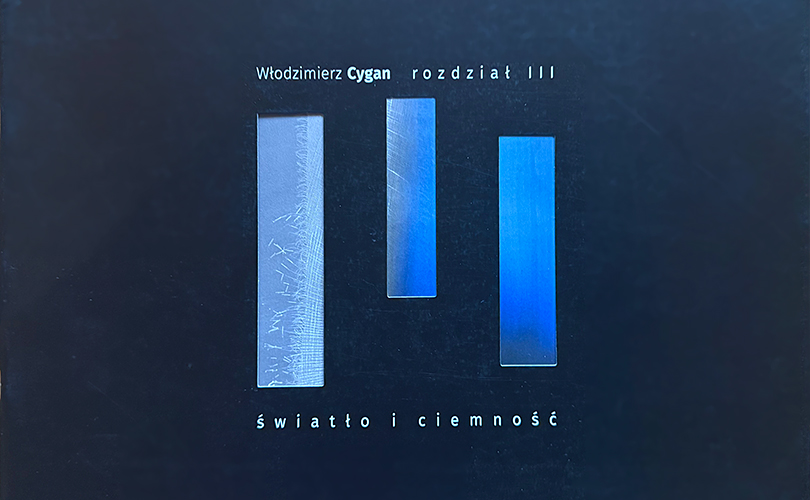
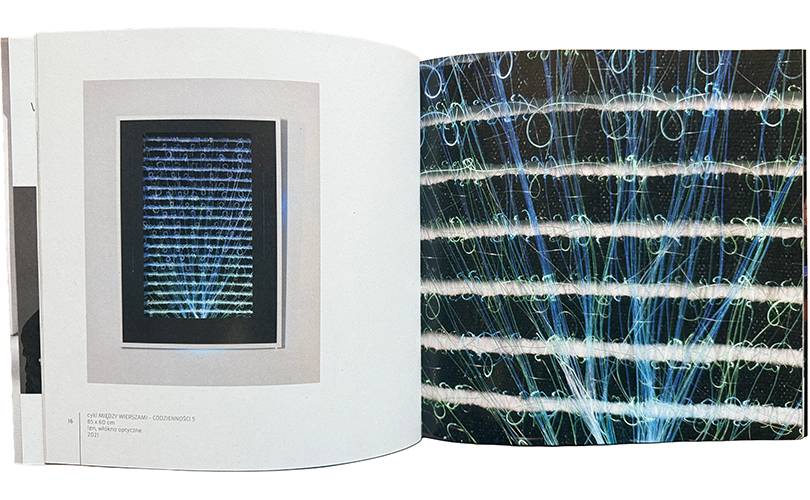
Wlodimirez Cygan shared two beautiful catalogs with us in May, Tożsamotność (Loneliness) and Światło i ciemność (Separation of Light and Darkness). Cygan wrote that the Tożsamotność (Loneliness) exhibition presented selected textiles created after 2008, when he finished working for Academy of Fine Arts in Gdańsk. “All of them make a reference to the textile – light and textile — interior relationship. In some works it is an interpretation of light; in others – light implemented in the living tissue of the creation.” The text of the catalog is in Polish, but the photographs — many of them full page — are luminous. We are excited that browngrotta arts will exhibit two of the works in this catalog — Organic 3 and Between the Lines of Everyday Life 5,  in its May 2026 exhibtion. In the Światło i ciemność (Separation of Light and Darkness) catalog, the text is in Polish and English, and again, the illustrations are dramatic, many of them of the artist’s works in black and white. In a reference pertinent to this body of work, essayist Marta Kowalewska writes, “Deliberately limiting the range of colors and color effects, associated to a great extent with painting, as well as defending against purely sculptural treatments, [he] strengthens those values that make up the essence of textile art,” she writes. “The technical constraints become an ally of the artist; sensuality of the fiber builds sensuality of the pieces …. Range of black, gray, and white allows perception of the mastery of the weave, perfection of design, but ultimately leads viewers’ attention to poetics of the communication.”

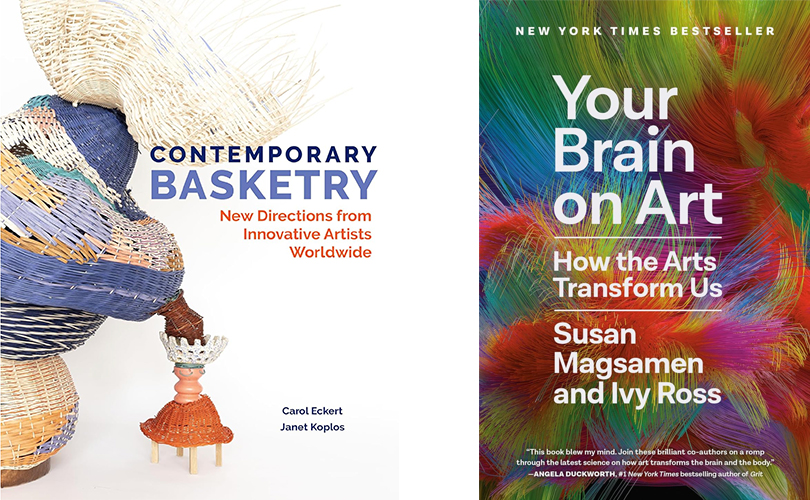
Contemporary Basketry and Your Brain on Art Covers

Contemporary Basketry: New Directions from Innovative Artists Worldwide is a new work by Janet Koplos and Carol Eckert. Inspired by Eckert’s blog, “Contemporary Basketry,” the book profiles 60 international artists (15 of whom have been promoted by browngrotta arts). A comment by each artist is included and Koplos has contributed an insightful essay, “Looking Into Baskets,” that discusses architecture, technique, allusion, and other attributes of contemporary practice. She borrows sculptor Phyllida Barlow’s term “restless objects,” noting baskets are restless in being unfixed in time, being portable and not fixed in place, and the artists who make them are restless, interested in defying expectations and distinguishing their works. 

A book from 2024 was particularly relevant for us this year. From the perspective of artists, the browngrotta arts’ exhibition, Beauty is Resistance: art as antidote, explored the impact of art on anxiety, pain, mood, and memory. In Your Brain on Art: How the Arts Transform Us, authors Susan Magsamen and Ivy Ross report on the scientific research supporting those effects  — on physical health, cognitive development, and memory. The findings cited are truly remarkable — engaging in art for 45 minutes straight can lower cortisol levels, learning music improves cognitive skills, striking tuning forks lower stress, and museum visits are prescribed to treat dementia and depression. Also featuring conversations with artists such as David Byrne, Renée Fleming, and evolutionary biologist E. O. Wilson, Your Brain on Art, is an authoritative guide to neuroaesthetics. 

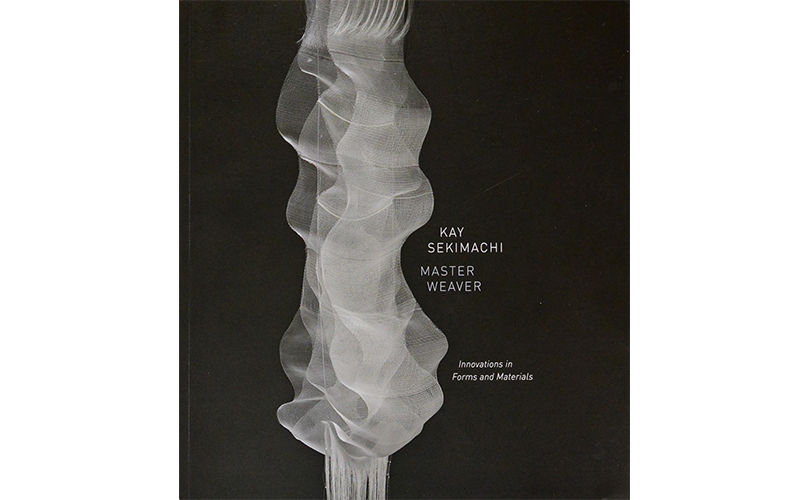
Kay Sekimachi Master

We have acquired more copies of Kay Sekimachi: Master Weaver, Innovations in Forms and Materialpublished by the Fresno Art Museum to celebrate Sekimachi’s selection for the Council of 100 Distinguished Women Artists for 2018. The catalog, available on our website, covers the expanse of Sekimachi’s career. It includes a comprehensive essay by Mija Riedel, “Thinking Through Thread,” a detailed chronology by Signe Mayfield, and exquisite photography by M. Lee Featheree. “Over six decades, Sekimachi has become a virtuoso of thread and form,” Riedel writes .… “She has bent, sewn, and molded paper into three-dimensional objects we haven’t seen before that can stand on their own and fill with light.”

May your 2026 reading list also be filled with light!


Art Assembled: New this Week in November

Works by Norma Minkowitz, Nnenna Okore, Laura Foster Nicholson, and Gyöngy Laky made up our New this Week selection for November.

Each of these works were featured in our Fall exhibition, Beauty is Resistance: art as antidote. The exhibition highlighted artworks in which artists used beauty as a way speak about agency, identity, anxiety, environmental issues, and more. 

Large Norma Minkowitz sculpture on the wall
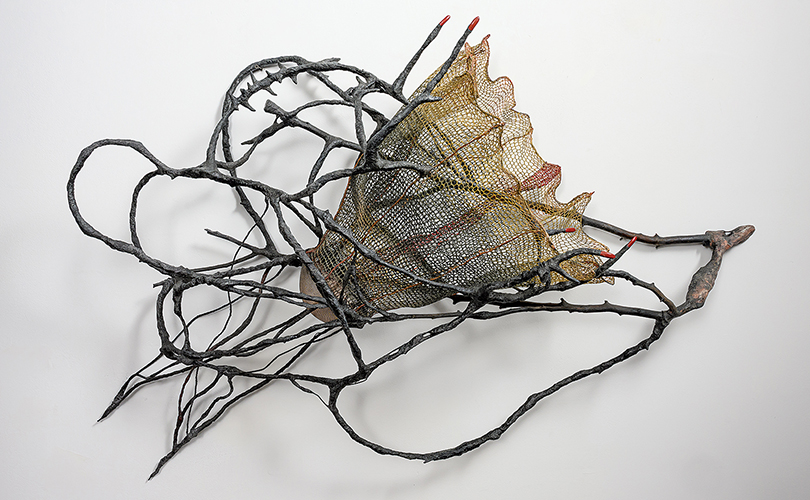
123nm Venus Trapped, Norma Minkowitz, mixed media fiber, 19.25″ x 50″ x 38″, 1997. Photo by Tom Grotta

Norma Minkowitz is widely known for works of three-dimensional crochet. For Venus Trapped, Minkowitz started with a giant crocheted flower head not really knowing where the sculpture was headed. Her initial inspiration leaned toward creating a female figure in combination with a giant flower head. But then, she started creating thorn-like shapes that resembled female fingernails painting them red. The flower, generally a symbol of renewal, peace, and celebration became a Venus fly trap — a persistent threat to certain species. Thorns and red sharp fingernails appeared to ward off any attacks — a symbol of resistance defending oneself against unwanted behavior.

White Cowries, Nnenna Okore
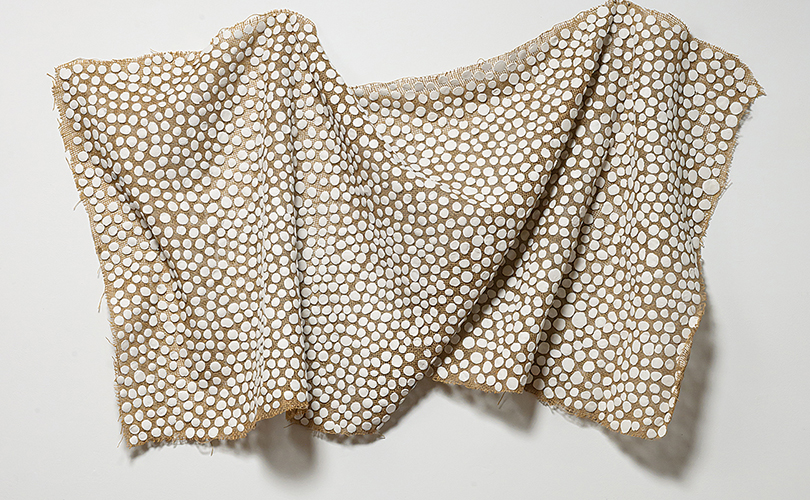
4no White Cowries, Nnenna Okore, hessian and ceramic, 34″ x 54″ x 7″, 2010. Photo by Tom Grotta

Born in Australia, raised in Nigeria, and now working in the United States, today Nnenna Okore uses bioplastics as a primary material in her work. However, her present ideas around material transformation took root in earlier works like White Cowries. Okore spent a year as an apprentice in El Anatsui’s studio in Nigeria, an artist who transforms thousands of throwaway metal bottle caps, tops, and fragments into dazzling tapestries that simultaneously confront the effects of the transatlantic slave trade and affirm the majesty of West African textiles like Kente cloth.  In Okore’s White Cowries, 2010 draped hessian (burlap) pulses with white clay dots to suggest the depth of symbolic, economic, and historical meaning of the cowrie shell in Nigerian culture.

Laura Foster Nicholson Face Tapestry
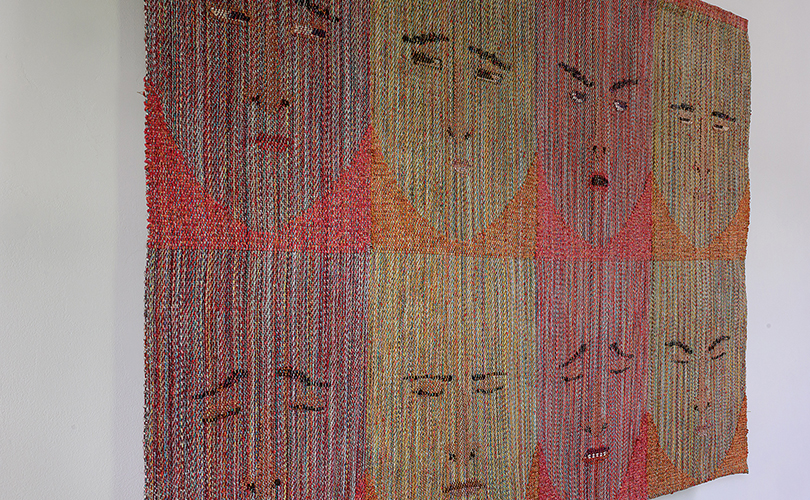
28lfn Eight Faces of Concern, Laura Foster Nicholson, cotton, 40″ x 54″, 2019. Photo by Tom Grotta

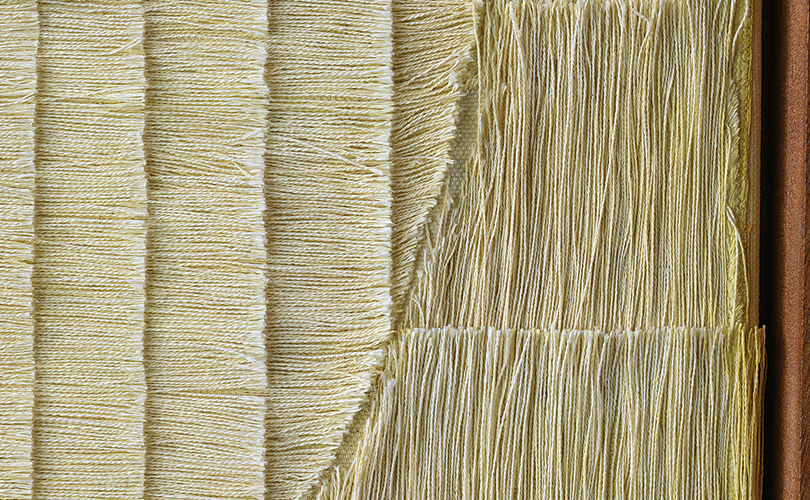
Laura Foster Nicholson is a textile artist known for her handwoven tapestries. With a BFA from Kansas City Art Institute and and MFA from Cranbrook Academy of Art, she has lectured, taught, and exhibited in the US, Canada and Italy. Her artwork is in several museum collections, including the Art Institute of Chicago, The Minneapolis Institute of Art, and the Denver Art Museum. Grants and awards include an NEA fellowship, the Leone di Pietra prize at the Venice Biennale of Architecture, three Illinois Arts Council fellowships, and a grant from the Graham Foundation for Research in the Fine Arts. She often does fabric and ribbon design commissions, including for Thomas Jefferson’s home, Monticello. “Eight Faces of Concern,” Nicholson says, “was a cathartic response to Trump’s first term. It was so much fun to get each subtle expression about these feelings into weaving. There are a lot of them!”
John Wax Gyöngy Laky basket
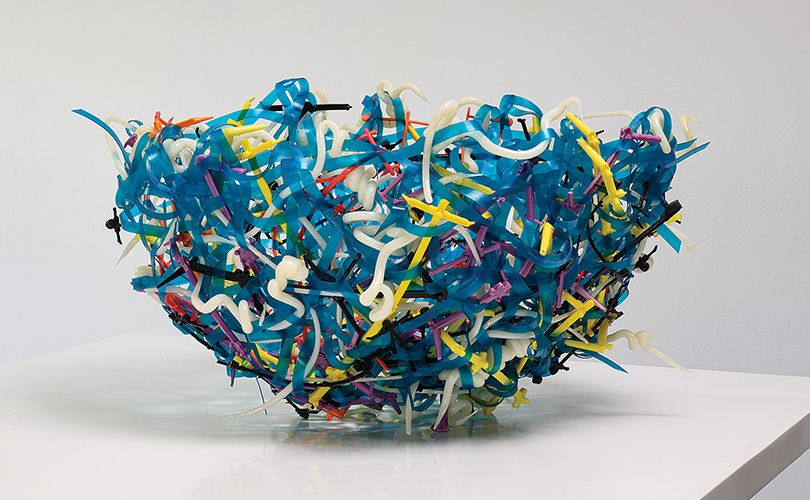
21L.1 Graceful Exit, Gyöngy Laky, discards from SC Johnson Wax company, 13″ x 21″ x 21″, 1994. Photo by Tom Grotta

In the 90s, Gyöngy Laky was enthusiastic when the SC Johnson Wax company sent waste bits of plastic from their manufacturing process to artists to use in their work. At that time, Laky says, many artists were addressing reuse, recycling, post-consumer life for discards, but here a major company joined the conversation. Graceful Exit was the result. Laky began to call of her materials addressing sustainability “industrial harvesting.” The artist is known for her wise and witty juxtapositions of natural and manmade materials. “Laky’s art manifests architectonic sensibility. She is as much an engineer as she is an artist in the conventional sense,” Kenneth Trapp wrote in an introduction to Laky’s oral biography (Nathan, Harriet, Trapp, Kenneth (2003). Gyongy Laky (b. 1944) Fiber Art: Visual Thinking and the Intelligent Hand. Regional Oral History Office, Bancroft Library, University of California, Berkeley, CA: The Regents of the University of California).

Enjoy! More to come in December…


Kisetsukan – Pursuing Seasonal Sense in Art

The weather’s changing here in Connecticut. Sweaters come out of storage, and sandals and sleeveless shirts are packed away. Light-colored duvets give way to warmer quilts and flannels. Pumpkins appear on porches and shelves, paving the way for twinkling lights in December.

What if we gave our art collections the same seasonal revisit?

The Japanese embrace this idea through a practice called kisetsukan, or “seasonal sense” — an aesthetic and cultural principle deeply rooted in their appreciation of nature and the home. This approach doesn’t just apply to art but extends to festivals, food, clothing, and everyday life. Kisetsukan reflects an awareness of the seasons and their emotional impact — something echoed in many cultures.

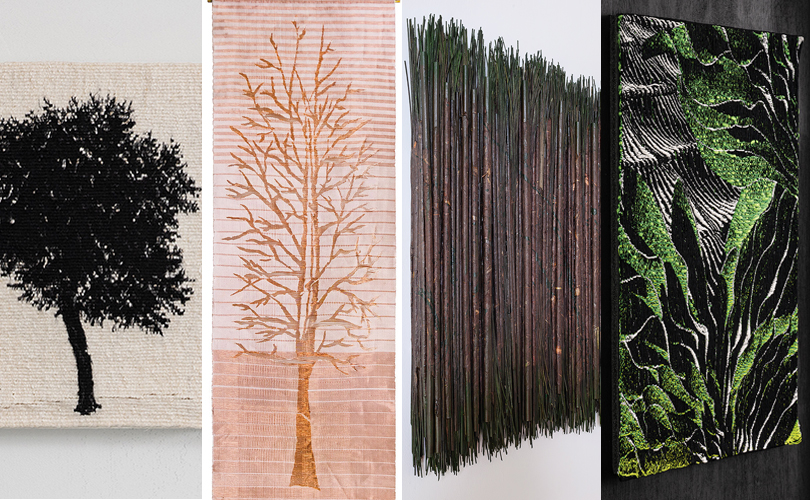
Sara Brennan, Gali Cnaani, Mary Merkel-Hess Details
Sara Brennan, Gali Cnaani, Mary Merkel-Hess, Lia Cook: Trees, woods and greenery in varying views.

Substituting artwork throughout the year can shift one’s emotional response and renew our connection with both the art and the environment around us. A single piece viewed in spring might evoke freshness and renewal; that same piece in the depths of winter could feel nostalgic or even melancholy.

One beautiful example is Paul Furneaux’s City Trees II, City Lights II, a memory of a hidden park in Tokyo where luminous white and pale pink cherry blossoms contrasted against dark-barked pines and the brutalist concrete and glass of the surrounding buildings — a moment of heightened beauty and tension. Works like this could be rotated in and out as the days lengthen or shorten, responding to the mood of the season.

Katherine Westphal, Merja Winqvist, Nancy Koenigsberg, Paul Furneaux details
Katherine Westphal (Fall Leaves); Merja Winqvist (Long Hot Summer); Nancy Koenigsberg (Winter Field), Paul Furneaux (City Trees II and City Lights II). Seasons highlighted in disparate media.

The Benefits of Seasonal Rotation

Rotating your artwork seasonally can:

  • Deepen your connection to nature by aligning your interior space with what’s happening outside.
  • Enhance appreciation for individual works by seeing them with fresh eyes each time they return.
  • Spark reflection on the passage of time and the impermanence of beauty — what the Japanese call mono no aware, a bittersweet awareness of life’s fleeting nature.
  • Expand your collection by giving you reason to collect more works and experiment with pairings, contrasts, and themes.

You don’t need to collect four new works for each season to begin. Start small. Instead of grouping similarly sized pieces, try alternating light and dark palettes, or switching black and white for bold color.

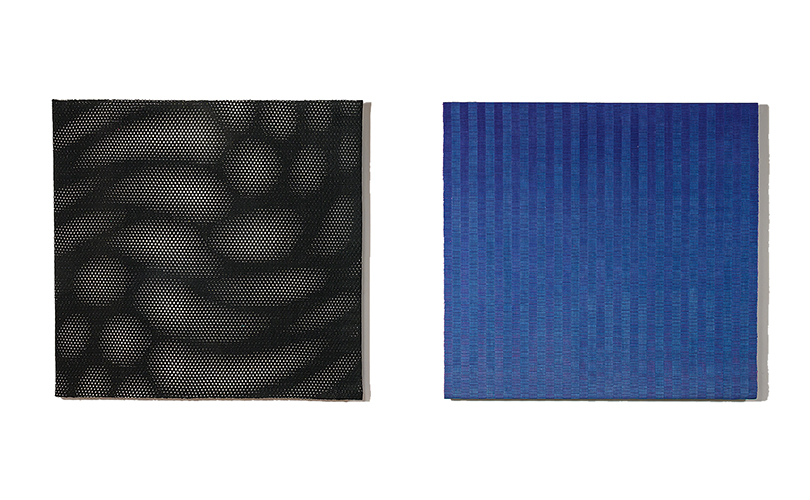
Grethe Sorensen diptych
Grethe Sorensen’s Interferens-7 and Blue-Color-Gradation can be hung together or rotated.
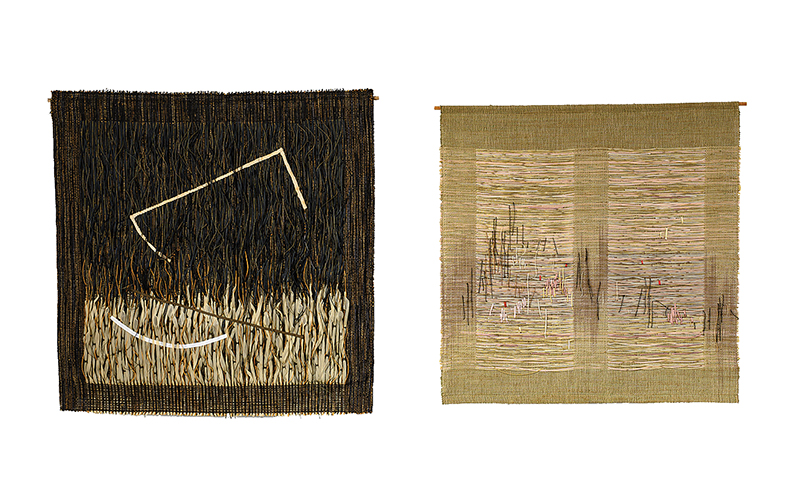
Cynthia Schira weavings
Cynthia Schira’s Nightfall and Spring-Lyric can be hung together or rotated.

Some pieces even offer built-in versatility:

Gyöngy Laky's Deviation displayed two ways
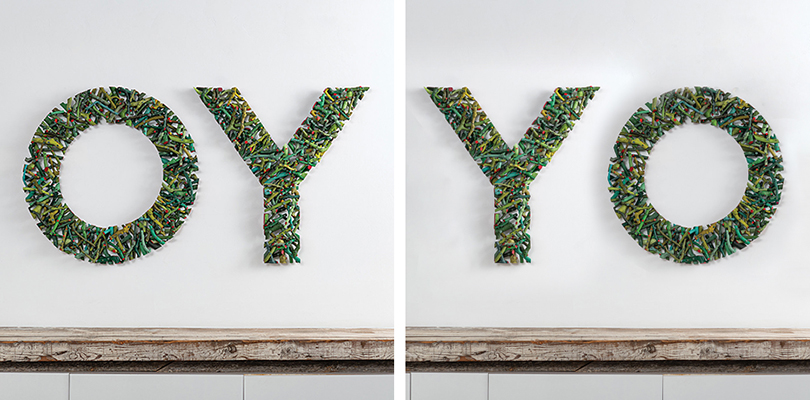
Gyöngy Laky’s Deviation installed two ways
  • Gyöngy Laky’s Deviation — OY can be displayed as “OY” for half the year and flipped to read “YO” for the other. Is it an existential “Oh, Why?” or a cheerful “Yo!” greeting? Let the season decide.
Laura Foster Nicholson's Shed displayed two ways
Laura Foster Nicholson’s Shed installed two ways

Laura Foster Nicholson’s work Shed can be hung vertically or horizontally, allowing a shift in visual weight and direction.

Sung Rim Parks sculpture on and off the wall
Sung Rim Park’s Beyond 220723. Displayed on the floor and floating in space.

Sung Rim Park’s Beyond series can be installed on or off the wall, offering new perspectives and levels of engagement.

Tall Lia Cook positive/negative image weaving
Lia Cook’s Big Richard front and back.

Lia Cook’s banners, like Big Richard, are impactful whether viewed from the front or reversed — another way to surprise the eye.

The more flexible the installation options, the more enjoyment you may find in your collection. Changing your art throughout the year brings new energy into a space, reawakens your senses, and reminds you of the beauty in change itself.


In Situ: A Look Book of Acquired Art

Below are some works that left browngrotta arts for new homes in the last few months.We are always pleased when art works we promote capture the imagination of a client or collector or someone who found us on the internet.

Mariette Rousseau-Vermette
Work by Mariette Rousseau-Vermette (Canada) in California. Client photo.
Katherine Westphal
A Katherine Westphal (US) collage in New York. Client Photo.

We then have the chance to tell them more about the remarkable artist whose work we admire.

Naomi Kobayashi
Work by Naomi Kobayashi (Japan) in Massachusetts.
Warren Seelig
A stonefield work by Warren Seelig (US), commissioned for a client in Connecticut. Photo by Tom Grotta

We share the impetus behind the work when we have that information.

Gudrun Pagter
A tapestry by Gudrun Pagter (Sweden) at home in Massachusetts.
Pat Campbell
A multi-layered paper work by Pat Campbell (US) in Connecticut. Photo by Tom Grotta

And, in an ideal world, they work is acquired and finds a new location.

Dorothy Gill Barnes
A grouping of innovative objects by Dorothy Gill Barnes (US) displayed in New York City. Client photo.
Keiji Nio
Cat’s Eyes by Keiji Nio (Japan) in Connecticut. Photo by Tom Grotta

A location where it inspires and delights.

Włodzimierz Cygan
Włodzimierz Cygan’s work in New York City. Client Photo.
Åse Ljones
An embroidery by Åse Ljones (Norway) in Connecticut. Photo by Tom Grotta.

Agneta Hobin
Fans of stainless steel mesh and mica by Agneta Hobin (Finland) in Pennsylvania. Client Photo.
Lilla Kulka
A sculptural tapestry by Lilla Kulka (Poland) in Connecticut. Photo by Tom Grotta
Baiba Osite
A work of driftwood by Baiba Osite (Latvia) in Connecticut. Photo by Tom Grotta
Caroline Bartlett
A dyed, pleated and stitched work by Caroline Bartlett(UK) installed in CT. Photo by Tom Grotta.
Works by Dorothy Gill Barnes(US) and Gyöngy Laky(US). Photo by Tom Grotta.

To find something for your location, visit our website: browngrotta.com.