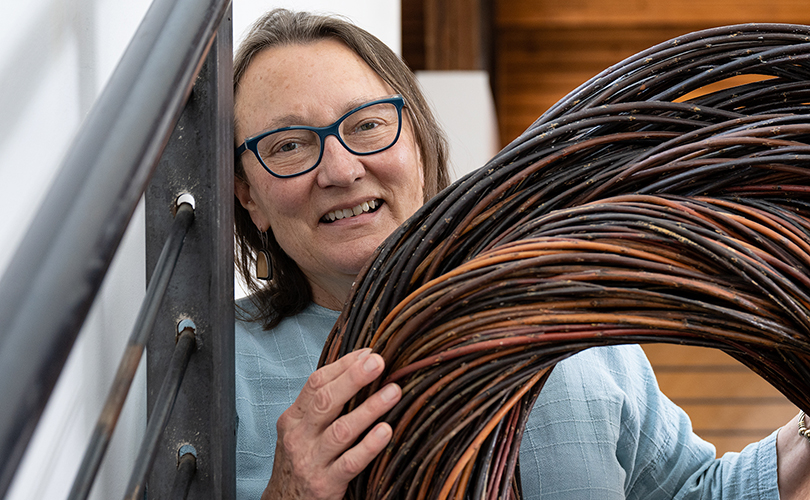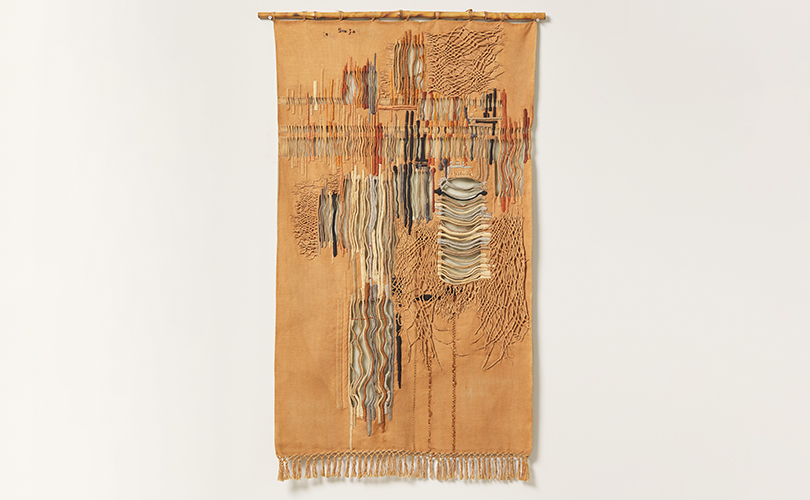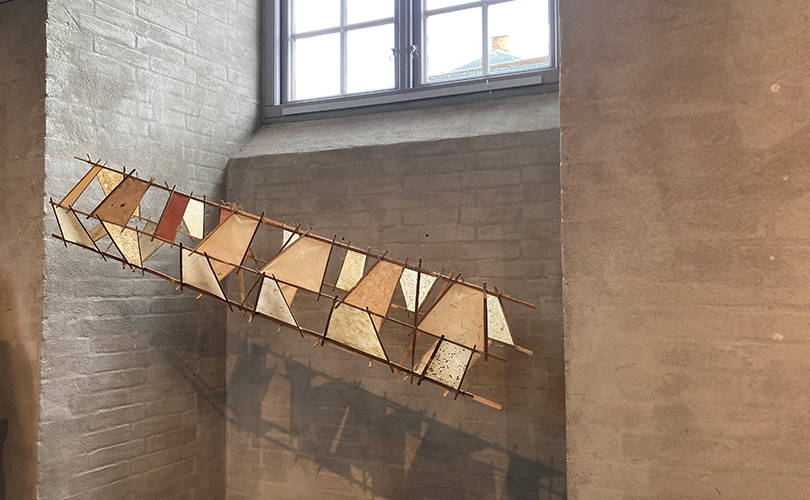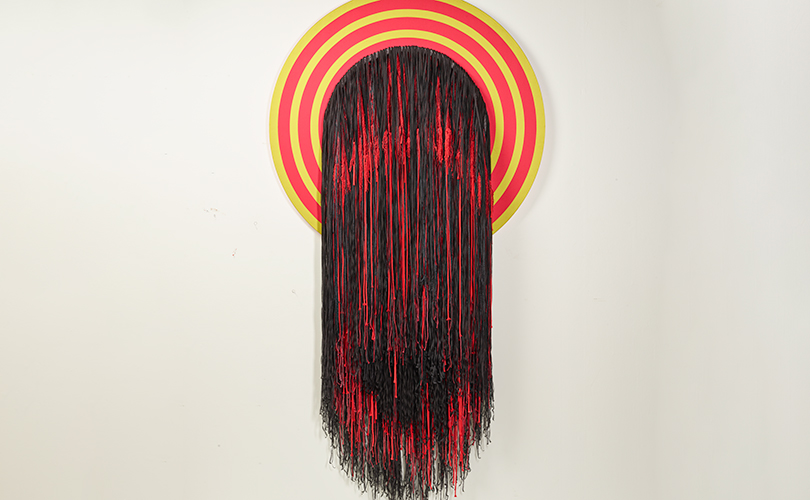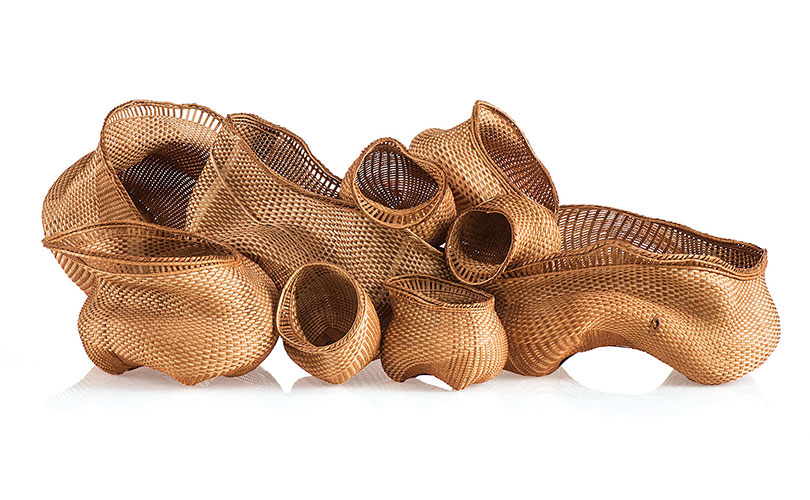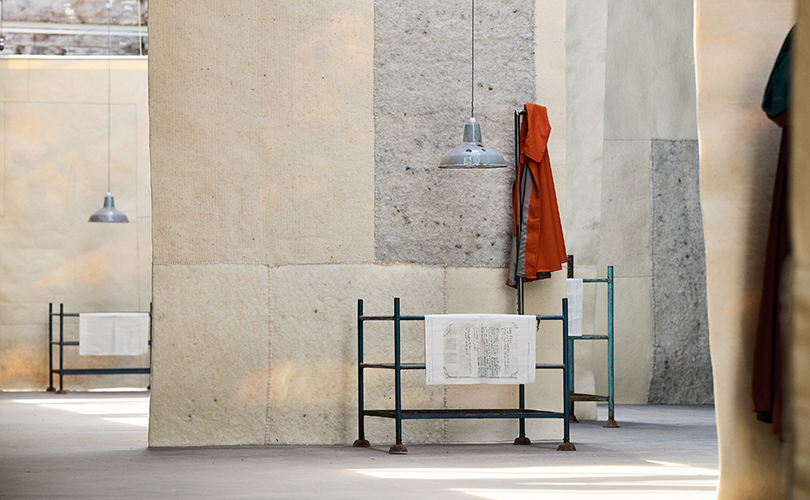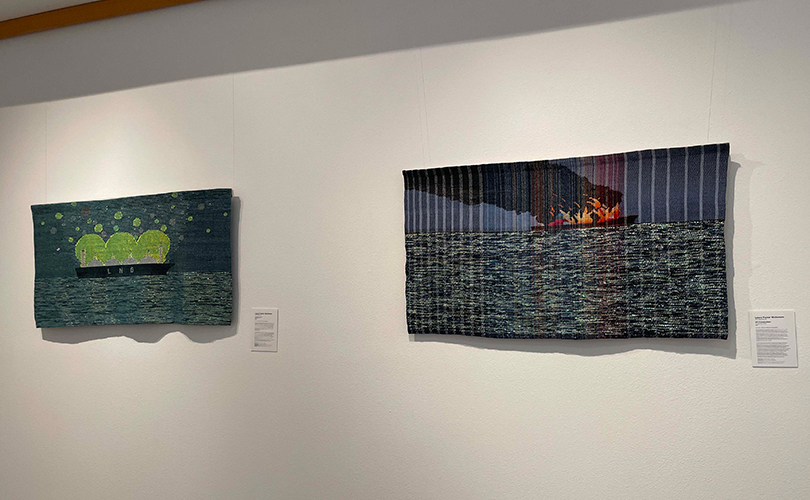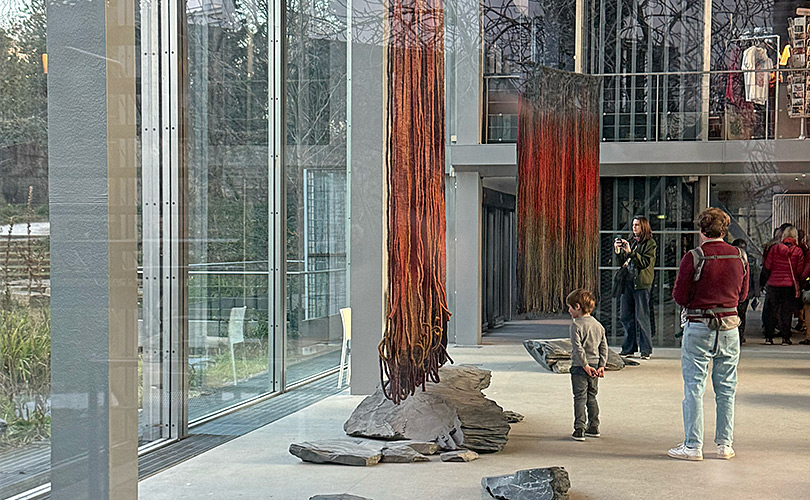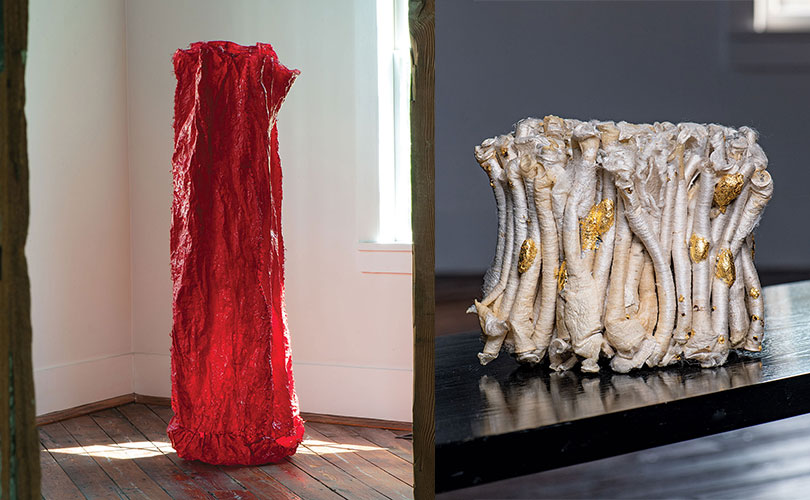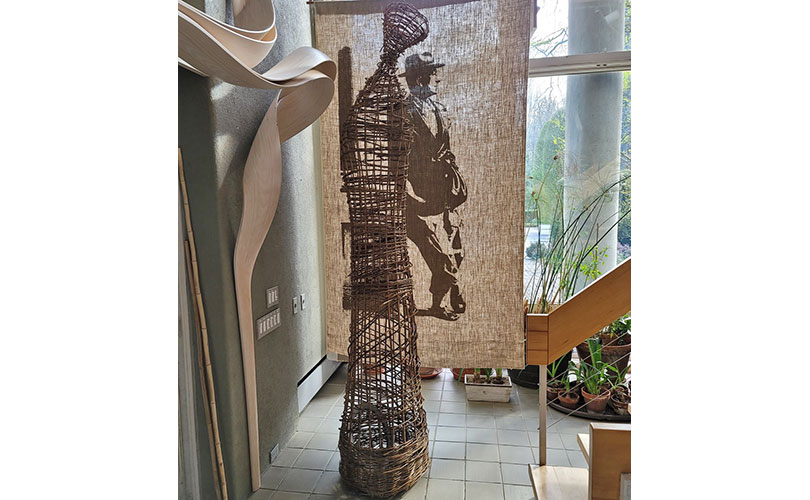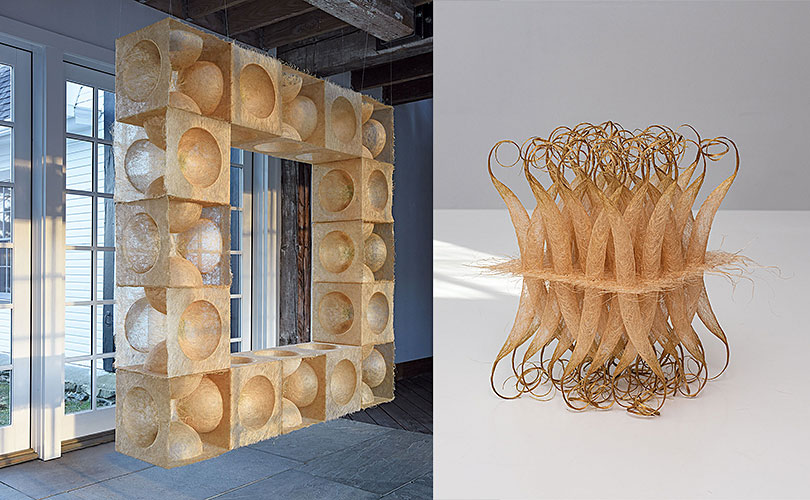
Tag: Polly Adams Sutton

In Print — Continental Drift: Encounters North and South

Continenbtal Divide Catalog Cover

Yes, we’ve published yet another catalog at browngrotta arts in conjunction with our Fall 2026 exhibition, Continental Drift: Encounters North and South.

Continental Drift: Encounters North and South table of contents spread

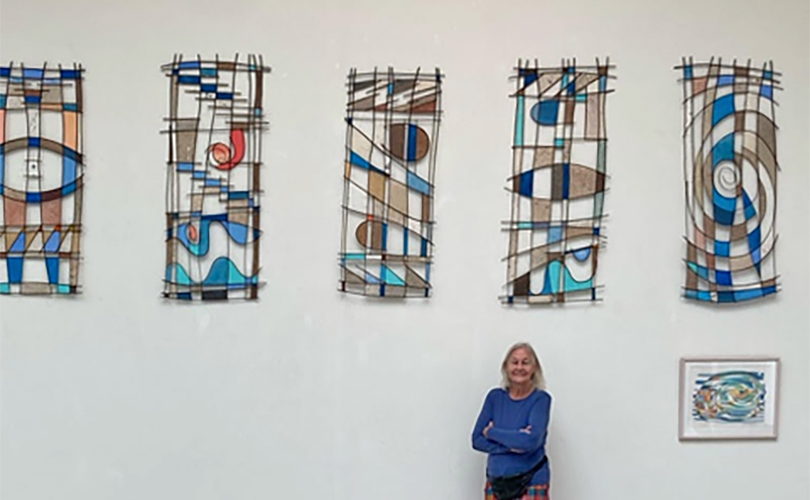
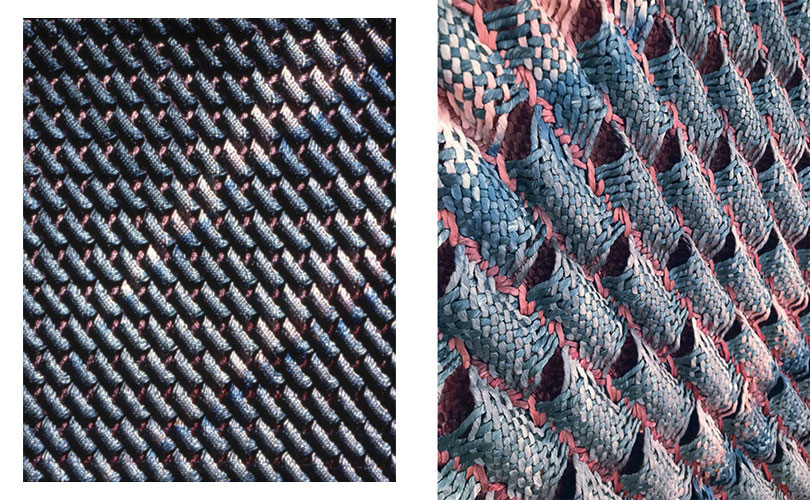
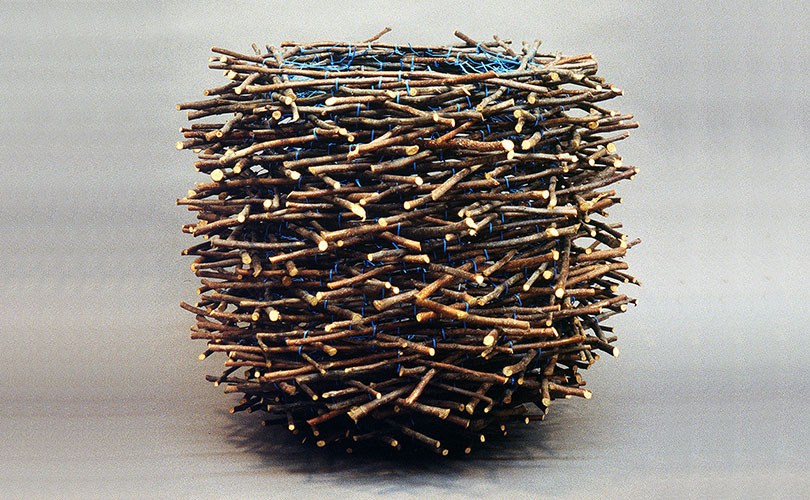
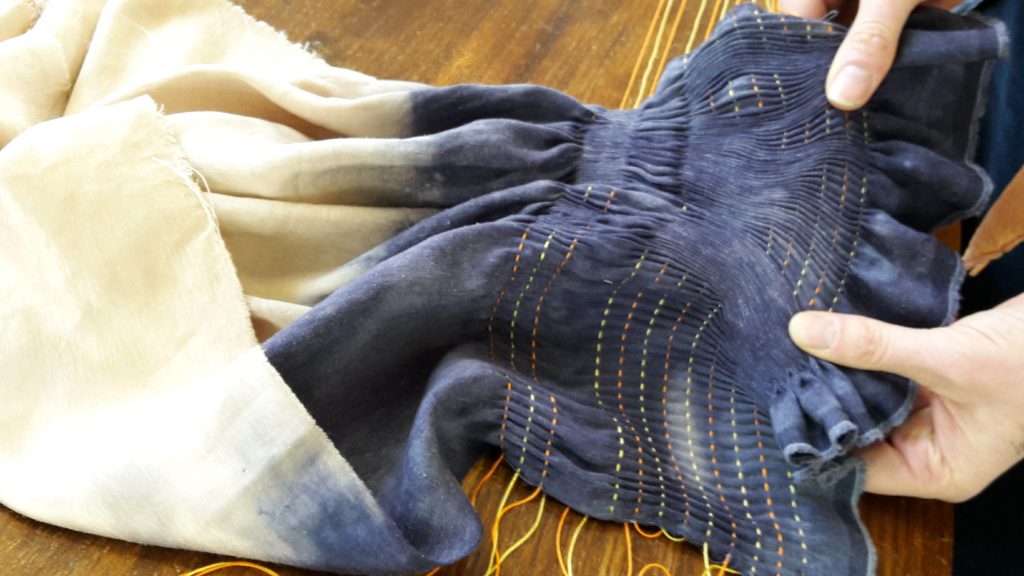
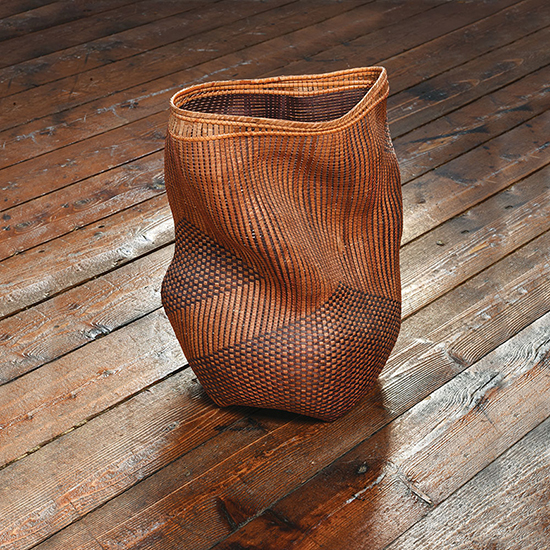
Continental Drift is an exciting volume, if we do say so ourselves. Actually, we have additional data — out less than a month, it is already one of our best-selling catalogs. It’s full-color and 164 pages. Forty-six artists are included with images of work for each. There is a profile for each artist that maps their links to North, Central, or South America, or all three. For example, Joe Feddersen and Dawn Walden, Sylvia Seventy, Mary Giles, and Polly Adams Sutton have links to Native-American basketmaking by heritage and study. Adela Akers traveled to Peru in 1965 as a weaving adviser to the Alliance for Progress Program where she was profoundly influenced by the innovative textiles of pre-Columbian Peruvian weavers. The following year, she set up a successful local cottage industry in the Yucatán, Mexico, employing Indigenous weavers who used backstrap looms in order to encourage the modern survival of an age-old fiber arts heritage. 

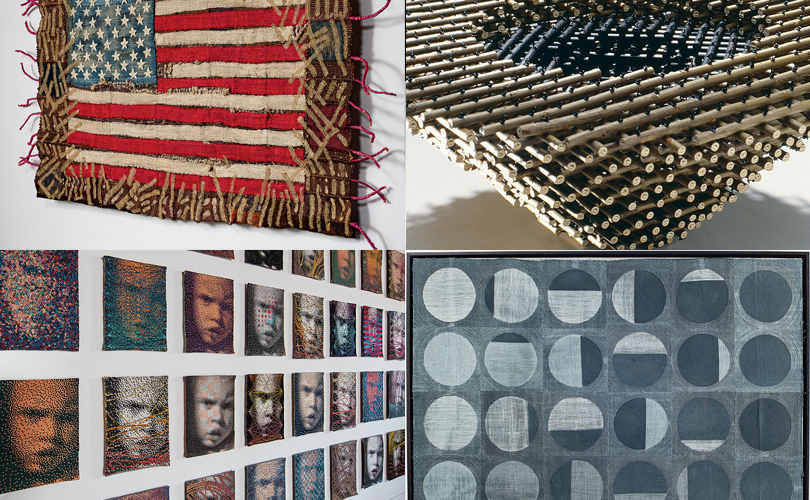
Lia Cook Spread

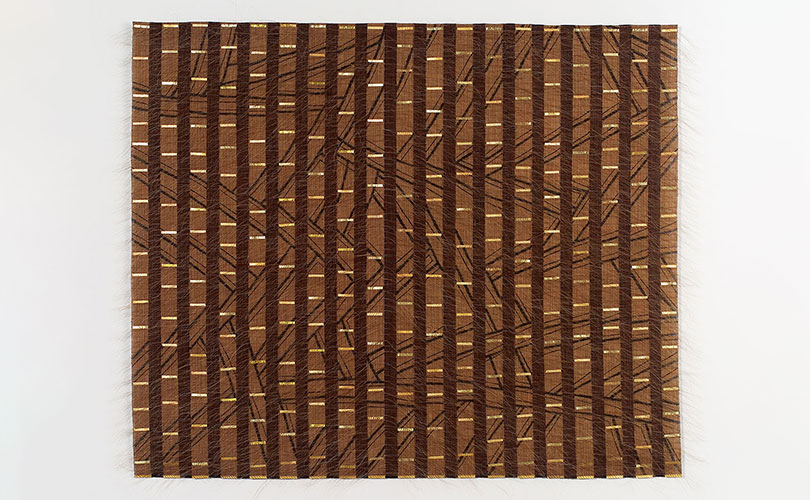
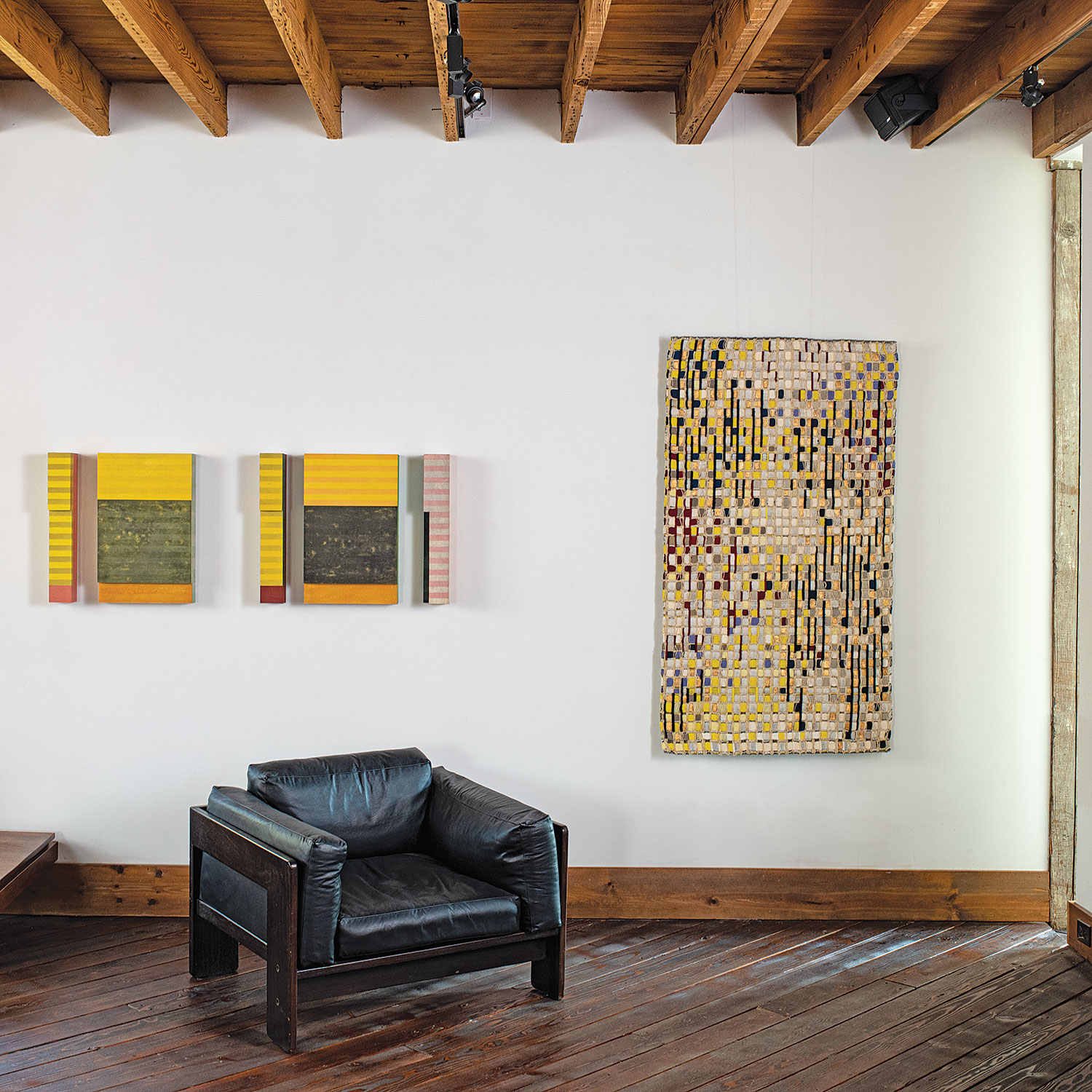
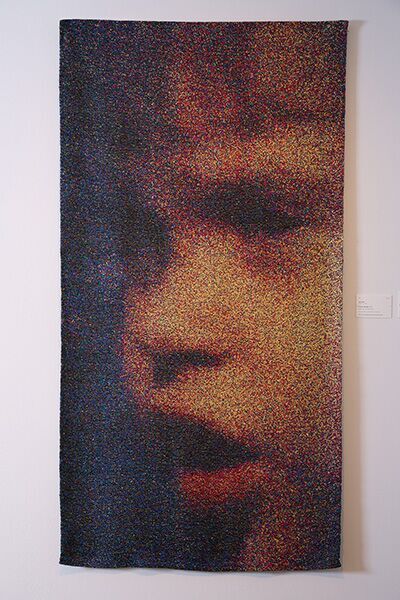
The profiles also track the interconnections among these artists. Akers taught basketmaker, John McQueen, in the 1970s, when she was a professor at Tyler School of Art in Philadelphia, Pennsylvania. Polly Sutton and Hisako Sekijima, in turn, studied basketmaking with McQueen, while Dorothy Gill Barnes, Jiro Yonezawa, and Leon Niehues claim John McQueen as an influence. Sheila Hicks studied with Joseph and Anni Albers at Yale. The Albers’s traveled to South and Central America, and Mexico several times. Hicks went to Chile on a Fulbright where she met and made a significant impact on Chilean artist Carolina Yrarrázaval. Meanwhile, Venezuelan artists Eduardo Portillo and María Dávila claim Anni Albers as an influence and have come to the US to do a residency at the Albers Foundation in Connecticut. Finnish artist Merja Keskinen, developed her immersive relationship to color after encountering Josef Albers’s Color Theory. James Bassler taught Albers’s Color Theory at UCLA for 25 years, and addressed it directly in his recent series of works, Threads I Have Carried, in which he has created grids of left-over warp and weft yarns from the past 65 years to focus on the vibrancy of the complementary color squares. 

Ferne Jacobs Spread

A significant feature of Continental Drift is the essay, Tangled Roots: The Influence of the Americas in Contemporary Fiber Art, by Sarah Parrish, PhD, Associate Professor of Art and Design, Plymouth State University, New Hampshire. In her essay, Parrish explores the tangled roots of how North, Central, and South American aesthetics achieved widespread popularity in fiber art over the course of several generations. This included study of ancient and Andean and Peruvian textiles from the 40s and 60s, the fiber artists who “forged a new, sculptural wave of fiber art” in the 60s, 70s, and 80s, in which influences from the Americas, Asia, Oceania, and, Africa played a part, and the belated attention given to indigenous voices from 1980 to the present. In Continental View, “[v]iewers are invited to form their own connections and perspectives because the theme is so liberally interpreted, defying

Dominic Di Mare Spread

fixed categories,” Parrish writes. “Some artists are inspired by the Americas’ culture, others by the landscape. Some artists have Indigenous heritage, others are descended from settlers, and still others are immigrants or expatriates.” Influence is a two-way street, she notes, with artists North and Southe artists both imparting and absorbing cultural references locally and abroad in an endless loop. “…[U]ltimately, there is no way to disentangle the roots of influence in contemporary art – all we can do is bear witness to these cultural exchanges in all their, sincerity, complexity, and contradiction, and watch out for one another with care and respect.”

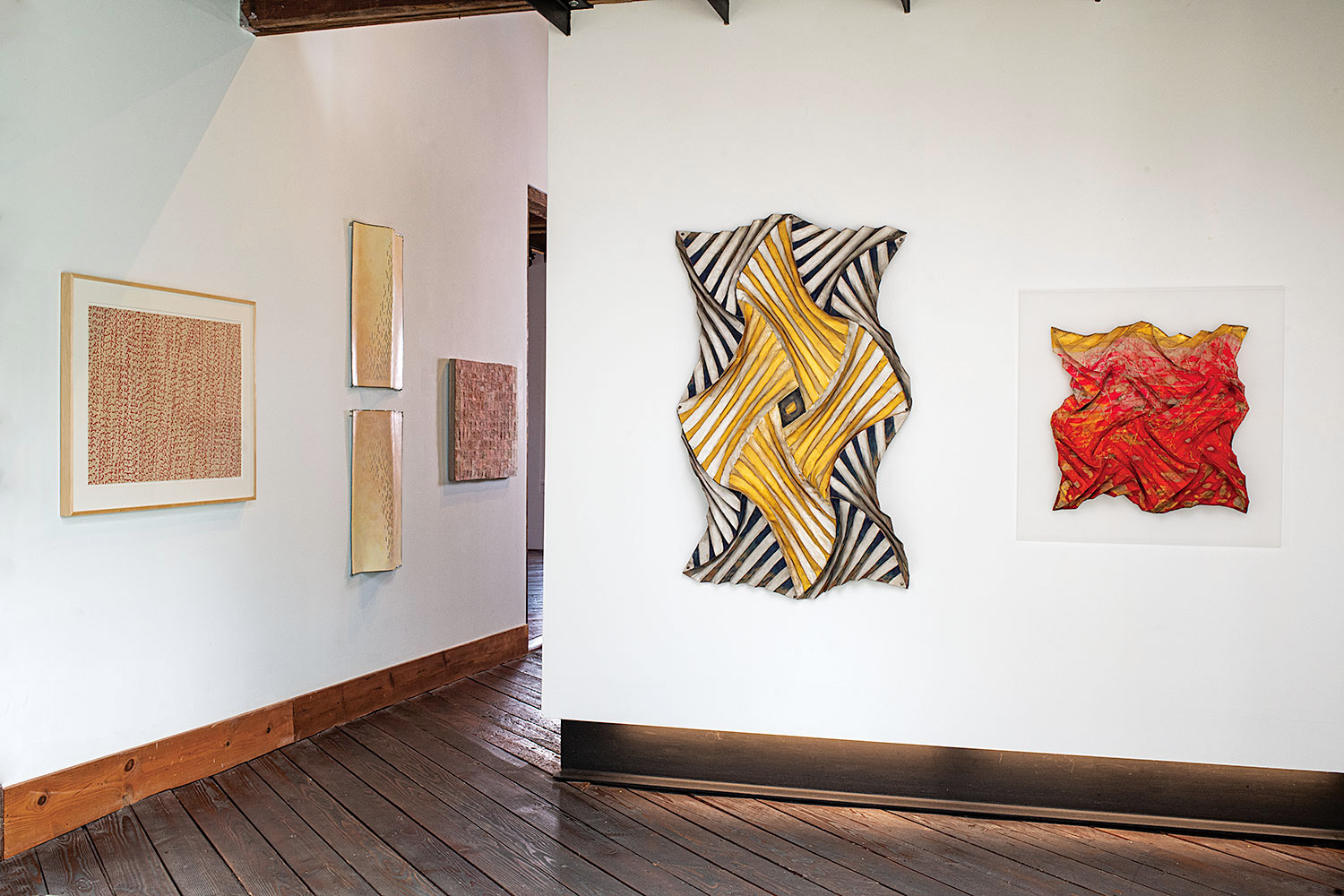
Trude Guermonprez spread

Read and see more by ordering your copy of Continental Divide from our website.

Summer Recap

Summertime and the living is easy … We’ve always loved that song by DuBose Heyward and George Gershwin. It’s not quite easier at browngrotta arts as we have lots of preparation to do for our upcoming fall exhibition and next year’s 40th anniversary celebration, but the pace is a little slower. We spend more time with family and friends and fishing in Maine with art projects in between.

Even if leisurely, life goes on, and we still have plenty of news to share.

Gjertrud Hals and Misako Nakahira
Works by Gjertrud Hals and Misako Nakahira. Photo by Tom Grotta.

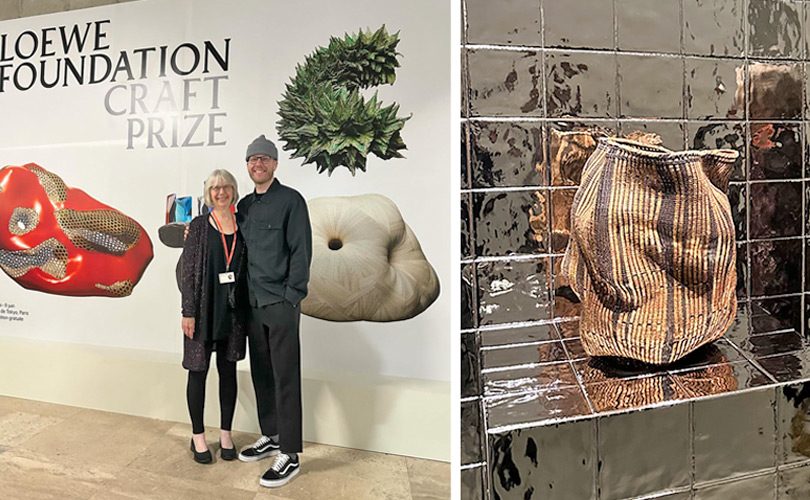
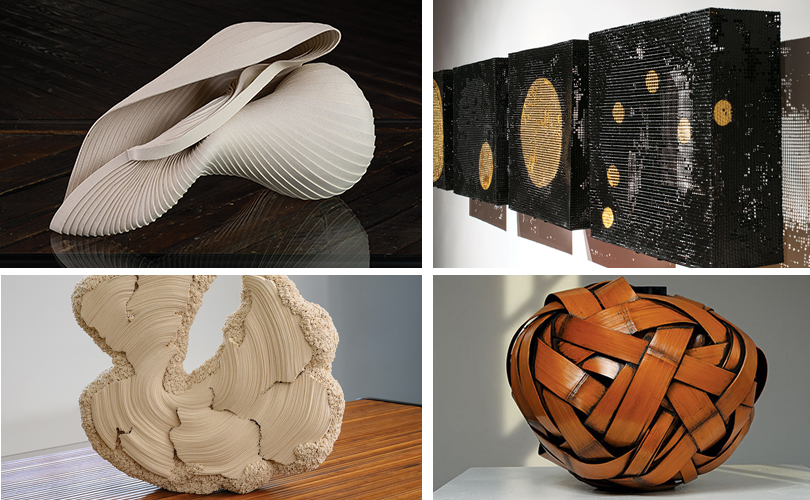
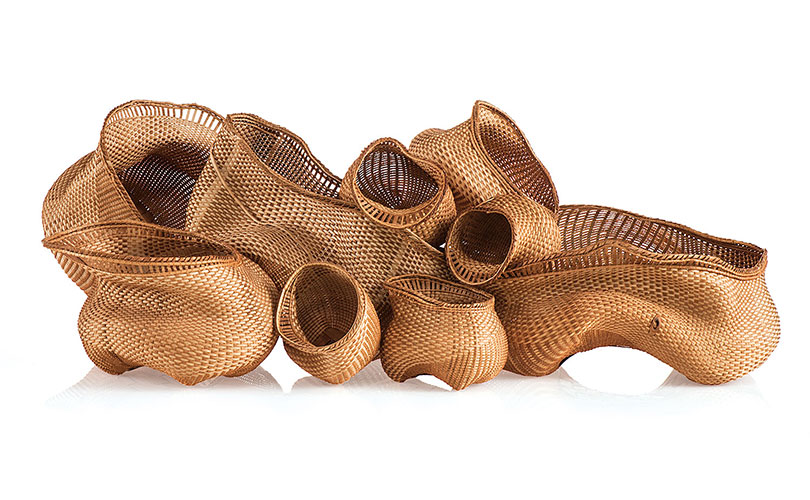
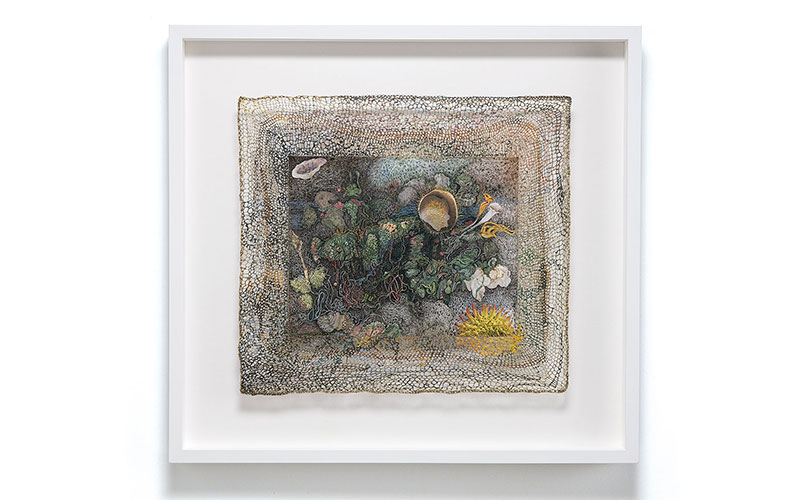
The Loewe Craft Foundation Awards for 2026 were presented. Through its Craft Prize, the Loewe Foundation seeks to acknowledge and support international artisans over 18, of any gender who demonstrate an exceptional ability to create objects of superior aesthetic value. By identifying work that “reinterprets existing knowledge to make it relevant today while reflecting its maker’s personal language and distinct hand,” the Foundation aims to “highlight the continuing contribution of craft to the culture of our time.” Two of the artists that work with browngrotta arts were on the short list — Gjertrud Hals of Norway and Misako Nakahira of Japan. They join several other artists that browngrotta arts promotes who have made the shortlist in years past— Mercedes Vincente, Polly Adams Sutton, Yeonsoon Chang, Ferne Jacobs, and Simone Pheulpin, who was also awarded an honor prize. Separately, Loewe has worked with Jiro Yonezawa and Kay Sekimachi to create designs for products for the legendary leather goods retailer.

James Bassler, Dail Behennah, Lia Cook and Neha Puri Dhir
Works by James Bassler, Dail Behennah, Lia Cook and Neha Puri Dhir. Photo by Tom Grotta.

This summer saw Museum Acquisition action: This Old House by James Bassler will join the permanent collection at Crystal Bridges Museum of American Art in Bentonville, Arkansas. This Old House was featured in the Museum’s recent exhibition,  America 250: Common Threads. The adoption of a second work of art by another artist is in progress at a separate major US museum. The last 12 months have seen more acquisition activity. Last August,  Bowl with Black Centre, by Dail Behennah was acquired by the Fuller Craft Museum in Brockton, Massachusetts. In November, Lia Cook’s Su Series was acquired by the Crystal Bridges Museum of American Art and Neha Puri Dhir’s work Transition, was acquired by the John and Mable Ringling Museum in Sarasota, Florida. In January, four works of wearable art by Norma Minkowitz joined the collection of the Los Angeles County Museum of Art in California. 

Jane Balsgaard
Jane Balsgaard. Photo courtesy of Jane Balsgaard.

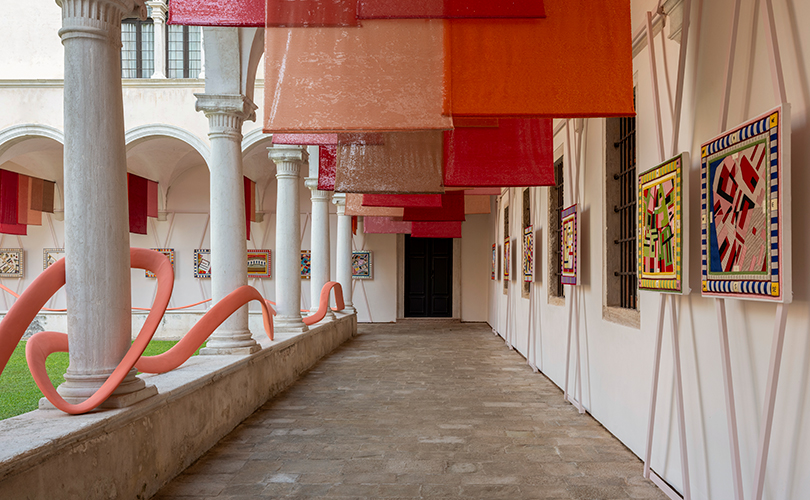
Artists who work with browngrotta arts are featured in a number of Exhibitions in Canada, China, Europe, and the US. Jane Balsgaard’s work is on exhibit at the Vrå Exhibition in the  Art Building-Engelund Museum in Vrå, Denmark (through August 30th). Jeannet Leendertse is part of Water Proof: Maine Artists Reflect on their  Environment, at the  Wendell Gilley Museum in Southwest Harbor, Maine (through August 22nd). In Montreal, Canada, Mariette-Rousseau Vermette’s, Micheline Beauchemin’s, and Young-Ok Shin’s works are featured in Plot at the Baie-Saint-Paul Museum of Contemporary Art (through September 6th). The work of Eduardo Portillo and María Dávila is included in See You Tomorrow Under Other Skies at the  Andrew Kreps Gallery in New York City (through September 12th, with a summer break in August. Check hours). Gjertrud Hals’s work is part of the 
Personal Structures exhibition at the Palazzo Mora in Venice, Italy (through November 22nd).  Simone Pheulpin’s work is in Intertwined Breath: Contemporary Fiber Narratives at the  Taoxichuan Gallery in Jingdexhen, China (through November 25th). And, opening on August 25th, is a retrospective of Mary Merkel-Hess’s work at the  Brunnier Art Museum, Ames, Iowa (through January 31, 2027).

Birth-Giulio-Ghirardi
Birth-Giulio-Ghirardi©Michelangelo-Foundation

The fourth edition of the Homo Faber Biennial is titled An Island of Light and runs from September 1 – 30, 2026 at the Fondazione Giorgio Cini on San Giorgio Maggiore Island in Venice, Italy. Curated by the Michelangelo Foundation with artistic direction by Es Devlin, the event explores the relationship between light, materials, and the human hand. A number of artists who work with browngrotta arts will be part of the Biennial including Jiro Yonezawa, Christine Joy, Jennifer Zurick, Nancy Moore Bess, Simone Pheulpin, Polly Adams Sutton, and Gyöngy Laky. Homo Faber also maintains an online platform 
dedicated to craftsmanship that provides profiles of artisans worldwide.

Make/Shift
Make/Shift exhibition, through September 19th.

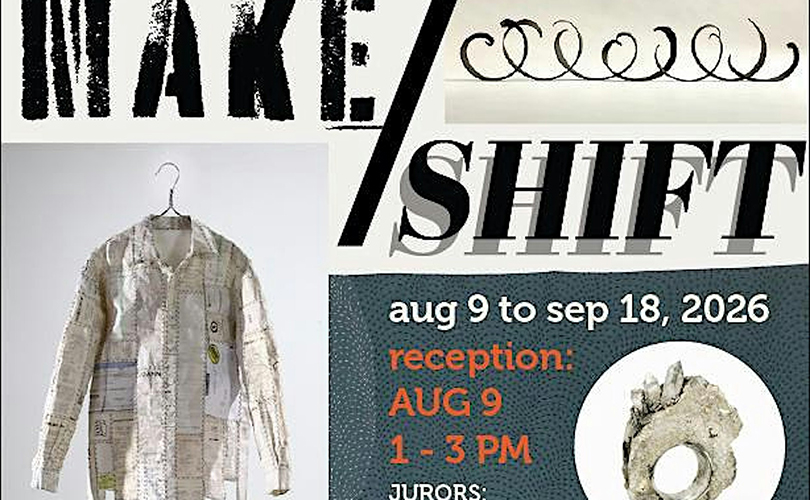
In June, we served as Jurors for Make/Shift, an exhibition at the  Crown Gallery, Metro Art Studios in Bridgeport, Connecticut.  Artists were asked to submit work that “explores the space where material, process, and intention converge — grounded in techniques and materials traditionally associated with functional craft—ceramics, fiber, glass, wood, basketry, and other hand-based practices—reimagined through a fine art lens.” We reviewed more than 150 entries and selected over two dozen intriguing works — of glass, ceramics, jewelry, metal — but a preponderance of the entries were works of fiber. The exhibition will run from August 9th to September 19th.

Ferne Jacobs
Work by Ferne Jacobs. Photo by Tom Grotta

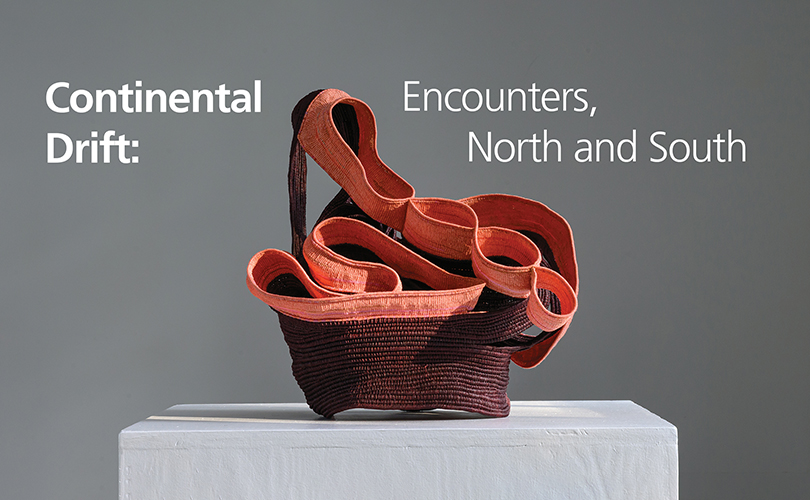
Much of our summer has been spent on October Exhibition Planning. In Continental Drift: Encounters, North and South (October 17 – 25), we will explore art from North and South America from two different vantage points. First, we are gathering works by significant artists from the US, Canada, Chile, Venezuela, and Colombia, including Sheila Hicks, Lenore Tawney, and Carolina Yrarrázaval) many of whom are not just representative of their own countries but have a connection to other regions as well. Second, we will include work by artists from in and outside North and South America who cite art, artists, or experiences from these continents as an influence. We’ve been receiving deliveries from new artists from Argentina and Mexico, and viewed compelling works that artists created after a pilgrimage to another country or a study of an artist from elsewhere. And we’ve been in correspondence with Sarah Parrish, Associate Professor of Art History at Plymouth University, who’ll be writing the catalog essay for Continental Drift.

Hope you, too, are having a great summer!


Art Out and About

This year continues to deliver when it comes to exciting and immersive exhibitions of fiber art. Artists that work with browngrotta arts are included in exhibitions in Montana, Boston, Trondberg, Norway, and San Diego, California. Elsewhere are monumental tapestries and imaginative presentations from Berkeley, California to Tilburg, the Netherlands, to Miami, Florida to North Jyland, Denmark and parts in between.

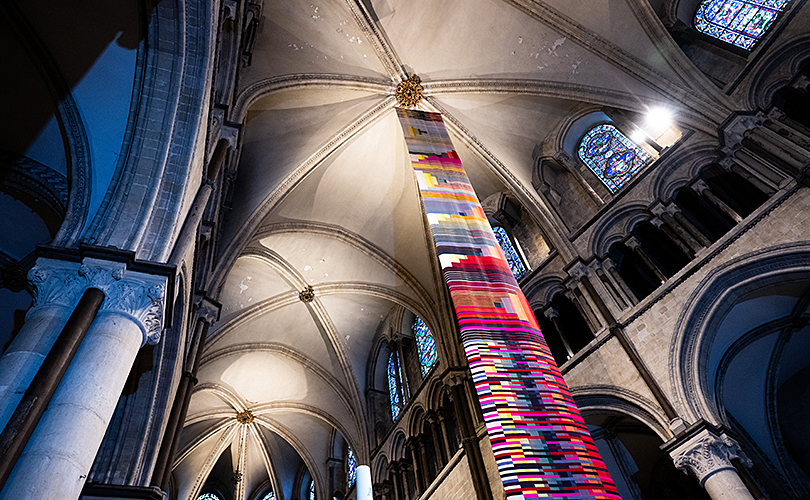
moon landing at Canterbury Cathedral
Moon Landing at Canterbury Cathedral © Chapter of Canterbury Cathedral | Photographer: Jon Barlow

Moon Landing: an immersive textile and musical collaboration
Through August 31, 2025
Canterbury Cathedral
Cathedral House 
11 The Precincts
Canterbury, CT1 2EH
United Kingdom
https://www.canterbury-cathedral.org/whats-on/events/moon-landing

This summer, the medieval splendour of Canterbury Cathedral will complement a stunning free-to-view modern art installation inspired by the little-known story of the women who wove the integrated computer circuits and memory cores which enabled the 1969 moon landing. The breathtaking installation moon landing – a duo work created by British textile artist and designer of woven textiles, Margo Selby, and award-winning composer, Helen Caddick – comprises a vibrant 16-meter hand-woven textile suspended from the ceiling near the Cathedral’s Trinity Chapel, created in response to the moon landing score, an original musical piece scored for strings. It is a celebration of the mathematical and technical possibilities of weaving and the crossovers of pattern, tone and rhythm found in both music and woven textiles.

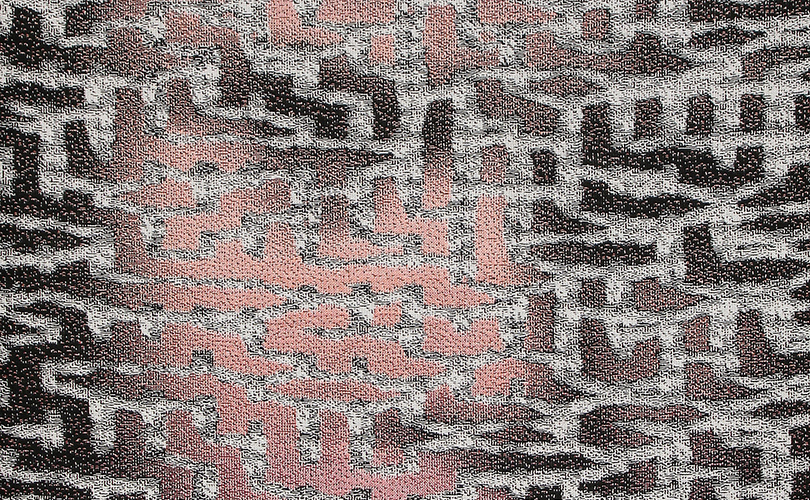
Lia Cook Digital Weaving
Detail: Maze Gaze, Lia Cook, cotton, rayon, 72″ x 52″, 2007

Digital Weaving Norway
From August 12 – 15, 2025
Solgaard Skog 132, 1599 
Moss, Norway
https://digitalweaving.no

Lia Cook’s work will be featured in the exhibition of Digital Weaving – Innovation Through Pixels in Norway — a conference and exhibition celebrating the 30th Anniversary of the TC-Looms with Digital Weaving Norway (August 12–15). 

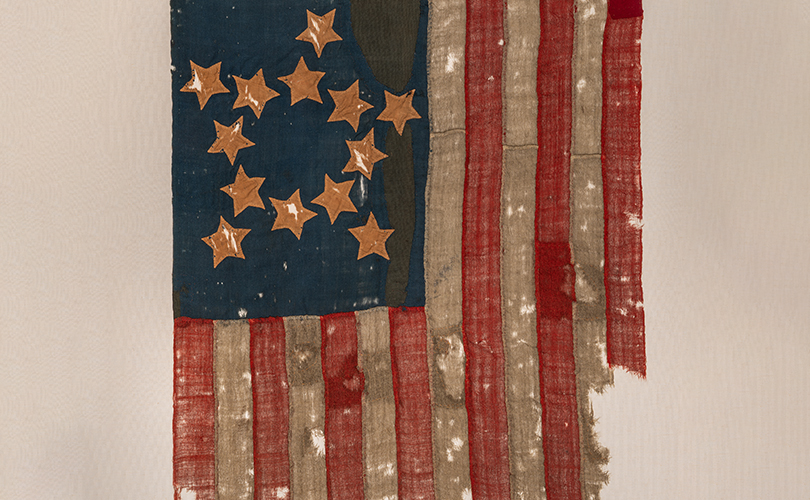
American Flag
Photo supplied by Museum of the American Revolution

Banners of History: An Exhibition of Original Revolutionary War Flags
Through August 10, 2025
Museum of American Revolution
101 South Third Street
Philadelphia, PA
https://www.amrevmuseum.org/exhibits/banners-of-liberty-an-exhibition-of-original-revolutionary-war-flag

A significant use of fiber throughout the world is in the creation of flags. In preparation for the 250th Anniversary of the birth of the United States, the Museum of the American Revolutionary in Philadelphia, Pennsylvania, has mounted an expansive exhibition of flags from the early part of the Nation’s history. The exhibition, dispalyed in the Museum’s first-floor Patriots Gallery, features the largest gathering of rare and significant Revolutionary War flags in more than two centuries. This one you see online!

Christine Joy
Christine Joy. Photo by Tom Grotta

Willow Woven
Through August 6, 2025
Studio Gallery
Hennebery Eddy Architects’
109 N Rouse 
Bozeman, MT
https://downtownbozeman.org/summer-art-walks

Willow Woven, by Christine Joy, part of Bozeman, Montana’s Art Walk is on view in the window of Hennebery Eddy Architects’ Studio Gallery until August 6th, 2025.

On public display in the studio’s storefront window, the gallery is about making connections — with neighbors, friends, clients, and colleagues. The alternating exhibits at the Studio Gallery feature curated staff and visiting artist displays that spark new ideas and promote a shared sense of place.

Lee ShinJa: Image of City
Lee ShinJa: Image of City, 1961. Cotton, linen, and wool thread on cotton cloth; coiling, free technique. Courtesy of the artist and Tina Kim Gallery.

Lee ShinJa: Drawing with Thread
Through February 1, 2026
Berkeley Art Museum and Pacific Film Archives (BAMPFA)
215 Center Street 
Berkeley, CA
https://bampfa.org/program/lee-shinja-drawing-thread

Lee ShinJa: Drawing with Thread at BAMPFA in Berkeley, California is the first North American survey of the captivating work of the under-recognized Korean artist Lee ShinJa (b. 1930, Uljin, South Korea; lives and works in Seoul). Lee ShinJa worked throughout the five decades of contemporary fiber arts’ history, from the 1950s to the early 2000s, the exhibition showcases the artist’s bold innovations in fiber through 40 monumental textile works, woven maquettes, and preparatory sketches. Like artists from Eastern Europe working in that time period, Lee’s artworks from the 1950s incorporate everyday objects and found materials, such as grain sacks, mosquito nets, and domestic wallpaper; notably, she used yarn salvaged from secondhand sweaters and bedding to make her earliest tapestries

Jane Balsgaard Relief
Jane Balsgaard, Relief 320 x 180 cm, for the exhibition in Vrå (Nordth Jylland). Photo courtesy of Jane Balsgaard

Kunstbygningen/Vrå Udstillingen
Museum for Contemporary Art in North-Jylland
Højskolevej 3A
9760 Vrå, Denmark
Through July 27 – August 31, 2026
https://www.kunstbygningenvraa.dk/vraa-udstillingen]

Jane Balsgaard will hang a several-part relief in an exhibition at the Vrå-Udstilligen in North Jylland, Denmark through August 31st. The opening party is July 26 at 2:00 pm. The exhibition is supported by the Danish State Art Foundation.

Liz Collins, Power Portal
Liz Collins, Power Portal, 2023–2024. Courtesy of the Artist and Candice Madey, New York. RISD Museum, Providence, RI. 

Liz Collins: Motherlode
Through January 11, 2026
RISD Museum
20 North Main Street
Providence, RI
https://risdmuseum.org/exhibitions-events/exhibitions/liz-collins

On July 19, the RISD Museum will open the first U.S. survey of artist Liz Collins’ genre-defying work. As the Museum explains, “For more than three decades, Collins has moved fluidly among the realms of fine art, fashion, and design, pushing material and technical boundaries to create works that evoke a depth of emotion, energy, and individual expression. The exhibition, titled Liz Collins: Motherlode, will feature more than 80 objects, capturing for the first time the full arc of Collins’ career from the 1980s to the present day. Motherlode includes important examples of her immersive textile installations and wallworks, intricate and monumental woven hangings, fashion, needlework, drawings, performance documentation, and ephemera. In keeping with the RISD Museum’s commitment to centering makers and broadening perspectives, the exhibition vividly showcases the trailblazing nature of Collins’ work as well as the artist’s deep commitment to illuminating Queer feminist creative practice and environmental activism.” Liz Collins: Motherlode will remain on view at RISD Museum through January 11, 2026. The exhibition is curated by Kate Irvin, RISD Museum’s department head and curator of costume and textiles.

Polly Sutton Facing the Unexpected
1ps Facing the Unexpected, Polly Adams Sutton, western red cedar bark, ash, spruce root, coated copper wire, 11.5” x 18” x 32”, 2013. Photo by Tom Grotta

State Fair: Growing American Craft
August 22 – September 7, 2026
Renwick Gallery, Smithsonian American Art Museum
Pennsylvania Avenue at 17th Street, NW
Washington, DC
https://americanart.si.edu/exhibitions/state-fairs

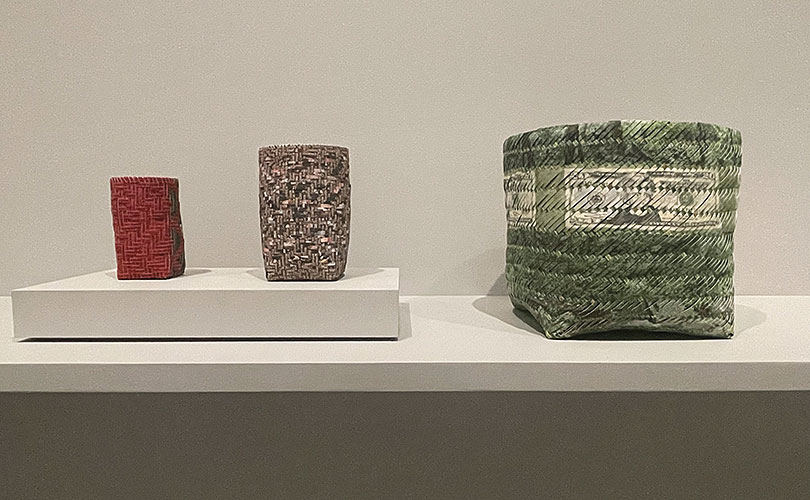
Polly Adams Sutton‘s work is in the permanent collection of the Smithsonian American Art Museum and will be featured in the Smithsonian’s upcoming exhibition, State Fair: Growing American Craft, which includes exceptional examples of American craft, highlighting personal stories and regional and cultural traditions.

Salts Mill roof We Will Sing
Installation in Salts Mill, Bradford, UK from We Will Sing. Photo by Ann Hamilton

We Will Sing
Through November 2, 2025
1A Aldermanbury
Bradford, UK
https://bradford2025.co.uk/event/we-will-sing

We Will Sing is a work of memory and imagining. Drawing on the origins of the textile processes that once filled the huge Salts Mill textile works built in 1853, a site-responsive installation by Ann Hamilton weaves together voice, song and printed word in a material surround made from raw and woven wool sourced from local textile companies H Dawson, based at Salts Mill, and William Halstead, which celebrates its 150th anniversary in 2025. We Will Sing is the first major work created by Hamilton in the UK for more than 30 years, and the first time all three spaces on the vast top floor of Salts Mill have been combined to present a single artwork. (We’ve been big fans of Hamilton’s immersive installations since she transformed our neighborhood museum, the Aldrich, in the 1990s.)

Laura Foster Nicholson

Human Affects
Through October 4, 2025
Visions Museum of Textile Art
2825 Dewey Road
Suite 100
San Diego, CA
https://vmota.org/human-affects

Human Affects is a one-person exhibition at the Visions Museum of Textile Art featuring work by 
Laura Foster Nicholson. From 2020-2023, Nicholson made three related bodies of work about climate change: flooding in Venice, container ships, and the landscape and architecture of industrial agriculture and energy. A selected grouping of these themes comprises the exhibition at VMOTA, plus a few that focus more on the hope of renewable energy, careful farming, and a less destructive way of life.

And continuing:

Olga de Amaral
Olga de Amaral exhibition has moved from Paris (above) to Miami. Photo by Tom Grotta

Olga de Amaral
Through October 12, 2026
Institute of Contemporary Art
61 NE 41st Street
Miami, FL
https://icamiami.org/exhibition/olga-de-amaral

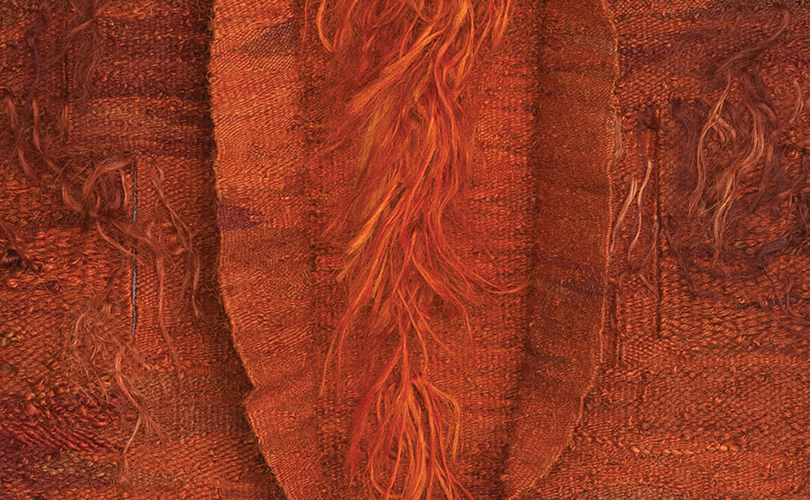
ICA Miami, in collaboration with the Fondation Cartier pour l’art contemporain, presents a major retrospective of the work of Colombian artist Olga de Amaral, bringing together more than 50 works from six decades, and featuring recent and historical examples, some of which have never been presented outside of her home country.

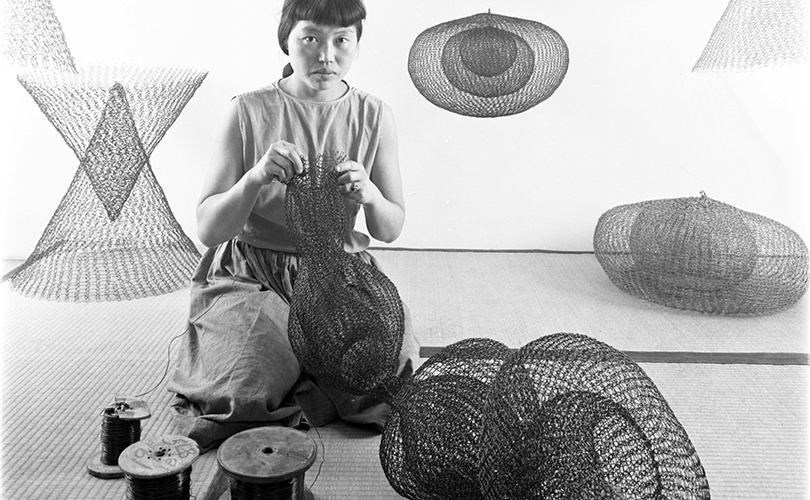
Ruth Asawa
Artist Ruth Asawa making wire sculptures, California, United States, November 1954;  image: Nat Farbman/The LIFE Picture Collection/Shutterstock; artwork: © 2025 Ruth Asawa Lanier, Inc., courtesy David Zwirner

Ruth Asawa: Retrospective
Through September 2, 2025
San Francisco Museum of Modern Art (SFMOMA)
San Francisco, CA 
https://www.sfmoma.org/exhibition/ruth-asawa-retrospective

This first posthumous retrospective presents the full range of Ruth Asawa’s work and its inspirations over six decades of her career. As an artist, Asawa forged a groundbreaking practice through her ceaseless exploration of materials and forms.

Woven Histories: Textiles and Modern Abstraction
September 13, 2025
The Museum of Modern Art
11 West 53rd Street
New York, NY
https://press.moma.org/exhibition/woven-histories

Shan Goshen Baskets from the Woven Histories exhibition at the National Gallery, DC. Photo by Tom Grotta

An in-depth exhibition featuring 150 works that delves into the dynamic intersections between weaving and abstraction.

Magdalena Abakanowicz – Everything is made of fiber
Through August 23, 2025
TextielMuseum
Goirkestraat 96
5046 GN Tilburg, the Netherlands
https://textielmuseum.nl/en/exhibitions/Abakanowicz

Magdalena Abakanowicz
Detail: Montana del Fuego, Magdalena Abakanowicz, 1986. Photo by Tom Grotta

The complete story of Abakanowicz’s work, life and legacy will be told at three locations in Brabant this spring. Abakanowicz was fascinated by the texture of textiles and the structure of natural fibres. She used this fascination as a basis for her weavings, but also to depict the human body.

Almost too many to choose from — fiber art continues its time in the spotlight!


And the Winner Is … Loewe Celebrates Art and Artisans

Polly Adams Sutton Loewe
Ebb Tide in Loewe exhibition in Paris, France. Photo by Polly Adams Sutton. 

Too often we hear about corporations that are using creators’ works — art and music — without permission (https://www.artsy.net/article/artsy-editorial-graffiti-artists-fighting-brands-steal-work). Many raise concerns about AI borrowing and boosting artwork without attribution or compensation (https://www.newyorker.com/culture/infinite-scroll/is-ai-art-stealing-from-artists). So it’s gratifying to learn about the efforts of Loewe, a corporation that celebrates and collaborates with artists rather than cannibalizing their work. 

Loewe is a luxury fashion house founded in 1846 by a group of Spanish leather craftsmen. Loewe’s efforts to support the arts are severalfold — it organizes exhibitions, promotes a prestigious international art competition, and creates artist-inspired capsule collections. It created a foundation in 1988, which supports international prizes for craft and poetry, collaborates with major arts festivals, and also supports other art, photography, and dance. The Foundation sponsors the Loewe Foundation Craft Prize, an international award celebrating exceptional craftsmanship. Through the Prize, the Foundation aims to discover uniquely talented artisans with the vision and innovative drive to set new standards for the future of craft. The Prize ecognizes those who combine tradition, modernity, and a unique artistic concept. Like browngrotta arts aims to do, the Loewe Prize elevates artists who contribute continuously to contemporary culture through a contemporary reinterpretation of tradition. 

Jiro Yonezawa, leather basket
Jiro Yonezawa crafting LOEWE leather into unique pieces at milan design week 2019. Photo courtesy of Loewe.

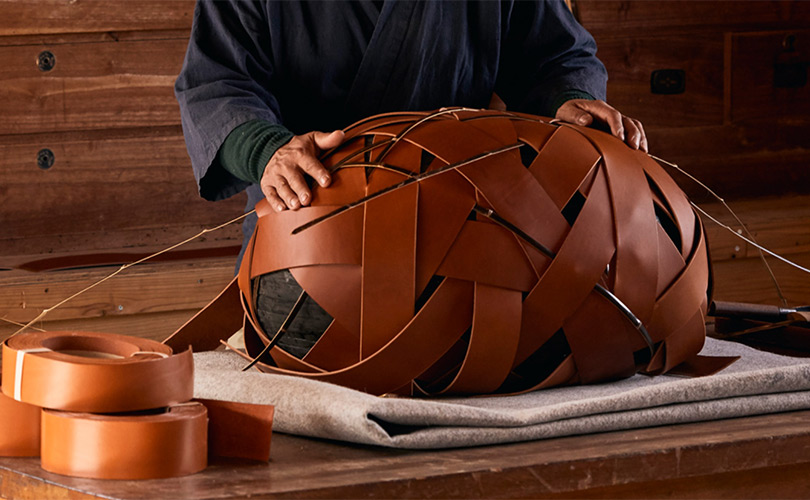
In 2019, for example, as part of Milan Design Week, Loewe installed an exhibition that placed a spotlight on basketmaking, divided into two installments — inspiration and collection. As part of that project, Loewe’s creative director, Jonathan Anderson, invited Japanese artist Jiro Yonezawa to creaft one off pieces in which he swapped the strips of bamboo, with which he usually works, for naturally dyed Loewe leather.

Mercedes Vicente, Yeonsoon Chang, Gerne Jacobs, Simone Pheulpin, Jiro Yonezawa, Kay Sekimachi
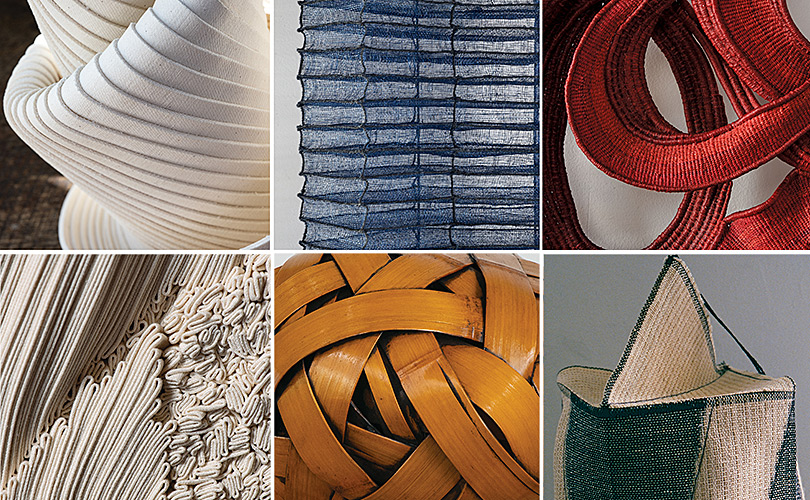
clockwise details of works by: Mercedes Vicente, Yeonsoon Chang, Ferne Jacobs, Simone Pheulpin, Jiro Yonezawa, Kay Sekimachi. Photos by Tom Grotta

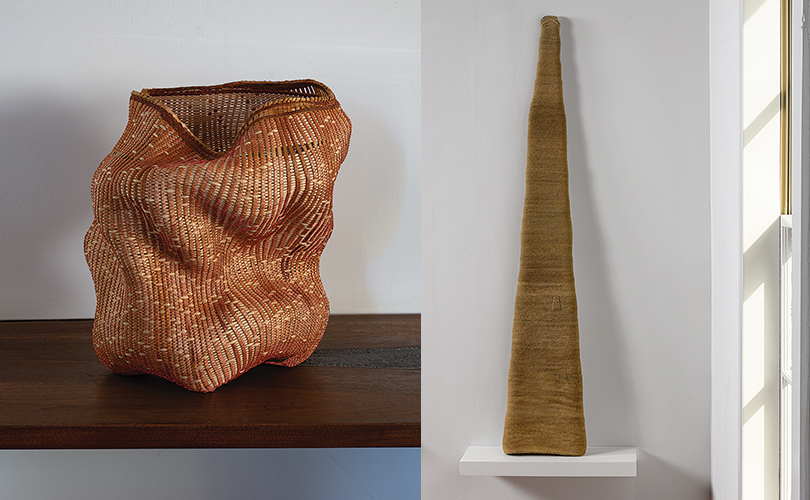
Several of the artists that work with browngrotta arts have made the Loewe Foundation Craft Prize short list, including Mercedes Vicente, Yeonsoon Chang, Ferne Jacobs, and Simone Pheulpin, who was awarded the Honor Prize in 2018. Finalists are brought to Europe for the award presentation. For Polly Adams Sutton, who made the short list in 2024, that meant a trip to Paris to see her work installed. “What an amazing privilege it was!” she says of the competition. “By providing a means for craft artists of all mediums to be recognized as Art, Loewe elevates the crafts as legitimate forms of art. Loewe creations may use craft as inspiration for their work but the craft prize has been created solely for the artists to be honored and to give craft its place in the art world.”

Kay Sekimachi Loewe bags
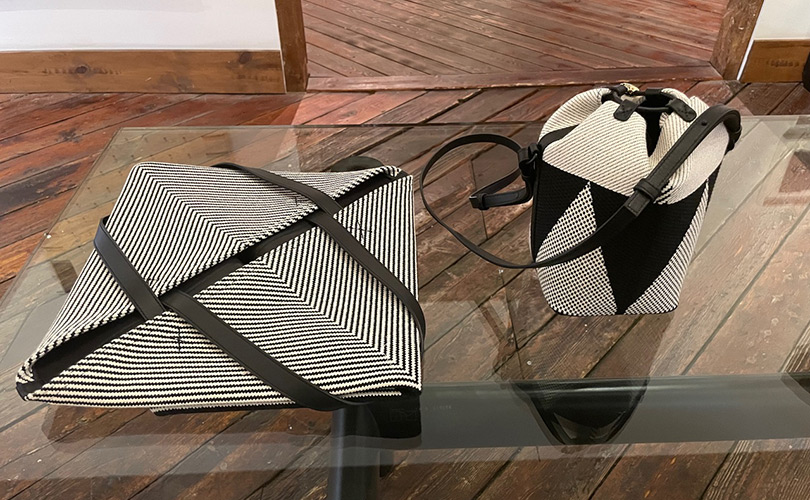
Loewe bags inspired by Kay Sekimachi’s work. Photo by Tom Grotta

Loewe also works with artists to create specially curated collections, inspired by the artists’ work. This year, Loewe partnered with Kay Sekimachi to create a limited-edition collection of handbags that showcase her pioneering work in loom weaving and draw upon Sekimachi’s 1999 “Takarabako” series. The Puzzle Fold Tote and Bucket Bag are crafted in cotton jacquard with a calfskin base and details, and feature a gold embossed motif with Sekimachi’s name. The project was licensed by Artists Rights Society.

Kudos to the artists honored and to Loewe and its commitment to craft.


Congratulations: The Loewe Foundation Craft Prize Short List!

Congratulations to Polly Adams Sutton and Ferne Jacobs who have been sort listed for the 2024 Loewe Craft Prize!

Polly Sutton basket and Ferne Jacobs Fiber Sculpture
14ps Berry, Polly Sutton, cedar bark, ash, wire, yellow cedar outer bark, 13″ x 12″ x 12″, 2022
7fj Shadow Figure, Ferne Jacobs, coiled and twined linen thread, 61″ x 11″ x 3″, 1980s. Photos by Tom Grotta

Loewe was founded in 1846 as a collective of artisans dedicated to leather making. Some of their leather artisans have been with Loewe for as many as 50 years. The Loewe School of Leather Craft in Madrid ensures these time-honored skills are passed on to new generations.

The Loewe Foundation Craft Prize was launched 70 years later in 2016 to illuminate excellence, innovation, and artistic vision in contemporary craftsmanship. Finalists represent makers of all ages, cultures and disciplines, selected by experts reviewing submissions from over 100 countries. “Craft is the essence of Loewe,” the firm quotes its creative director, Jonathan Anderson. “It is where our modernity lies, and it will always be relevant.” 

The Loewe Prize acknowledges international artisans over 18, of any gender, who demonstrate an exceptional ability to create objects of superior aesthetic value. All entries should: 1) fall within an area of applied arts, such as ceramics, bookbinding, enamelwork, jewellery, lacquer, metal, furniture, leather, textiles, glass, paper, wood, etc; 2) be an original work, handmade or partly handmade; 3) have been created in the last five years; 4) be one-of a-kind; 5) have won no prizes previously; and 6) demonstrate artistic intent. A jury composed of 13 leading figures from the world of design, architecture, journalism, criticism and museum curatorship — including a curator from the Metropolitan Museum of Art in New York City and the Director of the Design Museum in London — will select the winner of the 2024 Craft Prize from the short list of 30 artists. The prize awarded to the winner is 50,000 Euros in cash. The announcement will be made in the Spring of 2024.

works by Mercedes Vicente, Yeonsoon Chang, Jiro Yonezawa and Simone Pheulpin
clockwise: works by Mercedes Vicente, Yeonsoon Chang, Jiro Yonezawa and Simone Pheulpin. Photos by Tom Grotta

The Loewe Prize short list in other years has recognized many interesting artists including Joe Hogan of Ireland and Tanya Aguiñiga of the US.  Besides Sutton and Jacobs, other artists that browngrotta arts works with have been recognized through these competitions.  Mercedes Vicente of Spain and Yeonsoon Chang of Korea have both appeared on the short list in previous years. Simone Pheulpin of France was short listed and received a Special Mention award. Her work was displayed in the Design Museum in the UK. And Jiro Yonezawa of Japan has been involved in a Loewe creative initiative in which he created works of leather, adapting some of the techniques he uses to create bamboo sculptures.

Good Luck to Polly and Ferne!


Acquisition News – Part I, US

We last reported on museum acquisitions of works by artists from browngrotta arts in 2019. There has been continued interest in acquiring work by these artists in the two years since by museums and art programs in the US and abroad. browngrotta arts has placed several works and acquisitions have occurred through the efforts of other galleries, artists and donors. As a result, we have a long list of aquisitions to report. In this, Part I, acquisitions in the Untied States:

Polly Adams Sutton
Polly Adams Sutton, Facing the Unexpected, 2013. Photo by Tom Grotta

Polly Adams Sutton

Polly Adams Sutton’s work Facing the Unexpected has been acquired by the Smithsonian American Art Musuem. It’s going to be part of the Renwick’s 50th anniversary exhibition in 2022.

Norma Minkowitz
Norma Minkowitz’s, Goodbye My Friend, 2017. Photo by Tom Grotta

Norma Minkowitz

Goodbye My Friend by Norma Minkowitz was gifted to the Renwick, Smithsonian American Art Museum, in memory of noted fiber art collector, Camille Cook.

Kiyomi Iwata
Kiyomi Iwata’s Red Aperture, 2009 and Fungus Three, 2018. Photos By Tom Grotta

Kiyomi Iwata 

Two works, Red Aperture and Fungus Three by Kiyomi Iwata were acquired by The Warehouse, MKE in Milwaukee, Wisconsin. Two works by Iwata, Grey Orchid Fold V made in 1988, and Auric Grid Fold made in 1995 were donated to the Philadelphia Art Museum.

Adela Akers
Adela Akers, Traced Memories, 2007. Photo by Tom Grotta

Adela Akers

Adela Akers‘ work, Traced Memories from 2007 was acquired by the DeYoung Museum in San Francisco, California in 2020.

Dawn MacNutt
Dawn MacNutt’s, Larger Than Life, 2021.

Dawn MacNutt  

Dawn MacNutt’s 9 foot-high willow sculpture, Larger Than Life, was acquired by Longhouse Reserve in East Hampton, New York in 2021.

Naoko Serino
Naoko Serino’s Existing-2-D, 2017 and Generating Mutsuki, 2021. Photos by Tom Grotta

Naoko Serino

Two works by Naoko Serino, Generating Mutsuki and Existing 2-D, were acquired by The Warehouse, MKE in Milwaukee, Wisconsin.

Ferne Jacobs

A work by Ferne Jacobs, Slipper, made in 1994, was donated to the Philadelphia Art Museum. Another, Centric Spaces, from 2000, was donated to Houston Museum of Fine Art.

Presence Absence Tunnel Four, 1990, by Lia Cook

Lia Cook

The Los Angeles County Museum of Art (LACMA) purchased Presence Absence Tunnel Four, 1990, by Lia Cook, in 2019.

Gyöngy Laky
Gyöngy Laky’s, Noise at Noon, 1996. Photo by Gyöngy Laky

Gyöngy Laky   

The Oakland Museum of California in California acquired Noise at Noon by Gyöngy Laky this year. In 2019, the U.S. District Court for the Northern District of California Historical Society, added That Word to its collection and the Crocker Art Museum in Sacramento, California, added Ex Claim!  The Art in Embassies program of the US Department of State, acquired Seek, for the US embassy in Pristina, Kosovo.

Congratulations to the artists and acquiring organizations!


Adaptation Opens Saturday at browngrotta arts, Wilton, CT

from left to right works by Paul Furneaux and Eduardo Portillo & Mariá Eugenia Dávila. Photo by Tom Grotta

This Saturday at 11 am, our Spring Art in the Barn exhibition: Adaption: Artists Respond to Change opens to the public. We can’t describe it better than ArteMorbida: the Textile Arts Magazine did. “This project is born from the reflection on how the world of art and its protagonists, the artists, had to rethink and redesign their action, when the pandemic, significantly affecting the global lifestyle, compelled everyone to a forced and repeated isolation,” the magazine wrote. “But the need to adapt their responses to change, generated by the complicated health situation, was only the beginning of a broader reflection that led the two curators [Rhonda Brown and Tom Grotta] to note that change itself is actually an evolutionary process immanent in human history, generative, full of opportunities and unexpected turns.”
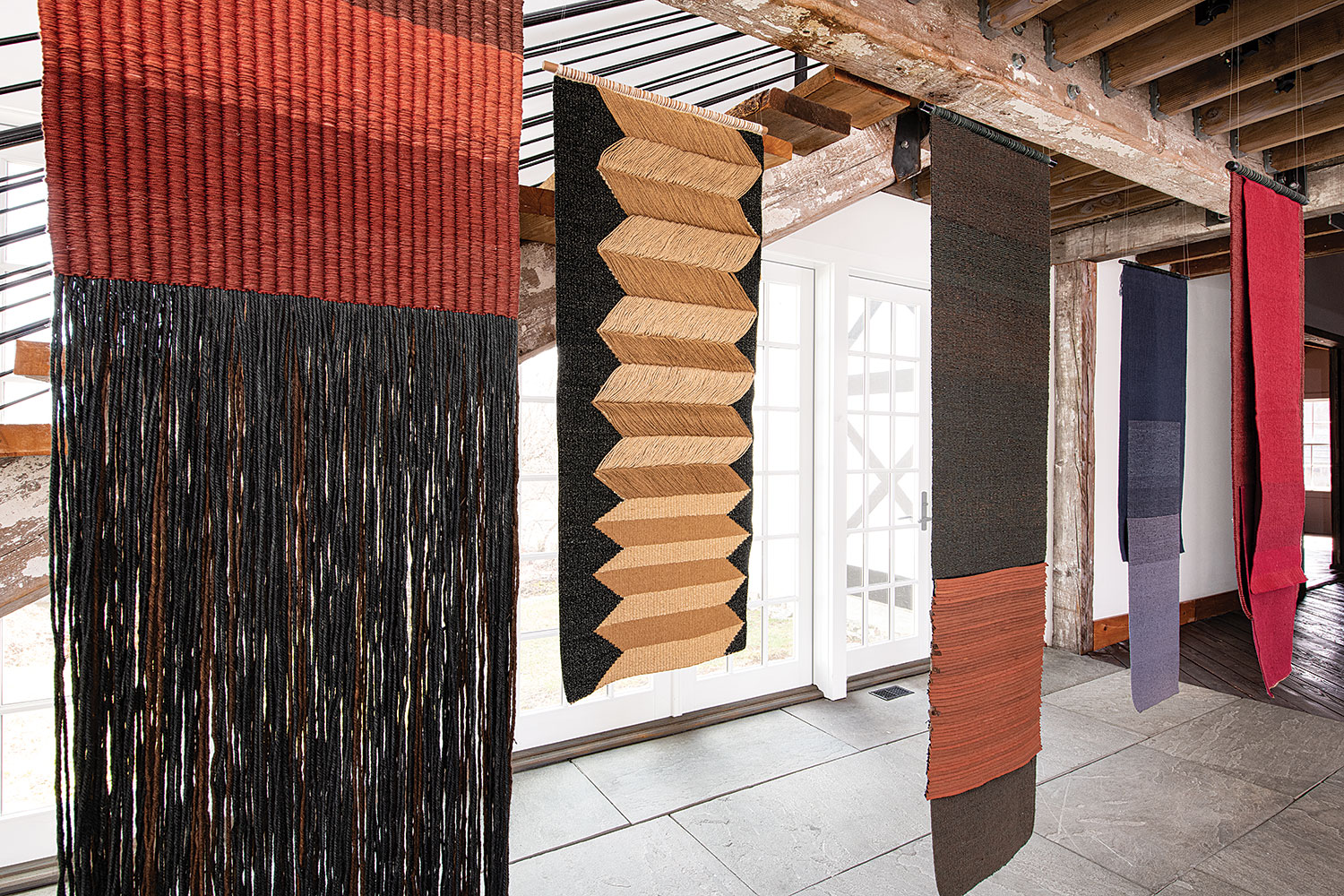
Tapestries by Carolina Yrarrázaval. Photo by Tom Grotta

The 48 artists in Adaptation pose, and in some cases answer, a series of interesting questions about art. Does it offer solutions for dealing with daily stress? For facing larger social and global issues? How do artists use art to respond to unanticipated circumstances in their own lives. The work in the exhibition offers a wide variety of responses to these questions.

Several of artists wrote eloquently for the Adaptation catalog about how art has helped them manage the stress and upheaval of the past year. Ideally, for those who attend Adaptation: Artist’s Respond to Change that calming effect will be evident and even shared. 

pictured: works by Lawrence LaBianca, Włodzimierz Cygan, Chiyoko Tanaka, Gizella Warburton, Norma Minkowitz, Polly Adams Sutton

Wlodzimierz Cygan of Poland says the time of the pandemic allowed him to draw his attention to a “slightly different face of Everyday, the less grey one.”  He found that, “slowing down the pace of life, sometimes even eliminating some routine activities, helps one to taste each day separately and in the context of other days. Time seems to pass slower, I can stay focused longer.” Life has changed in Germany, Irina Kolesnikova told us. Before the pandemic, “we would travel a lot, often for a short time, a few days or a weekend. We got used to seeing the variety in the world, to visit different cities, to go to museums, to get acquainted with contemporary art. Suddenly, that life was put on pause, our social circle reduced to the size of our immediate environment.” Kolesnikova felt a need to dive deeper into herself and create a new series of small works, Letters from Quarantine, “to just work and enjoy the craft.”

clockwise: Adela Akers, Irina Kolesnikova, Ane Henriksen, Nancy Koenigsberg, Laura Foster Nicholson, Lawrence LaBianca, Gizella Warburton. Photo by Tom Grotta

Other artists were moved to create art that concerned larger social issues. Karyl Sisson’s Fractured III, makes use of vintage paper drinking straws to graphically represent in red and white the discontents seen and felt in America as the country grappled with police violence against Black Americans, polarized election politics and larger issues like climate change and the environment.  Climate change and the danger of floods and fire were reflected in the work of the several artists in Adaptation. New Yorker Nancy Koenigsberg created Approaching Storm, adding an even greater density of the grey, coated-copper wire that she generally works with to build a darkened image that serves as a warning for the gravity of current events.

High water appears in Laura Foster Nicholson’s view of Le Procuratie, which envisions a flooded Venice, metallic threads illustrating the rising waters. Works by Adela Akers and Neha Puri Dhir were influenced by wildfires in California and India, respectively.

left to right: Karyl Sisson, Jennifer Falck Linssen, Sue Lawty, Jin -Sook So

Still other artists found way to use their art as a meditative practice in order to face their sense of personal and public dislocation. For Jennifer Falck Linssen, the solution was to turn off all media, go outside and find inspiration in morning and evening light. For Paul Furneaux, initially cut off from his studio, the garden became an obsession as he undertook an extensive renovation.  Returning to art making, the spring colors, greens and yellows he had seen while gardening, created a new palette for his work.  Feeling the need for complete change, Hisako Sekijima turned away from basket finishing. Instead, immersing herself in the underlying processes of plaiting. Her explorations became both meditative and a process that led to new shapes. 

Experience these artists’ reflections on change in person. Schedule your appointment for Adaptation: Artists Respond to Change here:

https://www.eventbrite.com/e/adaptation-artists-respond-to-change-tickets-148974728423

The full-color catalog(our 51st) for Adaptation: Artists Respond to Change is available Friday May 7th:

http://store.browngrotta.com/adaption-artist-respond-to-change/


Summer Stock: Artist Lectures, Classes, Workshops and Walkthroughs

Have some spare time on your hands this summer? Here is a list of opportunities browngrotta arts artists are offering to help you channel your creativity:

Calculus, Sue Lawty, natural stones on gesso, 78.75" x 118", 2010

Calculus, Sue Lawty, natural stones on gesso, 78.75″ x 118″, 2010. Photo by Tom Grotta

Sue Lawty

June 16, 11-5pm
The Artworkers Guild, 6 Queen Square, Bloomsbury, London
Woven Tapestry with Sue Lawty”
Website: https://bit.ly/2t3ZZ2J


Susie Gillespie

June 17-21
Yalberton Farm House, Yalberton Road, Paignton, Devon, UK
“Field to Fabric with Susie Gillespie”
Website: selvedge.org

Susie Gillespie Detail


July 30-August 2
South Devon, UK
“Textile Art Techniques: Weaving, Stitching and Dying with Alice Fox and Susie Gillespie”
Website: https://bit.ly/2HJIKc3


 New Nebula, Eduardo Portillo & Mariá Eugenia Dávila , silk,alpaca, moriche palm fiber dyed with Indigo, rumex spp., onion,eucalyptus, acid dyes, copper and metallic yarns, 74” x 49.25”, 2017

New Nebula, Eduardo Portillo & Mariá Eugenia Dávila, silk,alpaca, moriche palm fiber dyed with Indigo, rumex spp., onion,eucalyptus, acid dyes, copper and metallic yarns, 74” x 49.25”, 2017. Photo by Tom Grotta

Maria and Eduardo Portillo

June 24-July 6
Penland School of Crafts – Textiles Summer Session Three, Bakersville, NC
“Weaving Ideas”
Website:   https://bit.ly/2LGP1rB


Carolina Yrarrázaval

July 2
Tama Art Museum, 11th International Shibori Symposium, Tokyo
Talk: “Modern Art Museum Exhibition, Chile”
Website: https://www.11iss.org


Tim Johnson's Keeping Time Baskets

Tim Johnson’s Keeping Time Baskets. Photo by Tim Johnson

Tim Johnson

July 3-4
Järvsö, Sweden
“Finding Fibres – basketmaking with soft materials”

July 16-17, 10-5pm
FlechtSommer – Basketmaking Summer School, Korbmacher-Museum, Dalhausen, Germany
“Looping Techniques with Soft Materials”
Website: https://bit.ly/2JxdOln


July 22 – 27
West Dean College, near Chichester, England
Flexible basketry structures – looping, netting and knotting
Website: https://bit.ly/2y3bblG


Gizella Warburton

July 6 – 8
Hawkwood College, UK
“Presence and Absense”
Website: https://bit.ly


Caroline Bartlett

July 16-18, 10:30-4:30pm
City Lit, London, UK
“Textiles: manipulation, folding and fabric origami”
Website: https://bit.ly/2l3iRv3


An example of what you can learn at Caroline Bartlett’s “Surfacing: Fold, Pleat, Form”

August 11-17
West Dean College near Chichester, UK
“Reshaping cloth — print and manipulation”
Website: https://bit.ly/2JR0w2w

July 31-August 2
Hawar Textile Institute, Oldeberkoop, Netherlands
“Surfacing: Fold, Pleat, Form”
Website: https://bit.ly/2LFM9Lm

August 27-31
Big Cat Textiles, Newburgh, Scotland
“Between the Folds — Concealing and Revealing with Caroline Bartlett”
Website: https://bit.ly/2JNd4b2


Shady Lane Polly Adams Sutton western red cedar bark, dyed ash, wire, cane 16” x 12” x 9”, 2006

Shady Lane,Polly Adams Sutton, 
western red cedar bark, dyed ash, wire, cane
16” x 12” x 9”, 2006. Photo by Tom Grotta


Polly Sutton

August 2-5
Missouri Basketweavers Convention
Talk: August 4, 7pm, “Basketry in Sardinia”
Workshop:  August 4-5, “Cedar Knothole Cathead”
August 4, 8am-5pm, August 5, 8am-10am
Website: https://bit.ly/2l6HjvG


Ferne Jacobs

Offering private classes throughout the summer on the fiber techniques of coiling, knotting and twining.

For more information on Jacobs’ offered classes contact her at fernejacobs@gmail.com


Art Out and About: US

The opportunities to see great art are endless this summer! Heading to the West Coast for work? Take a detour and visit  the newly opened Nordic Museum to check out Northern Exposure: Contemporary Nordic Arts Revealed in Seattle, Washington. Visiting friends or family in the Northeast? Make plans to spend the day in New Haven and see Text and Textile at The Beinecke Rare Book & Manuscript Library on Yale’s campus. Whether you are in the North, South, East or West there are a wide variety of strong exhibitions on display across the US this summer, here are a few of our favorites:

Grethe Wittrock's Nordic Birds at the Nordic Museum

Grethe Wittrock’s Nordic Birds at the Nordic Museum in Seattle, Washington. Photo by Grethe Wittrock

Northern Exposure: Contemporary Nordic Arts Revealed at the Nordic Museum, Seattle, Washington

The newly opened Nordic Museum hopes to share and inspire people of all ages and backgrounds through Nordic art. The museum is the largest in the US to honor the legacy of immigrants from the five Nordic countries: Denmark, Finland, Iceland, Norway and Sweden. Northern Exposure studies “how the Nordic character continues to redefine itself within an evolving global context” by challenging “perceptions of form, gender, identity, nature, technology and the body,” explains the Museum. The exhibition features work by internationally acclaimed artists, including Grethe Wittrock, Olafur Eliasson, Bjarne Melgaard, Jesper Just, Kim Simonsson and Cajsa Von Zeipel. Made of Danish sailcloth, Wittrock’s Nordic Birds immediately attracts the eye upon entering the exhibition. Northern Exposure: Contemporary Nordic Arts Revealed will be on display through September 16, 2018. For more information click HERE.

Traces: Wonder by Lia Cook at the Racine Art Museum, Gift of Karen Johnson Boyd. Photo by Jon Bolton

Traces: Wonder by Lia Cook at the Racine Art Museum, Gift of Karen Johnson Boyd. Photo by Jon Bolton

Honoring Karen Johnson Boyd: Collecting In-Depth at Home and at RAM, Racine Art Museum, Wisconsin

The Racine Art Museum’s new exhibit Honoring Karen Johnson Boyd: Collecting In-Depth at Home and at RAM showcases art advocate and collector Karen Johnson Boyd’s collection of ceramic, clay and fiber art. The exhibition, which is broken up into a series of four individually titled exhibitions, with varying opening and closing dates, highlight Boyd’s interests, accomplishments and lifelong commitment to art. Throughout her life, Boyd was drawn to a diverse array of artistic styles and subjects. Boyd, who collected fiber in an encyclopedic fashion, supported artists of varying ages with varying regional, national and international reputations. Boyd’s Frank Lloyd Wright-designed home provided her with many display options for her fiber collection. Though baskets encompassed the majority of Boyd’s fiber collection, she regularly altered her environment, adding and subtracting works as she added to her collection. The exhibitions feature work from Dorothy Gill Barnes, Lia Cook, Kiyomi Iwata, Ferne Jacobs, John McQueen, Ed Rossbach, Hideho Tanaka, Mary Merkel-Hess, Norma Minkowitz, Lenore Tawney and Katherine Westphal. Honoring Karen Johnson Boyd: Collecting In-Depth at Home and at RAM will be on display at the Racine Art Museum through December 30th, with exhibited pieces changing over in mid-September. For more information on Honoring Karen Johnson Boyd: Collecting In-Depth at Home and at RAM visit the Racine Art Museum’s website HERE.

Text and Textile at The Beinecke Rare Book & Manuscript Library

Text and Textile at The Beinecke Rare Book & Manuscript Library, New Haven, Connecticut

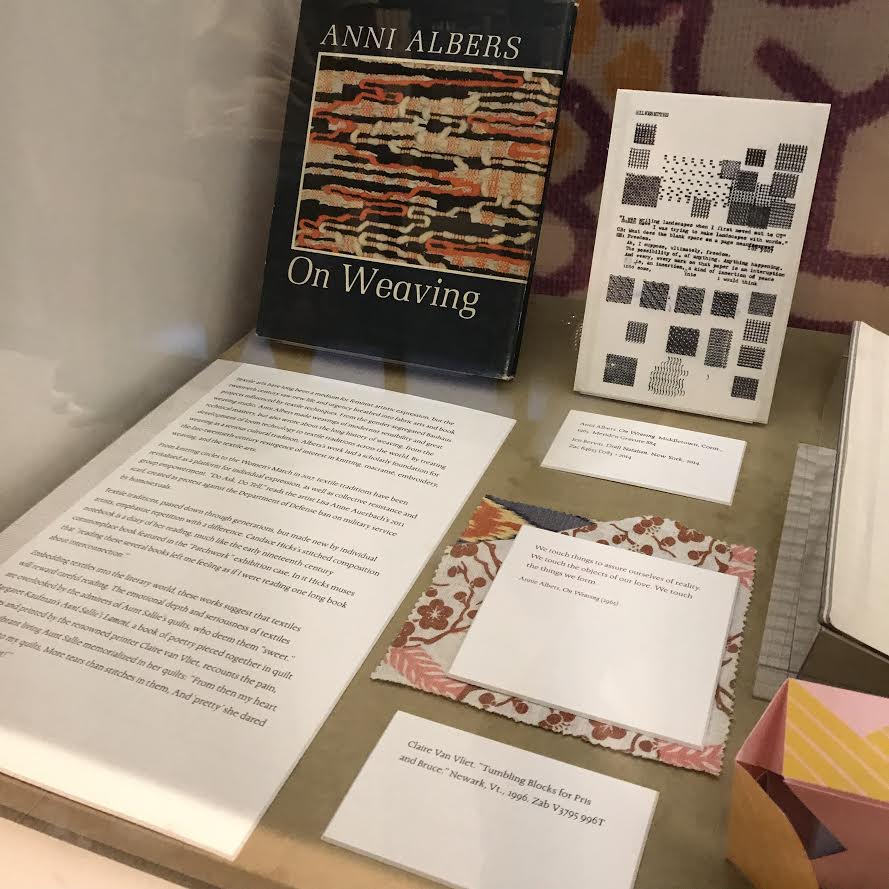
In New Haven, Connecticut, The Beinecke Rare Book & Manuscript Library recently opened Text and Textile. The exhibition, which will be on display through August 12th, explores the relationship and intersection between text and textile in literature and politics.Text and Textile draws on Yale University’s phenomenal collection of literature tied to textiles, from Renaissance embroidered bindings to text from Anni Albers’ On Weaving. Additionally, the exhibition features: Gertrude Stein’s waistcoat; manuscript patterns and loom cards from French Jacquard mills; the first folio edition of William Shakespeare’s plays; the “Souper” paper dress by Andy Warhol; American samplers; Christa Wolf’s “Quilt Memories”; Zelda Fitzgerald’s paper dolls for her daughter; Edith Wharton’s manuscript drafts of “The House of Mirth”; an Incan quipu; poetry by Langston Hughes, Emily Dickinson, Susan Howe and Walt Whitman; and “The Kelmscott Chaucer” by William Morris. For more information on Text and Textile click HERE.
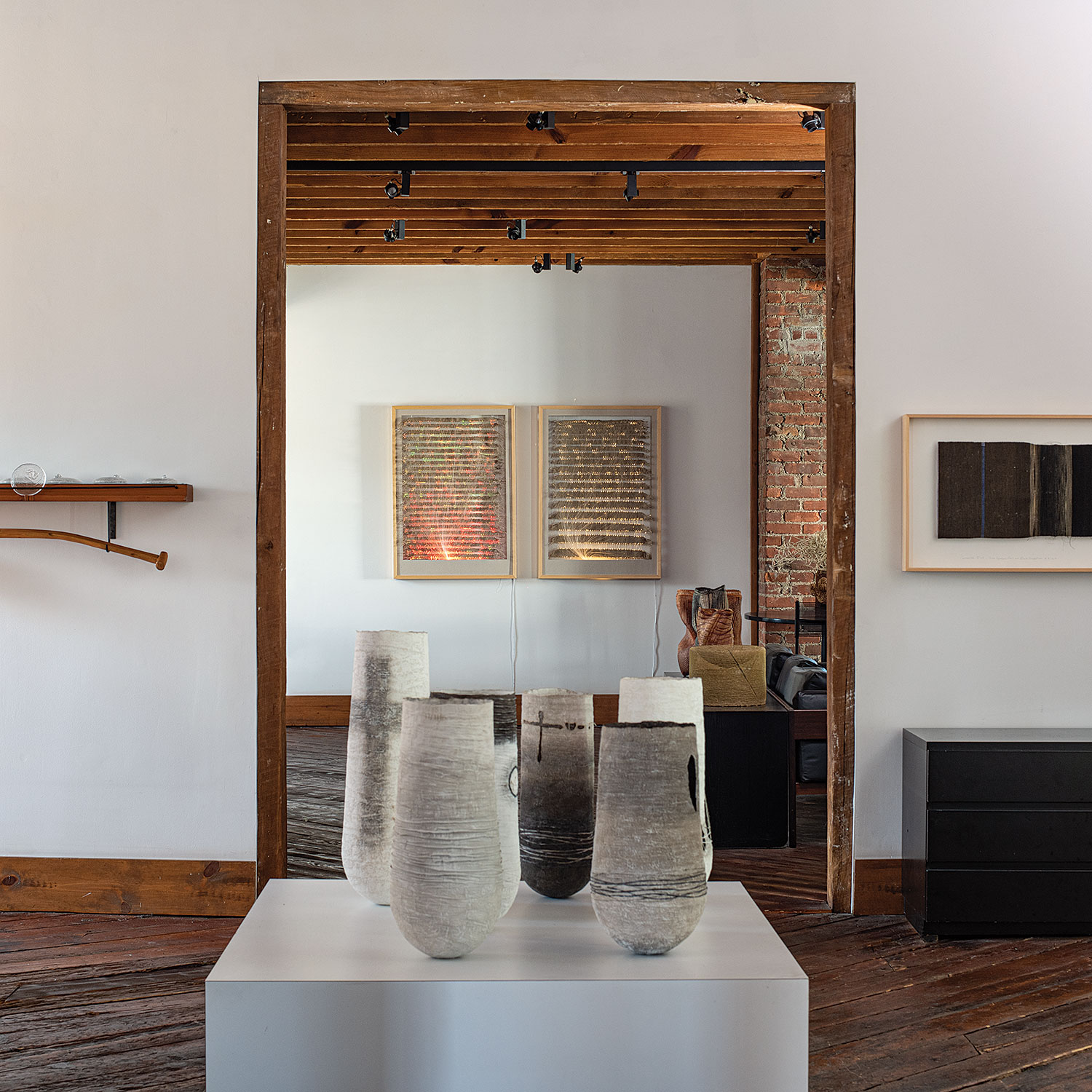
Kaki Shibu by Nancy Moore Bess. Lent by Browngrotta Arts

Kaki Shibu by Nancy Moore Bess. Lent by Browngrotta Arts

Rooted, Revived, Reinvented: Basketry In America at the Houston Center for Contemporary Craft. Houston, Texas

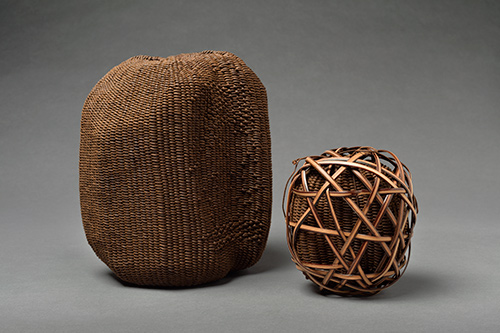
The traveling exhibition Rooted, Revived, Reinvented: Basketry In America is now on display at the Houston Center for Contemporary Craft in Houston, Texas. The exhibition, which is set to travel around the United States through the end of 2019, chronicles the history of American basketry from its origins in Native American, immigrant and slave communities to its presence within the contemporary fine art world. Curated by Josephine Stealy and Kristin Schwain, the exhibition is divided into five sections: Cultural Origins, New Basketry, Living Traditions, Basket as Vessel and Beyond the Basket which aim to show you the evolution of basketry in America. Today, some contemporary artists seek to maintain and revive traditions practiced for centuries. However, other work to combine age-old techniques with nontraditional materials to generate cultural commentary. Rooted, Revived, Reinvented: Basketry In America features work by browngrotta arts’ artists Polly Adams Sutton, Mary Giles, Nancy Moore Bess, Christine Joy, Nancy Koenigsberg, Dorothy Gill Barnes, Ferne Jacobs, Gyöngy Laky, Kari Lønning, John McQueen, Norma Minkowitz, Leon Niehues, Ed Rossbach, Karyl Sisson and Kay Sekimachi.

Kay Sekimachi in Handheld at the Aldrich Museum

Kay Sekimachi in Handheld at the Aldrich Museum. Photo by Tom Grotta

Handheld at the Aldrich Museum, Ridgefield, Connecticut

The Aldrich Museum’s new exhibition Handheld explores how contemporary artists’ and designers’ perceive the meaning of touch. Touch is one of the most intimate and sometimes unappreciated senses. Today, the feeling our hands are most familiar with are our that of our handheld devices and electronics. Touch is no longer solely used to hold objects such as pencils and tools, in fact, touch is increasingly taking the form of a swipe, where the sensation is ignored in favor to the flat visual landscapes of our own selection. “Handheld takes a multifarious approach—the hand as means of creation, a formal frame of reference” explains the Aldrich Museum. It serves the viewer as “a source of both delight and tension as they experience sensual objects in familiar domestic forms, scaled for touch, that can be looked upon but not felt.” The group exhibition, which features work by Kay Sekimachi will be on display until January 13, 2019. For more information on Handheld click HERE.


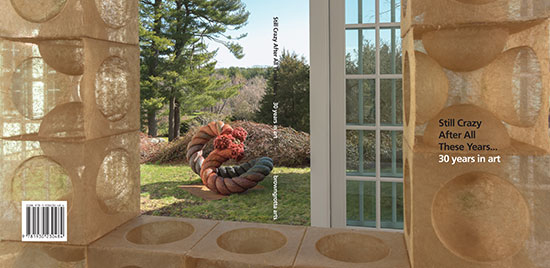
Still Crazy…30 Years: The Catalog

Still Crazy...30 Years: The Catalog Cover Naoko Serino and Mary Yagi

Still Crazy…30 Years: The Catalog

It’s big! It’s beautiful (if we do say so ourselves –and we do)! The catalog for our 30th anniversary is now available on our new shopping cart. The catalog — our 46th volume — contains 196 pages (plus the cover), 186 color photographs of work by 83 artists, artist statements, biographies, details and installation shots.

Still Crazy...30 Years: The Catalog

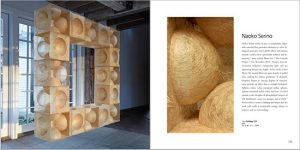
Naoko Serino Spread

Still Crazy...30 Years: The Catalog

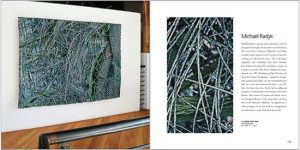
Michael Radyk Spread

Still Crazy...30 Years: The Catalog

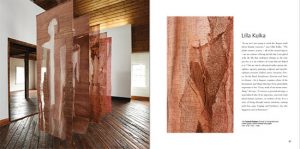
Lilla Kulka Spread

Still Crazy...30 Years: The Catalog

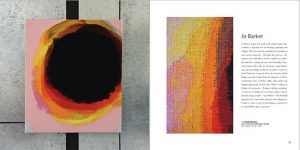
Jo Barker Spread

The essay, is by Janet Koplos, a longtime editor at Art in America magazine, a contributing editor to Fiberarts, and a guest editor of American Craft. She is the author of Contemporary Japanese Sculpture (Abbeville, 1990) and co-author of Makers: A History of American Studio Craft (University of North Carolina Press, 2010). We have included a few sample spreads here. Each includes a full-page image of a work, a detail shot and an artist’s statement. There is additional artists’ biographical information in the back of the book. Still Crazy After All These Years…30 years in art can be purchased at www.browngrotta.com http://store.browngrotta.
com/still-crazy-after-all-these-years-30-years-in-art/.
Our shopping cart is mobile-device friendly and we now take PayPal.