July has been good to us here at browngrotta arts. We’ve started getting into our final planning phases for our Fall 2024 “Art in the Barn” exhibition, Ways of Seeing – exploring ways individuals envision and curate art collections. The exhibition within the exhibition will feature distinct groupings: The Art Aquatic, art influenced by water; Impact: Women Artists to Collect, accomplished artists from the US and abroad; and Right-Sized, art compiled with specific parameters in mind. The exhibition will be open to the public September 21-29. We hope to see you there!
Outside of prepping for this exhibition, we’ve had the opportunity to introduce six artists in our New This Week series, including: James Bassler, Susie Gillespie, Eduardo and Mariá Eugenia Dávíla Portillo, Eva Vargo and Adela Akers.
Now, we’re recapping everything we covered so you don’t miss a thing! Read on for the full breakdown.
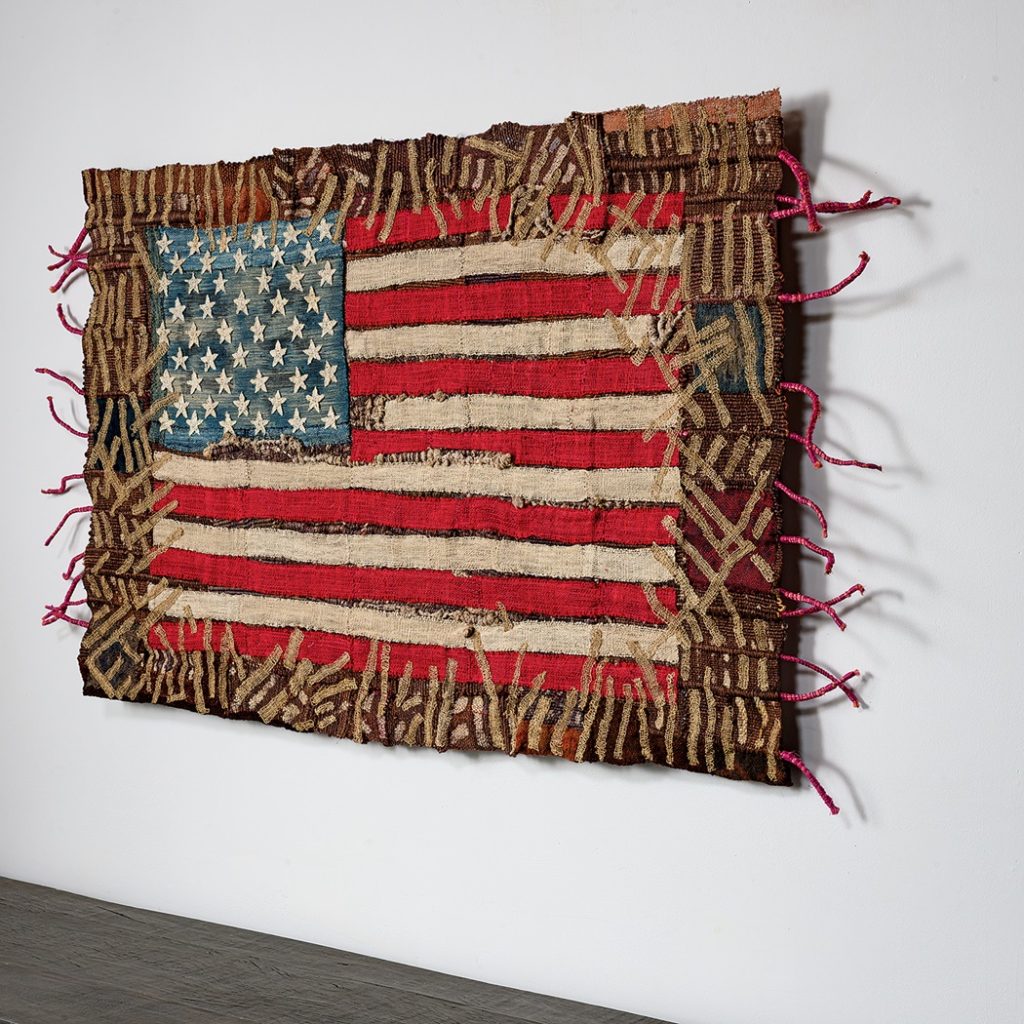
We kicked off the month with a powerful feature on James Bassler‘s piece, This Old House. Timed with the 4th of July, this piece resonated deeply with the occasion. Since 1980, Bassler has been celebrated for his innovative textile work, drawing inspiration from diverse traditions such as the Navajo wedge-weave, Japanese shibori, and pre-Columbian scaffold weaves.
In “This Old House,” Bassler draws from Isabel Wilkerson’s book Caste, which likens America to an old house, with the caste system of slavery being as foundational as the studs and joints. The piece’s flag design, adorned with wax resist and a rich array of woven elements, pays homage to the African textile traditions brought to Virginia in 1619, symbolizing the loss of identity and culture imposed by slavery.
Not only is this work profound, but it also stands out for its stunning complexity.
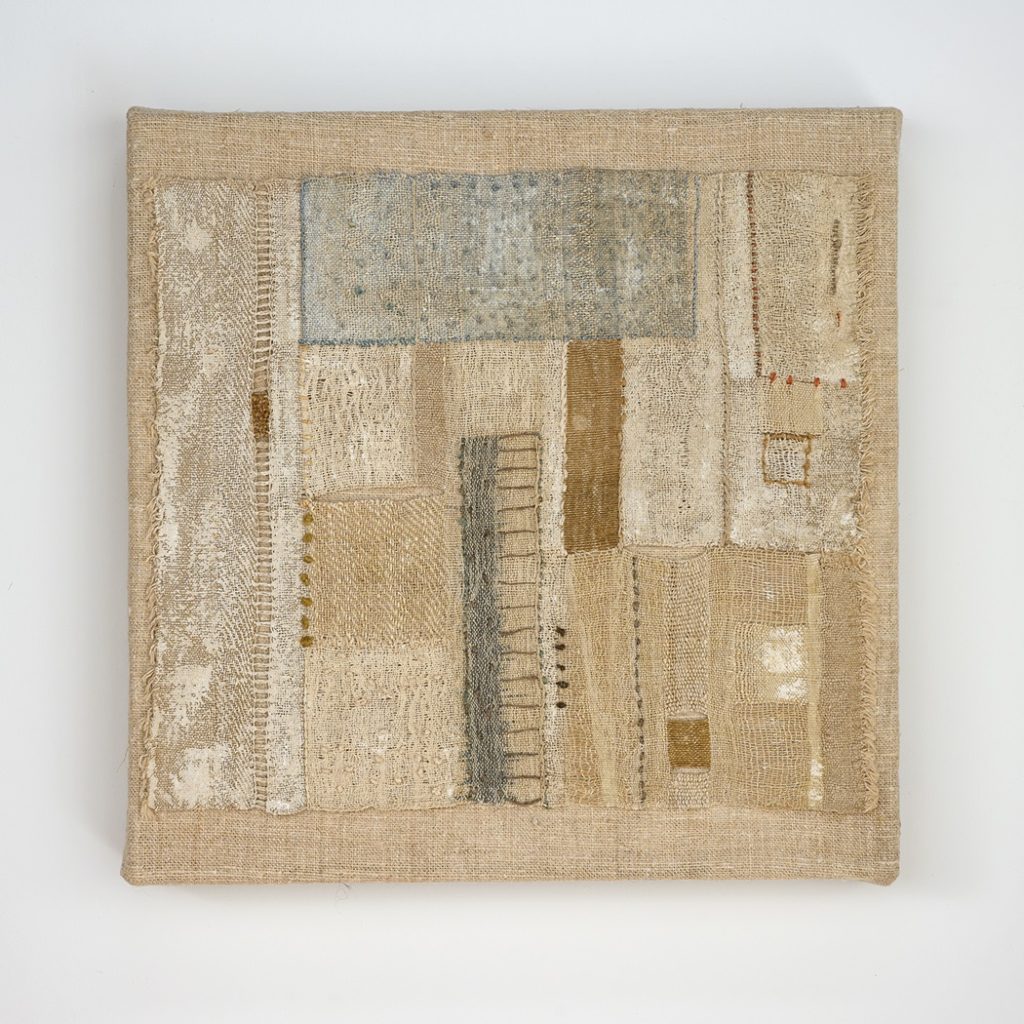
Next up, we featured the talented artist Susie Gillespie and her captivating piece, Evidence of Passing Time. Gillespie draws inspiration from the beauty found in the remnants of what was once new: the patterns in damp, crumbling plaster; remnants of paint on decayed wood; rotting bark; and broken carvings. Her intricate techniques, such as broken borders, insets, twining, and weaves of herringbone and twill, bring these elements to life.
When asked about her work, Gillespie said: “Out of decay and disintegration I wish to express a sense of renewal.”
It’s no secret to us why this artist come so acclaimed, and we hope our readers feel the same.
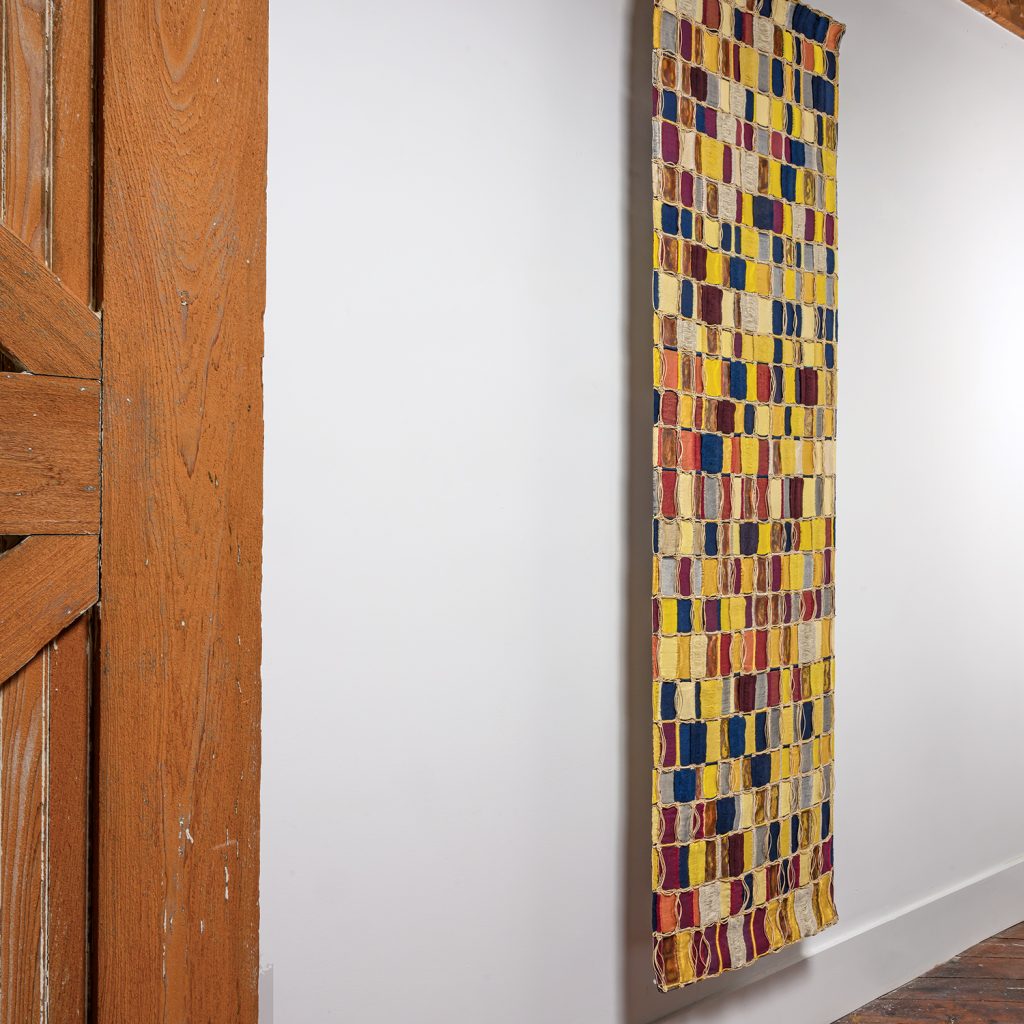
The next duo we highlighted did not disappoint! Turning our spotlight to Eduardo and Mariá Eugenia Dávíla Portillo. Renowned for their experimental approach, this artistic pair has made significant strides across all facets of their practice.
Originating from Venezuela, they pioneered silk farming, utilizing local fibers and exploring natural indigo dyeing techniques inspired by their journeys through Orinoco and the Amazon. Extensive research in China and India further enriched their process, where they developed a comprehensive silk production cycle from mulberry tree cultivation to innovative textile design.
They make a spectacular duo, and we can’t wait to see more from them in the future!
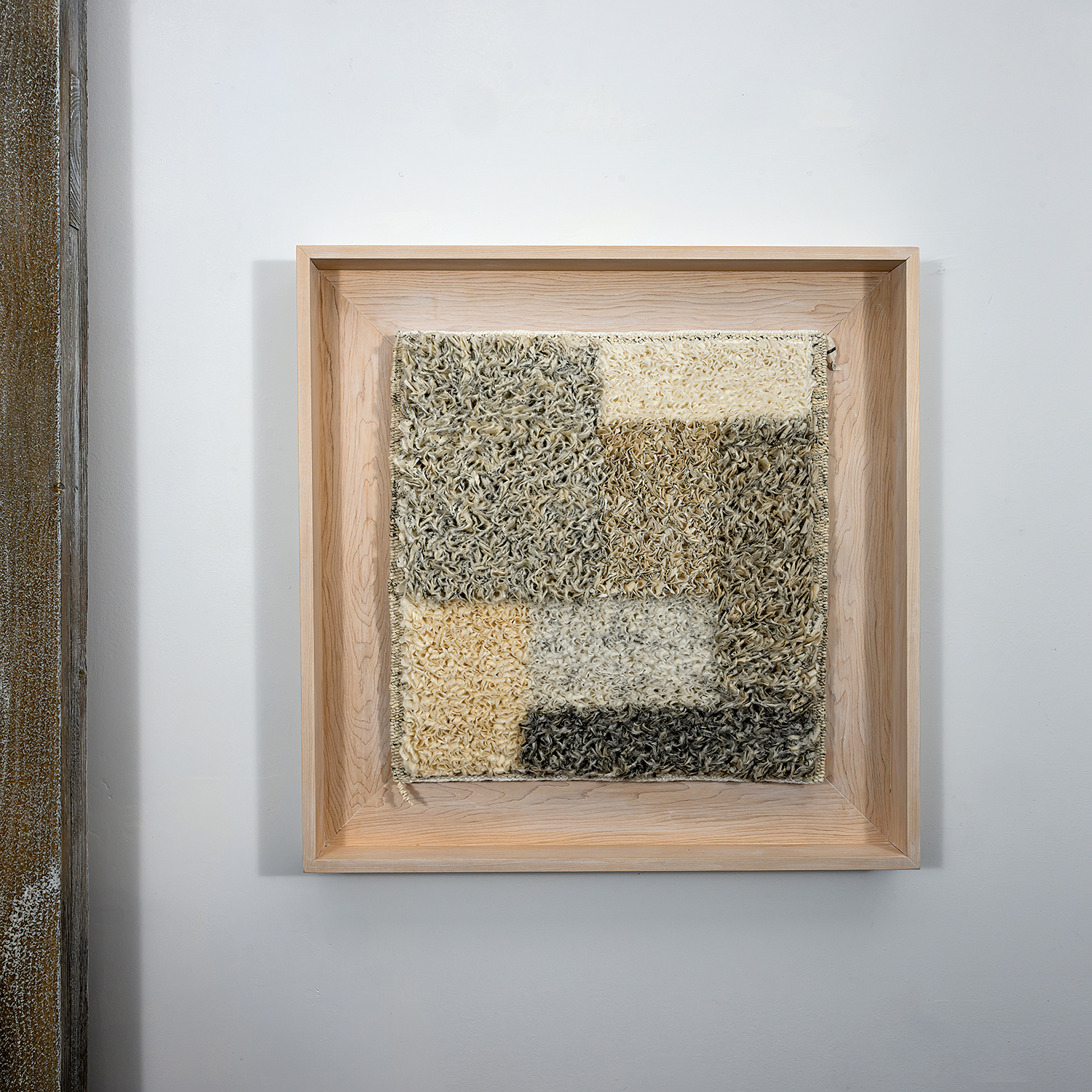
We then turned our spotlight to artist Eva Vargö. With extensive travel experience, including time spent in Sweden, Japan, and Korea, Vargö has skillfully infused global influences into her practice.
Her current works are a fascinating blend of traditional weaving techniques and her own innovative paper-weaving methods. By integrating elements from Eastern philosophy, Vargö creates pieces that resonate with a deep sense of harmony and balance. Her unique approach not only reflects her diverse experiences but also continues to captivate audiences worldwide. It’s no wonder she’s earned such acclaim!
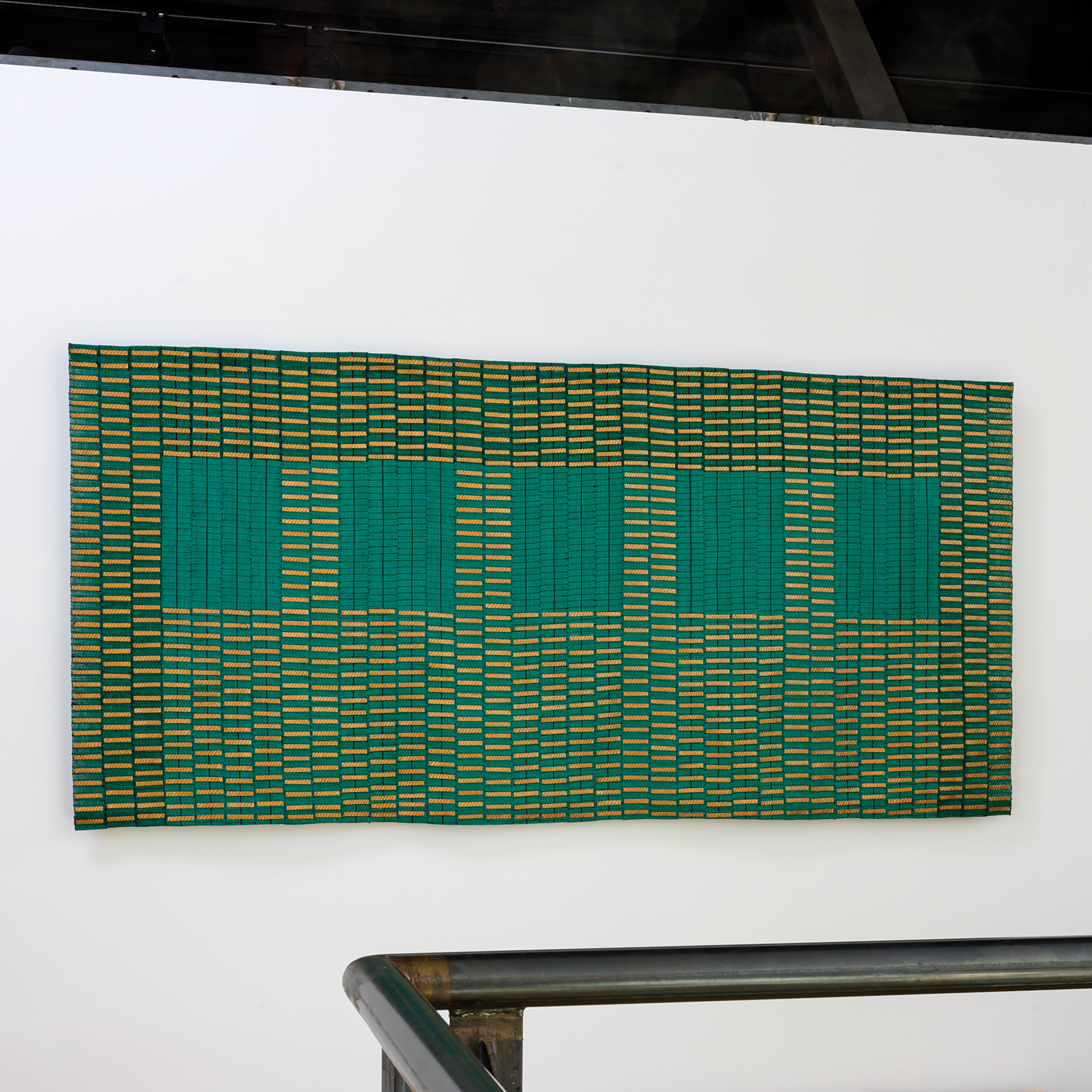
To close out the month, we are honored to highlight the work of the late, acclaimed artist Adela Akers. Her piece, Five Windows, created in 2005, showcases her masterful use of linen and metal foiling.
Born in Spain and later residing in the United States, Akers was a pivotal figure in the textile and fiber art world. Her career, which began in the 1950s, spanned the entire evolution of modern fiber art, leaving an indelible mark on the field.
We’re also thrilled to share that Akers’ work will be featured in Impact: 20 Women Artists to Collect, part of our upcoming Fall 2024 exhibition, Ways of Seeing. The exhibition will take place from September 21 to September 29, and we can’t wait for you to experience her remarkable artistry once again.
Thank you for joining us on this journey through July’s exciting features. We’re incredibly grateful for your continued support and enthusiasm for the artists and their remarkable work. Stay tuned for more updates and insights as we approach the unveiling of our upcoming Fall 2024 exhibition, Ways of Seeing. Don’t miss your chance to experience these stunning artworks in person—reserve your spot today! We look forward to seeing you there and sharing more artistic inspirations in the months ahead.