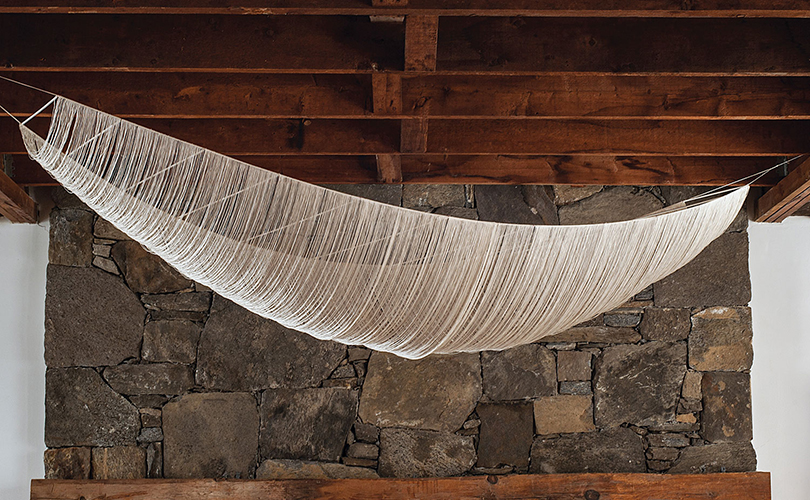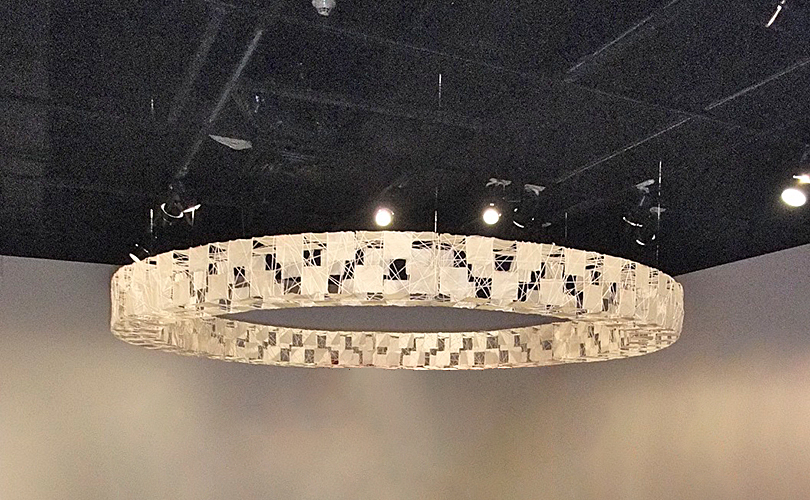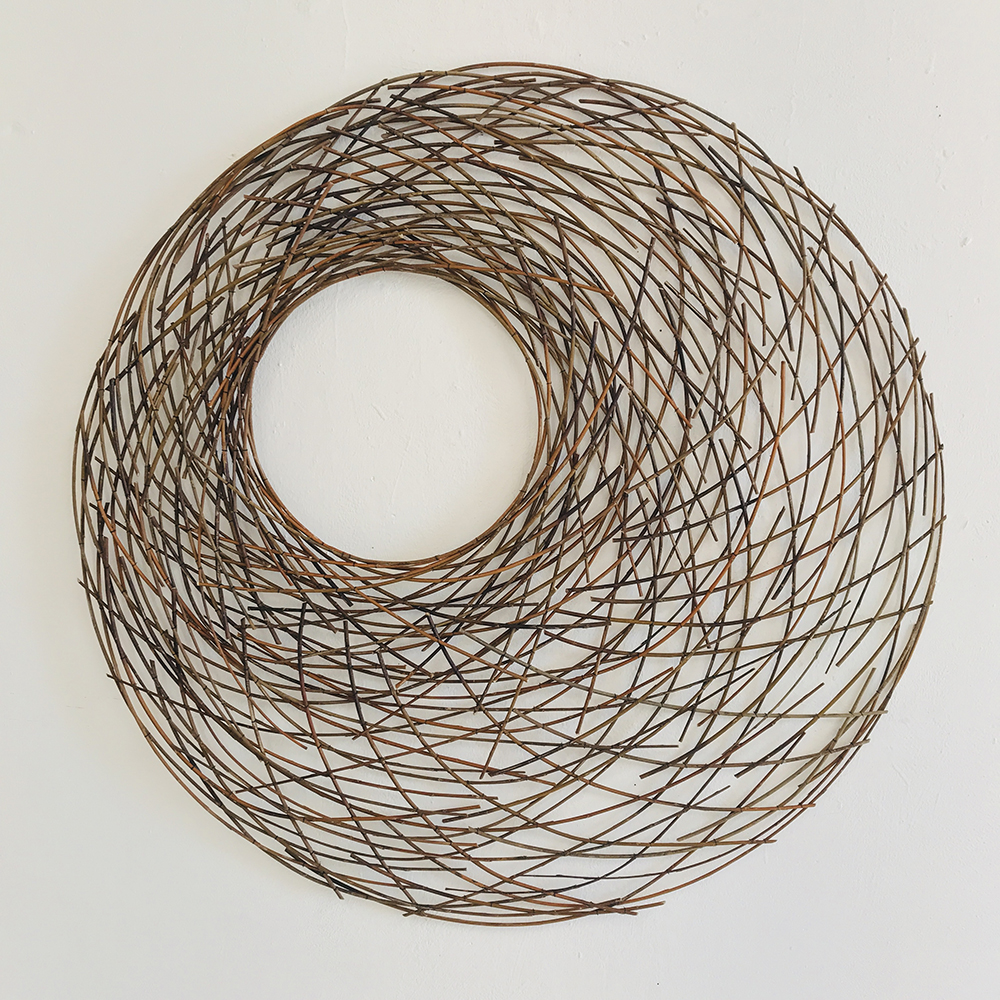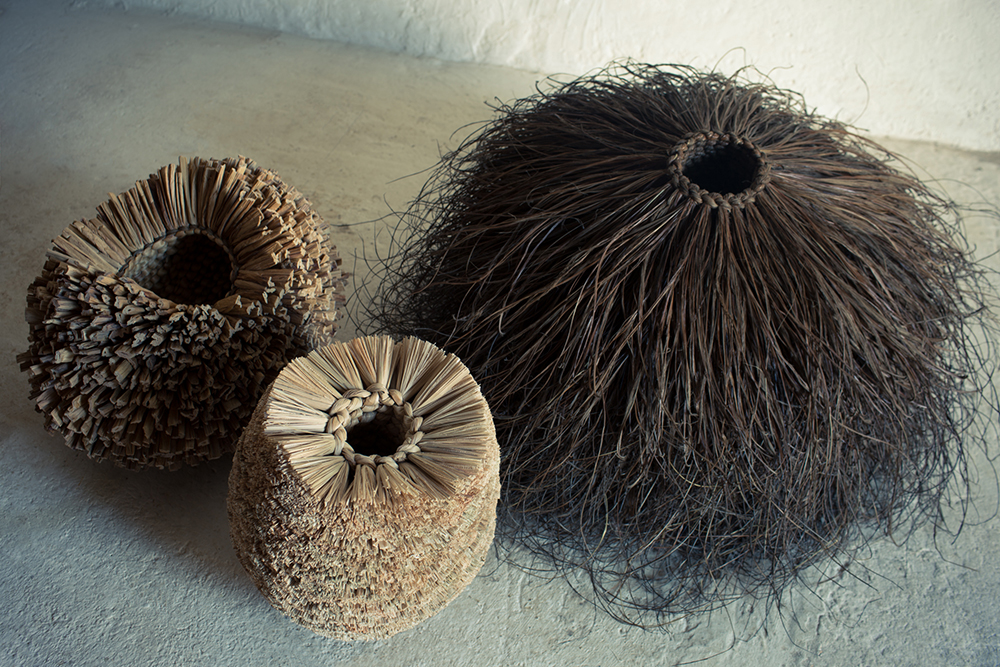
Tag: Dail Behennah

Summer Recap

Summertime and the living is easy … We’ve always loved that song by DuBose Heyward and George Gershwin. It’s not quite easier at browngrotta arts as we have lots of preparation to do for our upcoming fall exhibition and next year’s 40th anniversary celebration, but the pace is a little slower. We spend more time with family and friends and fishing in Maine with art projects in between.

Even if leisurely, life goes on, and we still have plenty of news to share.
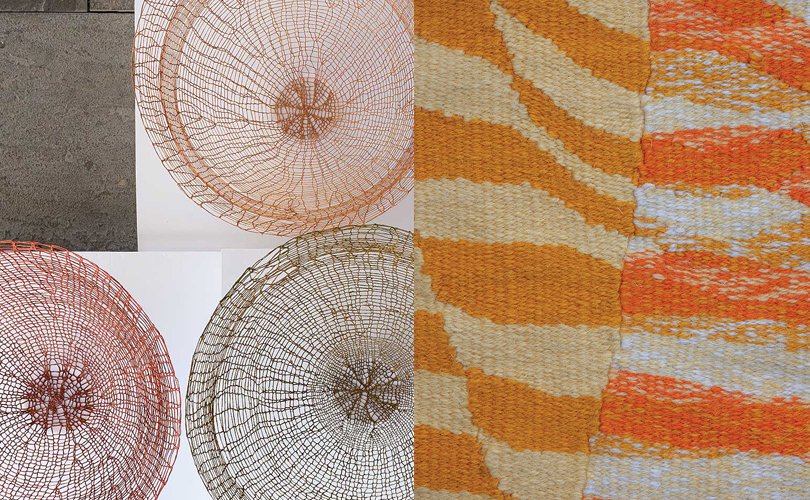
Gjertrud Hals and Misako Nakahira
Works by Gjertrud Hals and Misako Nakahira. Photo by Tom Grotta.

The Loewe Craft Foundation Awards for 2026 were presented. Through its Craft Prize, the Loewe Foundation seeks to acknowledge and support international artisans over 18, of any gender who demonstrate an exceptional ability to create objects of superior aesthetic value. By identifying work that “reinterprets existing knowledge to make it relevant today while reflecting its maker’s personal language and distinct hand,” the Foundation aims to “highlight the continuing contribution of craft to the culture of our time.” Two of the artists that work with browngrotta arts were on the short list — Gjertrud Hals of Norway and Misako Nakahira of Japan. They join several other artists that browngrotta arts promotes who have made the shortlist in years past— Mercedes Vincente, Polly Adams Sutton, Yeonsoon Chang, Ferne Jacobs, and Simone Pheulpin, who was also awarded an honor prize. Separately, Loewe has worked with Jiro Yonezawa and Kay Sekimachi to create designs for products for the legendary leather goods retailer.
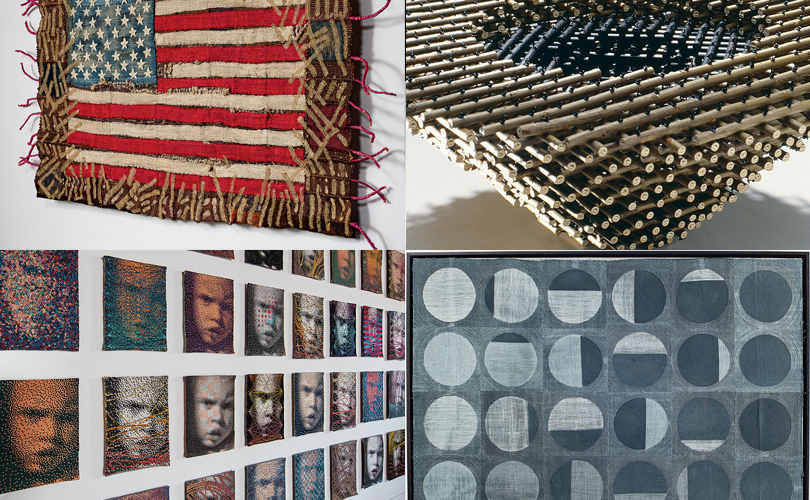
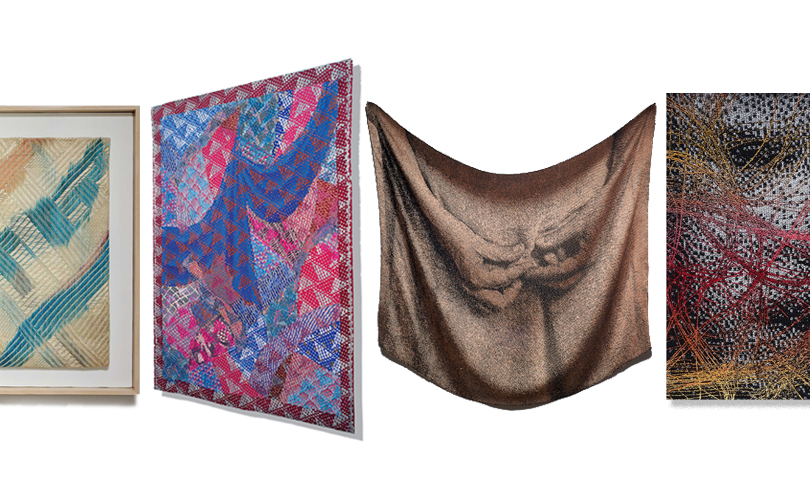
James Bassler, Dail Behennah, Lia Cook and Neha Puri Dhir
Works by James Bassler, Dail Behennah, Lia Cook and Neha Puri Dhir. Photo by Tom Grotta.

This summer saw Museum Acquisition action: This Old House by James Bassler will join the permanent collection at Crystal Bridges Museum of American Art in Bentonville, Arkansas. This Old House was featured in the Museum’s recent exhibition,  America 250: Common Threads. The adoption of a second work of art by another artist is in progress at a separate major US museum. The last 12 months have seen more acquisition activity. Last August,  Bowl with Black Centre, by Dail Behennah was acquired by the Fuller Craft Museum in Brockton, Massachusetts. In November, Lia Cook’s Su Series was acquired by the Crystal Bridges Museum of American Art and Neha Puri Dhir’s work Transition, was acquired by the John and Mable Ringling Museum in Sarasota, Florida. In January, four works of wearable art by Norma Minkowitz joined the collection of the Los Angeles County Museum of Art in California. 
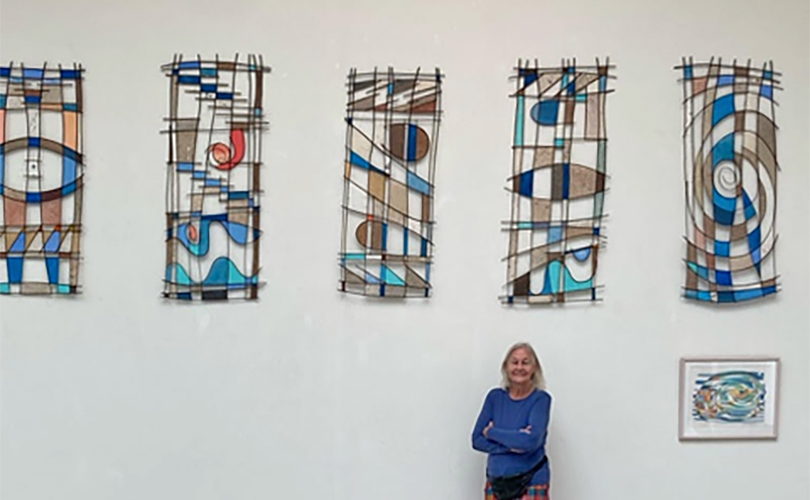
Jane Balsgaard
Jane Balsgaard. Photo courtesy of Jane Balsgaard.

Artists who work with browngrotta arts are featured in a number of Exhibitions in Canada, China, Europe, and the US. Jane Balsgaard’s work is on exhibit at the Vrå Exhibition in the  Art Building-Engelund Museum in Vrå, Denmark (through August 30th). Jeannet Leendertse is part of Water Proof: Maine Artists Reflect on their  Environment, at the  Wendell Gilley Museum in Southwest Harbor, Maine (through August 22nd). In Montreal, Canada, Mariette-Rousseau Vermette’s, Micheline Beauchemin’s, and Young-Ok Shin’s works are featured in Plot at the Baie-Saint-Paul Museum of Contemporary Art (through September 6th). The work of Eduardo Portillo and María Dávila is included in See You Tomorrow Under Other Skies at the  Andrew Kreps Gallery in New York City (through September 12th, with a summer break in August. Check hours). Gjertrud Hals’s work is part of the 
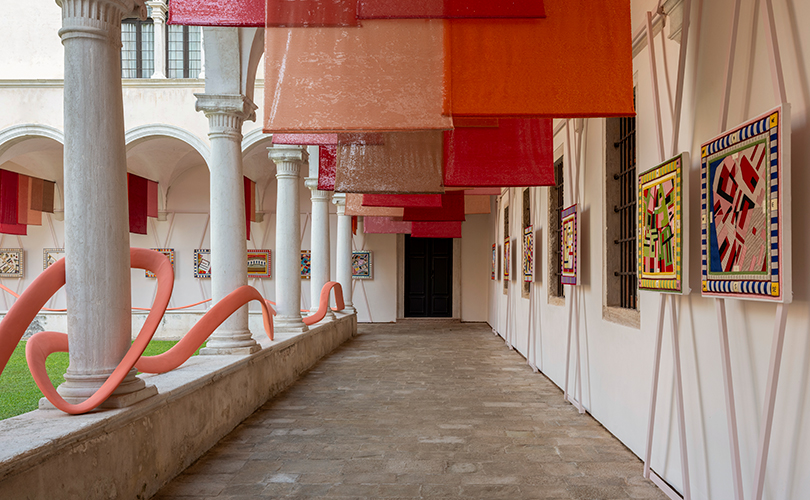
Personal Structures exhibition at the Palazzo Mora in Venice, Italy (through November 22nd).  Simone Pheulpin’s work is in Intertwined Breath: Contemporary Fiber Narratives at the  Taoxichuan Gallery in Jingdexhen, China (through November 25th). And, opening on August 25th, is a retrospective of Mary Merkel-Hess’s work at the  Brunnier Art Museum, Ames, Iowa (through January 31, 2027).
Birth-Giulio-Ghirardi
Birth-Giulio-Ghirardi©Michelangelo-Foundation

The fourth edition of the Homo Faber Biennial is titled An Island of Light and runs from September 1 – 30, 2026 at the Fondazione Giorgio Cini on San Giorgio Maggiore Island in Venice, Italy. Curated by the Michelangelo Foundation with artistic direction by Es Devlin, the event explores the relationship between light, materials, and the human hand. A number of artists who work with browngrotta arts will be part of the Biennial including Jiro Yonezawa, Christine Joy, Jennifer Zurick, Nancy Moore Bess, Simone Pheulpin, Polly Adams Sutton, and Gyöngy Laky. Homo Faber also maintains an online platform 
dedicated to craftsmanship that provides profiles of artisans worldwide.
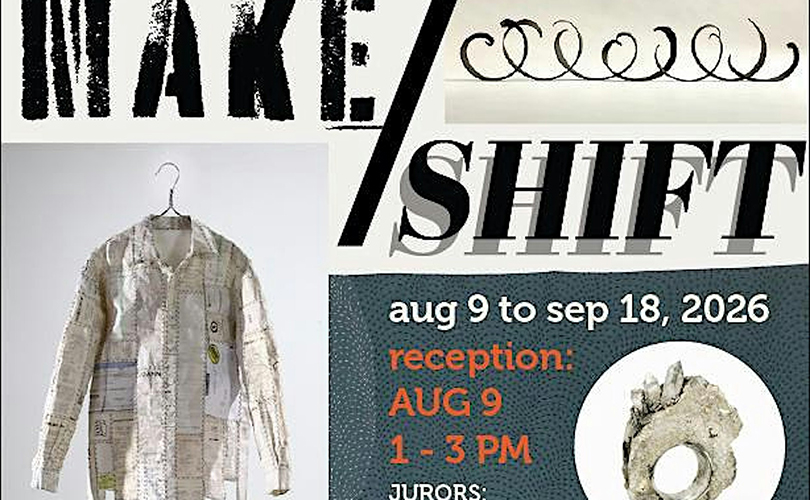
Make/Shift
Make/Shift exhibition, through September 19th.

In June, we served as Jurors for Make/Shift, an exhibition at the  Crown Gallery, Metro Art Studios in Bridgeport, Connecticut.  Artists were asked to submit work that “explores the space where material, process, and intention converge — grounded in techniques and materials traditionally associated with functional craft—ceramics, fiber, glass, wood, basketry, and other hand-based practices—reimagined through a fine art lens.” We reviewed more than 150 entries and selected over two dozen intriguing works — of glass, ceramics, jewelry, metal — but a preponderance of the entries were works of fiber. The exhibition will run from August 9th to September 19th.
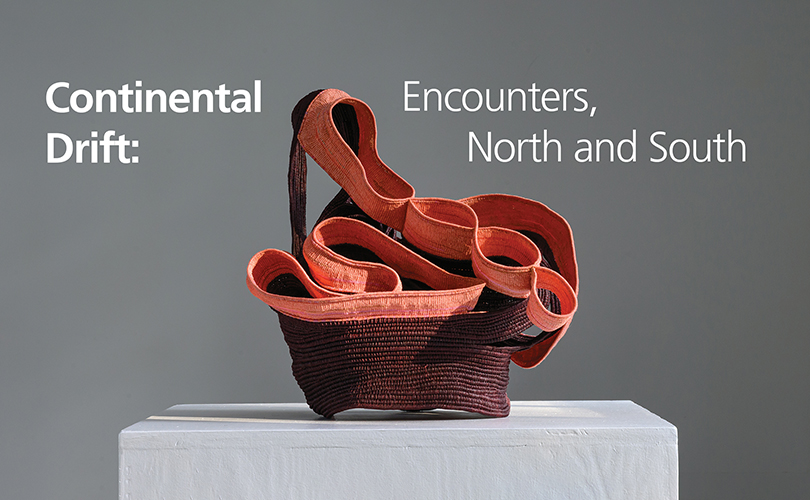
Ferne Jacobs
Work by Ferne Jacobs. Photo by Tom Grotta

Much of our summer has been spent on October Exhibition Planning. In Continental Drift: Encounters, North and South (October 17 – 25), we will explore art from North and South America from two different vantage points. First, we are gathering works by significant artists from the US, Canada, Chile, Venezuela, and Colombia, including Sheila Hicks, Lenore Tawney, and Carolina Yrarrázaval) many of whom are not just representative of their own countries but have a connection to other regions as well. Second, we will include work by artists from in and outside North and South America who cite art, artists, or experiences from these continents as an influence. We’ve been receiving deliveries from new artists from Argentina and Mexico, and viewed compelling works that artists created after a pilgrimage to another country or a study of an artist from elsewhere. And we’ve been in correspondence with Sarah Parrish, Associate Professor of Art History at Plymouth University, who’ll be writing the catalog essay for Continental Drift.

Hope you, too, are having a great summer!


Our 60-what? browngrotta arts’ latest publication

Catalog Cover: Transformations: dialogues in art and materials

Another exhibition, time for another catalog. The volume for this Spring’s exhibition, Transformations: dialogues in art and materials, is our 63rd (57 catalogs, 6 monographs). With work by 79 artists highlighted in Transformations, the catalog was bound to be a big one. In fact it weighs in at 164 full-color pages. The works in Transformations were installed to illustrate the varying ways artists used the same material — whether traditional, silk, cotton, sisal or more unusual, feathers, horsehair, and jute. The catalog essay explores additional themes.

Hisako Sekijima catalog spread
Two different types of Bambo Baskets by Hisako Sekijima. Photo by Tom Grotta

Making and Meaning
Some artists in Transformations take their materials beyond physical characteristics— asking viewers to feel, remember, or reconsider. Stéphanie Jacques describes this approach with characteristic directness: “[P]lant matter is not the subject of my work. It is a means among others… But this means is not trivial. It connects me to what man has always done, shaping what he needs with his hands from what he sees around him. What matters to me is to talk about what is alive.” Jacques constructs sculptural forms that are humanoid but less than literal, using volume to give life to an unfilled interior space — speaking of the movements of the body, desire, intuitions, something that pushes from the inside and overflows. For Hisako Sekijima the subject is not the material alone; it is the dynamic interplay between what the material will and will not do, and what the maker can discover within that negotiation. 

Willow title page
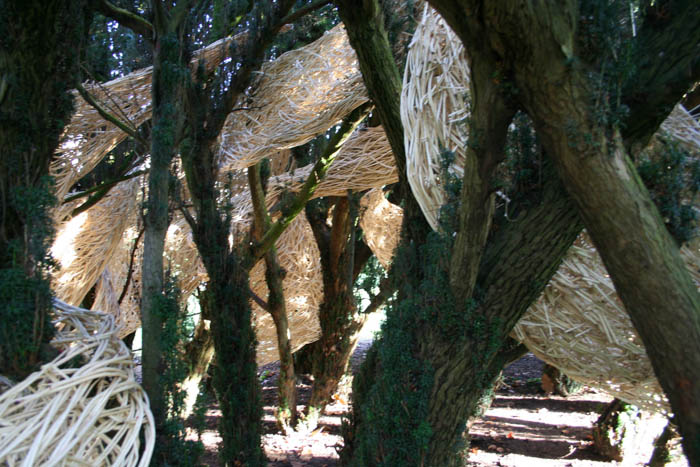
willow works by Dail Behennah, Stéphanie Jacques and Esmé Hofman. Photo by Tom Grotta

The Material as Its Own Message
For some artists, the material does not carry meaning so much as it is the meaning. Sue Lawty and Yasuhisa Kohyama work at opposite ends of the material world —one with fiber and stone, the other with clay and fire — but they share a conviction that the deepest outcomes come not from overriding what a material wants to do, but from creating conditions for it to reveal itself.

Yasuhisa Kohyama and Sue Lawty catalog pages
Ceramic by Yasuhisa Kohyama and Indigo weaving by Sue Lawty. Photo by Tom Grotta

Material as Cultural Memory
James Bassler and Eduardo Portillo and María Dávila ask us to attend to where materials have been — to the long human histories encoded in fiber, dye, and weave structure. For these artists, meaning is inseparable from origin; the biography of a material is part of what the finished work contains. Bassler has spent decades drawing from Navajo wedge-weave, pre-Columbian scaffold weave, and Andean shibori, accumulating a global inventory of material knowledge. Portillo and Dávila traveled extensively in China and India to study indigo dye-making, silk sericulture, and handweaving, learning that fiber is a vehicle for understanding other cultures. Their Azul Indigo series emerged from looking for blue in their Venezuelan mountain landscape. 

James Bassler and Eduardo Portillo and María Dávila catalog pages
Indigo weavings by James Bassler and Eduardo Portillo and María Dávila. Photo by Tom Grotta

Between System and Surprise
One theme recurring in Transformations is the tension between system and discovery. Merja Keskinen describes this generative uncertainty: “I work to see. The joy of discovery and the delight of experiencing colors are essential to me.” Norie Hatakeyama works with factory-made paper-packing tape, an experimental material that enables her to break free from traditional limitations. By submitting an industrial material to the ancient technique of plaiting, she transforms both: the tape becomes sculpture, and the sculpture raises questions about what we mean by “natural.”

Norie Hatakeyama and  Merja Keskinen cTALOG PAGES
Paper sculpture by Norie Hatakeyama and line weaving Merja Keskinen. By Tom Grotta

Drawing with Material, Drawing in Space
Several artists treat fiber not as the medium of weaving but as an instrument of drawing itself. “Instead of drawing on paper,” Marian Bijlenga says, “I draw in space by using textile as a material.”After rejecting weaving as too slow, she discovered horsehair as an element — stiff enough to stand on its own, allowing a new kind of freedom. Kyoko Kumai has spent decades achieving something similarly paradoxical with stainless steel. She has written of her chosen material with wonder: “Thin pieces of stainless steel wire create a richly expressive fabric that does not stand solidly, cleaving the air. It has its own language fluttering above the floor; breathing and melting into the air.” 

Kyoko Kumai Catalog spread
steel filament textiles by Kyoko Kumai. Photo by Tom Grotta

The works in Transformations demonstrate how material intelligence, at its highest level, transcends the categories of craft and fine art altogether.


Ways of Seeing: On Assembling

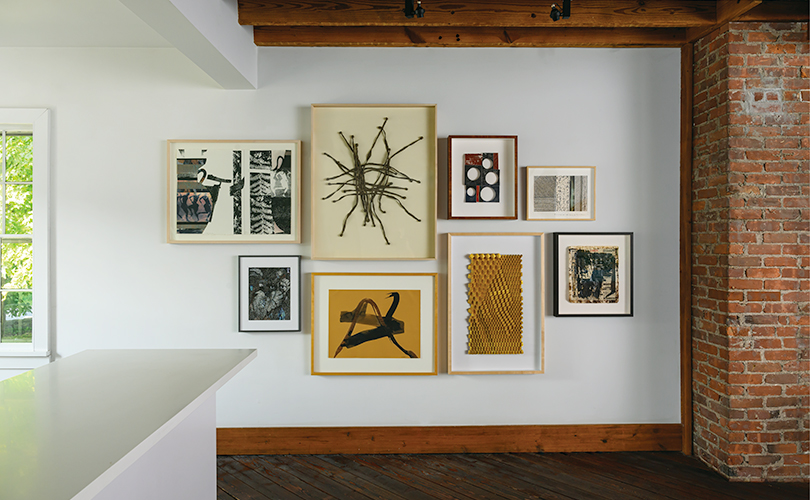
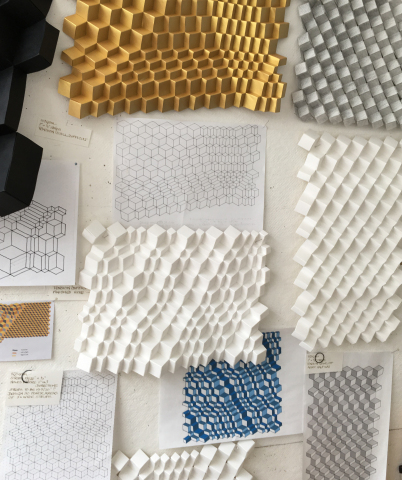
Ways of Seeing, our Fall art event, is mid-exhibition today. It’s a celebration of collecting and the myriad ways that people acquire and arrange art. We’ve put together some groupings within the show and thought of others. We’ll share some of them below for those of you who can’t attend in person. For example, collecting by material, even one as ubiquitous as paper, can result in a varied collection. We put together a wall of works on paper: a print using xerography by Katherine Westphal, a painting on paper by Claude Vermette, collages by Norma Minkowitz and Hideho Tanaka, an intricately folded paper work by Dail Behennah, a composition of twisted commercial paper by Wendy Wahl, and an assemblage of colored sandpaper by Marian Bijlenga.

Gallery Wall of paper works
left to right, top to bottom:
Katherine Westphal, 10w Amphora and Fern, 1993; Wendy Wahl, 2ww 7 by 7 and 22, 1999; Marian Bijlenga, 37mb Luitzen, 2019; Hideho Tanaka, 31ht Emerging 008, 2016; Norma Minkowitz, 114nm The Seeker, 2014; Claude Vermette, 126c Untitled, 1980; Dail Behennah, 56db Two Golds, 2019; Toshio Sekiji, 26ts Lacquered and Torn, 1998. Photo by Tom Grotta

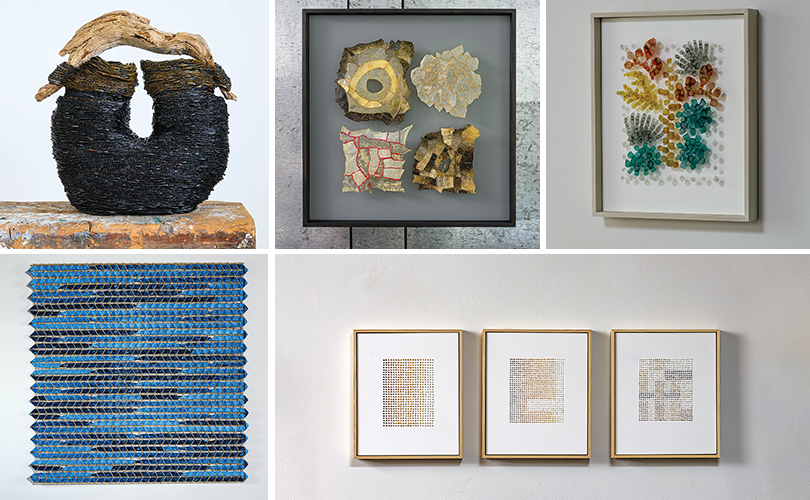
A more unusual material choice — assembling items made of materials from the sea, will also result in a wildly diverse group of works. We’re showing baskets of seaweed, wall work of fish skin and fish scales, and works that incorporate sea sand and sea stones. 

Artwork with sea materials
12jle Bivalve, Jeannet Leendertse, 2023; 5ab Threading Fish, Annette Bellamy, 2023; 40mb Scale Flowers, Marian Bijlenga, 2019; 32kn Sazanami(Ripples), Keiji Nio , 2022; 35sl Coast, East Riding of Yorkshire 1-3, Sue Lawty, 2024. Photos by Tom Grotta

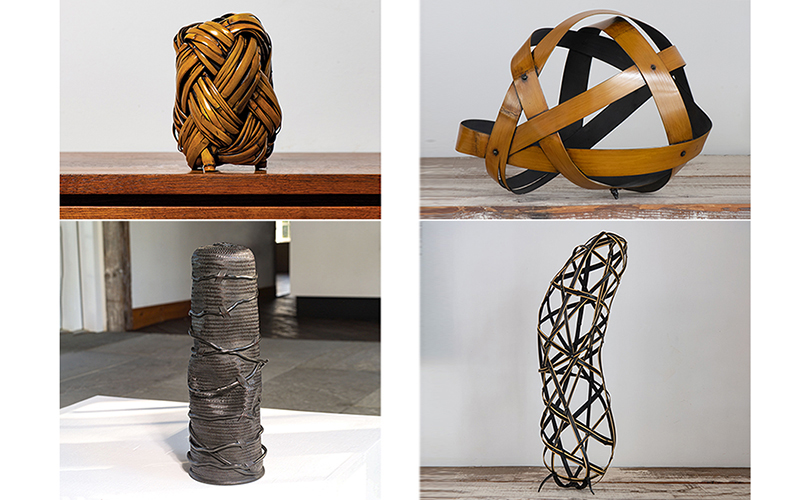
Collecting by artist can yield a broad mix of results. Choosing a category, like Polish, LQBTQ+ or self-taught artists, can result in considerable variation. Even a single artist, if it is one who experiments relentlessly like Jiro Yonezawa, can ground a surprising collection.

Bamboo works by Jiro Yonezawa
Jiro Yonezawa 109jy Yellow Lady Bug, 2021; 95jy Ecdysis , 2019; 64jy Ascension, 2006 92jy Orbit, 2019. Phots by Tom Grotta

There are four very different works by this artist in Ways of Seeing, and they don’t even include the wide bamboo spheres which he has created more recently. 

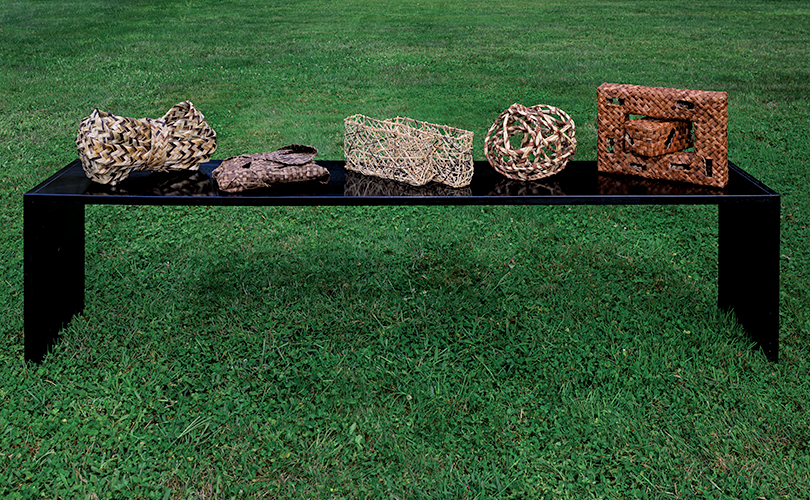
Works by Hisako Sekijima
Hisako Sekijima
650hs Suspended Decision, 2021; 620hs From 2 to 3 Dimensions V; 643-655hs A Line of Willow, 2020; 639-651hs Bound to Continue VII; 625hs Structural Discussion VI, 2016

Basketmaker Hisako Sekijima, who has worked in everything from cherry bark to kudzu is another example of someone who can be collected in multiples. Lia Cook is another — her practice has moved in several different and exciting ways through out her career.

Works by Lia Cook
Lia Cook 55lc Between Clouds , 1978; 4lc Crazy Quilt: Royal Remnants, 1988; 16lc Presence/Absence: Gather, 1998; 28lc Su Brain Tracts Renew, 2014. Photos by Tom Grotta

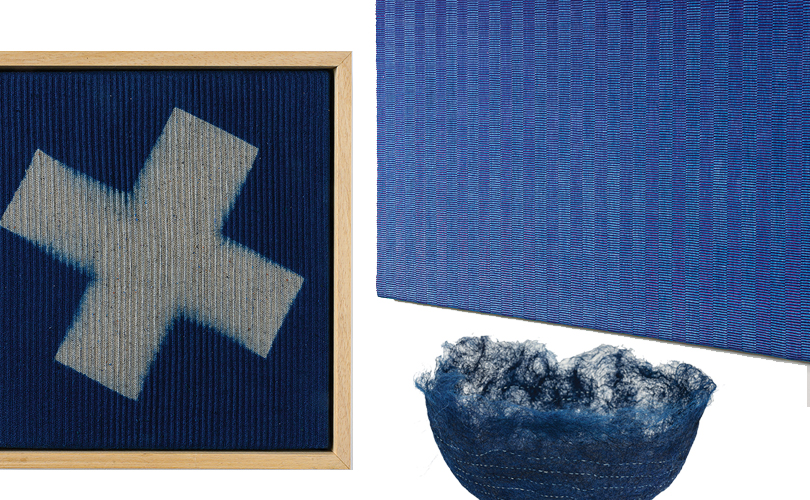
Then there are them groupings — we are showing art related to water, but even a color, like Picasso’s blue period, can be an energizing organizing principle. We’ve gathered weavings and objects that meet that criteria: 

Blue Textiles
12lt Cross, Laura Thomas, 2023; 25gs Blue Color Gradation, Grethe Sørensen, 2005; 14jle Blue Levels, Jeannet Leenderste, 2019. Photos by Tom Grotta

There are a few days to see our compilations in person. Or you can order the catalog: https://store.browngrotta.com/c-54-ways-of-seeing/

Happy Hunting!
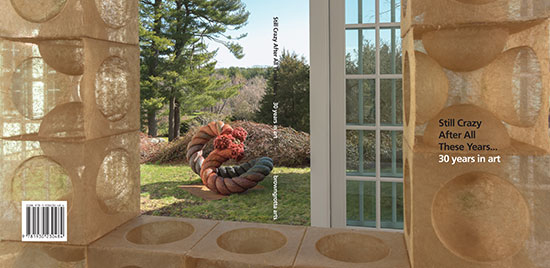
Ways of Seeing: how individuals envision and curate their art collections

Through September 29, 2024
browngrotta arts
276 Ridgefield Road
Wilton, CT 06897
https://browngrotta.com/exhibitions

Gallery Dates/Hours:
Monday, September 23rd through Saturday, September 28th: 10am to 5pm (40 visitors/ hour) Sunday, September 29th: 11am to 6pm [Final Day] (40 visitors/ hour)

Safety protocols: 
Reservations strongly encouraged; No narrow heels please (barn floors)


Look Up: installing art in the air

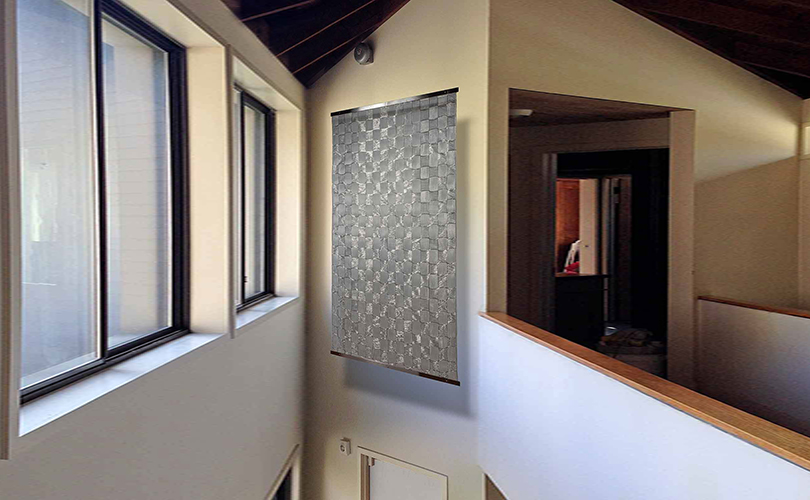
We often meet collectors who say “I love that piece, but I have no more room.” Our response — “What about your ceiling?” Work hung from above — in the center of the room, in front of a wall or window, or over a doorway can offer an exciting installation option.

Stainless steel Kyoko Kumai installation
Stainless Steel Tapestry by Kyoko Kumai installed from the ceiling in a two-story space in CT. Photo by Tom Grotta

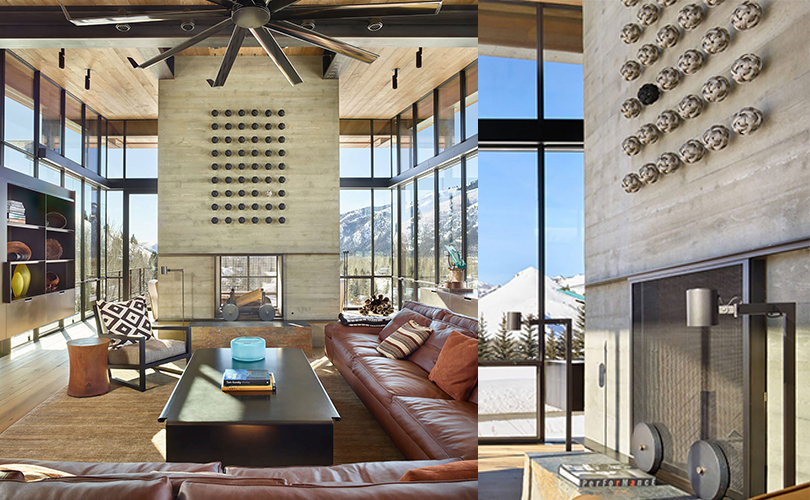
We may have anticipated what would become a decorating trend. “Suspended Art is the New Gallery Wall,” claimed Apartment Therapy in 2021. “If you’ve been able to visit a museum or gallery safely recently (or even caught a digital exhibition), then you might have noticed that artwork is starting to move off of walls,” wrote Danielle Blunder. “Framed pieces and canvases alike are being suspended straight from ceilings, and I have to say, it’s an ever-so-slight — but clever — alternative to the gallery wall that I’d consider trying in my home to create an unexpected focal point.” (“This Art Hanging Idea Will Make Your Favorite Pieces Look Even More Luxe,” Danielle Blunder, Apartment Therapy, August 14, 2021. https://www.apartmenttherapy.com/suspending-art-from-the-ceiling-36962165.) Blunder’s article gives several examples, including a designer who hung a framed photograph from the ceiling in front of a pair of heavy drapes — effectively creating a picture wall where there wasn’t one. Below are examples of works that could be ceiling-installed in front of a window.

Two Steel Dail Behennah stainless steel rope ball sculptures in Idaho home. Collector photo.

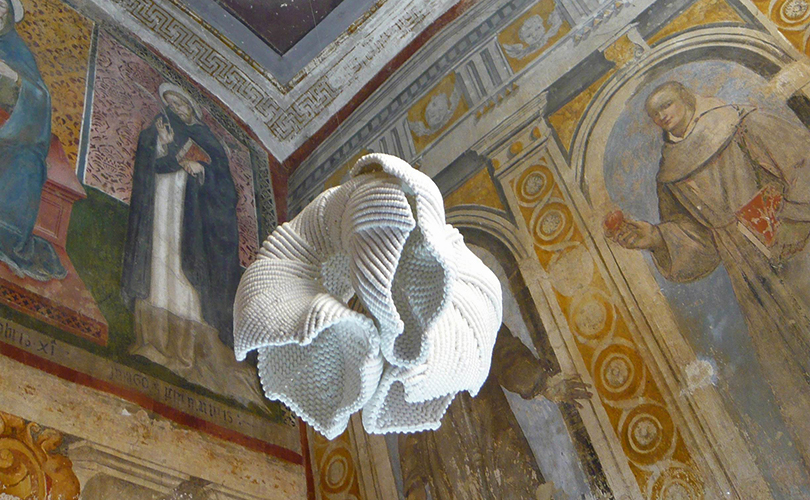
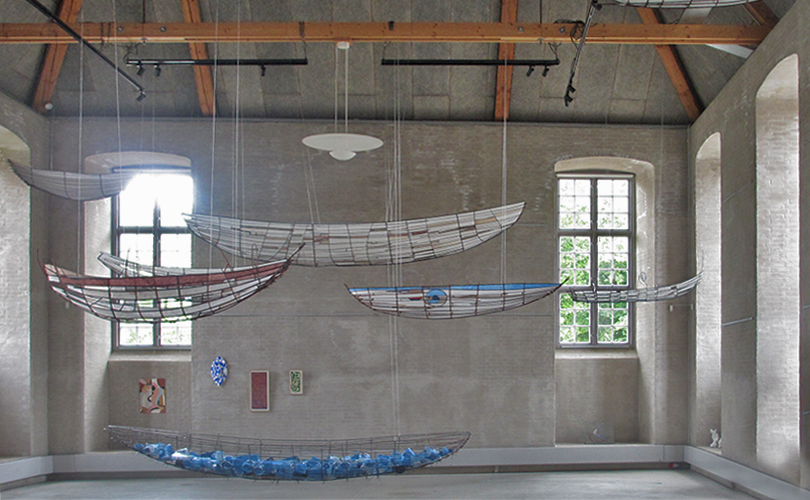
The results of a ceiling installation can be dramatic. Federica Luzzi’s contemporary fiber works have hung in Renaissance spaces, creating intriguing juxtapositions. Jane Balsgaard’s boats have graced churches — inspiring transcendent experiences. 

Federica Luzzi Chiesa Madonna del Pozzo, Spoleto, Italy installation
Solo exhibition of work by Federica Luzzi in Chiesa Madonna del Pozzo, Spoleto, Italy. Photo by the artist.
Jane Balsgaard boats
Jane Balsgaard’s elevated boats. Photo by the artist.

Grethe Wittrock’s lofty sail works create another incentive for using ceiling space.

Grethe Wittrock installation at the Fuller Craft Museum
Grethe Wittrock installation at the Fuller Craft Museum. Photo by Tom Grotta

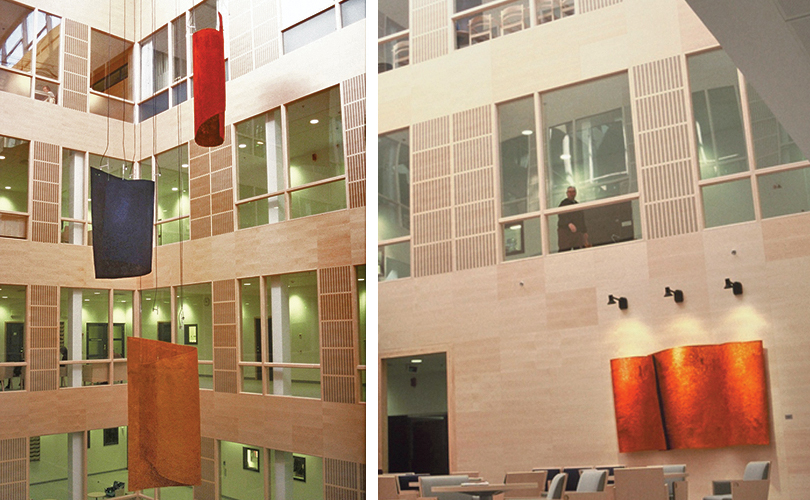
Mia Olsson’s sisal panels create still one more.

Mia Olsson installation at the Diagnostic Center, University Hospital of Skåne
Mia Olsson installation at the Diagnostic Center, University Hospital of Skåne (in Malmö) 2003-04. Photo by the artist.

And, of course, there’s always straight from the ceiling, like these works by Masakazu and Naomi Kobayashi. 

white Space Ship 2000 by Masakazu Kobayashi suspended in air
Space Ship 2000 by Masakazu Kobayashi, silk and wood, 31.5″ x 118″ x 35.5″, 2000. Photo by Tom Grotta.
Naomi Kobayashi's paper, Cosmic Ring
Naomi Kobayashi’s paper, Cosmic Ring. Photo by Tom Grotta

Contact us at art@browngrotta.com for ideas to create an aerial gallery in your space. Send us photos of the spot you have in mind and we can digitally install various options.


Art Out and About: Exhibitions Abroad

Things are (happily!) opening up all over. If you are located abroad or planning to travel , there are a number of exciting exhibitions to visit in person and to check out online.

Lookout installation in Spain, Photo by Tim Johnson

Lookout
Mas de Barberans, Spain
An exhibition of the best of European basketmaking, Lookout, has been curated by Monica Guilera and Tim Johnson at the Museu de la Pauma, Mas de Barberans in Catalonia, Spain until September 30, 2021. The collection includes work by Dail Behennah, Mary Butcher and makers from Poland, France, Italy, Crimea and elsewhere. There is a beautifully illustrated 52-page catalogue which you can view online here.

Participation, Archie Brennan, 1977, woven at Dovecot Studios. Image Courtesy of Dovecot Studios

Archie Brennan Goes Pop
Edinburgh, Scotland
The Dovecot Studios in Scotland, is celebrating the extraordinary career of Archie Brennan in Archie Brennan Goes Pop through August 21, 2021. The Studios describe the exhibition as: “Bringing together over 80 tapestries as well as archive material, this is a chance to delve into the world of a master of modern tapestry. Sharp, witty, and immensely talented, Brennan began his 60-year weaving career at Dovecot and was an innovator and iconoclast who inspired weavers all over the world from Papua New Guinea to Australia.” Brennan’s contribution as a pop artist has not been recognized, until now.

Light, Nancy Koenigsberg, coated copper wire, 47″ x 47″ x 8″, 2011, photo by Tom Grotta. Part of the Artapestry6 traveling exhibition. 

ArtTapestry 6
Jyväskylä, Finland
2020’s ArtTapestry finally opened and has begun traveling, opening in Denmark and now installed in Finland and the Museum of Central Finland in Jyväskylä, through September 2022. Next it travels to Sweden. 43 works of 40 artists, from 16 countries were selected. Among the artists included are Gudren Pagter of Denmark, Wlodzimierz Cygan of Poland, Nancy Koenigsberg of the US and Helena Hernmarck, originally from Sweden but now of the US. For more information and to see the catalog, visit here: https://static1.squarespace.com/static/5e55552503aff02749460670/t/602e819c27e2076281e2ef40/1613660584707/Artapestry6_catalog_2021.pdf

Sheila Hicks: Cosmic Arrivals
Milan, Italy
The Francesca Minini gallery opened an exhibition of Sheila Hick’s work last week in Milan. Sheila Hicks: Cosmic Arrivals runs until July 17, 2021 (http://www.francescaminini.it/exhibition). The gallery quotes Hicks in its press release, “Nature determines everything. Climate and light influence space. Each of my works inhabits in a particular place, respects its history, its temperature, its architecture.” Fibers are unmade and recreated in her hands, according to the release. Cloth is thus the cornerstone of a way of thinking that was developed under the influence of her mentor [Josef] Albers and continued through the search for a new construction of color and the reuse of textile fibers, often considered functional or decorative.

MAKING NUNO Japanese Textile Exhibition, Photo by JSouteyrat courtesy of the Japan House London

Making Nuno: Japanese Textile Innovation from Sudō Reiko
London, UK
Japan House in London hosts an extraordinary exhibition, Making Nuno: Japanese Textile Innovation from Sudō Reiko, showcasing the innovative work of Japanese textile designer Sudō Reiko. Sudō is renowned for pushing boundaries of textile production and championing new methods of sustainable manufacturing. She has been the design director of leading textile design firm Nuno for over 30 years and is a member of the Japan Design Committee. Her fabric designs combine Japanese craft traditions with new engineering techniques and unusual combinations of diverse materials such as silk, hand-made washi (Japanese paper), nylon tape and thermoplastic. Through July 11, 2021: https://www.japanhouselondon.uk/whats-on/2021/exhibition-making-nuno-japanese-textile-innovation-from-sudo-reiko/.

Textilés
Mons, France
BeCraft in collaboration with the City of Mons and Les Drapiers, Contemporary Art Center (Liège) has installed a provocative exhibit, Textilés through August 1, 2021. www.becraft.org

Happy travels!


UK Basketry Revisited at the Ruthin Craft Centre

Propius, Lizzie Farey, willow
© Lizzie Farey

Works by a notable group of artists are on exhibit in Basketry: Function & Ornament at the Ruthin Craft Centre in the UK through October 13, 2019. The exhibition, curated by Gregory Parsons, looks at current practice of some 30 makers from throughout the UK including bg artists Lizzie Farey, Dail Behennah, Tim Johnson, Rachel Max and Laura Ellen Bacon. Basketry: Function & Ornament brings together functional vernacular work from various parts of the country, alongside pieces that are sculptural and ornamental, providing “a survey of a craft that has been somewhat sidelined in times of great technological advances, yet offers a sustainable answer to so much of our modern day throw-away habits.”

Keeping Time Baskets
Keeping Time Baskets,
© Tim Johnson, 2019

Tim Johnson’s artistry is represented by baskets from his “Keeping Time” series. “These ‘keeping time’ baskets, like all baskets, take time to make,” he says. “The twining, folding and stitching that holds them together marks increments of being, a declaration of presence, the makers time is kept in the work, a trace of activity. “

Thatched and piled textile structures date back to Neolithic times, Johnson says, providing insulation and weather protection in our ancestors garments and shelters. “In the ‘keeping time’ series I am happy to work in this tradition and relate the basket’s captured spaces to the containment of ancient clothing and architecture.”

Ventus, Lizzie Farey, willow
© Lizzie Farey

The other artists in Basketry: Function & Ornament include influential makers Lois Walpole and Mary Butcher, the remarkable Irish basketmaker Joe Hogan and Lise Bech along with Mandy Coates, John Cowan, Mary Crabb, Jane Crisp, Jenny Crisp, Alison Dickens, Rosie Farey, Eddie Glew, Charlie Groves, Stella Harding, Peter Howcroft, Anna King, Annemarie O’Sullivan, Sarah Paramor, Dominic Parrette, Polly Pollock, Ruth Pybus & David Brown, Clare Revera, Lorna Singleton and Maggie Smith.
RUTHIN CRAFT CENTRE
THE CENTRE FOR THE APPLIED ARTS
PARK ROAD, RUTHIN
DENBIGHSHIRE
LL15 1BB
OPEN DAILY
10.00AM – 5.30PM
ADMISSION FREE


Who Said What: Josef Albers

“Easy to know that diamonds– are precious good to know that rubies — have depth but more–to see–that pebbles–are miraculous.”
Josef Albers

Pebble Sphere Sculpture by Dail Behennah
Large Pebble Sphere by Dail Behennah
Detail of The Seashore stone ribbons by Keiji Nio
Detail of The Seashore by Keiji Nio, polyester, aramid fiber 48” x 48,” 2019
Thirty Year stone Calendar Art by Sue Lawty
Triginta Annis (Thirty Years in Latin), Sue Lawty, natural stone on gesso 27” x 26”, 2017


Collaborations: Creativity x 2

Artist collaborations account for some of the greatest pieces ever made. For example, the 1874 collaborative exhibition between Monet, Renoir, Morisot, Cézanne in which the called themselves the “Société Anonyme des Artes” helped establish the artists in the art world. In fact, it was a snide remark by art critic Louise Leroy of the show, which he called ‘The Exhibition of Impressionists” that established the impressionist style and movement (Financial Times).

Dail Behennah’s Studio Work-board. Photo: Dail Behennah via In.Dialogue

“History has proved time and again that two creative minds can sometimes be better than one,” explains Nadja Bozovic of Agora Gallery. “Even today, artists are increasing collaborating with each other and with creative professions from other fields.” Laura Ellen Bacon and Chris Drury have both collaborated with or inspired creators in different fields, Bacon with composer Helen Grime and Drury with poet Kay Syrad. Historically, many renowned artists have collaborated with their significant others. Artists and couple Debra Sachs and Marilyn Keating were the focus of a collaborative exhibition at the Stockton University Art Gallery in 2016. Collaborations between couples, which require much trust and respect, fuse the differing talents, ideas and creative energies of the individuals. In the end, artists don’t see collaborations as a way to create masterpieces, instead, artists see it as a way to force themselves into uncomfortable territory and break old habits while also breaking new ground. Several of browngrotta arts’artists have been part of these fruitful arrangements, including:


Dail Behennah and Jessica Turrell

Dail Behennah and Jessica Turrell started a joint adventure with their collaborative blog, In.dialogue. Through the years Behennah and Turrell have had numerous conversations about their work. They originally thought that they would create a body of work on a common them, but the more they explored the idea the more they realized it was the conversation around their work they valued the most. “Trust is an important aspect of a project,” Turrell explains “we need to be able to challenge and support each other in the sometimes difficult  process of thinking and talking about our work, and of pushing ourselves to do something new.”

Laura Ellen Bacon's Woven Space at the Chatsworth House. Photo: The Chatsworth House Trust

Laura Ellen Bacon’s Woven Space at the Chatsworth House. Photo: The Chatsworth House Trust

Laura Ellen Bacon & Helen Grime

Composer Helen Grime’s piece Woven Space was inspired by the work of Laura Ellen Bacon. Grime was inspired by the way in which Bacon’s sculptures embrace, surround and engulf architecture and natural landscape. Grime’s Woven Space comes from Bacon’s 2009 willow sculpture in the Chatsworth House gardens. Grime did not set out to create a literal musical representation of Bacon’s work sculptural work, instead, she worked to parallel the intertwining limbs of Bacon’s sculptural work with her score.

Debra Sachs and Marilyn Keating:

Debra Sachs and her partner Marilyn Keating held a collaborative exhibition at the Stockton University Art Gallery in 2016. The exhibition, titled Going Solo and Tandem, featured individual and joint work the couple produced over the course of 30 years. Sachs and Keating, who met in the early 1970s during their time as students at the Moore College of Art in Philadelphia, are both influenced by their surroundings. Keating, who primarily works with wood, creates depictions of kites, birds, bugs and dogs. Sachs, who mainly works in the form of abstract paintings and three-dimensional pieces, takes a more design-oriented approach to her work. “It’s more about colors and shapes of landscapes,” explains Sachs. “For Marilyn, it’s more about fish and whatever kinds of things you can find. More Narrative stuff. She can make a bird on a band saw. Those are skills I don’t even have.” Though their influences and methods are quite different, the two are able to meld their style when working together. Typically, Keating builds the structures and Sachs designs and paints the structures’ surface.

Sounding, Donald Fortesque and Lawrence LaBianca, 2008. Photo by Lawrence LaBianca

Sounding, Donald Fortesque and Lawrence LaBianca, 2008. Photo by Lawrence LaBianca.

Chris Drury & Kay Syrad

In May, Chris Drury collaborated with Kay Syrad to host a five-day art.earth intensive. Throughout the intensive, titled “Context and Form: Art and Writing,” Drury shared how he works with form, including whirlpool, vortex, fractal and wave patterns.  In order to work with such patterns, Drury explores and investigates how the earth unfolds these specific aesthetic forms. Syrad, a novelist and poet, had collaborated with Drury on a number of art-text projects. Participants immersed themselves in the landscape by walking, collecting and working on pieces during short lectures, shared conversation and studio time.

Lawrence LaBianca and Donald Fortescue

In 2011, Lawrence LaBianca collaborated with Donald Fortescue to create Sounding for the Milwaukee Art Museum’s exhibition The New Materiality: Digital Dialogues at the Boundaries of Contemporary Craft. The artists selected for the exhibition were established American crafts artists who blended traditional craft materials (i.e. fabric, glass, wood, metal and clay) with digital technologies, therefore, blurring the boundaries between the traditionally established categories of craft, art and design. Sounding, which happened to be one of the largest pieces in the exhibition, explored the relationship between technology and nature. In making Sounding, Fortescue and LaBiance were inspired by Herman Melville’s Moby Dick. The artists’ fascination with Moby Dick came in part from “its detailed evocation of the bygone crafts of sailing and whaling and the struggles of men at sea.” The two lowered a cabriole-legged table into the ocean near Pillar Point in Half Moon Bay with a hydrophone and left in in the ocean for two months to record the ambient sound. “Sounding provides a direct link to the living oceans surrounding the Bay Area through sight, sound, smell, and touch. In both form and concept it also links to the historical, literary, and metaphorical oceans of Moby-Dick,” explains LaBianca


ART ASSEMBLED FEATURED IN JUNE

The start to summer has been quite busy for browngrotta arts. At the beginning of June browngrotta arts’ opened Plunge: explorations from above and below in collaboration with the New Bedford Art Museum in New Bedford, Massachusetts. Soon after came the launch of Cross Currents: Art Inspired by Water, an online companion exhibition to Plunge. We’ve featured four works on our website as New This Week—three sculptures and a tapestry.

Reaching Out by Karyl Sisson

Reaching Out by Karyl Sisson, vintage zipper tape and thread, 8″ x 56″ x 45″, 2013

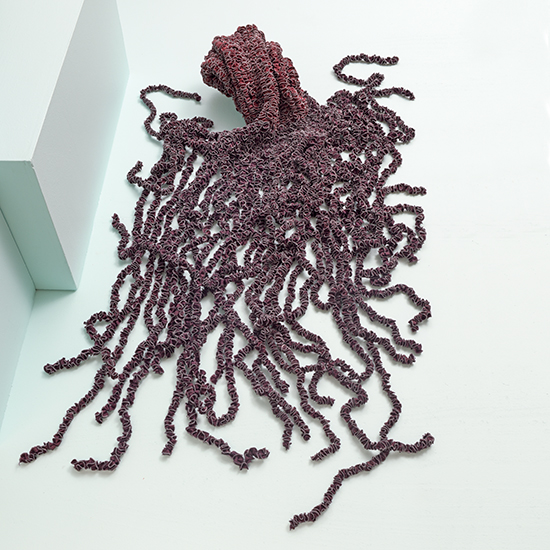
Made with vintage zipper tape and thread, Karyl Sisson’s Reaching Out cloaks the floor in a deep red. Many of Karyl’s sculptures resemble sea creatures, Reaching Out, which can be viewed in Plunge, resembles an octopus lingering along the seafloor. Rather than starting with a set idea of what she wants to create, Sisson lets the materials and processes dictate the form of her pieces.

61hh

On the Dock by Helena Hernmarck, wool, 43″ x 57″, 2009

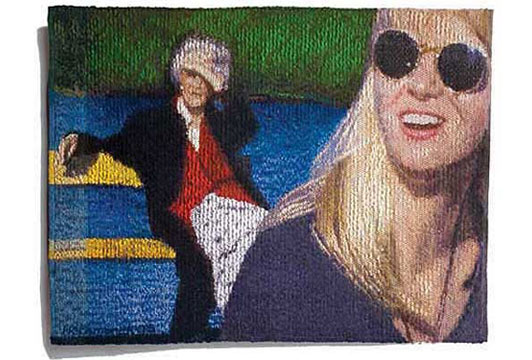
Helena Hernmarcks’ tapestry On the Dock depicts two women enjoying the sunshine. Hernmarck. On the Dock can also be viewed with other water-influenced works in Cross Currents, at browngrotta.com.  

Peninsula by Mary Merkel-Hess

Peninsula by Mary Merkel-Hess, paper, paper cord
22” x 22” x 44”, 2016

Peninsula, a sculpture made with paper and paper cord, reflects Mary Merkel-Hess’ study of the natural world. Using a technique of her own creation, Merkel-Hess builds each piece using a combination of collage and paper mâché with inclusions of materials such as reed, paper cord, wood, and drawings.  

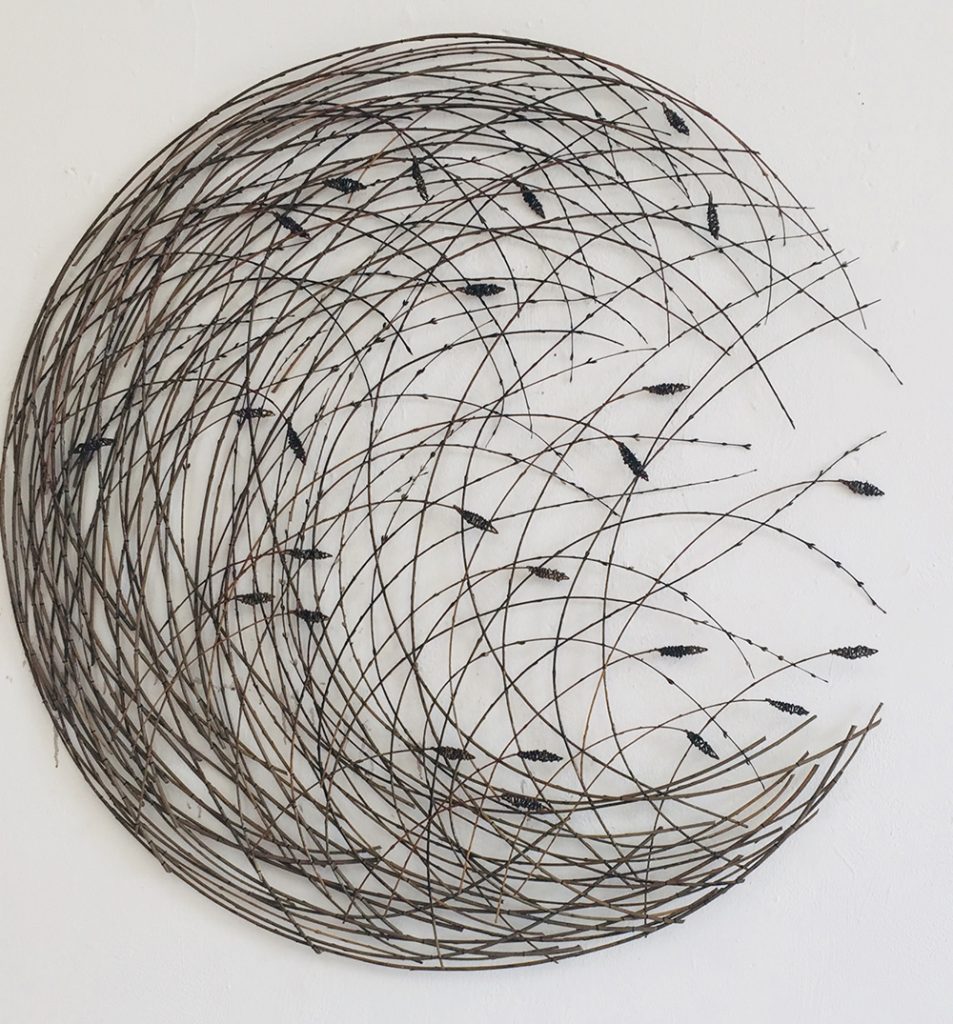
Intrusion by Dail Behennah, scorched and waxed white willow; silver black patinated and plated pins, 2″ x 22″ x 22″; 2014

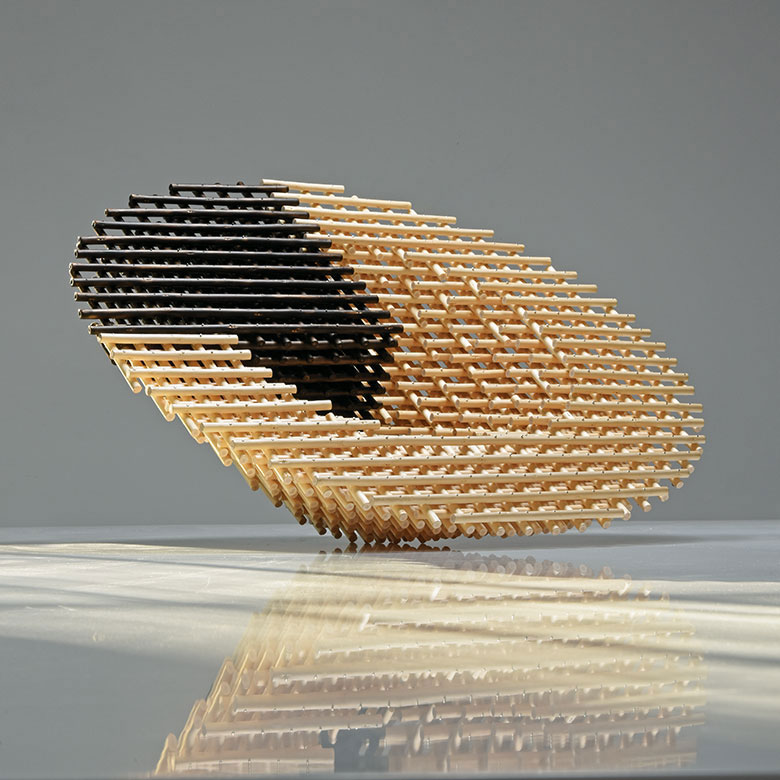
Intrusion, a white willow basket made by Dail Behennah draws in the eye with its grid-like basket architecture. Dail drew inspiration for this piece from igneous intrusions into landscapes. As the softer rocks are worn away the peaks and tors remain hard-edged outcrops on the surface.


Still Crazy…30 Years: The Catalog

Still Crazy...30 Years: The Catalog Cover Naoko Serino and Mary Yagi

Still Crazy…30 Years: The Catalog

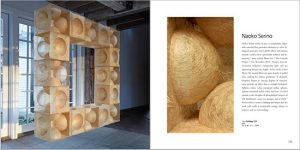
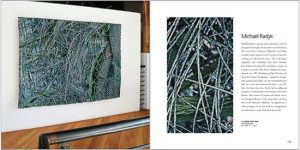
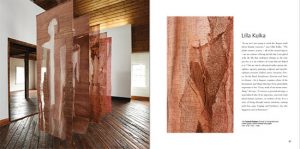
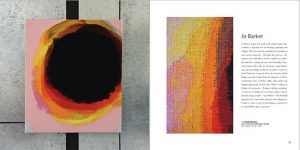
It’s big! It’s beautiful (if we do say so ourselves –and we do)! The catalog for our 30th anniversary is now available on our new shopping cart. The catalog — our 46th volume — contains 196 pages (plus the cover), 186 color photographs of work by 83 artists, artist statements, biographies, details and installation shots.

Still Crazy...30 Years: The Catalog

Naoko Serino Spread

Still Crazy...30 Years: The Catalog

Michael Radyk Spread

Still Crazy...30 Years: The Catalog

Lilla Kulka Spread

Still Crazy...30 Years: The Catalog

Jo Barker Spread

The essay, is by Janet Koplos, a longtime editor at Art in America magazine, a contributing editor to Fiberarts, and a guest editor of American Craft. She is the author of Contemporary Japanese Sculpture (Abbeville, 1990) and co-author of Makers: A History of American Studio Craft (University of North Carolina Press, 2010). We have included a few sample spreads here. Each includes a full-page image of a work, a detail shot and an artist’s statement. There is additional artists’ biographical information in the back of the book. Still Crazy After All These Years…30 years in art can be purchased at www.browngrotta.com http://store.browngrotta.
com/still-crazy-after-all-these-years-30-years-in-art/.
Our shopping cart is mobile-device friendly and we now take PayPal.