Tag: Carol Shaw-Sutton

Artist Focus: Carol Shaw-Sutton

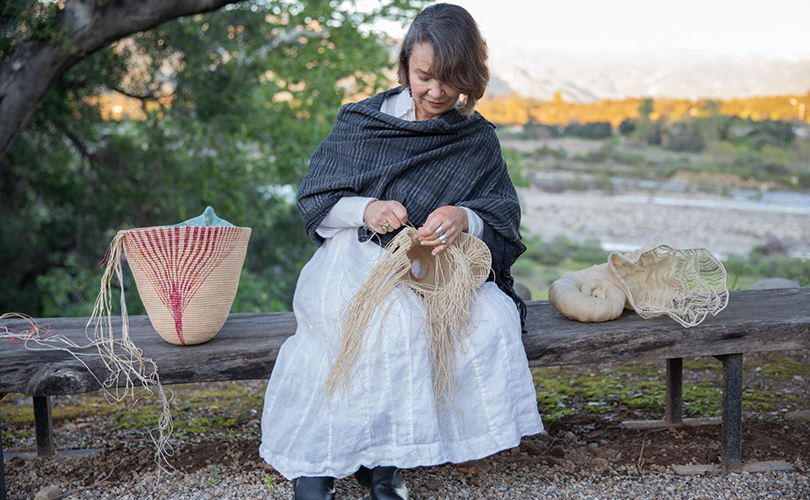
Carol Shaw-Sutton working
photo: Cyrus Sutton

In an art landscape increasingly drawn to fiber and textile practices, Carol Shaw-Sutton stands out as someone who has been doing this work — with rigor, curiosity, and consistency — since long before it was considered mainstream. Her practice is a reminder that fiber is a language capable of carrying myth, memory, and meaning as powerfully as any other.
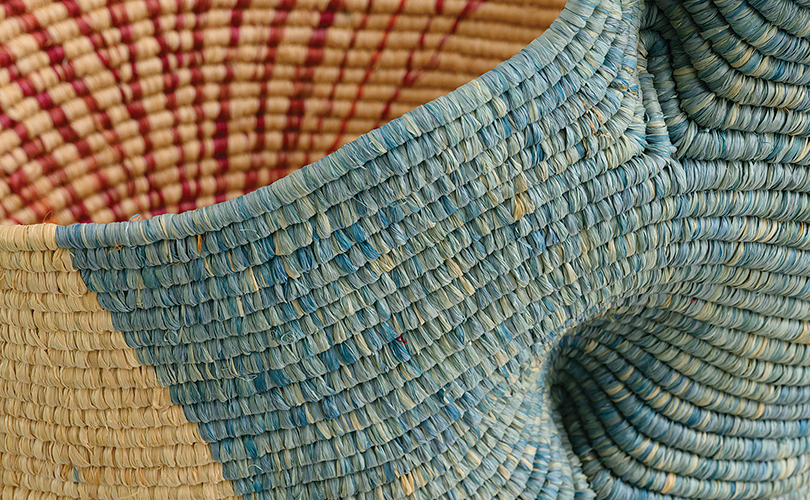
Detail of Sea of the Mother
Detail: 10css Sea of the Mother, Carol Shaw-Sutton, coiled linen and raffia, 13″ x 13.5″ x 12″, 2025-26. photo by Tom Grotta

Some artists find their medium. Carol Shaw-Sutton’s found her. At age five, recovering from burns to her hands, she was taught to knit as part of her physical therapy. What began as a clinical exercise in dexterity became something else entirely — a quiet, absorbing way of looking closely at the world. That early encounter with thread set the course for a career that has spanned more than five decades and established her as a respected voice in contemporary fiber art.
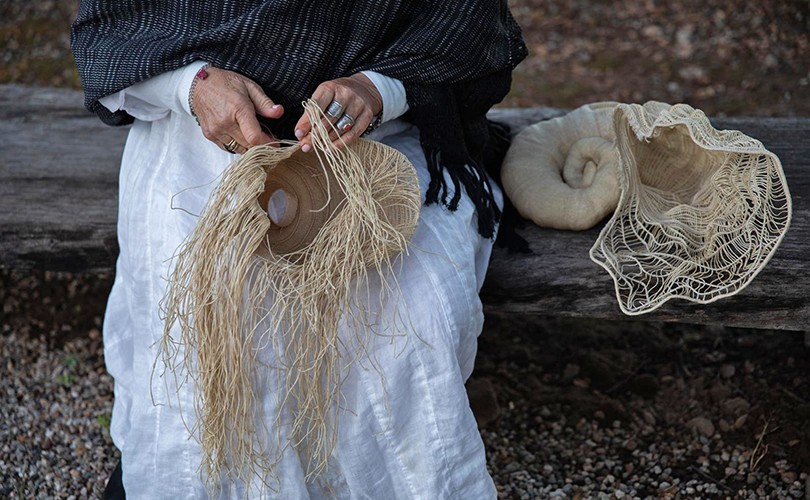
photo: Cyrus Sutton

A Life Woven from Many Threads
Shaw-Sutton’s visual language didn’t come from a single source. As a child, road trips through the American Southwest introduced her to Indigenous craft traditions, including the coiled ceremonial baskets of the Hopi. Around the same time, she watched her family’s Japanese gardener bundle backyard vines using nothing but the vines themselves — a small, practical act that left a lasting impression about how material could be both functional and beautiful.
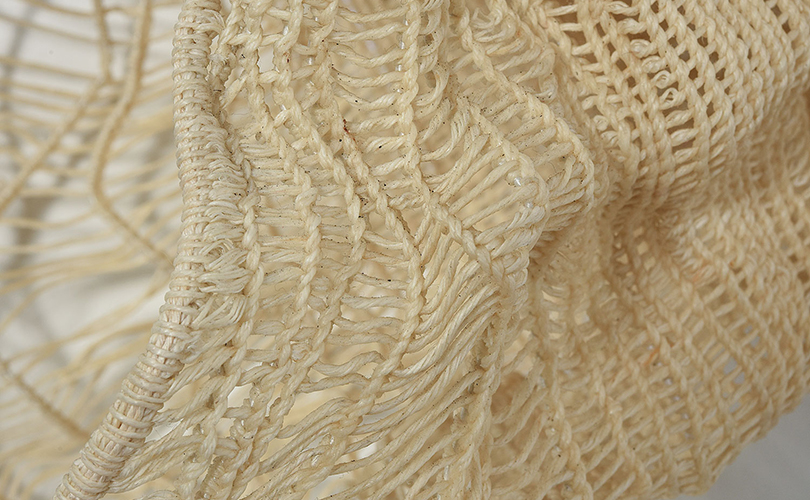
Detail: 7css the White Sound, twined waxed linen, 22″ x 15″ x 9″, 2010. photo by Tom Grotta

These influences converge in a practice built on what she has called ancient and modern processes working side by side: coiling, wrapping, looping, knotting, and weaving, often using natural materials like willow, linen, wood, and feathers. The results are sculptural, immersive, and frequently large in scale — installations that can stretch many feet across a gallery while still carrying the intimacy of handwork.
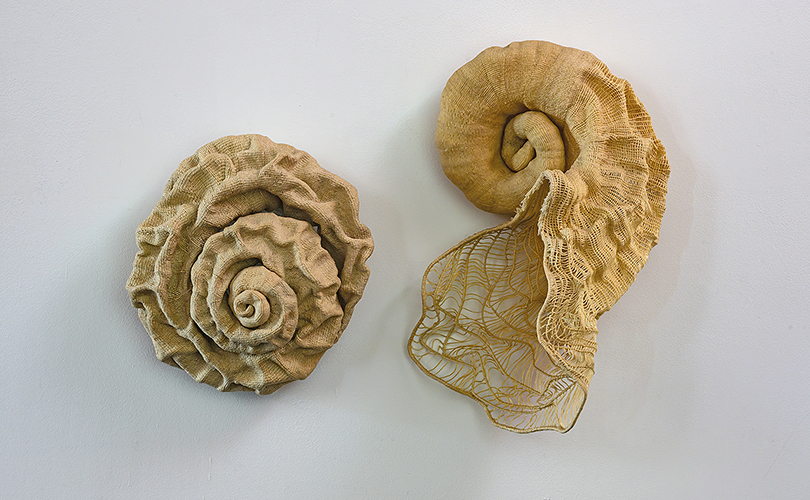
Installation view of Inward and White Sound
9css Inward, twined linen & steel wire, 15″ x 16″ x 5″, 2010; 7css the White Sound, twined waxed linen, 22″ x 15″ x 9″, 2010. photo by Tom Grotta

Themes That Run Through the Work
Critics and curators consistently point to a recurring set of concerns in Shaw-Sutton’s output: loss, longing, repair, and the search for wholeness — cultural and environmental alike. Writer and critic Betty Park described her pieces as objects laden with meaning, functioning less like literal narratives and more like myths open to many readings.
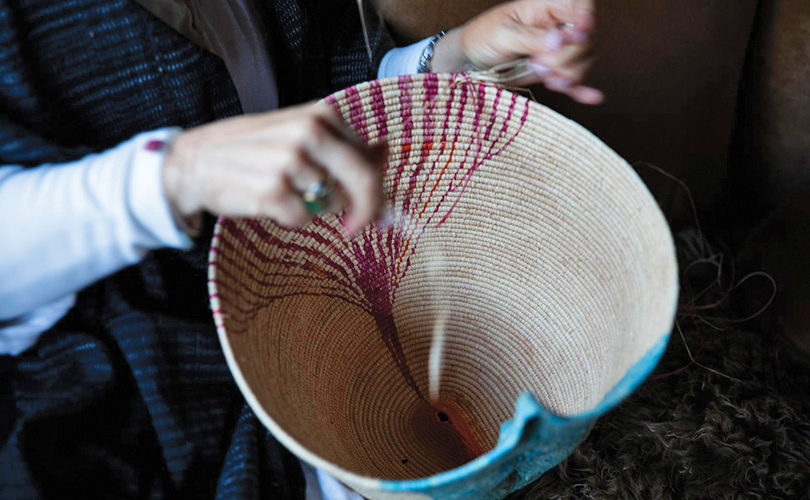
stitching on Sea of the Mother
working on Sea of the Mother, Carol Shaw-Sutton, coiled linen and raffia, 13″ x 13.5″ x 12″, 2025-26. photo: Cyrus Sutton

That mythic quality is deliberate. Shaw-Sutton has spoken about wanting her work to sit at the intersection of the deeply personal and the broadly human — pieces that reference her own body and history while also gesturing toward larger questions about nature, culture, and time. Titles and series such as Our Bones Are Made of Stardust and Staying Alive reflect this dual register: intimate and cosmic in the same breath.
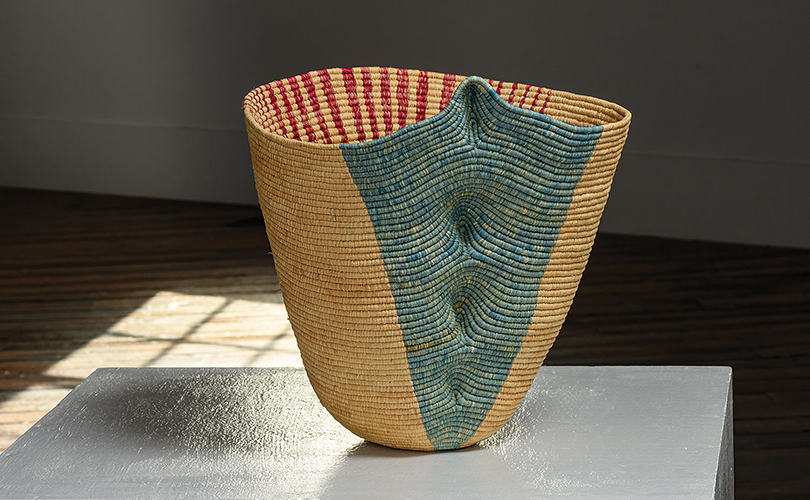
10css Sea of the Mother, Carol Shaw-Sutton, coiled linen and raffia, 13″ x 13.5″ x 12″, 2025-26. photo by Tom Grotta

Recognition and Collections
Shaw-Sutton’s accolades include multiple National Endowment for the Arts Individual Artist Fellowships, a Fellowship from the American Craft Council, and honors from institutions in Japan and France, among others. Her work resides in numerous major public collections, including the de Young Museum in San Francisco, the Oakland Museum of California, the Museum of Arts and Design in New York, the Mint Museum in North Carolina, and the Musée des Beaux-Arts in Lausanne, Switzerland — a testament to how thoroughly fiber art rooted in ancient technique has found a home in the contemporary art world.
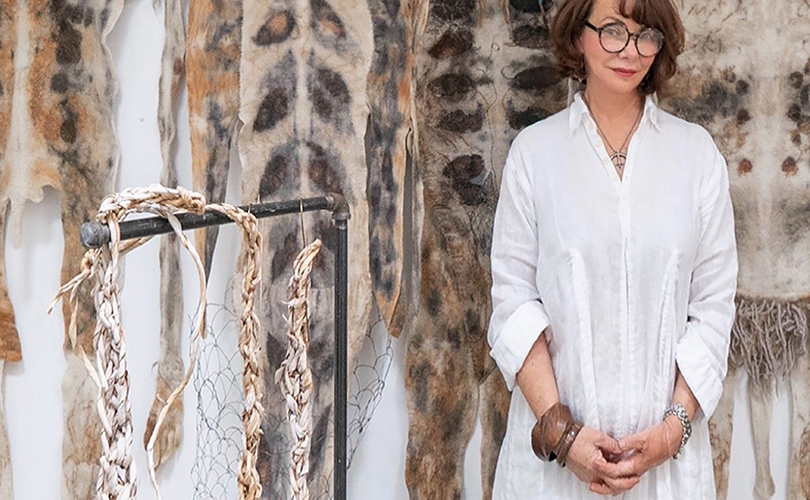
portrait of Carol Shaw-Sutton
photo: Cyrus Sutton

Continuous Significance
For over 30 years, Shaw-Sutton taught at California State University, Long Beach, where she chaired the Fiber Program starting in 1990. She is now Professor Emerita there, having shaped generations of fiber artists during her tenure. Her influence extends well beyond her own studio practice — a reminder that some of the most significant contributions in art happen in the classroom as well as the gallery.

“At its root, Shaw-Sutton’s work is traditional,” Betty Park has written, “yet also highly original, elegant and eloquent in its form and concept. She has stepped into an unknown land that somehow feels like home.” For anyone interested in where contemporary textile art has been, and where it might be going, Carol Shaw-Sutton’s body of work is essential viewing.
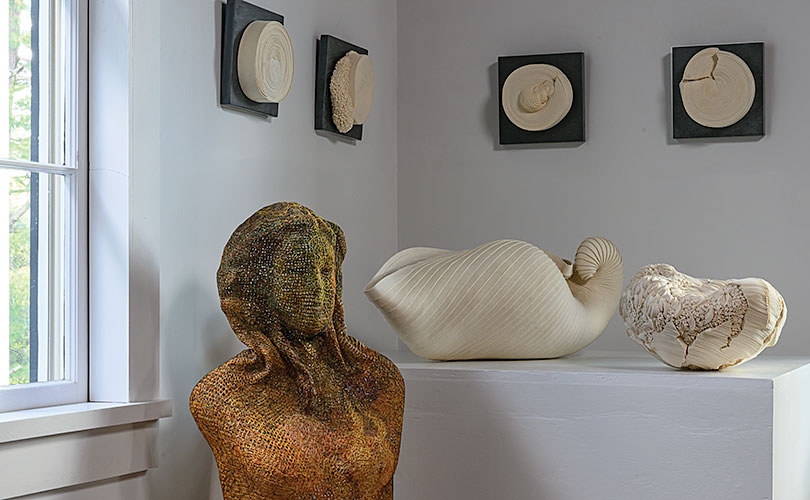
Materials in Conversation: Transformations Opens this Week

In the right hands, a strip of bark becomes a narrative. Linen becomes landscape. Seaweed becomes an accent, steel mesh becomes a tapestry, and a cloth measuring tape — repurposed, reimagined — becomes art. 

Simone Pheulpin, Mercedes Vicente, Norma Minkowitz
Cotton works by Simone Pheulpin, Mercedes Vicente, Norma Minkowitz. Photo by Tom Grotta

This is the animating premise of Transformations: dialogues in art and material which opens this Saturday, May 9th at browngrotta arts. The exhibition that asks a deceptively simple question: what happens when artists stop treating materials as additives and start treating them as collaborators? The answer, it turns out, is profound.

Material Is Not Neutral
We tend to think of materials as passive — the stuff through which ideas pass on their way to becoming art. The artists in Transformations challenge that assumption at every turn. In the contemporary art context, materiality isn’t just about physical substance. It encompasses everything a material carries with it: weight, surface, history, cultural memory, expressive charge. A piece of linen isn’t just woven thread. It’s centuries of labor, landscape, and touch.

linen works work by
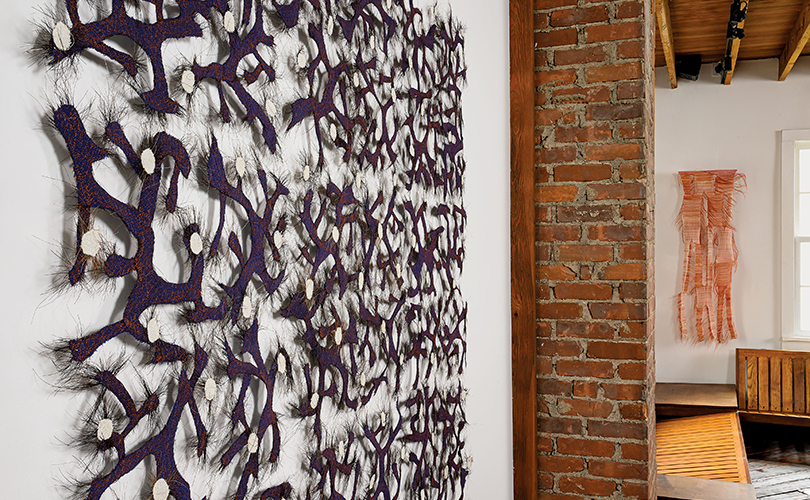
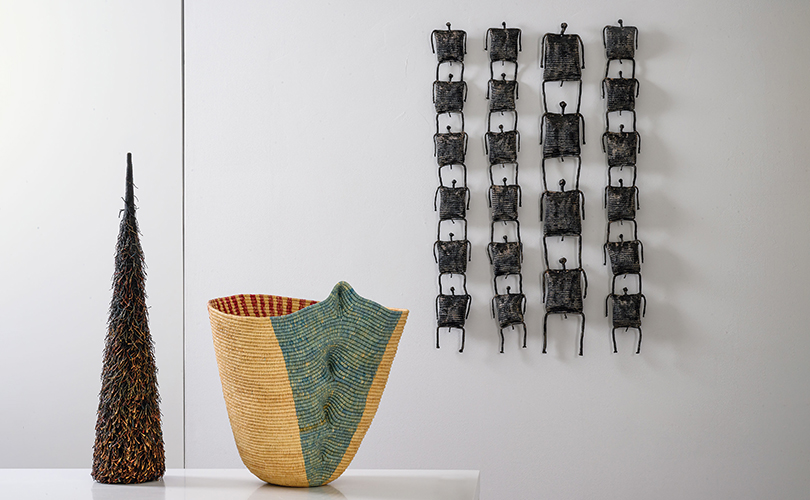
Linen works by Jane Sauer, Carol Shaw-Sutton, Mary Giles. Photo by Tom Grotta

System and Surprise
Transformations proves that the range of works that a simple material can inspire is nearly endless. Carol Shaw-Sutton, Chiyoko Tanaka, Sara Brennan, Mary Giles, Merja Keskinen, and Jane Sauer all work with Linen. In Shaw-Sutton’s hands the material becomes a molded vessel. Under Chiyoko Tanaka’s ministrations, woven linen fabric is returned to its essential threads, transformed into an artifact. For Sara Brennan, woven linen serves as a canvas. From a distance, her works appear to be abstract paintings. A close up view reveals a textured weaving using dozens of shades. For Jane Sauer and Mary Giles, linen is a sculptural medium.

Gyöngy Laky, Kyoko Kumai
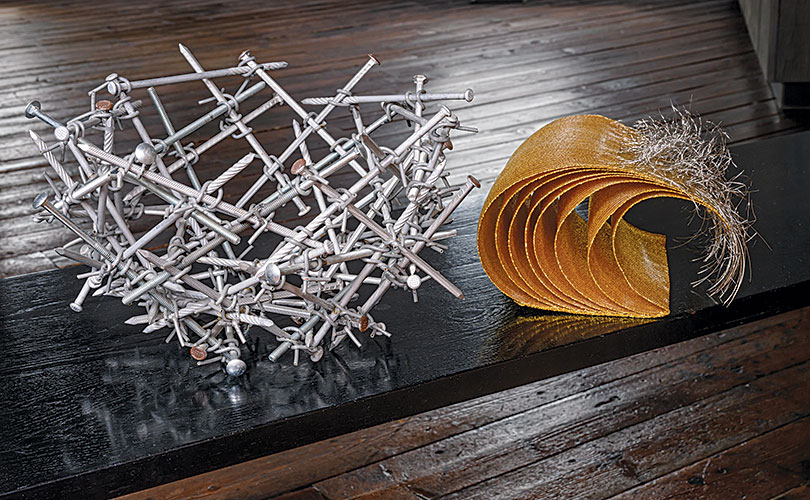
Metal works by Gyöngy Laky, Kyoko Kumai. Photo by Tom Grotta

Material as More
Metal is a canopied category in Transformations. Artists consider it as thread— from gold filaments, to lead extrusions, to bent wire of copper and brass. Kyoko Kumai’s spun steel threads float. Gyöngy Laky turns nails and wire into an artful assemblage. Sue Lawty weaves with bast fibers — raffia, hemp, nettle, linen — and elemental lead, and assembles carefully ordered stones drawn from beaches and riverbeds. She pursues qualities inherently given by the chosen substance, seeking “an understated restraint, balance, tension, rhythm: an essential stillness.”

Yasuhisa Kohyama and Toshiko Takaezu
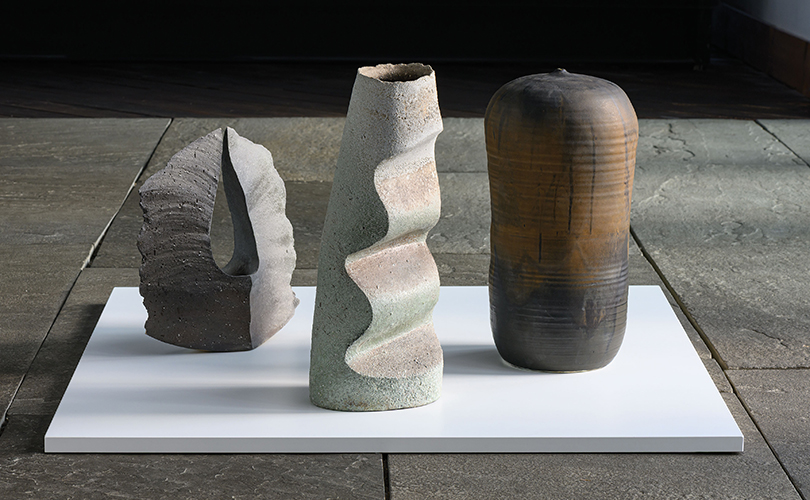
Clay works by Yasuhisa Kohyama, Toshiko Takaezu. Photo by Tom Grotta

Same Input, Different Outcome
Toshiko Takaezu and Yasuhisa Kohyama both devoted their lives to clay, but their practices reveal just how vast the distance can be within a single medium. Takaezu’s closed ceramic forms — rounded, glazed, often containing a small stone or rattle sealed inside — are intimate and quietly mysterious, their surfaces richly colored and their shapes suggesting the human body. There is a sense of the maker’s hand coaxing something from the earth. Kohyama, by contrast, surrenders control to the fire itself. He builds by hand and fires with wood, never applying glaze; color and surface are entirely the product of ash movement and the object’s position within the kiln. Where Takaezu brings clay close — shaping it into vessels that hold secrets — Kohyama sends it into an elemental process and receives back something ancient and unpredictable.

Marian Bijlenga, Marianne Kemp
Horsehair works by Marian Bijlenga, Marianne Kemp. Tom Grotta

What These Works Carry
What unites the artists in Transformations isn’t a shared aesthetic or a shared geography. It’s a shared conviction: that choosing a material is a serious act, that working with it is as meaningful as the finished object, and that what results carries something more than form.

It carries thought. History. Culture. The trace of a hand that knew exactly what it was doing — and trusted the material to meet it halfway.

Join us at Transformations: dialogues in art and material (May 9-17) at browngrotta arts in Wilton, CT. Or order the 164-page catalog from browngrotta.com.


Gone Fishing!

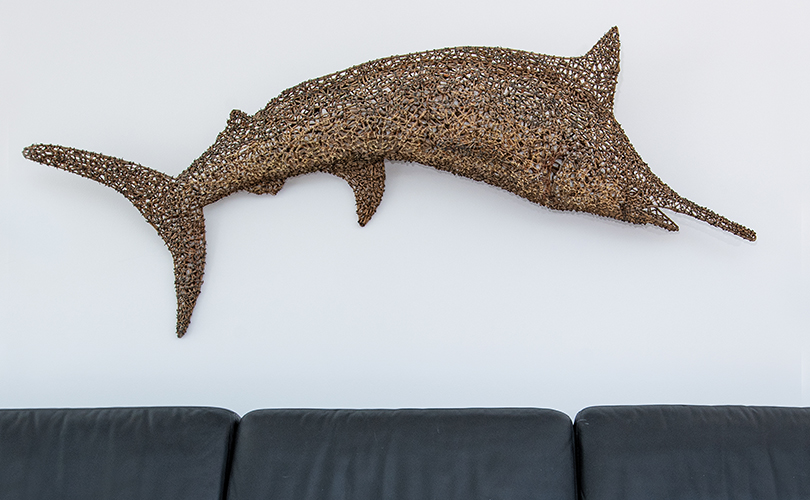
John McQueen willow billfish
John McQueen, Just Under the Record, willow sticks and waxed string, 30″ x 72″ x 12″, 1998. Photo by Tom Grotta

We are off to spend some of August in Maine. 

Judy Mulford Fish gord
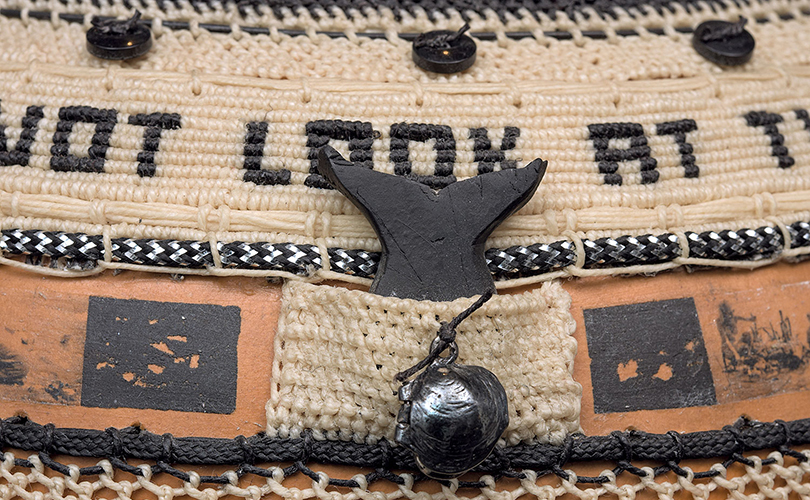
Judy Mulford, A Day at the Beach, mixed media, 6″ x 9.5″ x 9.5″, 1997. Photo by Tom Grotta

We are using this week’s arttextstyle to share some images of art that reflects some of our favorite things about the place.

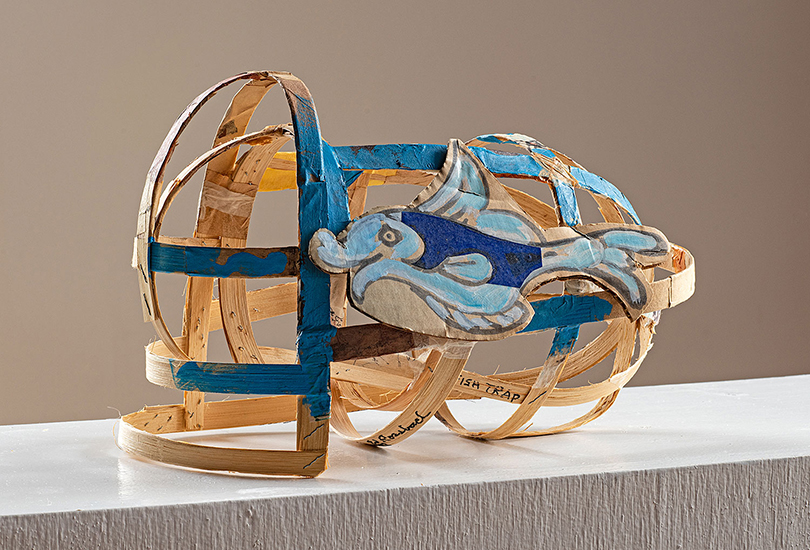
Ed Rossbachs Fish Trap basket
Ed Rossbach, Fish Trap, 14″ x 11″ x 11″, 1988. Photo by Tom Grotta

Fish would be one. Watching, catching, and eating them.

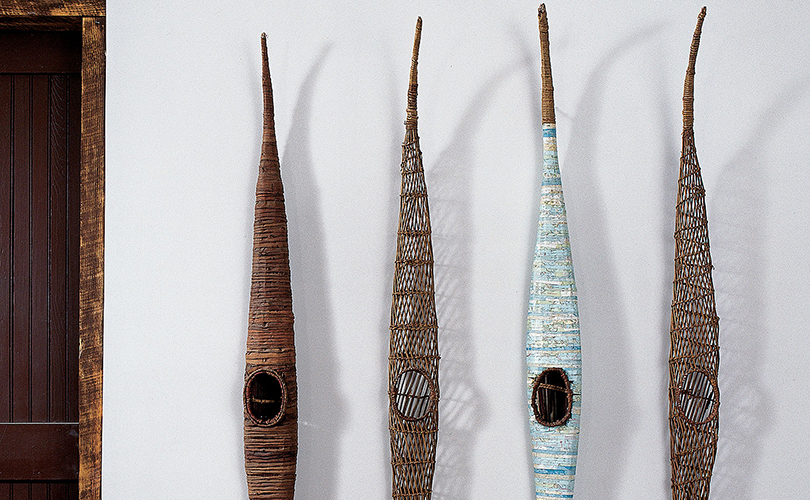
Chris Drury Kayaks
Chris Drury, Kayak Bundles, willow bark and cloth sea charts from Greenland and Outer Hebrides, 79″ x 55″ x 12″, 1994. Photo by Tom Grotta

Water travel is another. We love to watch boats and kayak.

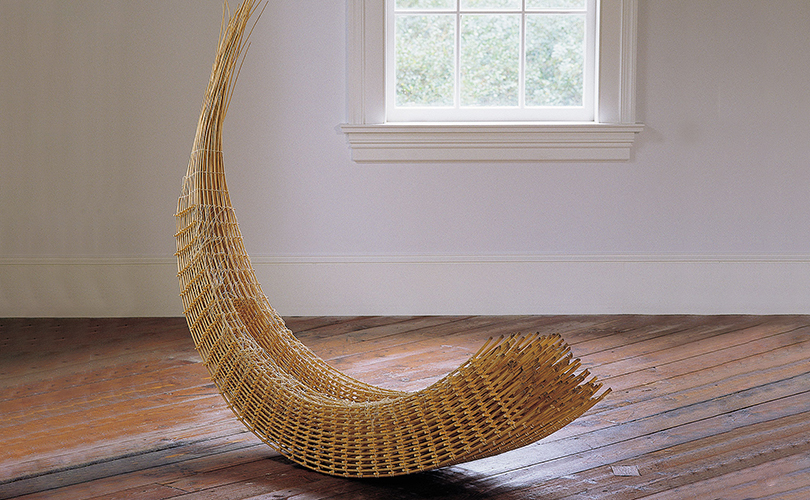
Carol Shaw-Sutton willow Canoe
Carol Shaw-Sutton, Spirit Canoe, willow construction with waxed linen, 56″ x 60″ x 28″, 1999. Photo by Tom Grotta

We love to watch boats and kayak.

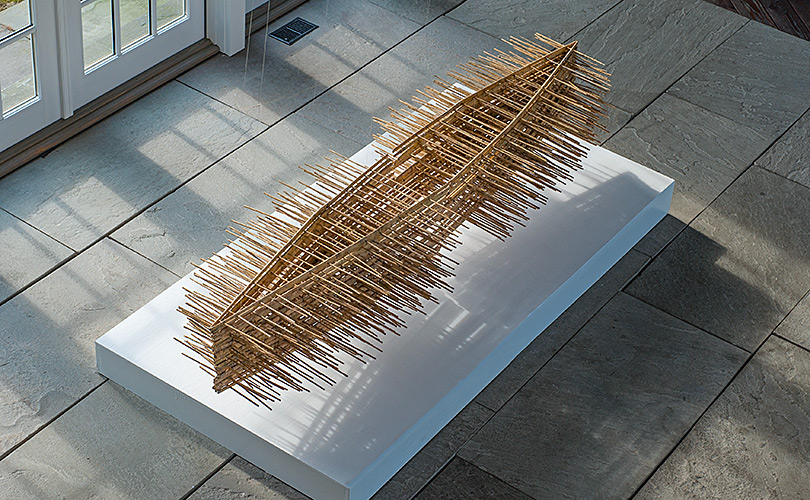
Bamboo boat by Dona Anderson
Dona Anderson, Crossing Over, bamboo kendo (martial art sticks), patterened paper, thread, 15″ x 94″ x 30″, 2008. Photo by tom grotta

We’ll be back next week with Art Assembled.

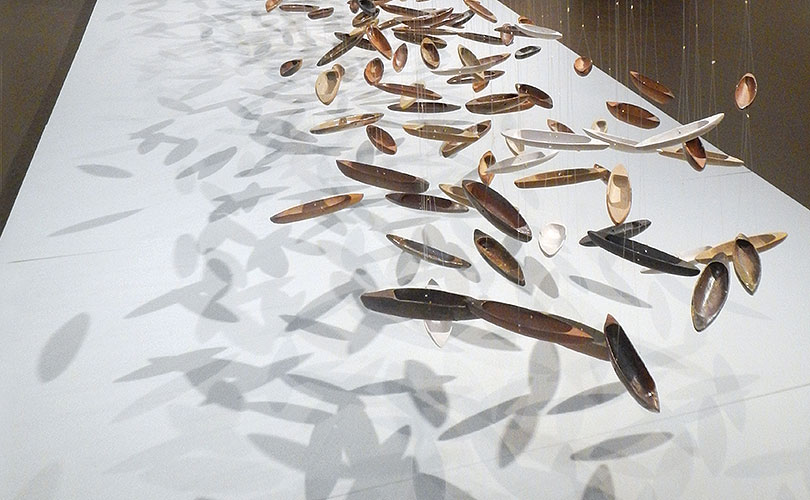
Annette Bellamy floating boats
Annette Bellamy Floating Installation, Fuller Craft Museum Installation. Photo by Tom Grotta

Happy Summer!!


Still Crazy…30 Years: The Catalog

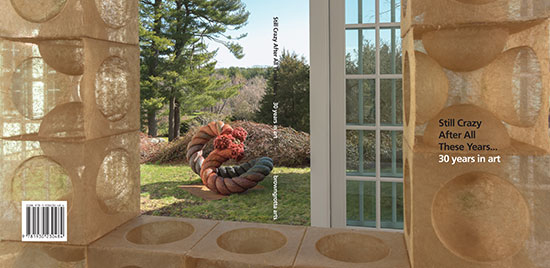
Still Crazy...30 Years: The Catalog Cover Naoko Serino and Mary Yagi

Still Crazy…30 Years: The Catalog

It’s big! It’s beautiful (if we do say so ourselves –and we do)! The catalog for our 30th anniversary is now available on our new shopping cart. The catalog — our 46th volume — contains 196 pages (plus the cover), 186 color photographs of work by 83 artists, artist statements, biographies, details and installation shots.

Still Crazy...30 Years: The Catalog

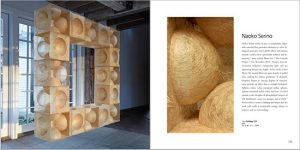
Naoko Serino Spread

Still Crazy...30 Years: The Catalog

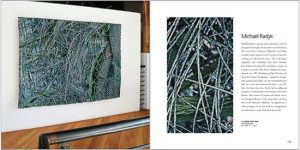
Michael Radyk Spread

Still Crazy...30 Years: The Catalog

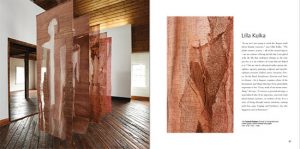
Lilla Kulka Spread

Still Crazy...30 Years: The Catalog

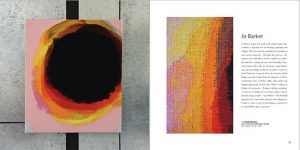
Jo Barker Spread

The essay, is by Janet Koplos, a longtime editor at Art in America magazine, a contributing editor to Fiberarts, and a guest editor of American Craft. She is the author of Contemporary Japanese Sculpture (Abbeville, 1990) and co-author of Makers: A History of American Studio Craft (University of North Carolina Press, 2010). We have included a few sample spreads here. Each includes a full-page image of a work, a detail shot and an artist’s statement. There is additional artists’ biographical information in the back of the book. Still Crazy After All These Years…30 years in art can be purchased at www.browngrotta.com http://store.browngrotta.
com/still-crazy-after-all-these-years-30-years-in-art/.
Our shopping cart is mobile-device friendly and we now take PayPal.


Still Crazy After All These Years…30 years in art Preview: Hello Again!

For our 30th anniversary exhibition, we’ve invited six artists that had worked with browngrotta arts in previous years. Three; Leon Niehues, John Garrett and Kari Lonning, work in vessel forms. Laura Foster Nicholson and Eva create weavings and Carol Shaw-Sutton sculptural forms of fiber.

Woven Open Neck by Leon Niehues. Photo by Tom Grotta

Leon Niehues, a studio basket maker, creates his vessel forms from the young white oak trees that grow in his immediate area of the Ozarks. While using traditional splint techniques, he has added new construction methods and simple design elements that dramatically change his oak baskets into exciting contemporary pieces. We’ve captured several samples of his designs in a catalog that features his work and that of Mary Merkel-Hess. View them at: http://www.browngrotta.com/Pages/c15.php.

Emerging from Chaos by Kari Lønning. Photo by Tom Grotta

Best known for her double-walled constructions and a complex-weaving process she refers to as her “hairy technique,” Kari Lønning works extensively with graphic patterns, using both bold and subtle color schemes. Lønning’s work is also featured in a browngrotta arts’ exhibition catalog, Mary Giles/Kari Lønning, which can be viewed at http://www.browngrotta.com/Pages/c11.php.

Age Basket No.4 by John Garrett, recycled metals. Photo by Tom Grotta

A weaver and teacher of experimental basketry, John Garrett’s weaving materials consist of aluminum, steel, brass, or cooper in slat or wire form. Many of his creative pieces are included in the permanent collections of museums nationwide. View samples of his weaving in our catalog, Dorothy Gill Barnes and John Garrett: http://www.browngrotta.com/Pages/c14.php.

Being Here by Laura Foster Nicholson. Photo by Tom Grotta

Laura Foster Nicholson is a textile artist known for her powerful hand-woven tapestries that feature whimsical, engaging imagery. Her artwork is featured in several museum collections, including the Art Institute of Chicago, The Minneapolis Institute of Art, and the Denver Art Museum, among others. Nicholson was included in the 10th Wave II: New Textile and Fiber Wall Art: http://www.browngrotta.com/Pages/c18.php.

Ist All History by Eva Vargo. Photo by Tom Grotta

Eva Vargö fuses paper and linen-thread materials into her weaving techniques to employ paper craft artwork. Many of her pieces are inspired by her own life experiences and also by integrating the various materials she discovers on her travels across the world. Vargö is from Sweden, but has lived in Korea as well as Japan. Vargo was included in the Retro/Prospective: 25+ Years of Art Textiles and Sculpture: http://www.browngrotta.com/Pages/c25.php

White Sound by Carol Shaw-Sutton. Photo by Tom Grotta

A participant in browngrotta arts’ 25 for the 25th: Glancing Back, Gazing Ahead http://www.browngrotta.com/Pages/c25.php, Carol Shaw-Sutton creates sculptural forms of fiber. Her artwork often consists of personal narrative objects and installations that utilize both ancient and modern textile. Her new work focuses on our inter relationship to each other, which is reflected in images of the human form as organic flowing substance.

Still Crazy After All These Years…30 years in art runs from
April 22nd to 30th at browngrotta arts, 276 Ridgefield, Connecticut. For more information, visit: http://www.browngrotta.com/Pages/calendar.php.