Art Assembled: New This Week October


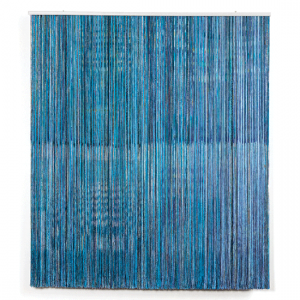
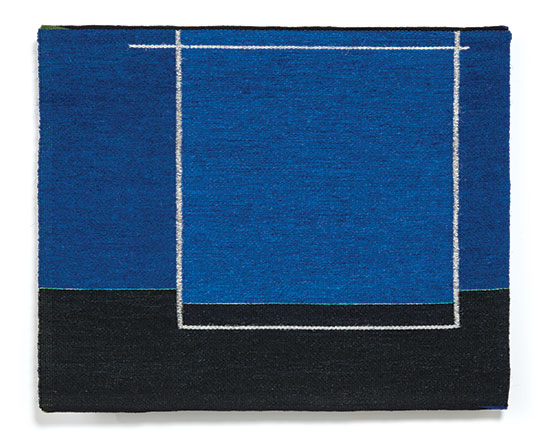
Yellow, Blue and Black, Gudrun Pagter, sisal, linen/flax, 42.5” x 95”, 2017

We started off October with Yellow, Blue and Black, a tapestry made by Danish artist Gudrun Pagter. When making tapestries, Pagter draws inspiration from architecture, using lines and shapes to achieve spatial tension. “I am engaged in a constant process of exploring the picture through a highly disciplined structuring of geometrical form elements and lines through a restricted color spectrum,” states Pagter. The expansive gray line in Yellow, Black and Blue not only creates a sense of movement but also “transforms a two-dimensional plane into a three-dimensional space.” Despite the name, there are actually many colors in Yellow, Black and Blue; Pagter mixed in light pink and yellow linen threads with the yellow sisal, deep green flax with the blue sisal and blue and black flax with the black sisal. Incorporating other colors into Yellow, Black and Blue helped Pagter to bring the tapestry to life.


Black 15 Boxes Steel mesh, electroplated gold, gold leaf, painted acrylic and patinated thread, 43" × 65" × 3", 2016

Black 15 Boxes Steel mesh, Jin-Sook So, electroplated gold, gold leaf, painted acrylic and patinated thread, 43″ × 65″ × 3″, 2016

Jin-Sook So’s Black 15 Boxes immediately grabs the viewers eye with its grid-like structure. In Black 15 Boxes So creates a grid pushing each of the 15 electroplated gold boxes off the wall, giving them a two-dimensional quality which flattens the boxes without completely altering the perspective. While the ability to peek inside So’s boxes and bowls captivates the viewer, the material’s ability to look like paper, silk and steel bend the viewer’s perception.


, Biagga (Sea Wind), Ulla-Maija Vikman, painted viscose and linen, 67 x 71 in, 2010

Biagga (Sea Wind), Ulla-Maija Vikman, painted viscose and linen, 67 x 71 in, 2010

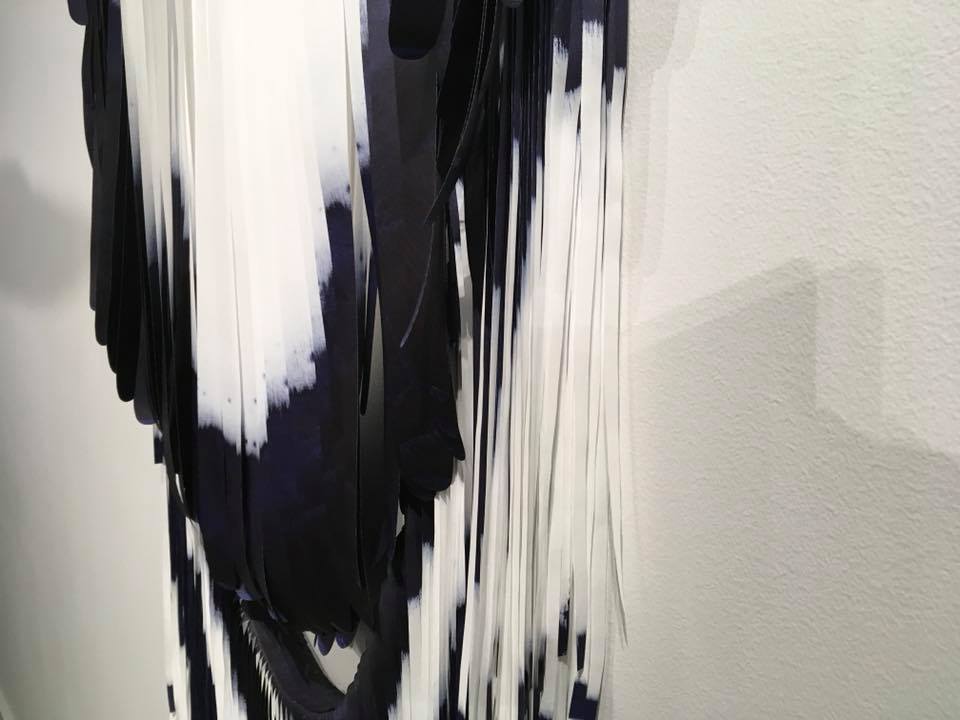
When making Biagga (Sea Wind) Ulla-Maija Vikman was inspired by his material, linen. The vertical threads create their own natural rhythm complemented by their horizontal patterns. Vikman paints and repaints the threads two or three times in order to get the tones he desires. Vikman always hangs his work off the wall to give the impression of a free fall. The slightest breeze or draft moves will move the threads, altering the light and form of the piece, having a kinetic effect that brings the work to life.


 Left: White Shell Tongue n. 1, Federica Luzzi ,two fine art prints on “baritata” paper, 66.875” x 24.75” x 1.25”, 2006 Right: White Shell Tongue n. 2, Federica Luzzi, 78.625” x 32.75” x 1.25”, 2006

Left: White Shell Tongue n. 1, Federica Luzzi ,two fine art prints on “baritata” paper, 66.875” x 24.75” x 1.25”, 2006 Right: White Shell Tongue n. 2, Federica Luzzi, 78.625” x 32.75” x 1.25”, 2006

Federica Luzzi’s work focuses on nature, specifically leaves, bark and plant seeds. Above all, Luzzi is fascinated with plant seed, it is for that reason all of her work features the title Shell. “I am interested in their small and sinuous shapes, which assure their mobility from trees, and in their vital capacity of shutting themselves until the moment they mysteriously wake up, the seeds like ‘sleeper beauties,’ ” states Luzzi. The White Shell Tongue prints were born after a variety of conversations with researchers at the National Institutes of Physics in Frascati about the concepts of dark matter, antimatter, nuclear, subnuclear physics and the particle accelerator. The prints “suggest a primordial voice, speaking in a language now unknown to us but original, a pure, reductive writing externality, with wrappings and empties shells,” Luzzi explains. The vertical loom and tapestry art tools allow Luzzi to work with vegetal fibers from their frame to three-dimensionality.  Luzzi’s works are presented like a dimensional installation as if they are fragments of a galaxy: macrocosm and microcosm together.

 Federica Luzzi’s work focuses on nature, specifically leaves, bark and plant seeds. Above all, Luzzi is fascinated with plant seed, it is for that reason all of her work features the title Shell. “I am interested in their small and sinuous shapes, which assure their mobility from trees, and in their vital capacity of shutting themselves until the moment they mysteriously wake up, the seeds like ‘sleeper beauties,’ ” states Luzzi. The White Shell Tongue prints were born after a variety of conversations with researchers at the National Institute of Physics in Frascati about the concepts of dark matter, antimatter, nuclear, subnuclear physics and the particle accelerator. The prints “suggest a primordial voice, speaking in a language now unknown to us but original, a pure, reductive writing externality, with wrappings and empties shells,” Luzzi explains. The vertical loom and tapestry art tools allow Luzzi to work with vegetal fibers from their frame to three-dimensionality.  Luzzi’s works are presented like a dimensional installation as if they are fragments of a galaxy: macrocosm and microcosm together.

Art Out and About: Exhibits in the US and Abroad

Lia Cook's work on display at Coded Threads: Textiles & Technologies

Lia Cook’s work on display at Coded Threads: Textiles & Technologies, Photo: Lia Cook

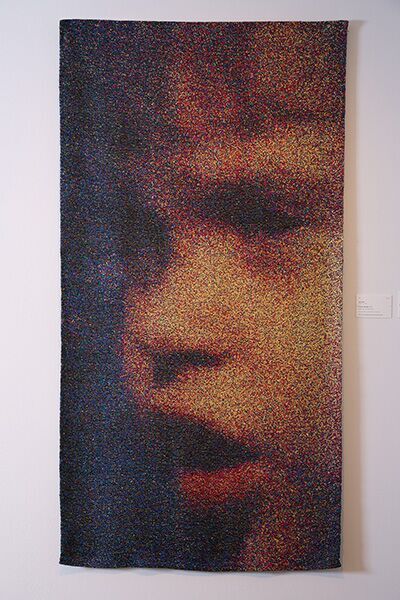
Art of interest can be found across the US and abroad this winter. Out West, Lia Cook and browngrotta art’s friend Carol Westfall are both featured in Coded Threads: Textiles and Technology in the Western Gallery at Western Washington University. The fourteen artists in the exhibition were chosen for their use of new textile technologies. Despite the fact that technology is changing lives and art rapidly, the earliest textile techniques are still practiced (basket weaving, indigo dying, etc.) The exhibition recognizes the importance of maintaining a connection to the past while seizing the opportunities that lie ahead with innovative textiles technology. Artists are now using spider silk, nanotechnology, biocouture, smart textiles (conductive threads, fiber optics) and Arduino microprocessors as materials for their work. The creation and use of these materials have fostered collaborative relationships between scientists, artist, and engineers. For example, Lia Cook works in collaboration with neuroscientists to investigate the natural response to woven faces by mapping the responses in the brain. She uses DSI (Diffusion Spectrum Imaging of the brain) and TrackVis software to view the structural neuronal connections between parts of the brain and then integrates the resulting “fiber tracks” with weaving materials to make up the woven translation of an image. Coded Threads: Textiles and Technology is on display in the Western Gallery at Western Washington University until December 8th. Do not miss the chance to glimpse at the future of textile art!

Flow: The Carved Paper Work of Jennifer Falck Linssen 

Flow: The Carved Paper Work of Jennifer Falck Linssen, Photo: Jennifer Falck Linssen

If you’re in the Midwest make sure to go see Flow: The Carved Paper Work of Jennifer Falck Linssen before it closes at the Talley Gallery in Bemidji, Minnesota on October 27th. “The impetus for Flow began one cold January week when Wisconsin artist Jennifer Falck Linssen escaped the frozen north for the lush green vegetation and mild temperatures of the Florida coast,” notes Laura Goliaszewski, the Talley’s Gallery Director. As Linssen was kayaking and hiking, she noticed the large population of birds making their new homes along the coast. Linssen began to consider how the diverse landscapes and climates of Florida and Wisconsin serve the seasonal needs of birds. A series of swooping, swerving wall sculptures that send viewers’ eyes aloft is the result.

Are We The Same?, Norma Minkowitz, mixed media, 12” x 28” x 26.375”, 2016, Photo: Tom Grotta

Of Art and Craft, on display in the Flinn Gallery at the Greenwich Library, on the East Coast, explores the division between Art and Craft. The exhibition displays creations of glass, clay and fiber, which are all traditionally considered “craft materials.” However, the talent and skill present in all of the resulting pieces without a doubt make the pieces art, in the view of the exhibition’s curators. The exhibition features clay sculptures from Jocelyn Braxton Armstrong, Susan Eisen, and Phyllis Kudder Sullivan; glass work from Kathleen Mulcahy, Josh Simpson, and Adam Waimon; as well as fiber explorations by Emily Barletta, Ellen Schiffman and browngrotta arts artist Norma Minkowitz. Minkowitz, a resident of Westport, CT, has seven pieces featured in the exhibition, all of which use a variety of materials. Minkowitz’s piece in the exhibition Goodbye My Friend exemplifies her commitment to conveying the intimacy and imperfection of the human hand. “The interlacing technique that I use makes it possible for me to convey the fragile, the hidden, and the mysterious qualities of my work, in psychological statements that invite the viewer to interpret and contemplate my art,” explains Minkowtiz. Minkowitz is set to give a talk at the Flinn Gallery on November 5th at 2pm. Of Art and Craft will be on display at the Flinn Gallery from October 26th through December 6th.

This Way and That, 2013, Gyöngy Laky. Cut and assembled manzanita wood painted with acrylic paint and secured with trim screws. Photo: Bruce M. White© Lloyd Cotsen, 2016

This Way and That, 2013, Gyöngy Laky. Cut and assembled manzanita wood painted with acrylic paint and secured with trim screws. Photo: Bruce M. White© Lloyd Cotsen, 2016

The Box Project: Uncommon Threads, which was previously at the Racine Art Museum, is currently on display in the Textile Museum at The George Washington University Museum. Art collector Lloyd Costen challenged 36 international fiber artist to create a piece of work in the parameters of an archival box. 10 browngrotta arts artist have work on display in The Box ProjectHelena HernmarckAgenta HobinKiyomi IwataLewis KnaussNaomi KobayashiNancy KoenigsbergGyöngy LakyHeidrun SchimmelHisako Sekijima and Sherri Smith. The exhibition will be on display at The George Washington University Museum through January 29th.

Essence Iki at the Dronninglund Kunstcenter in Denmark, Photo: Yuko Takada Keller


Out side the US, Essence Iki at the Dronninglund Kunstcenter in Denmark, celebrates 150 years of diplomatic cooperation between Japan and Denmark. Browngrotta arts artist Jane Balsgaard is one of six artists featured in the exhibtion, three from Denmark and three from Japan. Featured are objects, room dividers and Balsgaard’s majestic, airbound boats of paper. The exhibition will be on display at the Dronninglund Kunstcenter until December 11th

Open Form, Laura Ellen Bacon, willow, 2016, Photo: Matthew Ling

Open Form, Laura Ellen Bacon, willow, 2016, Photo: Matthew Ling

BBC Woman’s Hour Craft Prize nominee Laura Ellen Bacon also has a solo exhibition on display at the National Centre for Craft & Design in Sleaford, UK. The exhibition, titled Rooted in Instinct demonstrates the process Bacon goes through when crafting a new sculpture or installation while also displaying a variety of Bacon’s new thatching, weaving and knotting techniques. Once an old seed warehouse, The National Centre for Craft & Design is the largest venue in England entirely dedicated to the exhibition, celebration, support, and promotion of national and international contemporary craft and design. Rooted in Instinct will be on display until January 14th.

In Lodz, Poland, at the Central Museum of Textiles, this winter will see an exhibition of the work of Magdalena Abakanowicz and, in January, a solo exhibition of the work of Włodzimierz Cygan that will include his luminous Tapping series made of optical fibers. For more information, watch the Museum’s website HERE

Art News: Publications

A number of interesting and varied press reports, books and catalogs have crossed our desk at browngrotta arts in the last couple of months. The truly glorious Spoken Through Clay,  Native Pottery of the Southwest: The Eric S. Dobkin Collection, edited by Charles S. King (Museum of New Mexico Press) is one example. The volume documents 300 vessels in the Dobkin collection in large-scale, meticulously corrected color photos, a collection that has a “unique and distinctive focus on aesthetic of the vessel.” King has organized the works into several sections: Dreamers, Traditionalists, Transitionists, Modernists, Visonaries, Transformists and Synchronicity. The Navajo artists — mostly Pueblo — provide uniques insights into the works.
The catalog from Ane Henriksen’s recent exhibition in Denmark, Ane Henriksen in collaboration with Jens Søndergaard, is another.  Visual artist and weaver Ane Henriksen returned to Museum Thy in Denmark in June, with “a handful of great pictures,” inspired by the painter Jens Søndergaard’s works. The catalog chronicles that exhibition. For a number of years, Ane Henriksen has worked with image theories, including at the National Workshops at the Old Dock in Copenhagen. For 25 years, she has lived in Thy and created woven pictures inspired by nature and culture there. Highlighting work by Sara Brennan, James Koehler and Ann Naustdal among others, the Coda 2017 catalog is the third Coda volume published by the American Associate of Tapestry. It also includes informative
essays by Lesley Millar, Alice Zrebiec and other authors.
Several recent magazines have also featured browngrotta arts’artists including Fiber Art now’s Summer 2017 article, “Marian Bijlenga: Creator and Curator” by Jamie Chalmers. Chalmers notes that Bijlenga’s works dissect individual elements and disperse them while still maintaining an order to the arrangement. “[T]he incisions in the work reinforce the notion of scientific intervention and have echoes of the natural architectural work of Andy Goldsworthy, someone Biljenga’s cites as an influence.” In the September/October 2017 issue of Crafts magazine from the UK, Laura Ellen Bacon’s elegant work of willow is the subject of a feature, which notes that she has created a new work of Flanders Red willow, “about movement and vigor and trying to show how the material is being worked,” for the Woman’s Hour Craft Prize, for which Crafts noted in its July August issue, she is a finalist.
In the fall 2017 issue of Interweave Crochet, Dora Ohrenstein explains how Norma Minkowitz has established crochet “as a legitimate tool for artistic expression ”recognized by the 31 major museums that have acquired her work, including the Wadsworth Atheneum Museum of Art in Hartford, Connecticut, New York’s Metropolitan Museum of Art and the Philadelphia Museum of Art, in her article “Norma Minkowitz: A Life in the Fiber Arts.” And online in “Randy Walker: Thread Held in Tension,” textileartist.org shares “what fires Randy’s imagination…how his background in architecture has shaped his artistic vocabulary…and how he puts together his subtle, yet mind-blowing installations.” Look for them.

Art Assembled: New this Week in September

Currents, Nancy Koenigsberg, coated copper wire, 29" x 29" , 2016

Currents, Nancy Koenigsberg, coated copper wire, 29″ x 29″, 2016

September was quite the busy month for browngrotta arts. Summer officially ended and fall is here and as beautiful as ever. Owners and Curators Tom Grotta and Rhonda Brown went on an art-filled adventure to South Africa (to read about click here). In addition to our “New this Week” posts, we have also started posting “Art Live!” videos every Monday. There is a wealth of video contents available online that allows you to see artworks up close and learn about the artist. Some Art Live! videos feature interviews with artists, while others allow you to visit exhibitions or view the details of a particular piece. Still, others feature a close-up, 360-degree view of a single work.

Green Sow Sow, Michael Radyk, cotton, jacquard, 52" x 66" x 1", 2017

Green Sow Sow, Michael Radyk, cotton, jacquard, 52″ x 66″ x 1″, 2017

We started off September with Nancy Koenigsberg’s Currents, a square coated copper wire piece. The wire Koenigsberg uses for her work allows her to explore space. The delicate nature of the wire allows Koenigsberg to create lace-like layers. “The layers allow for transparency, the passage of light, and the formation of shadows,” notes Rhonda Brown in    Still Crazy After All These Years…30 years in Art. The intertwining of the wires creates a complex fabric and variety of light and shadow.

Next up we had Michael Radyk’s tapestry Green Sow Sow. In his recent series, Corduroys, Migrations and Featherworks, Radyk drew inspiration from featherworks in Peru and Africa, cut corduroy structures from Peter Collingwood’s The Technique of Rug Weaving and the concept of migration. However, for Green Sow Sow Radyk drew inspiration from a conversation he had with Lousie Mackie, former Curator of Textiles and Islamic Art at the Cleveland Museum of art, about fakes and forgeries. The conversation inspired him to create a “forgery” of his own work by re-imagining two dimensions of work he had previously done.

Tonal Fifths, Rachel Max, dyed cane, plaited and twined. 25" x 21" x 7.5", 2017

Tonal Fifths, Rachel Max, dyed cane, plaited and twined. 25″ x 21″ x 7.5″, 2017

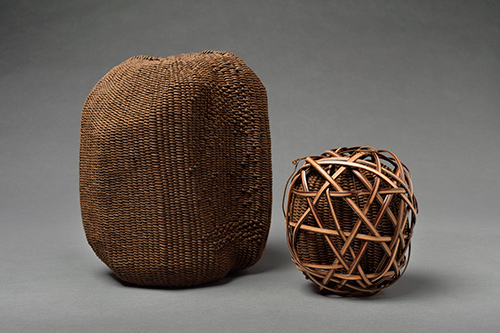
Tonal Fifths by Rachel Max was also featured this month. Max’s artwork challenges the relationship between containment and concealment, lines and shadow, and movement and space. Max constructs her forms with a combination of lace and basketry techniques. These techniques help her to creates an intricate, open weave fabric of interlinked lines. Max’s current work (such as Tonal Fifths) investigates the similarities between weaving and music. The musical composition of Max’s works are based on two or more themes which she works to weave together through her art.


Dispatches: Art South Africa

Zebra

Zebra Pilanesburg Nature Reserve. Photo by
Tom Grotta

We had the opportunity to spend nine days in South Africa this month — Johannesburg, Capetown, Stellenbosch. A glorious country; a splendid trip and lots of art to write about. The big news, of course is the Zeitz Museum of Contemporary African Art.
https://www.afar.com/magazine/get-the-inside-scoop-on-cape-towns-new-zeitz-mocaa?category=overview&guide=21&email=art@browngrotta.com&utm_source=Sailthru&utm_medium=email&utm_campaign=Kindness of Strangers&utm_term=Daily Wander Newsletter

MOCAA opening in Cape Town

No Slide Found In Slider.
We missed the opening (long story) — but we’ve got images for you anyway. We did get to visit the Silo Hotel which is part of the amazing complex designed by Thomas Heatherwick.http://www.cnn.com/style/article/thomas-heatherwick-zeitz-silo-museum/index.html We also visited the Southern Guild Gallery next door and also its location in Johannesburg, where we were particularly taken by work by Porky Hefer and David Krynauw.

Porky Hefer

Porky Hefer’s Mud Dauber Sleeping Pod wall sculpture at the Southern Guild Gallery Cape Town, South Africa. Photo by Tom Grotta

We visited other galleries, including Kim Sacks in Jo’Burg, Kalk Bay Modern and Artvark, greatly appreciating Mark Hilltout’s works photo of woven metal and Yda Walt’s photo provocative appliques on our gallery tours.

Mark Hilton and Yda Walt

Mark Hilton Metal Work and Yda Walt appliqué quilts. Photos by Tom Grotta

William Kentridge, Said Mahmoud, Lyndi Sales and Mark Rautenbach were on display at restaurants and wineries we visited (Shortmarket Club, Tokara and Delaire Graff in these shots).

Just as captivating were the vibrant handicrafts — on the streets and in the shops in Woodstock and Bo-kaap and along the coast. The http://www.fodors.com/world/africa-and-middle-east/south-africa/cape-town-and-peninsula/experiences/news/art-lovers-guide-to-cape-town-12123 Simon’s town sculptures.

Simon Town

Simon’s Town Street bead art. Photo by Tom Grotta

A Nigerian embroidery and an antique rattle basket found their way into our suitcase home.

Blanket and Rattle

Nigerian Blanket and Rattle. Photo by Tom Grotta

Art and oogling and eating, aren’t all. The historical stops we made – the Apartheid Musuem, Robben Island, Nobel Square — were moving and insightful ways to urge people remember the past while forging a better future.

Nelson Mandela Garden

Nelson Mandella’s Garden in Robben Island Prison. Photo by Tom Grotta

If South Africa has been on your must- or even maybe-visit list, just go. The people are open and inviting, the wine and food world class and the natural beauty is nonstop.

Scenic View of Table Mountain

Table Mountain South Africa, View from Robben Island. Photo by Tom Grotta


Anniversary Lookback: Hisako Sekijima at browngrotta arts

For our 30th Anniversary exhibition, Still Crazy After All These Years…30 Years of Art, Hisako Sekijima provided us Structural Discussion VI, a work made in 2016. In 1994, the first year Sekijima showed with browngrotta arts, we sold another work from the Structural Discussion series, #312, which she had made 30 years before in 1987. Even as she addresses a single theme, Sekijima’s use of varied materials and approaches makes the results of these explorations remarkably diverse.

NYT portrait of Hisako Sekijima

Portrait of Hisako Sekijima at her first solo exhibition with browngrotta arts in 1994; baskets of Kudzo vine, walnut, cedar, cherry bark, hackberry shavings and willow bark. Photo by Tom Grotta. The exhibition was reviewed in The New York Times, “Cherishing the Space and the Forms that Define It,” Bess Liebenson, July 1994.

Sekijima writes below about her many-year basket journey in Japan where, she explains, “making non-utilitarian baskets is not so properly appreciated after these 30 years!!” Her journey has included a collaboration with other basketmakers in Japan who have prepared an exhibition and catalog each year for 30 years. Information about that group and its anniversary will form Part 2 of this series of posts and will appear in an upcoming arttextstyle.
Sekijima featured in <em>The New York Times</em>

Sekijima featured in The New York Times

“In the 40 years I have been working with baskets, my concerns have extended beyond basket topics toward sculptural ones. Not only I have used rather common basket materials including tree barks, vines, splints of bamboo or woods, but also I have chosen extended concepts of vessel forms with negative spaces and linear constructions.  Both of my aesthetic and technical ideas such as revaluing negative space and examining the natural property of materials are illustrated in my explorations into the nature and history of basketmaking. It brings me a deeper understanding of physical rules of interplay among materials’ property, constructing method and a form, while it brings me a tactility or real touch of abstract ideas of numbers/counting, time, order, and etc. With coordination of hands, spirits and sense, physical experiences and conceptual ones come together in baskets.

Over the years, basketmaking has continued to inspire my inquiry into how and why human beings are motivated to make objects as well as how object-making forms and develops makers’ way of looking at things in general. As I explored baskets, I came better understand the interaction of human beings and our natural environment. My interest is not confined to representing personal inner imagery, but is widened to research the function of human hands and intellect through our interaction with nature.
Sekijima’s Structural Discussions

On the wall: Structural Discussion IV & V, plaited and woven cedar, 1997-98 from left to right: Structural Discussion VI, plaited cedar and walnut, 2016; Multiple Axis II, looped chamaecyparis (cyprus) and cedar, 2013; Structural Discussion I, plaited cedar, walnut, ginkgo, 1987; From 2 to 3 Dimensions V, plaited and folded walnut.

In 1994, when I was invited to show at browngrotta arts for the first time, basket #312 was among the first sales. It was entitled Structural Discussion and made in 1987, same year browngrotta had opened. Around that time, I concluded my classification of baskets into six primary types: looped, knotted, plaited, coiled, warp/weft woven and twined. Since 1987, visions of structural concepts have continued to return to me and have resulted in varying expressions. A set of two square baskets, #434 and #435, Structural Discussion IV and V made in 1997 and 1998, shows the comparison of plaited structure and warp/weft structure. You see in IV oblong negative spaces put in parallel to the edges, while in V they appear sideways at a 45-degree angle to the edges. IV shows the nature of warp/weft structure; V that of plaited structure. I find it interesting, that as you look at the edges of negative spaces, you see the structural elements behave in the same way in both. How things look depends on where or what you look at: either as a part or as a whole? Different names might be given, or might not.
Structural Discussion I, which I also made in 1987, uses plaited cedar, walnut, ginko and willow to highlight angles and openings. 2 to 3 Dimensions and Structural Discussion VI I made in 2016. VI is a basket in a basket that can be shifted to highlight one angle and then another. For 2017, I plan to create another piece in this discussion, to join browngrotta arts in expressing myself being ‘still crazy about it after 30 years!’”
-Hisako Sekijima

Bay Area Artists Get the Nod at James Cohan Gallery

A Line Can Go Anywhere curated by Jenelle Porter at the James Cohan Gallery, NY

A Line Can Go Anywhere, currently on display at the James Cohan Gallery in New York, studies the use of fiber as the main material used by seven Bay Area artists. The show examines artists ability to use linear pliable elements such as yarn, thread, monofilament, and rope.

A Line Can Go Anywhere curated by Jenelle Porter at the James Cohan Gallery, NY

A Line Can Go Anywhere works to show viewers all the ways in which fiber is utilized in art. The term “fiber” encompasses both the use of pliable material and technique needed to manipulate the materials to construct art works. “Crisscrossing generations, nationalities, processes, and approaches, the works speak to the cultural forces and art discourses that have contributed to a rich, and often overlooked, legacy of art making,” explains Jeffrey Waldon “from the initial efflorescence of the international fiber revolution of the 1960s to fiber’s recent reclamation by contemporary artists who, in an expanded field of art, create fiber-based work with a kind of ‘post-fiber’ awareness.”

The show features works from Trude Guermonprez and browngrotta arts’ artist Ed Rossbach, two influential artists whose works served as primers for the making of art in Northern California. The pair “contributed to the categorical transformation of art and craft,” notes the Gallery. In addition to Rossbach and Guermonprez, A Line Can Go Anywhere will feature work by Josh Faught, Terri Friedman, Alexandra Jacopetti Hart, Ruth Laskey, and browngrotta arts’ artist Kay Sekimachi.


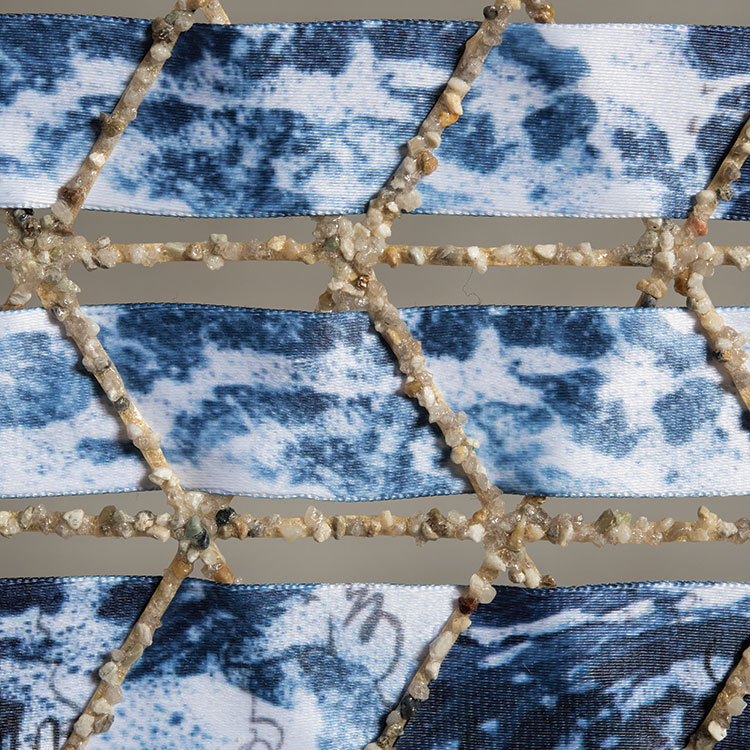
Top: Homage to Paul Klee, Kay Sekimachi, linen, painted warp & weft with dye, permanent marker, modified plain weave, 13.25” x 12”, 2013
Bottom: Lines, Kay Sekimachi, linen, painted warp & weft with dye, permanent marker, modified plain weave, 11.5″ x 11.75″, 2011

With a sincere devotion to textile traditions and worldwide culture, Ed Rossbach’s work referenced everything from ancient textile fragments to pop-culture icons such as Mickey Mouse. Rossbach experimented with atypical materials to create an anti-form intimate body of work. Despite being a prolific maker, write and professor at the University of California between 1950 and 1979, Rossbach, by his own choice, rarely exhibited or sold his work. Shortly before his death in 2002 he provided a large number of his remaining works of fiber, paintings, and drawings to Tom Grotta to photograph and exhibit. Most of Rossbach’s remaining works continue to be available through browngrotta arts.                                                                                                   Kay Sekimachi began working in fiber in 1960s, just as the international fiber movement began. For a number of years, according to the Gallery, Sekimachi’s work was “charged by Guermonprez’s pedagogical emphasis on both free experimentation and the rational logic of weaving.” Sekimachi’s early double weavings showcased her ability to harmonize the opposite relationships of density and translucency, complexity and simplicity, technique and free expression.

A Line Can Go Anywhere was curated by Jenelle Porter, an independent curator in Los Angeles. From 2011 to 2015 she was the Mannion Family Senior Curator at the Insitute of Contemporary Art/Boston where she organized the acclaimed Fiber Sculpture 1960-present. A Line Can Go Anywhere is on show at the James Cohan Gallery in New York until October 14th. For more information about the show click HERE.


Art Assembled: Art Featured in August

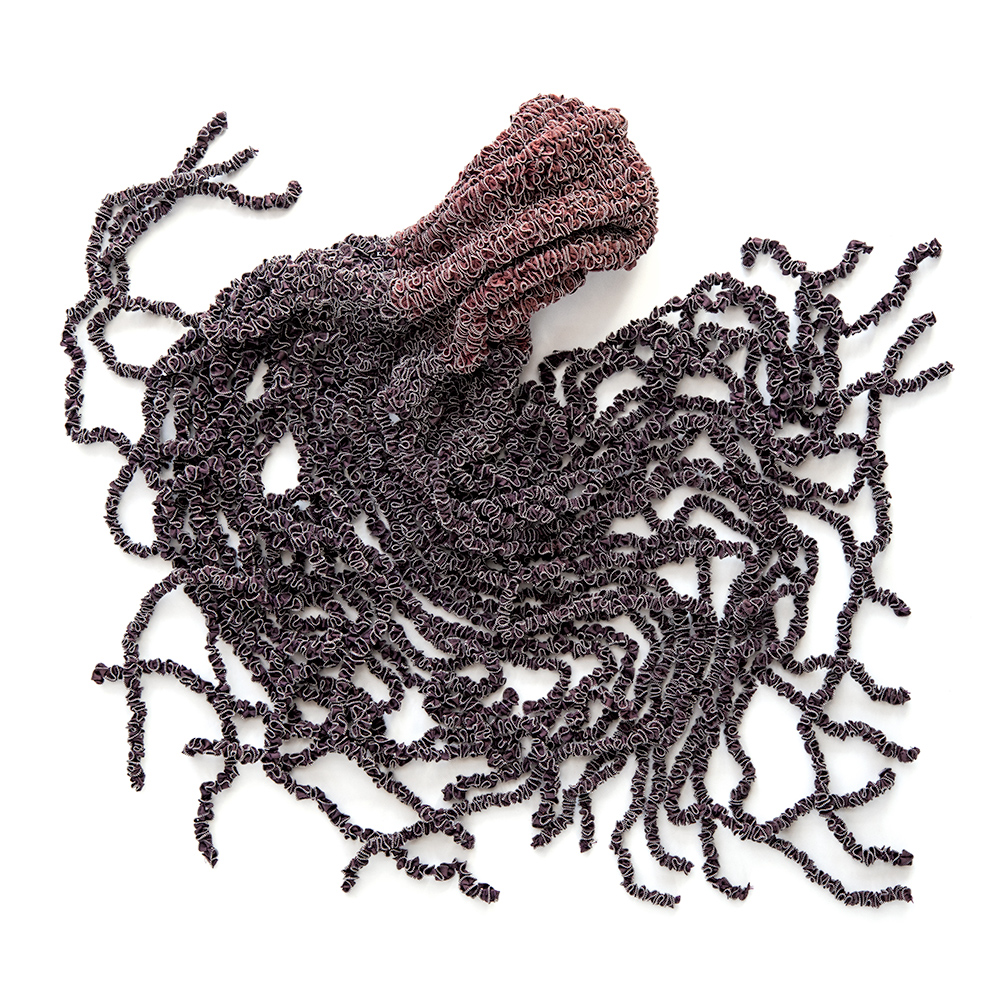
Twister by Norma Minkowitz, fiber, paint, resin, 25.5” x 15” x 10.5”, 1994-2016

Southern Crossing Six by Kiyomi Iwata, Kibiso, silver leaf, indigo-color dye on canvas with pencil drawing, 30” x 33” x 1.75”, 2015

Fossil by Jiro Yonezawa, bamboo, 11″ x 13″ x 17″, 2017

We started off August with Norma Minkowtiz’s Twister, a figure shaped sculpture made from fiber, paint, and resin. In works such as Twister Minkowitz explores her thoughts on the different paths people take in life. “Some of my themes explore making concessions, personal choices, different lifestyles, ways of survival and transitions in nature as well as human nature. I am engaged in creating works that weave the personal and universal together,” explains Minkowitz.

Next up we had Southern Crossing Six by Kiyomi Iwata. Iwata began her new series Southern Crossing Six after he recent move from New York to Richmond, Virginia. The move to the South felt as dramatic as her move from Japan to the United States many decades ago. While Iwata’s move from Japan to the United States was characterized by youthful anticipation and excitement, her move from New York to Richmond was much different. Iwata’s need for adventure was replaced by a desire of comfort of the familiar. The stark contrast between indigo dyed Kibiso silk and silver leaf juxtapose the two different landscapes…

Fossil, a bamboo sculpture by artist Jiro Yonezwa is a true masterpiece. Yonezawa, who studied in Beppu and apprenticed under Masakazu Ono, has been a bamboo basket maker and artists for over 35 years. For Yonezwa, it is the regenerative nature of bamboo which attracts him to the art form. While living in the United States from 1989 to 2007 his artwork became larger, bolder, and more sculptural. Yonezawa finds the process of preparing bamboo strips to weave, and the weaving the strips to be inherently meditative. While going through this process “the cacophony of life dissipates; the sculpture emerges vigorous and vibrant. Form, contrast, balance, and the interplay of space, color and texture” all come together.

Made with thousands of strands of 18-carat gold threads and Japanese silk thread, Grethe Wittrock’s Gold Reserves has a tactile sculptural presence. Like Wittrock’s Nordic Currents series, Gold Reserves also celebrates Danish Design and craftwork traditions. Unknown to many, the Danish national gold reserves were shipped to New York right before the start WWII to be stored in vaults at the Federal Reserve Bank to be kept safe from the Nazis.

Gold Reserves by Grethe Wittrock, custom-dyed Japanese silk yarns, konjaku root starched, various gold yarns, cotton yarn, 63” x 24”, 2008/09

“Although she attempts to retain a sense of the material in its raw state, she pushes it sculptural possibilities,” explains Milena Hoegsberg. Wittrock aims “to ‘respect’ the raw materials ‘energy’ by distilling it ‘to reveal its essence’.” Wittrock tediously chose the color combinations for each group of threads that were to be knotted, taking into consideration where the groups would lay against the brown threads and the texture they would create.


Spotlight on Bamboo: Bamboo Baskets Get the Nod at the Met

Japanese Bamboo Art: The Abbey Collectionis the first show at the Metropolitan Museum of Art in New York to concentrate on basketry, it features works of Japanese bamboo art dating from the late 19th century to the present—the period when basketry in Japan became recognized as an art form that transcends “craft.” The exhibition showcases more than 80 bamboo baskets and sculptures created by accomplished artists, including all six masters who have received the designation “Living National Treasure.” It celebrates the promised gift to the Met of more than 70 mostly extraordinary bamboo baskets and sculptures from the New York collectors Diane and Arthur Abbey. The exhibition also includes a site-specific installation, The Gate, by Tanabe Chikuunsai IV, a fourth-generation bamboo artist born in 1973, meandering forms, that Roberta Smith says have “an animated-cartoon energy and snap; they cavort almost wickedly.” “Throughout the exhibition,” Smith continues. ” you will see basketry abstracted, deconstructed and all but exploded in the hands of successive generations of artists.” The exhibition will be open through February 2018 — it is not to be missed.

The Gate by Tanabe Chikuunsai IV, Tiger bamboo, 2017, Photo: The Metropolitan Museum of Art

A number of the artists exhibited by browngrotta arts have frequently worked with bamboo. Jiro Yonezawa , awarded the Lloyd Cotsen Bamboo Prize in 2006, is a master — creating vessels, seductive objects and human-size sculptures.

Red Heat Haze by Jiro Yonezawa, bamboo and thread, 100″ x 13.5″, 2004, Photo: Tom Grotta

While Yonezawa harvests and prepares his own bamboo, (and speaks about that process here), Dona Anderson repurposes the bamboo she uses from kendo and hockey sticks to create vessels and sculptures. She began in the 1980s, making a series of missiles of bamboo sticks combined with colored fabrics stitched with a sewing machine, each nearly five feet high.
Nancy Moore Bess has studied bamboo extensively. She is the author of Bamboo in Japancalled by Donald Richie

” a compendium of information that is not likely to be soon duplicated.” She is also the creator of works that combine bamboo and waxed linen. “I met Tanabe-san on the first tour,” Bess writes. “He is a lovely young man.” The entry piece in Japanese Bamboo Art: The Abbey Collection is “ spectacular” in Bess’s view. The artist/author met Yamagishi-san who provided the Tiger Bamboo in the Met exhibition and from which The Gate is made, when she was researching the book. “Interestingly,” Bess writes, “if you take a rhizome of his tosatorafudake (tiger bamboo from Tosa, had to show off a bit) and plant it anywhere else, the skin does not develop the distinctive tiger markings!”

The exhibition will be open through February 2018 — it is not to be missed. For more information on the show click here. The show’s catalog is available in The Met’s online store here.


Dispatches: New Bedford, Mass — history, art and eats

We’ve all heard of the common stomping grounds of an affluent New England traveler. Many New Yorkers head to the Hamptons, but for those who are farther north (or willing to take a longer trek), Cape Cod, Martha’s Vineyard and Nantucket make up the holy trinity.

But for anyone who’s ready to switch things up, enjoy the opportunity to take a break from driving this summer by stopping in New Bedford, MA on your way to whichever classic summer vacation spot lies ahead. Whether you’ve visited before or it’s your first time stopping through, New Bedford will capture your heart with its rich history, quaint cobblestone streets and incredible art offerings.

New Bedford’s historic downtown boasts a working waterfront brings the nostalgia of old whaling days. Filled with a variety of restaurants, shops, and museums, the downtown district of New Bedford offers something for everyone while bringing the past to life. If you are looking for a lively experience, check out the North End of New Bedford; teeming with an array of cafes and bakeries, the North End illuminates New Bedford’s multicultural heritage.

More into the museum scene? Don’t miss the New Bedford Art Museum, Artworks!, which plays host this summer to Plunge: Explorations from Above and Below, a fascinating group exhibition of works influenced by water.
And because there’s so much to catch and so little time, press this list of to create your perfect New Bedford itinerary.


What to Do in New Bedford and environs:

New Bedford Whaling Museum

Above: Entry to the New Bedford Whaling Museum. Photo by Tom Grotta


The New Bedford Whaling Museum chronicles the history and impact of the “Old Dartmouth” whaling industry. Whale oil harvested by crews from New Bedford once lit the entire East Coast. The museum houses everything from whale skeletons and a model of the world’s largest whaling ship to work by internationally known maritime artists. The museum also gives you an opportunity to explore the importance of whale science and conservation, as well as informing you about what you can do to advance the cause.

New Bedford Art Museum/Artworks!

Above: Facade of the New Bedford Art Museum, Photo by Tom Grotta


The New Bedford Art Museum is a must-see for visitors of all ages. The museum offers a diverse array of engaging artwork, as well as a dynamic and interactive experience for kids and an extensive collection for parents and art lovers. This summer, the New Bedford Art Museum collaborated with browngrotta arts to create Plunge: Explorations from Above and Below, a unique exhibit that combines 16 artists working in numerous media to create a body of work that pays tribute to the nautical and natural processes around us. Artist featured in Plunge used fish scales, Danish sail cloth, and even an old Moby Dick book as material for their work.  Plunge can be viewed at the New Bedford Art Museum until October 8th.

Above: Plunge: Explorations from Above and Below at the New Bedford Art Museum, Photo by Tom Grotta


The Seamen’s Bethel

Life at sea was exhausting and monotonous, after returning to landwhalers would spend the majority of their time and money at gambling dens, brothels and saloons. However, Quaker whalers in New Bedford saw this as a threat to the dignity and good order of their community. Therefore, the citizens of the town created the New Bedford Port Society for the Moral Improvement of Seamen, which offered church services to whalers before and after their whaling ventures. Due to the varying religions of the whalers, the church was declared non-denominational and is still that way today. Moby Dick’s author Herman Melville was one of the many whalers who found solace in the church before venturing out to sea.

New Bedford Fishing Heritage Center

The Fishing Heritage Center, which opened just over a year ago, works to share the story of New Bedford’s fishing community by educating the public about the history and culture of the fearless fishermen who spent their lives working to provide for the community. Where the Whaling Museum celebrates the past, the Fishing Heritage Center celebrates the contemporary fishing industry.The Center offers free admission and provides engaging educational programs for people of all ages.
More art is to be found in nearby Westport, MA.


Where to Stay:

In addition to the larger chains, like the Fairfield Inn, Seaport Inn and Conference Center in Fairhaven, the area is home to charming Bed and Breakfasts like the Cranberry Gardens Inn; in nearby Wareham, Massachusetts (Contact: 508-295-9475 www.bbonline.com) or the Delano Homestead & Gardens in Fairhaven (Contact: 508-992-5552; http://www.delanohomestead.com).


Nearby:

Above: Dedee Shattuck Gallery, Photo by Neil Alexander


Dedee Shattuck Gallery (Just 25 minutes West of New Bedford)

A contemporary art gallery situated among acres of meadows and forests in neighboring Westport, Massachusetts, the Dedee Shattuck Gallery exhibits an ever-broadening selection of noted international, national, regional and emerging artists, and select artistic gifts — jewelry, scarves, tableware — establishing a cultural destination in the heart of Westport, Massachusetts (Contact: 508-636-4177; Dedeeshattuckgallery@gmail.com).


Above: Partners Village Store & Kitchen, Photo by Tom Grotta


Partners Village Store and Kitchen (also 25 minutes West of New Bedford)

Just next door to the Dedee Shattuck Gallery in Westport is Partners Store and Kitchen offering gifts, toys, books, cards, candy, specialty foods — great coffee and light dining. Come to shop, stay for lunch (Contact: 508.636.2572; http://partnersvillagestore.com).
Details
Decided to stay the night in New Bedford? You’ll be sure to find an option to please even the pickiest traveler.
Prefer a tried and true staple when choosing your accommodations? Post up at the Fairfield Inn or Seaport Inn and Conference Center in Fairhaven. Or, if B&Bs are more your style, the area is home to charming options like the Cranberry Gardens Inn, in nearby Wareham, MA or the Delano Homestead & Gardens in Fairhaven.
Your itinerary is almost complete – now for critical decisions. What will you eat?
There are some epic choices for fine dining in and near New Bedford.
A short walk from the New Bedford Whaling Museum, The Black Whale consistently serves phenomenal seafood. With a great drink menu and a great kids menu, the Black Whale is the perfect destination after a long day of sightseeing.
Cork Wine & Tapas is among the hidden gems of New Bedford. Offering a variety of wine flights, there is no chance you’ll leave this place displeased. Not to mention, the food is to die for. Cork’s menu offers everything from savory short rib tacos to delicious lobster crostini.
Margaret’s, in nearby Fairhaven, offers a variety like no other, and for an affordable price. Margaret’s is also known for their delicious breakfast; order the ‘Home Friends’ and I promise you won’t regret it. With amazing service and a cozy atmosphere, Margaret’s will become your home away from home.